Convenience vs Cost: Are Quick-Commerce Apps Worth Using?
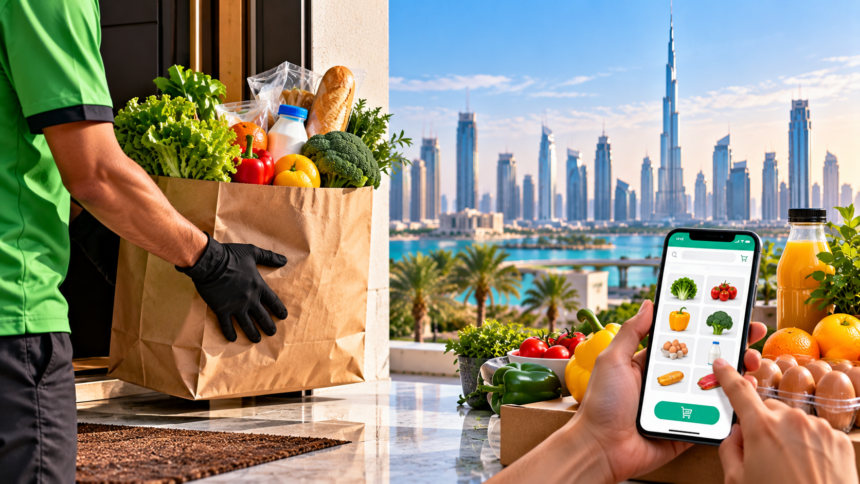
Quick-commerce apps in UAE are transforming the way residents purchase groceries, household essentials and everyday products. Instead of planning a weekly supermarket trip, many shoppers can now order milk, bread, vegetables, snacks or cleaning supplies through a mobile application and receive them within minutes.
- Quick-Commerce Apps in UAE: What They Are and How They Work
- 7 Ways Quick-Commerce Apps Are Changing Grocery Shopping Habits
- Popular Quick-Commerce Platforms and Grocery Delivery Services in the UAE
- How Quick Commerce Is Affecting Supermarkets and Local Grocery Stores
- Convenience vs Cost: Are Quick-Commerce Apps Worth Using?
- Technology, Delivery Logistics and Sustainability Challenges
- The Future of Quick-Commerce Apps in UAE Grocery Shopping
The growing popularity of rapid delivery services reflects a major shift in consumer expectations. Convenience, speed and digital accessibility are becoming increasingly important factors in everyday shopping decisions across Dubai, Abu Dhabi, Sharjah and other emirates.
Platforms such as Noon Minutes, Talabat Mart, Careem Quik and InstaShop have introduced new ways for customers to access groceries without visiting a physical store. Some services operate through neighbourhood warehouses, while others connect shoppers with established supermarkets.
The results are changing more than delivery times. Quick-commerce platforms are influencing how frequently people shop, how much they purchase in each order and how retailers manage their products.
Recent research highlights the importance of this transformation. A grocery retail study published by Abu Dhabi Chamber found that 86% of surveyed UAE consumers used an online grocery shopping channel. Online participation reached 88% among Dubai respondents and 87% in Abu Dhabi.
Meanwhile, an October 2026 analysis by Redseer Strategy Consultants reported that quick-commerce platforms accounted for approximately 66–75% of online grocery gross merchandise value across the UAE, Saudi Arabia and Egypt collectively.
These figures demonstrate the growing significance of rapid grocery delivery, although they represent different markets and research populations.
However, quick commerce also raises questions about delivery charges, impulse purchases, product freshness, packaging waste and the long-term future of traditional supermarkets.
For UAE residents, understanding these changes can help them shop more conveniently without unnecessarily increasing household expenses.
This guide explores seven ways quick-commerce apps are changing grocery shopping habits, the technology behind rapid delivery and the advantages and limitations consumers should consider.
Quick-Commerce Apps in UAE: What They Are and How They Work
Quick commerce, often called Q-commerce, is a retail model designed to deliver frequently purchased products within a short period.
Unlike conventional e-commerce, which may involve deliveries scheduled for the following day or later, quick commerce focuses on immediate consumer needs.
Its product selection usually includes groceries, beverages, snacks, personal care products and household essentials.
How Quick-Commerce Delivery Works
The process generally begins when a customer opens an application and selects an available delivery address.
The platform displays products that can be fulfilled within the service area.
After the customer confirms the order, the products are picked, packed and assigned to a delivery rider.
The order is then transported to the customer’s location.
Delivery times depend on location, inventory availability, demand, traffic and operating conditions.
The Role of Dark Stores
Many rapid delivery platforms operate small warehouses known as dark stores.
These facilities are designed to fulfil online orders rather than serve walk-in shoppers.
They are often located near densely populated residential areas.
This reduces the distance between products and customers.
Dark stores may stock frequently purchased items such as:
- Milk, eggs and bread.
- Fruits and vegetables.
- Packaged snacks.
- Bottled water and beverages.
- Cleaning products.
- Personal care essentials.
- Baby products.
- Pet supplies.
Quick Commerce Compared With Traditional Grocery Shopping
| Feature | Quick Commerce | Traditional Supermarket |
|---|---|---|
| Shopping Method | Mobile application | Physical store |
| Product Access | Selected nearby inventory | Wider in-store assortment |
| Delivery | Often within minutes | Immediate collection or scheduled delivery |
| Convenience | No physical visit required | Customers select items directly |
| Product Inspection | Limited before delivery | Direct inspection possible |
| Extra Charges | May include delivery and service fees | Travel or parking costs may apply |
| Best Use | Urgent and smaller purchases | Planned household shopping |
Both models offer advantages depending on the customer’s needs.
7 Ways Quick-Commerce Apps Are Changing Grocery Shopping Habits
Rapid grocery delivery is influencing consumer behaviour in several important ways.
The change is not simply about replacing physical shopping with online orders. It also affects purchasing frequency, convenience expectations and household planning.
1. Grocery Shopping Is Becoming More Frequent
Traditional household shopping often involves purchasing groceries for several days or an entire week.
Quick commerce allows customers to order smaller quantities whenever they need them.
A resident who runs out of eggs or cooking oil can order those items without making another supermarket trip.
This convenience reduces the need to maintain large quantities of every product at home.
However, frequent small purchases can increase delivery fees and make spending more difficult to track.
2. Customers Expect Faster Delivery
Delivery speed has become a competitive feature of grocery shopping.
Some platforms advertise delivery windows as short as 10–15 minutes in selected locations.
These promises are dependent on operational conditions and are not guaranteed across every neighbourhood.
Still, the availability of rapid delivery encourages customers to expect shorter waiting periods.
3. Last-Minute Purchases Are Easier
Quick-commerce services are especially useful when essential items are unexpectedly unavailable.
A family preparing dinner may discover that an important ingredient is missing.
Instead of interrupting cooking to visit a supermarket, they can order the product through an app.
This creates a new form of convenience for busy households.
4. Mobile Applications Are Replacing Some Store Visits
Customers can search products, compare available brands and complete payments directly through their phones.
Digital ordering eliminates travel and checkout queues.
This may be particularly appealing to people with long working hours or limited access to transport.
5. Product Discovery Is Becoming Digital
Shopping apps recommend products through search results, promotions and personalised displays.
Consumers may discover new brands they would not otherwise notice in a supermarket.
However, prominently displayed products are not necessarily the cheapest or most suitable options.
6. Households Are Rethinking Grocery Planning
With rapid delivery available, some households rely less heavily on large scheduled shopping trips.
Others combine a weekly supermarket visit with occasional small online orders.
This hybrid approach allows shoppers to balance convenience with price and product selection.
7. Grocery Shopping Is Becoming More Data-Driven
Digital platforms collect information about purchasing patterns, subject to applicable privacy rules.
Retailers can use aggregated demand information to manage stock and predict popular products.
This can improve availability and reduce certain operational inefficiencies.
Seven Major Changes Compared
| Changing Habit | Previous Approach | Emerging Approach |
|---|---|---|
| Shopping Frequency | Weekly purchases | More frequent small orders |
| Delivery Expectations | Scheduled delivery | Rapid delivery |
| Forgotten Essentials | Visit another store | Order immediately |
| Shopping Experience | Browse supermarket aisles | Search mobile catalogues |
| Product Discovery | Shelf displays | Digital recommendations |
| Household Planning | Stock up regularly | Combine planned and top-up shopping |
| Retail Operations | Store-based demand | Digital demand forecasting |
These changes demonstrate how convenience is reshaping the purchasing journey.
Popular Quick-Commerce Platforms and Grocery Delivery Services in the UAE
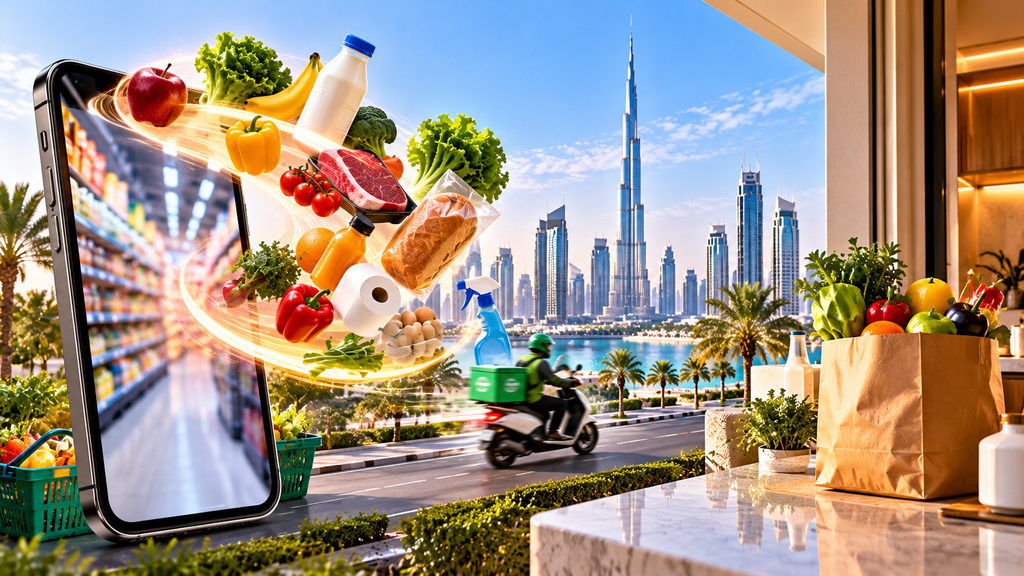
The UAE has a competitive digital grocery market involving specialist delivery services, established supermarkets and larger online retail platforms.
Different providers use different operating models.
Noon Minutes
Noon Minutes offers rapid delivery of groceries and everyday essentials.
The platform uses neighbourhood fulfilment facilities to support short delivery windows in selected areas.
Its product categories include food, beverages, personal care products and household items.
Actual availability and estimated delivery times depend on the customer’s address.
Talabat Mart
Talabat Mart operates as part of Talabat’s wider delivery ecosystem.
It focuses on groceries and convenience products that customers may need quickly.
The service allows users to order daily essentials without placing a restaurant food order.
Talabat’s 2025 delivery data also demonstrated demand for familiar grocery staples, including more than 620,000 orders featuring laban through Talabat Mart.
Careem Quik
Careem Quik is part of Careem’s broader consumer services.
It offers groceries and selected everyday products for rapid delivery in supported areas.
Careem’s reported 2025 ordering patterns showed strong interest in familiar household staples, with bananas among its most frequently ordered grocery items.
InstaShop
InstaShop connects customers with supermarkets and other participating retailers.
Unlike a purely warehouse-based model, its service can involve existing retail stores fulfilling orders.
This approach offers access to participating neighbourhood businesses and different product selections.
Supermarket Delivery Platforms
Established supermarket operators also offer digital ordering and delivery.
These services may provide larger product ranges or scheduled delivery windows.
For consumers, the distinction between rapid grocery delivery and conventional supermarket delivery is becoming less rigid.
Delivery Platform Comparison
| Service | General Operating Approach | Typical Focus |
|---|---|---|
| Noon Minutes | Neighbourhood fulfilment network | Groceries and essentials |
| Talabat Mart | Rapid grocery fulfilment | Daily convenience products |
| Careem Quik | On-demand grocery delivery | Everyday household needs |
| InstaShop | Participating retail stores | Supermarket and convenience shopping |
| Supermarket Apps | Store-based and scheduled fulfilment | Broader grocery shopping |
Services, coverage and delivery promises vary by location and may change over time.
Customers should compare final prices, delivery charges and product availability before placing an order.
How Quick Commerce Is Affecting Supermarkets and Local Grocery Stores
Quick commerce is creating new competition for traditional grocery retailers.
However, the evidence does not suggest that physical supermarkets are becoming obsolete.
Many consumers continue to prefer visiting stores for larger purchases, fresh produce and direct product inspection.
Traditional Supermarkets Are Adapting
Large retailers are investing in online ordering, digital payments and delivery partnerships.
Some combine physical branches with fulfilment operations.
This allows them to use existing inventory and infrastructure while serving digital customers.
Local Grocery Stores Can Benefit
Smaller neighbourhood stores may participate in delivery marketplaces.
This can provide access to customers beyond their immediate walk-in audience.
However, delivery commissions, pricing pressures and digital visibility can affect profitability.
Quick Commerce Creates New Opportunities for Brands
Online grocery platforms allow brands to reach customers through digital catalogues.
Product descriptions, search ranking and promotional placement become increasingly important.
An October 2026 Redseer report noted that quick-commerce platforms now represent a substantial share of online grocery sales across three major regional markets.
For consumer goods companies, this makes digital grocery distribution an important business consideration.
A New Type of Competition
| Retail Model | Main Strength | Main Challenge |
|---|---|---|
| Large Supermarket | Product range and physical shopping | Travel and checkout time |
| Neighbourhood Grocery | Local convenience | Limited selection |
| Quick-Commerce Platform | Rapid delivery | Fulfilment and delivery costs |
| Online Supermarket | Larger digital orders | Delivery scheduling |
| Hybrid Retailer | Physical and online access | Operational coordination |
Physical Shopping Still Matters
Fresh produce selection, promotions and bulk purchasing remain reasons to visit supermarkets.
Some customers also enjoy comparing products directly or shopping as part of their weekly routine.
The more likely development is coexistence between different shopping channels rather than the disappearance of physical grocery stores.
Convenience vs Cost: Are Quick-Commerce Apps Worth Using?
Rapid grocery delivery saves time, but convenience may come with additional expenses.
Customers should compare the total order cost rather than focusing only on product prices.
Understanding Delivery and Service Fees
Some platforms charge delivery fees, small-order fees or service charges.
Other services offer promotions or memberships that reduce selected charges.
These conditions vary by platform and may change frequently.
A product advertised at an attractive price can become less competitive after additional fees.
Illustrative Grocery Cost Comparison
| Expense | Quick-Commerce Order | Supermarket Purchase |
|---|---|---|
| Grocery Items | AED 80 | AED 76 |
| Delivery Fee | AED 8 | AED 0 |
| Service Fee | AED 3 | AED 0 |
| Total | AED 91 | AED 76 |
This hypothetical example excludes transportation, parking and the value of personal time. It does not represent actual platform pricing.
The online order costs AED 15 more in this example.
Whether that difference is worthwhile depends on the customer’s circumstances.
The Risk of Impulse Buying
Convenient ordering can encourage unplanned purchases.
Customers may add snacks, drinks or promotional items because they are easily available.
Over time, these small purchases can affect household budgets.
When Quick Commerce Provides Better Value
Quick delivery may be useful when:
- An essential ingredient is urgently needed.
- Travelling to a supermarket would be inconvenient.
- A customer has mobility limitations.
- Household circumstances make shopping difficult.
- A delivery replaces a more expensive transport journey.
- A genuinely useful promotion reduces total costs.
When Traditional Shopping May Be Better
A physical supermarket or scheduled delivery service may be more appropriate for large household purchases.
These options can offer wider selections, bulk discounts and easier direct inspection of fresh products.
Smart Grocery Shopping Checklist
- Compare final prices across services.
- Check delivery and service charges.
- Avoid adding unnecessary items.
- Review product sizes and quantities.
- Compare unit prices.
- Check delivery estimates.
- Verify expiry dates after delivery.
- Report damaged or missing products promptly.
- Review weekly grocery spending.
- Use quick commerce for genuine convenience needs.
The objective is not to avoid rapid delivery but to use it deliberately.
Technology, Delivery Logistics and Sustainability Challenges
Quick commerce depends on operational efficiency.
Delivering groceries within minutes requires more than a mobile application.
Companies must coordinate inventory, location planning, delivery fleets and customer demand.
Micro-Fulfilment Centres
Dark stores are typically positioned close to areas with substantial customer demand.
Their compact product selections allow workers to pick orders quickly.
However, these facilities require rent, equipment, inventory and employees.
Operating numerous locations can create significant costs.
Artificial Intelligence and Demand Forecasting
Retailers increasingly use data analysis to estimate demand.
For example, historical sales can help predict which household products are likely to sell frequently in a particular area.
These systems may reduce stock shortages and improve order fulfilment.
However, forecasts are not always accurate, especially during holidays, unusual weather or unexpected demand changes.
Delivery Efficiency
Short delivery windows require careful routing and coordination.
Platforms must balance speed with rider safety, traffic conditions and order accuracy.
Customers should not expect delivery workers to disregard road safety to meet advertised timings.
Packaging and Environmental Concerns
Frequent small orders may involve additional bags, packaging and individual delivery journeys.
These factors can affect the environmental impact of grocery shopping.
However, larger consolidated deliveries may also involve packaging and transportation.
The environmental comparison depends on order size, transport method, packaging materials and operational efficiency.
Food Safety and Freshness
Customers expect fresh groceries to arrive in suitable condition.
Temperature-sensitive products require appropriate storage and handling throughout the fulfilment process.
Retailers must manage expiry dates, stock rotation and delivery conditions carefully.
Major Operational Challenges
| Challenge | Why It Matters |
|---|---|
| Inventory Accuracy | Prevents unavailable products |
| Delivery Coordination | Supports reliable fulfilment |
| Rider Safety | Protects delivery workers |
| Temperature Control | Maintains food quality |
| Packaging | Influences waste generation |
| Customer Data | Requires responsible handling |
| Profitability | Determines long-term sustainability |
Reliable service depends on balancing speed with quality and responsible operations.
The Future of Quick-Commerce Apps in UAE Grocery Shopping
Quick commerce is becoming an established component of the UAE’s retail environment.
Its future development will depend on consumer expectations, technology, operating costs and competition.
Growth Beyond Groceries
Rapid delivery platforms increasingly offer household products, baby supplies, personal care items and other essentials.
This may encourage consumers to rely on the same applications for different everyday needs.
However, expanding product categories also increases inventory complexity.
More Personalised Shopping
Digital platforms may increasingly recommend products based on shopping history and preferences.
Such features can improve convenience, but customers should remain mindful of advertising influence and privacy settings.
Subscription and Loyalty Programmes
Membership plans may offer reduced delivery fees or other benefits.
These arrangements can be attractive for frequent users.
However, households should calculate whether the savings exceed the subscription cost.
Continued Competition With Traditional Retail
Traditional supermarkets are likely to remain important, particularly for larger purchases and customers who prefer direct product selection.
Quick-commerce platforms may continue focusing on smaller, urgent and convenience-driven orders.
The resulting retail market could give shoppers more choices rather than forcing them into one shopping model.
Frequently Asked Questions
What is quick commerce in the UAE?
Quick commerce is a retail model offering rapid delivery of groceries and everyday essentials, often using nearby fulfilment facilities.
Which quick-commerce apps operate in the UAE?
Examples include Noon Minutes, Talabat Mart, Careem Quik and InstaShop, although availability varies by location.
Can groceries really arrive within 15 minutes?
Some services advertise delivery windows around 10–15 minutes in selected locations. Actual times depend on operational conditions and are not guaranteed everywhere.
Are quick-commerce apps cheaper than supermarkets?
Not necessarily. Prices, promotions and additional fees vary. Customers should compare the final order total.
Do quick-commerce apps replace weekly grocery shopping?
For some households, they reduce the need for additional supermarket visits. Others continue combining weekly shopping with occasional rapid deliveries.
Are groceries ordered online safe?
Food safety depends on proper storage, handling and delivery conditions. Customers should inspect products and report concerns promptly.
Will quick commerce continue growing in the UAE?
Current market research indicates continued industry development, although future growth depends on profitability, consumer demand and competition.
Final Thoughts on Quick-Commerce Apps in UAE
Quick-commerce apps are changing grocery shopping habits in the UAE by making essential products easier to access through smartphones.
Rapid delivery services have introduced new expectations around convenience, availability and shorter waiting periods.
For consumers, the main advantage is flexibility. Families and professionals can purchase missing essentials without always needing to visit a supermarket.
For retailers, the shift creates opportunities to improve digital operations, reach new customers and use data more effectively.
However, the benefits come with important considerations.
Additional charges, impulse purchases, packaging waste and delivery reliability can influence whether rapid grocery shopping offers genuine value.
Consumers who compare prices, plan larger purchases and reserve quick delivery for appropriate situations may benefit most.
Ultimately, quick-commerce apps in UAE are unlikely to eliminate traditional grocery shopping. Instead, they are helping create a more flexible retail environment in which consumers can choose between physical stores, scheduled deliveries and near-instant purchases.
As competition and technology continue to evolve, the most successful services will be those that combine speed with affordability, product quality and customer trust.
Do follow us on Instagram
Read More – Subscription Fatigue in Dubai: Are Residents Paying for Too Many Monthly Services?