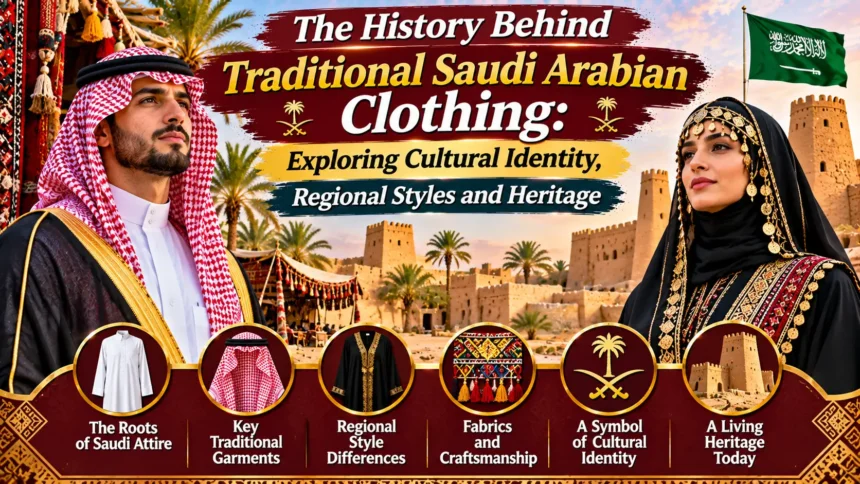
The History Behind Traditional Saudi Arabian Clothing
Saudi Arabia is known for its rich history, traditional customs and strong cultural identity. One of the most interesting ways to understand this heritage is through its traditional clothing. For centuries, people across the Kingdom have worn garments that reflect their surroundings, daily activities, social customs and cultural values.
- 1. How Traditional Saudi Clothing Developed Over Time
- 2. The Saudi Thobe: A Symbol of Traditional Men’s Clothing
- 3. Ghutra and Shemagh: The Traditional Saudi Head Coverings
- 4. The Agal: A Small Accessory with a Long Tradition
- 5. The Bisht: A Traditional Garment for Special Occasions
- 6. The Abaya: A Major Part of Women’s Traditional Clothing
- 7. Traditional Women’s Dresses and Their Beautiful Embroidery
- 8. Traditional Clothing in Different Regions of Saudi Arabia
- 9. Fabrics, Colours and Materials Used in Traditional Clothing
- 10. Jewellery and Accessories in Traditional Saudi Clothing
- 11. How Traditional Saudi Clothing Has Changed Over Time
- 12. Preserving the Heritage of Traditional Saudi Clothing
- 13. Why Traditional Saudi Arabian Clothing Still Matters
- Conclusion
- Frequently Asked Questions (FAQs)
Traditional Saudi Arabian clothing is easily recognised by garments such as the thobe, ghutra, shemagh, agal, bisht and abaya. However, the country’s clothing heritage is much more diverse than these familiar styles. Each region has its own traditional dresses, fabrics, embroidery patterns and accessories.
People living in the Arabian Peninsula before Islam preferred loose-fitting clothes made from natural materials like cotton and wool. These clothes helped them stay comfortable during hot days and cold desert nights.
In the past, clothing was closely connected with everyday life. People needed garments that protected them from the hot weather, blowing sand and cooler winter nights. At the same time, traditional dress reflected modesty, social identity and local craftsmanship.
Over time, these practical garments developed into important symbols of Saudi culture. Today, traditional clothing connects modern generations with the history and customs of their ancestors.
Let’s explore the history behind traditional Saudi Arabian clothing and discover the stories behind its most famous garments.
1. How Traditional Saudi Clothing Developed Over Time
The history of traditional Saudi clothing is closely connected with the environment and lifestyle of the Arabian Peninsula. Before modern cities and factories developed, people depended on locally available materials and handmade clothing.
Saudi Arabia has large desert areas, coastal settlements, mountains and agricultural regions. People living in these different environments needed clothing that suited their surroundings.
In desert communities, loose-fitting garments helped people stay comfortable in hot weather. Head coverings protected them from direct sunlight, dust and blowing sand. In colder areas, people used heavier fabrics and additional layers to stay warm.
Clothing was also influenced by trade. Saudi Arabia was connected with important trade routes that brought fabrics, dyes, jewellery and decorative materials from other parts of the world. These connections introduced new designs and materials into local clothing traditions.
Traditional dress also reflected social customs and religious values. Modest clothing was important in everyday life, while special garments were prepared for weddings, festivals and other celebrations.
Over generations, these styles became part of the cultural identity of different Saudi regions.
2. The Saudi Thobe: A Symbol of Traditional Men’s Clothing
The thobe, also called thawb, is one of the most recognisable garments in Saudi Arabia. It is a long, loose-fitting garment usually worn by men and generally reaches the ankles.
The traditional Saudi thobe developed as a practical form of clothing for the region’s warm climate. Its loose design allows air to move around the body, making it comfortable during hot weather. Men of all ages and backgrounds wear it for everyday activities as well as formal occasions.
White is one of the most common colours, especially during warmer months. However, thobes are also available in cream, grey, brown and other shades. Some men prefer lighter fabrics in summer and thicker materials during winter.
Traditional thobes are usually made from cotton or other comfortable fabrics. Their design is simple, but details such as collars, buttons, cuffs and stitching can vary.
The thobe is worn in many situations, including:
- Everyday activities and work.
- Family gatherings and social visits.
- Friday prayers and religious occasions.
- Weddings and celebrations.
- National events and cultural festivals.
Although modern clothing styles have become popular, the thobe continues to hold an important place in Saudi society. It represents a connection between traditional values and modern life.
3. Ghutra and Shemagh: The Traditional Saudi Head Coverings
The ghutra and shemagh are important parts of traditional Saudi men’s clothing. These square pieces of fabric are worn over the head and are usually secured with a black cord called the agal.
People wear headscarves to protect themselves from the sun, dust, and wind. The plain white ghutra is often worn on formal occasions, while the red-and-white checked shemagh is popular for everyday wear and is linked to Bedouin traditions.
Although it became popular in Saudi Arabia only about 50 years ago, it is now an important part of local dress.
The white ghutra and red-and-white shemagh are among the most familiar styles. Both have practical uses and cultural importance.
In the past, head coverings were especially useful for people living in desert environments. They helped protect the head and face from strong sunlight, dust and sand.
The ghutra is commonly made from white fabric, while the shemagh usually features a red-and-white pattern. The choice of style can depend on personal preference, regional customs and the occasion.
These head coverings are arranged in different ways. Some people wear them loosely over the shoulders, while others fold them into particular shapes.
Their importance goes beyond protection from the weather. Today, the ghutra and shemagh are widely recognised symbols of Saudi cultural identity.
4. The Agal: A Small Accessory with a Long Tradition
The agal is a black cord worn over the ghutra or shemagh to keep the head covering in place. Although it is a simple accessory, it has become an important part of traditional Saudi men’s dress.
Traditionally, the agal was made from twisted wool or other fibres. Craftspeople carefully prepared the material and shaped it into a circular cord.
Different styles developed over time, including more decorative versions made with fine materials and detailed finishing.
One recognised style is the muqassab agal, which may include decorative metallic thread. The craft of making the agal has also been connected with local artisans and traditional skills.
The agal is usually worn with the thobe and head covering during everyday activities and formal occasions. Together, these garments create one of the most familiar traditional Saudi looks.
5. The Bisht: A Traditional Garment for Special Occasions
The bisht is a traditional outer cloak worn by men over the thobe. It is particularly associated with formal gatherings, weddings, religious celebrations and important public occasions.
Unlike the everyday thobe, the bisht is usually worn when a more formal appearance is desired. It is commonly made from lightweight or heavier fabrics, depending on the season and the type of garment.
Artisans use wool, goat hair, and soft camel hair to make different types of fabric. For summer, they create light and breathable materials, while winter clothing is made from thicker wool to provide warmth.
Traditional bishts often feature decorative embroidery around the neckline and front edges. Gold-coloured or metallic thread is sometimes used to create detailed borders.
The quality of the material and embroidery can influence the appearance and value of a bisht. Skilled craftspeople spend considerable time preparing and decorating these garments.
The bisht also has a strong connection with hospitality and respect. It is frequently worn by important guests and public figures during formal events.
Its long history and elegant appearance make it one of the most recognised garments in Saudi traditional clothing.
6. The Abaya: A Major Part of Women’s Traditional Clothing
The abaya is one of the most familiar garments associated with Saudi women’s clothing. It is a long outer garment traditionally worn over other clothes when going outside.
Historically, abayas were made using materials such as wool and other locally available fabrics. Their simple and loose design offered coverage and protection from the surrounding environment.
Long before Islam, women in Mesopotamia and the Arabian Peninsula wore loose outer cloaks to protect themselves from the sun, strong winds, and desert sand. In some early cities, women also wore fine black wool cloaks with gold decoration as a sign of wealth and high social status.
Over time, the abaya developed into an important part of women’s clothing traditions across Saudi Arabia. Black became a widely recognised colour, although traditional and modern abayas are also found in other colours and designs.
Today, abayas are available in many styles, including:
- Simple everyday abayas.
- Embroidered abayas for special occasions.
- Open-front abayas.
- Abayas with decorative sleeves and borders.
- Modern designs using different fabrics and colours.
Traditional abayas also varied between communities. Some were handmade and decorated with coloured thread or other decorative materials.
Modern fashion has introduced new designs, but the abaya continues to represent an important connection with Saudi clothing traditions.
7. Traditional Women’s Dresses and Their Beautiful Embroidery
Traditional Saudi women’s clothing is especially interesting because it includes many regional styles. Unlike men’s traditional clothing, which has several widely recognised common elements, women’s garments differ considerably across the Kingdom.
In the past, women wore long dresses made from cotton, silk and other fabrics. Some garments were designed for everyday use, while others were prepared for weddings, family celebrations and special gatherings.
Embroidery played an important role in decorating traditional dresses. Women and skilled craftspeople used colourful threads, metallic decorations, beads and other materials to create beautiful designs.
Some traditional garments include:
Munaykhal Thobe: A traditional dress associated with the Central Region. It is known for its wide shape and large sleeves.
Mushallal Thobe: Another traditional garment from the Central Region, recognised for its loose design, light fabric and decoration.
Darra’a: A long traditional dress found in parts of central and northern Saudi Arabia. Different versions are recognised by their fabrics and decorative techniques.
Kartah: A traditional dress associated with Madinah. It is known for its long shape, sleeves and variety of fabrics and colours.
Thobe Al-Muzannad: One of the traditional women’s garments associated with western Saudi clothing heritage.
These garments show how women used clothing to express creativity, regional identity and personal style.
8. Traditional Clothing in Different Regions of Saudi Arabia
Saudi Arabia has thirteen administrative regions, and each has its own cultural history. Traditional clothing developed differently across these areas because of differences in climate, local customs, trade and available materials.
Here are some interesting regional clothing traditions.
Najd: Traditional Clothing of Central Saudi Arabia
Najd is the central region of Saudi Arabia and includes Riyadh and surrounding areas. Traditional clothing here is strongly connected with desert and Bedouin lifestyles.
Men commonly wore the thobe, ghutra and agal. On special occasions, garments such as the bisht and daqlah were also used.
Women’s clothing included different types of long dresses, head coverings and decorative accessories. Embroidery and traditional stitching were important features of many garments.
Hijaz: Clothing Influenced by Trade and Cultural Exchange
The Hijaz region includes historic cities such as Makkah, Madinah and Jeddah. Because of its position along important pilgrimage and trade routes, the region experienced cultural influences from different parts of the world.
Traditional women’s dresses in the Hijaz often featured colourful fabrics, detailed embroidery and decorative materials.
In the past, some garments included metallic threads, beads and other imported decorations. These details reflected the region’s long history of contact with travellers and traders.
Asir: Colourful Clothing from the Southern Highlands
Asir is known for its mountains, traditional villages and distinctive cultural arts. Its clothing heritage includes colourful designs and regional embroidery styles.
Traditional women’s garments from parts of Asir feature bright colours, decorative stitching and patterns that reflect local artistic traditions.
Men’s traditional clothing in the southern region has included garments such as the samadah and jubbah, along with accessories such as the mihzam and traditional dagger.
Eastern Province: Clothing Connected with Coastal Life
The Eastern Province has a strong connection with the Arabian Gulf, fishing, pearl diving and trade.
Traditional clothing in this region shares some features with other Gulf communities. Men commonly wore the dishdasha, a garment similar to the thobe, along with head coverings and outer garments such as the bisht.
Women’s clothing included long dresses, decorative fabrics and traditional accessories.
Northern Saudi Arabia: Clothing Suited to Desert and Cooler Weather
The northern parts of Saudi Arabia have their own clothing traditions shaped by desert conditions and cooler winter weather.
People used different fabrics and layers depending on the season. Traditional dresses often featured decorative stitching, while heavier outer garments provided warmth during colder months.
These regional differences show that traditional Saudi clothing is not one single style. It is a collection of traditions shaped by the history of different communities.
9. Fabrics, Colours and Materials Used in Traditional Clothing
The materials used in traditional Saudi clothing were closely connected with the local environment and trade networks.
In the past, people relied on materials such as cotton, wool, silk and animal hair. The choice depended on the purpose of the garment, the season and the availability of fabrics.
Common traditional materials included:
- Cotton: Popular for everyday clothing because it is comfortable and suitable for warm weather.
- Wool: Used for heavier garments and outer clothing, particularly during colder months.
- Camel and goat hair: Used in some traditional textiles and outer garments.
- Silk: Used for decorative clothing and special occasions.
- Metallic threads: Added to embroidery and decorative borders.
- Beads and ornaments: Used to make women’s clothing and accessories more attractive.
Colours also carried cultural and personal meaning. White was widely used for men’s clothing, while women’s traditional garments often included brighter colours and decorative patterns.
The use of different materials also reflects Saudi Arabia’s historical connections with international trade. Fabrics and decorative items travelled through ports and markets, influencing local fashion over time.
10. Jewellery and Accessories in Traditional Saudi Clothing
Jewellery has been an important part of traditional Arabian clothing for generations. In the past, gold and silver ornaments were not only used for decoration but could also represent wealth, family status and personal security.
Women traditionally wore necklaces, bracelets, rings, earrings and other ornaments. Some pieces included gemstones, coins, beads and decorative metalwork.
In different parts of Saudi Arabia, jewellery designs reflected local traditions and the materials available through trade.
Head coverings and clothing accessories were also important. Women used shaylas and other traditional head coverings, while men wore the ghutra or shemagh with the agal.
Some accessories were designed for everyday use, while others were reserved for weddings and important celebrations.
These decorative details helped make traditional clothing more personal and reflected the artistic skills of local craftspeople.
11. How Traditional Saudi Clothing Has Changed Over Time
Traditional Saudi clothing has changed as the country has developed. Modern cities, new fabrics, changing lifestyles and international fashion have all influenced the way people dress.
In the past, many garments were made by hand at home or by local tailors. Today, ready-made clothing and specialised tailoring businesses are widely available.
Modern thobes come in different cuts, fabrics, colours and collar designs. Abayas have also developed into a major part of contemporary fashion, with designers experimenting with new shapes, materials and decorations.
However, many traditional garments have retained their original appearance and cultural importance.
Traditional clothing is still commonly worn during:
- Saudi Founding Day celebrations.
- Saudi National Day events.
- Weddings and family gatherings.
- Religious occasions.
- Cultural festivals and heritage exhibitions.
- Official ceremonies and formal meetings.
This combination of traditional and modern fashion shows how Saudi clothing continues to develop while maintaining a strong connection with the past.
12. Preserving the Heritage of Traditional Saudi Clothing
Traditional clothing is an important part of Saudi Arabia’s cultural heritage. However, as modern fashion becomes more popular, some older clothing styles are becoming less common in everyday life.
This makes documentation and preservation especially important.
The King Abdulaziz Foundation for Research and Archives, also known as Darah, has worked to document traditional clothing from different regions of the Kingdom. Its publication on traditional fashion in the Central Region, released in 2023, is part of a wider effort to record the country’s clothing heritage.
The project helps preserve information about traditional garments, fabrics, embroidery, decorative techniques and regional differences.
There are several ways to keep these traditions alive:
- Supporting traditional clothing designers and local tailors.
- Visiting heritage exhibitions and cultural festivals.
- Recording the stories of older generations.
- Teaching traditional embroidery and stitching skills.
- Documenting regional clothing styles.
- Encouraging young designers to use traditional patterns in modern fashion.
Preserving traditional clothing is not simply about keeping old garments. It is also about protecting the skills, knowledge and cultural stories connected with them.
13. Why Traditional Saudi Arabian Clothing Still Matters
Traditional Saudi clothing continues to play an important role because it connects modern society with its history.
The thobe, ghutra, shemagh, agal, bisht and abaya are recognised symbols of Saudi identity. Regional women’s dresses and decorative embroidery also show the artistic diversity of the Kingdom.
These garments reflect the country’s environment, social customs and cultural values. They also tell stories about the lives of people who lived in different regions and developed their own clothing traditions.
Today, traditional clothing is not limited to museums or historical photographs. It remains visible in daily life, formal events and cultural celebrations.
For younger generations, learning about these garments provides a better understanding of Saudi heritage. It also creates opportunities to support local craftspeople and traditional fashion businesses.
Conclusion
The history behind traditional Saudi Arabian clothing is closely connected with the country’s climate, regional communities, cultural values and trading history. From the simple design of the thobe to the detailed embroidery of traditional women’s dresses, every garment reflects a different part of Saudi life.
Regional clothing styles in Najd, Hijaz, Asir, the Eastern Province and other areas show the diversity of the Kingdom’s cultural heritage. Over time, modern fashion has introduced new designs and materials, but traditional garments continue to hold a special place in Saudi society.
Preserving these clothing traditions helps future generations understand their cultural identity and appreciate the skills of earlier craftspeople. Traditional Saudi clothing is not just about appearance; it is a living connection between the country’s past and present.
Frequently Asked Questions (FAQs)
1. What is traditional Saudi Arabian clothing?
Traditional Saudi Arabian clothing includes garments such as the thobe, ghutra, shemagh, agal, bisht and abaya. Women’s traditional clothing also includes regional dresses with distinctive embroidery and decorative designs.
2. Why do Saudi men wear white thobes?
White thobes are popular because they are comfortable and suitable for the country’s hot climate. The loose design also allows air to move around the body.
3. What is the difference between a ghutra and a shemagh?
A ghutra is generally a plain white head covering, while a shemagh commonly has a red-and-white checked pattern. Both are worn by men and are usually secured with an agal.
4. What is a bisht in Saudi Arabia?
A bisht is a traditional outer cloak worn over the thobe. It is commonly used during weddings, religious celebrations, formal gatherings and important occasions.
5. What is the traditional dress for women in Saudi Arabia?
The abaya is a widely recognised outer garment worn by Saudi women. However, traditional women’s clothing also includes many regional dresses, such as the munaykhal thobe, mushallal thobe, darra’a and kartah.
6. Does traditional clothing differ across Saudi Arabia?
Yes. Different regions have their own clothing styles, fabrics, embroidery and accessories. Najd, Hijaz, Asir and the Eastern Province all have distinctive clothing traditions.
7. Is traditional Saudi clothing still worn today?
Yes. Many people continue to wear traditional garments in everyday life and during weddings, cultural festivals, national celebrations and formal occasions. Modern designs have also adapted traditional styles for contemporary fashion.
Do follow us on Instagram
Read More – Why Failaka Island Is Important to Kuwait’s History