



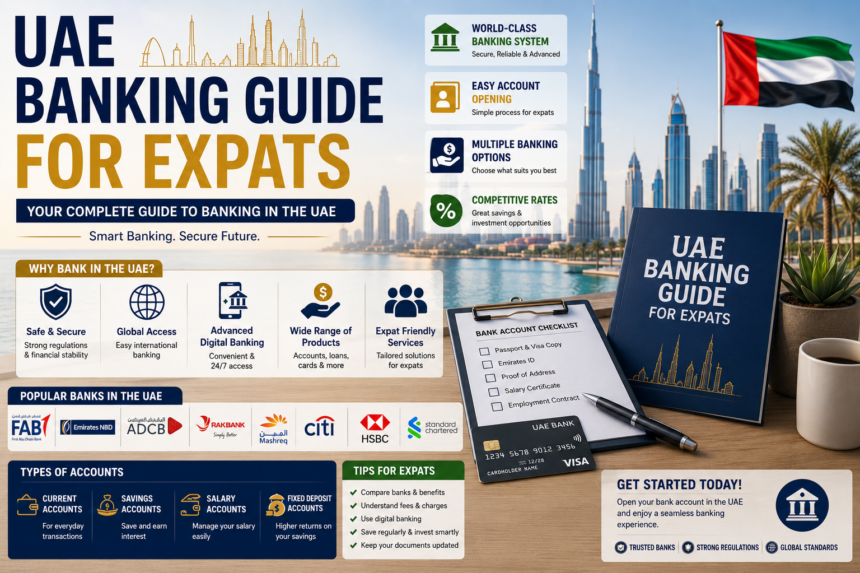
The Complete Banking Handbook for New Residents
Relocating to the UAE is an exciting opportunity, but managing your finances efficiently starts with understanding the local banking system. A reliable bank account makes it easier to receive your salary, pay bills, transfer money, and build financial stability. This UAE Banking Guide for Expats explains everything you need to know about opening a bank account, choosing the right banking services, understanding account types, and avoiding common mistakes. Whether you are moving for work, business, or family, this guide will help you make confident financial decisions from day one.
- Why Having a UAE Bank Account Is Important
- Understanding the UAE Banking System
- Who Can Open a Bank Account?
- Types of Bank Accounts Available
- UAE Banking Guide for Expats: How to Choose the Right Bank
- Digital Banking in the UAE
- Common Banking Fees to Understand
- Tips for Safe and Secure Banking
- Managing Your Money Effectively
- How to Open a Bank Account Successfully
- Choosing Between a Current and Savings Account
- Sending Money Internationally
- Benefits of Online and Mobile Banking
- Common Banking Mistakes Expats Should Avoid
- Managing Credit Responsibly
- Banking Tips for New Expats
- Features to Look for in a UAE Bank
- Frequently Asked Questions
- Conclusion
Why Having a UAE Bank Account Is Important
Opening a local bank account offers more than just convenience. It allows you to manage your finances securely while accessing a wide range of banking services.
Some of the main benefits include:
- Receiving your salary directly.
- Paying utility bills easily.
- Accessing online and mobile banking.
- Applying for credit cards and loans.
- Making local and international transfers.
- Building a banking history in the UAE.
A local account also simplifies everyday financial transactions and reduces reliance on cash.
Understanding the UAE Banking System
The UAE has a well developed banking sector known for its strong regulations, digital innovation, and customer-focused services.
Banks generally offer:
- Current accounts.
- Savings accounts.
- Fixed deposits.
- Credit cards.
- Personal loans.
- Home financing.
- Investment products.
- Business banking services.
Most banks provide both traditional branch services and advanced mobile banking applications.
Who Can Open a Bank Account?
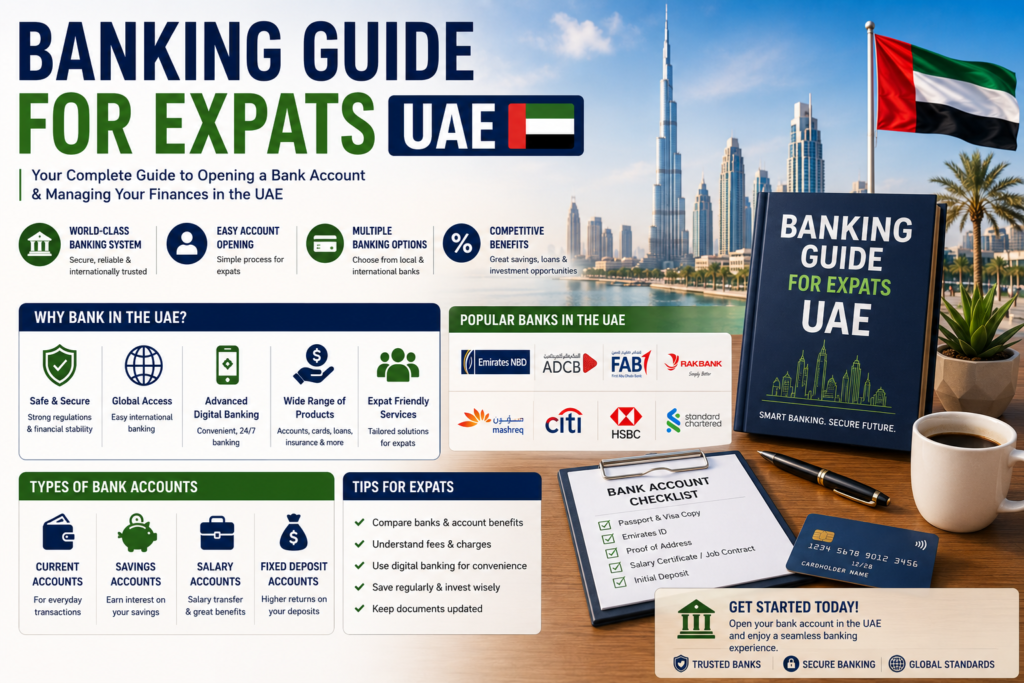
Most expatriates with valid residency status can open a personal bank account in the UAE.
Typically, banks require:
- A valid passport.
- UAE residence visa.
- Emirates ID or registration receipt.
- Salary certificate or employment letter.
- Proof of address, if requested.
Requirements may vary slightly depending on the bank and the type of account.
Types of Bank Accounts Available
Choosing the right account depends on your financial needs and spending habits.
The most common options include:
Current Account
Suitable for everyday banking.
Features include:
- Salary deposits.
- Debit card access.
- Online banking.
- Bill payments.
- Local and international transfers.
Savings Account
Designed for individuals who want to save money while earning interest.
Benefits include:
- Interest on eligible balances.
- Easy access to funds.
- Mobile banking.
- Flexible deposits.
Fixed Deposit Account
Ideal for people looking for stable returns over a fixed period.
Advantages include:
- Guaranteed returns.
- Lower investment risk.
- Multiple deposit terms.
- Suitable for medium-term savings goals.
UAE Banking Guide for Expats: How to Choose the Right Bank
Selecting the right bank is one of the most important financial decisions you will make.
Consider factors such as:
- Branch and ATM availability.
- Mobile banking features.
- Customer service quality.
- Account maintenance fees.
- Minimum balance requirements.
- International transfer services.
- Credit card options.
- Loan eligibility.
- Digital banking experience.
Comparing several banks before opening an account can help you find services that best match your lifestyle.
Digital Banking in the UAE
Most banks now provide comprehensive digital banking services that allow customers to manage their finances anytime.
Popular features include:
- Instant balance checks.
- Fund transfers.
- Utility bill payments.
- Mobile cheque deposits where available.
- Card management.
- Spending insights.
- Secure login using biometric authentication.
Digital banking reduces the need to visit a branch for everyday transactions.
Common Banking Fees to Understand
Before opening an account, familiarize yourself with potential charges.
These may include:
- Monthly account maintenance fees.
- Minimum balance penalties.
- International transfer fees.
- ATM withdrawal charges.
- Foreign currency conversion fees.
- Replacement card fees.
- Cheque book charges.
Understanding these costs helps you avoid unexpected deductions.
Tips for Safe and Secure Banking
Protecting your financial information is essential.
Follow these best practices:
- Use strong passwords.
- Enable two-factor authentication.
- Never share your banking PIN.
- Monitor transactions regularly.
- Avoid using public Wi-Fi for banking.
- Report suspicious activity immediately.
- Keep your contact information updated with your bank.
Good security habits greatly reduce the risk of fraud and unauthorized account access.
Managing Your Money Effectively
A bank account is most useful when combined with good financial habits.
Try to:
- Create a monthly budget.
- Track your spending.
- Build an emergency fund.
- Save regularly.
- Avoid unnecessary debt.
- Review your account statements each month.
These habits help you make the most of the UAE banking system while improving your overall financial well-being.
How to Open a Bank Account Successfully
Opening a bank account in the UAE is generally straightforward if you have the required documentation.
Follow these steps:
- Compare different banks and account features.
- Choose the account that matches your financial needs.
- Prepare all required documents.
- Submit your application online or at a branch.
- Complete identity verification.
- Wait for account approval.
- Activate your debit card and online banking.
Most banks complete the process within a few working days, although timelines may vary.
Choosing Between a Current and Savings Account
Understanding the differences between account types helps you make the right decision.
| Feature | Current Account | Savings Account |
|---|---|---|
| Daily Transactions | Excellent | Good |
| Salary Deposit | Yes | Sometimes |
| Debit Card | Yes | Yes |
| Interest Earnings | Usually No | Yes |
| Bill Payments | Yes | Limited |
| Best For | Everyday Banking | Saving Money |
Many expats choose to maintain both a current account for daily expenses and a savings account for long-term financial goals.
Sending Money Internationally
Many expatriates regularly send money to family members or maintain financial commitments in their home countries.
When making international transfers, consider:
- Exchange rates.
- Transfer fees.
- Processing time.
- Security measures.
- Daily transfer limits.
- Online transfer options.
Comparing available transfer methods can help reduce costs and improve convenience.
Benefits of Online and Mobile Banking
Digital banking has transformed financial management in the UAE.
Some of the key advantages include:
- Access your account 24/7.
- Pay utility bills online.
- Transfer money instantly.
- Manage debit and credit cards.
- Receive transaction notifications.
- Track monthly spending.
- Download account statements.
Using mobile banking apps allows you to manage your finances without visiting a branch.
Common Banking Mistakes Expats Should Avoid
Many newcomers make avoidable banking mistakes during their first year in the UAE.
Avoid these common errors:
- Choosing a bank without comparing services.
- Ignoring minimum balance requirements.
- Missing credit card payment deadlines.
- Sharing banking credentials with others.
- Not reviewing monthly statements.
- Overlooking account maintenance fees.
- Forgetting to update personal information after changing jobs or addresses.
Being aware of these mistakes can save both time and money.
Managing Credit Responsibly
Banks may offer credit cards and personal financing after you establish your banking relationship.
To maintain a healthy financial profile:
- Pay your credit card balance on time.
- Avoid spending beyond your budget.
- Keep track of repayment dates.
- Use credit only when necessary.
- Monitor your credit obligations regularly.
Responsible borrowing helps build a positive financial history and improves future eligibility for banking products.
Banking Tips for New Expats
If you have recently moved to the UAE, these practical tips can help you manage your finances more effectively.
- Open your bank account as soon as your residency documents are ready.
- Set up salary transfers immediately.
- Activate mobile banking for easier account management.
- Create a monthly budget linked to your bank account.
- Build an emergency savings fund.
- Keep copies of important banking documents.
- Review bank fees regularly.
- Contact customer support if you notice suspicious transactions.
Developing good banking habits from the beginning makes managing your finances much easier.
Features to Look for in a UAE Bank
Not all banks offer the same services, so compare features before opening an account.
| Feature | Why It Matters |
|---|---|
| Mobile Banking | Convenient everyday banking |
| ATM Network | Easy cash withdrawals |
| Online Transfers | Fast local and international payments |
| Customer Support | Quick problem resolution |
| Low Banking Fees | Lower overall costs |
| Savings Options | Better financial planning |
| Security Features | Protection against fraud |
Selecting a bank that matches your financial lifestyle can improve your overall banking experience.
Frequently Asked Questions
Can expatriates open a bank account in the UAE?
Yes. Most expatriates with a valid residence visa and the required identification documents can open a personal bank account.
What documents are usually required?
Banks commonly request a valid passport, residence visa, Emirates ID or registration receipt, salary certificate or employment letter, and, in some cases, proof of address.
Can I open a bank account before receiving my salary?
Some banks allow account opening before your first salary is deposited, while others may require salary transfer arrangements. Requirements differ between banks.
Is online banking safe in the UAE?
Yes. Banks use advanced security measures such as encryption, multi-factor authentication, and fraud monitoring. Customers should also follow safe online banking practices.
Should I have both a current account and a savings account?
Many expats benefit from using a current account for everyday transactions and a savings account for building emergency funds and achieving long-term financial goals.
Conclusion
Understanding the UAE Banking Guide for Expats is an important step toward building financial stability while living in the Emirates. Choosing the right bank, selecting suitable account types, using digital banking services, and managing your money responsibly can simplify everyday financial tasks and support your long-term goals. A well-managed bank account not only makes receiving your salary and paying bills easier but also provides access to savings products, financing options, and secure payment services.
Whether you have recently arrived in the UAE or have been living here for several years, taking the time to compare banking options and develop healthy financial habits will benefit you in the long run. By staying informed, monitoring your accounts regularly, and making smart financial decisions, you can confidently navigate the UAE banking system and build a strong financial foundation for the future.
Do follow us on Instagram
Read More – Best Investment Options in the UAE: Smart Ways to Grow Your Wealth