



UAE Social Media Laws 2026: Complete Guide to Online Rules, Cybercrime Laws, Privacy & Safe Social Media Use
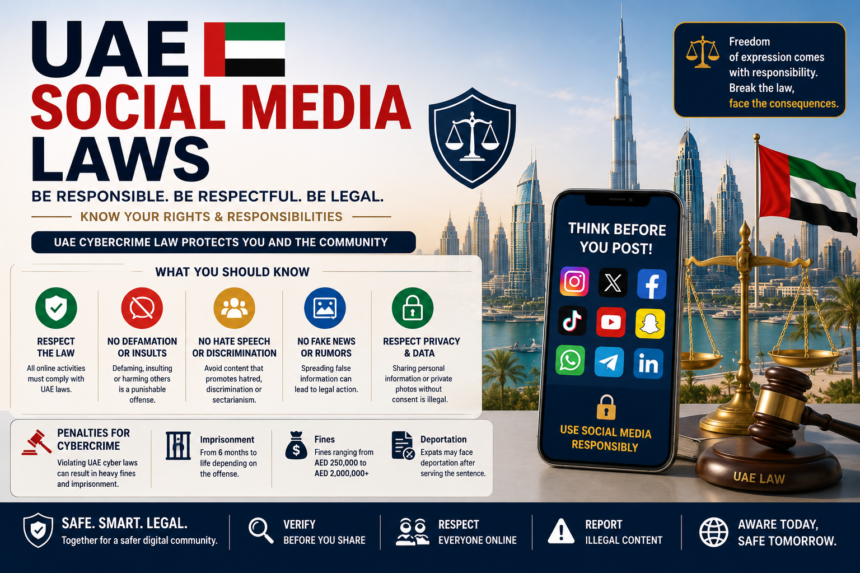
In today’s world, social media has changed the way we meet and talk to people from all over the globe. For the UAE’s big population of expats, sites like Instagram, TikTok, and Twitter are important ways to keep in touch with family and friends and to share their experiences. But with the increase in using social media, there are also important duties to follow. The UAE has strict rules about social media to help protect people, keep society peaceful, and ensure public safety. Here’s what experts suggest to help you use these platforms safely and correctly.
- Why UAE Social Media Laws Matter
- What Are UAE Social Media Laws?
- Who Must Follow UAE Social Media Laws?
- Responsible Use of Social Media
- Privacy and Personal Information
- Online Defamation
- Cybercrime Awareness
- False Information and Rumors
- Respectful Communication
- Intellectual Property
- Influencer Marketing
- Business Social Media Accounts
- Advertising on Social Media
- Protecting Your Social Media Accounts
- Online Shopping Safety
- Children and Social Media
- Employers and Employees
- Digital Reputation
- Common Social Media Mistakes
- Tips for Businesses
- Emerging Trends
- Frequently Asked Questions
- Best Practices for Safe Social Media Use
Social media has become an essential part of daily life in the United Arab Emirates (UAE). Millions of residents, businesses, influencers, and visitors use platforms such as Instagram, TikTok, X (formerly Twitter), Facebook, Snapchat, LinkedIn, and YouTube to communicate, share content, promote brands, and stay informed.
While social media offers countless opportunities, users should understand that online activities in the UAE social media laws are subject to laws designed to protect individuals, businesses, national security, and public order. Content shared online can have legal consequences, making it important to understand the country’s social media and cybercrime regulations.
This guide provides a comprehensive overview of UAE social media laws, online privacy rules, cybercrime regulations, responsible social media practices, influencer guidelines, and practical tips for staying compliant.
Disclaimer: This article is for general informational purposes only and should not be considered legal advice. Laws and regulations can change, and their application depends on specific facts. For legal guidance, consult the relevant UAE authorities or a qualified legal professional.
Why UAE Social Media Laws Matter
Social media allows users to instantly share opinions, photos, videos, and information with audiences around the world. Because online content can spread rapidly, governments establish legal frameworks to balance freedom of communication with privacy, safety, and public interests.
The UAE’s legal framework seeks to:
- Protect personal privacy
- Combat cybercrime
- Prevent online fraud
- Reduce misinformation
- Protect intellectual property
- Promote responsible digital behavior
- Safeguard public safety
Every post, comment, image, video, or direct message shared online should be treated with the same care as communication in the offline world.
What Are UAE Social Media Laws?
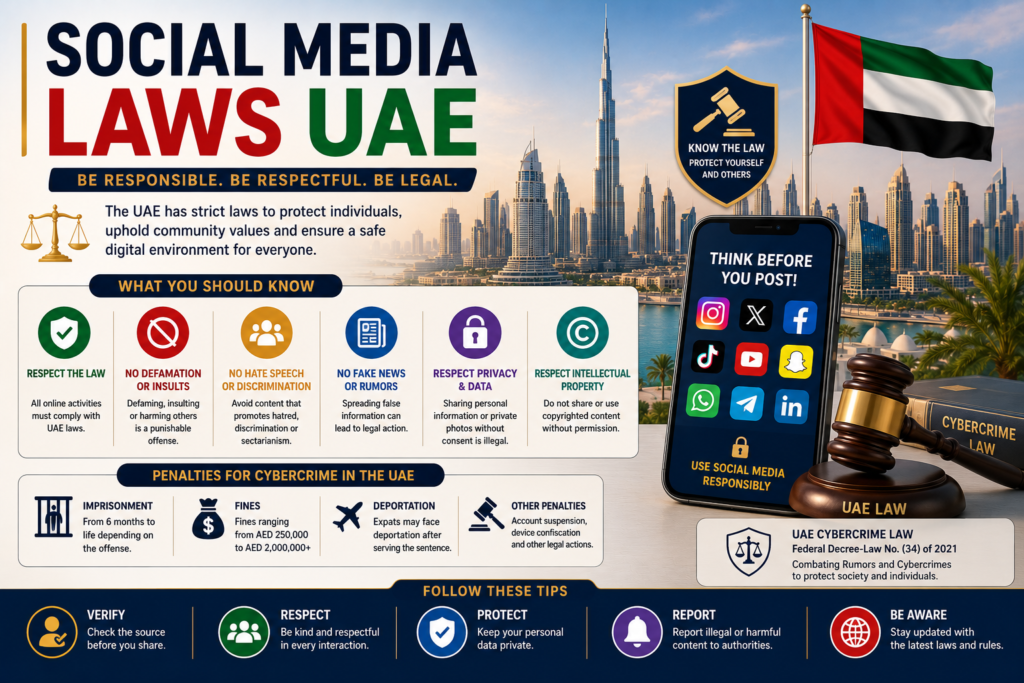
The term “UAE social media laws” generally refers to the collection of laws and regulations that govern online conduct. These include rules related to cybercrime, privacy, defamation, intellectual property, electronic communications, advertising, and consumer protection.
Rather than relying on a single law, users should understand that several legal frameworks may apply depending on the circumstances.
Who Must Follow UAE Social Media Laws?
UAE social media laws rules generally apply to:
- UAE citizens
- Residents
- Businesses operating in the UAE
- Licensed influencers
- Content creators
- Visitors using social media while in the UAE
If online activity has a connection to the UAE or affects people or organizations there, legal obligations may arise.
Responsible Use of Social Media
Responsible online behavior includes:
- Respecting others’ privacy
- Verifying information before sharing
- Avoiding offensive or harmful content
- Respecting intellectual property rights
- Using polite and professional language
- Protecting personal information
Digital responsibility benefits both individuals and the wider online community.
Privacy and Personal Information
Privacy is an important consideration in the UAE.
Before sharing content online:
- Obtain permission where appropriate before posting identifiable images or videos of others.
- Avoid sharing sensitive personal information without consent.
- Be mindful that reposting someone else’s content may still raise privacy or copyright considerations.
- Protect your own account with strong passwords and multi-factor authentication where available.
Respecting privacy helps maintain trust and reduces the risk of disputes.
Online Defamation
Online comments can have legal consequences.
Users should avoid:
- Publishing false statements about individuals or organizations.
- Using insulting or abusive language.
- Posting content intended to harm another person’s reputation.
- Making allegations without reliable evidence.
Expressing opinions respectfully and avoiding personal attacks is a safer approach.
Cybercrime Awareness
Cybercrime includes unlawful activities carried out using computers, smartphones, or the internet.
Examples may include:
- Identity theft
- Account hacking
- Online fraud
- Phishing
- Malware distribution
- Unauthorized access to systems
Protecting your digital accounts and devices helps reduce these risks.
False Information and Rumors
Before sharing news or claims online:
- Verify information using credible sources.
- Be cautious with sensational headlines.
- Avoid forwarding unverified rumors.
- Check whether images or videos are authentic and current.
Sharing inaccurate information can cause unnecessary harm and confusion.
Respectful Communication
Healthy online discussions are encouraged when conducted respectfully.
Good practices include:
- Remaining polite during disagreements.
- Avoiding discriminatory or hateful language.
- Refraining from harassment or intimidation.
- Respecting cultural and religious diversity.
Constructive communication creates a more positive online environment.
Intellectual Property
Creators own rights in many forms of original content.
Users should:
- Avoid copying copyrighted material without permission.
- Credit creators where appropriate.
- Use licensed images, music, and videos when required.
- Respect trademarks and brand identities.
Businesses and creators should also protect their own intellectual property.
Influencer Marketing
The UAE has an active creator economy, and influencers play an important role in digital marketing.
Good practices include:
- Clearly identifying sponsored or paid partnerships where required.
- Providing truthful product information.
- Avoiding misleading advertising claims.
- Following any applicable licensing or regulatory requirements.
Transparency helps build consumer trust.
Business Social Media Accounts
Organizations should establish internal policies covering:
- Approval of posts
- Brand messaging
- Customer service
- Crisis communication
- Employee responsibilities
Consistent governance reduces the risk of mistakes.
Advertising on Social Media
Businesses should ensure advertisements are:
- Accurate
- Honest
- Clear
- Not misleading
- Respectful of consumers
Maintaining transparent marketing practices supports long-term credibility.
Protecting Your Social Media Accounts
To improve account security:
- Use strong, unique passwords.
- Enable multi-factor authentication.
- Keep apps updated.
- Review account privacy settings.
- Be cautious of suspicious links.
- Monitor login activity.
These measures help reduce the risk of unauthorized access.
Online Shopping Safety
Social media increasingly serves as a platform for buying and selling.
Consumers should:
- Research sellers.
- Use secure payment methods where possible.
- Keep records of purchases.
- Be cautious of offers that seem unusually attractive.
Taking reasonable precautions can reduce exposure to scams.
Children and Social Media
Parents and guardians can support safe online experiences by:
- Discussing digital safety.
- Monitoring age-appropriate platform use.
- Encouraging respectful online behavior.
- Explaining privacy settings.
- Promoting critical thinking about online content.
Education is an important part of online safety.
Employers and Employees
Employees should remember that personal social media activity may affect professional relationships.
Organizations often encourage employees to:
- Protect confidential business information.
- Respect workplace policies.
- Communicate professionally.
- Avoid representing personal opinions as official company statements.
Clear internal guidelines help reduce misunderstandings.
Digital Reputation
Everything shared online contributes to your digital footprint.
Maintaining a positive reputation involves:
- Thinking before posting.
- Reviewing old public content periodically.
- Responding professionally to criticism.
- Avoiding impulsive comments during emotional moments.
A thoughtful online presence benefits both personal and professional opportunities.
Common Social Media Mistakes
Users should avoid:
- Sharing private information publicly.
- Posting without verifying facts.
- Using offensive language.
- Ignoring privacy settings.
- Falling for phishing attempts.
- Downloading unknown files.
- Reusing weak passwords.
- Sharing copyrighted content without permission.
Awareness helps prevent avoidable problems.
Tips for Businesses
Businesses can strengthen their online presence by:
- Creating a social media policy.
- Training employees.
- Reviewing content before publication.
- Monitoring customer feedback.
- Maintaining cybersecurity practices.
- Responding respectfully to customer inquiries.
Responsible management supports long-term brand trust.
Emerging Trends
The UAE continues to embrace digital innovation.
Growing trends include:
- Artificial Intelligence
- Short-form video
- Social commerce
- Digital payments
- Virtual influencers
- Augmented Reality
- Creator partnerships
As technology evolves, businesses and individuals should stay informed about changes in best practices and applicable regulations.
Frequently Asked Questions
Q1. Can visitors use social media in the UAE?
Ans: Yes. Visitors can use social media while in the UAE and are expected to comply with applicable local laws during their stay.
Q2. Are businesses responsible for their social media posts?
Ans: Businesses are generally responsible for content they publish through their official channels and should maintain appropriate review processes.
Q3. How can I protect my social media account?
Ans: Strong passwords, multi-factor authentication, updated software, and careful management of privacy settings can significantly improve account security.
Q4. Why is online privacy important?
Ans: Protecting personal information helps reduce the risk of identity theft, fraud, harassment, and unauthorized use of personal data.
Q5. How can I be a responsible social media user?
Ans: Think before posting, verify information, respect others, safeguard privacy, communicate professionally, and follow applicable laws and platform rules.
Best Practices for Safe Social Media Use
Follow these simple habits:
- Pause before posting.
- Verify facts before sharing.
- Respect other people’s privacy.
- Avoid abusive or offensive language.
- Protect your accounts with strong security.
- Keep software updated.
- Use trusted internet connections.
- Report suspicious activity through the appropriate channels.
Responsible digital behavior benefits everyone.
Conclusion
Social media has transformed the way people communicate, conduct business, and access information in the UAE. Along with these opportunities comes the responsibility to use digital platforms thoughtfully and lawfully.
By respecting privacy, communicating respectfully, protecting personal data, avoiding misinformation, honoring intellectual property rights, and following applicable UAE social media laws and regulations, individuals and organizations can enjoy the benefits of social media while minimizing legal and reputational risks.
Staying informed about evolving digital regulations and adopting good online practices will help residents, businesses, influencers, and visitors contribute to a safer, more trustworthy digital environment in the UAE.
Do follow us on Instagram
Read More – UAE Joins Global Push to Restrict Social Media for Kids