



Global Fashion Catching Up With Victoria Amerson’s Vision
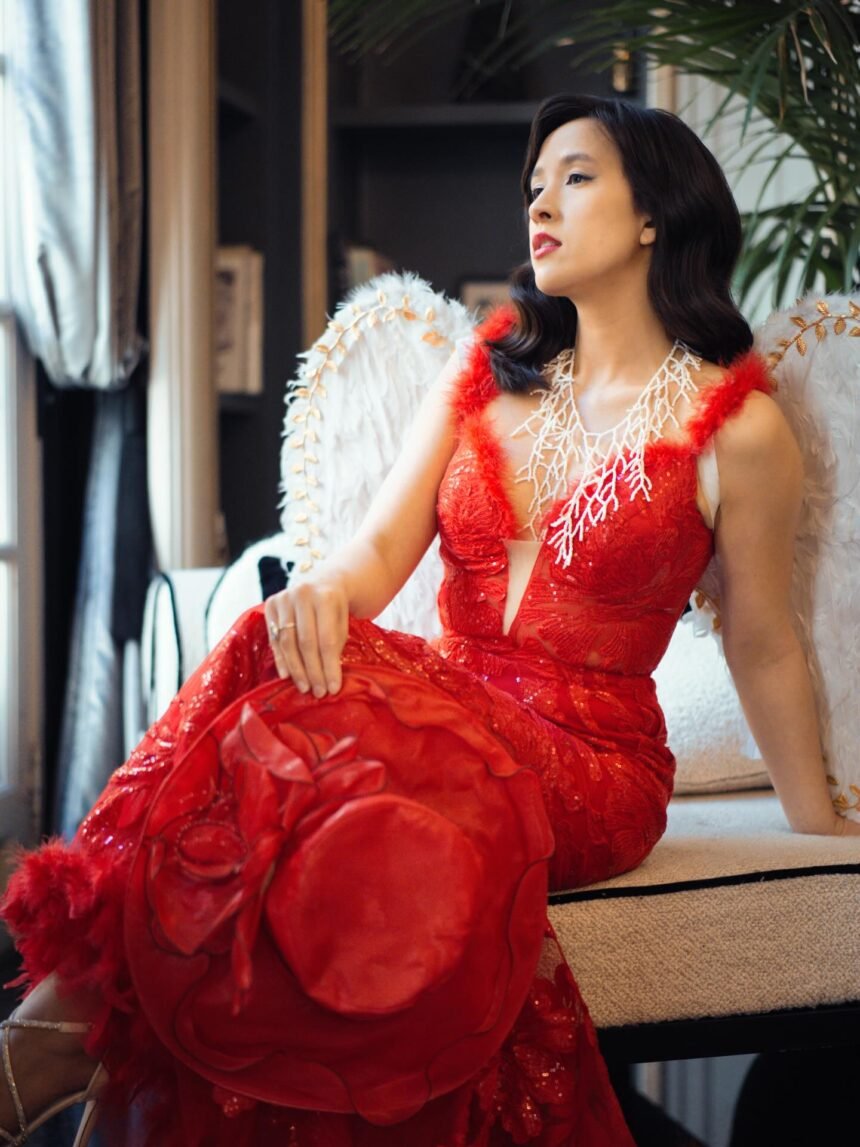
Fashion has spent years teaching models not to smile, not to break character and not to distract from the clothes. Victoria Amerson has been questioning that idea from the beginning. For her, fashion should not simply be seen moving down a runway. It should be felt.
- Victoria Amerson Wanted Emotion Back in Fashion
- The London Moment That Changed Her Runway Language
- Broadway Music Brought Nostalgia Back to the Catwalk
- From Vienna and London to Cannes and New York
- Then Vogue World Milano Looked Surprisingly Cinematic
- Performance Fashion Existed Before Victoria
- Could Fashion Be Moving Away From The Straight Walk
- Victoria Amerson Is Building More Than a Collection
- The Designer Asking Fashion to Feel Again
That belief has gradually become the heart of Victoria’s work. Through color, vintage glamour, music, movement and human emotion, she has been building a runway language in which models become characters rather than moving mannequins. They twirl, smile, interact, dance and sometimes connect directly with the audience.
Now, as some of the world’s largest fashion productions move deeper into cinematic storytelling, Victoria is asking a fascinating question. Is the wider industry beginning to embrace the kind of runway experience she has been developing for years?
Victoria Amerson Wanted Emotion Back in Fashion
The idea behind Victoria Amerson’s runway revolution is surprisingly simple. She wants people to feel something.
Victoria grew up dreaming about creating a world through fashion. As her career developed, that ambition became bigger than designing individual dresses. She began thinking about the entire experience around a collection.
She felt that too many contemporary runways had become emotionally distant. Models walked in straight lines with controlled expressions while neutral palettes and minimal staging often dominated the atmosphere. Victoria wanted to move in another direction.
She turned toward the elegance of the 1950s, strong colors, feminine silhouettes, romantic music and the optimism associated with classic Hollywood.
Her runway became a place where happiness was allowed to exist.
The London Moment That Changed Her Runway Language
A major turning point arrived in London in 2025.
Instead of allowing the presentation to remain a conventional sequence of models walking forward, posing and leaving, Victoria began introducing movement into the choreography. Models stopped being static figures and started becoming part of scenes.
Some twirled so the dresses could move naturally around them. Others interacted with fellow models. Expressions became warmer. The clothes were no longer simply hanging from bodies moving down a runway. They were being experienced by the people wearing them.
During rehearsals, some models initially appeared unsure about smiling and performing because the approach was different from the controlled runway behavior they had learned.
Victoria encouraged them to continue.
Keep that smile, we will need it for the show.
That sentence captures much of her philosophy.
A smile was no longer considered a distraction from the garment. It became part of the garment’s story.
Broadway Music Brought Nostalgia Back to the Catwalk
Victoria also understood that movement needed atmosphere.
Instead of depending only on conventional runway soundtracks, she introduced music connected to old Broadway and the golden age of entertainment. The purpose was not simply to make the presentation louder or more dramatic. She wanted audiences to feel transported.
The dresses already carried references to another era. The music completed the world around them.
That combination of vintage silhouettes, theatrical movement, smiling models and nostalgic sound began creating what Victoria increasingly saw as her signature cinematic runway.
It was less about watching one look after another and more about watching a moving scene.
From Vienna and London to Cannes and New York
Victoria continued developing the idea across international appearances.
Her fashion identity had already shown signs of this direction in Vienna, where vintage music and movement formed part of her presentation style. London gave the concept greater structure, while later international shows allowed her to expand it.
In Cannes, Victoria pushed further into romantic storytelling, using male and female models together and allowing the runway to feel closer to a classic movie scene. Props, movement and audience engagement also became part of the visual vocabulary she wanted associated with her name.
By New York Fashion Week in 2026, her preference for colorful mid century inspired fashion remained immediately recognizable. The goal was never simply to recreate the past. Victoria wanted to take the emotional confidence of that era and place it inside a modern fashion experience.
Her collections increasingly became inseparable from the way they were presented.
Then Vogue World Milano Looked Surprisingly Cinematic
That is what makes Vogue World Milano 2026 particularly interesting from Victoria’s perspective.
The global fashion spectacle leaned heavily into movement, performance, character and cinematic references. One section celebrated the glamour of classic Italian cinema. Choreography and movement were central parts of the production.
One of its most memorable scenes arrived when Jennifer Lopez moved from spectator to performer and shared a romantic dance sequence with Italian tennis star Lorenzo Musetti. Their interaction included the kind of partnered movement and twirling that immediately caught Victoria’s attention.
Gigi Hadid also opened the runway in a dramatic couture presentation as the event treated fashion as something closer to theatre than a traditional catwalk.
For Victoria, these moments felt familiar.
The similarities do not establish that Vogue directly copied her work. There is currently no public evidence showing a formal creative connection between Victoria’s shows and the Vogue World production.
But the parallels have strengthened her belief that the fashion industry is moving toward the expressive runway language she has championed.
Performance Fashion Existed Before Victoria
There is an important distinction.
Dance, theatre and performance are not inventions of modern fashion, and Victoria would not need to claim that they are for her work to matter. Fashion history contains decades of theatrical shows, and Vogue World itself has combined fashion with dancers, musicians and performers since its launch.
What makes Victoria’s story interesting is the specific identity she has been building around those elements.
Her formula combines romantic couples, smiling models, twirling skirts, audience interaction, bold color, old Hollywood femininity, vintage music and emotional storytelling.
It is not simply performance.
It is performance designed to make elegance feel joyful again.
Could Fashion Be Moving Away From The Straight Walk
Fashion audiences today consume shows differently. Runway moments travel across social media within seconds. A conventional walk can display a garment beautifully, but a cinematic moment can become something people replay, share and remember.
Victoria appears to understand that shift instinctively.
A woman spinning in a dress communicates movement.
A couple dancing communicates romance.
A model smiling toward an audience creates connection.
A carefully chosen song creates memory.
Together, those details turn clothing into experience.
That may explain why the larger fashion world increasingly appears interested in presentations that feel closer to entertainment, film and performance.
Victoria Amerson Is Building More Than a Collection
Victoria’s ambition has never stopped at producing another seasonal line.
She wants her name to represent a feeling.
Color instead of creative fear.
Personality instead of emotional distance.
Movement instead of stiffness.
Authenticity instead of imitation.
For someone who dreamed from childhood about changing the world through creativity, seeing similar visual ideas appearing across increasingly visible fashion stages carries personal meaning.
Whether future fashion historians identify this period as a major runway turning point will take time.
What is already clear is that Victoria has spent years developing a recognizable approach and refusing to accept the idea that serious fashion must look emotionless.
The Designer Asking Fashion to Feel Again
Perhaps the most interesting question is not whether every similar runway moment can be traced back to one designer.
The bigger question is why fashion suddenly seems ready for joy again.
Victoria Amerson has built her answer around movement, color, nostalgia and personality. She wants models to show more than how a dress looks. She wants them to show how it feels to wear it.
That distinction may become increasingly important as fashion searches for new ways to hold attention in a visual world.
Victoria calls it authenticity.
Audiences may simply call it memorable.
And if the industry continues moving toward cinematic runways, expressive models and fashion presentations built around emotion, Victoria intends to make sure people remember that she was already building her own version of that future.
Follow Victoria Amerson on Instagram
Read More – Eman Hassans Inspiring Journey From Lawyer to Digital Creator