


Wilfred Thesiger in Arabia Brings Desert History Back to Life
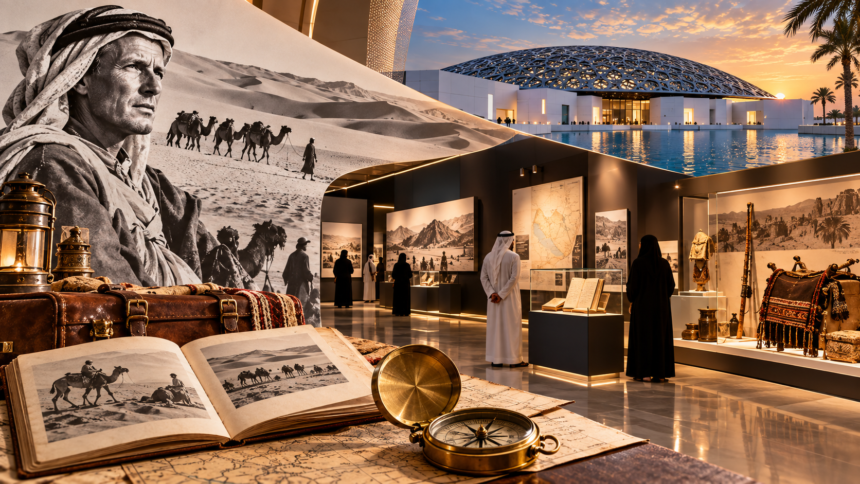
Long before the modern skylines of Dubai, Abu Dhabi and Riyadh transformed the Arabian landscape, British explorer Wilfred Thesiger was travelling across some of the region’s most remote deserts with a camera and notebook. His journeys through Arabia produced a remarkable visual and written record of landscapes, communities and traditions that were already beginning to change.
- A New Book Revisits Thesiger’s Extraordinary Arabian Journey
- Sheikh Nahyan Bin Mubarak Al Nahyan Unveils the Publication
- Why Wilfred Thesiger’s Photographs Still Matter
- From the Empty Quarter to a Wider Portrait of Arabia
- A Book Built Around Multiple Perspectives
- The Human Stories Behind the Photographs
- Ian Fairservice’s Connection to Thesiger
- Arabia Before the Transformation of the Modern Gulf
- Why the Abu Dhabi Launch Is Significant
- What Makes Wilfred Thesiger in Arabia Different
- A Window Into a Changing Region
- A Publication for History and Exploration Enthusiasts
- From Historical Archive to New Generation
- The Legacy of Wilfred Thesiger Continues
Now, 80 years after his first crossing of the Empty Quarter, that legacy has returned to the region in a new illustrated publication. Wilfred Thesiger in Arabia was officially launched at the Abu Dhabi International Book Fair on September 17, 2026, bringing together his photography with essays and personal reflections from writers, explorers and scholars who have continued to study his work.
A New Book Revisits Thesiger’s Extraordinary Arabian Journey
Published by Motivate Media Group, Wilfred Thesiger in Arabia has been created as a visual and literary tribute to one of the most recognised explorers to document Arabia during the twentieth century.
The book focuses on Thesiger’s travels across the Arabian deserts, his experiences with Bedouin communities and the social and cultural transformation taking place across the region during his lifetime.
Rather than presenting his photographs as isolated historical images, the publication places them alongside essays and reflections that explore their wider significance.
This gives readers an opportunity to look at Thesiger’s work from several perspectives, including exploration, photography, history and cultural heritage.
The timing of the publication is particularly significant. The new volume marks 80 years since Thesiger’s first crossing of the Empty Quarter, one of the defining achievements of his Arabian travels.
Sheikh Nahyan Bin Mubarak Al Nahyan Unveils the Publication
The book was officially unveiled by His Excellency Sheikh Nahyan bin Mubarak Al Nahyan, UAE Minister of Tolerance and Coexistence, at the Motivate Media Group stand during the Abu Dhabi International Book Fair.
The launch also carried an additional connection to the UAE’s cultural landscape because Sheikh Nahyan contributed the Foreword to the publication.
His involvement highlighted the book’s wider significance as a record of Arabia’s history and cultural heritage.
The publication brings together photographs, documents and personal accounts to provide a broader picture of Thesiger’s experiences and the environments through which he travelled.
For a book centred on a historical period of enormous change, the Abu Dhabi launch provided a fitting setting.
The UAE capital has become an important centre for literature, publishing, museums and cultural events, making the book fair a natural platform for a publication focused on preserving the memory of an earlier Arabia.
Why Wilfred Thesiger’s Photographs Still Matter
Thesiger’s photographs are important because they captured communities and landscapes at a moment when Arabia was entering a period of profound transformation.
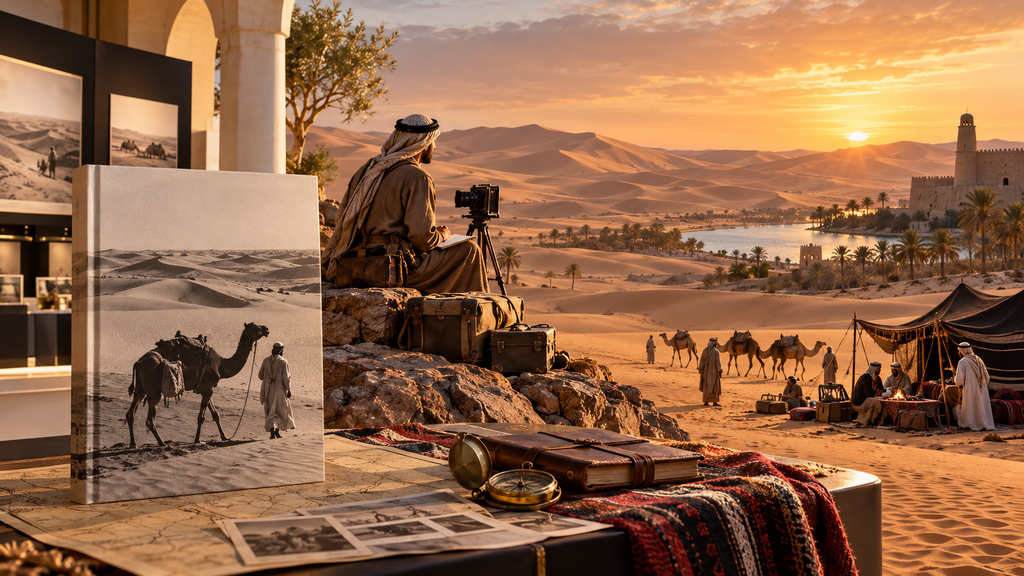
His images document desert journeys, Bedouin life, traditional environments and people he encountered during years of travel.
For modern readers, these photographs offer a visual connection to places that have changed dramatically.
The contrast is particularly striking.
Today, the Gulf is associated with airports, skyscrapers, highways, luxury developments and rapidly growing cities. Thesiger’s photographs reveal a very different visual landscape, one shaped by desert travel, traditional communities and long-established ways of life.
That contrast is one reason his archive continues to attract interest.
His photographs are not simply pictures of the past. They provide evidence of how quickly landscapes, communities and societies can change.
From the Empty Quarter to a Wider Portrait of Arabia
The Empty Quarter occupies a central place in Thesiger’s story.
Known in Arabic as Rub Al Khali, the enormous desert stretches across parts of Saudi Arabia, Oman, the United Arab Emirates and Yemen.
Crossing such an environment required significant preparation, endurance and cooperation with experienced local guides.
Thesiger travelled through the region during the 1940s and developed close relationships with Bedouin communities.
His experiences became the basis for books and photographs that introduced international audiences to parts of Arabia that were largely unfamiliar to them.
The new publication revisits those experiences while placing them within a broader historical context.
It is not simply about one expedition.
It is about the people, places and cultural encounters that shaped Thesiger’s understanding of Arabia.
A Book Built Around Multiple Perspectives
One of the most distinctive aspects of Wilfred Thesiger in Arabia is the range of contributors included in the volume.
The publication has been edited by Ian Fairservice and Alexander Maitland and includes contributions from internationally recognised explorers, writers and scholars.
Among them are Sir David Attenborough, Sir Ranulph Fiennes, BBC correspondent Frank Gardner, Benedict Allen, Elizabeth Edwards and Dr Peter Clark.
Each contributor brings a different perspective to Thesiger’s legacy.
Some examine exploration.
Others consider photography, history, culture or the significance of his written record.
This variety allows the book to move beyond a traditional biography.
Readers can instead encounter Thesiger through multiple interpretations, creating a broader picture of why his work continues to attract attention decades after his travels.
The Human Stories Behind the Photographs
The most compelling part of Thesiger’s work may not be the desert itself.
It is the people he met along the way.
His photographs documented Bedouin communities and the relationships he developed during his journeys.
That human element gives the archive its emotional quality.
A photograph of a desert landscape can communicate scale and isolation, but a photograph of people travelling, resting or sharing everyday life can reveal something more personal about the society Thesiger encountered.
The new publication brings these human stories into focus.
It also invites readers to consider the difference between observing a culture and understanding it.
Thesiger spent extended periods travelling with local communities, rather than simply passing through as a conventional tourist.
That depth of exposure influenced the way he wrote about Arabia and the people who lived there.
Ian Fairservice’s Connection to Thesiger
The publication also carries a personal connection for Ian Fairservice, who knew Thesiger and worked closely with him during the later years of his life.
As the managing partner and group editor in chief of Motivate Media Group, Fairservice has been involved in bringing Thesiger’s archive and legacy together for a new generation of readers.
His connection gives the project an additional dimension.
The book is not simply an editorial collection assembled from distant historical material.
It is also an attempt to preserve and reinterpret the work of someone whose record of Arabia continues to influence how the region’s past is remembered.
Fairservice has described the publication as a way of bringing Thesiger’s photographs together with reflections from people who have continued to engage with his work.
That approach makes the volume both archival and contemporary.
Arabia Before the Transformation of the Modern Gulf
Perhaps the strongest reason to explore this book is the glimpse it provides into Arabia before the region’s enormous economic and urban transformation.
The Gulf that Thesiger encountered was very different from the Gulf of today.
There were far fewer roads and modern cities, while many communities remained closely connected to traditional patterns of movement, trade and survival.
The discovery and development of oil would eventually reshape the region.
Cities expanded, infrastructure transformed and new industries emerged.
Thesiger’s photographs therefore preserve a visual record from a period immediately before many of these changes accelerated.
For younger generations, his photographs can provide an opportunity to understand that the modern Gulf did not appear overnight.
Behind today’s architecture are generations of communities, traditions and landscapes.
Why the Abu Dhabi Launch Is Significant
Launching the book in Abu Dhabi adds another layer to its story.
The UAE today is deeply connected with global publishing, museums, cultural institutions and international events.
At the same time, the country continues to invest in preserving its history and heritage.
A book focused on an earlier Arabia therefore fits naturally within that wider cultural conversation.
The Abu Dhabi International Book Fair provided a setting where historical exploration could meet contemporary audiences.
The publication was displayed at the Motivate Media Group stand during the fair, giving visitors an opportunity to encounter Thesiger’s work through a new editorial presentation.
What Makes Wilfred Thesiger in Arabia Different
Many books about explorers focus primarily on where they travelled.
This volume takes a wider approach.
It brings together:
Photography
Thesiger’s extensive visual record of Arabia forms the heart of the publication.
Personal Accounts
The book explores experiences and encounters from his journeys.
Historical Context
Readers can understand the region within the wider period of social and economic transformation.
Expert Perspectives
Contributors from exploration, journalism and scholarship offer different interpretations of his legacy.
Cultural Heritage
The publication examines the importance of documenting communities and traditions during periods of change.
Together, these elements make the book more than a collection of old photographs.
It becomes a conversation between Arabia’s past and present.
A Window Into a Changing Region
The most interesting question raised by Thesiger’s archive is perhaps how much can change within a single lifetime.
A person looking at his photographs today may recognise the deserts and some traditional elements of Gulf life, but the surrounding world can appear almost unrecognisable.
The region has developed into a global centre for business, tourism, aviation, culture and technology.
Yet many of the landscapes and traditions documented by Thesiger remain part of the region’s identity.
That creates a powerful connection between the past and present.
His photographs remind readers that modernisation does not erase history.
Instead, history becomes part of the story that explains how a place reached its present form.
A Publication for History and Exploration Enthusiasts
Wilfred Thesiger in Arabia is likely to appeal to several different audiences.
For history enthusiasts, it offers a visual record of a transformative period.
For photography lovers, it provides access to an important archive.
For explorers and travellers, it offers insight into one of the region’s most challenging environments.
For readers interested in Gulf heritage, it provides a window into communities and traditions from another era.
The combination of these subjects gives the publication a broad appeal.
It also makes the book relevant beyond the world of traditional exploration literature.
Its central theme is ultimately human curiosity and the desire to understand places beyond familiar boundaries.
From Historical Archive to New Generation
One of the biggest challenges with historical photography is keeping it relevant to younger audiences.
A new generation may recognise Dubai’s skyline but have little visual connection with the Gulf before its modern transformation.
Publications such as this can help bridge that gap.
By presenting historical photographs alongside contemporary reflections, Wilfred Thesiger in Arabia gives younger readers a way to explore the region’s past without separating it from the present.
The book can therefore be viewed as both an archive and an educational resource.
It preserves images from a particular period while encouraging readers to think about how Arabia has evolved.
That may ultimately be its most important contribution.
The Legacy of Wilfred Thesiger Continues
Wilfred Thesiger’s relationship with Arabia was shaped by travel, observation and long periods spent among communities across the region.
His photographs became one of the most enduring visual records of Arabia during a period of major transformation.
Eight decades after his first crossing of the Empty Quarter, his work is now being introduced to new audiences through a publication that combines photography, documents, personal accounts and contemporary reflections.
The launch in Abu Dhabi gives that story a particularly appropriate setting.
The city represents the modern Gulf while also being part of a region where history and heritage remain deeply important.
Wilfred Thesiger in Arabia ultimately asks readers to look beyond the modern image of the Gulf and consider the landscapes, people and traditions that existed before today’s cities emerged.
For anyone interested in Arabia’s history, photography, exploration or cultural heritage, the book offers an opportunity to see the region through a different lens.
And perhaps that is why Thesiger’s work continues to matter.
His photographs do not simply show what Arabia looked like decades ago.
They help explain how much the region has changed, what has survived that change and why remembering the past remains important in understanding the Gulf today.
Do follow us on Instagram
Read More – Guggenheim Abu Dhabi Tickets: Prices, Opening Date and What to Expect