Which World’s Most Beautiful Cities Are Best for Different Travellers?
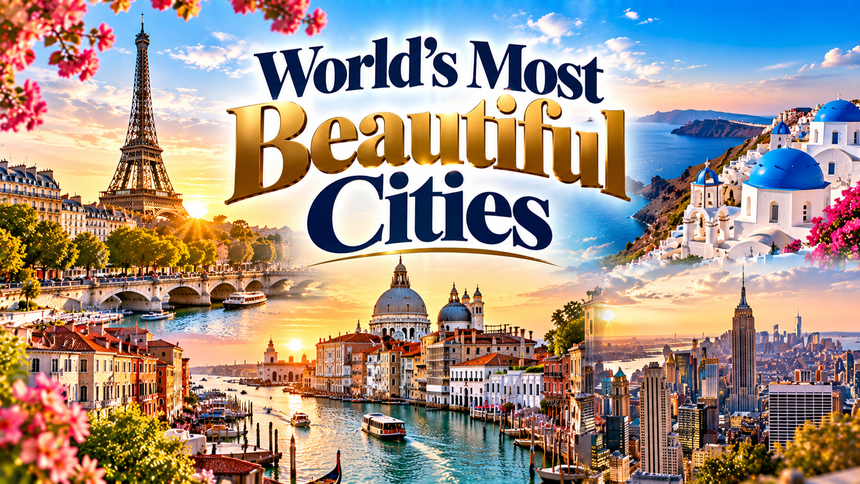
The World’s Most Beautiful Cities cannot be defined by one universal formula. Some travellers are drawn to historic streets and classical architecture, while others prefer dramatic mountains, beaches, canals, skylines or colourful neighbourhoods. What makes one city unforgettable may be completely different from what makes another visually remarkable.
- World’s Most Beautiful Cities at a Glance
- 1. Paris Combines Monumental Architecture With Everyday Elegance
- 2. Venice Looks Unlike Almost Any Other City
- 3. Cape Town Blends a Major City With Extraordinary Nature
- 4. Kyoto Offers a Different Kind of Urban Beauty
- 5. Prague Feels Like a Historic European Storybook
- 6. Edinburgh Combines Gothic Architecture With Dramatic Terrain
- 7. Sydney’s Harbour Gives the City Its Iconic Identity
- 8. Lisbon Is Beautiful Because of Its Hills, Tiles and Light
- 9. Florence Is a Showcase of Renaissance Beauty
- 10. Istanbul Brings Europe and Asia Together on the Bosphorus
- 11. Rio de Janeiro Has One of the World’s Most Dramatic Urban Settings
- 12. Amsterdam Is Defined by Its Canals and Historic Houses
- 13. Dubrovnik Combines Historic Walls With Adriatic Blue
- 14. Barcelona Mixes Gaudí Architecture With Mediterranean Life
- 15. Singapore Shows How Modern Architecture and Nature Can Work Together
- Which World’s Most Beautiful Cities Are Best for Different Travellers?
- Architecture Is Only One Part of What Makes a City Beautiful
- Best Time to Visit the World’s Most Beautiful Cities
- Common Mistakes When Visiting Beautiful Cities
- World’s Most Beautiful Cities: Which Ones Should Be on Your List?
Recent 2026 travel surveys show how subjective beauty can be. Time Out asked 24,000 urban residents whether they considered their city beautiful and found especially strong local enthusiasm for places including Cape Town and Edinburgh. Other major travel publications continue to highlight cities such as Paris, Venice, Kyoto, Sydney and Lisbon for their combination of architecture, setting and atmosphere.
This guide is therefore not intended as a scientific ranking. Instead, it brings together cities that stand out because of their distinctive visual character, natural surroundings, historic landmarks and memorable urban landscapes.
World’s Most Beautiful Cities at a Glance
Each city on this list offers a different type of beauty. Some are defined by water, some by mountains and others by architecture that has evolved over centuries.
| City | Country | What Makes It Beautiful |
|---|---|---|
| Paris | France | Boulevards, monuments and the Seine |
| Venice | Italy | Canals, palaces and historic bridges |
| Cape Town | South Africa | Mountains, beaches and coastal scenery |
| Kyoto | Japan | Temples, gardens and seasonal beauty |
| Prague | Czech Republic | Gothic towers and historic streets |
| Edinburgh | Scotland | Castle views and dramatic stone architecture |
| Sydney | Australia | Harbour, beaches and iconic landmarks |
| Lisbon | Portugal | Hills, tiles and colourful neighbourhoods |
| Florence | Italy | Renaissance architecture and art |
| Istanbul | Türkiye | Bosphorus views and imperial landmarks |
| Rio de Janeiro | Brazil | Mountains, coastline and urban scenery |
| Amsterdam | Netherlands | Canals and narrow historic houses |
| Dubrovnik | Croatia | Stone walls and Adriatic views |
| Barcelona | Spain | Gaudí architecture and Mediterranean setting |
| Singapore | Singapore | Futuristic skyline and tropical greenery |
The strongest travel experience usually comes from understanding what kind of beauty each destination offers rather than trying to decide which city is objectively number one.
1. Paris Combines Monumental Architecture With Everyday Elegance
Paris remains one of the most recognisable urban landscapes in the world.
The Eiffel Tower dominates the skyline, but the city’s appeal extends far beyond one landmark. The Seine, historic bridges, Haussmann-era boulevards, café-lined streets and formal gardens create a remarkably consistent visual identity.
Areas around Île de la Cité, the Latin Quarter, Montmartre and Saint-Germain-des-Prés reveal very different sides of the city while maintaining the architectural character visitors associate with Paris.
The city’s beauty works especially well because its major landmarks are integrated into normal urban life. The Louvre, Notre-Dame, Arc de Triomphe and Eiffel Tower are not isolated attractions; they are connected by streets, riverbanks and neighbourhoods that remain visually interesting between major sights.
Paris also continues to perform strongly in global city surveys and travel rankings, appearing near the top of major 2026 city lists.
Best views: Trocadéro, Montmartre, Seine riverbanks and rooftop terraces
Best time for atmosphere: Spring and early autumn
2. Venice Looks Unlike Almost Any Other City
Venice is extraordinary because water replaces roads throughout its historic centre.
The Grand Canal moves between palaces, churches and centuries-old buildings, while smaller canals create quieter scenes away from the city’s busiest attractions.
Gondolas and vaporetto boats add movement to the landscape, while bridges connect neighbourhoods that feel almost theatrical in appearance.
St Mark’s Square, the Doge’s Palace and Santa Maria della Salute provide major architectural highlights, but Venice’s greatest visual strength may be found in its smaller streets and canals.
A short walk away from the busiest tourist areas can reveal fading façades, laundry hanging between buildings and boats tied beside residential doors.
This mixture of grandeur and everyday life is what keeps Venice visually distinctive.
Best views: Grand Canal, Rialto Bridge and San Giorgio Maggiore
Best experience: Walk early in the morning before the busiest crowds arrive
3. Cape Town Blends a Major City With Extraordinary Nature
Cape Town stands apart because the landscape is impossible to separate from the city itself.
Table Mountain rises immediately behind the urban centre, while the Atlantic coastline stretches past beaches, cliffs and neighbourhoods.
In Time Out’s 2026 survey, 86% of surveyed Cape Town residents described their city as beautiful, the highest share among the cities included in that survey.
The city combines several landscapes within a relatively small area.
Visitors can experience:
- Table Mountain
- Camps Bay
- Clifton beaches
- V&A Waterfront
- Lion’s Head
- Kirstenbosch
- Cape Peninsula scenery
This variety means Cape Town can look completely different depending on where you stand.
From Signal Hill, the city spreads between mountain and ocean. From Camps Bay, the Twelve Apostles create a dramatic backdrop behind the beach.
Few major cities integrate natural geography so strongly into everyday urban views.
4. Kyoto Offers a Different Kind of Urban Beauty
Kyoto’s beauty is quieter than the dramatic skylines of cities such as New York or Dubai.
Its strongest visual experiences come from temples, gardens, wooden houses, narrow streets and seasonal landscapes.
The city is particularly famous for:
- Fushimi Inari
- Kiyomizu-dera
- Arashiyama
- Gion
- Kinkaku-ji
- Traditional machiya houses
Spring cherry blossoms and autumn foliage transform many of these locations.
Kyoto also offers a striking contrast between old and new. Traditional temple roofs and historic districts exist alongside a modern Japanese city.
The most rewarding areas are often those where visitors slow down rather than moving quickly between attractions.
Walking through Higashiyama early in the morning, for example, can reveal traditional architecture with far fewer crowds.
5. Prague Feels Like a Historic European Storybook
Prague is known for an exceptionally well-preserved historic centre filled with Gothic, Baroque and Renaissance architecture.
The skyline includes church towers, red roofs and Prague Castle overlooking the Vltava River.
Charles Bridge provides one of the city’s most famous views, particularly early in the morning when the historic centre is quieter.
Old Town Square adds another concentration of impressive architecture, including the Astronomical Clock and the Church of Our Lady before Týn.
Prague’s beauty is especially strong because many of its major sights are walkable.
Visitors can move from Old Town to Charles Bridge, Malá Strana and Prague Castle without losing the sense of architectural continuity.
For travellers who enjoy medieval streets and European history, Prague remains one of the most visually satisfying city breaks.
6. Edinburgh Combines Gothic Architecture With Dramatic Terrain
Edinburgh has a darker, more dramatic appearance than many other European capitals.
Its Old Town is characterised by narrow streets and stone buildings, while Edinburgh Castle sits high above the city on Castle Rock.
Calton Hill and Arthur’s Seat provide elevated viewpoints, helping visitors appreciate how the city’s historic architecture interacts with the surrounding landscape.
Time Out’s 2026 beauty survey also placed Edinburgh among the cities where a large share of residents described their home as beautiful.
The city is visually divided between the medieval Old Town and the more orderly Georgian New Town.
This contrast creates variety while still maintaining a strong overall character.
Rain, fog and changing light can actually enhance Edinburgh’s atmosphere, which is one reason the city photographs so differently from brighter Mediterranean destinations.
7. Sydney’s Harbour Gives the City Its Iconic Identity
Sydney is one of the world’s most recognisable waterfront cities.
Its harbour contains two landmarks that have become international symbols of Australia: the Sydney Opera House and Sydney Harbour Bridge.
Travel + Leisure’s updated 2026 list of beautiful cities highlights Sydney for its harbour, iconic landmarks and extensive beaches.
However, the city’s visual appeal extends beyond central Sydney.
Visitors can explore:
- Bondi Beach
- Manly
- Royal Botanic Garden
- The Rocks
- Coastal walking routes
The combination of urban skyline, blue water and beaches makes Sydney feel unusually open for a major global city.
A ferry ride across the harbour is one of the easiest ways to appreciate the city from multiple angles.
8. Lisbon Is Beautiful Because of Its Hills, Tiles and Light
Lisbon’s beauty comes from texture and colour.
The Portuguese capital rises across several hills, creating viewpoints over red-tiled roofs, the Tagus River and historic neighbourhoods.
Buildings decorated with azulejo tiles give many streets a distinctive visual identity.
Yellow trams, steep lanes and pastel façades add further character.
Neighbourhoods such as Alfama and Bairro Alto are especially attractive because their irregular streets reflect centuries of urban development rather than modern planning.
The city also benefits from unusually bright Atlantic light, which changes the appearance of façades throughout the day.
For photographers, Lisbon is one of the most rewarding cities because even ordinary residential streets can be visually interesting.
9. Florence Is a Showcase of Renaissance Beauty
Florence is one of the world’s most important cities for Renaissance art and architecture.
Its historic centre contains landmarks including:
- Florence Cathedral
- Giotto’s Campanile
- Ponte Vecchio
- Palazzo Vecchio
- Basilica of Santa Croce
The cathedral’s enormous dome remains the dominant feature of the skyline.
One reason Florence feels visually coherent is its relatively low-rise historic centre. Churches, towers and palaces remain prominent because they are not surrounded by modern skyscrapers.
The Arno River adds another important visual element, particularly around Ponte Vecchio.
For one of the best city panoramas, visitors can climb to Piazzale Michelangelo and look back across the river toward the cathedral and historic centre.
10. Istanbul Brings Europe and Asia Together on the Bosphorus
Istanbul’s setting is difficult to replicate.
The city stretches across Europe and Asia, divided by the Bosphorus and connected by bridges and ferries.
Historic mosques and palaces dominate parts of the skyline, while busy waterfront neighbourhoods create a completely different atmosphere at street level.
Major visual landmarks include:
- Hagia Sophia
- Blue Mosque
- Topkapı Palace
- Galata Tower
- Bosphorus waterfront
- Süleymaniye Mosque
Istanbul also ranked among the leading cities in recent 2026 traveller-focused city lists, reflecting its combination of history, culture and modern urban life.
A ferry ride across the Bosphorus provides one of the strongest ways to appreciate the city.
From the water, domes, minarets and hillside neighbourhoods create a skyline that immediately distinguishes Istanbul from other major cities.
11. Rio de Janeiro Has One of the World’s Most Dramatic Urban Settings
Rio de Janeiro is defined by its geography.
Mountains rise directly beside neighbourhoods and beaches, creating dramatic contrasts between urban development and tropical nature.
The most recognisable landscapes include:
- Sugarloaf Mountain
- Copacabana
- Ipanema
- Corcovado
- Guanabara Bay
Christ the Redeemer provides one of the city’s most famous viewpoints, but the landscape remains impressive from many lower elevations as well.
Rio’s coastline creates long open views that contrast with its dense neighbourhoods.
The city’s natural setting is so dominant that it often feels as though the urban environment has developed around the mountains rather than replacing them.
12. Amsterdam Is Defined by Its Canals and Historic Houses
Amsterdam’s canal network gives the Dutch capital much of its character.
Tall, narrow houses line waterways crossed by hundreds of bridges, creating one of Europe’s most recognisable urban landscapes.
The central canal belt works particularly well for walking because streets, bridges and water constantly create new viewpoints.
Bicycles, houseboats and cafés make these areas feel lived-in rather than preserved only for visitors.
Spring adds another visual element when flowers and trees brighten the city.
Evening can be equally attractive, when lights from canal houses reflect across the water.
Amsterdam’s beauty is less about one monumental landmark and more about the consistency of its neighbourhoods.
13. Dubrovnik Combines Historic Walls With Adriatic Blue
Dubrovnik’s Old Town sits directly beside the Adriatic Sea, creating a striking contrast between pale stone buildings and deep blue water.
Massive defensive walls surround much of the historic centre.
Walking along them provides views over:
- Terracotta roofs
- Church towers
- Narrow streets
- Harbour
- Adriatic coastline
The city is relatively compact, which means its strongest visual features can be experienced in a short visit.
However, Dubrovnik can become crowded during cruise-ship arrivals and peak summer months.
Early morning and late afternoon are generally better times to enjoy the old streets and viewpoints.
The combination of fortified architecture and coastal scenery gives Dubrovnik an identity that is difficult to confuse with any other European city.
14. Barcelona Mixes Gaudí Architecture With Mediterranean Life
Barcelona’s beauty comes partly from contrast.
Wide boulevards and geometric blocks coexist with medieval streets, beaches and some of the world’s most unconventional architecture.
Antoni Gaudí’s work gives the city much of its visual identity.
Important examples include:
- Sagrada Família
- Park Güell
- Casa Batlló
- Casa Milà
The Gothic Quarter provides a very different architectural experience, with narrower streets and older buildings.
Barcelona’s Mediterranean coast adds another layer.
Visitors can move from major architectural landmarks to the beach within the same day, giving the city a combination of culture and outdoor lifestyle that is especially attractive.
15. Singapore Shows How Modern Architecture and Nature Can Work Together
Singapore represents a more contemporary form of urban beauty.
Its skyline features modern towers and futuristic structures, while extensive landscaping and tropical vegetation soften the density of the city.
The Marina Bay area provides some of the most recognisable views, including Marina Bay Sands and Gardens by the Bay.
Other visually interesting districts include:
- Chinatown
- Kampong Glam
- Little India
- Civic District
Singapore’s strength is the way very different environments exist close together.
One part of the day can involve futuristic architecture, while another can be spent walking through colourful historic neighbourhoods or tropical gardens.
This combination makes Singapore particularly interesting for travellers who prefer modern cities but still want greenery and cultural variety.
Which World’s Most Beautiful Cities Are Best for Different Travellers?
Not everyone defines beauty in the same way, so choosing a destination based on personal interests can be more useful than following a strict ranking.
| If You Love… | Consider |
|---|---|
| Classical architecture | Paris, Florence, Prague |
| Canals and waterways | Venice, Amsterdam |
| Mountains and scenery | Cape Town, Rio de Janeiro |
| Temples and tradition | Kyoto |
| Coastal cities | Sydney, Barcelona, Dubrovnik |
| Historic atmosphere | Edinburgh, Istanbul |
| Colourful streets | Lisbon |
| Modern architecture | Singapore |
| Romantic city breaks | Paris, Venice, Florence |
| Photography | Kyoto, Cape Town, Lisbon, Prague |
A traveller interested mainly in historic architecture may prefer Florence to Sydney, while someone who prioritises beaches and dramatic landscapes may have exactly the opposite preference.
That is why lists of beautiful cities should be treated as inspiration rather than rigid rankings.
Architecture Is Only One Part of What Makes a City Beautiful
Architecture naturally plays a major role in city beauty, but it is rarely the only factor.
Some cities become memorable because of how buildings interact with the surrounding landscape.
Cape Town without Table Mountain would feel completely different. Rio without its mountains and beaches would lose much of its visual identity, while Venice’s architecture is inseparable from its canals.
Other factors can include:
- Parks and greenery
- Waterways
- Mountains
- Coastline
- Street design
- Historic preservation
- Colour
- Public spaces
- Local culture
Recent lists from major travel publications demonstrate this variety. Architectural Digest notes that city beauty can be judged through many different lenses, including architecture, landscape and atmosphere, while Condé Nast Traveler’s 2026 selection similarly spans futuristic skylines, canals, historic settlements and natural scenery.
This is why comparing Venice directly with Cape Town or Kyoto is difficult.
They are beautiful for completely different reasons.
Best Time to Visit the World’s Most Beautiful Cities
Season can dramatically affect how a city looks and feels.
| City | Particularly Attractive Period |
|---|---|
| Paris | April–May, September–October |
| Venice | April–May, September–October |
| Cape Town | November–March |
| Kyoto | Cherry blossom and autumn foliage periods |
| Prague | Spring and early autumn |
| Edinburgh | May–September |
| Sydney | September–November, March–May |
| Lisbon | April–June, September–October |
| Florence | April–May, September–October |
| Istanbul | April–May, September–October |
| Rio de Janeiro | May–October for milder weather |
| Amsterdam | April–May |
| Dubrovnik | May–June, September |
| Barcelona | May–June, September |
| Singapore | Year-round, with weather considerations |
The busiest season is not always the most enjoyable.
Venice, Dubrovnik, Florence and Barcelona can be extremely busy during peak summer periods, while shoulder seasons often provide better conditions for walking and photography.
Kyoto is visually spectacular during cherry-blossom season, but accommodation demand can also be much higher.
Travellers should therefore balance ideal scenery with crowd levels and prices.
Common Mistakes When Visiting Beautiful Cities
One mistake is trying to see every famous viewpoint in a single day.
Many of these cities are most enjoyable when travellers allow time to walk through ordinary neighbourhoods instead of moving continuously between attractions.
Another mistake is visiting only during midday.
Early morning and the final hours before sunset often provide better light, cooler temperatures and fewer crowds.
Travellers should also avoid judging a city entirely from social media photographs.
Popular viewpoints may be heavily edited or photographed under unusually favourable conditions, while real neighbourhoods can feel much busier.
Another common mistake is overlooking less famous districts.
Paris is more than the Eiffel Tower, Venice is more than St Mark’s Square and Kyoto is more than Fushimi Inari.
The character of a beautiful city usually becomes clearer after leaving its most photographed locations.
World’s Most Beautiful Cities: Which Ones Should Be on Your List?
The World’s Most Beautiful Cities represent many different ideas of urban beauty.
Paris and Florence demonstrate how architecture and history can shape an entire city. Venice and Amsterdam show the visual power of waterways, while Cape Town and Rio de Janeiro demonstrate how mountains and coastline can become central parts of urban identity.
Kyoto offers temples, gardens and seasonal beauty. Lisbon uses colour, hills and light to create a distinctive atmosphere, while Singapore shows that modern cities can combine futuristic architecture with extensive greenery.
There is therefore no single city that will look most beautiful to every traveller.
A 2026 Time Out survey based on responses from 24,000 urban residents placed Cape Town particularly strongly when locals were asked about the beauty of their own cities, while other contemporary travel lists highlight a much broader mix of destinations.
The best approach is to decide which type of scenery speaks to you most.
If you love historic streets, choose Prague or Florence. If you want nature beside the city, Cape Town or Rio may be stronger choices. If canals appeal to you, Venice and Amsterdam deserve priority.
Ultimately, the most beautiful city is often the one where architecture, landscape and everyday life come together in a way that stays in your memory long after the trip ends.
Do follow us on Instagram
Read More – Choosing a Dubai School: 20 Questions Parents Should Ask Before Enrolling