


Everything You Need to Know in 2026 For UAE Salary Guide by Industry
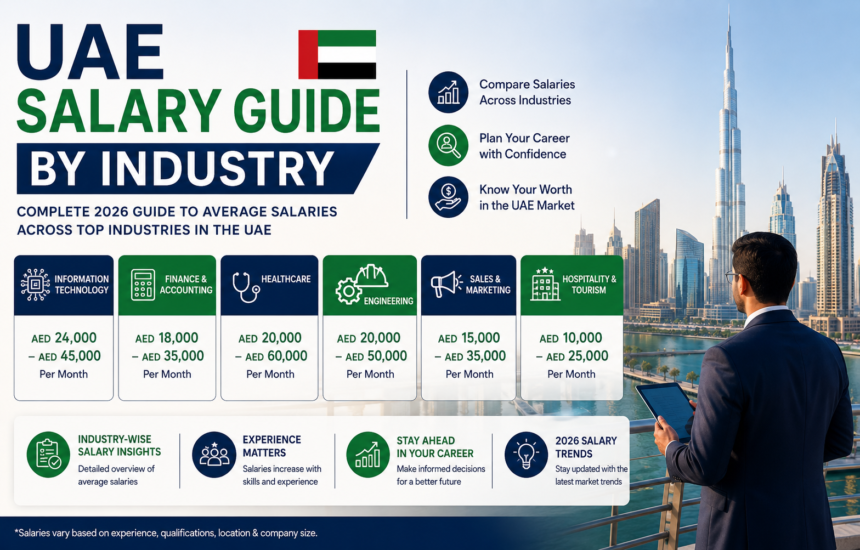
The United Arab Emirates (UAE) remains one of the world’s most attractive destinations for professionals seeking rewarding careers, tax-friendly income, and international work experience. With thriving industries such as technology, finance, healthcare, engineering, tourism, logistics, and construction, the UAE offers competitive salaries for both experienced professionals and skilled newcomers.
- Why Understanding UAE Salary Guide by Industry Trends Matters
- Factors That Influence Salaries in the UAE Industry
- UAE Salary Guide by Industry
- Information Technology (IT)
- Finance and Banking
- Healthcare
- Engineering
- Construction
- Hospitality and Tourism
- Sales and Marketing
- Education
- Logistics and Supply Chain
- Real Estate
- Aviation
- Highest-Paying Industries in the UAE
- UAE Industry Common Employee Benefits
- Tips to Increase Your Salary
- Salary Negotiation Tips
- Frequently Asked Questions
Whether you are planning to relocate, negotiating a salary, changing careers, or hiring talent, understanding current salary trends is essential. This UAE Salary Guide by Industry provides an overview of average salary ranges, factors influencing pay, the highest-paying sectors, and practical tips to maximize your earning potential.
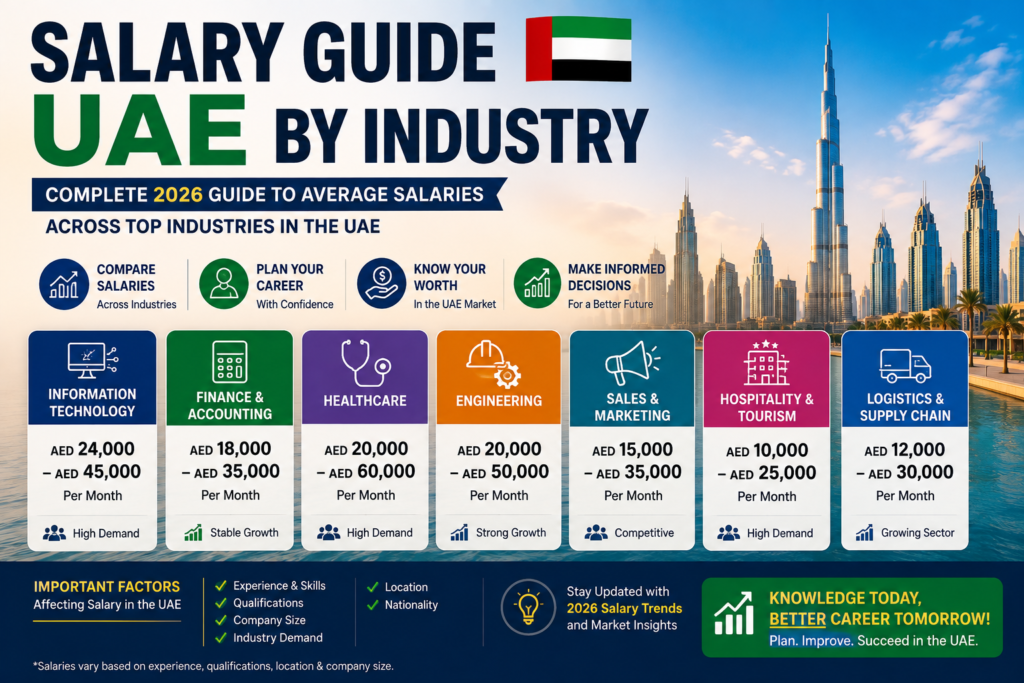
Note: Salaries mentioned are approximate monthly gross salary ranges in AED and vary depending on experience, qualifications, employer, city, and responsibilities.
Why Understanding UAE Salary Guide by Industry Trends Matters
Knowing the average salary in your industry helps you:
- Negotiate a fair compensation package
- Compare opportunities across sectors
- Plan your relocation budget
- Set realistic career expectations
- Identify high-growth industries
- Understand market demand for your skills
Salary research is particularly important in a competitive job market where compensation packages differ significantly between employers.
Factors That Influence Salaries in the UAE Industry
Several factors determine how much professionals earn.
1. Work Experience
Experience remains one of the biggest salary drivers.
Typical progression:
- Entry Level: 0–2 years
- Mid-Level: 3–7 years
- Senior Level: 8–15 years
- Executive Level: 15+ years
Professionals with proven leadership experience generally command higher salaries.
2. Educational Qualifications
Higher qualifications often improve earning potential.
Examples include:
- Bachelor’s Degree
- Master’s Degree
- MBA
- Professional Certifications
- Doctorate (for specialized fields)
3. Industry
Some industries naturally offer higher salaries due to skill shortages or business demand.
Examples include:
- Information Technology
- Oil & Gas
- Healthcare
- Banking
- Artificial Intelligence
- Aviation
4. Location
Although Dubai and Abu Dhabi generally offer the highest salaries, opportunities also exist in Sharjah, Ajman, Ras Al Khaimah, Fujairah, and other emirates.
5. Company Size
Large multinational organizations often provide:
- Higher salaries
- Annual bonuses
- Health insurance
- Housing allowance
- Flight tickets
- Training opportunities
Small businesses may offer lower salaries but provide faster career growth and broader responsibilities.
UAE Salary Guide by Industry
Below are approximate monthly salary ranges for major industries.
Information Technology (IT)
The UAE continues investing heavily in digital transformation, artificial intelligence, cybersecurity, fintech, and cloud computing.
Average Monthly Salaries
| Job Role | Average Salary (AED) |
|---|---|
| IT Support Specialist | 5,000–9,000 |
| Software Developer | 10,000–22,000 |
| Full-Stack Developer | 12,000–25,000 |
| Data Analyst | 10,000–18,000 |
| Cybersecurity Specialist | 18,000–35,000 |
| Cloud Engineer | 18,000–40,000 |
| AI Engineer | 20,000–45,000 |
| IT Manager | 25,000–45,000 |
Skills in Demand
- Python
- AWS
- Azure
- Cybersecurity
- Machine Learning
- DevOps
- SQL
- Data Science
Finance and Banking
Dubai and Abu Dhabi are major financial centers in the Middle East.
Average Monthly Salaries
| Job Role | Average Salary (AED) |
|---|---|
| Accountant | 5,000–10,000 |
| Senior Accountant | 10,000–18,000 |
| Financial Analyst | 12,000–22,000 |
| Auditor | 10,000–20,000 |
| Investment Analyst | 18,000–35,000 |
| Finance Manager | 25,000–45,000 |
| Banking Relationship Manager | 18,000–35,000 |
Preferred Qualifications
- ACCA
- CPA
- CFA
- CMA
- MBA
Healthcare
Healthcare remains one of the fastest-growing sectors due to population growth and continued investment in medical infrastructure.
Average Monthly Salaries
| Job Role | Average Salary (AED) |
|---|---|
| Registered Nurse | 6,000–12,000 |
| Pharmacist | 8,000–18,000 |
| Physiotherapist | 8,000–16,000 |
| General Practitioner | 20,000–40,000 |
| Specialist Doctor | 35,000–70,000+ |
| Dentist | 15,000–45,000 |
| Healthcare Administrator | 10,000–25,000 |
Engineering
Infrastructure projects continue to create opportunities across multiple engineering disciplines.
Average Monthly Salaries
| Job Role | Average Salary (AED) |
|---|---|
| Civil Engineer | 8,000–18,000 |
| Mechanical Engineer | 9,000–20,000 |
| Electrical Engineer | 9,000–22,000 |
| Structural Engineer | 12,000–25,000 |
| Project Engineer | 15,000–30,000 |
| Engineering Manager | 25,000–50,000 |
Construction
Construction remains one of the UAE’s largest employment sectors.
Average Monthly Salaries
| Job Role | Average Salary (AED) |
|---|---|
| Site Supervisor | 5,000–10,000 |
| Quantity Surveyor | 10,000–22,000 |
| Planning Engineer | 12,000–25,000 |
| Construction Manager | 20,000–45,000 |
| Project Manager | 25,000–50,000 |
Hospitality and Tourism
Tourism continues to be a key contributor to the UAE economy.
Average Monthly Salaries
| Job Role | Average Salary (AED) |
|---|---|
| Hotel Receptionist | 3,500–7,000 |
| Waiter/Waitress | 2,500–5,500 (plus tips) |
| Chef | 5,000–18,000 |
| Restaurant Manager | 10,000–25,000 |
| Hotel Manager | 20,000–45,000 |
Many employers also provide accommodation, meals, and transportation.
Sales and Marketing
Sales professionals remain in high demand across retail, real estate, automotive, technology, and FMCG sectors.
Average Monthly Salaries
| Job Role | Average Salary (AED) |
|---|---|
| Sales Executive | 4,000–10,000 |
| Business Development Executive | 6,000–15,000 |
| Marketing Executive | 6,000–12,000 |
| Digital Marketing Specialist | 8,000–18,000 |
| Sales Manager | 15,000–35,000 |
| Marketing Manager | 18,000–40,000 |
Performance incentives and commissions can substantially increase earnings.
Education
International schools and universities employ professionals from around the world.
Average Monthly Salaries
| Job Role | Average Salary (AED) |
|---|---|
| Teacher | 8,000–18,000 |
| Senior Teacher | 12,000–22,000 |
| School Principal | 25,000–45,000 |
| University Lecturer | 18,000–35,000 |
Many education packages include housing allowances and annual airfare.
Logistics and Supply Chain
The UAE is a global logistics hub with world-class ports and airports.
Average Monthly Salaries
| Job Role | Average Salary (AED) |
|---|---|
| Warehouse Supervisor | 5,000–10,000 |
| Logistics Coordinator | 6,000–12,000 |
| Procurement Officer | 8,000–18,000 |
| Supply Chain Manager | 18,000–35,000 |
| Logistics Manager | 20,000–40,000 |
Real Estate
The UAE property market continues to attract investors and professionals.
Average Monthly Salaries
| Job Role | Average Salary (AED) |
|---|---|
| Property Consultant | 5,000–12,000 + Commission |
| Real Estate Agent | Commission-Based |
| Sales Manager | 18,000–40,000 |
| Property Manager | 12,000–25,000 |
Top-performing agents can earn significantly more through commissions.
Aviation
The UAE’s aviation industry supports thousands of skilled jobs.
Average Monthly Salaries
| Job Role | Average Salary (AED) |
|---|---|
| Cabin Crew | 10,000–18,000 |
| Ground Staff | 5,000–10,000 |
| Aircraft Engineer | 20,000–45,000 |
| Commercial Pilot | 35,000–80,000+ |
Highest-Paying Industries in the UAE
Some sectors consistently offer higher-than-average compensation:
- Oil & Gas
- Aviation
- Healthcare
- Artificial Intelligence
- Information Technology
- Investment Banking
- Engineering
- Legal Services
- Management Consulting
- Renewable Energy
Professionals with niche expertise and leadership experience often receive premium salaries.
UAE Industry Common Employee Benefits
Beyond salary, many employers offer valuable benefits such as:
- Health insurance
- Paid annual leave
- End-of-service gratuity
- Annual air tickets
- Housing allowance
- Transportation allowance
- Performance bonuses
- Professional training
- Visa sponsorship
When comparing offers, consider the total compensation package rather than salary alone.
Tips to Increase Your Salary
You can improve your earning potential by:
- Gaining industry-recognized certifications
- Learning in-demand technical skills
- Improving communication and leadership abilities
- Building a strong professional network
- Keeping your CV updated
- Demonstrating measurable achievements
- Negotiating based on market research
- Staying informed about salary trends
Continuous learning and a strong track record often lead to faster salary growth.
Salary Negotiation Tips
Before accepting an offer:
- Research average salaries for similar roles.
- Highlight your experience and achievements.
- Discuss the full benefits package.
- Be realistic and professional.
- Avoid accepting the first offer without understanding the market.
Preparation and confidence can make a meaningful difference in your final compensation.
Frequently Asked Questions
Q1. What is a good salary in the UAE?
Ans: A good salary depends on your lifestyle, city, family size, and benefits. Compensation should be evaluated alongside housing, healthcare, transportation, and other employer-provided allowances.
Q2. Which industry pays the highest salaries in UAE industry?
Ans: Oil & Gas, Aviation, Healthcare, Investment Banking, Artificial Intelligence, and senior IT roles are among the highest-paying sectors.
Q3. Do salaries differ between Dubai and Abu Dhabi?
Ans: Yes. While both cities offer competitive compensation, salary packages vary depending on the employer, industry, and demand for specific skills.
Q4. Are salaries tax-free in the UAE?
Ans: The UAE generally does not levy personal income tax on employment income, making it an attractive destination for many professionals. However, individuals should stay informed about applicable regulations and any tax obligations in their home country.
Q5. Can fresh graduates find well-paying jobs?
Ans: Yes. Graduates with strong academic records, internships, language skills, and in-demand technical expertise often secure competitive entry-level positions.
Final Thoughts
The UAE continues to be one of the most dynamic employment markets in the Middle East, offering competitive salaries across industries such as technology, finance, healthcare, engineering, logistics, hospitality, education, and aviation. Understanding salary trends enables job seekers to negotiate effectively, evaluate offers, and make informed career decisions.
While UAE salary guide by Industry is important, remember to assess the overall employment package, including benefits, career development opportunities, work-life balance, and long-term growth. By investing in your skills, staying updated with market trends, and researching compensation before applying or negotiating, you can position yourself for success in the UAE’s competitive job market.
Do follow us on Instagram
Read More – How to Get a Job in Dubai Without an Agent Complete Guide