



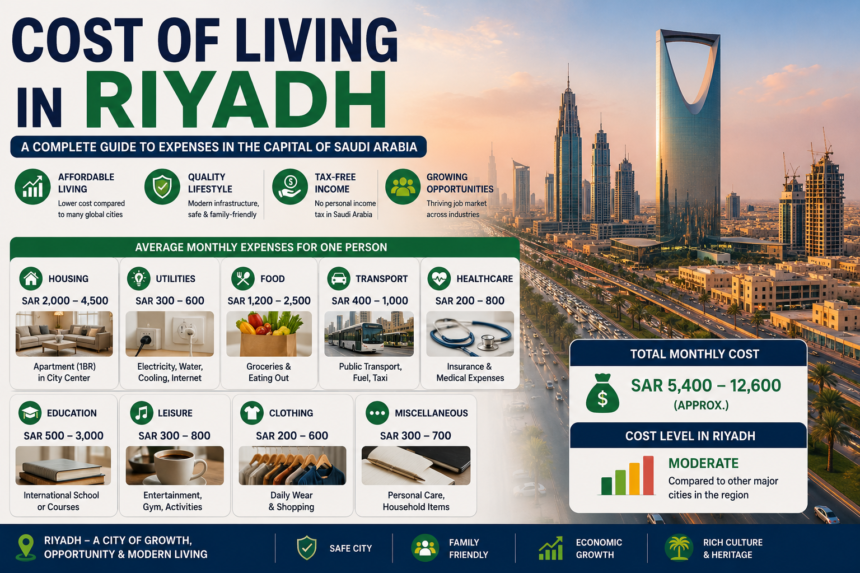
Complete Guide to Monthly Expenses For Cost of Living in Riyadh
Riyadh, the capital of Saudi Arabia, has rapidly become one of the Middle East’s most attractive destinations for professionals, entrepreneurs, students, and expatriates. Driven by the country’s Vision 2030 initiative, Riyadh continues to experience significant growth in business, infrastructure, technology, healthcare, tourism, and entertainment. As a result, thousands of people relocate to the city every year for better career opportunities and a modern lifestyle.
- Why Riyadh Is Becoming a Popular Place to Live
- Average Monthly Cost of Living in Riyadh
- Housing Costs in Riyadh
- Utility Costs
- Grocery Expenses
- Dining Out
- Transportation Costs
- Healthcare Expenses
- Education Costs
- Entertainment and Leisure
- Clothing and Shopping
- Internet and Mobile Costs
- Cost of Living for Expats
- Cost of Living for Families
- Cost of Living for Students
- Ways to Save Money in Riyadh
- Comparing Riyadh With Other Cities
- Is Riyadh Expensive?
- Sample Monthly Budget for a Single Professional
- Frequently Asked Questions
One of the first questions most newcomers ask is: What is the cost of living in Riyadh?
Compared with many major global cities, Riyadh offers a competitive cost of living, especially considering the absence of personal income tax on employment income in Saudi Arabia. While expenses vary based on lifestyle, family size, and accommodation choices, careful budgeting can help residents enjoy a comfortable standard of living.
This guide explores the average cost of housing, transportation, groceries, healthcare, education, entertainment, utilities, and other living expenses to help you plan your finances.
Note: Prices mentioned are approximate and may vary depending on location, property type, lifestyle, and market conditions.
Why Riyadh Is Becoming a Popular Place to Live
Riyadh has transformed into a global business hub, attracting multinational companies, startups, and international professionals.
Some key reasons people choose Riyadh include:
- Growing employment opportunities
- Competitive salaries
- No personal income tax on employment income
- Modern infrastructure
- High-quality healthcare
- Expanding entertainment options
- Safe residential communities
- Excellent road network
- Vision 2030 development projects
These advantages make Riyadh an appealing destination for both individuals and families.
Average Monthly Cost of Living in Riyadh
The monthly budget depends on your lifestyle and household size.
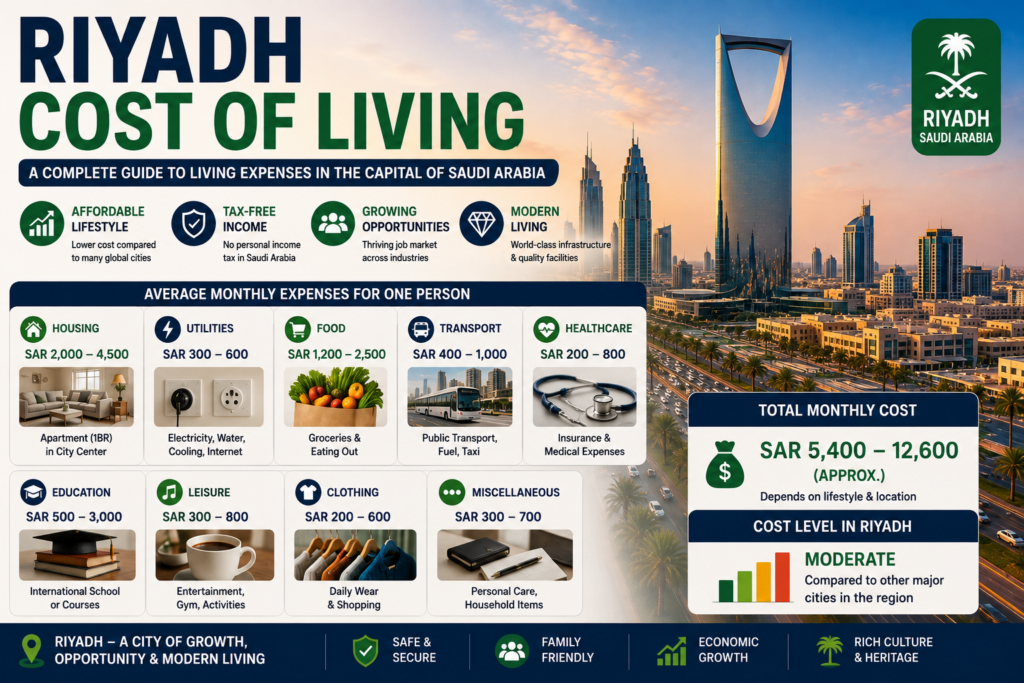
Estimated Monthly Expenses
| Lifestyle | Monthly Cost (SAR) |
|---|---|
| Single person (budget lifestyle) | 4,500–7,000 |
| Single professional (comfortable lifestyle) | 7,000–11,000 |
| Couple | 10,000–16,000 |
| Family of four | 15,000–28,000+ |
These estimates typically include housing, utilities, groceries, transportation, and leisure but exclude major one-time purchases.
Housing Costs in Riyadh
Accommodation is usually the largest monthly expense.
Rental prices vary depending on the neighborhood, apartment size, and amenities.
Average Monthly Rent
| Property Type | Monthly Rent (SAR) |
|---|---|
| Studio Apartment | 1,800–3,500 |
| One-Bedroom Apartment | 2,500–5,500 |
| Two-Bedroom Apartment | 4,000–8,000 |
| Three-Bedroom Apartment | 6,000–12,000+ |
| Villa | 10,000–25,000+ |
Premium districts and compounds generally command higher rents, while suburban areas offer more affordable options.
Utility Costs
Utilities are generally reasonable, although electricity bills may increase during the summer due to air conditioning.
Estimated Monthly Utility Costs
| Utility | Average Cost (SAR) |
|---|---|
| Electricity | 150–500 |
| Water | 50–150 |
| Internet | 200–350 |
| Mobile Phone | 75–250 |
Many rental agreements include some utility charges, so always confirm what is covered before signing a lease.
Grocery Expenses
Supermarkets in Riyadh stock both local and imported products.
Monthly grocery costs vary according to shopping habits and family size.
Estimated Monthly Grocery Budget
| Household | Cost (SAR) |
|---|---|
| Single person | 700–1,500 |
| Couple | 1,500–2,500 |
| Family | 2,500–5,000 |
Typical grocery items include:
- Bread
- Rice
- Chicken
- Beef
- Fresh vegetables
- Fruits
- Dairy products
- Eggs
- Cooking oil
- Snacks and beverages
Choosing locally produced goods can help reduce expenses.
Dining Out
Riyadh offers a wide range of dining experiences, from affordable local eateries to luxury international restaurants.
Typical Prices
| Item | Cost (SAR) |
|---|---|
| Coffee | 12–25 |
| Fast food meal | 25–40 |
| Casual restaurant meal | 40–90 |
| Mid-range restaurant | 100–250 (for two) |
| Fine dining | 300+ |
Cooking at home regularly can significantly lower monthly expenses.
Transportation Costs
Riyadh has continued to improve its transportation infrastructure, including expanded public transit options.
Public Transportation
Estimated monthly public transport costs:
- Metro and bus travel: 100–350 SAR (depending on usage)
Private Vehicle Costs
Typical monthly expenses include:
- Fuel: 250–800 SAR
- Car insurance: varies by vehicle and coverage
- Maintenance: 150–600 SAR
- Parking: depends on location
Ride-hailing services are also widely available throughout the city.
Healthcare Expenses
Saudi Arabia has a modern healthcare system with both public and private facilities.
Many employers provide health insurance as part of employment packages.
Without employer-sponsored coverage, monthly healthcare costs vary depending on insurance plans and medical needs.
Estimated costs:
| Service | Cost (SAR) |
|---|---|
| General consultation | 150–400 |
| Specialist consultation | 250–700 |
| Dental cleaning | 200–600 |
| Health insurance (individual plans) | Varies by provider |
Education Costs
Families relocating with children should consider school fees.
International schools generally charge higher tuition than local schools.
Annual Tuition Estimates
| School Type | Annual Cost (SAR) |
|---|---|
| Private School | 10,000–40,000 |
| International School | 25,000–90,000+ |
Additional expenses may include:
- Uniforms
- Books
- Transportation
- Extracurricular activities
Entertainment and Leisure
Riyadh has expanded its entertainment offerings in recent years.
Typical monthly expenses include:
| Activity | Cost (SAR) |
|---|---|
| Cinema ticket | 45–80 |
| Gym membership | 150–500 |
| Theme parks | Varies |
| Sporting events | Varies |
| Coffee outings | 100–400 per month |
Budget-conscious residents can also enjoy public parks, cultural attractions, and community events.
Clothing and Shopping
Shopping options range from traditional markets to luxury malls.
Monthly clothing expenses vary according to personal preferences.
Average monthly budget:
- Budget shopper: 200–500 SAR
- Moderate shopper: 500–1,200 SAR
- Premium brands: 1,500 SAR and above
Seasonal sales can provide excellent savings.
Internet and Mobile Costs
Reliable internet access is widely available.
Typical monthly costs:
- Home broadband: 200–350 SAR
- Mobile plans: 75–250 SAR
Packages vary based on data limits and service providers.
Cost of Living for Expats
Many expatriates relocate to Riyadh for employment opportunities.
Common expenses include:
- Accommodation
- Transportation
- Groceries
- Healthcare
- Leisure
- Visa-related costs (usually handled by employers)
- Household items
Some employers also provide:
- Housing allowance
- Transportation allowance
- Annual airfare
- Health insurance
- Education allowance for children
These benefits can substantially reduce overall living costs.
Cost of Living for Families
Families generally have higher monthly expenses due to:
- Larger accommodation
- School fees
- Healthcare
- Transportation
- Family entertainment
- Groceries
Careful financial planning helps maintain a comfortable lifestyle.
Cost of Living for Students
Students usually spend less by sharing accommodation and limiting discretionary spending.
Average monthly student budget:
| Expense | Estimated Cost (SAR) |
|---|---|
| Shared accommodation | 1,000–2,500 |
| Food | 700–1,200 |
| Transport | 100–300 |
| Internet & phone | 100–250 |
| Personal expenses | 300–800 |
Actual costs depend on housing arrangements and individual spending habits.
Ways to Save Money in Riyadh
You can reduce your monthly expenses by:
- Sharing accommodation
- Cooking at home
- Using public transportation where practical
- Shopping during seasonal promotions
- Buying locally produced groceries
- Comparing internet and mobile plans
- Using employer-provided benefits
- Planning monthly budgets
- Limiting unnecessary subscriptions
Small changes can add up to meaningful savings over time.
Comparing Riyadh With Other Cities
Compared with many major international business hubs, Riyadh generally offers:
- Lower housing costs than several global financial centers
- Competitive grocery prices
- Affordable fuel costs
- Strong earning potential
- Tax advantages on employment income
However, actual affordability depends on your salary, employer benefits, and lifestyle choices.
Is Riyadh Expensive?
The answer depends on your expectations and income.
For professionals receiving competitive salaries and employer benefits, Riyadh can offer an attractive balance between earnings and living expenses.
Luxury lifestyles involving premium housing, international schools, and frequent dining out will naturally increase monthly costs.
Sample Monthly Budget for a Single Professional
| Category | Estimated Cost (SAR) |
|---|---|
| Rent | 3,500 |
| Utilities | 500 |
| Groceries | 1,000 |
| Transportation | 500 |
| Internet & Mobile | 300 |
| Entertainment | 500 |
| Miscellaneous | 700 |
| Total | 7,000 SAR (Approx.) |
This sample budget illustrates one possible lifestyle and should be adjusted based on personal circumstances.
Frequently Asked Questions
Q1. Is Riyadh cheaper than many major international cities?
Ans: For many professionals, Riyadh can be more affordable than numerous global business hubs, particularly when considering tax advantages and employer benefits.
Q2. How much salary is enough to live comfortably?
Ans: The answer depends on your lifestyle, accommodation, and family size. A comprehensive employment package that includes housing and healthcare benefits can significantly improve affordability.
Q3. What is the biggest monthly expense?
Ans: Housing is generally the largest recurring expense for most residents.
Q4. Are groceries expensive?
Ans: Groceries are available across a wide price range. Purchasing local products and planning meals can help keep costs manageable.
Q5. Can expats save money in Riyadh?
Ans: Many expatriates are able to save a portion of their income, especially when they receive employer-sponsored benefits such as accommodation, transportation, and health insurance.
Final Thoughts
Riyadh continues to establish itself as one of the Middle East’s leading cities for work, business, and modern living. While the cost of living varies depending on housing choices, lifestyle, and family size, the city offers a combination of competitive salaries, expanding career opportunities, and access to high-quality services.
Before relocating, prepare a realistic budget that accounts for rent, utilities, food, transportation, healthcare, education, and personal spending. Reviewing the complete compensation package including allowances and benefits can provide a clearer picture of your overall financial position.
With thoughtful planning and informed financial decisions, professionals, entrepreneurs, students, and families can enjoy a comfortable and rewarding life in Riyadh while taking advantage of the city’s continued growth and development.
Do follow us on Instagram
Read More – Best Cities to Live in Saudi Arabia For Expats, Families & Professionals