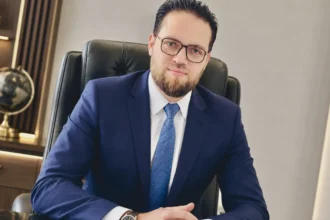





From Baghdad to the Gulf, a Journey Built Inside the Kitchen
For many people, a career begins with a university degree, a carefully chosen profession, or a clear plan for the future. For Hassanein Salem Jawad, it began somewhere very different.
- A Childhood Decision That Changed Everything
- Learning Business Before Becoming a Chef
- The Kitchen Became His Classroom
- When Modernization Tested a Family Business
- From Pastry Chef to Professional Trainer
- Building a More Sustainable Culinary Future
- Taking Culinary Knowledge Beyond the Kitchen
- A New Chapter in Saudi Arabia
- His Mission Is Bigger Than Personal Success
- A Message Built Around Time and Integrity
It began inside his father’s bakery.
Born in Baghdad, Iraq, and now based in the Kingdom of Saudi Arabia, Hassanein has built a career that stretches far beyond the traditional role of a pastry chef. Today, he works as an Executive Chef specializing in bakery and pastry, professional trainer, culinary consultant, and specialist in the design and establishment of bakery and pastry kitchens.
His story is particularly interesting because it did not follow the conventional path.
There was no university degree behind his early career. Instead, his education came through years of hands on experience, observation, discipline, experimentation, and an unusually close relationship with his father, who was himself a pastry and bakery chef.
What began as a childhood decision eventually developed into an international culinary career spanning Iraq and the Gulf.
A Childhood Decision That Changed Everything
Hassanein was only ten years old when he began thinking seriously about leaving school.
At that age, he had already developed a strong dislike for formal education and felt disconnected from the classroom. His father initially refused to let him leave school, but after seeing his growing lack of interest in his studies, he eventually made a decision that would change the course of his son’s life.
He allowed Hassanein to join him at work.
For the young Hassanein, it was exciting. For his father, it was an opportunity to introduce his son to a demanding profession that required patience, precision, discipline, and responsibility.
The first five years became his foundation.
Rather than simply teaching him recipes, his father introduced him to the complete business behind a bakery. Hassanein learned about ingredients, purchasing, suppliers, customers, sales, and the daily realities of running a food business.
His father would take him to markets, introduce him to merchants, and explain how ingredients were selected and purchased.
Those experiences gave Hassanein an understanding that many young chefs take years to develop.
He learned that the kitchen does not begin when the oven is switched on. It begins much earlier, with sourcing, planning, quality control, cost awareness, and respect for ingredients.
Learning Business Before Becoming a Chef
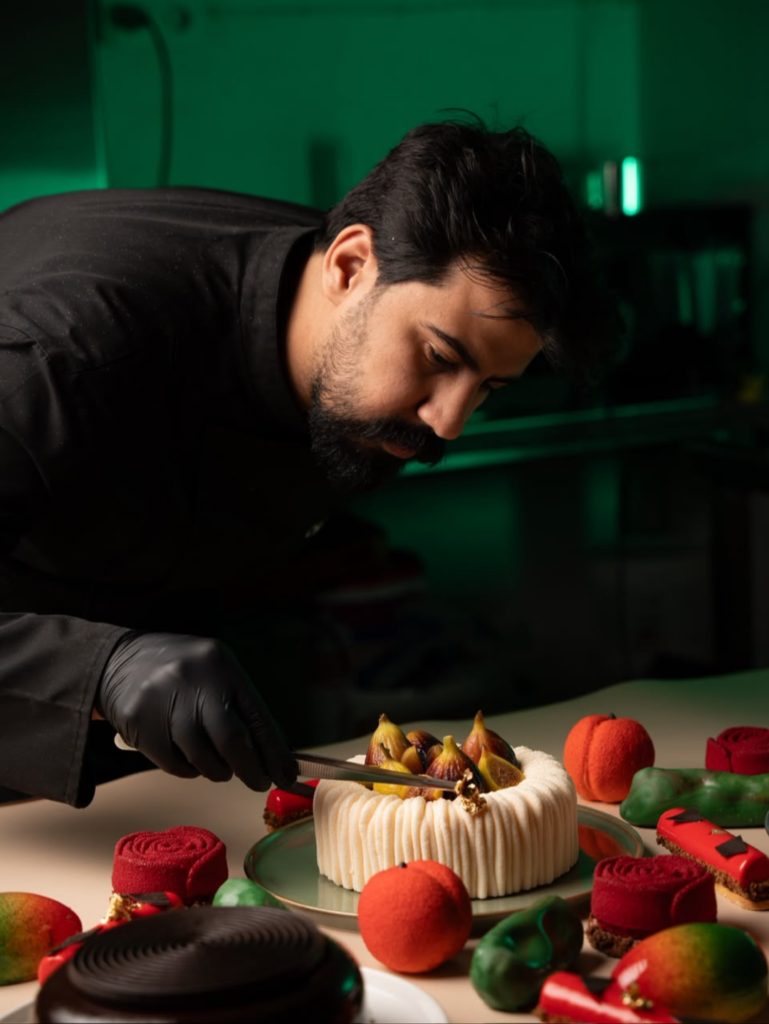
One of the most unusual aspects of Hassanein’s early journey was that he did not immediately begin working as a pastry chef.
Instead, he first became involved in purchasing.
While still young, he was given responsibility for buying ingredients and dealing with suppliers. What initially felt like a major challenge became another important stage of his development.
For more than two years, he gained practical experience in procurement and sales.
He learned how to communicate with merchants, understand customer expectations, manage purchases, and contribute to the commercial side of the family business.
At the same time, his interest in the kitchen continued to grow.
Eventually, five years after joining the business, he stepped into the production side and began learning the fundamentals of pastry and cake making.
That transition marked the beginning of his real culinary education.
The Kitchen Became His Classroom
Without formal culinary university training, Hassanein relied heavily on observation and practice.
His father became his first mentor, teaching him techniques while also passing down values that would later define his professional philosophy.
Patience became essential.
So did respect.
So did professional integrity.
Learning from a parent who was already an experienced chef also gave Hassanein something that cannot easily be taught in a classroom. He experienced the profession from the inside, seeing its pressures, mistakes, successes, and responsibilities every day.
Over time, he began developing confidence in his own abilities.
By 2017, he realized that continuing the family business exactly as it had always been was no longer enough.
The industry was changing, customer expectations were changing, and the business needed to change with it.
When Modernization Tested a Family Business
Modernization became one of the biggest turning points in Hassanein’s journey.
He began developing new products and looking for ways to bring the business closer to contemporary market expectations. His plans included updating the shop’s appearance, improving equipment, and eventually rebranding the business.
But change was not easy.
His father had spent years building the business and naturally had reservations about altering what had already worked for him.
The disagreement became a difficult personal and professional challenge.
Hassanein nevertheless believed that standing still could become a greater risk than changing.
In 2019, he moved forward with the modernization of the shop.
The exterior was updated, equipment was replaced, and the business was given a renewed identity.
The result eventually proved his point.
Sales improved, the venture became more successful, and his father gradually accepted the changes.
For Hassanein, the experience provided a lesson that would remain important throughout his career.
Respecting tradition does not necessarily mean refusing innovation.
From Pastry Chef to Professional Trainer
After 2020, Hassanein’s career expanded beyond the family business.
He began working with agencies, media organizations, brands, and five star hotels. His experience increasingly placed him in the position of not only creating food but also teaching others how to create it.
That transition became one of the most important milestones in his career.
Today, he considers becoming a professional trainer among his greatest achievements.
He has trained teams for more than 30 brands and companies and has worked with cafés and hospitality businesses on staff development, kitchen establishment, menu development, and operational improvement.
His expertise also extends to designing and establishing bakery and pastry kitchens, an area where his early exposure to procurement, production, business management, and kitchen operations gives him a broader perspective.
Rather than focusing only on what goes onto the plate, he understands the systems required to make a culinary business function effectively.
Building a More Sustainable Culinary Future
Sustainability has also become an important part of Hassanein’s professional development.
He successfully completed the Sustainability Education for Culinary Professionals program associated with Worldchefs Feed the Planet and the Electrolux Food Foundation. The program is designed to help culinary professionals understand practical sustainability across areas such as agriculture, energy, water, waste management, and nutrition.
This approach fits naturally with lessons Hassanein learned during his childhood.
His father had already taught him to respect ingredients and avoid unnecessary waste in the kitchen.
Professional sustainability education gave those early lessons a wider framework.
For Hassanein, sustainability is not simply an environmental concept. It can also influence kitchen efficiency, purchasing decisions, food costs, waste reduction, and the long term health of a culinary business.
Taking Culinary Knowledge Beyond the Kitchen
Hassanein’s career eventually moved into media and public speaking.
He became involved with television and collaborated with major channels before receiving the opportunity to host the Design program on Awafi TV.
The move into media allowed him to communicate with audiences beyond professional kitchens.
He also became a member of the Iraqi Chefs Association and began receiving invitations to speak at universities and professional events.
His connection with Iraqi academic institutions included invitations to deliver talks on professional life and future career opportunities. He also received an invitation to speak at a TEDx event at the American University of Baghdad.
These experiences reinforced another discovery.
Hassanein realized that his abilities were not limited to preparing food.
He could teach.
He could communicate.
He could mentor.
And he could inspire young people considering careers in hospitality and culinary arts.
A New Chapter in Saudi Arabia
Opportunities eventually arrived from across the Gulf, including Saudi Arabia and the United Arab Emirates.
Hassanein chose Saudi Arabia and made the Kingdom his new professional base.
The move opened another chapter in his career.
He trained staff for a chain operating eight branches and supervised a team of 45 chefs. He also conducted training programs at established centers across the Gulf and worked with international companies associated with the culinary industry.
His experience in Saudi Arabia has strengthened his position as a trainer and consultant while giving him exposure to the rapidly developing hospitality and food and beverage sectors across the region.
His journey from a small family bakery in Baghdad to professional kitchens and training environments across the Gulf represents a significant transformation.
His Mission Is Bigger Than Personal Success
Today, Hassanein’s ambitions extend beyond becoming a successful chef.
His current focus is on empowering young people in the Gulf and helping companies and brands improve their culinary capabilities through training and development.
For him, knowledge becomes more valuable when it is shared.
This philosophy explains why training has become such a central part of his career.
He wants young culinary professionals to understand that success is not achieved simply by learning recipes. It requires discipline, continuous education, professional behavior, teamwork, respect, and the willingness to improve.
His long term ambition is even bigger.
He wants to become a globally recognized chef, speak at international conferences, and help establish Arab culinary brands that can compete on an international level.
A Message Built Around Time and Integrity

Perhaps the most revealing part of Hassanein’s philosophy is his belief that every second matters.
His professional journey has taught him to value time, respect colleagues, protect his reputation, and take pride in his work.
He believes people should pursue their goals sincerely, work hard, remain authentic, and continue developing their skills.
For someone whose career began unexpectedly at the age of ten, the message carries particular weight.
Hassanein did not follow a traditional road into the culinary industry.
He built his education through experience.
He turned family lessons into professional expertise.
He challenged tradition when modernization became necessary.
He transformed culinary knowledge into training.
And he carried his experience from Baghdad into the wider Gulf.
His story demonstrates that professional success does not always begin with a conventional qualification. Sometimes, it begins with an opportunity, a mentor, a willingness to learn, and the courage to keep moving forward.
For Hassanein Salem Jawad, the kitchen was once simply the place where his father worked.
Today, it has become the foundation of a much larger mission.
A mission built around culinary excellence, professional training, sustainability, youth empowerment, and the ambition to take Arab culinary talent to the world.
Follow Hassanein Salem Jawad on Instagram
Read More – UAE Ranked Among World’s Top 5 Most Competitive Economies in 2026