



Lorena Pestana’s Journey From Architecture to Jewelry
Some careers begin with a carefully planned destination. Others change direction when an unexpected experience reveals a completely different path.
- When Nature Became Her Greatest Inspiration
- Bringing Ancient Peru Into the Present
- A Design Process Built on Research
- From Beadwork to Gold, Silver and Bronze
- Protecting Craft Through Collaboration
- Building a Creative Life Between Peru and Mexico
- More Than Jewelry, A Story Worn Close to the Body
- Curiosity Continues to Shape Her Future
For Lorena Pestana, that turning point came through her connection with the Peruvian Amazon.
Trained as an architect, Lorena originally approached the Amazon with an interest in traditional construction and local craftsmanship. But during her time in the region, she became deeply fascinated by the techniques, materials, patterns, and traditions of the communities she encountered.
What began as exploration gradually became a new creative language.
Her experience with weaving, beadwork, and traditional craftsmanship opened the door to jewelry design. By the early 2000s, she had established her first jewelry atelier in Lima, transforming an unexpected discovery into a professional journey that would span more than two decades.
Today, Lorena is recognized for creating jewelry that connects contemporary design with the natural and cultural heritage of Peru.
When Nature Became Her Greatest Inspiration
For Lorena, nature is not simply a visual reference. It is an ongoing source of energy, curiosity, and imagination.
The Amazon introduced her to an environment where animals, plants, rivers, colors, textures, and indigenous traditions exist in close relationship with one another. That experience continues to influence the way she approaches design.
Her collections have explored creatures such as snakes, butterflies, hummingbirds, spiders, birds, turtles, insects, and other forms found throughout the natural world.
But the goal is not to simply copy what she sees.
Instead, Lorena studies a natural form and asks how its movement, structure, symbolism, or character can become something wearable. A bird can become an abstract silhouette. A plant can inspire the shape of an earring. An ancient symbol can evolve into a contemporary pendant.
This approach allows her jewelry to feel connected to nature without becoming predictable.
Bringing Ancient Peru Into the Present
One of the strongest elements of Lorena’s work is her relationship with Peru’s pre Hispanic heritage.
Ancient Peruvian civilizations left behind an extraordinary visual vocabulary filled with animals, deities, geometric patterns, ceremonial objects, and symbolic forms. Lorena approaches this heritage with research and curiosity, looking beyond its historical appearance to understand the meaning and emotion behind it.
Her background in architecture also plays an important role.
Architecture teaches an appreciation for proportion, structure, space, balance, and form. Those principles can be seen in the way her jewelry is constructed, allowing intricate ideas to become pieces that remain comfortable and visually harmonious when worn.
Rather than reproducing archaeological objects, Lorena creates her own interpretation of them.
This distinction is important to her creative identity. Her jewelry does not attempt to turn history into a museum piece. Instead, it gives ancient influences a place in modern life.
Her work connected with the Moche heritage, for example, has demonstrated how historical figures and symbols can be reimagined through contemporary jewelry. Her research into the Señora de Cao became the foundation for a collection exploring female power, ancient symbolism, land, and the sea.
A Design Process Built on Research
Behind every finished piece is a process that begins long before metal is shaped or beads are arranged.
Lorena’s creative practice depends heavily on observation.
She researches historical cultures, studies natural forms, examines traditional techniques, and looks closely at the relationship between people and their environment. This allows an idea to develop naturally rather than being forced into a predetermined collection.
That patience has become one of the defining qualities of her career.
Instead of following every changing fashion trend, Lorena has built a recognizable visual identity around subjects that continue to interest her. Nature, cultural memory, craftsmanship, and human connection remain central even as her materials and techniques evolve.
Her collections have also allowed her to experiment with different scales and forms. Some pieces are bold and sculptural, while others are delicate interpretations of flowers, insects, animals, and other natural elements.
The result is jewelry that can feel expressive without losing its sense of elegance.
From Beadwork to Gold, Silver and Bronze
Materials have played an important role in Lorena’s evolution as a designer.
Her early connection with beadwork became a foundation for experimentation, but over the years her creative vocabulary expanded to include gold, silver, bronze, pearls, gemstones, leather, steel thread, and other materials.
This evolution helped her move beyond a single technique and develop a broader approach to contemporary jewelry.
Gold can give a piece a sense of permanence and luxury. Silver can create a cooler and more understated character. Bronze can emphasize the sculptural qualities of an animal or botanical form. Beadwork can introduce color, rhythm, and a direct connection to traditional craftsmanship.
For Lorena, material is not simply a matter of appearance.
It contributes to the story of the piece.
Protecting Craft Through Collaboration
Another important part of Lorena’s philosophy is her respect for human craftsmanship.
In an industry increasingly influenced by mass production, she continues to value processes that require time, skill, and individual attention.
Her work has involved collaborations with craftspeople and artists whose knowledge has been developed through generations. These partnerships help preserve techniques while allowing them to exist within a contemporary design context.
That balance is particularly significant in Peru, where jewelry and artisanal traditions have deep historical roots.
Lorena’s approach demonstrates that heritage does not have to remain frozen in the past. Traditional knowledge can continue to evolve when designers understand its value and find thoughtful ways to bring it into modern life.
Building a Creative Life Between Peru and Mexico
Although Lima remains an important part of Lorena’s identity, her creative journey has increasingly connected Peru with Mexico.
Her work between the two countries has created new opportunities to introduce her jewelry to different audiences while maintaining the cultural foundation that defines the brand.
Mexico City has become another important chapter in that story, giving the designer a platform to present her collections and continue developing her international presence.
Yet geography has never replaced the importance of her roots.
Peru remains central to the story behind her work. The Amazon, ancient civilizations, local craftsmanship, and the country’s extraordinary biodiversity continue to provide an almost endless source of ideas.
More Than Jewelry, A Story Worn Close to the Body
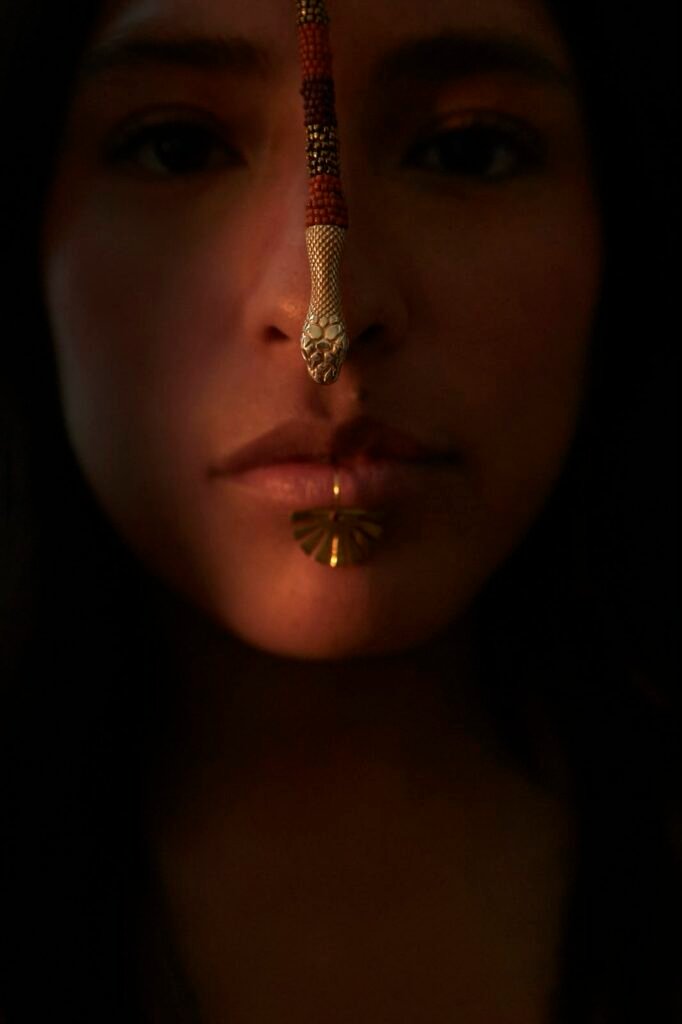
Perhaps the most meaningful aspect of Lorena’s work is the way she views jewelry itself.
A necklace, ring, bracelet, or pair of earrings can be beautiful, but beauty is only the beginning.
For Lorena, jewelry can carry memory.
It can remind someone of a landscape, represent an animal, preserve a cultural reference, or create a personal connection with a story that began centuries ago.
That makes each piece more than an accessory. It becomes something intimate.
Jewelry is one of the few forms of design that travels directly with the person who wears it. It moves through everyday life, accompanies important occasions, and becomes part of personal identity.
Lorena’s work takes advantage of that intimacy by giving her designs a deeper narrative.
Curiosity Continues to Shape Her Future
After more than 25 years of designing, Lorena Pestana has built a career around an idea that remains remarkably simple: keep looking.
Look at nature. Look at history. Look at materials. Look at traditional techniques. Look at the details that others might overlook.
That curiosity has allowed her to keep evolving without losing the identity that made her work distinctive in the first place.
Her journey from architecture to jewelry also offers a reminder that creative careers do not always follow straight lines. Sometimes the most meaningful professional direction emerges from an unexpected experience.
For Lorena, that experience was the Amazon.
More than two decades later, the influence of that journey can still be seen in the jewelry she creates. Ancient Peru, the living landscape of the Amazon, contemporary design, and generations of craftsmanship meet in pieces designed for the present.
And perhaps that is the lasting strength of her work.
Lorena does not simply look backward for inspiration. She takes what history and nature have given her, interprets it through her own perspective, and transforms it into something new.
In doing so, she gives Peru’s stories another way to travel, not through books or museums alone, but through jewelry worn close to the human body.
Follow Lorena Pestana on Instagram
Read More – Ultimate Guide to Dubai Marina: Amazing Expert Tips for Every Visitor