



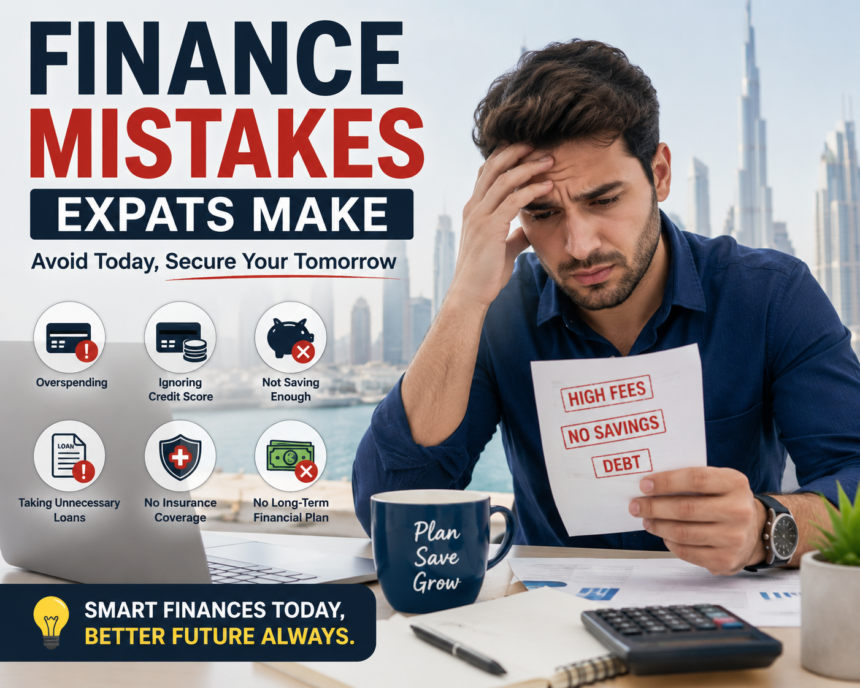
Common Money Mistakes and How to Avoid Them: Finance Mistakes Expats Make
Moving to another country for work, business, or a better lifestyle can be an exciting experience. Expats often enjoy new career opportunities, higher earning potential, international exposure, and access to a different standard of living. However, managing money in a new country can also be challenging. Differences in currency, banking systems, taxes, employment benefits, housing costs, and financial regulations can make it easy to make expensive financial mistakes.
- Why Financial Planning Is Important for Expats
- 1. Finance Mistakes Expats Make: Spending Too Much on Lifestyle
- 2. Failing to Create a Monthly Budget
- 3. Not Building an Emergency Fund
- 4. Ignoring Debt
- 5. Ignoring Your Credit Score
- 6. Failing to Understand Local Banking
- 7. Sending Money Home Without a Plan
- 8. Spending Too Much on Cars and Transportation
- 9. Neglecting Insurance
- 10. Not Planning for Retirement
- 11. Keeping All Money in One Place
- 12. Ignoring Currency Exchange Costs
- 13. Making Investments Without Understanding Them
- 14. Failing to Consider Taxes
- 15. Not Planning for Job Loss
- 16. Mixing Short-Term and Long-Term Money
- 17. Failing to Set Financial Goals
- 18. Relying Too Much on Employer Benefits
- How Expats Can Improve Their Financial Habits
- A Simple Financial Checklist for Expats
For many expatriates, the biggest problem is not necessarily earning too little. It is failing to manage income effectively. A good salary can disappear quickly when spending habits are not controlled, savings are neglected, debt continues to grow, or there is no long-term financial plan.
Understanding the most common finance mistakes expats make is an important step toward building financial stability. Whether you are a newly arrived expat or have lived abroad for several years, reviewing your financial habits can help you save more, reduce unnecessary expenses, protect your income, and work toward long-term financial freedom.
Why Financial Planning Is Important for Expats
Life abroad often comes with unique financial responsibilities. An expat may need to pay rent, transportation costs, insurance premiums, school fees, family expenses, travel costs, and other living expenses while also sending money to family in another country.
At the same time, many expats think about future goals such as buying a home, starting a business, supporting parents, funding children’s education, or retiring comfortably. Without proper planning, short-term lifestyle spending can easily take priority over these long-term goals.
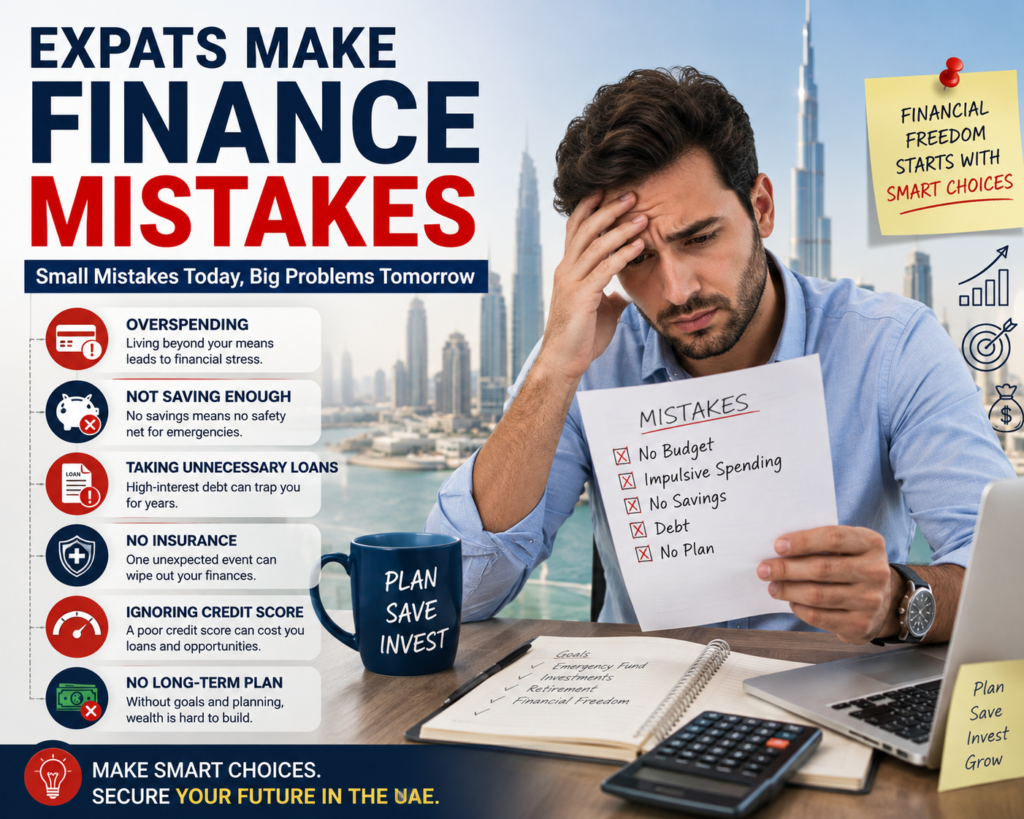
Financial planning helps expats answer important questions:
- How much should I save every month?
- How much can I realistically spend on lifestyle expenses?
- How large should my emergency fund be?
- Should I pay off debt or invest?
- How should I manage money across different countries?
- What insurance protection do I need?
- How can I prepare financially if I lose my job?
- What should my retirement plan look like?
The earlier these questions are addressed, the easier it becomes to avoid costly financial mistakes.
1. Finance Mistakes Expats Make: Spending Too Much on Lifestyle
One of the most common financial mistakes expats make is lifestyle inflation. When people move to a country with a higher salary or better purchasing power, they may immediately upgrade their lifestyle.
A larger apartment, expensive car, frequent restaurant visits, luxury shopping, weekend trips, entertainment subscriptions, and expensive hobbies can quickly consume a large portion of monthly income.
The problem is that lifestyle expenses can become difficult to reduce once they become part of your routine.
For example, an expat may receive a significant salary increase after moving abroad but still have very little money left at the end of each month. The higher income creates the impression of financial success, while actual savings remain low.
A better approach is to increase your lifestyle gradually.
Before upgrading your lifestyle, consider:
- Building an emergency fund.
- Paying down expensive debt.
- Increasing monthly savings.
- Investing for long-term goals.
- Creating a retirement fund.
- Setting aside money for annual travel and large expenses.
A comfortable lifestyle is important, but it should not come at the expense of financial security.
2. Failing to Create a Monthly Budget
Another major mistake is not having a realistic budget. Some expats track their income but do not track where their money goes.
Without a budget, small expenses can become surprisingly large over the course of a month.
A practical expat budget should include categories such as:
- Rent or mortgage.
- Utilities and internet.
- Groceries.
- Transportation.
- Insurance.
- School and childcare expenses.
- Dining and entertainment.
- Family support.
- Travel.
- Debt repayments.
- Savings.
- Investments.
- Emergency expenses.
A budget does not mean you cannot enjoy your life. Instead, it gives every major part of your income a purpose.
One useful strategy is to save or invest immediately after receiving your salary rather than waiting until the end of the month. This makes saving a priority instead of an afterthought.
3. Not Building an Emergency Fund
An emergency fund is particularly important for expatriates because employment circumstances can change unexpectedly.
A job loss, medical emergency, family situation, relocation, or unexpected travel requirement can create a major financial burden.
Without emergency savings, an expat may need to rely on credit cards, personal loans, or borrowed money.
Ideally, your emergency fund should cover several months of essential living expenses. The appropriate amount depends on your employment stability, family responsibilities, income, and cost of living.
Your emergency fund should generally be:
- Easy to access.
- Kept separate from everyday spending.
- Available for genuine emergencies.
- Large enough to cover essential expenses during an unexpected period.
Building this fund may take time, but even starting with a small monthly contribution can make a significant difference.
4. Ignoring Debt
Debt can be one of the biggest obstacles to financial progress. Expats sometimes take personal loans or accumulate credit card balances to finance cars, travel, electronics, furniture, or lifestyle expenses.
The danger is not simply having debt. The problem arises when debt payments become difficult to manage or when high-interest balances continue growing.
Before taking on new debt, ask:
- Do I really need this purchase?
- What is the total cost of the loan?
- What interest rate am I paying?
- How long will repayment take?
- Can I still save while making the payments?
- What happens if my income decreases?
High-interest debt should generally receive serious attention because it can consume money that could otherwise be used for savings or investments.
Avoid borrowing simply to maintain a lifestyle that your current income cannot comfortably support.
5. Ignoring Your Credit Score
Credit history can influence access to financial products and the terms available to borrowers. Yet some expats do not pay enough attention to their credit profile after moving abroad.
Missing payments, maintaining excessive balances, or applying for too many financial products can create problems.
Expats should understand how credit reporting works in their country of residence and monitor their financial accounts carefully.
Good financial habits include:
- Paying bills on time.
- Avoiding unnecessary borrowing.
- Keeping credit utilization under control.
- Reviewing account statements.
- Checking credit reports where available.
- Correcting errors promptly.
A strong credit history can become an important financial asset over time.
6. Failing to Understand Local Banking
Banking systems differ between countries. Fees, minimum balances, international transfers, account requirements, exchange rates, credit products, and regulations can vary significantly.
New expats sometimes open the first bank account available without comparing costs or understanding the terms.
Before choosing a bank, consider:
- Monthly account fees.
- International transfer charges.
- Currency conversion rates.
- ATM fees.
- Online banking features.
- Minimum balance requirements.
- Credit and loan products.
- Customer service.
- Accessibility in your country of residence.
If you regularly send money internationally, exchange rates and transfer fees deserve particular attention. Even small differences can become significant when transferring money every month.
7. Sending Money Home Without a Plan
Supporting family members is an important responsibility for many expats. However, remittances should be included in a financial plan rather than treated as an unlimited obligation.
Some expatriates send a large portion of their income home and leave too little money for their own emergency savings, insurance, retirement, and future goals.
A better strategy is to establish a sustainable monthly amount.
Consider creating separate categories for:
- Regular family support.
- Emergency family assistance.
- Personal emergency savings.
- Long-term investments.
- Retirement planning.
- Future relocation expenses.
Helping your family is important, but financial stability allows you to provide support more consistently over the long term.
8. Spending Too Much on Cars and Transportation
A vehicle can be an important part of life abroad, especially in cities where public transportation does not meet every need. However, buying an expensive car can become a significant financial burden.
The cost of a vehicle is more than the monthly payment. Expats should also consider:
- Insurance.
- Fuel.
- Maintenance.
- Registration.
- Parking.
- Repairs.
- Depreciation.
- Financing costs.
Choosing a vehicle based solely on monthly affordability can be misleading. A car that appears affordable each month may still consume a large percentage of annual income.
Consider the total ownership cost before making a decision.
9. Neglecting Insurance
Insurance is another area where expats can make expensive mistakes. Some people assume that employer-provided coverage is enough or delay purchasing additional protection.
Depending on your circumstances, you may need to consider health, life, disability, property, travel, or other forms of insurance.
The appropriate coverage depends on factors such as:
- Your employment benefits.
- Family responsibilities.
- Existing assets.
- Income.
- Dependents.
- Country of residence.
- Long-term financial obligations.
Insurance should be viewed as a financial protection tool rather than simply another expense.
10. Not Planning for Retirement
One of the biggest financial mistakes expats make is assuming retirement planning can wait.
Because expatriates may move between countries and employers, retirement planning can become complicated. Some expats focus entirely on their current salary and lifestyle without considering what happens decades later.
Your retirement strategy should account for:
- Where you expect to retire.
- Your expected retirement age.
- Current savings.
- Existing pension arrangements.
- Investments.
- Future healthcare expenses.
- Inflation.
- Currency considerations.
- Support for dependents.
Starting early can make long-term saving easier because investments have more time to potentially grow.
11. Keeping All Money in One Place
Concentrating all your money in a single account or financial product can create unnecessary risk.
Expats often have financial connections to more than one country. They may earn income in one currency, support family in another country, and eventually plan to retire somewhere else.
This makes diversification and organization particularly important.
Keep track of:
- Bank accounts.
- Investments.
- Retirement accounts.
- Insurance policies.
- Property.
- Loans.
- International transfers.
- Tax-related documents.
Maintain accurate records and understand the rules that apply to financial assets held across borders.
12. Ignoring Currency Exchange Costs
Currency conversion is an important issue for international workers. Regularly exchanging money can create costs through exchange-rate differences and transfer fees.
An expat sending money home every month should understand how much the recipient actually receives after all charges and conversion costs.
Instead of focusing only on the advertised transfer fee, compare the complete transaction cost.
Pay attention to:
- Exchange rates.
- Transfer fees.
- Receiving-bank charges.
- Transfer limits.
- Processing times.
- Currency conversion spreads.
Small savings on every transfer can add up over several years.
13. Making Investments Without Understanding Them
Investing can help build long-term wealth, but investing in products you do not understand can create unnecessary risk.
Some expats are attracted to investments because of recommendations from friends, colleagues, social media influencers, or informal financial groups.
Never invest simply because someone promises high returns.
Before investing, understand:
- What you are investing in.
- How the investment generates returns.
- What risks are involved.
- What fees apply.
- How easily you can access your money.
- What happens if the investment loses value.
- Whether the product is properly regulated.
Diversification is also important. Depending on one investment or asset class can expose your finances to unnecessary risk.
14. Failing to Consider Taxes
Tax rules can become complicated for expatriates because they may have financial connections to multiple countries.
Moving abroad does not automatically mean that all previous tax obligations disappear. Similarly, earning income, owning property, receiving investments, or maintaining financial accounts across borders can create reporting requirements depending on the countries involved.
Expats should understand their tax residency and seek qualified professional advice when their situation is complicated.
Important areas may include:
- Employment income.
- Investment income.
- Rental income.
- Property ownership.
- Capital gains.
- Overseas accounts.
- Retirement accounts.
- Inheritance or estate considerations.
Tax planning should be done legally and proactively rather than after a problem arises.
15. Not Planning for Job Loss
An expat’s financial situation can be closely connected to employment. Losing a job may affect income, housing, insurance, visa status, and the ability to remain in the country.
For this reason, expats should have a financial contingency plan.
A useful plan may include:
- An emergency fund.
- Updated employment documents.
- A current CV.
- A list of professional contacts.
- A backup housing strategy.
- Adequate insurance.
- Money reserved for relocation.
- A clear understanding of employment-related benefits.
Do not assume that your current salary will continue indefinitely.
16. Mixing Short-Term and Long-Term Money
Another common mistake is using long-term savings to pay for short-term expenses.
For example, money intended for retirement should not routinely be used for vacations, electronics, shopping, or lifestyle upgrades.
Separate your financial goals into different time horizons.
Short-term goals may include:
- Emergency savings.
- Annual travel.
- Household purchases.
- Professional expenses.
Medium-term goals may include:
- Buying a property.
- Starting a business.
- Children’s education.
- Major relocation.
Long-term goals may include:
- Retirement.
- Wealth building.
- Financial independence.
- Estate planning.
Separating these goals makes financial decisions easier and reduces the temptation to spend money intended for the future.
17. Failing to Set Financial Goals
Saving without a goal can be difficult to maintain. Expats should establish clear financial objectives and attach realistic timelines to them.
For example:
- Build an emergency fund within 12 months.
- Pay off high-interest debt within two years.
- Save for a property deposit.
- Invest a fixed amount every month.
- Build a retirement portfolio.
- Create a dedicated education fund.
Goals should be measurable and reviewed regularly.
A financial plan is not something you create once and forget. Your income, expenses, family situation, career, and country of residence may change over time.
18. Relying Too Much on Employer Benefits
Employer benefits can be valuable, but expats should understand exactly what they include and what happens when employment ends.
Review your employment package carefully. Understand what is covered, what is excluded, and whether benefits continue after leaving the company.
Do not assume that your employer’s insurance, retirement contribution, housing allowance, or other benefits will always be available.
Personal financial planning should complement employer benefits rather than depend entirely on them.
How Expats Can Improve Their Financial Habits
Avoiding financial mistakes does not require becoming a financial expert. It requires consistency, awareness, and planning.
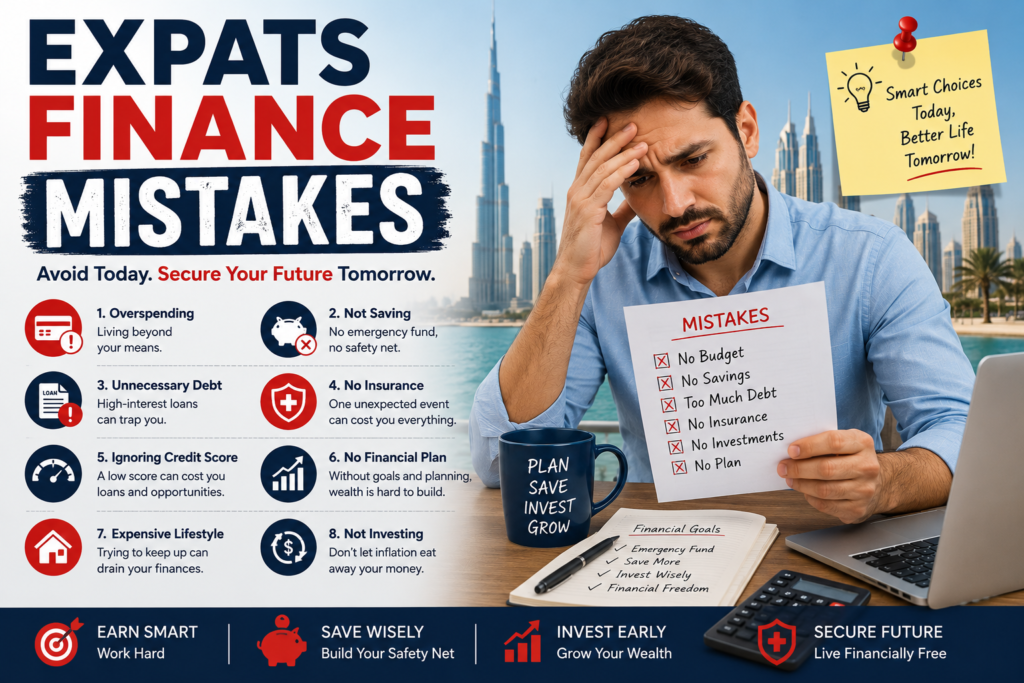
A simple approach is to follow these principles:
- Create a monthly budget and track your spending.
- Build an emergency fund before increasing lifestyle expenses.
- Control unnecessary debt and prioritize expensive balances.
- Save automatically after receiving your salary.
- Invest according to your goals and risk tolerance.
- Review insurance coverage regularly.
- Understand local banking and tax requirements.
- Compare international transfer costs.
- Plan for retirement early.
- Review your financial plan at least once or twice a year.
A Simple Financial Checklist for Expats
Before considering your finances in good shape, ask yourself:
- Do I know exactly how much I spend each month?
- Do I have emergency savings?
- Can I cover several months of essential expenses if my income stops?
- Do I have unnecessary high-interest debt?
- Am I saving consistently?
- Do I have appropriate insurance?
- Am I investing for long-term goals?
- Do I understand my tax responsibilities?
- Have I planned for retirement?
- Do I have a strategy for supporting family members?
- Am I paying unnecessary banking or currency conversion fees?
- Do I know what would happen financially if I lost my job?
If several answers are “no,” there may be opportunities to improve your financial situation.
Final Thoughts
Living abroad can provide excellent opportunities to earn, save, invest, and build a better future. However, a higher salary does not automatically create financial security. The way you manage your income is often more important than the amount you earn.
The most common finance mistakes expats make include overspending, failing to budget, ignoring debt, neglecting emergency savings, overlooking insurance, misunderstanding taxes, making poorly researched investments, and failing to plan for retirement.
The good news is that most of these mistakes can be corrected with disciplined financial habits. Start by understanding your income and expenses, create a realistic budget, build an emergency fund, manage debt carefully, protect yourself with appropriate insurance, and establish clear long-term goals.
For expatriates, financial planning should also account for international transfers, currency exchange, multiple countries, employment changes, and future relocation. A strategy that works today may need to be adjusted as your career and personal circumstances change.
Ultimately, the goal is not simply to earn more money. It is to make your money work effectively for your present needs and future ambitions. By avoiding common financial mistakes and making informed decisions, expats can enjoy their life abroad while building a stronger and more secure financial future.
Do follow us on Instagram
Read More – How to Save Money in Dubai as an Expats