



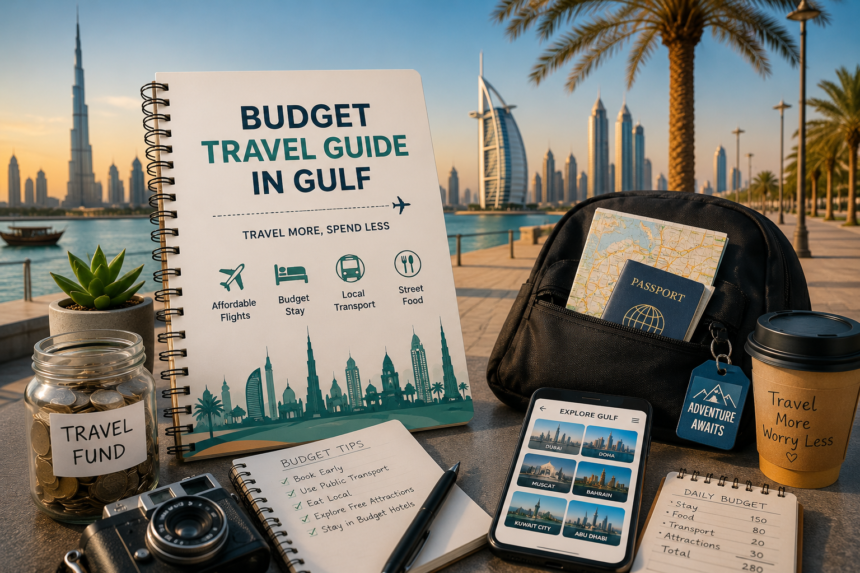
Think the Gulf Is Expensive? These Budget Travel Tips May Surprise You
The Gulf is often associated with luxury hotels, supercars, premium shopping malls and expensive restaurants. That image can make travellers assume that visiting Dubai, Riyadh, Doha, Muscat, Manama, Kuwait City or other destinations across the GCC requires a huge travel budget.
- Why Gulf Travel Does Not Have to Be Expensive
- 1. Choose the Right Gulf Destination for Your Budget
- 2. Travel Outside Peak Periods
- But Consider Gulf Weather Carefully
- 3. Compare Airports Before Booking Flights
- Travel Light When Possible
- 4. Use Public Transport Instead of Taxis Everywhere
- Dubai Is Particularly Easy for Budget Public Transport
- Use Metro Plus Walking
- 5. Stay Near Public Transport, Not Necessarily Near Famous Attractions
- Look Beyond Traditional Hotels
- 6. Eat Where Residents Eat
- Look for Breakfast Outside the Hotel
- Use Supermarkets Strategically
- 7. Build Your Itinerary Around Free Attractions
- Use a One-Paid-Attraction-a-Day Rule
- 8. Explore Traditional Markets Instead of Only Malls
- 9. Use Affordable Local Transport Experiences as Attractions
- 10. Save Money on Desert Experiences
- 11. Consider Oman for Nature-Focused Budget Travel
- Camping Can Reduce Costs, but Plan Properly
- 12. Set a Daily Travel Budget
- Track Spending Daily
- Sample Budget-Friendly Dubai Day
- Budget Travel for Families in the Gulf
- Budget Travel for Solo Travellers
- Budget Travel for Couples
- How to Avoid Tourist Traps
- Do Not Overspend on Souvenirs
- Use Travel Apps Before Arriving
- Where Should You Spend More?
- Common Budget Travel Mistakes in the Gulf
- Gulf Budget Travel at a Glance
- FAQs About Budget Travel Guide in Gulf
- Conclusion
It does not always have to.
With careful planning, this Budget Travel Guide in Gulf can help you experience modern cities, historic districts, beaches, deserts, mountains, souqs and local food without turning every day into a luxury expense.
The key is knowing where to save and where spending a little more actually improves the experience. Public transport, neighbourhood selection, travel timing, local restaurants and free attractions can make a significant difference.
Dubai, for example, has a zone-based public transport system where regular Silver nol fares currently start from AED 3 for travel within one zone, while seven-day passes start from AED 50 for one zone.
Budget travel in the Gulf is therefore less about travelling cheaply at all costs and more about spending intelligently.
Why Gulf Travel Does Not Have to Be Expensive
Luxury tourism is an important part of the Gulf’s international image.
But it represents only one side of the region.
Across the GCC, travellers can also discover:
- public beaches,
- traditional markets,
- historic neighbourhoods,
- inexpensive local restaurants,
- public parks,
- promenades,
- mosques,
- mountain landscapes,
- desert scenery,
- affordable museums,
- public transport.
The biggest expenses are usually accommodation, flights and transportation.
Control these three areas and the entire trip can become much more affordable.
1. Choose the Right Gulf Destination for Your Budget
The GCC includes:
- United Arab Emirates
- Saudi Arabia
- Qatar
- Oman
- Bahrain
- Kuwait
Each offers a very different travel experience.
Dubai is famous for entertainment, shopping, beaches and modern attractions.
Saudi Arabia offers historic cities, desert landscapes and rapidly expanding tourism destinations.
Oman stands out for mountains, wadis, beaches and road trips.
Qatar combines modern Doha with museums, markets and desert experiences.
Bahrain offers a compact city break combining heritage and modern attractions.
Kuwait provides urban, cultural and coastal experiences.
Your destination should match what you actually want to do.
A traveller interested mainly in mountains and nature may get more value from an Oman road trip than spending heavily on attractions in Dubai.
2. Travel Outside Peak Periods
Timing can completely change the cost of a Gulf holiday.
Hotel and flight prices often rise around:
- major holidays,
- international events,
- school breaks,
- New Year,
- major exhibitions,
- festivals.
Dubai around New Year’s Eve is a very different budget proposition from Dubai during a quieter period.
Before booking flights, check hotel prices for the same dates.
A cheap flight is not necessarily a bargain if accommodation costs twice as much.
But Consider Gulf Weather Carefully
The cheapest season is not automatically the best season.
Much of the Gulf experiences extremely hot summers.
Lower hotel prices may look attractive, but outdoor sightseeing can become uncomfortable during the hottest parts of the day.
For a budget trip, consider the balance between:
price + weather + activities
If most of your itinerary involves museums, malls and indoor attractions, hotter months may still work.
For hiking, beaches, desert camps and long outdoor walks, cooler weather may justify paying more.
3. Compare Airports Before Booking Flights
Large Gulf cities are well connected by air.
Do not search only one airport or one airline.
Depending on your itinerary, consider whether nearby airports or different arrival cities could reduce the total cost.
But calculate the entire journey.
A flight that saves AED 150 is not cheaper if reaching your hotel costs AED 200 more.
Compare:
Flight + baggage + airport transport + travel time
rather than the headline airfare alone.
Travel Light When Possible
Low-cost airline tickets can become expensive once you add:
- checked baggage,
- seat selection,
- meals,
- priority boarding.
For a short Gulf trip, cabin baggage may be enough.
Light packing can also make:
- public transport easier,
- walking easier,
- hotel changes simpler.
Check airline baggage rules before arriving at the airport because excess baggage can be expensive.
4. Use Public Transport Instead of Taxis Everywhere
Transportation can quietly become one of the biggest travel expenses.
A taxi from the airport may feel reasonable.
Another taxi to lunch does too.
Then one to the beach.
Another to the mall.
Another back to the hotel.
By the end of a week, transport can consume a large part of your budget.
Cities with strong public transport offer significant savings.
Dubai Is Particularly Easy for Budget Public Transport
Dubai’s Metro, Tram and bus network allows visitors to travel through much of the city without depending entirely on taxis.
The RTA’s current Silver nol fares are:
| Journey | Silver nol Fare |
|---|---|
| Within 1 zone | AED 3 |
| 2 adjacent zones | AED 5 |
| More than 2 zones | AED 7.50 |
A Silver nol card currently costs AED 25, including AED 19 in balance.
Dubai also offers travel passes. A seven-day Silver pass currently costs AED 50 for one zone, AED 80 for two zones and AED 110 for all zones.
For travellers making multiple journeys every day, comparing a pass with pay-as-you-go fares can be worthwhile.
Use Metro Plus Walking
Do not expect public transport to take you directly to every attraction.
A smarter budget strategy is:
Metro → short walk
or
Metro → short taxi ride
This can be much cheaper than taking a taxi across the entire city.
Dubai’s RTA also allows transfers between certain public transport modes within its fare structure, with qualifying transfers made within 30 minutes treated as part of the overall journey based on zones travelled.
5. Stay Near Public Transport, Not Necessarily Near Famous Attractions
Hotel location can have a huge impact on travel costs.
A cheaper hotel far outside the city may not actually save money if you spend heavily on taxis every day.
Instead, search for accommodation:
- near a Metro station,
- near a major bus route,
- within walking distance of inexpensive restaurants,
- close to a supermarket.
In Dubai, staying slightly away from premium beachfront districts can reduce accommodation costs while Metro access keeps much of the city reachable.
Neighbourhood strategy is often more important than hotel star rating.
Look Beyond Traditional Hotels
Depending on local regulations and availability, compare:
- hotels,
- hotel apartments,
- hostels,
- serviced apartments,
- licensed short-term rentals.
For families or longer stays, having a kitchen can save money because every meal does not need to come from a restaurant.
But compare the final price.
Cleaning fees and taxes can make an apparently cheap short-term rental less attractive.
6. Eat Where Residents Eat
You do not need fine dining to experience Gulf food culture.
Some of the region’s most enjoyable meals can come from:
- cafeterias,
- bakeries,
- shawarma restaurants,
- South Asian restaurants,
- Turkish restaurants,
- Lebanese eateries,
- Yemeni restaurants,
- local grills,
- traditional markets.
A budget traveller can often eat extremely well simply by moving away from premium tourist areas.
Look for Breakfast Outside the Hotel
Hotel breakfast packages can be convenient.
But if breakfast adds a substantial amount to the nightly rate, compare nearby options.
A simple breakfast from a local bakery or cafeteria may cost significantly less.
The same principle applies to coffee.
One premium hotel coffee every morning can cost more over a week than several local meals.
Use Supermarkets Strategically
You do not need to cook every meal.
Simply buying:
- water,
- fruit,
- snacks,
- breakfast items,
- soft drinks
from supermarkets can reduce daily spending.
Tourist convenience stores in premium locations may charge more, so shop where local residents do.
7. Build Your Itinerary Around Free Attractions
One of the easiest ways to travel affordably is to mix paid attractions with free experiences.
A successful Gulf itinerary does not need an entrance ticket every few hours.
Free or low-cost experiences can include:
- beaches,
- promenades,
- souqs,
- heritage districts,
- parks,
- public viewpoints,
- traditional neighbourhoods,
- architectural areas.
In Dubai, simply exploring areas around Dubai Creek, traditional souqs and older neighbourhoods can provide a completely different experience from the city’s luxury attractions.
Use a One-Paid-Attraction-a-Day Rule
Instead of booking three expensive attractions in one day, choose one major experience.
Then surround it with free activities.
For example:
Morning: Beach
Afternoon: One paid attraction
Evening: Walk through a traditional district or waterfront
You still get a full day of experiences without constantly buying tickets.
8. Explore Traditional Markets Instead of Only Malls
The Gulf’s enormous malls are worth seeing.
But shopping is not compulsory.
Traditional souqs can provide a richer cultural experience at little or no cost.
You can explore:
- spices,
- perfumes,
- textiles,
- handicrafts,
- jewellery,
- traditional clothing,
- local snacks.
Examples include traditional markets in Dubai, Doha, Muscat and other Gulf cities.
Markets are also excellent places for photography and people-watching.
Just remember that “budget travel” can quickly disappear if every souq visit becomes a shopping trip.
9. Use Affordable Local Transport Experiences as Attractions
Some forms of transportation can also become part of the sightseeing.
This is particularly useful for budget travellers.
Instead of paying for a premium sightseeing cruise, look for:
- public ferries,
- traditional boats,
- local buses,
- scenic public transport routes.
In Dubai, RTA’s nol system extends across several transport modes, and nol cards can also be used on certain marine transport services.
The journey itself can provide a different perspective on the city.
10. Save Money on Desert Experiences
A Gulf trip often feels incomplete without seeing the desert.
But desert experiences range dramatically in price.
Premium packages can include:
- private vehicles,
- luxury camps,
- gourmet dining,
- entertainment,
- photography.
Budget travellers should compare packages based on what they genuinely want.
If your priority is simply seeing the desert and enjoying sunset, you may not need the most elaborate package available.
Check:
- transportation,
- meal inclusion,
- duration,
- activities,
- cancellation rules.
Avoid choosing only by the lowest advertised price because optional extras can increase the final cost.
11. Consider Oman for Nature-Focused Budget Travel
Oman can be particularly attractive for travellers interested in natural landscapes.
Its appeal includes:
- mountains,
- wadis,
- beaches,
- desert,
- historic towns,
- road trips.
A group sharing a rental vehicle can sometimes create an affordable way to explore outside Muscat.
However, road trips require careful budgeting.
Include:
- rental price,
- insurance,
- fuel,
- parking,
- accommodation,
- possible one-way fees.
Do not compare the rental rate alone.
Camping Can Reduce Costs, but Plan Properly
For experienced travellers, camping can become part of an Oman adventure.
But budget should never override safety.
Consider:
- weather,
- local regulations,
- water,
- communication,
- road conditions,
- appropriate vehicle,
- emergency planning.
Remote areas require more preparation than urban sightseeing.
12. Set a Daily Travel Budget
One of the most effective budget travel strategies is deciding your spending limit before the trip.
Divide the budget into categories.
For example:
| Category | Share of Budget |
|---|---|
| Accommodation | 35% |
| Food | 20% |
| Transport | 15% |
| Attractions | 15% |
| Shopping | 5% |
| Emergency / flexibility | 10% |
These percentages are examples rather than fixed rules.
A traveller staying with friends may spend almost nothing on accommodation and more on experiences.
The important thing is knowing where the money is going.
Track Spending Daily
Do not wait until the final day to discover you have exceeded the budget.
Each evening, check:
Accommodation + transport + food + attractions + shopping
If you overspend one day, adjust the next.
A five-minute daily review can prevent a major budget surprise.
Sample Budget-Friendly Dubai Day
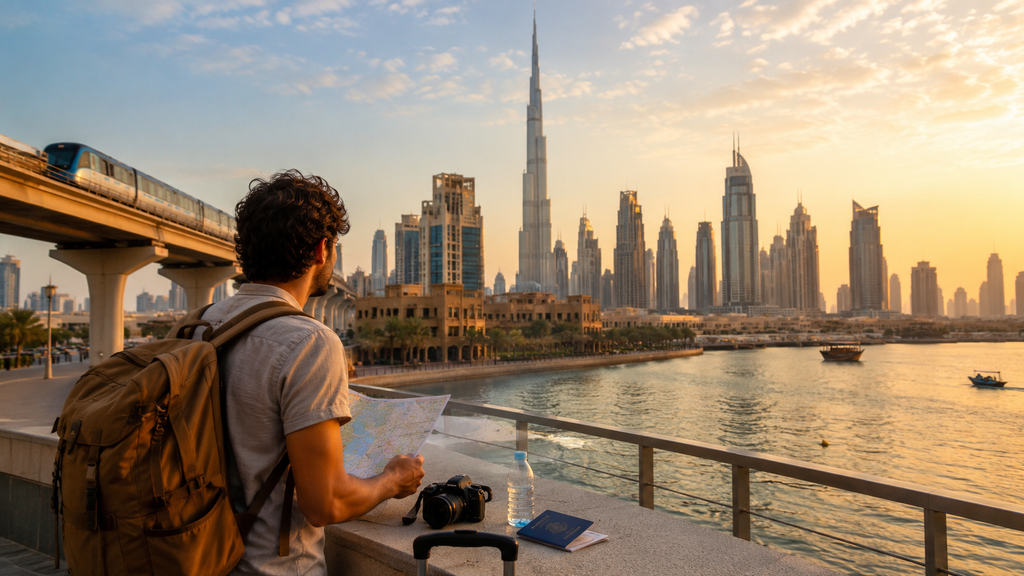
A lower-cost Dubai itinerary could look like this:
Morning: Explore an older neighbourhood and Dubai Creek.
Lunch: Eat at a local restaurant rather than a luxury hotel.
Afternoon: Use Metro to reach another part of the city.
Evening: Visit a public beach or waterfront area.
Dinner: Choose an affordable multicultural restaurant.
Public transport can keep the transport component relatively modest. Regular Silver nol fares currently range from AED 3 to AED 7.50 depending on the zones travelled.
The experience can still feel distinctly Dubai without requiring premium spending all day.
Budget Travel for Families in the Gulf
Family travel requires a slightly different strategy.
Costs multiply quickly when four people need:
- flights,
- meals,
- tickets,
- transportation.
Families can save by choosing:
- hotel apartments,
- accommodation with breakfast,
- supermarkets,
- public beaches,
- parks,
- family transport passes where available.
Dubai’s public transport can also provide savings for families. RTA states that children aged five and below travel free on its Metro, Tram and bus services.
Budget Travel for Solo Travellers
Solo travellers cannot split hotel and taxi costs.
That makes location even more important.
Prioritize:
- public transport,
- hostels where suitable,
- walking,
- group tours,
- affordable food areas.
Solo travel can still have one financial advantage: complete control over the itinerary.
You do not need to pay for activities simply because someone else wants to do them.
Budget Travel for Couples
Couples can share:
- hotel rooms,
- taxis,
- rental vehicles,
- certain meals.
That can make some experiences relatively affordable per person.
Before booking an expensive romantic restaurant or resort, decide which experiences genuinely matter.
Spend more on one memorable evening and keep other meals simple.
Budget travel does not require eliminating luxury completely.
It requires choosing it intentionally.
How to Avoid Tourist Traps
A tourist trap is not necessarily a bad attraction.
It becomes a problem when the experience provides poor value for the price.
Before booking:
- Check what is actually included.
- Read recent independent reviews.
- Compare the official ticket price.
- Check transportation separately.
- Look for hidden add-ons.
Avoid making expensive decisions because someone says:
“Only available today.”
You usually make better travel decisions without pressure.
Do Not Overspend on Souvenirs
Souvenirs can quietly destroy a travel budget.
Set a fixed shopping amount before entering markets or malls.
Instead of buying many generic items, consider one meaningful product connected to the destination.
Also remember airline baggage limits.
A cheap souvenir becomes less cheap if it contributes to excess baggage fees.
Use Travel Apps Before Arriving
Download useful apps before the trip.
These may include:
- public transport apps,
- airline apps,
- maps,
- currency tools,
- hotel apps,
- attraction ticketing platforms.
In Dubai, RTA’s S’hail platform integrates mobility information and nol-related public transport services, making journey planning easier.
Digital planning reduces the chance of taking expensive transportation simply because you do not know another option exists.
Where Should You Spend More?
Budget travel does not mean choosing the cheapest option every time.
Some areas deserve more spending.
Travel Insurance
A medical emergency abroad can cost far more than the policy.
Safe Accommodation
Saving money should not require choosing unsafe or extremely inconvenient accommodation.
Unique Experiences
If visiting Oman specifically for a mountain experience or Saudi Arabia for a particular heritage destination, that experience may justify a larger share of the budget.
Appropriate Transport
Do not take unnecessary safety risks simply to save money.
The goal is value, not minimum expenditure.
Common Budget Travel Mistakes in the Gulf
Avoid these:
- Booking flights before checking hotel prices
- Using taxis for every journey
- Staying far from public transport
- Eating every meal in tourist districts
- Booking too many paid attractions
- Travelling during major events without checking prices
- Ignoring baggage fees
- Shopping without a fixed budget
- Choosing the cheapest desert tour without checking inclusions
- Ignoring extreme summer weather
- Forgetting insurance
- Not keeping emergency money
Cheap travel and smart travel are not always the same thing.
Gulf Budget Travel at a Glance
| Destination | Strong Budget Experiences |
|---|---|
| Dubai | Metro, Creek, souqs, beaches, older districts |
| Abu Dhabi | Corniche, architecture, public spaces |
| Riyadh | Heritage districts, urban exploration, museums |
| Jeddah | Corniche, historic districts, local food |
| Doha | Souq, Corniche, museums and public spaces |
| Muscat | Beaches, souqs, road trips and nature |
| Bahrain | Heritage, markets and compact city exploration |
| Kuwait | Waterfront, markets and cultural attractions |
The best destination depends on whether you value cities, culture, beaches, nature or road trips.
FAQs About Budget Travel Guide in Gulf
Is the Gulf expensive for tourists?
It can be expensive, particularly for luxury hotels, premium restaurants and major attractions. However, public transport, affordable restaurants, free attractions and careful accommodation choices can significantly reduce costs.
Can you travel Dubai on a budget?
Yes. Dubai has extensive public transport and many free or low-cost experiences. Current regular Silver nol fares range from AED 3 for one-zone journeys to AED 7.50 for journeys crossing more than two zones.
How much is a Dubai nol Silver card?
RTA currently lists the Silver nol card at AED 25, including AED 19 of initial balance.
Is a Dubai Metro pass worth buying?
It depends on how frequently and how far you travel. Current seven-day Silver passes cost AED 50 for one zone, AED 80 for two zones and AED 110 for all zones. Compare this with your expected pay-as-you-go journeys.
Which Gulf country is good for nature travel?
Oman is particularly popular for mountains, wadis, desert landscapes and beaches, while Saudi Arabia also offers increasingly diverse natural and heritage destinations.
How can I save money on food in Gulf cities?
Eat at local cafeterias, bakeries and neighbourhood restaurants, buy snacks and water from supermarkets and avoid making every meal a hotel or premium tourist-area experience.
Should I rent a car for a Gulf trip?
It depends on the destination. A car may be valuable for an Oman road trip or remote areas, while cities such as Dubai can often be explored efficiently using public transport.
What is the biggest mistake budget travellers make?
Looking only at individual prices rather than the total trip cost. A cheaper hotel far from attractions or a cheaper flight into an inconvenient airport can ultimately cost more.
Conclusion
A useful Budget Travel Guide in Gulf should challenge the idea that exploring the GCC requires a luxury budget.
Yes, the region offers some of the world’s most expensive hotels, restaurants and shopping experiences.
But those are choices, not requirements.
A traveller can explore traditional souqs, waterfronts, beaches, historic neighbourhoods, deserts and multicultural food scenes while keeping spending under control.
The formula is straightforward:
Travel at the right time. Stay near useful transport. Use public transportation. Eat beyond tourist districts. Mix paid attractions with free experiences. Track spending daily.
Dubai shows how much difference transportation alone can make. Its current regular Silver nol fares start at AED 3, while seven-day travel passes start at AED 50 depending on the zones required.
Other Gulf destinations require different strategies. Oman can reward travellers willing to plan road trips carefully. Saudi Arabia offers an expanding mix of urban, heritage and natural experiences. Doha, Bahrain and Kuwait can work well for shorter city-focused itineraries.
Most importantly, budget travel should not become a competition to spend as little as possible.
Spend less on things that do not matter to you so you can spend more on experiences that do.
A comfortable Metro ride instead of repeated taxis may leave enough money for a desert experience. A neighbourhood restaurant instead of a luxury hotel dinner may fund another day of travel.
That is the real purpose of travelling on a budget: not experiencing less, but getting more meaningful experiences from the money you have.
follow us on Instagram
Read More – Credit Score Guide for Gulf: 10 Powerful Ways to Improve It