

Complete Guide for Best Traditional Emirati Foods to Authentic UAE Cuisine
The United Arab Emirates is famous around the world for its modern cities, luxury hotels, spectacular architecture, and diverse international food scene. However, beyond the restaurants and global cuisines, the UAE has a rich culinary heritage shaped by Bedouin traditions, the desert environment, coastal communities, and centuries of trade. Traditional Emirati foods reflect the history and culture of the country, using simple ingredients to create flavourful and satisfying dishes.
- What Is Traditional Emirati Cuisine?
- 1. Best Traditional Emirati Foods Machboos
- 2. Best Traditional Emirati Foods Harees
- 3. Best Traditional Emirati Foods Thareed
- 4. Best Traditional Emirati Foods Balaleet
- 5. Best Traditional Emirati Foods Al Harees with Emirati Ghee
- 6. Best Traditional Emirati Foods Madrouba
- 7. Best Traditional Emirati Foods Al Jasheed
- 8. Best Traditional Emirati Foods Saloona
- 9. Best Traditional Emirati Foods Chabab Bread
- 10. Best Traditional Emirati Foods Regag Bread
- 11. Best Traditional Emirati Foods Khameer Bread
- 12. Best Traditional Emirati Foods Luqaimat
- 13. Best Traditional Emirati Foods Chebab with Date Syrup
- 14. Best Traditional Emirati Foods Khabeesa
- 15. Best Traditional Emirati Foods Khanfaroosh
- 16. Best Traditional Emirati Foods Dates
- 17. Best Traditional Emirati Foods Arabic Coffee
- 18. Best Traditional Emirati Foods Karak Tea
- Best Traditional Emirati Foods During Ramadan
- Best Traditional Emirati Foods for Breakfast
- Best Traditional Emirati Foods for Special Occasions
- Spices Used in Emirati Cuisine
- Why Dates Are Important in Emirati Cuisine
- The Role of Seafood in Emirati Cuisine
- How Emirati Food Reflects UAE Culture
- Where to Try Best Traditional Emirati Foods in the UAE
- Tips for Trying Emirati Cuisine for the First Time
- Traditional Emirati Foods vs. Modern UAE Cuisine
- Best Traditional Emirati Foods to Try
From fragrant rice and meat dishes to sweet dumplings, dates, breads, and aromatic drinks, Emirati cuisine offers a unique taste of the UAE. Many traditional dishes were originally prepared for families, travellers, and special occasions using ingredients that were easily available in the region. Rice, meat, fish, dates, wheat, saffron, cardamom, and spices continue to play an important role in traditional Emirati cooking.
Whether you are visiting Dubai, Abu Dhabi, Sharjah, or another emirate, trying authentic Emirati food is one of the best ways to experience local culture. This guide explores the best traditional Emirati foods, including popular main dishes, snacks, desserts, drinks, and foods commonly enjoyed during celebrations.
What Is Traditional Emirati Cuisine?
Traditional Emirati foods cuisine developed from the lifestyle and environment of the Arabian Peninsula. Historically, Emirati communities included Bedouins, farmers, fishermen, and pearl divers. Their food traditions were influenced by what was locally available as well as by trade routes connecting the Arabian Peninsula with India, Persia, East Africa, and other regions.
Because of the UAE’s hot climate and desert environment, traditional cooking often focused on ingredients that could be stored and transported easily. Dates, dried fish, grains, rice, and spices were particularly important.
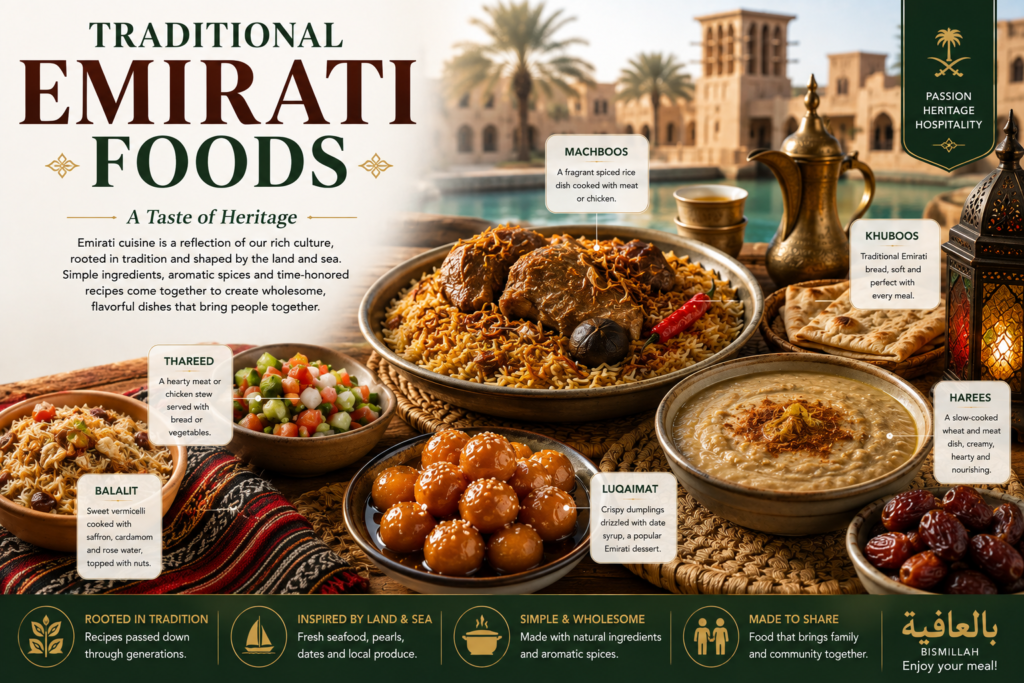
Traditional Emirati dishes are generally characterized by:
- Fragrant spices and herbs
- Rice-based meals
- Meat such as chicken, lamb, and goat
- Fresh and dried fish
- Dates and date-based products
- Wheat and other grains
- Cardamom, saffron, cinnamon, turmeric, and dried limes
- Slow cooking methods
- Generous portions designed for sharing
Food is also closely connected to Emirati hospitality. Guests are often welcomed with Arabic coffee, dates, and generous meals, making dining an important part of social and cultural life.
1. Best Traditional Emirati Foods Machboos
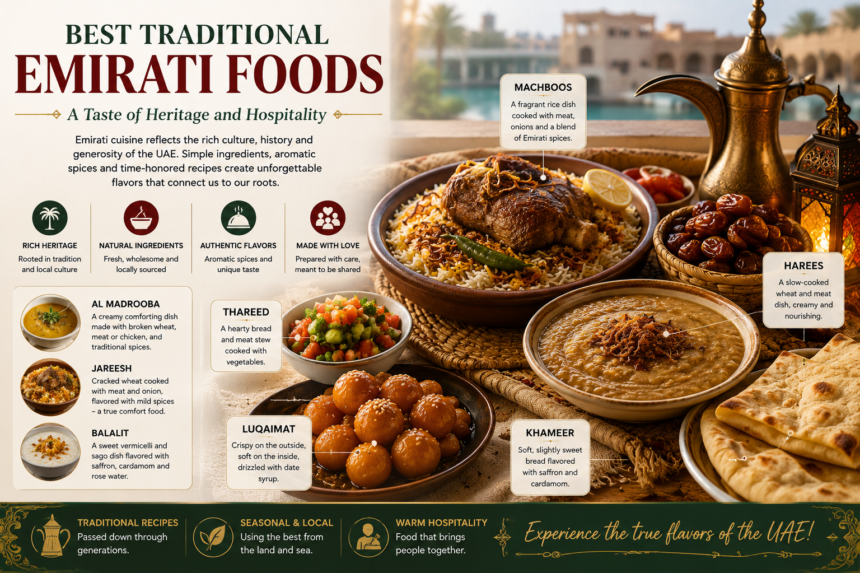
Machboos is one of the most famous traditional Emirati foods and is often considered a staple of UAE cuisine. It is a fragrant rice dish prepared with meat, chicken, or fish and seasoned with a blend of spices.
The rice is typically cooked with ingredients such as onions, tomatoes, dried lime, cardamom, cinnamon, cloves, and other spices. The protein is cooked separately or together with the rice, allowing the flavors to combine.
Machboos is commonly served during family gatherings, celebrations, and special occasions. The combination of aromatic rice, tender meat, and spices makes it one of the best dishes to try when exploring authentic Emirati cuisine.
2. Best Traditional Emirati Foods Harees
Harees is a traditional Emirati dish made primarily from wheat and meat. The ingredients are cooked slowly for several hours until they form a smooth, thick, porridge-like consistency.
The dish has a mild and comforting flavor and is particularly popular during Ramadan, Eid, weddings, and other special occasions.
Harees is valued not only for its taste but also for its cultural importance. Preparing it traditionally can require considerable time and patience, making it a dish closely associated with communal cooking and celebrations.
3. Best Traditional Emirati Foods Thareed
Thareed is another traditional Emirati favorite. It generally consists of thin bread soaked in a flavorful meat or vegetable stew.
The bread absorbs the broth, creating a soft texture and rich flavor. The stew can contain vegetables such as potatoes, carrots, tomatoes, and onions, along with meat or chicken.
Thareed is particularly popular during Ramadan and is considered a comforting and filling meal. Its simplicity reflects the traditional approach to Emirati cooking, where bread and stews were combined to create nutritious family meals.
4. Best Traditional Emirati Foods Balaleet
For those who enjoy sweet and savory combinations, Balaleet is a must-try Emirati dish.
Balaleet is made with sweetened vermicelli noodles flavored with cardamom, saffron, sugar, and sometimes rose water. It is commonly topped with a thin egg omelet, creating an interesting contrast between sweet noodles and savory egg.
It is often enjoyed for breakfast, although it can also be served at other times of the day. Balaleet is particularly popular during festive occasions and traditional celebrations.
5. Best Traditional Emirati Foods Al Harees with Emirati Ghee
Traditional Harees is sometimes served with Emirati ghee, which adds richness and aroma to the dish. The combination of slow-cooked wheat, meat, and clarified butter produces a hearty meal with a smooth texture.
The use of ghee in traditional Emirati cooking is part of the region’s broader culinary heritage. It was historically valued for its ability to add calories, flavor, and richness to simple dishes.
6. Best Traditional Emirati Foods Madrouba
Madrouba is a thick, comforting dish made from rice and meat or fish. The ingredients are cooked until soft and then mashed or beaten together to create its characteristic consistency.
The dish is typically seasoned with spices and may contain ingredients such as onions, garlic, and dried lime. Madrouba can vary between households, with families often having their own preferred preparation methods.
It is an excellent example of how traditional Emirati cooking transforms basic ingredients into a satisfying and flavorful meal.
7. Best Traditional Emirati Foods Al Jasheed
Al Jasheed is a traditional Emirati seafood dish that reflects the importance of fishing in the UAE’s coastal heritage.
The dish is traditionally prepared using small shark meat or other locally available seafood, depending on the recipe and location. The fish is cooked with spices, onions, and other ingredients before being served, often alongside rice.
For visitors interested in the UAE’s maritime history, Al Jasheed offers an opportunity to explore a side of Emirati cuisine that is different from the better-known meat and rice dishes.
8. Best Traditional Emirati Foods Saloona
Saloona is a traditional Emirati-style stew that can be prepared using meat, chicken, or fish along with vegetables and spices.
Common ingredients may include tomatoes, potatoes, carrots, onions, and peppers. The ingredients are cooked together to create a flavorful broth that is often served with rice or bread.
Saloona is a good example of an everyday Emirati meal because it is hearty, adaptable, and suitable for family dining.
9. Best Traditional Emirati Foods Chabab Bread
Chabab bread is a traditional Emirati pancake-like bread often enjoyed for breakfast. It gets its name from its resemblance to a thin pancake and is commonly flavored with cardamom and saffron.
Chabab can be served with honey, date syrup, cheese, or other accompaniments. Its slightly sweet and aromatic flavor makes it a popular choice for a traditional Emirati breakfast.
For travelers looking to experience local breakfast culture, Chabab is an excellent food to try.
10. Best Traditional Emirati Foods Regag Bread
Regag bread is a very thin traditional Emirati flatbread. It is usually prepared on a hot cooking surface and can be eaten with various savory or sweet accompaniments.
Regag has historically been an important part of Emirati food traditions because it is simple to prepare and can be paired with different dishes.
It may be served alongside stews, eggs, cheese, or other ingredients, depending on the meal.
11. Best Traditional Emirati Foods Khameer Bread
Another important traditional bread is Khameer. It is a soft, slightly sweet Emirati bread traditionally flavored with ingredients such as cardamom and saffron.
Khameer can be eaten on its own or served with dates, honey, cheese, or other accompaniments. It has a distinctive aroma and soft texture that makes it different from many other flatbreads found in the region.
Khameer is commonly associated with traditional breakfasts, snacks, and hospitality.
12. Best Traditional Emirati Foods Luqaimat
No guide to the best traditional Emirati foods would be complete without mentioning Luqaimat.
Luqaimat are small, deep-fried dough balls with a crisp exterior and soft interior. They are traditionally drizzled with date syrup or other sweet toppings and may be sprinkled with sesame seeds.
They are especially popular during Ramadan and other celebrations.
The contrast between the crispy outside, soft center, and sweet syrup makes Luqaimat one of the most popular Emirati desserts. Visitors can find them in traditional restaurants, local food establishments, cultural events, and markets.
13. Best Traditional Emirati Foods Chebab with Date Syrup
Chebab is often served with date syrup, connecting two important elements of Emirati cuisine: traditional bread and dates.
Dates have been an essential part of life in the Arabian Peninsula for centuries. They are naturally sweet, nutritious, and well suited to the region’s climate.
Combining date syrup with aromatic Chebab creates a simple but delicious traditional breakfast or snack.
14. Best Traditional Emirati Foods Khabeesa
Khabeesa is a traditional Emirati sweet dish prepared using flour or other grains and flavored with ingredients such as sugar, cardamom, saffron, and rose water.
The dish has a soft, rich texture and is often served during family gatherings and special occasions.
Khabeesa demonstrates how traditional Emirati desserts rely heavily on aromatic ingredients rather than complicated preparation. Cardamom and saffron provide distinctive flavors associated with Gulf cuisine.
15. Best Traditional Emirati Foods Khanfaroosh
Khanfaroosh is a traditional Emirati sweet treat made from a batter containing ingredients such as flour or rice flour, sugar, eggs, cardamom, saffron, and rose water.
The mixture is shaped and fried, creating a crisp exterior and soft interior. Khanfaroosh is commonly enjoyed with tea or coffee and is especially suitable for gatherings and celebrations.
Its combination of spices and sweetness makes it a distinctive example of traditional Emirati desserts.
16. Best Traditional Emirati Foods Dates
Dates are far more than a snack in Emirati culture. They have been an important food source in the Arabian Peninsula for generations and remain central to UAE hospitality.
There are many varieties of dates, ranging from soft and caramel-like to firmer and less sweet varieties. Dates are often served to guests with Arabic coffee.
They may also be incorporated into desserts, syrups, breads, and other dishes.
If you want to experience authentic Emirati hospitality, being offered dates alongside Arabic coffee is one of the most recognizable traditions you will encounter.
17. Best Traditional Emirati Foods Arabic Coffee
Arabic coffee, locally known as Gahwa, is one of the most important traditional drinks in the UAE.
Unlike many Western-style coffees, Arabic coffee is typically light in color and flavored with cardamom. Some preparations may include saffron, cloves, or other aromatic spices.
Gahwa is traditionally served in small cups called finjan. It is often offered to guests as a symbol of welcome and generosity.
The ritual surrounding Arabic coffee is as important as the beverage itself. Serving coffee to guests is deeply connected to hospitality throughout the Gulf region.
18. Best Traditional Emirati Foods Karak Tea
Although Karak tea has influences from South Asian tea traditions, it has become extremely popular in the UAE and is now an important part of everyday food culture.
Karak is generally made using strong black tea, milk, sugar, and spices such as cardamom. Some versions may include saffron or other spices.
It is commonly enjoyed throughout the day and is widely available at cafés and tea shops across the UAE.
For visitors, enjoying a cup of Karak is an easy way to experience the country’s modern multicultural food culture alongside its traditional cuisine.
Best Traditional Emirati Foods During Ramadan
Ramadan is one of the most important periods for traditional Emirati food. Family members and communities come together for Iftar, the meal that breaks the daily fast.
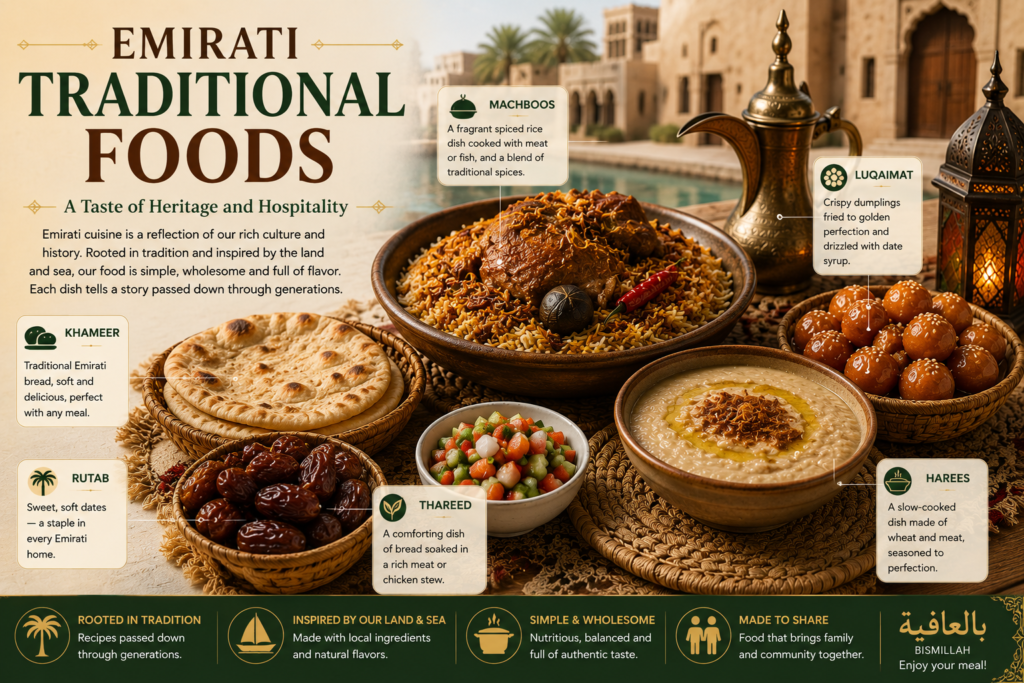
Traditional dishes commonly associated with Ramadan may include:
- Harees
- Thareed
- Luqaimat
- Dates
- Arabic coffee
- Saloona
- Machboos
- Various breads and sweets
Dates are particularly important for breaking the fast, followed by drinks and a larger meal.
Ramadan also provides an opportunity for younger generations to learn traditional recipes and cooking methods from older family members.
Best Traditional Emirati Foods for Breakfast
Traditional Emirati breakfast can be simple, flavorful, and filling. Popular choices include breads, eggs, dates, cheese, and sweet dishes.
Some traditional breakfast foods include:
- Balaleet
- Chabab bread
- Khameer bread
- Regag bread
- Dates
- Eggs
- Arabic coffee
- Karak tea
Balaleet is particularly interesting because its combination of sweet vermicelli and egg offers a flavor profile that may be unfamiliar to visitors.
Best Traditional Emirati Foods for Special Occasions
Food plays an important role in Emirati celebrations, including weddings, Eid, family gatherings, and religious occasions.
Large dishes are often prepared for groups, reinforcing the importance of sharing and hospitality.
Popular celebratory dishes can include:
- Machboos
- Harees
- Thareed
- Luqaimat
- Balaleet
- Khabeesa
- Khanfaroosh
- Dates and Arabic coffee
The exact menu can vary according to the family, region, occasion, and personal preferences.
Spices Used in Emirati Cuisine
One of the defining characteristics of Emirati food is its use of aromatic spices. The UAE’s historic position along major trade routes helped introduce and popularize many spices.
Common spices and flavorings include:
- Cardamom
- Saffron
- Cinnamon
- Turmeric
- Cloves
- Black pepper
- Dried lime
- Ginger
- Rose water
These ingredients are used carefully to add aroma and depth without necessarily making dishes extremely spicy.
Why Dates Are Important in Emirati Cuisine
Dates have played an important role in the food traditions of the Arabian Peninsula for centuries. Date palms are well adapted to the region’s climate, making dates a valuable source of energy and nutrition.
In Emirati culture, dates are commonly associated with hospitality. They are frequently served alongside Arabic coffee when welcoming visitors.
Dates can also be used in:
- Desserts
- Syrups
- Breads
- Snacks
- Traditional sweets
The cultural importance of dates makes them an essential part of any exploration of Emirati cuisine.
The Role of Seafood in Emirati Cuisine
The UAE has a long coastline, and fishing was historically an important source of food and livelihood for coastal communities.
Traditional seafood dishes reflect this maritime heritage. Fish and other seafood could be dried, preserved, grilled, or cooked with rice and spices.
Seafood remains popular in modern UAE cuisine, although today’s food scene also includes cuisines from around the world.
For visitors interested in traditional coastal food, trying Emirati seafood dishes can provide a different perspective on the country’s culinary history.
How Emirati Food Reflects UAE Culture
Traditional Emirati cuisine is not simply about food. It tells the story of the country’s people and environment.
Desert communities relied on ingredients that could be preserved and transported. Coastal communities developed seafood traditions. Trade brought new spices and ingredients. Date palms provided food and shade, while rice and wheat became important staples.
Most importantly, food became a way of expressing hospitality, generosity, family, and community.
Sharing a large plate of rice and meat with family or serving dates and Gahwa to a guest reflects values that remain important in Emirati society today.
Where to Try Best Traditional Emirati Foods in the UAE
Visitors can experience traditional Emirati foods cuisine in several types of locations, including:
- Emirati restaurants
- Heritage villages
- Traditional markets
- Cultural festivals
- Local cafés
- Hotel restaurants offering UAE cuisine
- Food events and Ramadan markets
- Family-owned restaurants
Dubai and Abu Dhabi have particularly diverse food scenes, making it possible to explore traditional Emirati dishes alongside international cuisine.
When looking for authentic food, consider restaurants that focus specifically on Emirati cuisine rather than simply offering a few local dishes on a large international menu.
Tips for Trying Emirati Cuisine for the First Time
If you are new to traditional Emirati food, start with a few classic dishes rather than ordering everything at once.
A good introductory meal could include:
- Machboos for a traditional rice-based main course.
- Harees for a taste of slow-cooked wheat and meat.
- Chabab or Khameer for traditional bread.
- Luqaimat for dessert.
- Dates and Gahwa to experience Emirati hospitality.
It is also worth asking the restaurant staff about the ingredients and cultural background of each dish. Many Emirati recipes vary between families, so there can be different versions of the same food.
Traditional Emirati Foods vs. Modern UAE Cuisine
The UAE’s modern food scene is highly international. Dubai and Abu Dhabi are home to restaurants representing cuisines from across Asia, Europe, Africa, the Americas, and the Middle East.
However, traditional Emirati cuisine remains an important part of the country’s identity.
Modern restaurants may reinterpret classic dishes by changing presentation, ingredients, or cooking techniques. At the same time, many families continue to prepare traditional recipes at home.
This combination of heritage and innovation makes the UAE’s food culture particularly interesting.
Best Traditional Emirati Foods to Try
If you have limited time in the UAE and want to focus on the most representative dishes, consider prioritizing these foods:
- Machboos – Fragrant rice with meat, chicken, or seafood.
- Harees – Slow-cooked wheat and meat with a smooth texture.
- Thareed – Bread served with a rich stew.
- Balaleet – Sweet vermicelli topped with egg.
- Madrouba – Thick rice and meat or fish dish.
- Saloona – Traditional meat, chicken, or vegetable stew.
- Chabab – Aromatic pancake-like Emirati bread.
- Khameer – Soft, slightly sweet traditional bread.
- Regag – Thin traditional flatbread.
- Luqaimat – Crispy sweet dumplings served with syrup.
- Khabeesa – Traditional spiced sweet dish.
- Khanfaroosh – Fried traditional Emirati sweet.
- Dates – A central element of Emirati hospitality.
- Gahwa – Traditional cardamom-flavored Arabic coffee.
Final Thoughts
Exploring the best traditional Emirati foods is one of the most rewarding ways to understand the culture and history of the UAE. From the fragrant rice of Machboos and the comforting texture of Harees to the sweetness of Luqaimat and the warmth of Arabic coffee, every dish offers a glimpse into the country’s traditions.
Emirati cuisine has developed from the experiences of desert communities, coastal fishermen, traders, farmers, and families. Its ingredients may appear simple, but traditional cooking methods and carefully selected spices create distinctive flavors.
Whether you are visiting Dubai for a holiday, living in Abu Dhabi, exploring Sharjah’s cultural attractions, or simply interested in Middle Eastern cuisine, make time to try authentic Emirati dishes.
Start with Machboos, Harees, Balaleet, and Luqaimat, then explore traditional breads, seafood, desserts, dates, and Gahwa. Most importantly, enjoy these foods as part of the culture of Emirati hospitality and sharing.
Traditional Emirati cuisine is a reminder that the UAE’s food story extends far beyond its modern skyline. It is a culinary heritage shaped by the land, sea, trade, family, and generations of tradition—and it remains an important part of the country’s identity today.
Do follow us on Instagram
Read More – Best Emirati Food in the UAE