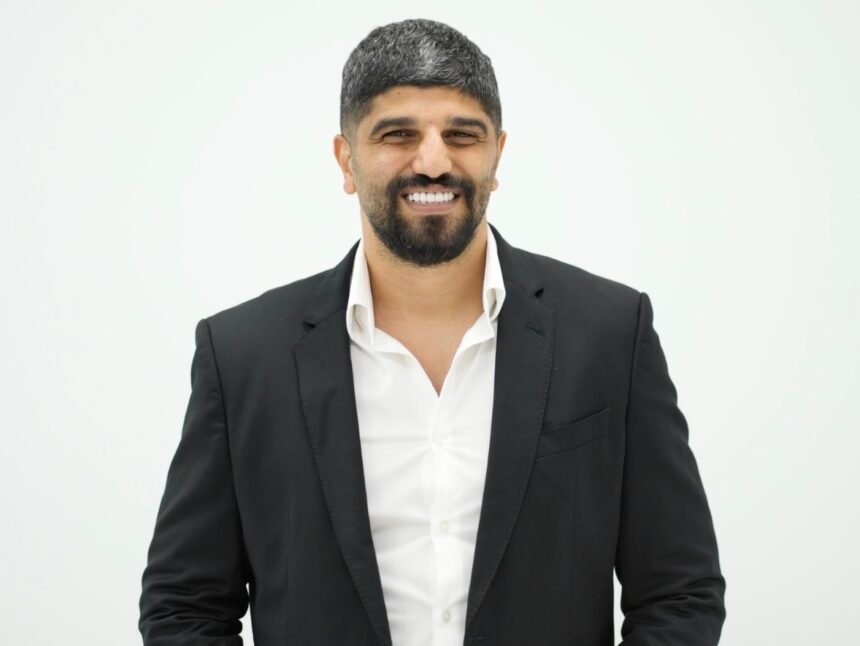
From Banking Sales to Building a Business
Every entrepreneurial journey is shaped by the experiences and people that come along the way. For Abdallah Shanableh, the path toward entrepreneurship began in the banking sector, where he developed an understanding of sales, customer relationships, financial products and the discipline required to perform in a competitive industry.
- From Banking to Entrepreneurship
- Building Sulfa Group
- The Power of Loyalty in Building Success
- More Than Employees: Building Long-Term Relationships
- Leadership Built on Trust
- A Professional Milestone and the Confidence to Aim Higher
- Discipline and Consistency
- The Human Side of Entrepreneurship
- Looking Toward the Future
- A Message for Aspiring Entrepreneurs
Today, Abdallah is the Founder and Managing Director of Sulfa Group, a Dubai-based financial services business focused on helping make financial and banking processes more accessible for customers.
His journey from working in banking to leading his own business reflects years of professional experience, ambition and a belief that long-term success is rarely built alone.
While business achievements and financial goals are important parts of his story, Abdallah places significant value on something else: loyalty.
For him, one of the strongest foundations behind long-term success has been the people who have remained part of his journey. Some members of his team have worked alongside him for more than 15 years, creating relationships built on trust, shared experience and a deep understanding of how they work together.
In a business world where employees and partnerships often change quickly, maintaining a loyal team over such a long period has become one of the defining elements of Abdallah’s approach to leadership.
From Banking to Entrepreneurship
Abdallah’s professional journey began in the banking industry, where he worked in sales and gained firsthand experience in dealing with customers and understanding their financial needs.
Working in a customer-facing environment taught him that financial services are not simply about products or transactions. Behind every financial decision is a person with individual circumstances, goals and concerns.
Sales also introduced him to the importance of communication, persistence and trust. These lessons later became valuable as he moved into entrepreneurship.
The transition from employee to entrepreneur required a different mindset. Instead of focusing only on individual performance, Abdallah had to think about building systems, managing people, creating opportunities and making decisions that could influence an entire organization.
His experience in banking provided the foundation, but entrepreneurship required him to take greater responsibility and develop a broader vision.
For Abdallah, building a business was an opportunity to take the knowledge he had gained throughout his career and apply it to something of his own.
Building Sulfa Group
Today, Abdallah leads Sulfa Group, a Dubai-based financial services business.
Public company information describes Sulfa as a financial services group focused on helping customers navigate financial and banking processes. The business positions itself around making financial services more accessible and creating a smoother experience for customers.
The financial services industry is built on trust. Customers are often making important decisions involving their personal or business finances, which means companies operating in this sector must combine commercial performance with responsibility.
This creates an environment where experience, relationships and customer understanding become particularly important.
For Abdallah, Sulfa Group represents an opportunity to bring together his professional background, entrepreneurial experience and long-term business ambitions.
The company operates within an industry that continues to change as customers increasingly expect more convenient processes, greater access to information and solutions that better match their individual needs.
As the business develops, Abdallah’s role involves more than simply managing day-to-day operations. It requires building a company capable of growing while maintaining strong relationships with customers, partners and employees.
The Power of Loyalty in Building Success
One of the most important parts of Abdallah’s professional philosophy is loyalty.
Business success is often presented as the result of one founder’s vision or leadership. While leadership is important, Abdallah recognizes that building something meaningful requires people who believe in the journey and remain committed through different stages of growth.
Some members of his team have worked with him for more than 15 years.
That level of long-term loyalty is not something that happens by accident.
Over many years, people experience different business conditions together. They face challenges, work toward shared goals, celebrate achievements and learn from mistakes. Through that process, relationships can become stronger because the team develops a shared understanding that cannot easily be created overnight.
For Abdallah, having people around him who understand his approach and have been part of his professional journey for many years has played an important role in his success.
A loyal team brings more than experience. It brings continuity.
When people have worked together for a long time, communication can become more efficient. Team members understand expectations, recognize each other’s strengths and are often better prepared to face challenges together.
In a fast-moving business environment, this continuity can be a major advantage.
More Than Employees: Building Long-Term Relationships
The idea of loyalty goes beyond simply staying in the same workplace for many years.
For Abdallah, long-term professional relationships are built through mutual respect, trust and the ability to grow together.
A successful leader must give people a reason to remain part of the journey.
That means creating an environment where team members feel valued and understand that their contributions matter. It also means recognizing that success belongs to more than one person.
When a company achieves an important milestone, the founder may receive public recognition. However, behind that achievement are often people who have contributed their time, skills and commitment over many years.
Abdallah’s experience reflects this reality.
Having a team that has remained with him for more than 15 years has given him the opportunity to build on a foundation of trust. Instead of constantly starting again with new people and new working relationships, he has been able to develop alongside individuals who understand his professional journey.
This type of loyalty can be especially valuable for an entrepreneur.
Entrepreneurship involves uncertainty. Business conditions change, plans evolve and challenges can appear without warning. During those moments, having people who understand the vision and remain committed to the larger goal can make a significant difference.
Leadership Built on Trust
Abdallah’s journey also highlights an important lesson about leadership: people are more likely to remain loyal when trust exists in both directions.
A business leader can set ambitious goals, but achieving those goals requires people who are willing to contribute their skills and energy to the journey.
Trust becomes essential.
Over time, Abdallah has built professional relationships that have lasted for more than a decade. This reflects the importance he places on people and the role they play in building long-term success.
A loyal team can also provide something that is difficult to measure: stability.
As businesses grow, founders often face pressure to make important decisions quickly. A team that has worked together for years can provide valuable perspective because its members understand the history behind the business.
They know what has worked before. They understand previous challenges. They have experienced the evolution of the company and the leadership style behind it.
This shared history can create a stronger foundation for future growth.
A Professional Milestone and the Confidence to Aim Higher
Abdallah’s entrepreneurial journey has also included significant professional milestones.
One notable achievement came through a previous company, where he says he helped raise the company’s valuation to $10 million within two years.
For any entrepreneur, reaching such a milestone can provide valuable experience and confidence.
However, business achievements are rarely created by one person alone.
Behind growth are strategies, customers, partners and teams working toward shared objectives.
This is where Abdallah’s emphasis on loyalty becomes particularly relevant.
The experience gained from working with trusted people over many years can create a strong platform for growth. Long-term team members understand the founder’s expectations and can contribute with a level of confidence that comes from shared experience.
For Abdallah, previous success became part of a larger journey rather than the final destination.
His focus has continued toward building Sulfa Group and working toward larger ambitions, including a goal of reaching $100 million in assets.
However, the journey toward that target is not simply about financial numbers.
It is also about building the right organization, maintaining strong relationships and surrounding himself with people who share the commitment required to achieve long-term goals.
Discipline and Consistency
Alongside loyalty, Abdallah believes in the importance of discipline.
His approach to success is straightforward: believe in yourself, work hard and remain consistent.
These principles have followed him from his early experiences in sales through his transition into entrepreneurship and business leadership.
Success stories often focus on the final result while overlooking the years of work behind them.
Building a career or company involves periods where progress may be slow. There are difficult decisions, changing plans and moments when results do not arrive as quickly as expected.
Consistency becomes important during those periods.
For Abdallah, discipline provides the ability to continue working toward a goal even when the journey becomes challenging.
But discipline does not have to be an individual process.
A committed and loyal team can create collective discipline within an organization. When people understand the vision and remain committed to their responsibilities, the business can continue moving forward together.
This combination of personal discipline and team loyalty has become an important part of Abdallah’s approach.
The Human Side of Entrepreneurship
Beyond financial achievements and business growth, Abdallah believes in showing a more complete picture of entrepreneurship.
He wants his journey to reflect lifestyle, struggles, achievements and the experiences that come with building a business.
This perspective is important because entrepreneurship is often viewed only through the lens of success.
People see the achievements, the growth and the milestones. They may not always see the years of effort behind them.
They may not see the difficult conversations, the sacrifices or the people who remained committed during uncertain periods.
For Abdallah, the people who have been part of his journey for more than 15 years represent an important part of that story.
Their loyalty demonstrates that business success can also be built through long-term relationships.
A company may have strategies and financial targets, but people remain at the center of its ability to operate and grow.
Looking Toward the Future
Abdallah’s future vision for Sulfa Group is ambitious.
His goal of reaching $100 million in assets represents the next stage of his entrepreneurial journey.
Reaching that level will require continued growth, strong leadership and the ability to adapt to changing conditions within the financial services industry.
As customer expectations continue to evolve, businesses must find ways to combine trust, convenience and strong customer relationships.
For Abdallah, the challenge will be to continue building while maintaining the values that have helped shape his journey.
One of those values is loyalty.
As businesses grow, teams can expand and structures can change. However, the importance of maintaining trusted relationships remains.
The people who have worked alongside Abdallah for more than 15 years represent the value of building professional relationships that last.
Their shared experience has contributed to the foundation on which future growth can be built.
A Message for Aspiring Entrepreneurs
Abdallah Shanableh’s story offers several lessons for people who hope to build their own careers or businesses.
Professional experience can become the foundation for entrepreneurship.
Discipline and consistency remain important when progress takes time.
But perhaps one of the strongest lessons from his journey is the value of loyalty.
Success does not always come from finding new people at every stage of the journey. Sometimes, it comes from building strong relationships with the right people and growing together over many years.
A loyal team can become one of the most valuable assets an entrepreneur has.
People who understand the journey, believe in the vision and remain committed through challenges can help turn an idea into a long-term business.
Abdallah’s journey from the banking sector to entrepreneurship reflects ambition and professional growth. But it also demonstrates that behind individual leadership, there is often a team that has shared the journey.
As he continues building Sulfa Group and working toward his next major goals, the importance of loyalty remains part of his story.
For aspiring entrepreneurs, the message is clear.
Believe in yourself. Work hard. Stay consistent.
But also value the people who stand beside you.
Because long-term success is rarely built alone.
This version removes much of the repeated information and makes loyalty and the 15+ year team relationships one of the main themes of the article.
Follow Abdallah Ahmad Shanableh on Instagram
Read More – How Mina Pejovic Built a Powerful Fashion Legacy in Dubai?