


Complete Guide to Hospitals, Clinics and Health Insurance
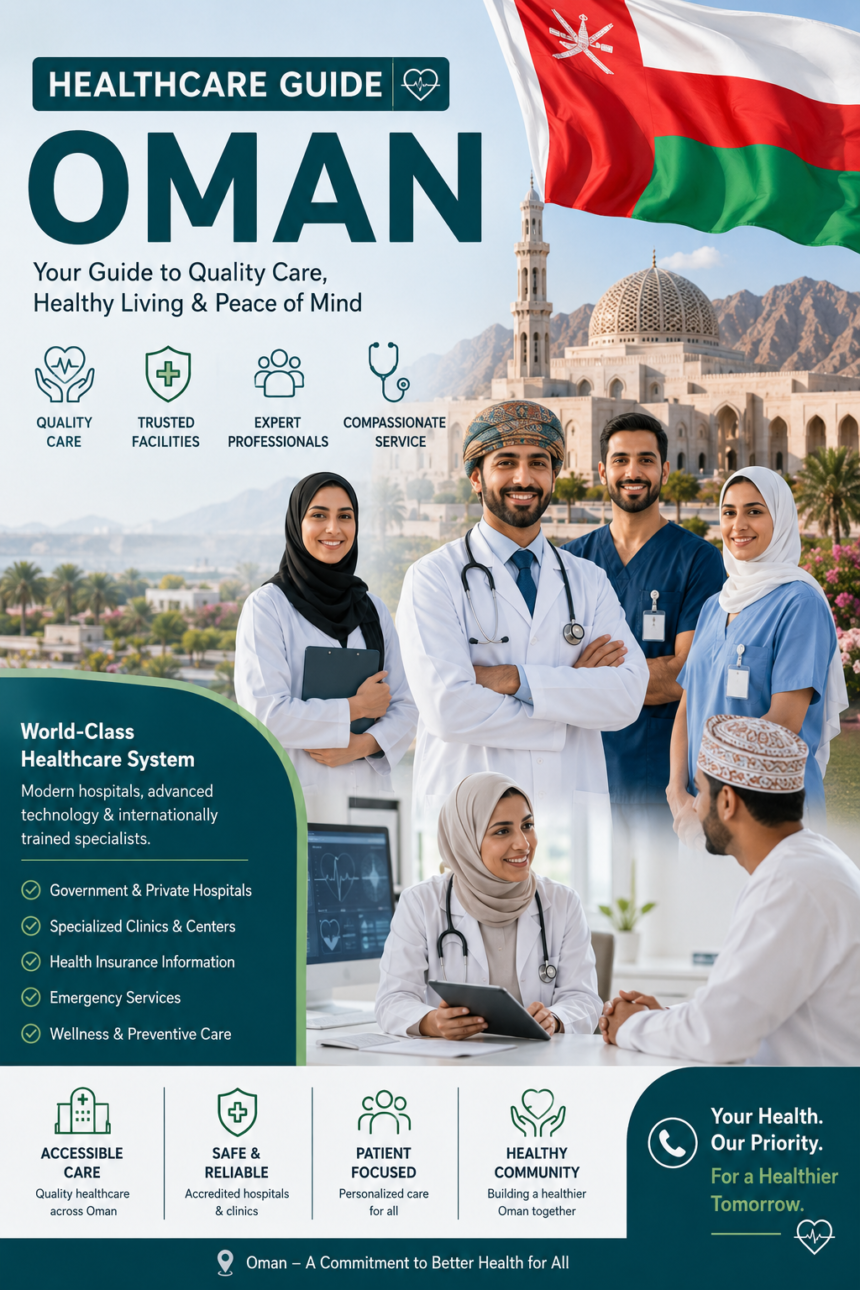
The Healthcare Guide Oman is an important resource for expatriates, families, workers and new residents who want to understand how medical care works in the Sultanate.
- Healthcare Guide Oman for Expats, Families and Residents in 2026
- Understanding Oman’s Healthcare System
- Public Healthcare in Oman
- Private Healthcare in Oman
- Healthcare in Muscat
- Healthcare Outside Muscat
- Primary Healthcare in Oman
- Emergency Medical Care in Oman
- Health Insurance in Oman
- What Is the Dhamani Platform?
- Choosing Health Insurance in Oman
- Healthcare for Expatriates in Oman
- Healthcare for Expat Families
- Maternity Care in Oman
- Children’s Healthcare in Oman
- Dental Care in Oman
- Pharmacies in Oman
- Medical Fitness Tests for Foreign Workers
- Specialist Healthcare in Oman
- Preventive Healthcare in Oman
- Managing Chronic Conditions
- Healthcare and Oman’s Ageing Population
- Digital Healthcare in Oman
- The Shifa App and Digital Health Services
- Public Versus Private Healthcare in Oman
- Healthcare Quality and Regulation
- Healthcare Under Oman Vision 2040
- The Growing Role of Private Healthcare
- How to Choose a Hospital or Clinic in Oman
- Healthcare Tips for New Expats in Oman
- Healthcare Costs in Oman
- Frequently Asked Questions About Healthcare Guide Oman
- Conclusion
Oman has developed a healthcare system that combines government hospitals and health centres with an expanding private healthcare sector. The Ministry of Health is the principal authority responsible for healthcare services and operates hospitals, local hospitals, polyclinics, health centres and other facilities across the country’s governorates.
For residents, understanding the system before medical care is needed can make life considerably easier.
Where should you go for routine treatment?
How does private healthcare work?
Do expatriates need health insurance?
Where can you find specialists?
What should families know?
And how is Oman modernising healthcare?
This Healthcare Guide Oman explains the essentials.
Healthcare Guide Oman for Expats, Families and Residents in 2026
Healthcare in Oman operates through both public and private providers.
The Ministry of Health manages a network that includes primary, secondary and tertiary healthcare services. The government’s objective is to provide accessible healthcare across the Sultanate while strengthening prevention, specialised treatment and healthcare quality.
The private healthcare sector has also become increasingly important.
In February 2026, Oman’s Ministry of Health described private healthcare establishments as strategic partners in the national healthcare system and emphasised stronger integration between public and private providers as part of Oman Vision 2040.
For residents, this creates different choices depending on eligibility, insurance coverage, location and the treatment required.
Understanding Oman’s Healthcare System
Oman’s healthcare system can broadly be divided into three areas.
The first is the Ministry of Health network.
The second consists of healthcare institutions operated by other government organisations.
The third is the private healthcare sector.
Primary healthcare is especially important because health centres and polyclinics can act as the first point of contact for many medical needs.
More complicated cases may then be referred to hospitals or specialised facilities.
The Ministry of Health says its system is designed around equitable access to primary, secondary and tertiary healthcare across the Sultanate.
This referral structure helps ensure that major hospitals are used appropriately for more specialised treatment.
Public Healthcare in Oman
Public healthcare forms the foundation of Oman’s medical system.
Government health facilities are distributed across different governorates rather than being concentrated entirely in Muscat.
Depending on the location and service level, the network includes:
Health centres
Polyclinics
Local hospitals
Regional hospitals
Specialised hospitals
Medical fitness centres
The Ministry of Health’s current electronic portal provides directories for hospitals, local hospitals, polyclinics, health centres and medical fitness facilities.
For Omani citizens, the public system is particularly important.
Expatriate access, eligibility and charges can differ depending on circumstances, employment and applicable regulations.
Foreign residents should therefore understand their employer-provided insurance and available private healthcare network.
Private Healthcare in Oman
Private healthcare has expanded alongside population growth and demand for greater choice.
Muscat contains a significant concentration of private hospitals, medical centres, dental clinics, diagnostic facilities and specialist practices.
Private healthcare can offer advantages such as greater appointment flexibility, access to particular specialists and a wider choice of facilities.
However, cost becomes important.
A routine consultation is very different financially from surgery, emergency admission or long-term specialist treatment.
This is one reason health insurance matters particularly for expatriates.
Oman’s Ministry of Health maintains regulatory oversight of private healthcare establishments and provides an online directory of licensed private health establishments, specialties and licensed medical professionals.
Patients can use this information when verifying healthcare providers.
Healthcare in Muscat
Muscat naturally offers some of the widest medical choices in Oman.
As the capital and largest urban centre, it has government hospitals, private hospitals, specialist centres, clinics, pharmacies, dental facilities and diagnostic services.
This makes Muscat particularly convenient for expatriates who require regular specialist care.
People relocating elsewhere in Oman should investigate local healthcare before choosing where to live, particularly when someone in the family requires ongoing specialist treatment.
A smaller city may handle routine healthcare effectively while certain advanced procedures require referral to a larger facility.
Healthcare Outside Muscat
Living outside Muscat does not mean living without healthcare.
The Ministry of Health operates facilities across the Sultanate’s governorates as part of its objective of providing geographically accessible healthcare.
However, the range of specialists and advanced procedures may differ from one location to another.
Residents of regional communities should know:
Their nearest health centre
Nearest hospital
Nearest emergency department
Available private clinics
Nearest pharmacy
Referral arrangements for specialist care
This information becomes particularly important for families with children, elderly relatives or chronic healthcare needs.
Primary Healthcare in Oman
Primary care is one of the most important parts of the Omani healthcare system.
Rather than immediately visiting a major hospital for every medical problem, patients can often begin with a primary healthcare facility.
Primary healthcare can include preventive care, routine consultations, vaccinations, maternal services, chronic disease management and referrals.
This approach helps identify health problems earlier and reduces unnecessary pressure on specialist hospitals.
Oman’s Ministry of Health specifically describes accessible primary care as a key gateway to advanced and specialised treatment.
Emergency Medical Care in Oman
Everyone living in Oman should know what to do during a medical emergency before one occurs.
Emergency departments are designed for serious and urgent situations rather than ordinary consultations.
Examples can include severe injuries, breathing difficulties, major bleeding, loss of consciousness, suspected stroke, serious chest pain and other potentially life-threatening conditions.
Keep identification and insurance information easily accessible.
Families should also identify their nearest appropriate emergency facility after moving into a new neighbourhood.
This simple preparation can save valuable time.
Health Insurance in Oman
Health insurance is becoming increasingly important within Oman’s healthcare system.
One of the major developments is Dhamani, Oman’s national health insurance platform.
The Financial Services Authority describes Dhamani as a national platform connecting healthcare providers, insurance companies and regulators so health insurance information and transactions can be exchanged electronically.
The system is designed to make processes such as insurance eligibility, preauthorisation, claims and payments more efficient.
For expatriates, insurance coverage should be reviewed carefully rather than simply assuming every medical service is covered.
What Is the Dhamani Platform?
Dhamani is not a hospital.
It is healthcare insurance infrastructure.
The system connects insurers, healthcare providers and regulators.
According to Oman’s Financial Services Authority, Dhamani supports eligibility checks, preauthorisation, claims submissions, resubmissions and payment transfers. Integration with Dhamani is a regulatory requirement for healthcare facilities and insurers.
This digital integration can reduce paperwork and improve the way insurance transactions are processed.
For patients, the long-term objective is a smoother experience between insurer and healthcare provider.
Choosing Health Insurance in Oman
Do not choose insurance solely based on the cheapest premium.
Coverage matters more.
Before relying on a policy, understand:
Which hospitals are included
Which clinics are included
Whether outpatient treatment is covered
Emergency coverage
Hospital admission coverage
Specialist consultations
Maternity coverage
Dental coverage
Prescription medicines
Diagnostic tests
Pre-existing condition rules
Annual limits
Deductibles and co-payments
International coverage
Emergency evacuation where relevant
The cheapest plan can become expensive if the hospitals or treatments you actually need are excluded.
Healthcare for Expatriates in Oman
Expatriates form an important part of Oman’s population and workforce.
For foreign residents, the practical healthcare experience often depends on employer arrangements and insurance.
Before accepting an employment package, workers should ask what healthcare coverage is included.
Do not simply ask:
“Is medical insurance provided?”
Ask what the insurance actually covers.
Request information about the hospital network, outpatient limits, inpatient coverage, medicines, dental treatment and family coverage.
A strong salary package with weak healthcare coverage can create unexpected expenses.
Healthcare for Expat Families
Families need to examine medical coverage more carefully than individual workers.
A policy suitable for one healthy adult may not be sufficient for a family.
Parents should consider:
Paediatric care
Vaccinations
Emergency treatment
Dental services
Specialist consultations
Prescription medicine
Diagnostic testing
Hospital admission
Maternity coverage
Chronic conditions
Nearby hospitals and clinics
Families should also confirm whether dependants are included under employer insurance or require separate policies.
Never assume spouse and child coverage is automatic.
Maternity Care in Oman
Maternity healthcare is available through both public and private facilities, depending on eligibility and insurance arrangements.
Expectant parents should investigate maternity coverage early.
Insurance plans can differ significantly in:
Waiting periods
Pregnancy coverage
Routine consultations
Ultrasound scans
Laboratory tests
Delivery costs
Caesarean sections
Hospital room categories
Newborn coverage
Pregnancy complications
The Ministry of Health continues to regulate standards for maternity care, including private-sector guidance relating to high-risk obstetric services.
Planning before pregnancy or early in pregnancy can help families avoid unexpected expenses.
Children’s Healthcare in Oman
Families with children should identify a paediatrician soon after relocating.
Children may require routine check-ups, vaccinations, emergency care and treatment for common illnesses.
Parents should keep vaccination and medical records organised.
If a child has allergies or a chronic medical condition, provide relevant information to schools and caregivers.
Insurance networks should also be checked to confirm access to appropriate paediatric hospitals or clinics.
Dental Care in Oman
Dental services are widely available through private clinics, particularly in urban areas.
Common services include:
Routine examinations
Cleaning
Fillings
Root canal treatment
Crowns
Orthodontics
Dental implants
Cosmetic dentistry
Dental insurance coverage varies considerably.
Some medical insurance plans provide limited dental benefits, while others exclude routine dental treatment.
Check this before booking expensive procedures.
Pharmacies in Oman
Pharmacies are widely available in major towns and cities.
Many common medicines can be obtained relatively easily, while other medications require prescriptions.
People taking long-term medication should verify availability before relocating.
Brand names can differ between countries even when the active ingredient is the same.
Bring appropriate medical documentation for important ongoing treatment.
Never assume that a medication available without prescription in another country will have identical rules in Oman.
Medical Fitness Tests for Foreign Workers

Medical fitness procedures are important for many expatriate workers.
Certain employment and visa processes require medical examinations.
Oman’s Ministry of Health also operates a pre-arrival medical report attestation service that helps employers and individuals recruiting expatriate workers authenticate required reports before visa procedures are completed.
Requirements can depend on the worker’s nationality, profession and visa process.
Applicants should follow current official instructions rather than relying on old information because medical and immigration requirements can change.
Specialist Healthcare in Oman
Patients requiring specialised care may access services in areas such as:
Cardiology
Orthopaedics
Neurology
Oncology
Dermatology
Ophthalmology
ENT
Gastroenterology
Endocrinology
Urology
Obstetrics and gynaecology
Paediatrics
Psychiatry
Rehabilitation
The exact specialist network depends on facility and location.
When choosing health insurance, people with existing conditions should check whether the specialists and hospitals they use are included.
Preventive Healthcare in Oman
Modern healthcare is increasingly focused on preventing illness rather than treating disease only after it becomes serious.
Oman is strengthening its approach to noncommunicable diseases.
In February 2026, the Ministry of Health published results from its 2025 National Survey on Noncommunicable Diseases and associated risk factors. The government said the results would support evidence-based health planning aligned with Oman Vision 2040.
Preventive healthcare can include regular screenings, vaccinations, exercise, healthy eating and monitoring risk factors such as blood pressure and blood sugar.
Managing Chronic Conditions
People with diabetes, hypertension, heart conditions, asthma or other chronic illnesses should establish continuity of care soon after moving to Oman.
Do not wait until medication is almost finished.
Bring:
Medical reports
Prescription information
Recent test results
Medication list
Allergy information
Specialist reports
Relevant imaging where necessary
Finding a suitable doctor early can prevent interruptions in treatment.
Healthcare and Oman’s Ageing Population
As populations live longer, healthcare systems increasingly need to address chronic diseases, rehabilitation and elderly care.
Oman is no exception.
The country’s healthcare planning will increasingly need to balance infectious disease control with long-term conditions and age-related healthcare requirements.
This creates opportunities for expanded home healthcare, rehabilitation, specialised nursing and geriatric medicine.
It also means families may need to think more carefully about healthcare when elderly parents live with them.
Digital Healthcare in Oman
Digital transformation is becoming increasingly visible across Oman’s healthcare system.
The Ministry of Health’s electronic portal now brings together healthcare information and services for individuals, businesses and employees. It also provides access to facility directories and other digital health resources.
Dhamani is another example of digital transformation, connecting healthcare and insurance institutions electronically.
As digital healthcare develops, patients can expect technology to play a larger role in appointments, records, insurance and communication.
The Shifa App and Digital Health Services
The Ministry of Health currently promotes its Shifa application through the national electronic health portal.
Digital services can make healthcare administration more convenient and reduce reliance on physical paperwork.
Residents should become familiar with official digital platforms after obtaining the identification and residency documentation needed to access services.
Digital transformation is likely to remain a major part of Oman’s healthcare development.
Public Versus Private Healthcare in Oman
Neither system is automatically the right choice for everyone.
Public healthcare provides the backbone of national health services.
Private healthcare provides additional choice and capacity.
The Ministry of Health has explicitly emphasised stronger integration between public and private healthcare as part of the country’s healthcare development strategy and universal health coverage goals.
For expatriates, private healthcare and insurance frequently play particularly important roles.
The best approach depends on eligibility, medical requirements, location and insurance.
Healthcare Quality and Regulation
Quality is especially important when choosing private healthcare.
Oman’s Ministry of Health regulates private healthcare establishments and maintains information about licensed facilities and healthcare professionals.
This means patients have an official resource for checking whether providers are appropriately licensed.
In 2026, the Ministry’s private health sector forum focused on trust, excellence, partnership, governance and accountability.
These efforts are part of a broader strategy to strengthen quality across the healthcare sector.
Healthcare Under Oman Vision 2040
Healthcare development is closely connected to Oman Vision 2040.
The country’s objectives include improving quality, efficiency and sustainability while strengthening the role of prevention, technology and private-sector participation.
The Ministry of Health has also incorporated its five-year health plan for 2026–2030 into current healthcare planning and regulatory work.
This means the healthcare system is not static.
Oman is continuing to develop how services are organised, financed, regulated and delivered.
The Growing Role of Private Healthcare
Private healthcare is expected to remain important as Oman expands services and works toward broader healthcare transformation.
At its 2026 annual forum for private healthcare establishments, the Ministry described the sector as an active partner in national healthcare development rather than simply an additional service provider.
This creates opportunities for investment in:
Hospitals
Clinics
Diagnostics
Digital health
Medical technology
Rehabilitation
Specialist treatment
Home healthcare
Preventive services
Insurance technology
The challenge will be maintaining quality as the sector grows.
How to Choose a Hospital or Clinic in Oman
Choosing a healthcare provider should involve more than finding the closest location.
Consider:
Medical specialty
Doctor qualifications
Facility licensing
Insurance network
Appointment availability
Emergency facilities
Language support
Diagnostic services
Pharmacy access
Patient reviews
Location
Follow-up care
For complex treatment, obtaining a second medical opinion may also be appropriate.
The Ministry of Health’s private healthcare portal can help residents identify licensed establishments and professionals.
Healthcare Tips for New Expats in Oman
Complete several healthcare tasks soon after arriving.
Understand your insurance.
Save your insurance card digitally.
Identify the nearest clinic.
Identify the nearest emergency department.
Find a pharmacy.
Keep medical records.
Locate specialists if required.
Check medication availability.
Understand co-payments.
Add emergency contacts to your phone.
Parents should do the same for children.
A little preparation can prevent significant stress when medical care is suddenly required.
Healthcare Costs in Oman
Medical costs depend heavily on the provider, treatment and insurance arrangement.
A routine clinic consultation is very different from specialist surgery or hospital admission.
Private healthcare can become expensive when major treatment is required.
This is why patients should confirm insurance approval before non-emergency procedures whenever possible.
Ask:
Is this provider in-network?
Do I need preauthorisation?
What is my co-payment?
Is this test covered?
Is the prescribed medicine covered?
Is there an annual limit?
Understanding these details before treatment reduces billing surprises.
Frequently Asked Questions About Healthcare Guide Oman
Is healthcare good in Oman?
Oman has an established public healthcare network alongside a growing regulated private sector. The Ministry of Health provides services across primary, secondary and tertiary levels and is continuing healthcare transformation under Oman Vision 2040.
Does Oman have private hospitals?
Yes. Oman has a substantial private healthcare sector, and the Ministry of Health maintains information about licensed private healthcare establishments.
Do expats need health insurance in Oman?
Health insurance is particularly important for expatriates because access, employer coverage and private medical costs vary. Oman is also developing an integrated insurance environment through the national Dhamani platform.
What is Dhamani in Oman?
Dhamani is Oman’s national health insurance platform connecting insurers, healthcare providers and regulators for electronic insurance transactions.
Can families get healthcare in Oman?
Yes. Families have access to public and private healthcare depending on eligibility and insurance. Families should pay particular attention to paediatric, maternity, dental and emergency coverage.
Does Oman have healthcare outside Muscat?
Yes. Ministry of Health facilities operate across Oman’s governorates, although the range of specialised treatment can vary by location.
Conclusion
This Healthcare Guide Oman shows that the Sultanate has developed a healthcare system combining an extensive government network with a growing private healthcare sector.
The Ministry of Health remains the principal authority responsible for healthcare and operates services across the country’s governorates. At the same time, private hospitals and clinics are becoming increasingly important partners in national healthcare development.
For expatriates, understanding insurance is essential.
Do not wait until treatment is needed to discover what your policy covers.
Check your hospital network.
Understand outpatient and inpatient benefits.
Review maternity and dental coverage where relevant.
Know your co-payments.
Keep important medical documents organised.
Families should identify nearby paediatric and emergency facilities soon after relocating.
People with chronic conditions should establish continuity of care early.
And all residents can benefit from understanding Oman’s growing digital healthcare infrastructure, including the Ministry of Health’s electronic services and the Dhamani health insurance platform.
Oman’s healthcare sector continues to evolve under Oman Vision 2040, with greater emphasis on quality, public-private integration, digital transformation, preventive care and sustainable healthcare delivery.
For residents, that means more than simply knowing where the nearest hospital is.
Understanding how healthcare, insurance, specialists, digital services and emergency care fit together is an important part of building a secure life in Oman.
Follow us on Instagram
Read More – Best Restaurants in Oman: 15 Amazing Places to Eat in 2026