




Sweet vs Savoury Breakfast Traditions
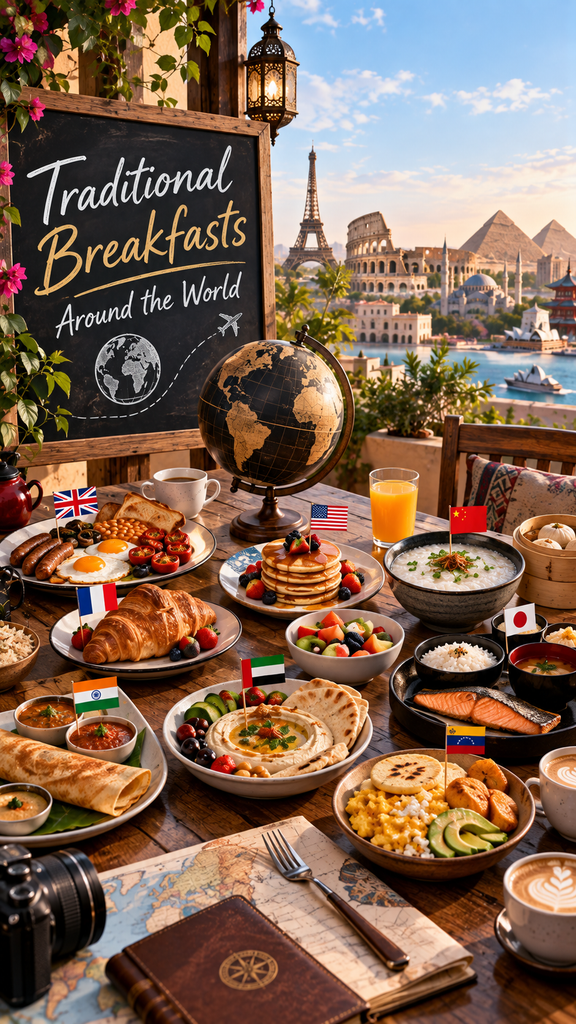
Traditional Breakfasts reveal far more about a country than what people happen to eat in the morning. From warm flatbread and beans in the Middle East to rice and miso soup in Japan, breakfast reflects local ingredients, climate, family traditions and the pace of everyday life.
- Traditional Breakfasts Around the World
- 1. UAE: Balaleet and Chebab
- 2. Saudi Arabia: Foul and Tamees
- 3. Turkey: Traditional Kahvaltı
- 4. India: Idli, Dosa and Paratha
- 5. Japan: Rice, Miso Soup and Grilled Fish
- 6. China: Congee and Youtiao
- 7. Mexico: Chilaquiles
- 8. United States: Pancakes, Eggs and Bacon
- 9. United Kingdom: Full English Breakfast
- 10. France: Bread, Pastries and Coffee
- 11. Italy: Cornetto and Cappuccino
- 12. Spain: Pan con Tomate
- 13. Egypt: Ful Medames
- 14. Brazil: Pão de Queijo and Coffee
- 15. Australia: Avocado Toast and Café Breakfasts
- Sweet vs Savoury Breakfast Traditions
- Bread in Global Breakfast Culture
- Tea and Coffee Around the Breakfast Table
- Healthy Traditional Breakfast Choices
- Breakfast Traditions Across the Gulf
- Traditional Breakfasts for Travellers
- Final Thoughts on Traditional Breakfasts
There is no single global definition of breakfast.
In some countries, people begin the day with something light, such as coffee and a pastry. In others, breakfast can be a complete meal containing bread, eggs, beans, vegetables, cheese, meat or rice.
The contrast is one of the most interesting things about exploring food around the world.
A visitor from Europe may consider rice and grilled fish unusual in the morning, while someone from Japan may find a large plate of bacon, sausages and beans equally surprising. Neither is strange within its own cultural setting.
Traditional morning meals also show how societies make practical use of ingredients that are inexpensive, filling and widely available.
Beans dominate breakfast tables in several parts of the Middle East and Latin America. Bread appears almost everywhere, although its form changes dramatically from country to country. Rice becomes central across much of Asia, while dairy products, eggs and coffee play major roles in many Western breakfast traditions.
Here are 15 memorable breakfasts that show just how different mornings can taste around the world.
Traditional Breakfasts Around the World
Breakfast can range from a small drink and pastry to a table filled with several dishes.
| Country | Traditional Breakfast | Main Ingredients |
|---|---|---|
| UAE | Balaleet and chebab | Vermicelli, eggs, saffron, pancakes |
| Saudi Arabia | Foul and tamees | Fava beans, flatbread |
| Turkey | Kahvaltı | Cheese, olives, eggs, bread |
| India | Idli, dosa, paratha | Rice, lentils, flour, spices |
| Japan | Traditional Japanese breakfast | Rice, fish, miso soup |
| China | Congee and youtiao | Rice porridge, fried dough |
| Mexico | Chilaquiles | Tortillas, salsa, eggs |
| United States | Pancakes and eggs | Eggs, pancakes, bacon |
| United Kingdom | Full English | Eggs, sausage, beans, toast |
| France | Tartine and croissant | Bread, butter, pastry |
| Italy | Cornetto and cappuccino | Pastry, coffee |
| Spain | Pan con tomate | Bread, tomato, olive oil |
| Egypt | Ful medames | Fava beans, bread |
| Brazil | Pão de queijo | Cheese bread, coffee |
| Australia | Café-style breakfast | Eggs, toast, avocado |
Not everyone in these countries eats these foods every morning. Modern schedules, health preferences and international food culture have changed breakfast habits considerably.
However, these dishes remain strongly connected with their countries and continue to appear in homes, cafés, restaurants and family gatherings.
1. UAE: Balaleet and Chebab
Traditional Emirati breakfast combines sweet and savoury flavours in ways that can surprise visitors.
One of the best-known dishes is balaleet.
Balaleet is made from sweetened vermicelli flavoured with ingredients such as cardamom, saffron and rose water. It is commonly served with an omelette or egg layer on top.
The result combines sweetness from the noodles with the savoury taste of eggs.
Another Emirati breakfast favourite is chebab, a traditional pancake.
Chebab can contain:
- Flour
- Eggs
- Sugar
- Cardamom
- Saffron
It is often served with date syrup, honey or cheese.
Traditional breakfast tables may also include bread, dates and tea.
These dishes reflect the flavours that appear throughout Emirati cuisine, particularly saffron, cardamom and dates.
For travellers looking beyond the international hotel buffet, an Emirati breakfast offers a much better introduction to local food culture.
2. Saudi Arabia: Foul and Tamees
Saudi breakfasts are often filling, savoury and designed for sharing.
One of the most popular combinations is foul with tamees.
Foul, or ful, is made primarily from cooked fava beans.
Depending on the preparation, it can include:
- Olive oil
- Tomato
- Lemon
- Cumin
- Onion
- Chilli
It is commonly eaten with tamees, a large soft flatbread traditionally baked in a hot oven.
Diners tear pieces of bread and use them to scoop up the beans.
Another familiar breakfast food is shakshuka, where eggs are cooked with tomatoes and spices.
Saudi breakfast culture also varies between regions.
Local breads, cheese, honey and dates can appear alongside tea or Arabic coffee.
The combination of beans and bread makes the meal inexpensive, satisfying and suitable for feeding several people at the same table.
3. Turkey: Traditional Kahvaltı
Turkey has one of the world’s most visually impressive breakfast traditions.
A traditional Turkish breakfast, known as kahvaltı, is not normally built around one single dish.
Instead, several small plates cover the table.
Common items include:
- White cheese
- Aged cheese
- Tomatoes
- Cucumbers
- Olives
- Eggs
- Bread
- Butter
- Honey
- Jam
Tea is an essential part of the experience.
Small glasses of strong Turkish tea are often refilled throughout the meal.
More elaborate breakfasts can include menemen, a soft egg dish cooked with tomato and peppers.
Simit, a ring-shaped sesame bread, is another familiar breakfast food.
What makes Turkish breakfast particularly memorable is its social nature.
Rather than eating quickly and leaving, families and friends may spend a long time talking while sharing multiple dishes.
Weekend breakfasts can become extended social occasions.
4. India: Idli, Dosa and Paratha
India does not have one national breakfast.
The country’s size, climate and regional food cultures have produced an enormous variety of morning meals.
In southern India, common breakfasts include idli and dosa.
Idli are soft steamed cakes made from fermented rice and lentil batter.
They are commonly served with:
- Sambar
- Coconut chutney
- Tomato chutney
Dosa uses a similar fermented batter but is cooked into a thin, crisp pancake.
Further north, paratha is an important breakfast.
This flatbread can be plain or stuffed with ingredients such as:
- Potato
- Paneer
- Cauliflower
- Radish
It is often eaten with yoghurt, pickles or butter.
Other regions have completely different traditions, including poha, upma, puri bhaji and various local breads.
Indian breakfast demonstrates how strongly geography shapes morning food.
5. Japan: Rice, Miso Soup and Grilled Fish
Traditional Japanese breakfast looks very different from the sweet pastries and cereals associated with mornings in many Western countries.
A classic meal can include:
- Steamed rice
- Miso soup
- Grilled fish
- Pickled vegetables
- Seaweed
- Egg
The meal is balanced rather than particularly heavy.
Rice provides the main source of carbohydrate, while fish and egg contribute protein.
Miso soup adds warmth and savoury flavour.
Small side dishes create variety without requiring enormous portions.
Many modern Japanese households now eat bread, coffee or quicker breakfast foods, particularly on busy weekdays.
However, traditional Japanese breakfasts remain common in ryokan inns, hotels and restaurants.
For travellers, staying at a traditional Japanese inn and eating a complete Japanese breakfast can be as memorable as the accommodation itself.
6. China: Congee and Youtiao
China’s breakfast traditions vary enormously by region.
One widely recognised dish is congee, a soft rice porridge.
Congee can be extremely simple or served with several toppings.
These may include:
- Pickled vegetables
- Egg
- Meat
- Peanuts
- Spring onions
Another famous breakfast combination is youtiao with soy milk.
Youtiao are long strips of fried dough with a light, crisp exterior.
They can be dipped into warm or cold soy milk.
Other Chinese regions have their own famous breakfast foods, including steamed buns, noodles and savoury pancakes.
Street vendors play an important role in breakfast culture in many Chinese cities.
Instead of cooking at home, commuters may purchase something inexpensive and freshly prepared on the way to work.
7. Mexico: Chilaquiles
Mexican breakfast can be bold, colourful and full of flavour.
Chilaquiles are among the country’s best-known breakfast dishes.
They are made using pieces of tortilla that are lightly fried or baked before being coated with salsa.
The dish can then be topped with:
- Eggs
- Chicken
- Cheese
- Cream
- Onion
- Avocado
Green and red salsa create different versions.
Chilaquiles are filling and make excellent use of tortillas that might otherwise become stale.
Other Mexican breakfasts include huevos rancheros, tamales and various egg dishes.
Beans frequently appear alongside breakfast as well.
Mexican breakfast shows that there is no rule saying morning food needs to be mild.
Spice, salsa and strong savoury flavours can begin the day just as naturally as coffee and toast.
8. United States: Pancakes, Eggs and Bacon
American breakfast has become internationally familiar through films, television and restaurant chains.
The classic large breakfast can include:
- Eggs
- Bacon
- Sausages
- Pancakes
- Toast
- Hash browns
Pancakes are commonly served with butter and maple syrup.
Eggs can be fried, scrambled or prepared as omelettes.
However, everyday American breakfasts are often much simpler.
People may eat:
- Cereal
- Bagels
- Toast
- Oatmeal
- Yoghurt
- Fruit
Coffee plays an especially important role in morning routines.
The large cooked breakfast is more commonly associated with diners, weekend meals and restaurants than with every weekday morning.
Regional differences also exist, including biscuits and gravy in parts of the American South.
9. United Kingdom: Full English Breakfast
The full English breakfast is one of Britain’s most recognisable dishes.
A traditional plate can contain:
- Eggs
- Sausages
- Bacon
- Baked beans
- Grilled tomatoes
- Mushrooms
- Toast
Black pudding may also appear.
It is a substantial meal and is particularly associated with weekends, cafés, hotels and traditional pubs rather than everyday breakfast for everyone.
Regional versions exist.
Scotland, Wales and Northern Ireland have their own cooked breakfast traditions with local additions.
Tea remains closely associated with British breakfast culture, although coffee has also become extremely common.
The full English shows how breakfast can evolve into part of a country’s tourism identity.
Visitors often seek it out precisely because of its strong cultural reputation.
10. France: Bread, Pastries and Coffee
Compared with large cooked breakfasts, the traditional French morning meal is generally much lighter.
Common choices include:
- Baguette
- Butter
- Jam
- Croissant
- Pain au chocolat
Coffee or hot chocolate typically accompanies the food.
A simple tartine, made from bread spread with butter or jam, can be more representative of an everyday French breakfast than a large plate of pastries.
The meal is usually sweet rather than savoury.
Eggs, bacon and sausages are not traditionally central to the French breakfast table.
This creates an interesting contrast with British breakfast culture despite the geographical closeness of the two countries.
France shows that breakfast does not need to be large to have a strong identity.
11. Italy: Cornetto and Cappuccino
Italian breakfast is often even simpler.
A common combination is:
Cornetto + cappuccino
The cornetto resembles a croissant but can have a slightly softer and sweeter texture.
It may be plain or filled with:
- Cream
- Chocolate
- Jam
- Pistachio
Many Italians eat breakfast quickly at a café or bar.
Someone may stand at the counter, drink an espresso or cappuccino, eat a pastry and continue with the day.
Breakfast is therefore very different from the long lunch or dinner meals associated with Italian food culture.
Coffee is the central ritual.
For visitors accustomed to large breakfasts, the simplicity can feel surprising.
Yet that simplicity is part of what makes Italian morning culture distinctive.
12. Spain: Pan con Tomate
Spain has several regional breakfast traditions.
One of the simplest and most popular is pan con tomate, particularly associated with Catalonia and other parts of Spain.
The dish consists of bread topped or rubbed with tomato and usually finished with olive oil and salt.
It can be accompanied by:
- Cheese
- Ham
- Coffee
Another famous Spanish breakfast treat is churros with hot chocolate.
Churros are strips of fried dough that can be dipped into thick chocolate.
However, this richer option is very different from the everyday simplicity of bread, tomato and coffee.
Spanish breakfast often demonstrates the importance of excellent basic ingredients.
Good bread, ripe tomato and quality olive oil can create a memorable dish without complicated preparation.
13. Egypt: Ful Medames
Ful medames is one of Egypt’s most important traditional foods and a classic breakfast.
It is made primarily from slow-cooked fava beans.
Common additions include:
- Cumin
- Lemon juice
- Olive oil
- Tomato
- Onion
- Chilli
The beans are eaten with Egyptian flatbread.
Eggs, cheese and falafel may also be served alongside them.
Ful is inexpensive, filling and rich in plant-based protein.
Its popularity extends beyond Egypt into other parts of the Middle East.
Like Saudi foul, the dish demonstrates how beans became an ideal breakfast ingredient in societies where affordable, filling food needed to sustain people through much of the day.
Despite its simplicity, preparation and seasoning can vary considerably from one household or restaurant to another.
14. Brazil: Pão de Queijo and Coffee
Brazilian breakfast, known as café da manhã, often combines bread, fruit and coffee.
One particularly famous item is pão de queijo.
These small cheese breads are made using cassava or tapioca starch and cheese.
They have a chewy interior and lightly crisp exterior.
They are especially associated with Minas Gerais but are eaten throughout Brazil.
Other breakfast items can include:
- Bread
- Butter
- Cheese
- Ham
- Tropical fruit
- Cake
Coffee is extremely important.
Brazil is one of the world’s major coffee-producing countries, and coffee naturally occupies a central place in breakfast culture.
The typical Brazilian morning meal is usually lighter than a large American or British cooked breakfast.
15. Australia: Avocado Toast and Café Breakfasts
Australia’s modern breakfast culture is strongly associated with cafés.
While many dishes have international influences, Australian cities have developed a distinctive brunch and breakfast scene.
Popular options include:
- Avocado on toast
- Poached eggs
- Sourdough
- Granola
- Yoghurt
- Fresh fruit
Coffee is central to the experience.
Australian cities became particularly well known for espresso-based café culture and the flat white.
Avocado toast has become so closely associated with contemporary Australian café culture that it is recognised internationally.
This example also shows that not every “traditional” breakfast needs to be centuries old.
Food traditions continue evolving.
Today’s café habits can become tomorrow’s cultural references.
Sweet vs Savoury Breakfast Traditions
One of the biggest differences between breakfast cultures is the preference for sweet or savoury foods.
Countries with strongly sweet breakfast traditions include France and Italy.
Pastries, jam and coffee dominate.
Many Middle Eastern and Asian breakfast traditions are much more savoury.
Beans, rice, bread, fish, eggs and vegetables can all appear in the morning.
| Mostly Sweet | Mostly Savoury | Mixed |
|---|---|---|
| France | Japan | UAE |
| Italy | Egypt | Turkey |
| Parts of Brazil | Saudi Arabia | United States |
| China | India | |
| Mexico | United Kingdom |
These categories are not strict.
Modern eating habits mix influences constantly.
Someone in Dubai may eat an Indian dosa on Monday, French croissant on Tuesday and shakshuka on Wednesday.
Global cities increasingly make breakfast international.
Bread in Global Breakfast Culture
Bread may be the closest thing to a universal breakfast food.
Its form changes dramatically.
In Saudi Arabia, tamees accompanies beans.
In France, baguette becomes tartine.
Spain serves toasted bread with tomato.
Britain serves sliced toast with a cooked breakfast.
Turkey provides several forms of bread alongside cheese and olives.
India offers paratha and other regional flatbreads.
Bread works well in the morning because it is affordable, filling and easy to combine with sweet or savoury ingredients.
It also reveals local grain traditions.
Wheat-based breads dominate many regions, while rice takes a stronger breakfast role across parts of Asia.
Tea and Coffee Around the Breakfast Table
Morning beverages are almost as culturally important as breakfast foods.
Coffee dominates many breakfast cultures.
It is particularly visible in:
- Italy
- France
- Brazil
- United States
- Australia
However, preparation differs considerably.
An Italian espresso is very different from an American filter coffee or an Australian flat white.
Tea plays an especially important role in countries including Turkey, India, the UAE, Saudi Arabia and the United Kingdom.
Turkish breakfast without tea would feel incomplete.
Likewise, karak and milk tea have become everyday morning favourites across parts of the Gulf and South Asia.
These beverages are not simply sources of caffeine.
They create rituals around beginning the day.
Healthy Traditional Breakfast Choices
Traditional does not automatically mean healthy or unhealthy.
Much depends on portion size, cooking method and frequency.
Several traditional breakfasts naturally provide useful nutritional balance.
Japanese breakfast can combine carbohydrates from rice with protein from fish and nutrients from vegetables.
Indian idli is steamed rather than fried and can be paired with lentil-based sambar.
Middle Eastern bean dishes provide fibre and plant protein.
Greek-style yoghurt, fruit, eggs and whole-grain bread can also form balanced meals.
At the same time, some traditional breakfasts can contain substantial amounts of:
- Sugar
- Salt
- Saturated fat
- Refined carbohydrates
A full English breakfast every morning would produce a very different nutritional pattern from eating it occasionally.
The healthiest approach is usually to borrow the strongest elements from traditional food culture: whole foods, moderate portions and varied ingredients.
Breakfast Traditions Across the Gulf
The Gulf has its own diverse breakfast traditions.
Although international cafés are everywhere in cities such as Dubai, Doha, Riyadh and Manama, local foods remain important.
Common elements can include:
- Flatbread
- Eggs
- Beans
- Cheese
- Dates
- Honey
- Tea
- Arabic coffee
The UAE has dishes such as balaleet and chebab.
Saudi Arabia is strongly associated with foul and tamees.
Other Gulf countries have their own breads, egg dishes and regional variations influenced by Arabia, Persia, India and East Africa.
That history helps explain why Gulf breakfast tables can contain both sweet and savoury dishes.
Centuries of trade shaped the region’s food.
Modern Gulf cities have added another layer, making it easy to find breakfasts from almost every part of the world.
Traditional Breakfasts for Travellers
Breakfast is one of the easiest ways to explore local culture while travelling.
Instead of eating the same hotel buffet in every country, try at least one traditional morning meal.
A few useful habits can make the experience better:
- Visit local cafés
- Ask what residents actually order
- Try regional breads
- Taste local tea or coffee
- Share several dishes
- Avoid assuming breakfast must look familiar
Some of the most interesting breakfast experiences happen outside tourist restaurants.
A bowl of congee from a neighbourhood stall, a plate of ful in Cairo or a simple espresso and cornetto in an Italian café can reveal more about everyday life than an expensive international brunch.
Food becomes memorable when it connects the visitor with the rhythm of the place.
Final Thoughts on Traditional Breakfasts
Traditional Breakfasts show how differently people around the world begin their day.
In the UAE, sweet balaleet may be served with eggs.
Saudi diners can share foul and freshly baked tamees.
Turkey turns breakfast into a table filled with cheese, olives, bread and tea.
India offers everything from steamed idli to stuffed paratha.
Japan begins with rice, fish and miso soup, while Mexico brings tortillas and salsa to the morning table.
European traditions can be completely different again. France and Italy often prefer light pastries and coffee, while the United Kingdom is famous for a large cooked breakfast.
None of these approaches is more correct than another.
Breakfast develops around local agriculture, history, family habits and working life.
That is why exploring morning food can be such an easy way to understand a culture.
The next time you travel, look beyond the familiar hotel cereal and toast.
Try the breakfast people actually eat locally.
A simple morning meal may become one of the most memorable tastes of the entire journey.
Do follow us on Instagram
Read More – GCC VAT Guide: 12 Essential Rules for Successful Businesses in 2026