

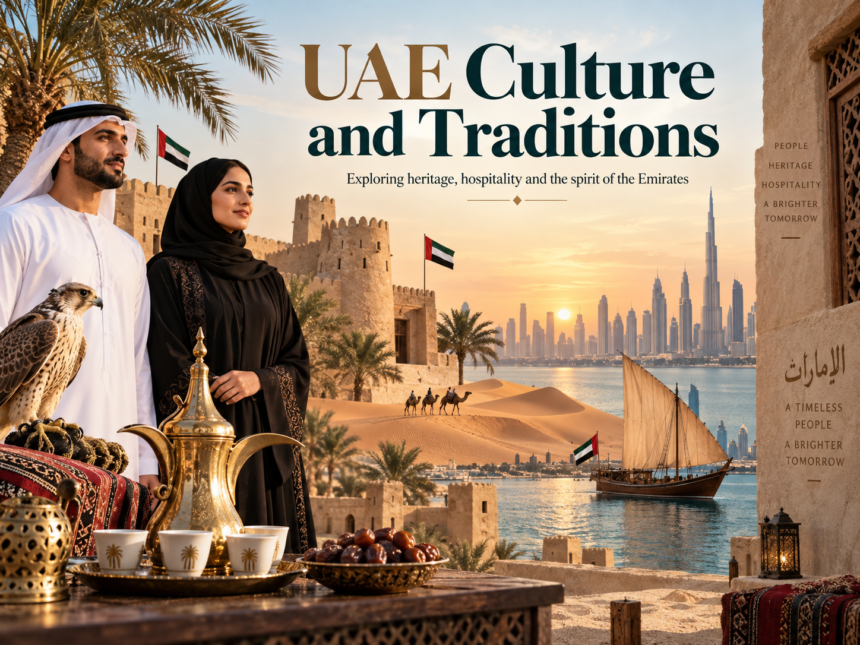
UAE Culture and Traditions Complete Guide to Emirati Heritage, Customs and Lifestyle
The UAE culture and traditions reflect a fascinating blend of deep-rooted Emirati heritage, Islamic values, Bedouin traditions, maritime history, and modern influences. Although the United Arab Emirates is now known for its futuristic cities, luxury lifestyle, and global business environment, its cultural identity remains closely connected to its history and traditional values.
- What Is UAE Culture and Why Is It Important?
- What Are the Main Features of UAE Culture and Traditions?
- How Has Islam Influenced UAE Culture?
- What Is Emirati Hospitality Like?
- What Are Traditional UAE Clothes?
- Why Is Family Important in UAE Culture?
- What Role Does Arabic Play in UAE Culture?
- What Is Traditional Emirati Food?
- Why Are Dates Important in UAE Culture?
- What Is the Traditional Role of Falconry in the UAE?
- Why Are Camels Important to Emirati Heritage?
- What Is the History of Pearl Diving in the UAE?
- What Are Traditional UAE Music and Dance?
- What Is Al Ayyala and Why Is It Important?
- What Traditional Handicrafts Are Found in the UAE?
- How Is Bedouin Heritage Reflected in UAE Culture?
- What Are Important UAE Festivals and Celebrations?
- How Is UAE National Day Celebrated?
- What Are UAE Social Customs Visitors Should Know?
- How Should Visitors Greet People in the UAE?
- Why Is Respect for Elders Important in UAE Culture?
- How Has Modernization Changed UAE Traditions?
- How Does the UAE Preserve Its Cultural Heritage?
- What Role Do Museums Play in UAE Culture?
- How Can Tourists Experience UAE Culture and Traditions?
- Is UAE Culture the Same Across All Seven Emirates?
- How Do Architecture and Heritage Reflect UAE Traditions?
- Why Is Emirati Hospitality Important for Tourism?
- How Can People Respect UAE Culture and Traditions?
- What Makes UAE Culture Unique?
- What Is the Future of UAE Culture and Traditions?
- Why Should You Learn About UAE Culture and Traditions?
- What Are the Most Important UAE Cultural Traditions to Remember?
From traditional clothing and Emirati food to hospitality, festivals, family life, music, and social customs, the culture of the UAE offers visitors and residents an opportunity to understand the country’s identity beyond its modern skyline.
What Is UAE Culture and Why Is It Important?
UAE culture is the collection of customs, traditions, values, beliefs, arts, food, clothing, and social practices that have developed across the Emirates over generations. Emirati culture has been shaped by the country’s desert environment, Islamic heritage, tribal communities, pearl-diving history, fishing traditions, and trading relationships.
Culture continues to play an important role in everyday life in the UAE. While cities such as Dubai and Abu Dhabi have become highly international, traditional Emirati values remain visible in family gatherings, national celebrations, religious occasions, hospitality, architecture, food, and community events.
Understanding UAE culture and traditions is particularly important for visitors because many social customs are influenced by Islamic values and local heritage. Respect for elders, family relationships, generosity, modesty, and hospitality are among the values that continue to have an important place in Emirati society.
What Are the Main Features of UAE Culture and Traditions?
The culture of the UAE includes several important elements that together create the country’s distinctive identity. These include:
- Islamic traditions and values
- Strong family relationships
- Emirati hospitality
- Bedouin heritage
- Traditional clothing
- Arabic language and literature
- Traditional Emirati cuisine
- Falconry and camel culture
- Pearl diving and maritime heritage
- Traditional music and dance
- Handicrafts and folk arts
- National celebrations
- Respect for elders and community values
These traditions have evolved over time, but many continue to be celebrated and passed from one generation to the next.
How Has Islam Influenced UAE Culture?
Islam is an important part of life and culture in the UAE. Islamic principles influence many aspects of society, including family life, celebrations, hospitality, dress, food, and social behavior.
The five daily prayers, Ramadan, Eid celebrations, charitable giving, and other Islamic practices are significant parts of the country’s cultural landscape. Mosques are also important community spaces and can be found throughout the UAE.
During Ramadan, Muslims fast from dawn until sunset. The month is also associated with generosity, family gatherings, charity, and spiritual reflection. At sunset, families and communities come together for iftar, the meal that breaks the fast.
Visitors to the UAE during Ramadan can experience this important part of Emirati culture by observing local customs and showing respect for those who are fasting.
What Is Emirati Hospitality Like?
One of the most well-known aspects of UAE culture is Emirati hospitality. Welcoming guests generously is a long-standing tradition influenced by Bedouin customs and the challenges of living in the desert.
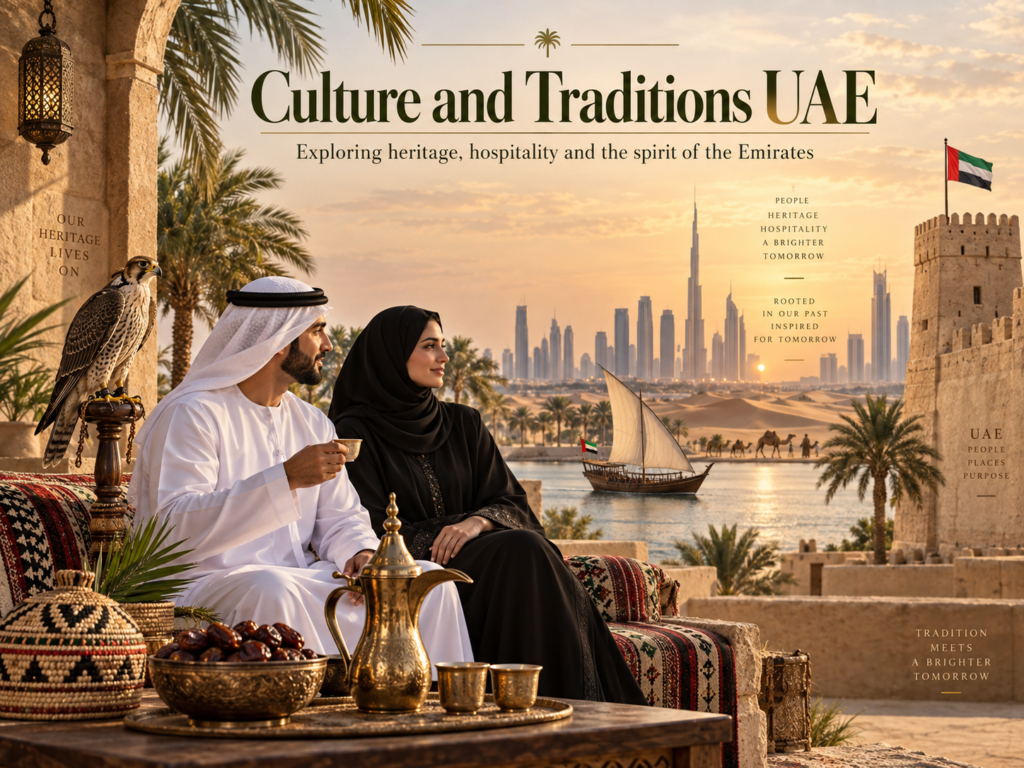
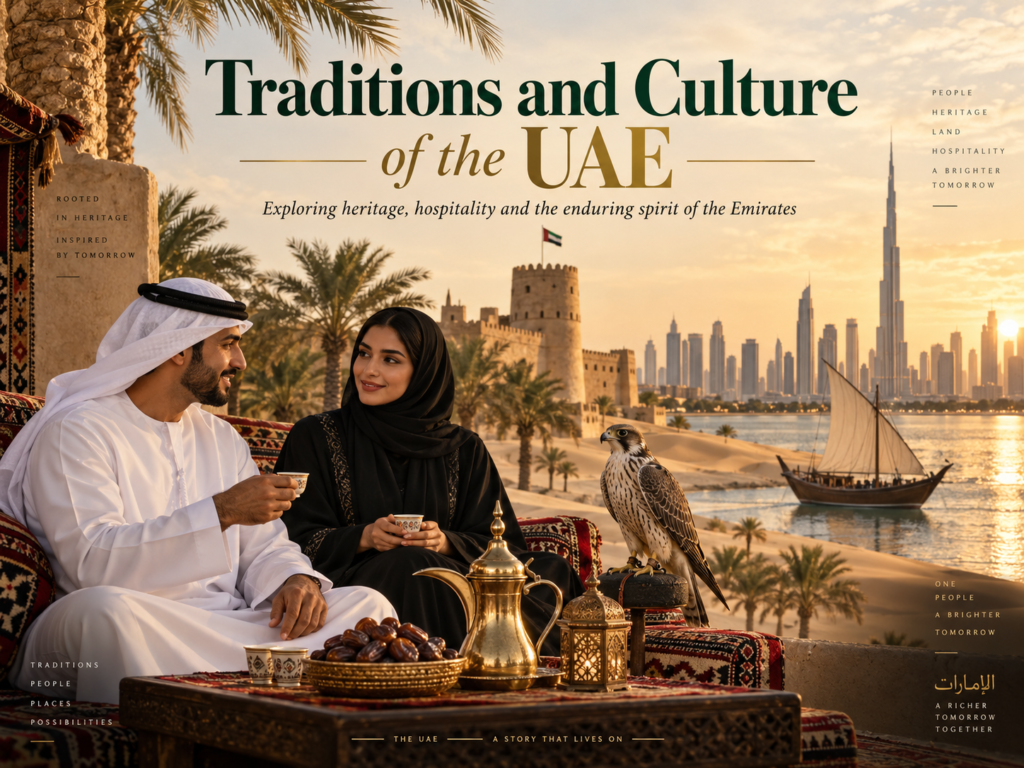
Guests are often offered Arabic coffee, dates, meals, or refreshments. Hospitality is not simply about providing food and drinks; it represents respect, generosity, friendship, and social connection.
Arabic coffee, commonly known as Gahwa, has a special place in Emirati hospitality. It is traditionally served in small cups and may be flavored with cardamom and other spices.
Dates are also commonly served alongside coffee. The combination of dates and Arabic coffee represents an important part of traditional Emirati welcoming customs.
What Are Traditional UAE Clothes?
Traditional clothing is one of the most recognizable elements of UAE culture and traditions. Emirati clothing is generally designed to provide comfort in the region’s hot climate while also reflecting cultural and religious values.
What Do Emirati Men Traditionally Wear?
Emirati men commonly wear the kandura, a long, loose-fitting garment that is usually white. Depending on the occasion and season, kanduras can also appear in other colors.
Men may wear a head covering called a ghutra, which can be secured with a black cord known as an agal.
Traditional men’s clothing is worn regularly in many settings and is particularly common during formal events, religious occasions, national celebrations, and family gatherings.
What Do Emirati Women Traditionally Wear?
Emirati women traditionally wear the abaya, a long outer garment that provides modest coverage. A shayla, or headscarf, is also commonly worn.
Modern Emirati fashion combines traditional clothing with contemporary designs. Abayas today can feature different fabrics, patterns, embroidery, and decorative details while maintaining their traditional identity.
Traditional clothing therefore represents both cultural heritage and the changing nature of UAE society.
Why Is Family Important in UAE Culture?
Family is one of the central pillars of Emirati society. Traditionally, extended families have played a major role in providing emotional, social, and practical support.
Respect for parents, grandparents, and older family members is strongly valued. Family gatherings are common during religious holidays, weddings, national celebrations, and other important occasions.
Children are generally taught the importance of family responsibility, hospitality, respect, and cooperation from an early age.
Even as the UAE culture and traditions has developed into a modern and highly urbanized country, family relationships continue to have an important place in everyday life.
What Role Does Arabic Play in UAE Culture?
Arabic is the official language of the UAE and an important part of its cultural identity. While English is widely spoken because of the UAE’s international population and business environment, Arabic remains central to Emirati heritage.
Arabic is used in government, education, literature, religious settings, media, and cultural activities.
Traditional poetry is also an important element of Arabian culture. Poetry has historically been used to express emotions, describe life in the desert, celebrate important people and events, and preserve stories and cultural knowledge.
What Is Traditional Emirati Food?
Traditional Emirati cuisine reflects the country’s desert environment, coastal history, trade connections, and Islamic traditions.
Food has always been an important part of hospitality and social gatherings. Traditional dishes often include rice, meat, fish, dates, spices, and locally available ingredients.
Some popular Emirati foods include:
- Al Machboos – A rice-based dish prepared with meat or seafood and aromatic spices.
- Harees – A traditional dish made from wheat and meat, commonly enjoyed during Ramadan and special occasions.
- Thareed – Bread combined with meat or vegetables in a flavorful stew.
- Luqaimat – Small sweet dumplings often served with date syrup or other sweet toppings.
- Balaleet – A dish combining sweetened vermicelli with eggs and spices.
- Al Madrooba – A traditional dish that can include salted fish, spices, and a thick sauce.
- Dates – A staple food and a traditional symbol of hospitality.
Emirati cuisine can vary from one family or region to another, making food an interesting way to explore the diversity of UAE heritage.
Why Are Dates Important in UAE Culture?
Dates have been connected with life in the Arabian Peninsula for centuries. Date palms can survive in the region’s challenging climate and have historically provided food and other useful resources.
In UAE culture and traditions, dates are commonly associated with hospitality and generosity. They are often served to guests alongside Arabic coffee.
Dates are also important during Ramadan, when they are traditionally eaten to break the daily fast.
Beyond their nutritional value, dates represent the connection between Emirati life, agriculture, hospitality, and the natural environment.
What Is the Traditional Role of Falconry in the UAE?
Falconry is one of the most famous traditional practices associated with the UAE and the wider Arabian Peninsula. Historically, falcons were used by desert communities for hunting.
Over time, falconry became more than a practical activity. It developed into an important cultural tradition associated with patience, skill, knowledge of nature, and a strong connection to the desert.
Today, falconry continues to be practiced and promoted as part of UAE heritage. Specialized facilities, cultural events, and competitions help preserve knowledge about falcon care and traditional hunting practices.
Falconry is also recognized internationally as an important element of intangible cultural heritage.
Why Are Camels Important to Emirati Heritage?
Camels have played a major role in the history of the Arabian Peninsula. They were particularly valuable to desert communities because they could travel long distances and survive in harsh environmental conditions.
Historically, camels provided transportation, milk, meat, and other resources. They also played an important role in trade and communication.
Today, camel culture remains visible through camel racing, heritage festivals, breeding programs, and traditional events.
Camel racing is especially popular as a cultural and sporting tradition. Modern technology may be used to organize and manage races, but the activity continues to reflect the historical importance of camels in Emirati society.
What Is the History of Pearl Diving in the UAE?
Before the discovery and commercial development of oil transformed the UAE economy, pearl diving was an important source of income for many coastal communities.
Pearl divers would spend long periods at sea searching for natural pearls. The work was physically demanding and involved significant risks.
Pearling also contributed to the development of coastal communities and connected the region to international trading networks.
Today, pearl diving is remembered as an important part of UAE maritime heritage. Museums, heritage villages, cultural exhibitions, and festivals help preserve stories about the traditional pearling industry.
What Are Traditional UAE Music and Dance?
Music and dance are important parts of Emirati celebrations and cultural events. Traditional performances often bring together poetry, drums, singing, and coordinated movement.
One of the most recognizable traditional performances is Al Ayyala. It features lines of performers holding canes and moving rhythmically while accompanied by drums and chanting.
Al Ayyala is commonly associated with celebrations, weddings, national events, and cultural occasions.
Other traditional forms of music and performance reflect the UAE’s Bedouin, coastal, and tribal heritage.
These performances help preserve historical stories and provide younger generations with an opportunity to connect with their cultural roots.
What Is Al Ayyala and Why Is It Important?
Al Ayyala is a traditional group performance that symbolizes unity, strength, and community. Performers typically stand in organized rows and move in rhythm while drums and voices accompany the performance.
The tradition is frequently performed during important celebrations and official cultural events.
Al Ayyala is more than entertainment. It represents cooperation, collective identity, and the transmission of cultural heritage from older generations to younger ones.
What Traditional Handicrafts Are Found in the UAE?
Traditional handicrafts have historically been an important part of everyday life in the UAE. Local communities developed practical skills using materials available in their environment.
Examples include:
- Palm-leaf weaving
- Basket making
- Traditional embroidery
- Pottery
- Textile work
- Jewelry making
- Traditional fishing-related crafts
Al Sadu, a traditional form of weaving, is particularly significant. It historically involved weaving wool and other fibers into textiles featuring geometric patterns.
Handicrafts are now promoted through cultural centers, museums, heritage villages, exhibitions, and festivals.
How Is Bedouin Heritage Reflected in UAE Culture?
Bedouin heritage is an important foundation of traditional Emirati culture. Historically, Bedouin communities lived in desert environments and developed ways of life suited to challenging conditions.
Values associated with Bedouin life include hospitality, courage, loyalty, generosity, family responsibility, and knowledge of the natural environment.
UAE culture and traditions desert life also influenced architecture, food, clothing, poetry, transportation, and social customs.
Although modern life in the UAE is very different from traditional desert life, many of these values continue to influence Emirati identity.
What Are Important UAE Festivals and Celebrations?
The UAE celebrates both Islamic occasions and national events. These celebrations provide opportunities for families and communities to come together.
Some important occasions include:
- UAE National Day
- Eid Al Fitr
- Eid Al Adha
- Ramadan
- Commemoration Day
- Cultural and heritage festivals
During celebrations, people may visit relatives, exchange gifts, prepare traditional foods, wear traditional clothing, and participate in cultural activities.
National celebrations often include performances, decorations, fireworks, heritage activities, and events showcasing Emirati traditions.
How Is UAE National Day Celebrated?
UAE National Day is one of the country’s most important national celebrations. It commemorates the formation of the United Arab Emirates and provides an opportunity to celebrate national identity and unity.
Communities across the country often organize cultural programs, public events, performances, exhibitions, and family activities.
Traditional clothing, Emirati food, music, decorations, and heritage displays are often part of the celebrations.
National Day also encourages people to reflect on the UAE’s development and the cultural heritage that remains an important part of its national identity.
What Are UAE Social Customs Visitors Should Know?
Visitors can enjoy their time in the UAE more comfortably by understanding some basic social customs.
Important points include:
- Dress modestly, particularly when visiting religious or traditional places.
- Respect Islamic practices and religious occasions.
- Ask permission before photographing people, especially in personal or traditional settings.
- Use polite greetings when meeting people.
- Show respect toward older people.
- Avoid inappropriate behavior in public.
- Follow local rules concerning photography and public conduct.
- Be respectful when visiting mosques and other religious sites.
These customs are not difficult to follow and can help visitors demonstrate appreciation for UAE culture.
How Should Visitors Greet People in the UAE?
Greetings are an important part of Emirati social interaction. A polite verbal greeting is generally appropriate when meeting someone.
In many situations, people may use Arabic greetings such as “As-salamu alaykum,” meaning “peace be upon you.”
The appropriate form of greeting can depend on the relationship, gender, setting, and personal preferences of the people involved. Visitors should follow the lead of the person they are greeting and remain respectful of cultural boundaries.
Why Is Respect for Elders Important in UAE Culture?
Respect for elders is deeply rooted in Emirati society. Older family members are often viewed as sources of knowledge, experience, and guidance.
This respect can be seen during family gatherings, celebrations, religious occasions, and everyday social interactions.
Younger generations are traditionally encouraged to listen to elders, greet them respectfully, and consider their advice.
This UAE culture and traditions value contributes to strong intergenerational relationships and helps preserve traditional knowledge.
How Has Modernization Changed UAE Traditions?
The UAE has experienced extraordinary economic and technological development over the past several decades. Cities have expanded rapidly, international communities have grown, and lifestyles have become increasingly modern.
However, modernization has not necessarily eliminated traditional culture.
Instead, many Emirati traditions have adapted to modern life. Traditional clothing continues to be worn, Emirati food remains popular, cultural festivals attract large audiences, and heritage programs introduce younger generations to traditional practices.
The UAE’s approach combines modern development with efforts to preserve its cultural identity.
How Does the UAE Preserve Its Cultural Heritage?
The UAE uses a variety of cultural, educational, and institutional initiatives to preserve traditional heritage.
These include:
- Heritage villages and museums
- Cultural festivals
- Traditional arts programs
- Educational initiatives
- Handicraft workshops
- Falconry and camel-racing events
- Traditional music and dance performances
- Documentation of oral traditions
- Heritage exhibitions
- Support for traditional crafts and cultural practices
These initiatives help ensure that traditional knowledge continues to be shared with future generations.
What Role Do Museums Play in UAE Culture?
Museums across the UAE provide visitors with opportunities to understand the country’s history and cultural development.
Museums may showcase traditional clothing, archaeological discoveries, pearl-diving equipment, weapons, jewelry, manuscripts, household objects, photographs, and other artifacts.
UAE culture and traditions also explain how communities lived before the rapid modernization of the country.
Visiting a UAE museum can therefore provide valuable context for understanding how today’s modern cities developed from communities with deep desert and maritime traditions.
How Can Tourists Experience UAE Culture and Traditions?
Tourists can experience Emirati culture in many different ways. Cultural experiences can be found in both major cities and smaller communities.
Visitors can:
- Explore heritage villages.
- Visit museums and cultural centers.
- Try traditional Emirati cuisine.
- Attend cultural festivals.
- Learn about falconry.
- Experience traditional music and dance.
- Visit historic neighborhoods.
- Explore traditional markets and souks.
- Learn about pearl diving and maritime heritage.
- Purchase locally made handicrafts.
- Enjoy Arabic coffee and dates.
- Visit cultural landmarks and historic sites.
Experiencing these traditions respectfully can make a trip to the UAE more meaningful.
Is UAE Culture the Same Across All Seven Emirates?
Although the seven emirates share many cultural values and traditions, each emirate also has its own history and local characteristics.
The seven emirates are:
- Abu Dhabi
- Dubai
- Sharjah
- Ajman
- Umm Al Quwain
- Ras Al Khaimah
- Fujairah
Geography has influenced local traditions. Coastal communities developed strong maritime connections, while communities in desert and mountain areas developed traditions suited to their surroundings.
This regional diversity contributes to the richness of UAE culture.
How Do Architecture and Heritage Reflect UAE Traditions?
Traditional UAE architecture was designed to respond to the country’s climate and social needs. Historic homes often featured courtyards, shaded areas, wind towers, and thick walls designed to provide greater comfort in hot conditions.
Traditional buildings also reflected family structures and community life.
Today, modern UAE architecture is globally recognized, but traditional design elements can still be found in heritage buildings, cultural centers, hotels, museums, and public spaces.
The combination of traditional architectural features and modern design demonstrates how the UAE connects its historical identity with contemporary development.
Why Is Emirati Hospitality Important for Tourism?
Hospitality is one of the strongest cultural experiences available to visitors in the UAE. Tourists often encounter traditional hospitality through food, coffee, cultural programs, hotels, restaurants, and heritage experiences.
The tradition of welcoming guests helps create a positive connection between visitors and local communities.
Emirati hospitality also reflects broader values of generosity, respect, and community.
How Can People Respect UAE Culture and Traditions?
Respecting UAE culture does not require visitors to understand every tradition. Basic awareness, politeness, and sensitivity can make a significant difference.
Visitors should remember that the UAE is a country where traditional Islamic and Emirati values coexist with a highly international lifestyle.
The best approach is to:
- Learn about local customs before traveling.
- Dress appropriately for different settings.
- Respect religious practices.
- Follow local laws.
- Ask before photographing people.
- Be polite when visiting homes or cultural spaces.
- Avoid making negative assumptions about traditions.
- Show appreciation for local food and customs.
- Respect privacy and personal boundaries.
What Makes UAE Culture Unique?
The uniqueness of UAE culture comes from the way ancient traditions coexist with rapid modernization.
The country has transformed from communities built around fishing, pearling, farming, trading, and desert life into one of the world’s most internationally connected economies. Despite this transformation, traditional values remain visible in daily life.
The combination of Islamic heritage, Bedouin traditions, maritime history, family values, hospitality, traditional arts, and modern development gives the UAE a distinctive cultural identity.
What Is the Future of UAE Culture and Traditions?
The future of UAE culture will likely involve both preservation and adaptation. Younger generations are growing up in a highly connected and multicultural environment, but cultural education and heritage initiatives continue to emphasize the importance of Emirati identity.
Technology is also creating new ways to preserve and share cultural knowledge. Digital museums, online educational programs, cultural archives, virtual experiences, and social media can introduce traditional practices to audiences around the world.
The challenge is not simply to preserve traditions exactly as they existed in the past but to ensure that their meaning and cultural importance continue to be understood.
Why Should You Learn About UAE Culture and Traditions?
Learning about UAE culture and traditions provides a deeper understanding of the country beyond its modern architecture, luxury tourism, business centers, and global reputation.
Emirati culture tells the story of communities that adapted to the desert and sea, developed strong traditions of hospitality and family, built trading connections, and eventually transformed their society while maintaining important elements of their heritage.
Whether you are visiting the UAE as a tourist, moving there for work, studying in the country, or simply interested in Arabian culture, understanding local traditions can help you appreciate the UAE from a broader perspective.
What Are the Most Important UAE Cultural Traditions to Remember?
For anyone looking for a quick overview, the most important aspects of UAE culture and traditions include:
- Hospitality: Welcoming guests with generosity is highly valued.
- Family: Strong family relationships remain central to Emirati society.
- Islam: Islamic values influence many areas of everyday life.
- Traditional clothing: The kandura, ghutra, abaya, and shayla remain important cultural symbols.
- Food: Emirati dishes, dates, and Arabic coffee are closely connected with hospitality.
- Falconry: A historic desert tradition that continues today.
- Camel culture: Camels remain an important symbol of Arabian heritage.
- Pearling: The historic pearl-diving industry is an important part of UAE maritime history.
- Music and dance: Traditional performances preserve stories and community identity.
- Handicrafts: Weaving, pottery, palm-leaf crafts, and other traditional skills continue to be celebrated.
- Festivals: Religious and national celebrations bring families and communities together.
- Respect: Respect for elders, religion, family, and local customs is an important social value.
Conclusion: Why Is UAE Culture and Traditions Important Today?
UAE culture and traditions represent the country’s journey from traditional desert and coastal communities to a modern global nation. While skyscrapers, advanced technology, international businesses, and luxury tourism have changed the UAE dramatically, cultural values remain an important part of national identity.
From Emirati hospitality and traditional clothing to Arabic coffee, dates, falconry, camel racing, pearl diving, music, dance, food, and family values, the country’s heritage can be experienced in many different ways.
For visitors and residents alike, learning about UAE traditions is an opportunity to understand the people, history, and values that have shaped the United Arab Emirates.
The UAE’s cultural identity is ultimately defined by its ability to look toward the future while continuing to value the traditions of its past. This balance between heritage and modernity is one of the most remarkable features of the United Arab Emirates and an important reason why UAE culture continues to attract interest from people around the world.
Do follow us on Instagram
Read More – Gulf Culture and Etiquette