

What Defines an Emerging Global Power?
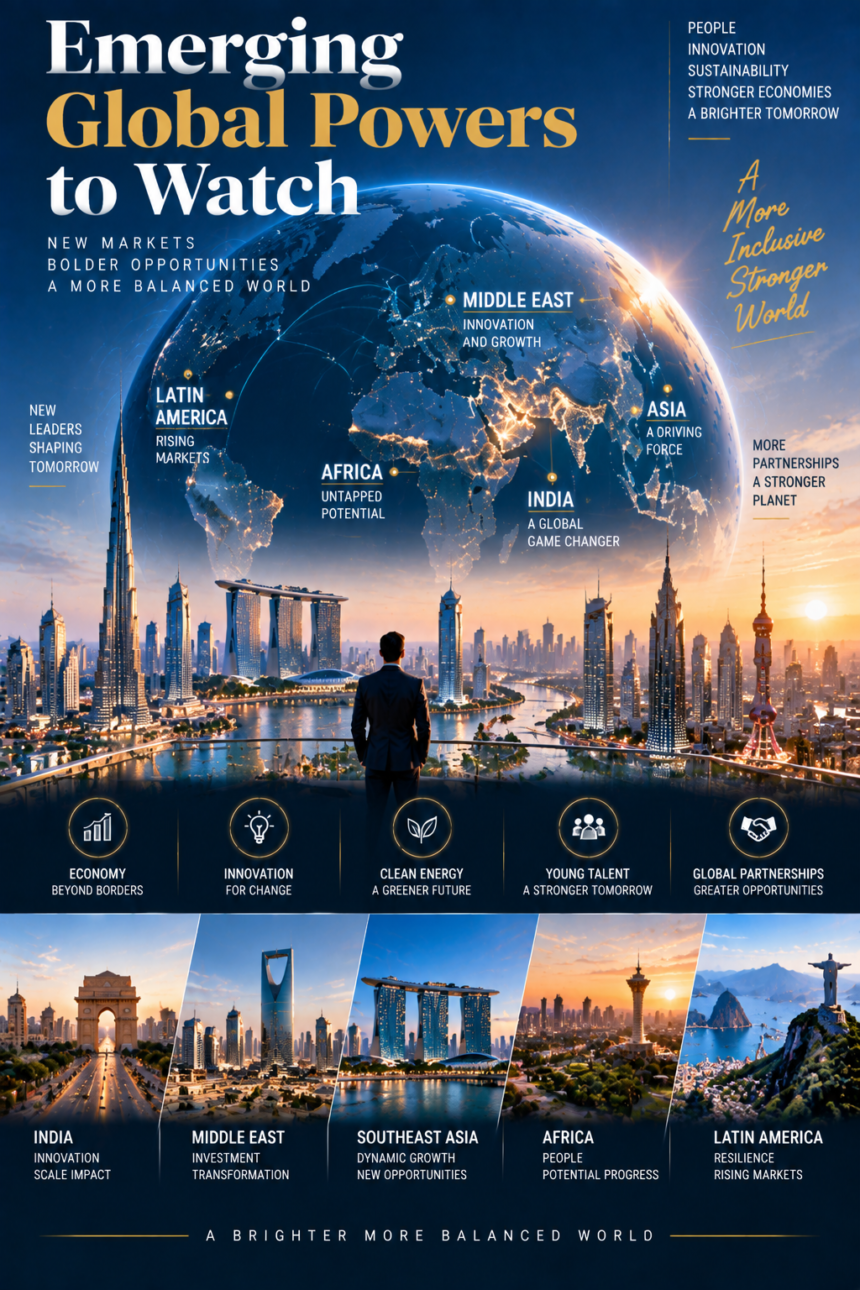
The rise of Emerging Global Powers is reshaping the way countries influence the global economy, technology, trade and international cooperation. While traditional powers continue playing major roles in world affairs, several developing economies are gaining greater importance through rapid economic growth, technological innovation, strategic resources and expanding international partnerships.
- What Defines an Emerging Global Power?
- India: Growth Through Technology, Economy and Innovation
- China: Global Influence Through Technology and Trade
- Brazil: Natural Resources and Economic Potential
- Indonesia: Southeast Asia’s Rising Economic Force
- Saudi Arabia and the Gulf: New Economic Influence
- Turkey: Strategic Position Between Regions
- African Economies Gaining Global Importance
- The Role of Technology in Creating Future Powers
- Challenges Facing Emerging Global Powers
- How Emerging Powers Are Building Global Influence
- The Future of Emerging Global Powers
- Artificial Intelligence and Digital Transformation
- Renewable Energy Transition
- Young Populations
- Global Connectivity
- Emerging Global Powers Shaping Tomorrow’s World
- Quick Takeaways
The global landscape is becoming increasingly diverse. Economic influence is no longer concentrated only among a small group of countries. Nations across Asia, the Middle East, Latin America and Africa are developing stronger positions through investments in technology, infrastructure, manufacturing, energy and human capital.
The growth of these countries is creating new opportunities and changing global connections.
Several factors are contributing to the rise of emerging powers:
| Factor | Global Impact |
|---|---|
| Economic growth | Creates stronger markets and investment opportunities |
| Technology development | Builds innovation capabilities |
| Young populations | Provides workforce and consumer growth |
| Natural resources | Supports energy and industrial development |
| Infrastructure investment | Improves trade and connectivity |
| International partnerships | Expands global influence |
The concept of global power is also changing. Economic size remains important, but modern influence depends on many elements, including technological capability, innovation, diplomacy, education and the ability to adapt to global challenges.
Countries that invest in future-focused industries are increasingly becoming important players in areas such as:
- Artificial intelligence
- Renewable energy
- Digital services
- Advanced manufacturing
- Space technology
- Financial innovation
The next generation of influential economies will likely be shaped by their ability to combine economic growth with innovation and sustainable development.
What Defines an Emerging Global Power?
An emerging global power is generally a country that is increasing its influence through economic development, technological progress, strategic importance or international engagement.
Unlike established global powers with decades of influence, emerging powers are still expanding their capabilities and global roles.
Several characteristics define these countries:
| Characteristic | Importance |
|---|---|
| Strong economic growth | Supports global market influence |
| Large population | Creates workforce and consumer demand |
| Innovation capacity | Drives future industries |
| Strategic location | Improves trade and connectivity |
| Resource availability | Supports economic development |
| International partnerships | Expands global cooperation |
Economic growth is often one of the first indicators of rising influence. Countries with expanding industries, growing middle classes and increasing investment opportunities become more important in global markets.
However, modern power is not only measured by GDP. Technology and innovation have become equally important.
For example, countries investing in:
- Artificial intelligence
- Semiconductor manufacturing
- Digital infrastructure
- Clean energy
- Research and development
can increase their global influence even without traditional advantages.
Another important factor is demographics. Countries with young and growing populations often have opportunities to develop new industries, provided they invest in education, skills and employment creation.
India: Growth Through Technology, Economy and Innovation
India has become one of the most closely watched emerging global powers due to its large economy, expanding technology sector and growing role in international affairs.
With one of the world’s largest populations, India has significant advantages in terms of workforce, consumer markets and innovation potential.
The country’s economic growth has been supported by several sectors:
| Sector | Growth Opportunity |
|---|---|
| Technology | Software, AI and digital services |
| Manufacturing | Industrial expansion |
| Space | Scientific development |
| Renewable energy | Clean energy projects |
| Finance | Digital payment systems |
India’s technology industry has played an important role in its global reputation. The country has developed strong capabilities in software services, startups and digital platforms.
Digital transformation has also changed how businesses and citizens access services. Digital payment systems, online platforms and technology-based solutions have expanded rapidly.
The country’s startup ecosystem has grown significantly, with entrepreneurs developing businesses in:
- FinTech
- Healthcare technology
- Education platforms
- E-commerce
- Artificial intelligence
India’s young population is considered one of its major economic strengths. However, continued investment in education, infrastructure and employment opportunities remains important for long-term growth.
The country is also increasing its focus on manufacturing and renewable energy as part of broader economic development strategies.
India’s growing role in global partnerships, technology and trade has made it an important participant in the changing global economy.
China: Global Influence Through Technology and Trade
China remains one of the world’s most influential economies and continues to play a major role in global trade, manufacturing and technology.
Over several decades, China developed into a major industrial centre, becoming a key part of global supply chains.
Its economic influence is supported by:
| Area | Contribution |
|---|---|
| Manufacturing | Global production capabilities |
| Technology | Innovation in AI and digital industries |
| Trade | International commercial networks |
| Infrastructure | Large-scale development projects |
| Research | Scientific and technological advancement |
China has invested heavily in advanced technologies, including:
- Artificial intelligence
- Electric vehicles
- Robotics
- Renewable energy
- Semiconductor development
The country’s technology sector has produced major companies in areas such as e-commerce, telecommunications and digital services.
China’s infrastructure development has also expanded its economic connections with other regions.
At the same time, China faces challenges including demographic changes, economic restructuring and international competition in technology.
Its future global role will depend on how effectively it manages these challenges while continuing innovation and economic development.
Brazil: Natural Resources and Economic Potential
Brazil represents one of the most important emerging economies in Latin America. The country’s influence comes from its natural resources, agricultural strength, industrial capacity and large domestic market.
Brazil has advantages in areas such as:
| Sector | Importance |
|---|---|
| Agriculture | Major global food producer |
| Energy | Renewable and traditional energy resources |
| Mining | Important mineral resources |
| Manufacturing | Industrial capabilities |
| Technology | Growing innovation ecosystem |
The country’s natural resources provide significant economic opportunities, especially as global demand increases for food, energy and sustainable solutions.
Brazil is also focusing on renewable energy development. Its experience in areas such as biofuels and clean energy contributes to its global importance.
However, Brazil’s future growth depends on addressing challenges related to infrastructure, productivity and economic stability.
With its resources and market size, Brazil remains an important emerging economy with potential influence in global discussions.
Indonesia: Southeast Asia’s Rising Economic Force
Indonesia has gained increasing attention as one of Southeast Asia’s most important emerging economies.
The country’s strengths include:
| Strength | Economic Impact |
|---|---|
| Large population | Strong consumer market |
| Natural resources | Industrial opportunities |
| Strategic location | Trade advantages |
| Digital economy | Startup growth |
| Manufacturing | Regional production role |
Indonesia’s young population and growing digital sector have supported the expansion of online businesses and technology companies.
The country is becoming increasingly important in industries such as:
- E-commerce
- Manufacturing
- Electric vehicle supply chains
- Digital finance
- Infrastructure development
Its position between major global trade routes also increases its strategic importance.
Indonesia’s economic future will depend on continued investment in education, technology and sustainable development.
Saudi Arabia and the Gulf: New Economic Influence
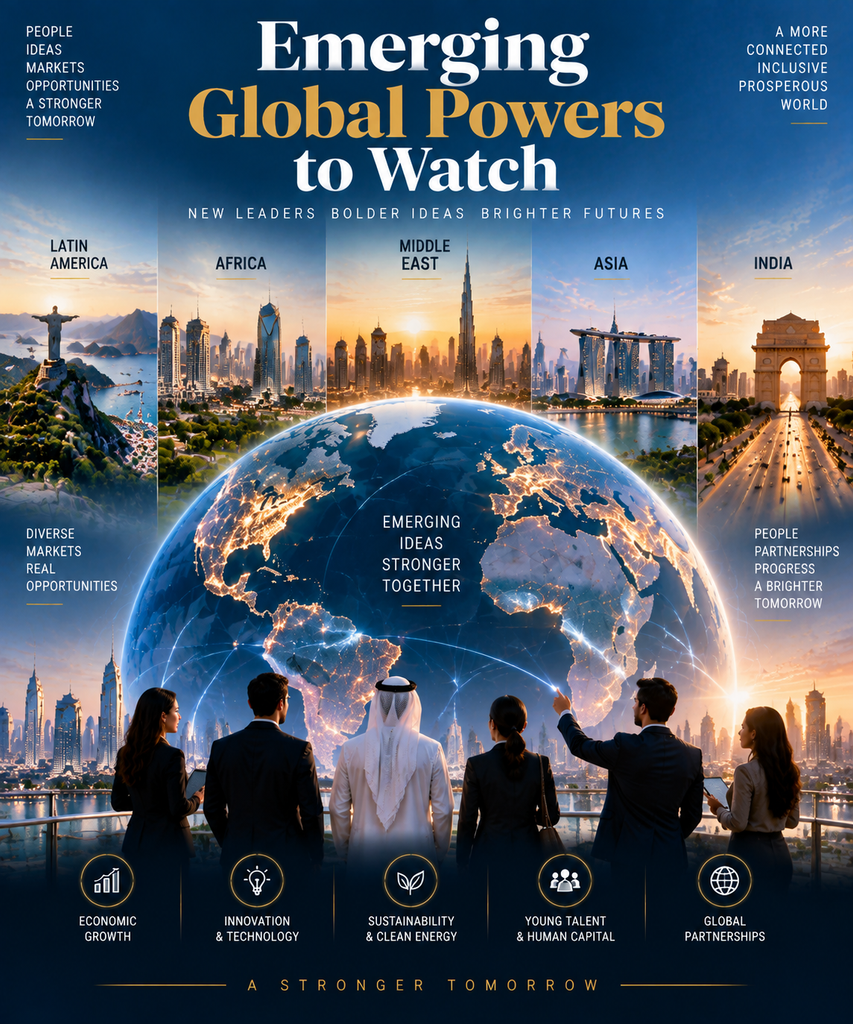
The Gulf region has become one of the most important examples of emerging economic influence in recent years. Countries such as Saudi Arabia, the United Arab Emirates, Qatar and other GCC members are expanding their global role through investments in technology, tourism, finance, infrastructure and renewable energy.
Traditionally known for energy resources, Gulf economies are now focusing on diversification by developing new industries and attracting international businesses.
Saudi Arabia has placed economic transformation at the centre of its development plans, focusing on sectors beyond oil and gas.
Important growth areas include:
| Sector | Economic Opportunity |
|---|---|
| Tourism | New destinations and international events |
| Technology | Digital transformation and innovation |
| Finance | Investment and financial services |
| Entertainment | Global events and creative industries |
| Renewable energy | Clean energy development |
The UAE has also strengthened its position as a global business and innovation hub. Cities such as Dubai and Abu Dhabi attract entrepreneurs, investors and international companies through modern infrastructure and business-friendly environments.
Gulf countries are increasing their global influence through:
- Sovereign investment funds
- International partnerships
- Technology investments
- Infrastructure projects
- Tourism development
One major factor behind the Gulf’s growing importance is its ability to connect different regions. Its geographical position between Asia, Europe and Africa makes it an important centre for trade, aviation and logistics.
The region is also investing in future industries such as:
- Artificial intelligence
- Space technology
- Financial technology
- Advanced manufacturing
- Sustainable energy
As Gulf economies continue diversifying, their role in the global economy is expected to expand.
Turkey: Strategic Position Between Regions
Turkey has long held strategic importance because of its geographical position connecting Europe and Asia. Its location, industrial capabilities and large domestic market contribute to its role as an influential emerging economy.
The country has developed strengths in several sectors:
| Industry | Contribution |
|---|---|
| Manufacturing | Industrial production and exports |
| Defence technology | Advanced technology development |
| Tourism | International visitor economy |
| Construction | Global infrastructure projects |
| Agriculture | Important regional production |
Turkey’s manufacturing sector has helped it become an important part of regional supply chains.
The country is also developing capabilities in areas such as:
- Defence technology
- Automotive production
- Renewable energy
- Digital industries
Its young population provides opportunities for future economic growth, particularly in technology and entrepreneurship.
However, like many emerging economies, Turkey faces challenges related to economic stability, inflation and investment conditions.
Its future global influence will depend on how effectively it balances economic development, innovation and international cooperation.
African Economies Gaining Global Importance
Africa is becoming increasingly important in discussions about future global growth. The continent has a young population, abundant natural resources and expanding consumer markets.
While Africa is not a single economy, several countries are developing stronger regional and global roles.
Important emerging economies include:
| Country | Key Strength |
|---|---|
| Nigeria | Energy, technology and large consumer market |
| Egypt | Strategic location and infrastructure |
| South Africa | Industrial and financial capabilities |
| Kenya | Technology and innovation ecosystem |
| Morocco | Manufacturing and renewable energy |
One of Africa’s biggest advantages is demographics. A young population creates opportunities for workforce development, entrepreneurship and consumer growth.
Technology is also changing economic possibilities across the continent.
Digital services are expanding in areas such as:
- Mobile payments
- E-commerce
- Financial technology
- Online education
- Healthcare platforms
Many African startups are creating solutions designed for local challenges while attracting international investment.
Renewable energy is another important area. With significant solar and wind potential, several African countries are exploring clean energy opportunities.
The future growth of African economies will depend on investment in:
- Education
- Infrastructure
- Digital connectivity
- Governance systems
- Industrial development
The Role of Technology in Creating Future Powers
Technology has become one of the most important factors determining global influence. Countries that develop strong technology ecosystems are increasingly able to compete internationally.
Artificial intelligence, digital infrastructure and advanced manufacturing are changing traditional ideas of economic power.
Emerging powers are investing in:
| Technology Area | Global Impact |
|---|---|
| Artificial Intelligence | Automation and innovation |
| Semiconductors | Digital infrastructure |
| Renewable energy technology | Sustainable development |
| Biotechnology | Healthcare advancement |
| Space technology | Scientific capabilities |
Technology allows countries to create new industries and improve productivity.
For example, digital platforms can help businesses reach global customers, while AI can improve decision-making across industries.
Countries with strong research institutions, skilled workers and innovation systems are better positioned to influence future economic trends.
The competition for technological leadership is becoming a major part of global economic development.
Challenges Facing Emerging Global Powers
Although emerging economies have significant opportunities, they also face challenges that can influence their future growth.
Economic expansion requires more than investment and resources. Countries need strong institutions, skilled populations and sustainable development strategies.
Major challenges include:
| Challenge | Impact |
|---|---|
| Infrastructure gaps | Slows economic development |
| Education needs | Limits skilled workforce growth |
| Economic inequality | Creates social challenges |
| Political uncertainty | Affects investment confidence |
| Climate risks | Impacts long-term sustainability |
Developing countries must balance rapid growth with responsible planning.
Another challenge is competition. As more countries develop technology and industries, maintaining competitiveness requires continuous innovation.
Investment in education and research will remain essential because future economies will depend heavily on knowledge and skills.
How Emerging Powers Are Building Global Influence
Modern influence comes from multiple sources. Economic strength is important, but countries also build influence through diplomacy, culture, technology and international partnerships.
Emerging powers are expanding their global presence through:
| Area | Influence Strategy |
|---|---|
| Trade | Building international economic relationships |
| Technology | Creating innovation partnerships |
| Culture | Expanding global connections |
| Education | Developing international networks |
| Investment | Supporting global projects |
Countries that successfully combine these elements can increase their role in international affairs.
Soft power is becoming increasingly important. Cultural influence, education exchanges and international cooperation help countries strengthen their global reputation.
The Future of Emerging Global Powers
The future of Emerging Global Powers will be shaped by their ability to adapt to major global changes.
Several trends will influence future economic leaders:
Artificial Intelligence and Digital Transformation
Countries that successfully develop AI capabilities and digital industries may gain significant advantages in the global economy.
Renewable Energy Transition
The shift towards cleaner energy will create opportunities for countries investing in renewable technologies and sustainable industries.
Young Populations
Countries with young, skilled populations have the potential to become major economic centres if they invest in education and employment opportunities.
Global Connectivity
Trade networks, technology partnerships and international cooperation will continue shaping economic influence.
The world is moving towards a more diverse economic landscape where multiple countries contribute to global growth.
Emerging Global Powers Shaping Tomorrow’s World
The rise of emerging global powers reflects a major transformation in the international system. Countries across Asia, the Middle East, Latin America and Africa are increasing their influence through economic growth, technology and innovation.
India’s digital economy, China’s technological capabilities, Indonesia’s market growth, Gulf countries’ diversification strategies and Africa’s demographic potential all demonstrate how new centres of influence are developing.
However, future success will depend on how these countries address challenges while creating sustainable growth.
The next generation of global powers will not only be defined by economic size but also by their ability to innovate, adapt and contribute to solving global challenges.
As technology, trade and international cooperation continue evolving, emerging economies will play an increasingly important role in shaping the future world economy.
Quick Takeaways
- Emerging Global Powers are reshaping the future economic and political landscape.
- Technology, innovation and human capital are becoming key sources of influence.
- India, China, Indonesia, Brazil and Gulf economies are gaining global importance.
- African economies are attracting attention through young populations and digital growth.
- Future global influence will depend on innovation, sustainability and international cooperation.
- Economic growth alone is not enough; education, technology and adaptability will define future success.
Do follow us on Instagram
Read More – Things to Do in Dubai This Weekend: September 18–20 Guide