

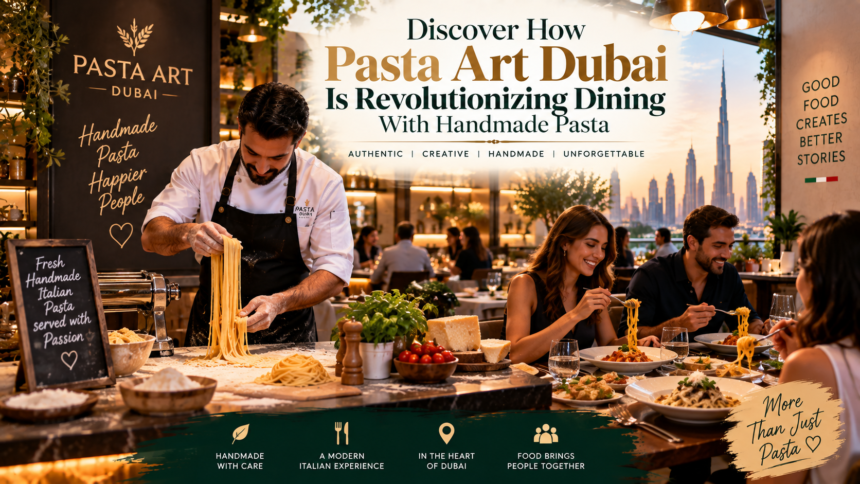
Pasta Art Dubai serving freshly made Italian pasta at Market Island in Dubai Festival City Mall
Dubai has no shortage of Italian restaurants, but Pasta Art is approaching the category from a slightly different angle. Located inside Market Island at Dubai Festival City Mall, the concept puts pasta itself at the centre of the experience, focusing on fresh preparation, recognisable Italian ingredients and dishes that range from cacio e pepe and gnocchi to truffle tagliolini and pasta finished with Parmigiano Reggiano.
- Pasta Art Dubai at a Glance
- Why Pasta Art Dubai Puts Fresh Pasta at the Centre
- Handmade Pasta Gives Pasta Art Dubai a Clear Identity
- Pasta Art Dubai Uses Recognisable Italian Ingredients
- What Should You Order at Pasta Art Dubai?
- The Parmigiano Wheel Adds an Element of Dining Theatre
- Market Island Changes the Pasta Art Dubai Dining Experience
- Pasta Art Dubai Brings Restaurant-Level Ingredients Into a Casual Setting
- How Much Does a Meal at Pasta Art Dubai Cost?
- Is Pasta Art Dubai Good for Families?
- What Makes Pasta Art Dubai Different From Typical Food-Court Pasta?
- Is Handmade Pasta Really Better?
- Best Time to Visit Pasta Art Dubai
- Who Will Enjoy Pasta Art Dubai Most?
- What to Know Before Visiting Pasta Art Dubai
- Frequently Asked Questions About Pasta Art Dubai
- Why Pasta Art Dubai Reflects a Bigger Change in Casual Dining
- Final Thoughts on Pasta Art Dubai
The restaurant’s official website says its pasta is made daily using fresh ingredients, while Dubai Festival City Mall describes Pasta Art as a handmade-pasta concept created around al-dente pasta and Italian flavours. This gives Pasta Art Dubai an identity closer to a specialised pastificio-style counter than a conventional food-court outlet serving a little bit of everything.
Its location also matters. Market Island is described by Dubai Festival City Mall as the largest food hall in the Middle East, covering around 70,000 square feet, accommodating more than 3,500 guests and bringing together over 50 food concepts. Within such a competitive setting, Pasta Art has chosen to specialise rather than build an oversized menu.
For diners, that means a casual setting but a menu built around ingredients more commonly associated with dedicated Italian restaurants, including San Marzano tomato, Pecorino Romano, fresh Italian buffalo mozzarella, burrata, DOP Parmigiano Reggiano and fresh truffle.
This guide looks at what makes Pasta Art different, which dishes currently stand out, how much you might spend, what the Market Island location adds to the experience and whether the concept deserves a place on a Dubai food itinerary.
Pasta Art Dubai at a Glance
Before getting into the dishes, it helps to understand what kind of restaurant Pasta Art is. This is not a formal Italian dining room with a multi-course menu and lengthy table service. It is a specialist pasta concept operating within a large contemporary food hall, making it relatively easy to visit for lunch, dinner or a casual meal while spending time at Dubai Festival City Mall.
| Quick Fact | Current Information |
|---|---|
| Restaurant | Pasta Art |
| Location | Market Island, Dubai Festival City Mall |
| Main Concept | Fresh and handmade Italian-style pasta |
| Pasta Preparation | Pasta made daily |
| Current Price Range | Approximately AED 50–100 per person in local business data |
| Current Local Rating | 4.6/5 from 274 reviews |
| Fresh Pasta Examples | Lasagna, gnocchi, tagliatelle, tonnarelli, tortellini |
| Dry Pasta Examples | Linguine, spaghetti, paccheri, penne |
| Premium Option | Tagliolini with truffle |
| Signature-Style Preparation | Pasta finished with Parmigiano Reggiano |
| Setting | Market Island food hall |
| Takeaway | Available according to current listings |
Current local business data lists Pasta Art with a 4.6 out of 5 rating from more than 270 reviews and a general price range of approximately AED 50–100. Ratings and hours can change, so these figures should be treated as a current snapshot rather than a permanent score.
The official menu supports that price range. Current pasta dishes generally sit between AED 55 and AED 95, depending on ingredients and preparation.
Why Pasta Art Dubai Puts Fresh Pasta at the Centre
The biggest difference between Pasta Art and a generic Italian menu is focus. Instead of using pasta as one category among pizzas, grills, salads and dozens of mains, the concept treats pasta as the main event.
Dubai Festival City Mall specifically describes the outlet as specialising in handmade, al-dente pasta created by Italian chefs. Pasta Art’s own website adds that its pasta is made daily, with freshness positioned as part of the restaurant’s core identity.
That matters because fresh pasta behaves differently from many dried varieties. Depending on shape and dough, it can have a softer texture and absorb sauces differently, which is particularly important in dishes such as tagliatelle Bolognese, tortellini and gnocchi.
Pasta Art’s menu is effectively divided between fresh pasta and dry pasta, allowing the restaurant to use different types where they make culinary sense rather than pretending that one form is automatically superior in every dish.
| Fresh Pasta Menu | Dry Pasta Menu |
|---|---|
| Lasagna | Linguine al pesto |
| Gnocchi alla Sorrentina | Mezzi paccheri al pomodoro |
| Tagliatelle Bolognese | Spaghetti carbonara |
| Tonnarelli cacio e pepe | Spaghetti aglio e olio |
| Tortellini alla panna | Penne arrabbiata |
| Tagliolini al tartufo | Penne with burrata |
This is a useful distinction. Authentic Italian cooking is not about using fresh pasta for every possible recipe. Certain sauces and shapes traditionally work very well with dried pasta, while filled or ribbon pastas can benefit from fresh preparation.
For diners who enjoy understanding what they eat rather than simply choosing between red and white sauce, this menu structure makes Pasta Art more interesting.
Handmade Pasta Gives Pasta Art Dubai a Clear Identity
Dubai’s dining market is crowded with Italian restaurants ranging from neighbourhood pizzerias to high-end venues run by internationally recognised chefs. In that environment, simply describing a restaurant as “Italian” does not create much differentiation.
Pasta Art has instead built its identity around a single product category. Dubai Festival City Mall goes as far as highlighting that fresh pasta rather than dried pasta is the focus of the concept and recommends ordering it al dente.
The approach also fits the name. “Pasta Art” suggests that shaping, cooking and combining pasta with sauces should be treated as a craft rather than a basic carbohydrate placed underneath sauce.
What does that mean for the diner? Rather than choosing a dish solely by sauce, you can pay attention to how pasta shapes interact with ingredients. Thick tonnarelli carries a cheese-and-pepper sauce differently from penne, while delicate tagliolini works differently with a creamy truffle preparation.
| Pasta Shape | Current Pasta Art Dish | Main Character |
|---|---|---|
| Tagliatelle | Bolognese | Wide ribbons with meat sauce |
| Tonnarelli | Cacio e pepe | Thick pasta with cheese and pepper |
| Tagliolini | Al tartufo | Fine ribbons with truffle |
| Tortellini | Alla panna | Filled pasta with cream |
| Gnocchi | Alla Sorrentina | Soft dumplings with tomato and cheese |
| Penne | Arrabbiata | Tubes with spicy tomato sauce |
| Linguine | Pesto | Long pasta with basil sauce |
Rather than creating novelty purely for social media, the strongest part of the concept is its ability to make diners think about pasta shapes, textures and sauces as connected decisions.
That is a relatively simple idea, but in a food-hall environment it can make the meal feel considerably more specialised.
Pasta Art Dubai Uses Recognisable Italian Ingredients
Fresh pasta alone does not guarantee a strong dish. Sauce, cheese and produce have just as much influence on the final plate.
Pasta Art’s current menu repeatedly identifies Italian ingredients rather than using generic descriptions. Gnocchi alla Sorrentina includes San Marzano tomato, fresh Italian buffalo mozzarella and DOP Parmigiano Reggiano. Cacio e pepe uses Pecorino Romano, black pepper and Parmigiano, while penne with burrata is built around fresh Italian burrata.
The tagliatelle Bolognese uses Australian Angus beef with Parmigiano and basil, while the lasagna combines Angus beef, béchamel and Parmigiano. Its premium tagliolini al tartufo features a creamy truffle sauce with fresh truffle.
A few ingredients appear repeatedly across the menu:
- DOP Parmigiano Reggiano
- Pecorino Romano
- San Marzano tomato
- Fresh Italian buffalo mozzarella
- Italian burrata
- Extra-virgin olive oil
- Basil
- Fresh truffle
Using named ingredients helps customers understand why some dishes cost more than others. A straightforward aglio e olio is currently AED 55, while fresh-truffle tagliolini reaches AED 95.
It also allows simpler recipes to work without excessive additions. Cacio e pepe, for example, depends heavily on cheese, pepper, pasta water and technique. There are very few places to hide weak ingredients.
What Should You Order at Pasta Art Dubai?
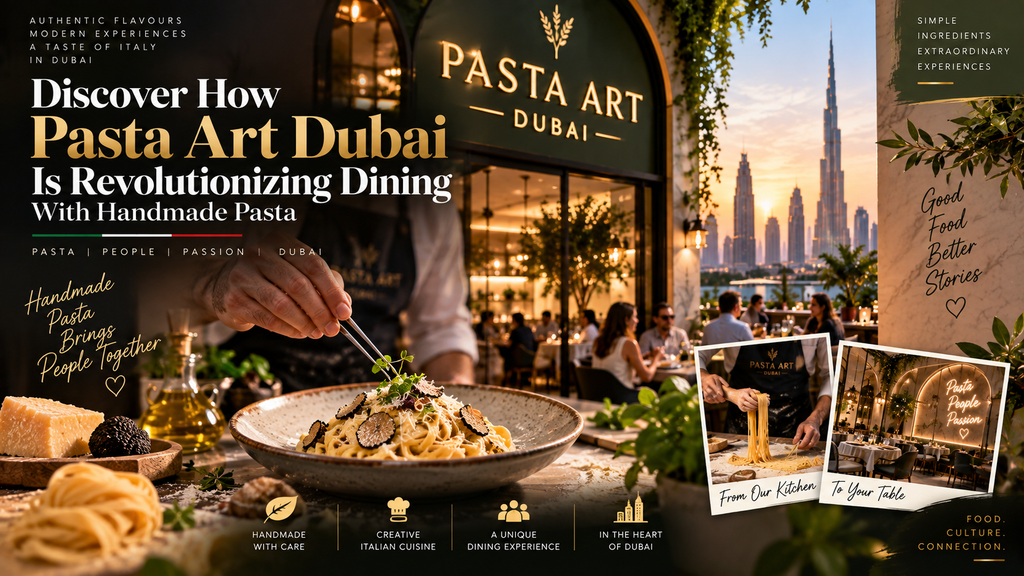
The current menu is compact enough that first-time visitors do not need to spend 20 minutes comparing dozens of pasta dishes.
The best order depends on whether you want something traditional, rich, spicy, vegetarian-friendly or slightly more indulgent.
| What You Want | Current Dish | Listed Price |
|---|---|---|
| Italian comfort food | Gnocchi alla Sorrentina | AED 65 |
| Classic meat pasta | Tagliatelle Bolognese | AED 70 |
| Cheese and pepper | Tonnarelli cacio e pepe | AED 60 |
| Filled pasta | Tortellini alla panna | AED 70 |
| Premium option | Tagliolini al tartufo | AED 95 |
| Basil-forward | Linguine al pesto | AED 65 |
| Simple tomato pasta | Mezzi paccheri al pomodoro | AED 55 |
| Spicy tomato | Penne arrabbiata | AED 55 |
| Creamy cheese experience | Alfredo with Parmigiano preparation | AED 75 |
| Burrata lover | Penne with burrata | AED 70 |
All menu prices above are based on the restaurant’s current published menu and may change.
For a first visit, tonnarelli cacio e pepe is a useful test of the kitchen because the dish relies on relatively few components. There is little distraction from the pasta itself.
For something richer, tagliolini al tartufo is the obvious premium choice. Fresh truffle pushes it into a different price bracket, but it also offers one of the menu’s most indulgent combinations.
For tomato lovers, gnocchi alla Sorrentina has one of the strongest ingredient combinations because San Marzano tomato, buffalo mozzarella, Parmigiano and basil create a classic Italian flavour profile.
For vegetarians, several current options do not centre on meat, including cacio e pepe, pesto, pomodoro, arrabbiata and burrata-based dishes. Diners with strict dietary requirements should still confirm ingredients and preparation directly with the restaurant.
The Parmigiano Wheel Adds an Element of Dining Theatre
One of the more visually interesting items on Pasta Art’s menu is the Alfredo preparation involving DOP Parmigiano Reggiano.
The official menu currently lists pasta with Alfredo sauce and a Parmigiano Reggiano wheel at AED 75.
Finishing pasta with cheese can add both flavour and theatre. It makes the cooking process more visible and transforms a familiar creamy pasta into something that feels more experiential.
This matters particularly inside Market Island, where more than 50 competing food concepts operate in the same venue. Diners can choose from multiple cuisines without leaving the food hall, so visually engaging preparation helps individual outlets stand out. Dubai Festival City Mall says Market Island covers around 70,000 square feet and can host more than 3,500 guests.
However, the experience works best when the performance supports the food rather than replacing it. The pasta still needs the correct texture, proper seasoning and enough sauce to coat rather than overwhelm it.
That balance between craft and presentation is where the name Pasta Art makes the most sense.
Market Island Changes the Pasta Art Dubai Dining Experience
Location is a major part of this restaurant’s story.
Pasta Art sits inside Market Island at Dubai Festival City Mall, a 70,000-square-foot food hall featuring more than 50 dining concepts. Dubai Festival City Mall describes the venue as the largest food hall in the Middle East, while Visit Dubai also identifies it as a 50-restaurant destination.
This creates a different experience from visiting a standalone Italian restaurant.
A family or group does not necessarily have to agree on one cuisine. Someone can order pasta while another diner chooses sushi, Lebanese food or another concept within the same food hall.
That flexibility is particularly useful in Dubai, where groups often include different ages, nationalities and food preferences.
| Standalone Restaurant | Pasta Art at Market Island |
|---|---|
| Everyone chooses from one menu | Group members can explore different outlets |
| More controlled dining atmosphere | More energetic food-hall environment |
| Usually longer meal structure | Can work for quick or relaxed meals |
| Often reservation-driven | More casual access |
| Cuisine-specific experience | International dining environment |
Market Island also hosts entertainment, and Dubai Festival City Mall notes that weekends can include live performances and DJ sets. It advises earlier dining for visitors looking for a quieter atmosphere.
This means the same Pasta Art meal can feel quite different depending on when you visit. Lunch may feel like a straightforward mall meal, while a busy weekend evening can have a more energetic social atmosphere.
Pasta Art Dubai Brings Restaurant-Level Ingredients Into a Casual Setting
One of the most interesting developments in modern food halls is the disappearance of the old assumption that casual dining must mean basic ingredients.
Pasta Art illustrates that change clearly. The menu includes DOP cheese, San Marzano tomato, fresh burrata, buffalo mozzarella and truffle, yet customers order within a food hall rather than entering a formal white-tablecloth restaurant.
That combination changes how premium food can be consumed.
A diner can order tagliolini with fresh truffle without committing to a lengthy fine-dining experience. Someone shopping at Dubai Festival City Mall can stop for freshly prepared pasta and continue with the rest of the day.
Market Island itself was designed around this broader evolution of mall dining. Al-Futtaim describes it as a social food destination rather than a conventional food court, bringing together more than 50 concepts and encouraging guests to explore multiple cuisines in the same space.
Pasta Art benefits from that environment because its product is familiar enough for casual diners but specialised enough to appeal to people who care about pasta preparation.
How Much Does a Meal at Pasta Art Dubai Cost?
Pasta Art sits in a middle ground between inexpensive fast-food pasta and premium Italian restaurant pricing.
Its current official pasta menu begins at approximately AED 55 for dishes such as mezzi paccheri al pomodoro, spaghetti aglio e olio and penne arrabbiata. Several popular choices sit around AED 60–75, while the fresh-truffle tagliolini costs AED 95.
Current local business data broadly places the restaurant in the AED 50–100 price category.
| Spending Style | Likely Approach |
|---|---|
| Lower-cost pasta meal | Choose a tomato or aglio e olio dish |
| Mid-range meal | Cacio e pepe, pesto or gnocchi |
| Meat-based option | Bolognese, lasagna or meat-filled pasta |
| Premium choice | Fresh-truffle tagliolini |
| Experience-focused | Parmigiano wheel preparation |
A couple ordering two mid-range pasta dishes should therefore expect pasta alone to cost somewhere around AED 120–150 before additional items, depending on their choices.
For a food-hall concept, that is not budget pricing. The value proposition instead rests on the quality of ingredients, fresh pasta preparation and specialised focus.
Is Pasta Art Dubai Good for Families?
Market Island’s format can make Pasta Art particularly practical for families.
The wider venue can accommodate more than 3,500 guests, and the range of more than 50 outlets means parents and children do not necessarily need identical food preferences.
Pasta itself is also relatively accessible for younger diners. Simple tomato pasta, meatballs or creamy preparations can be easier choices for children who may not want stronger truffle, pepper or spicy arrabbiata flavours.
For larger groups, the food-hall model removes some of the pressure of choosing one restaurant everyone likes.
Families may find Pasta Art useful when:
- Some family members want Italian food while others want different cuisines.
- Children prefer simpler pasta preparations.
- The group wants a casual rather than formal meal.
- Dining is being combined with shopping or entertainment.
- People want flexibility over how long they stay.
The busiest evenings may naturally feel noisier than a conventional restaurant. Dubai Festival City Mall advises visiting earlier if a quieter Market Island atmosphere is important.
What Makes Pasta Art Dubai Different From Typical Food-Court Pasta?
The easiest answer is specialisation.
Traditional food-court pasta can sometimes involve pre-cooked noodles, generic sauces and quick assembly. Pasta Art positions itself differently by emphasising pasta made daily and specific Italian ingredients.
The menu also avoids becoming excessively broad. There are enough choices for variety, but the main identity remains pasta.
| Typical Quick-Service Approach | Pasta Art Approach |
|---|---|
| Pasta as one menu category | Pasta is the concept |
| Generic cheese descriptions | Named Italian cheeses |
| Limited pasta shapes | Fresh and dry pasta formats |
| Sauce-first ordering | Shape and sauce combinations |
| Mostly convenience-driven | Convenience plus specialised preparation |
| Limited premium ingredients | Burrata, buffalo mozzarella and truffle |
That does not automatically mean every diner will prefer Pasta Art. Someone wanting a very inexpensive meal may be happier elsewhere, while a guest seeking formal Italian hospitality may choose a full-service restaurant.
Pasta Art occupies the space between those two experiences.
Is Handmade Pasta Really Better?
Fresh or handmade pasta is not automatically “better” than dried pasta. The two serve different purposes.
High-quality dried pasta can be excellent, particularly for sauces requiring a firmer bite and shapes designed to capture certain ingredients. Pasta Art itself includes a separate dry-pasta section alongside its fresh pasta menu.
Fresh pasta shines in other contexts. Filled pasta, ribbons and softer dough preparations can provide textures that are difficult to reproduce with industrial dried products.
What matters more is whether the restaurant matches the right pasta with the right sauce and cooks it correctly.
For diners, the advantage of a specialist concept is therefore not simply being able to say, “this pasta is handmade.” The more meaningful benefit is experiencing several pasta formats prepared with their texture and intended sauce in mind.
Best Time to Visit Pasta Art Dubai
Current business data shows Pasta Art generally operating from 10 AM, with closing times varying by day. Dubai Festival City Mall currently lists its wider food-and-beverage areas as operating until 11 PM on weekdays and midnight on weekends, while Market Island has published extended schedules at different times. Visitors planning a very late meal should therefore check same-day hours rather than relying on one static schedule.
For atmosphere, the timing matters as much as the opening hours.
| When You Visit | Likely Experience |
|---|---|
| Late morning | Quieter, easy casual meal |
| Lunch | Convenient during a mall visit |
| Mid-afternoon | Usually better for relaxed dining |
| Early evening | Good balance of atmosphere and comfort |
| Weekend night | Livelier and potentially busier |
| Late evening | Useful after shopping or entertainment |
Market Island specifically recommends arriving earlier in the evening for visitors seeking a quieter environment because weekends can include performances and music.
For food photography, a less crowded period also makes it easier to photograph the dish before the table becomes busy.
Who Will Enjoy Pasta Art Dubai Most?
Pasta Art has a fairly clear audience.
It suits diners who like Italian food but do not necessarily want the structure or cost of a long fine-dining meal. It also works for visitors curious about fresh pasta who want to compare different shapes and traditional sauces.
| Diner Type | Why It May Work |
|---|---|
| Pasta enthusiasts | Fresh and dry pasta choices |
| Italian food lovers | Recognisable traditional combinations |
| Families | Large food hall with many alternatives |
| Mall visitors | Convenient Dubai Festival City location |
| Social diners | Lively Market Island atmosphere |
| Truffle lovers | Fresh-truffle pasta available |
| Vegetarians | Several meat-free pasta options |
| Quick lunch diners | Casual food-hall format |
| Formal dining seekers | May prefer a standalone restaurant |
The concept is particularly useful for groups because one person’s pasta craving does not require everyone at the table to order Italian food.
That freedom is one of Market Island’s strongest advantages.
What to Know Before Visiting Pasta Art Dubai
The restaurant is located inside Market Island at Dubai Festival City Mall rather than as a standalone street-side venue. Current business information lists the contact number as
The official restaurant site also provides direct contact options for dietary questions and special requests. Diners with allergies, vegetarian requirements or other restrictions should confirm preparation directly, particularly because cheese, cream, meat and filled pastas appear across the menu.
Prices are higher than conventional fast food, so visitors should approach Pasta Art as a specialist casual-dining concept.
Parking and general access are tied to Dubai Festival City Mall, allowing the meal to be combined easily with shopping, cinema, family attractions or Festival Bay.
Frequently Asked Questions About Pasta Art Dubai
Where is Pasta Art Dubai located?
Pasta Art is located inside Market Island at Dubai Festival City Mall in Dubai. Market Island is positioned on the mall’s ground-floor level and contains more than 50 food concepts.
Does Pasta Art Dubai make fresh pasta?
Yes. Pasta Art’s official website says its pasta is made daily, while Dubai Festival City Mall describes the restaurant as a handmade-pasta concept focused on fresh, al-dente preparations.
How much does Pasta Art cost?
Current pasta prices generally range from around AED 55 to AED 95. Local business data categorises typical spending within approximately AED 50–100 per person.
What is the most expensive pasta currently listed?
The current published menu lists tagliolini al tartufo with creamy truffle sauce and fresh truffle at AED 95.
Does Pasta Art have vegetarian dishes?
The menu currently contains several dishes without listed meat, including cacio e pepe, pesto pasta, pomodoro, aglio e olio, arrabbiata and penne with burrata. Guests with strict dietary requirements should still confirm ingredients directly.
Is Pasta Art inside a food court?
It is located in Market Island, which is better described as a large contemporary food hall than a conventional mall food court. Dubai Festival City Mall says the venue spans 70,000 square feet, accommodates more than 3,500 guests and contains more than 50 concepts.
What should a first-time visitor order?
Cacio e pepe is a useful option for appreciating the pasta itself, while gnocchi alla Sorrentina offers tomato, buffalo mozzarella and Parmigiano. Diners seeking a premium dish can consider the fresh-truffle tagliolini. These are recommendations based on the current menu rather than claims that one dish is objectively the restaurant’s best.
Does Pasta Art serve only fresh pasta?
No. Its current menu has separate fresh-pasta and dry-pasta sections. Fresh options include tagliatelle and tortellini, while dry options include spaghetti, linguine, penne and paccheri.
Is Pasta Art suitable for a quick meal?
Yes. Its location inside Market Island gives it a more casual structure than a conventional full-service Italian restaurant, making it practical for lunch or dinner during a Dubai Festival City Mall visit.
Why Pasta Art Dubai Reflects a Bigger Change in Casual Dining
The interesting story behind Pasta Art is not simply that Dubai has gained another place serving pasta.
It represents a wider change in casual dining. Consumers increasingly want convenience without automatically accepting generic food. They may still want to order quickly and sit in an informal environment, but they also pay attention to where ingredients come from, whether food is prepared fresh and whether a restaurant has a recognisable speciality.
Market Island itself has been developed around this idea. Rather than operating as a traditional food court dominated by conventional fast-food counters, the 70,000-square-foot venue brings together more than 50 distinctive dining concepts in one shared social environment.
Pasta Art fits that model particularly well because pasta is both universally familiar and capable of considerable culinary complexity.
A plate of penne arrabbiata can remain straightforward and affordable, while fresh-truffle tagliolini can create a much more indulgent experience. Both can exist under the same specialised concept.
That range helps explain why pasta remains so adaptable. It can be comforting, sophisticated, quick, traditional or theatrical depending on how it is prepared.
Final Thoughts on Pasta Art Dubai
Pasta Art Dubai is a useful example of how Dubai’s food-hall scene is moving beyond the old definition of quick-service dining.
The restaurant’s strongest idea is also its simplest: make pasta the focus. Fresh dough prepared daily, different pasta shapes, Italian cheeses, San Marzano tomato, buffalo mozzarella, burrata and truffle give the menu more specificity than a generic Italian counter.
Its Market Island location then makes that food unusually accessible. Diners can order a specialist pasta dish while friends or family explore dozens of other concepts, turning what might normally require a dedicated restaurant booking into part of a much broader food experience.
There are also enough price levels to approach Pasta Art differently. A straightforward tomato or chilli pasta starts around AED 55, while premium fresh-truffle tagliolini reaches AED 95. The menu therefore moves between familiar comfort food and more indulgent combinations without abandoning its pasta-first identity.
For first-time visitors, the most interesting approach is to avoid treating every pasta as interchangeable. Choose a fresh shape such as tonnarelli, tagliatelle or gnocchi, pay attention to its texture and compare it with the sauce rather than simply looking for the richest topping.
That focus on the relationship between dough, shape, ingredients and preparation is where Pasta Art Dubai earns its name. In a city filled with dining concepts competing for attention, it shows that innovation does not always require inventing something completely new. Sometimes it means taking a familiar dish, returning attention to craftsmanship and presenting it in a format that fits the way people want to eat today.
Do follow us on Instagram
Read More – Amazing Saudi Arabia Heritage Villages to Explore