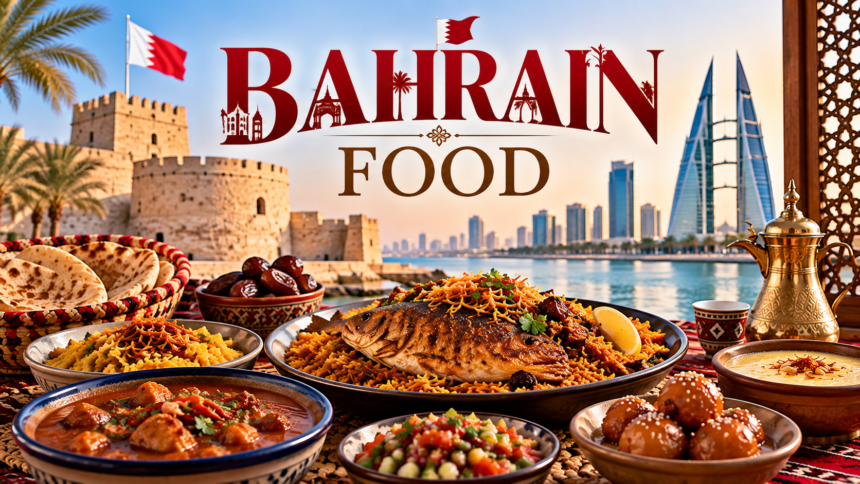
Traditional Bahraini Foods Visitors Should Taste on a First Trip
Traditional Bahraini foods reflect the island’s long history as a Gulf trading centre, where local ingredients mixed with influences from Persia, India and the wider Arabian Peninsula. Rice, fish, meat, dates, saffron, cardamom, rosewater and the Bahraini spice blend known as bzaar all play important roles in the country’s food culture.
- Traditional Bahraini Foods Visitors Should Know at a Glance
- Machboos Is One of Bahrain’s Most Important Rice Dishes
- Muhammar Shows Bahrain’s Love of Sweet and Savoury Combinations
- Bahrain’s Coastal Cuisine Makes Fish Essential
- Harees, Mathrooba and Margoog Represent Bahraini Comfort Food
- Balaleet Is One of the Best Bahraini Breakfast Dishes
- Bahraini Kebab Is Not the Kebab Many Visitors Expect
- Fresh Khubz and Ragag Are Central to Everyday Bahraini Food
- Tikka and Bahraini Street Food Reveal a More Casual Side of the Cuisine
- Luqaimat and Khanfaroosh Are Traditional Bahraini Sweets Worth Trying
- Bahraini Halwa Is One of the Country’s Most Famous Food Traditions
- Dates, Coffee and Tea Are Part of Bahraini Hospitality
- Manama Souq and Muharraq Are Good Places to Find Traditional Bahraini Foods
- How to Eat Traditional Bahraini Food Respectfully
- Common Mistakes Visitors Make When Trying Bahraini Food
- Traditional Bahraini Foods Visitors Should Taste on a First Trip
For visitors, Bahrain is especially interesting because traditional food is still easy to find in heritage neighbourhoods and souqs. Manama Souq and Muharraq both offer cafés, breakfast restaurants and sweet shops where local dishes remain part of everyday life rather than existing only in luxury hotels.
Bahrain Tourism specifically highlights traditional breakfasts such as Balaleet, fresh khubz, eggs with tomato and local dishes served at long-established cafés in Manama and Muharraq. The Bahrain Authority for Culture and Antiquities also lists Harees, Mathrooba, Margoog, Luqaimat, Khanfaroosh and Bahraini halwa among foods connected with the country’s culinary heritage.
The best way to explore Bahraini cuisine is therefore to try different types of food rather than ordering only one famous rice dish. A strong tasting experience should include breakfast, rice, seafood, bread, street food, sweets and traditional coffee.
Traditional Bahraini Foods Visitors Should Know at a Glance
Bahraini cuisine includes substantial family meals as well as small snacks, breakfast dishes and sweets. Some recipes are strongly associated with home cooking, while others can be found easily in cafés, restaurants and heritage markets.
| Dish | What It Is | Best Known For |
|---|---|---|
| Machboos | Spiced rice with meat, chicken or fish | One of Bahrain’s best-known main dishes |
| Muhammar | Sweetened rice | Commonly paired with fish |
| Harees | Wheat and meat cooked until soft | Traditional comfort food |
| Mathrooba | Beaten rice or grain-based dish | Soft home-style texture |
| Margoog | Meat and vegetable stew with dough | Family-style traditional food |
| Balaleet | Sweet vermicelli topped with egg | Breakfast |
| Bahraini kebab | Vegetable-based fried patties | Breakfast and casual food |
| Khubz | Fresh local bread | Everyday meals |
| Tikka | Grilled marinated meat | Street food |
| Luqaimat | Fried sweet dumplings | Traditional dessert |
| Khanfaroosh | Spiced fried sweet | Tea and coffee accompaniment |
| Bahraini halwa | Saffron, rosewater and nut sweet | Hospitality and gifting |
Visitors do not need to find every dish in one restaurant. In fact, exploring several different places usually provides a better sense of how Bahraini food is actually eaten.
Machboos Is One of Bahrain’s Most Important Rice Dishes
Machboos is one of the best-known foods in Bahrain and across much of the Gulf.
The dish combines rice with chicken, lamb, meat or fish and a mixture of aromatic spices. The exact recipe varies between households and restaurants, but the rice usually absorbs flavour from the meat stock and seasoning during cooking.
Bahrain Tourism highlights machboos as one of the signature dishes available at Haji’s Café in Manama Souq, where the daily menu focuses on traditional Bahraini food.
What gives Machboos its flavour?
Bahraini cooking often uses a spice mixture known as bzaar. Bahrain Tourism identifies bzaar as a staple blend in local cuisine and recommends it as one of the traditional products visitors can find in the souqs.
The seasoning can include combinations of spices such as:
- Cardamom
- Cinnamon
- Cloves
- Black pepper
- Turmeric
- Coriander
- Dried lime
The result is aromatic rather than necessarily extremely spicy.
Which version should visitors try?
Chicken Machboos is an easy introduction, but seafood versions are particularly relevant in Bahrain because of the country’s long connection with fishing and the sea.
If travelling with other people, order different versions and share them. This makes it easier to compare the flavours without eating several large rice plates.
Muhammar Shows Bahrain’s Love of Sweet and Savoury Combinations
Muhammar is one of the more distinctive Bahraini rice preparations.
Unlike ordinary savoury rice, Muhammar has a noticeable sweetness. It is commonly prepared with ingredients such as sugar, dates or date molasses, depending on the recipe.
The rice may also be flavoured with aromatic ingredients such as cardamom and saffron.
What makes the dish particularly interesting is how it is served.
Sweet Muhammar is traditionally paired with savoury fish, creating a contrast between the rich seafood and sweet rice.
That combination may seem unusual to first-time visitors, but it reflects one of the most recognisable features of Bahraini food: balancing different flavours within the same meal.
Why seafood works so well with Muhammar
Bahrain is an island nation, so fish has naturally played a major role in local cooking.
A sweet rice dish paired with grilled or fried fish brings together two parts of Bahrain’s culinary heritage: date-based sweetness and coastal food traditions.
Visitors who want something noticeably different from Machboos should look for Muhammar with local fish.
Bahrain’s Coastal Cuisine Makes Fish Essential
Visitors should not think of Bahraini cuisine only in terms of rice and meat.
Bahrain’s history is deeply connected with the sea through fishing, pearl diving and maritime trade. Fish and seafood therefore have an important place in local food.
Traditional meals may feature grilled, fried or spiced fish served with rice.
Different varieties may appear according to season and availability.
Common Gulf fish can include hammour and safi, while shrimp and other seafood are also widely used.
Fish with sweet rice
One of the most recognisable traditional combinations is fish served with Muhammar.
The sweetness of the rice balances the salty and savoury flavour of the seafood.
Simple preparation can be the most authentic
Not every local seafood dish needs an elaborate sauce.
Fresh fish grilled or fried and served with rice, salad or local condiments can provide a strong introduction to Bahraini coastal cooking.
When eating at a traditional restaurant, ask what fish is local or popular that day.
This can be more interesting than automatically ordering imported seafood from an international menu.
Harees, Mathrooba and Margoog Represent Bahraini Comfort Food
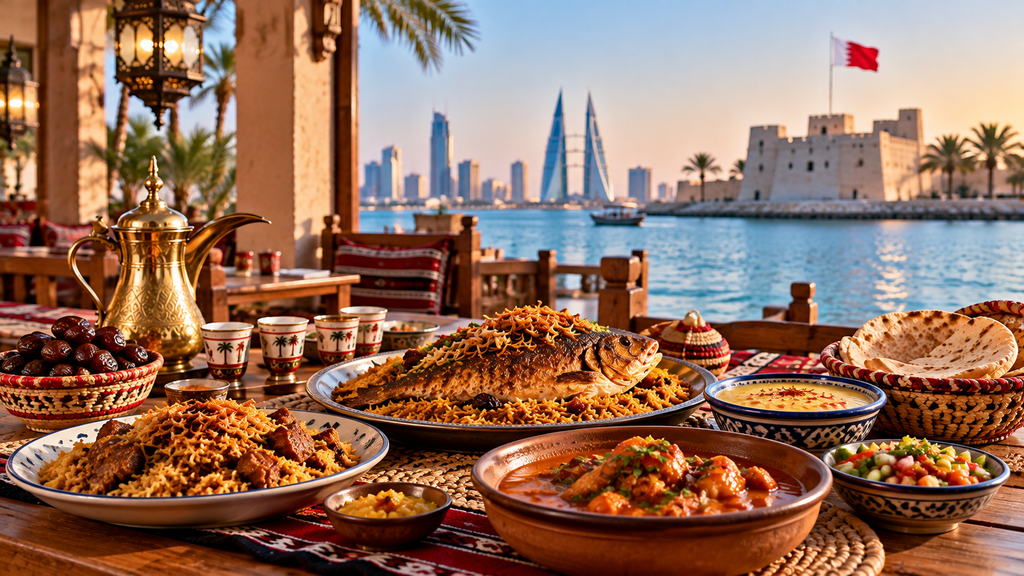
Some traditional Bahraini foods have softer textures and are associated more strongly with home cooking and family meals.
The Bahrain Authority for Culture and Antiquities specifically identifies Harees, Mathrooba and Margoog as dishes that have long formed part of Bahraini cuisine.
Harees
Harees combines wheat and meat that are cooked slowly until they become extremely soft.
The result is thick and smooth rather than grainy.
Versions of Harees exist across the Gulf, particularly during Ramadan and family occasions.
Mathrooba
Mathrooba is another soft dish, generally prepared by cooking rice or grain with meat or fish until the mixture can be beaten into a thick consistency.
Its texture makes it very different from separate-grain rice dishes such as Machboos.
Margoog
Margoog generally combines meat, vegetables and pieces of dough cooked together in a stew.
The dough absorbs the sauce while the dish cooks, creating a substantial family meal.
Why visitors should try these dishes
They reveal a side of Bahraini cuisine that is easy to overlook if you focus only on restaurant-friendly rice platters.
These foods are closer to traditional comfort food and often reflect the type of dishes prepared in family kitchens.
Balaleet Is One of the Best Bahraini Breakfast Dishes
Breakfast is one of the best times to explore Bahraini food.
Balaleet is a particularly important dish because it combines sweet vermicelli with a savoury egg topping.
Bahrain Tourism highlights Balaleet at several traditional breakfast venues, including Saffron by Jena in Muharraq and Haji’s Café in Manama Souq.
The vermicelli is usually flavoured with ingredients such as:
- Cardamom
- Saffron
- Sugar
- Rosewater
An omelette or layer of egg is then placed on top.
The result moves between sweet and savoury flavours in a way that can surprise visitors.
Why breakfast is worth making time for
Visitors often concentrate on dinner because they assume traditional food means a large meat-and-rice meal.
Bahraini breakfast can provide much more variety.
A table may include Balaleet, fresh bread, eggs, beans, cheese, tea and local sweets.
That makes breakfast one of the easiest ways to sample several foods without ordering an enormous meal.
Bahraini Kebab Is Not the Kebab Many Visitors Expect
The word “kebab” can be confusing in Bahrain.
Visitors may expect grilled meat on a skewer, but Bahraini kebab commonly refers to a fried vegetable-based patty or fritter.
Depending on the recipe, it can include ingredients such as:
- Chickpea flour
- Onion
- Tomato
- Herbs
- Spices
The mixture is fried until the outside becomes crisp.
Bahrain Tourism lists Bahraini kebab among traditional breakfast foods served in Muharraq.
This makes it a useful dish for visitors who want to understand how familiar food names can mean something completely different in local cuisine.
It can be eaten as part of breakfast or as a casual snack.
Pair it with fresh bread and tea for a simple local meal.
Fresh Khubz and Ragag Are Central to Everyday Bahraini Food
Bread is an important part of everyday Gulf cuisine.
In Bahrain, fresh khubz can accompany breakfast, eggs, meat dishes and stews.
Haji’s Café in Manama Souq is particularly known for producing hot Bahraini bread from its traditional oven. Bahrain Tourism describes the café’s large fresh khaboos as part of its long-established local dining experience.
Ragag
Ragag is a much thinner bread.
It is cooked until crisp and can be eaten plain or with different toppings and fillings.
The Bahrain Authority for Culture and Antiquities includes fresh Rgag bread among foods showcased as part of traditional heritage events.
It may be paired with:
- Egg
- Cheese
- Sweet toppings
- Local sauces
Why bread matters
Traditional bread helps connect large formal dishes with everyday life.
A visitor may eat Machboos once during a trip, but bread is the type of food Bahraini families and cafés can serve repeatedly in different forms.
Trying it fresh is far more rewarding than treating it simply as a side dish.
Tikka and Bahraini Street Food Reveal a More Casual Side of the Cuisine
Bahrain has a lively street-food and late-night eating culture.
Bahrain Tourism highlights tikka, malgoum wraps, potato sandwiches and karak among casual local favourites found in small restaurants and roadside food spots.
Tikka
Bahraini-style tikka usually consists of small pieces of marinated meat grilled over heat.
The marinade can be tangy and heavily seasoned, creating a strong flavour even though the dish itself is simple.
Tikka is usually eaten casually rather than as a formal main course.
Malgoum
Malgoum is a toasted wrap filled with meat and sauces.
It represents the more modern everyday side of Bahrain’s street-food culture.
Aloo sandwiches
Bahrain Tourism highlights Aloo Basheer as a decades-old local favourite known for spicy potato sandwiches.
These foods may not appear on luxury-hotel menus, but they can tell visitors more about how residents actually eat during casual evenings.
Street food also makes traditional flavours more accessible to travellers on smaller budgets.
Luqaimat and Khanfaroosh Are Traditional Bahraini Sweets Worth Trying
Bahraini sweets extend far beyond halwa.
Luqaimat and Khanfaroosh are two foods worth looking for at traditional events and local restaurants.
The Bahrain Authority for Culture and Antiquities includes both among heritage foods prepared at Bahraini cultural festivals.
Luqaimat
Luqaimat are small fried dumplings with a crisp exterior and soft centre.
They are often served with date syrup or another sweet topping.
The dessert is especially associated with Ramadan across the Gulf, though it can also be eaten at other times of the year.
Khanfaroosh
Khanfaroosh is a spiced fried sweet often flavoured with aromatic ingredients such as cardamom and saffron.
The texture sits somewhere between a cake and fried pastry.
It works particularly well with tea or coffee.
Why these sweets matter
Visitors sometimes buy imported chocolates or international desserts after a traditional meal.
Trying local sweets instead provides a more complete food experience.
Sharing Luqaimat or Khanfaroosh with tea can also be an affordable alternative to a formal dessert course.
Bahraini Halwa Is One of the Country’s Most Famous Food Traditions
Bahraini halwa is one of the country’s most recognisable traditional sweets.
The Bahrain Authority for Culture and Antiquities describes it as a famous Gulf sweet made mainly from starch, sugar and oil, with ingredients including nuts, saffron, rosewater and cardamom.
The Shuwaiter family is particularly associated with the tradition. Bahrain’s cultural authority says the family’s halwa-making history goes back more than 200 years, based on dated vessels kept in the Bahrain National Museum.
What does Bahraini halwa taste like?
The texture is sticky and gelatinous rather than cake-like.
Flavours can include:
- Rosewater
- Cardamom
- Saffron
- Nuts
The sweetness is usually intense, so small portions are enough.
How is it served?
Halwa pairs naturally with Arabic coffee or tea.
It is also commonly purchased as a gift.
Bahrain Tourism highlights Showaiter Delights as a modern café and sweet brand connected with this long-standing confectionery tradition.
For visitors looking for a food souvenir, Bahraini halwa is one of the strongest choices because it has a clear connection with local heritage.
Dates, Coffee and Tea Are Part of Bahraini Hospitality
Like neighbouring Gulf countries, Bahrain has strong traditions around coffee, dates and welcoming guests.
Dates have historically been important in Bahrain’s agriculture and food culture. Al Jasra House even preserves a traditional madbasa, a room used for producing date molasses, which was used in local dishes and sweets.
Date molasses, or dibs, can add natural sweetness to recipes.
Arabic coffee
Gahwa is traditionally served in small cups and often flavoured with cardamom.
It can accompany dates or halwa during hospitality.
The combination balances aromatic coffee with sweetness.
Karak and milk tea
Bahrain also has a strong tea culture.
The Bahrain Authority for Culture and Antiquities records chai haleeb, meaning tea with milk, as a traditional local drink, with variations using ingredients such as saffron, cardamom, roses or pistachio.
Karak is now especially common at casual restaurants and late-night food stops.
For visitors, tea and coffee can be as important as the food itself because these drinks are part of social life rather than simply beverages ordered after a meal.
Manama Souq and Muharraq Are Good Places to Find Traditional Bahraini Foods
Visitors looking for traditional food should spend time in both Manama and Muharraq.
Manama Souq
Manama Souq combines heritage, markets and food in a compact area.
Bahrain Tourism specifically recommends its traditional cafés and eateries, highlighting Haji’s Café and dishes such as Balaleet, liver, egg preparations, fresh tanoor bread and karak tea.
This makes the souq useful for visitors who want food without travelling between several distant neighbourhoods.
Muharraq
Muharraq is another important cultural area.
Bahrain Tourism recommends Saffron by Jena for a traditional breakfast featuring Balaleet and shakshuka in a restored historical setting.
The neighbourhood also provides an opportunity to combine food with historic streets and cultural attractions.
Why heritage areas work well
Traditional restaurants in these areas often provide both food and context.
Eating Balaleet in a restored house or drinking tea inside an old souq can create a stronger sense of place than eating the same dish inside a generic mall.
However, traditional food is not limited to heritage districts.
Modern Bahraini cafés across the country also reinterpret local dishes for younger diners.
How to Eat Traditional Bahraini Food Respectfully
Visitors do not need to memorise complicated dining rules.
Bahrain is highly accustomed to international guests, so normal respectful behaviour is generally enough.
Expect sharing
Large rice and meat dishes may be served communally.
If dining with Bahraini hosts, follow their lead about when to begin.
Use the right hand in traditional settings
When food is eaten directly by hand, the right hand is traditionally preferred.
If cutlery is provided, using it normally is perfectly acceptable.
Do not over-order
Rice dishes and breakfast spreads can be generous.
Ask restaurant staff about portion sizes before ordering several mains.
Sharing allows you to try more dishes and reduces waste.
Accept local recommendations
A useful question is:
“Which dishes are specifically Bahraini?”
This helps separate local cuisine from broader Gulf, Indian, Persian or Levantine food that is also widely available in Bahrain.
Be open to sweet-and-savoury combinations
Balaleet and Muhammar may taste unusual to visitors because sweetness appears alongside eggs or fish.
These combinations are part of what makes Bahraini cuisine distinctive.
Common Mistakes Visitors Make When Trying Bahraini Food
One common mistake is assuming all Gulf food is the same.
Bahraini cuisine shares dishes and ingredients with Qatar, Saudi Arabia, Kuwait and the UAE, but local recipes, spice mixtures and serving traditions can differ significantly.
Another mistake is eating only Machboos.
Machboos is important, but Balaleet, Bahraini kebab, Muhammar, Margoog and local sweets provide a much wider picture.
Visitors should also avoid skipping breakfast. Bahrain Tourism repeatedly highlights traditional breakfast cafés because this is where dishes such as Balaleet, fresh bread and eggs are easiest to experience.
Another mistake is assuming expensive restaurants are automatically more authentic.
Long-established cafés and small local restaurants can provide some of the strongest traditional experiences.
Visitors should also avoid confusing Bahraini kebab with the grilled meat kebab they may know from other countries.
Finally, do not leave Bahrain without trying local sweets. Bahraini halwa has one of the strongest historical connections to the country’s culinary identity.
Traditional Bahraini Foods Visitors Should Taste on a First Trip
If you have limited time, choose variety rather than ordering several similar dishes.
A useful first-time tasting list might look like this:
| Food Experience | What to Try |
|---|---|
| Main rice dish | Machboos |
| Sweet rice | Muhammar |
| Seafood | Local grilled or fried fish |
| Comfort food | Harees or Mathrooba |
| Stew | Margoog |
| Breakfast | Balaleet |
| Casual food | Bahraini kebab |
| Bread | Fresh khubz or Ragag |
| Street food | Tikka |
| Fried sweet | Luqaimat |
| Traditional sweet | Khanfaroosh |
| Signature dessert | Bahraini halwa |
| Drink | Gahwa or karak |
This provides rice, fish, wheat, bread, meat, sweets and drinks rather than focusing on one part of the cuisine.
The best traditional Bahraini foods tell the story of an island shaped by the sea, trade and cultural exchange.
Machboos reflects the Gulf’s love of aromatic rice, while Muhammar demonstrates Bahrain’s distinctive use of sweet and savoury combinations. Harees, Mathrooba and Margoog provide a closer look at home-style comfort food, while Balaleet and fresh khubz make breakfast one of the most useful meals for culinary travellers.
Bahrain’s heritage authorities also preserve and promote sweets such as Luqaimat, Khanfaroosh and the country’s famous halwa, whose confectionery tradition stretches back generations.
For visitors, the strongest food experience is therefore not necessarily found in one expensive restaurant.
Start with breakfast in Manama or Muharraq.
Try Machboos or fish for lunch.
Eat something casual such as tikka later in the day.
Finish with Bahraini halwa and coffee.
That combination provides a much richer introduction to Bahrain than simply ordering the most famous item on the menu.
Do follow us on Instagram
Read More – AI in Global Healthcare: How Artificial Intelligence Is Transforming Medicine