AI in Global Healthcare: What the Next Decade Could Look Like
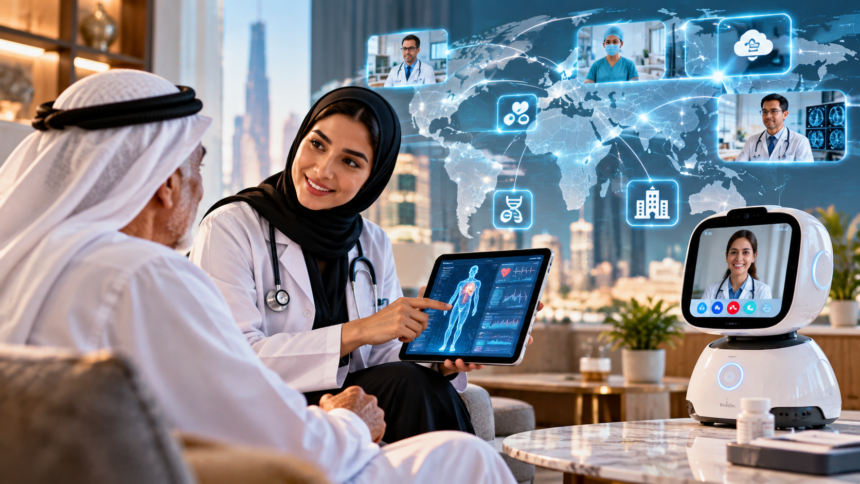
AI in global healthcare is moving rapidly from experimental technology into hospitals, clinics, medical devices, laboratories and everyday clinical workflows. Artificial intelligence is now helping doctors interpret medical images, identify disease patterns, automate documentation, monitor patients remotely, support treatment decisions and accelerate parts of drug development.
- How AI in Global Healthcare Is Changing Diagnosis
- AI Is Helping Doctors Spend Less Time on Administrative Work
- AI in Global Healthcare Is Supporting More Personalised Medicine
- AI Is Accelerating Drug Discovery and Medical Research
- AI Is Changing Hospitals Behind the Scenes
- Remote Monitoring Is Bringing Healthcare Beyond the Hospital
- Generative AI Could Change How Patients Access Health Information
- The Biggest Risks of AI in Global Healthcare
- Regulation Is Becoming Central to the Future of Healthcare AI
- Will AI Replace Doctors and Nurses?
- What Patients Will Notice as AI Becomes More Common
- AI in Global Healthcare: What the Next Decade Could Look Like
The scale of adoption is already significant. The US Food and Drug Administration says it had authorised more than 1,600 AI-enabled medical devices by September 2026, covering areas such as radiology, cardiology, neurology, pathology, obstetrics, gastroenterology and general hospital care.
The World Health Organization also says AI is already being used in diagnosis, clinical care, drug development, disease surveillance, outbreak response and health-system management. At the same time, WHO warns that technological development is moving faster than many legal and regulatory frameworks.
That combination of opportunity and risk explains why healthcare AI is attracting so much attention.
AI could help healthcare systems work faster, reduce administrative pressure and make advanced expertise available to more people. However, inaccurate outputs, biased training data, privacy concerns and overreliance on automated recommendations could create serious problems if systems are introduced without proper oversight.
The future is therefore unlikely to be about replacing doctors with machines. It is more likely to involve healthcare professionals using AI as another layer of clinical support while remaining responsible for judgement, communication and patient care.
How AI in Global Healthcare Is Changing Diagnosis
One of the most established uses of healthcare AI is diagnostic support.
Medical professionals produce enormous amounts of data through X-rays, CT scans, MRI scans, ultrasound, pathology slides, ECGs, laboratory tests and patient records. AI systems can analyse some of this information rapidly and highlight patterns that may deserve further attention.
The FDA’s current list of authorised AI-enabled medical devices is heavily represented by radiology tools. Recent 2026 authorisations include systems for breast imaging, lung analysis, cardiovascular imaging, ultrasound, radiation oncology and neurological assessment.
This does not mean the AI independently replaces the radiologist.
In many cases, the technology performs a narrower function such as:
- Identifying a suspicious area
- Measuring a structure
- Segmenting an organ
- Prioritising a scan for review
- Improving image quality
- Quantifying disease-related changes
The clinician then interprets the result alongside the rest of the patient’s medical information.
Earlier disease detection
AI can be especially useful when disease creates subtle patterns across thousands or millions of data points.
FDA examples include systems that can support detection of diabetic retinopathy from retinal images, provide information related to skin cancer diagnosis and estimate cardiovascular risk.
Earlier detection can matter because many diseases are easier to manage when identified before symptoms become severe.
Medical imaging
Radiology remains one of the most mature areas for AI adoption because medical images are highly structured digital data.
Algorithms may help with:
- Mammography
- Lung nodules
- Stroke imaging
- Cardiac scans
- Bone and joint assessment
- Cancer treatment planning
The potential benefit is not simply finding abnormalities faster. AI can also automate repetitive measurements that would otherwise consume clinician time.
The challenge is ensuring that systems continue working reliably across different hospitals, scanners and patient populations.
AI Is Helping Doctors Spend Less Time on Administrative Work
Some of the fastest-growing healthcare AI tools are not diagnosing disease at all.
They are writing notes.
Doctors and nurses spend large amounts of time documenting consultations, entering information into electronic health records and completing administrative tasks. This burden can reduce the time available for direct patient interaction.
Generative AI is increasingly being used through ambient AI scribes.
These systems listen to a patient-clinician conversation, convert speech into structured information and generate a draft clinical note for the clinician to review.
A 2026 study of emergency-department use found that encounters supported by an ambient AI scribe were associated with a 28% reduction in on-shift documentation time and a 16% reduction in total electronic-health-record time compared with standard encounters.
Other research has similarly found reductions in note-taking time and improvements in clinicians’ ability to focus on the patient rather than continually typing.
Why this matters
Reducing documentation burden could create several benefits:
- More eye contact during consultations
- Less after-hours paperwork
- Faster completion of clinical notes
- Reduced cognitive load
- Potentially more time for patient care
However, the technology is not error-free.
A recent review of ambient AI scribes found that systems could produce omissions and occasional clinically significant hallucinations, meaning clinicians still need to review generated notes carefully.
The practical lesson is important: AI-generated documentation may save time, but it should not be treated as automatically correct.
AI in Global Healthcare Is Supporting More Personalised Medicine
Traditional medicine often uses treatments based on what works for the average patient within a particular diagnosis.
AI may help healthcare become more personalised.
A patient’s medical record can include:
- Age
- Medical history
- Laboratory results
- Imaging
- Genetic information
- Medication history
- Lifestyle data
- Wearable-device data
AI systems can potentially combine these datasets and identify patterns that would be difficult for a person to process manually.
This could support decisions about which treatment is more likely to work for a particular patient.
Cancer care
Oncology is one of the areas where AI-driven personalisation is developing rapidly.
Algorithms can help analyse:
- Tumour imaging
- Pathology
- Genetic markers
- Treatment response
The goal is not simply to identify whether cancer exists but to provide additional information about how it may behave and which treatment strategies may be most appropriate.
The FDA’s 2026 AI-device list includes tools used in oncology imaging, breast cancer analysis and radiation-treatment planning, showing that AI is already being integrated into multiple stages of cancer care.
Cardiovascular medicine
AI can also combine ECG data, imaging and clinical information to identify cardiovascular risk.
The FDA lists AI-enabled cardiovascular devices designed to support tasks ranging from heart imaging to rhythm assessment and risk estimation.
Over time, more personalised systems could help doctors move away from one-size-fits-all treatment pathways.
However, personalised AI is only useful when the underlying data is accurate and representative.
If a model has been trained mainly on one demographic group, its recommendations may perform less effectively for other populations.
AI Is Accelerating Drug Discovery and Medical Research
Drug development is expensive, slow and uncertain.
Researchers may spend years identifying possible drug targets, screening molecules, conducting laboratory studies and moving through clinical trials before a treatment becomes available.
AI can help analyse large biological and chemical datasets much faster than traditional manual approaches.
WHO already identifies drug development as one of the major healthcare areas where AI is being used.
Finding possible drug targets
AI can analyse patterns in:
- Genetic data
- Proteins
- Biological pathways
- Disease mechanisms
- Scientific literature
This can help researchers identify possible targets for new therapies.
Molecule design
Machine-learning systems can also predict how potential drug molecules might interact with biological targets.
Instead of testing every possible compound manually, researchers can use AI to prioritise the most promising candidates.
Clinical-trial recruitment
AI may also help identify patients who meet complicated trial requirements.
A clinical trial could have dozens of inclusion and exclusion criteria. Searching medical records manually for eligible patients can be time-consuming.
AI-supported systems may help match suitable participants more efficiently.
Research synthesis
Generative AI can summarise scientific literature, compare studies and organise large bodies of evidence.
However, this creates new risks because language models can generate convincing but incorrect information.
WHO’s 2026 discussion paper on AI and health policy specifically warns that AI is beginning to influence how evidence is interpreted and how policy options are developed, meaning governance is needed across the entire evidence cycle.
AI Is Changing Hospitals Behind the Scenes
Patients often associate healthcare AI with futuristic diagnosis, but some of its biggest impacts may happen behind the scenes.
Hospitals are complex organisations that need to coordinate:
- Staff
- Beds
- Operating theatres
- Emergency departments
- Laboratories
- Imaging
- Pharmacy
- Equipment
- Patient appointments
AI can help predict demand and optimise how these resources are used.
Hospital bed management
A hospital may use predictive models to estimate which patients are likely to be discharged and when new beds will be needed.
This can help reduce bottlenecks.
Emergency departments
AI may support triage by helping staff identify high-risk patients from vital signs, test results and medical history.
The FDA authorised an AI-enabled sepsis-flagging device in April 2026, illustrating how predictive systems are moving into general hospital workflows.
Operating-room planning
Hospitals can use data analytics and AI to estimate procedure duration, predict cancellations and improve theatre scheduling.
Even small efficiency gains can matter because operating-room time is expensive.
Supply management
Healthcare organisations also need to manage medications, equipment and consumables.
Predictive systems can help identify patterns in usage and reduce shortages or unnecessary stock.
WHO includes health-system management among the areas where AI is already playing a role.
These applications are less visible than diagnostic tools, but they may significantly influence waiting times and healthcare costs.
Remote Monitoring Is Bringing Healthcare Beyond the Hospital
Healthcare traditionally depends heavily on appointments.
A patient visits the clinic, measurements are taken and the doctor makes decisions using information available at that moment.
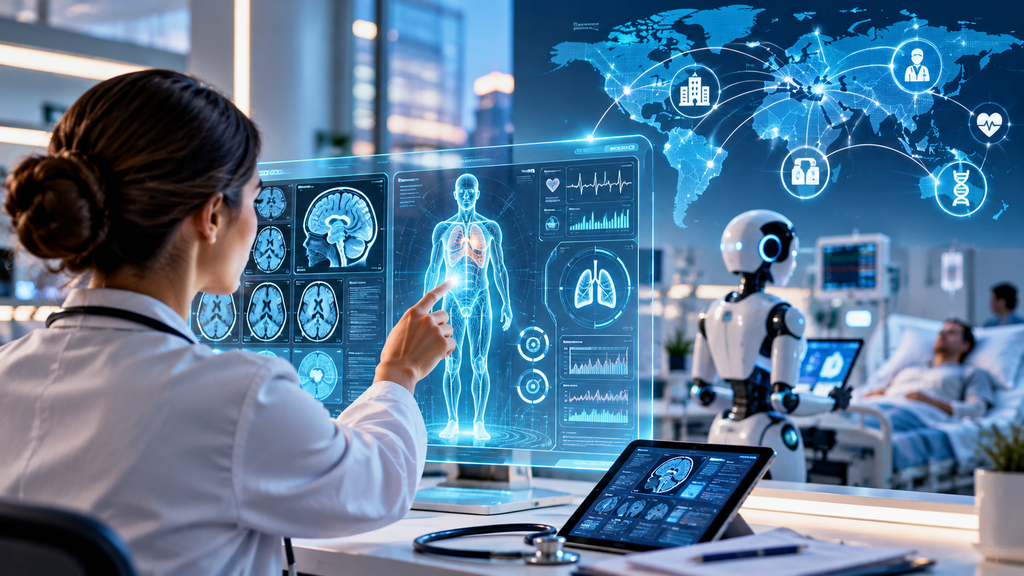
Connected devices and AI are gradually changing this model.
Wearable devices and home-monitoring technologies can collect information continuously.
1. AI in Global Healthcare: What the Next Decade Could Look Like
- Heart rate
- Heart rhythm
- Blood glucose
- Blood pressure
- Sleep patterns
- Oxygen levels
- Activity
AI can then help identify unusual patterns.
Diabetes management
The FDA gives automated insulin dosing based on continuous glucose-monitor data as one example of AI-enabled medical-device technology.
Such systems can analyse glucose trends continuously and help adjust treatment.
Cardiac monitoring
Wearable or portable devices can record heart rhythm over long periods.
AI can help detect patterns that might not appear during a short clinic visit.
Home diagnostics
The FDA’s 2026 device list includes AI-enabled systems related to sleep monitoring, wheeze detection and cardiovascular assessment.
This illustrates a broader shift from healthcare being delivered only inside hospitals towards continuous monitoring at home.
The potential benefit is earlier intervention.
Instead of waiting until a patient becomes seriously unwell, healthcare teams may receive warning signals sooner.
However, too many alerts can create another problem.
Clinicians need systems that identify genuinely useful changes rather than overwhelming them with false alarms.
Generative AI Could Change How Patients Access Health Information
Generative AI has created one of the biggest changes in healthcare technology because ordinary patients can now interact directly with powerful language models.
People already use AI to ask about:
- Symptoms
- Medications
- Medical terminology
- Laboratory reports
- Nutrition
- Preparing for appointments
This creates significant opportunities.
Medical information is often difficult to understand, and generative AI can explain complicated language in a simpler form.
It can also help patients organise questions before meeting a doctor.
However, patient-facing healthcare AI is also one of the highest-risk areas if used incorrectly.
Large language models can produce inaccurate answers confidently.
They may miss important clinical context or fail to recognise when a symptom requires urgent attention.
WHO has repeatedly emphasised the need for safety, transparency, equity and evidence when applying large multimodal or generative AI models to health.
The best role for patient-facing AI
AI is most useful when it helps people understand information rather than pretending to replace professional medical diagnosis.
For example, it may help a patient understand what a medical term means or prepare questions about a laboratory result.
It should not be treated as a substitute for emergency care or personalised medical evaluation.
Healthcare organisations developing patient-facing tools will therefore need strong escalation systems that direct users to qualified professionals when required.
The Biggest Risks of AI in Global Healthcare
The potential benefits of AI are large, but healthcare has little room for careless experimentation.
A wrong movie recommendation is inconvenient.
A wrong medical recommendation can be dangerous.
Several major risks therefore need continuous attention.
Hallucinations
Generative AI can produce false information that sounds convincing.
Clinical research on ambient scribes has already identified occasional clinically significant hallucinations and missing information.
For this reason, AI-generated medical content requires professional review.
Bias
AI systems learn from data.
If those datasets underrepresent particular ethnicities, age groups, sexes or geographic populations, the system may work less effectively for them.
This becomes especially important as healthcare AI expands globally.
A model developed using data from one country’s hospitals cannot automatically be assumed to perform equally well in every population.
Privacy
Healthcare records contain some of the most sensitive personal information people have.
AI systems may need access to:
- Diagnoses
- Medications
- Genomic information
- Medical images
- Conversations
- Personal identifiers
Healthcare providers therefore need strong rules around data access, cybersecurity and consent.
Automation bias
Doctors may gradually begin trusting automated recommendations too much.
If an AI system repeatedly performs well, people can become less likely to question it when it eventually makes a mistake.
Human oversight must remain meaningful rather than becoming a formality.
Unequal access
WHO warns that healthcare AI must not become another driver of inequality.
Wealthy health systems may be able to buy sophisticated AI infrastructure while lower-resource regions struggle with internet access, digital records or trained staff.
If implementation is poorly managed, AI could widen healthcare gaps instead of reducing them.
Regulation Is Becoming Central to the Future of Healthcare AI
Healthcare AI cannot scale safely without regulation.
Governments and medical regulators are increasingly developing frameworks that evaluate not only whether AI works when first released but whether it remains safe as technology and data change.
The FDA makes this distinction clearly.
It does not regulate “AI” as an abstract technology. It regulates medical devices that use AI when those products meet the legal definition of a medical device.
AI creates a particular challenge because some systems can change after deployment.
Traditional medical devices are usually evaluated as relatively fixed products.
Machine-learning systems may evolve through software updates or new data.
This means regulators increasingly need to think about the entire product lifecycle.
The FDA says AI-enabled medical devices require attention from development and validation through deployment, monitoring, maintenance and modification.
WHO is taking a similar approach globally.
Its AI-for-health strategy focuses on governance, technical standards, evidence-based adoption and ethical use. WHO specifically warns that regulation has struggled to keep pace with rapid technological development.
This regulatory work will become increasingly important as AI begins influencing not only diagnostic tools but also clinical notes, patient communication, hospital management and health-policy decisions.
Will AI Replace Doctors and Nurses?
The evidence so far suggests replacement is the wrong way to think about healthcare AI.
Most successful systems perform a specific task rather than functioning as an independent physician.
An imaging tool may detect a suspicious area.
An ambient scribe may draft a clinical note.
A predictive model may flag possible deterioration.
A language model may summarise information.
But healthcare involves much more than pattern recognition.
Clinicians must understand:
- Patient preferences
- Social circumstances
- Ethical questions
- Family concerns
- Uncertainty
- Communication
- Competing medical priorities
These decisions frequently involve judgement rather than a single mathematically correct answer.
AI is therefore more likely to change the job of healthcare professionals than eliminate it.
Doctors may spend less time manually measuring scans or writing routine notes.
Nurses may receive better warning systems for deteriorating patients.
Pharmacists may use AI to identify medication risks.
Researchers may analyse data faster.
But professional responsibility will remain crucial.
Nature Medicine researchers have described physicians increasingly acting as “context engineers,” ensuring AI systems receive and interpret the right clinical context rather than simply accepting generated outputs.
That may become one of the defining medical skills of the AI era.
What Patients Will Notice as AI Becomes More Common
Much of healthcare AI will remain invisible to patients.
You may never know that an algorithm helped improve an image, prioritise a scan or optimise your hospital appointment.
Other changes will be more obvious.
Patients may increasingly notice:
- Doctors spending less time typing
- Faster imaging reports
- Automated appointment support
- Remote health monitoring
- Digital symptom tools
- More personalised risk assessments
- AI-assisted patient portals
- Faster administrative processes
The most important improvement would be more time for actual human care.
If AI reduces paperwork but simply allows health systems to schedule more patients into the same amount of time, patients may feel little benefit.
If it allows doctors to spend more attention on conversation, explanation and decision-making, the technology becomes much more meaningful.
Early research on ambient AI documentation already suggests some clinicians feel more present during consultations when they do not need to type constantly.
That may be one of AI’s most valuable contributions: using technology to make healthcare feel more human rather than less.
AI in Global Healthcare: What the Next Decade Could Look Like
AI in global healthcare is moving beyond the idea of one algorithm performing one task.
The next generation of systems is increasingly multimodal, meaning they can work across combinations of medical notes, laboratory results, images, genomics and other forms of information.
Nature Medicine researchers argue that future medical AI will need to adapt to different patient populations, specialties and clinical environments instead of assuming one model works equally well everywhere.
This could lead to healthcare systems where AI helps coordinate information throughout the patient’s journey.
A future system might combine:
Medical history
→ Laboratory results
→ Imaging
→ Wearable data
→ Treatment guidelines
→ Medication history
and present clinicians with relevant patterns before the appointment.
The technology could also help address healthcare workforce shortages by automating repetitive tasks.
WHO specifically identifies workforce gaps and resource limitations as areas where responsible AI deployment could support health systems.
However, the biggest question is not whether AI will become more powerful.
It almost certainly will.
The more important question is whether healthcare systems can deploy that power safely, fairly and transparently.
By September 2026, the FDA had already authorised more than 1,600 AI-enabled medical devices in the United States alone.
That number shows AI is no longer a future concept.
It is already part of modern medicine.
The next stage will require better evidence, stronger regulation, representative datasets and clear accountability when systems make mistakes.
If those challenges are addressed, AI could help healthcare professionals detect disease earlier, reduce paperwork, personalise treatments and extend care beyond hospitals.
If they are ignored, the same technology could amplify bias, misinformation and inequality.
The transformation of healthcare will therefore depend not simply on building better algorithms.
It will depend on building health systems capable of using them responsibly.
Do follow us on Instagram
Read More – How Parking Works in Dubai: Zones, Charges, Payments and Fines Explained