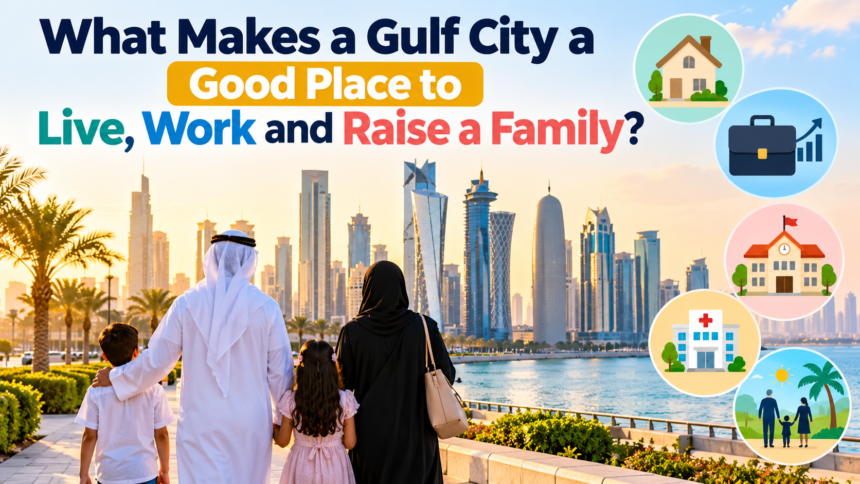
What Makes a Gulf Cities a Best Place to Live, Work and Raise a Family?
Introduction : Gulf Cities a Best Place to Live?
Choosing the right city to live in is a very important decision, especially when you are considering the future of your family. People look for places that offer good job prospects, a stable income, quality education, and reliable healthcare, all while allowing them to enjoy a comfortable life. For many people around the world, cities in the Gulf have become attractive destinations, as they offer modern infrastructure, international career opportunities, diverse communities, and a wide range of activities for families.
- Introduction : Gulf Cities a Best Place to Live?
- 1. Career Opportunities and Professional Growth
- 2. Safety and Security for Families
- 3. Quality Education and Good Schools
- 4. Reliable Healthcare and Medical Services
- 5. Cost of Living and Financial Comfort
- 6. Comfortable Housing and Family-Friendly Neighbourhoods
- 7. Public Transport and Easy Daily Travel
- 8. Work-Life Balance and Family Time
- 9. Parks, Beaches, and Outdoor Activities
- 10. Cultural Diversity and a Welcoming Community
- 11. Local Culture, Traditions, and Community Values
- 12. Entertainment and Activities for All Ages
- 13. Climate and Everyday Comfort
- 14. Financial Planning and Long-Term Stability
- 15. Choosing the Right Gulf City for Your Family
- Conclusion: Finding the Best Gulf City for Your Family
- Frequently Asked Questions (FAQs)
Cities such as Dubai, Abu Dhabi, Doha, Riyadh, Kuwait City, and Manama attract professionals, business owners, students, and families from different parts of the world. Some people move to the Gulf to grow their careers, while others want to improve their financial position or provide their children with access to international education.
However, moving to a Gulf city is about more than finding a good job or renting a beautiful home. Families must also consider the cost of living, school fees, healthcare, transport, safety, weather, and work-life balance. The best Gulf city for a family is one that meets its needs today while supporting its future goals.
In this guide, we explore what makes a Gulf city a good place to live, work, and raise a family, including career opportunities, education, healthcare, housing, community life, and everyday comfort.
1. Career Opportunities and Professional Growth
One of the main reasons people move to Gulf cities is the opportunity to build a successful career. Many cities in the region have developed into important centres for business, trade, tourism, technology, finance, and professional services.
Depending on the city and industry, people may find jobs in information technology, healthcare, education, engineering, construction, aviation, logistics, hospitality, retail, finance, and administration. Dubai and Abu Dhabi attract international businesses, while Doha offers opportunities in areas such as energy, education, healthcare, and transport. Riyadh has been expanding its business and service industries, while Kuwait City and Manama have their own employment markets.
Working in a Gulf city can provide valuable international experience. Employees may work with colleagues from different countries, develop new skills, and gain experience with international business practices.
However, job opportunities depend on qualifications, experience, language skills, professional licences, and employer requirements. Before moving, research your industry, check whether your qualifications are recognised, and understand the requirements for obtaining a work permit.
For families, a good job market should offer more than attractive salaries. Stable employment, reasonable working hours, clear contracts, and opportunities for career development can make a major difference to long-term quality of life.
2. Safety and Security for Families
Safety is one of the most important factors when choosing a place to live. Parents want their children to feel comfortable going to school, playing in parks, and taking part in everyday activities.
Many Gulf cities have modern residential developments, organised public areas, security services, and well-maintained buildings. Some apartment complexes and gated communities offer controlled entrances, security staff, parking facilities, playgrounds, and shared recreational spaces.
However, conditions can vary between neighbourhoods. Families should research the particular area where they plan to live instead of relying only on a city’s overall reputation.
Before choosing a neighbourhood, consider:
- The condition of roads and pedestrian paths.
- Access to emergency services and nearby hospitals.
- Lighting and security around residential buildings.
- Traffic conditions near schools and playgrounds.
- The distance between home, work, and essential shops.
- The availability of safe places for children to play.
Safety also includes understanding local laws and social expectations. Learning the rules that apply to public behaviour, driving, photography, and other everyday activities can help families settle in comfortably.
3. Quality Education and Good Schools
A major factor behind families moving to the Gulf is education. This is because families seek access to quality instruction, effective learning environments, useful facilities, the development of social skills, and academic growth for their children.
Many Gulf cities offer public schools, private schools, and international schools. Depending on the location, parents may find British, American, Indian, International Baccalaureate (IB), and other curricula.
For example, parents from India may prefer a school following a CBSE curriculum, while other families may choose British or IB programmes. The right curriculum can help children adjust to a new school and may make future transfers easier if the family moves again.
School fees can vary widely. Parents may also need to budget for transport, uniforms, books, meals, registration, and extracurricular activities.
Families should check:
- The availability of their preferred curriculum.
- Tuition fees and additional school expenses.
- Distance from home and daily transport arrangements.
- Teacher qualifications and school facilities.
- Sports, arts, language classes, and other activities.
- Admission requirements and available places.
A good school does more than teach academic subjects. It helps children build confidence, make friends, and feel connected to their community.
4. Reliable Healthcare and Medical Services
Access to good healthcare is another important reason families consider Gulf cities. Parents want to know that they can find doctors, hospitals, pharmacies, and specialist medical services when needed.
Major Gulf cities have a range of public and private healthcare facilities. However, access and costs depend on the country, location, type of treatment, and insurance coverage.
Some employers provide health insurance for employees, and some also include spouses and children. Families should check which hospitals are included, whether specialist consultations are covered, and what expenses they may need to pay themselves.
Before relocating, consider:
- The distance to the nearest hospital and family clinic.
- Whether your health insurance covers all family members.
- Coverage for medicines, dental care, maternity services, and specialist treatment.
- The availability of suitable doctors and medical facilities.
- The cost of treatment that is not covered by insurance.
- Whether regular medicines are available locally.
Reliable medical services can provide peace of mind and help residents manage their health while living away from their home country.
5. Cost of Living and Financial Comfort
A good salary does not always guarantee a comfortable lifestyle. Before moving to a Gulf city, families need to understand how much they will spend on housing, food, education, transport, healthcare, and other daily needs.
Rent is often one of the largest household expenses. The cost of housing depends on the city, neighbourhood, size of the property, building facilities, and distance from work or school.
Other expenses include groceries, electricity, water, internet, mobile services, school fees, childcare, transport, and leisure activities. Families who regularly eat out, shop, or travel should also include those costs in their budget.
Some employers offer housing allowances, health insurance, transport support, annual travel benefits, or school-fee assistance. These benefits can make a significant difference when comparing job offers.
A practical family budget should include:
- Rent and household bills.
- Groceries and everyday essentials.
- School fees and children’s activities.
- Transport, fuel, parking, or public transport.
- Health insurance and medical expenses.
- Internet and mobile phone bills.
- Clothing, personal care, and leisure.
- Savings and emergency expenses.
The best Gulf city for your family is not necessarily the one with the highest salaries. It is the one where your income can cover essential expenses, support a comfortable lifestyle, and leave room for savings.
6. Comfortable Housing and Family-Friendly Neighbourhoods
Gulf cities offer many housing options, from modern apartments in busy urban areas to larger villas in quieter residential communities.
Apartments may suit professionals who want to live close to offices, shops, restaurants, and public transport. Villas and larger homes may be better for families who need extra bedrooms, private outdoor space, or room for visiting relatives.
Some residential communities provide swimming pools, gyms, playgrounds, walking paths, and shared gardens. These facilities can be useful for families, especially when children need safe places to play close to home.
Before signing a rental agreement, check:
- The rent, deposit, and payment schedule.
- Maintenance responsibilities and additional charges.
- Contract length and renewal terms.
- Electricity, water, and cooling costs.
- Parking availability and access to public transport.
- The distance to schools, clinics, and grocery shops.
The climate is another important factor. During very hot months, reliable air conditioning, covered parking, shaded walkways, and nearby indoor facilities can make daily life more comfortable.
A well-chosen neighbourhood can save time, reduce travel stress, and help families develop a comfortable daily routine.
7. Public Transport and Easy Daily Travel
Transport affects almost every part of family life. Long journeys to work and school can reduce the time parents spend with their children. High fuel, parking, and vehicle costs can also place pressure on the family budget.
Some Gulf cities have modern public transport systems. Dubai has an extensive Metro network, while Doha’s Metro serves several important areas. Other cities offer buses, taxis, ride-hailing services, and road networks, although many neighbourhoods still depend heavily on private cars.
When choosing a location, consider:
- Travel time between home, work, and school.
- Access to Metro stations and bus routes.
- Traffic during morning and evening rush hours.
- Fuel, parking, insurance, and vehicle maintenance costs.
- Safe walking routes and access for young children.
- Availability of taxis and ride-hailing services.
Convenient transport can improve work-life balance and give family members more flexibility.
8. Work-Life Balance and Family Time
A good city should allow people to build their careers while still enjoying their personal lives. Work-life balance matters because families need time to relax, communicate, exercise, and take part in shared activities.
In Gulf cities, work-life balance depends on the employer, working hours, commuting distance, childcare arrangements, and the cost of leisure activities. Some professionals have regular schedules, while others work shifts or long hours, particularly in healthcare, aviation, retail, hospitality, and construction.
Before accepting a job, understand the expected working hours, overtime arrangements, annual leave, public holidays, and flexibility around family responsibilities.
Parents with young children should also think about childcare and school schedules. Simple habits, such as eating together, planning weekend activities, and setting aside time away from work, can support stronger family relationships.
Parks, sports facilities, beaches, cultural attractions, and neighbourhood cafés provide opportunities to relax after a busy week. A city with a variety of affordable activities makes it easier for families to enjoy their free time without spending too much.
9. Parks, Beaches, and Outdoor Activities
Outdoor spaces can make a city more enjoyable for families. Parks, beaches, playgrounds, walking paths, and waterfront areas give children room to play and adults a place to exercise or relax.
Dubai has public parks and beach areas, Doha offers waterfront walks and green spaces, and Abu Dhabi has parks, beaches, and family recreation facilities. Riyadh and other Gulf cities also offer parks and recreational areas.
These places are especially attractive during cooler months, when families can enjoy picnics, cycling, walking, and outdoor games. During hotter periods, indoor play areas, swimming pools, sports centres, and air-conditioned community facilities may be more practical.
Family activities do not always have to be expensive. Visiting a public park, taking an evening walk, or organising a picnic can be a simple way to spend time together.
Before planning an outdoor activity, check local opening times, entry fees, beach rules, and weather conditions. Families should also take precautions against heat, including drinking enough water and choosing cooler times of day for outdoor exercise.
10. Cultural Diversity and a Welcoming Community
Many Gulf cities are home to people from different countries, languages, and cultural backgrounds. This diversity creates opportunities to discover new foods, traditions, celebrations, and ways of life.
For children, growing up in a multicultural environment can be a valuable experience. They may make friends from different backgrounds, learn to respect different traditions, and develop a wider understanding of the world.
Parents can also find communities connected to their language, nationality, hobbies, or cultural interests. Schools, sports clubs, community groups, and local events can help newcomers make friends and feel more settled.
Moving abroad can also be emotionally challenging. Families may miss relatives, familiar food, and the support of friends back home. Building a new social network takes time.
Before moving, families can research the neighbourhood, nearby community facilities, school networks, and activities that match their interests. These connections can make the transition easier and help everyone feel more at home.
11. Local Culture, Traditions, and Community Values
Living in a Gulf city gives families the opportunity to learn about local customs and traditions. Hospitality, family relationships, traditional food, religious celebrations, and community gatherings are important parts of life across the region, although customs differ between countries and communities.
Ramadan is one example of a special time in the Gulf. Daily routines, business hours, dining arrangements, and public activities may change during the month. Families can learn about local customs, enjoy cultural events, and understand the importance of generosity and community.
Parents can introduce children to local heritage by visiting museums, traditional markets, historic neighbourhoods, and cultural festivals. These experiences can make living abroad more interesting and help children understand the place they call home.
It is also important to understand local laws and social expectations. Rules related to public behaviour, photography, road use, dress, and online communication may differ from those in other countries. Checking current official guidance can help families avoid misunderstandings.
Respecting local culture does not mean giving up your own identity. Families can continue celebrating their own festivals and following their traditions while learning about the culture of their new home.
12. Entertainment and Activities for All Ages
A good family city should offer activities that appeal to children, teenagers, and adults. Gulf cities provide entertainment options such as shopping centres, cinemas, museums, aquariums, indoor play areas, sports facilities, libraries, and seasonal festivals.
Shopping malls are popular because they often bring several services together in one place. Families may find supermarkets, restaurants, cinemas, children’s play zones, and shops under the same roof. This can be particularly convenient during hot weather.
However, family entertainment does not always need to be expensive. Public beaches, parks, cultural events, libraries, and neighbourhood walks can provide enjoyable alternatives to costly attractions.
Families can manage their budgets by looking for:
- Free public events and cultural activities.
- Parks, playgrounds, and walking areas.
- Family tickets and seasonal promotions.
- Community sports and creative workshops.
- Affordable local restaurants and cafés.
- Museums or attractions with reduced-price entry days, where available.
A variety of entertainment options helps families create happy memories without needing to follow the same routine every weekend.
13. Climate and Everyday Comfort
Climate is an important factor when deciding whether a Gulf city is suitable for long-term family life. Many cities in the region experience very hot summers, relatively mild winters, and limited rainfall.
Families moving from cooler countries may need time to adjust. During the hottest months, outdoor activities are often more comfortable in the early morning or evening. Indoor facilities become more important during the day.
Air conditioning is widely used in homes, schools, offices, shopping centres, and public buildings. Before renting a home, families should check whether the cooling system works well and whether electricity and cooling costs are included in the rent.
Other useful features include shaded walkways, indoor sports centres, swimming facilities, nearby shops, and covered parking. Parents should also follow local advice about hydration and heat exposure, especially for young children and older family members.
Choosing suitable housing and planning activities around the weather can make everyday life much more comfortable.
14. Financial Planning and Long-Term Stability
For many people, moving to a Gulf city is part of a wider plan to build a career, save money, or provide better opportunities for their children. A job may offer international experience, professional development, and the chance to support family members in another country.
However, the financial benefits depend on individual circumstances. Salary, rent, school fees, healthcare, transport, remittances, and lifestyle choices all affect how much a family can save.
Before moving, prepare a realistic budget that includes both regular expenses and unexpected costs. Compare the salary with the expected cost of living and check whether the employer offers housing support, health insurance, transport, or school-fee assistance.
It is also wise to keep emergency savings for unexpected expenses, job changes, medical needs, or travel. Families should understand their employment contract and residence requirements, including what may happen if employment ends or circumstances change.
Long-term planning should include questions such as:
- How long does the family plan to stay?
- Can the household manage expenses on one income if needed?
- What will happen if school fees or rent increase?
- Are there suitable career opportunities for both adults?
- How will the family manage savings and future education costs?
- What options are available if employment circumstances change?
Financial stability is not only about earning more; it is about managing expenses, saving regularly, and making choices that suit the whole household.
15. Choosing the Right Gulf City for Your Family
There is no single Gulf city that is perfect for everyone. The best choice depends on your profession, budget, family size, children’s needs, and preferred lifestyle.
Dubai, United Arab Emirates: Dubai offers a large international business environment, varied school options, modern transport in many areas, and a wide choice of entertainment. It may suit professionals who value career opportunities and an active urban lifestyle. Housing and school costs can be high, so budgeting is important.
Abu Dhabi, United Arab Emirates: Abu Dhabi combines employment opportunities with waterfront areas, parks, cultural attractions, and residential neighbourhoods. It may appeal to families seeking modern facilities and a comfortable city lifestyle.
Doha, Qatar: Doha offers modern infrastructure, international schools, healthcare facilities, museums, parks, and waterfront areas. It may suit people working in energy, education, healthcare, transport, and services.
Riyadh, Saudi Arabia: Riyadh has a growing business environment and expanding options for dining, entertainment, and family activities. Traffic, commuting distances, housing, and school availability deserve careful attention.
Manama, Bahrain: Manama offers a mixture of business districts, local markets, restaurants, and residential communities. Job options, schooling, and housing costs should be checked for each household.
These are general descriptions, not a ranking. Costs, transport, schools, and employment options can differ greatly within each city. Before deciding, compare specific neighbourhoods, check current job offers, and calculate your likely monthly expenses.
Conclusion: Finding the Best Gulf City for Your Family
A good Gulf city offers more than modern buildings and attractive salaries. It provides opportunities to build a career, access to quality education and healthcare, comfortable housing, safe surroundings, and activities that help families enjoy their time together.
Cities such as Dubai, Abu Dhabi, Doha, Riyadh, and Manama each offer different advantages. Some are known for international business opportunities, while others may appeal to families looking for particular neighbourhoods, cultural experiences, or lifestyle choices.
Before moving, consider your family’s needs as a whole. Compare the salary and benefits with the cost of rent, school fees, healthcare, transport, and everyday expenses. Research schools, check employment and residence requirements, and explore the neighbourhood where you plan to live.
There is no perfect city for everyone. The right choice is the one that supports your career, fits your budget, provides a suitable environment for your children, and helps your family feel comfortable and connected.
With careful planning, living in the Gulf can be an opportunity to grow professionally, experience different cultures, and build a rewarding life together.
Frequently Asked Questions (FAQs)
1. Which Gulf city is best for families?
Dubai, Abu Dhabi, Doha, Riyadh, and Manama are popular options, but the best choice depends on your budget, job opportunities, school preferences, and lifestyle. Compare specific neighbourhoods rather than relying only on a city’s reputation.
2. Are Gulf cities good places for expatriate families?
Many expatriate families live in Gulf cities and benefit from international schools, modern healthcare facilities, and multicultural communities. The experience depends on income, employment conditions, location, and access to family support.
3. Is it expensive to raise children in the Gulf?
Costs vary by city and lifestyle. Housing, school fees, childcare, healthcare, transport, and children’s activities can make up a large part of the family budget. Employer benefits may help reduce some expenses.
4. Are international schools available in Gulf cities?
Yes. Cities such as Dubai, Abu Dhabi, Doha, Riyadh, Manama, and Kuwait City offer international schooling options. Curricula, fees, admission requirements, and availability vary between schools.
5. Is healthcare easily available in Gulf cities?
Major Gulf cities have hospitals, clinics, pharmacies, and specialist services. Access and costs depend on location, medical needs, insurance coverage, and local requirements.
6. Can families live in the Gulf without owning a car?
It depends on the city and neighbourhood. Some areas of Dubai and Doha have access to Metro services and other public transport, while many suburban areas across the region are more car-dependent.
7. What should I check before accepting a Gulf job offer?
Review your salary, housing allowance, health insurance, work permit arrangements, working hours, annual leave, school support, and other benefits. Compare the complete package with your expected living expenses.
8. Are Gulf cities suitable for young children?
Many Gulf cities offer schools, parks, indoor play areas, sports facilities, and family-friendly residential communities. Parents should also consider traffic, summer temperatures, school journeys, and access to healthcare.
9. How can families reduce living costs in the Gulf?
Prepare a monthly budget, compare housing options, review school fees, plan transport expenses, cook at home regularly, and set aside emergency savings. Choosing a home close to work or school may also reduce travel costs.
10. What is the most important factor when choosing a Gulf city?
The most important factor is how well the city fits your family’s overall needs. Employment, affordability, education, healthcare, safety, and work-life balance should be considered together.
Do follow us on Instagram
Read More – The Fascinating Food Culture of Gulf Cities: From Traditional Meals to Modern Cafes