
From Traditional Advertising to Creator-Led Brand Campaigns
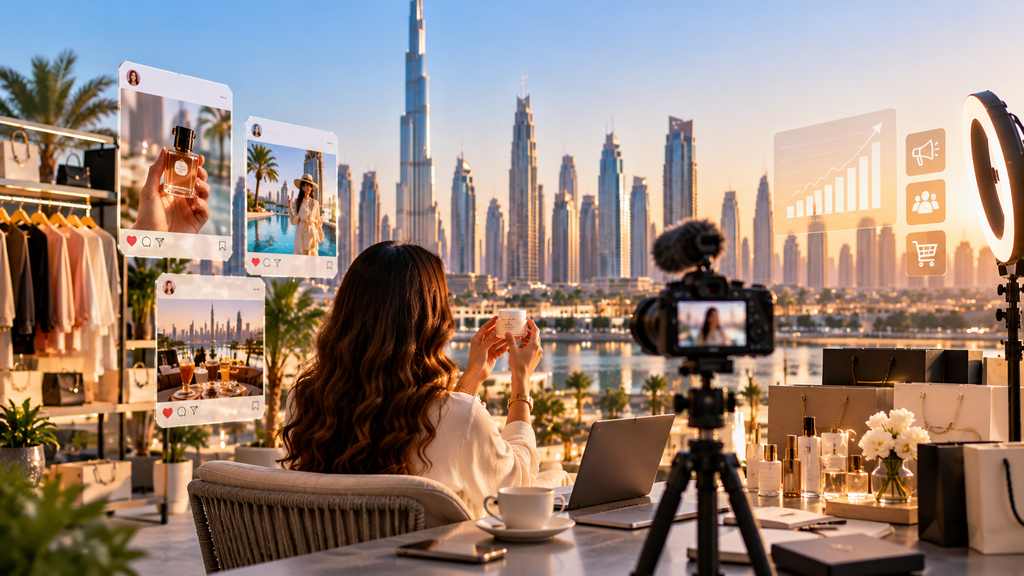
A few years ago, a major advertising campaign in the UAE might have centred on television commercials, outdoor billboards, magazine placements and celebrity endorsements. Today, a restaurant in Dubai can introduce a new menu through a food creator’s Instagram Reel, while a fashion brand can reach potential customers through a series of short videos filmed by independent content creators.
- What Is the UAE Creator Economy and Why Is It Growing?
- From Traditional Advertising to Creator-Led Brand Campaigns
- 7 Ways Content Creators Are Transforming UAE Brand Advertising
- Micro-Influencers vs Celebrities: How Brands Choose the Right Creators
- How UAE Creators Earn Money and How Brands Measure Advertising ROI
- UAE Influencer Advertising Rules, Permits and Transparency Requirements
- Challenges Facing the UAE Creator Economy and Brand Advertising
- The Future of the UAE Creator Economy and Frequently Asked Questions
The change is part of the expanding UAE Creator Economy, where individuals turn their knowledge, creativity, personalities and digital audiences into professional businesses.
Content creation is no longer limited to posting photographs or producing entertaining videos. Creators increasingly work as storytellers, product demonstrators, educators, community builders and advertising partners.
For brands, this introduces new ways to reach consumers.
Instead of relying exclusively on traditional advertisements, businesses can collaborate with creators who communicate directly with audiences interested in particular lifestyles, products or experiences.
Dubai’s hospitality sector, Abu Dhabi’s cultural attractions, the country’s beauty and fashion businesses, and the wider retail industry can all use this approach to develop more targeted campaigns.
The UAE is also investing in infrastructure that supports content creation as an economic activity.
At the end of September 2026, the UAE Government Media Office reported that Creators HQ had attracted 5,000 registered members from 130 countries, while the number of licensed content creators in the country had reached 15,000 across more than 90 nationalities.
The government has also announced an AED 150 million Content Creators Support Fund and an AED 50 million Creators Ventures Accelerator, demonstrating its interest in developing digital content as a professional industry.
However, the rise of creator advertising creates new challenges.
Brands must decide which personalities genuinely connect with their target audiences, how to measure campaign performance and how to distinguish authentic recommendations from paid promotions.
Creators face responsibilities involving advertising transparency, content quality and professional licensing.
Understanding these opportunities and challenges helps explain why the UAE’s creator economy is becoming increasingly relevant to the future of advertising.
What Is the UAE Creator Economy and Why Is It Growing?
The creator economy refers to commercial activity built around individuals or teams that produce and distribute content through digital platforms.
These creators may earn money through advertising partnerships, subscriptions, product sales, affiliate arrangements, digital services or businesses developed around their audiences.
Not every content creator is an influencer in the traditional sense.
Some focus on education, filmmaking, technology, business advice or specialised professional knowledge rather than personal lifestyle promotion.
Who Participates in the Creator Economy?
The ecosystem includes several different participants.
| Participant | Main Role |
|---|---|
| Lifestyle Creators | Share fashion, travel and daily experiences |
| Educational Creators | Explain topics and provide useful information |
| Professional Experts | Communicate specialist knowledge |
| Video Producers | Develop visual stories and branded content |
| Micro-Influencers | Reach smaller, focused communities |
| Creator Agencies | Manage partnerships and campaigns |
| Technology Platforms | Support content distribution and monetisation |
| Brands | Finance collaborations and purchase creative services |
Why the UAE Attracts Creators
The UAE offers a multicultural audience, established digital infrastructure and business opportunities across hospitality, retail, entertainment and technology.
Creators can produce content for local residents while also reaching international viewers.
The country’s diverse population makes multilingual communication commercially relevant.
A business may use Arabic-language content to connect with one audience and English or Hindi content to reach another.
The Role of Creators HQ
Creators HQ provides an organised ecosystem for content creators, including opportunities for networking, professional development and business collaboration.
The organisation has become part of the UAE’s wider effort to attract international creative talent.
This development illustrates a transition from content creation as an individual activity towards a more structured commercial sector.
Why Growth Does Not Guarantee Success
Creating an account is relatively easy, but building a sustainable content business requires consistent production, audience understanding and commercial planning.
Creators must compete for attention while maintaining credibility.
Brands also need to distinguish genuine engagement from inflated follower counts or content that attracts views without influencing relevant customers.
The industry’s expansion therefore creates opportunities for professional creators who can combine creativity with reliable business practices.
From Traditional Advertising to Creator-Led Brand Campaigns
Traditional advertising and creator marketing serve different purposes, although they increasingly operate together.
Conventional advertisements usually communicate a message produced and controlled by the brand.
Creator-led campaigns allow a personality or specialist to present that message in a format familiar to their audience.
How Creator Advertising Works
A business identifies a creator whose audience overlaps with its target customers.
The brand and creator agree on campaign objectives, deliverables, compensation and content requirements.
The creator then produces material such as a short video, product demonstration or educational explanation.
The content may appear on the creator’s own account, the brand’s channels or through authorised paid advertising.
Traditional Advertising vs Creator Marketing
| Factor | Traditional Advertising | Creator-Led Advertising |
|---|---|---|
| Main Voice | Brand | Creator and brand |
| Content Format | Commercials, print and display | Videos, reviews and social posts |
| Audience Relationship | Primarily media exposure | Existing creator communities |
| Creative Control | Usually brand-led | Shared through collaboration |
| Distribution | Purchased media placements | Creator channels and paid promotion |
| Measurement | Reach, frequency and conversion | Engagement, reach and conversion |
| Main Risk | Limited personal connection | Creator credibility and compliance |
Why Storytelling Matters
An advertisement might display a product beside a promotional slogan.
A creator can demonstrate how the product works, explain its features or incorporate it into a practical situation.
For example, a travel creator might document the experience of staying at a Dubai hotel rather than presenting only images of the property.
This can give viewers useful context about the product or service.
However, promotional material should not imply independent personal experience when the content is scripted, fabricated or based on claims the creator cannot substantiate.
Brands Still Need Creative Direction
Creator-led advertising does not mean businesses should abandon brand guidelines.
Companies must communicate campaign objectives, factual product information and mandatory disclosures.
Successful collaboration depends on balancing creative freedom with accuracy and brand responsibility.
7 Ways Content Creators Are Transforming UAE Brand Advertising
The creator economy affects more than the choice of advertising spokesperson.
It is changing production methods, audience targeting, campaign structures and the relationship between brands and consumers.
1. Making Advertising More Personal
Creators often communicate through familiar language and everyday experiences.
A beauty creator may explain product features through a practical demonstration, while a food creator introduces a restaurant through a visit.
This can make promotional content feel more relevant to the audience.
However, personal presentation should not conceal the commercial nature of a partnership.
2. Reaching Specific Communities
Brands can work with creators whose audiences share particular interests.
A sports equipment company might collaborate with a fitness educator, while a technology retailer could work with a device reviewer.
Audience relevance may be more useful than general popularity.
3. Supporting Short-Form Video Campaigns
Instagram Reels, TikTok videos, YouTube Shorts and other formats allow businesses to communicate messages quickly.
Short videos are particularly useful for demonstrations, visual storytelling and product discovery.
However, not every business objective can be achieved through short-form content alone.
4. Encouraging Localised Communication
The UAE’s multicultural market creates opportunities for campaigns in different languages.
Brands can collaborate with creators who understand local customs, communication styles and consumer preferences.
Effective localisation requires cultural awareness rather than simply translating the same advertisement.
5. Creating Content for Multiple Channels
A creator may develop footage that can be adapted for brand websites, social media advertisements and other digital channels.
Commercial agreements must clearly specify usage rights, duration and permitted distribution.
Brands should not assume that payment for one social post gives them unlimited rights to reuse the content.
6. Connecting Advertising With Community Engagement
Creators may respond to questions, receive feedback and participate in conversations around products.
This creates opportunities for brands to understand customer concerns.
However, personal interaction should not be treated as a substitute for formal customer service where product complaints or legal obligations are involved.
7. Developing Long-Term Brand Partnerships
Some companies work with creators on recurring campaigns rather than isolated promotional posts.
Longer relationships can support consistent messaging and allow creators to understand products more thoroughly.
They also require careful management of reputation, exclusivity and advertising transparency.
Seven Changes at a Glance
| Advertising Change | Potential Advantage | Main Consideration |
|---|---|---|
| Personal Storytelling | More relatable communication | Authenticity |
| Community Targeting | Relevant audiences | Audience verification |
| Short Videos | Flexible digital formats | Content quality |
| Localisation | Cultural relevance | Accurate messaging |
| Multi-Channel Content | More content applications | Usage rights |
| Audience Interaction | Direct feedback | Moderation and support |
| Long-Term Partnerships | Consistent brand association | Contract management |
These opportunities do not mean every creator campaign will perform better than conventional advertising.
The effectiveness depends on the campaign, audience, content and business objective.
Micro-Influencers vs Celebrities: How Brands Choose the Right Creators
One of the most important changes in creator marketing is that businesses do not always need a celebrity with millions of followers to develop an effective campaign.
Smaller creators may have audiences that are particularly relevant to a specific product, location or interest.
This creates opportunities for businesses that cannot afford major celebrity endorsements.
Understanding Different Creator Categories
Influencer categories are often described according to audience size.
| Creator Category | Illustrative Follower Range | Common Application |
|---|---|---|
| Nano-Creator | 1,000–10,000 | Local and specialised communities |
| Micro-Creator | 10,000–100,000 | Niche product promotion |
| Mid-Tier Creator | 100,000–500,000 | Broader campaign reach |
| Macro-Creator | 500,000–1 million | Large awareness campaigns |
| Mega-Creator | More than 1 million | Major brand visibility |
These are commonly used marketing classifications, not official UAE regulatory categories.
Why Micro-Creators Attract Attention
A small restaurant may benefit from working with a Dubai-based food creator whose audience regularly searches for local dining recommendations.
An electronics retailer may prefer a technology reviewer who explains product specifications in detail.
In both cases, the relevance of the audience can matter more than the creator’s total following.
Smaller creators may also offer more flexibility when developing campaigns.
However, fewer followers do not automatically mean better engagement or stronger conversion rates.
The Problem With Follower Counts
An account can have a large audience without reaching people who are likely to buy the advertised product.
Some followers may live outside the brand’s target market. Others may rarely interact with its content.
Artificial engagement can also distort apparent popularity.
Brands should examine audience geography, engagement quality, content consistency and previous collaborations before making decisions.
What Current Research Suggests
A May 2026 Ipsos and TikTok study analysed more than 42,500 creator collaborations across the UAE and Saudi Arabia.
The research encouraged marketers to move beyond simplistic measures such as follower totals, views and broad creator categories.
Its findings support a more detailed approach to evaluating how creators contribute to brand objectives.
The study does not establish that every small creator performs better than every large creator. Campaign performance remains dependent on context.
Choosing Creators According to Business Goals
| Business Objective | Creator Selection Consideration |
|---|---|
| Local Restaurant Awareness | Relevant nearby audience |
| Product Education | Subject expertise |
| Luxury Brand Visibility | Brand positioning and audience fit |
| E-Commerce Sales | Purchase intent and conversion history |
| Event Promotion | Geography and audience interests |
| Long-Term Brand Building | Credibility and consistency |
Businesses should begin by defining their objectives and then identify creators with appropriate audiences and capabilities.
How UAE Creators Earn Money and How Brands Measure Advertising ROI
The creator economy is developing into a commercial ecosystem involving professional services, digital products and recurring revenue arrangements.
For creators, brand partnerships are one important source of income, but they are not the only one.
For advertisers, the challenge is determining whether a campaign generates sufficient value to justify its cost.
Common Creator Revenue Models
| Revenue Model | How It Works |
|---|---|
| Sponsored Content | Brand pays for agreed promotional deliverables |
| Affiliate Marketing | Creator earns commission on eligible sales |
| Content Production | Creator supplies videos or photographs to businesses |
| Brand Ambassadorship | Ongoing promotional partnership |
| Platform Monetisation | Eligible platform-based earnings |
| Digital Products | Courses, guides or other products |
| Events and Workshops | Paid appearances or educational sessions |
Understanding Campaign Costs
Creator compensation can depend on audience size, content requirements, production complexity, usage rights and exclusivity.
A single short video is not necessarily comparable in cost to a campaign requiring several filming days, multiple edits and paid advertising rights.
Brands should request detailed proposals rather than relying on generic influencer rate estimates.
Illustrative Creator Campaign Budget
Consider a Dubai retailer planning a hypothetical campaign involving five creators.
| Campaign Expense | Hypothetical Cost |
|---|---|
| Five Creator Partnerships | AED 15,000 |
| Content Editing and Adaptation | AED 3,000 |
| Paid Media Distribution | AED 7,000 |
| Campaign Management | AED 3,000 |
| Total Campaign Budget | AED 28,000 |
These are illustrative amounts, not verified UAE market rates.
A campaign costing AED 28,000 does not necessarily need AED 28,000 in sales to break even. It needs sufficient contribution from those sales to cover the campaign expense.
Calculating Return on Investment
Suppose a campaign generates AED 100,000 in attributable sales.
If the contribution margin before advertising is 40%, the attributable contribution is AED 40,000.
After deducting AED 28,000 in campaign costs, the illustrative net contribution is AED 12,000.
Using this simplified approach, the return on advertising investment would be approximately 43%.
The calculation assumes sales were correctly attributed to the campaign and excludes any additional costs not already reflected in the contribution margin.
Metrics Brands Should Monitor
- Qualified reach within the target audience.
- Engagement from relevant potential customers.
- Website visits and product-page activity.
- Enquiries, bookings and completed purchases.
- Conversion rates from trackable campaign links.
- Cost per acquired customer.
- Repeat purchases where measurable.
- Customer feedback and advertising compliance.
Why Engagement Is Not the Same as Revenue
A video receiving thousands of likes may raise awareness without producing immediate sales.
Conversely, an educational video with modest reach may influence a smaller number of high-value customers.
Brands should evaluate results according to the purpose of the campaign rather than treating views as the only measure of success.
UAE Influencer Advertising Rules, Permits and Transparency Requirements
As creator marketing becomes more commercially important, regulatory compliance is becoming a central part of professional campaign planning.
In the UAE, individuals publishing relevant advertising content through social media are subject to a formal advertiser-permit framework.
The UAE Advertiser Permit
The UAE Media Council announced the Advertiser Permit in July 2025.
Current guidance from the National Media Authority states that the permit is required for individuals conducting advertising activities on social media, whether they receive financial compensation or not, subject to specific exemptions.
For UAE citizens and residents, the permit has a one-year renewable duration. The authority states that permits are free for the first three years under the applicable arrangement.
A relevant trade licence is also required for resident and citizen applicants undertaking the regulated activity.
Requirements for Visiting Creators
Visitors who intend to publish relevant promotional content in the UAE must consider the Visiting Advertiser Permit requirements.
The authority explains that applications must be submitted through an authorised advertising or talent-management agency.
The temporary permit generally has an initial duration of three months, with extensions subject to the applicable conditions.
Important Compliance Responsibilities
Creators and advertising businesses must pay attention to several requirements:
- Obtain appropriate permits and licences where applicable.
- Display required permit information on registered social media accounts.
- Publish advertisements through accounts associated with the permit.
- Clearly identify commercial promotional relationships.
- Avoid false or misleading claims.
- Obtain additional approvals for regulated advertisements when required.
- Protect relevant intellectual property and personal information.
Who May Be Exempt?
The authority’s guidance identifies an exemption for individuals promoting their own products or services, or those of a company they own, through their personal accounts.
The exact conditions matter, and a business engaging independent creators must still verify the compliance requirements relevant to those advertisers.
The Importance of Sponsored Content Disclosure
Audiences should be able to recognise when a recommendation forms part of a commercial arrangement.
Brands should avoid encouraging creators to disguise advertisements as independent opinions.
Transparent disclosure can support customer confidence while reducing legal and reputational risks.
Advertising Rules and Business Responsibilities
| Compliance Area | Practical Business Action |
|---|---|
| Advertiser Permit | Verify the creator’s authorisation |
| Trade Licensing | Confirm relevant business activity |
| Sponsored Content | Use clear promotional disclosures |
| Product Claims | Check accuracy before publication |
| Health and Financial Promotions | Verify sector-specific requirements |
| Content Ownership | Document usage rights |
| Personal Data | Follow applicable privacy requirements |
Why Professional Contracts Matter
Agreements should define deliverables, payment schedules, content approvals, usage rights and disclosure responsibilities.
They should also address cancellation procedures, unsuitable content and ownership of produced materials.
These safeguards protect both advertisers and creators, particularly during long-term campaigns.
Challenges Facing the UAE Creator Economy and Brand Advertising
The expansion of creator marketing creates opportunities, but it also introduces risks that businesses must manage.
Audience trust, authenticity and campaign quality can be difficult to maintain when promotional content becomes frequent.
Maintaining Authenticity
Creators may lose credibility if they continuously recommend unrelated products or promote items they do not understand.
Audiences may question whether recommendations reflect genuine opinions or commercial incentives.
Brands should therefore encourage accurate product demonstrations and avoid unrealistic claims.
Managing Influencer Reputation
A brand partnership can create reputational exposure.
Controversial behaviour, misleading promotions or disputes involving a creator may affect public perceptions of the sponsoring company.
Businesses should conduct appropriate background and content reviews before entering significant partnerships.
Audience Fatigue
Consumers are exposed to large quantities of digital advertising.
Repeated promotions may reduce attention, particularly when campaigns lack useful information.
Brands need creative strategies that provide entertainment, education or practical value rather than relying on constant product placement.
Artificial Intelligence and Synthetic Content
AI tools can assist with script preparation, editing, translation and production.
They may reduce certain technical barriers for smaller creators.
However, synthetic voices, altered imagery and virtual personalities create additional questions about authenticity and disclosure.
The UAE’s advertising guidance also recognises virtual advertisers and requires them to obtain applicable permits and disclose their virtual identities.
Major Challenges and Responses
| Challenge | Potential Impact | Suggested Response |
|---|---|---|
| Misleading Promotions | Loss of consumer confidence | Verify advertising claims |
| Artificial Engagement | Inefficient spending | Review audience quality |
| Repetitive Content | Reduced interest | Improve creative diversity |
| Creator Reputation | Brand image risks | Conduct appropriate screening |
| Unclear Contracts | Commercial disputes | Document expectations |
| AI Misrepresentation | Audience confusion | Disclose synthetic identities |
| Weak Measurement | Unclear campaign value | Use relevant performance indicators |
The Need for Professionalisation
As more money enters the sector, creators may need stronger skills in financial management, contracts, production planning and audience analysis.
Brands similarly need teams capable of evaluating partnerships beyond surface-level popularity.
The long-term development of the creator economy will depend on these professional standards as much as on creative talent.
The Future of the UAE Creator Economy and Frequently Asked Questions
The UAE is developing infrastructure intended to support content creation as a significant economic activity.
This includes creator-focused institutions, professional programmes, investment initiatives and international industry events.
However, the direction of the sector will depend on commercial demand, technology, consumer behaviour and the ability of creators to build sustainable businesses.
Dubai’s 1 Billion Followers Summit
The fourth edition of the 1 Billion Followers Summit took place in Dubai from January 9 to 11, 2026.
The event brought together content creators, technology companies, entrepreneurs and industry professionals.
In September 2026, organisers confirmed that the fifth edition would take place from January 8 to 10, 2027, under the theme Content for Good.
The announced programme includes discussions about artificial intelligence, business development and new opportunities for digital creators.
Financial Support for Creative Businesses
The UAE has introduced initiatives designed to encourage content-related entrepreneurship.
These include the AED 150 million Content Creators Support Fund, the AED 50 million Creators Ventures Accelerator and a separate AED 5 million Social Content Fund announced through Creators HQ and Alfan in January 2026.
These programmes have different purposes and eligibility conditions. Their announced values should not be interpreted as funding already distributed to individual creators.
More Creator-Owned Businesses
Some creators may expand from paid promotional collaborations into their own products, educational services or media companies.
A fitness creator might develop training programmes, while a beauty creator could introduce a cosmetics business.
Such ventures require product development, customer support, regulatory compliance and financial management beyond content production.
AI-Assisted Production
AI may help creators adapt content into different languages, develop visual concepts and complete repetitive editing tasks.
These capabilities could make professional production more accessible.
However, original storytelling, factual accuracy and audience trust will remain important competitive factors.
A More Performance-Focused Industry
Brand partnerships may increasingly be evaluated through sales, customer acquisition and measurable audience response.
Creators who can demonstrate reliable results may gain opportunities for longer-term commercial relationships.
Nevertheless, awareness, reputation and customer trust are not always captured by immediate conversion metrics.
Checklist for UAE Businesses Planning Creator Campaigns
- Define the advertising objective and target audience.
- Identify creators with relevant expertise and audience demographics.
- Review genuine engagement and past content quality.
- Verify appropriate permits and licensing.
- Agree on deliverables, fees and approval processes.
- Establish advertising disclosure requirements.
- Clarify ownership and reuse of content.
- Set measurable campaign indicators.
- Monitor audience feedback and brand safety.
- Evaluate results before renewing partnerships.
Frequently Asked Questions
What is the UAE creator economy?
It refers to businesses and commercial activities built around digital content creators, including brand partnerships, online media, educational content and creator-owned products.
Why are brands working with content creators?
Creators can help brands reach particular audiences through storytelling, demonstrations and content formats familiar to their communities.
Are micro-influencers useful for UAE businesses?
They can be useful when their audiences closely match a brand’s target market. Their effectiveness depends on engagement quality, relevance and campaign objectives.
How much do UAE influencers charge?
Fees vary according to audience, production requirements, usage rights, exclusivity and other commercial conditions. There is no single standard rate.
Do influencers need permits in the UAE?
Individuals publishing relevant advertisements through social media generally require an applicable advertiser permit, subject to the authority’s rules and exemptions.
Can international influencers advertise in Dubai?
Yes, provided they comply with applicable requirements, including the Visiting Advertiser Permit framework where relevant.
How can brands measure influencer marketing results?
They can evaluate audience reach, relevant engagement, qualified enquiries, website traffic, conversions and customer acquisition costs.
Will creator marketing replace traditional advertising?
There is no clear evidence that it will replace traditional advertising entirely. Many businesses can benefit from combining creator partnerships with other advertising channels.
Final Thoughts on the UAE Creator Economy
The UAE creator economy is changing how businesses communicate with customers.
Where conventional advertising often relied on centrally produced campaigns and established media placements, creator marketing allows brands to collaborate with individuals who have developed relationships with specialised digital audiences.
For businesses, this creates opportunities to develop more relatable content, reach specific communities and communicate across the UAE’s diverse consumer market.
For creators, it opens possibilities beyond individual sponsorships, including professional content services, education and entrepreneurial ventures.
The government’s investment in creator infrastructure and professional development illustrates the growing economic importance of the sector.
However, long-term success will require more than attractive videos and impressive follower counts.
Transparent advertising, credible content, sound commercial agreements and responsible use of technology remain essential.
Ultimately, the UAE Creator Economy is transforming brand advertising by making individual creators increasingly important participants in the wider marketing industry.
The businesses that benefit most will be those that combine creative storytelling with clear objectives, authentic partnerships and measurable value for their customers.
Do follow us on Instagram
Read More – Why Gulf Businesses Are Rethinking Supply Chains and Local Manufacturing