Why Qatar Sports Facilities Need a Long-Term Legacy Strategy
When thousands of football supporters filled Qatar’s stadiums during the FIFA World Cup in 2022, the country’s sports infrastructure became an international attraction. Modern stadiums, improved transport connections, training facilities and surrounding public spaces helped deliver one of the world’s largest sporting events.
- Why Qatar Sports Facilities Need a Long-Term Legacy Strategy
- What Happened to Qatar’s 2022 World Cup Stadium Legacy Plans?
- 7 Ways Qatar Could Give Sports Venues a Second Life
- Doha 2030 Asian Games and Future Tournaments: Reusing Existing Infrastructure
- How Community Sports Could Become Qatar’s Most Valuable Legacy
- The Business of Qatar Sports Facilities: Revenue, Costs and Investment
- Sustainability, Maintenance and Challenges of Stadium Reuse
- The Future of Qatar Sports Facilities and Frequently Asked Questions
But the final whistle created another challenge. What happens to major sporting facilities when international crowds leave and the excitement of a tournament ends?
This question is becoming increasingly important as Qatar seeks to transform its sporting infrastructure into a long-term economic and community asset.
Qatar Sports Facilities are no longer being considered exclusively as venues for international competitions. Their potential future includes youth development, community recreation, cultural events, sports education, commercial activities and the continued growth of sports tourism.
The country has already invested heavily in facilities intended to serve multiple purposes. Eight stadiums hosted the FIFA World Cup 2022, including seven newly constructed venues and the renovated Khalifa International Stadium.
Several were designed with modular seating, flexible spaces and surrounding developments that could support activities after the tournament.
However, the existence of these plans does not mean that every proposed transformation has already been completed. Stadium conversion, operating costs and future demand remain important considerations.
Recent developments show that Qatar is approaching the challenge through both major events and wider sports participation.
In January 2026, the Ministry of Sports and Youth highlighted the country’s National Sports Policy, which identifies community participation, sports facility management, private-sector involvement and sustainable development among its priorities.
The country is also preparing to host the Asian Games in 2030 and the FIFA Under-17 World Cup annually from 2025 through 2029.
These competitions provide opportunities to reuse established infrastructure rather than build entirely new venues for every event.
Yet the long-term value of Qatar’s facilities will depend on more than the number of tournaments they host.
A stadium that welcomes international fans several times a year may still face substantial maintenance expenses between competitions. A community sports centre, meanwhile, may deliver lasting social benefits even without attracting major commercial audiences.
This makes the future of Qatar’s sports infrastructure a question of balancing economic performance, community access and responsible asset management.
Why Qatar Sports Facilities Need a Long-Term Legacy Strategy
Large sporting events require infrastructure capable of accommodating crowds, athletes, officials, broadcasters and international visitors.
The facilities developed for these events often involve significant construction, technology and operational expenses. Once a tournament ends, their owners must decide how to maintain and use them effectively.
What Is a Sports Infrastructure Legacy?
A sports legacy refers to the lasting benefits, assets and capabilities associated with an event or sporting investment.
These benefits may include physical infrastructure, professional expertise, improved transportation, tourism activity and opportunities for community participation.
However, not every investment automatically produces a positive legacy.
Facilities that remain expensive to maintain but attract limited use can create financial pressure for operators and public authorities.
The Challenge of Oversized Stadiums
A stadium designed for an international tournament may require a much larger seating capacity than local competitions ordinarily need.
This creates a mismatch between event requirements and everyday demand.
Qatar’s World Cup planning recognised this challenge through modular stadium designs.
FIFA’s post-tournament legacy documentation described plans to reduce the capacity of several stadiums and potentially redistribute approximately 170,000 seats to other locations.
These were planned actions, and their implementation should not be assumed without updated confirmation.
The Difference Between Event Success and Long-Term Value
A major tournament can fill stadiums for several weeks, but venue sustainability must be evaluated over much longer periods.
Successful long-term use depends on recurring demand, maintenance costs, accessibility and the ability to host different activities.
| Measure | Tournament Performance | Long-Term Legacy Performance |
|---|---|---|
| Main Objective | Deliver a major event | Create ongoing value |
| Attendance | Large temporary crowds | Regular venue usage |
| Revenue | Tickets, sponsorships and event contracts | Diverse recurring income |
| Facilities | Tournament-specific requirements | Flexible everyday use |
| Community Value | Public excitement and international exposure | Participation and local access |
| Sustainability | Event-related performance | Lifecycle environmental impact |
Why Qatar’s Approach Matters
Qatar’s relatively concentrated urban geography provides opportunities to connect stadiums with transport, education and community facilities.
However, the country also needs to consider population size, local sports participation and the cost of operating large venues.
The strongest legacy strategy will be one that identifies realistic uses for each facility rather than expecting every stadium to follow the same commercial model.
What Happened to Qatar’s 2022 World Cup Stadium Legacy Plans?
Qatar’s eight World Cup stadiums were designed with different post-tournament roles in mind.
Some were intended to continue hosting professional football and international competitions. Others were associated with broader plans involving education, community facilities, leisure and flexible redevelopment.
The original legacy plans provide useful insight into how the country considered long-term reuse.
Lusail Stadium
Lusail Stadium hosted the 2022 World Cup final and was originally associated with plans for a future community development containing facilities such as schools, shops, healthcare services and recreational spaces.
However, those initial proposals should not be presented as completed conversions.
The venue has continued to feature in major sports-event planning, illustrating how its role has evolved beyond the original concept.
Education City Stadium
Education City Stadium was developed within Qatar’s education and research district.
Its planned legacy included university athletics, student recreation and community sporting activities.
This location creates opportunities to connect high-quality sports infrastructure with educational institutions and young participants.
Al Bayt Stadium
Al Bayt Stadium was associated with plans to support regional sports activity and broader community uses.
Its design and surrounding facilities offer potential for sports and leisure activities beyond major international football matches.
However, individual commercial and community components require confirmation before being described as operational.
Al Janoub Stadium
Al Janoub Stadium was designed for continued sports use, with modular capacity arrangements intended to accommodate smaller post-tournament audiences.
It has also been identified in Qatar’s planning for future international sporting events, demonstrating how established venues can support new competitions.
Stadium 974
Stadium 974 was constructed using shipping containers and modular elements, making it distinctive among World Cup venues.
Its original concept involved eventual dismantling and reuse.
However, a facility designed to be demountable is not necessarily one that has already been dismantled.
The stadium’s precise future use and the implementation of earlier proposals should be distinguished from its original design intentions.
World Cup Stadium Legacy Comparison
| Stadium | Original or Intended Legacy Direction |
|---|---|
| Lusail | Community development and future events |
| Education City | University and community sport |
| Al Bayt | Regional sport and community activities |
| Al Janoub | Continued sports competitions |
| Al Thumama | Sports and mixed-use development |
| Ahmad Bin Ali | Football development and club use |
| Khalifa International | Major sporting competitions |
| Stadium 974 | Modular reuse and potential relocation |
The important lesson is that legacy plans can change as financial conditions, community needs and sporting opportunities evolve.
Long-term success requires flexibility rather than treating proposals made before a tournament as permanent commitments.
7 Ways Qatar Could Give Sports Venues a Second Life
Qatar’s facilities provide opportunities beyond the conventional model of hosting occasional football tournaments.
Different venues can support different combinations of community, commercial and professional activities, depending on their size, location and operating requirements.
1. Community Fitness and Recreational Sport
Stadium precincts can become places where residents walk, run, cycle or participate in organised recreational programmes.
Accessible outdoor areas and suitable training facilities may be more useful to communities on a regular basis than large spectator spaces.
However, community access requires clear scheduling, appropriate pricing and safe facilities.
2. Youth Sports Academies
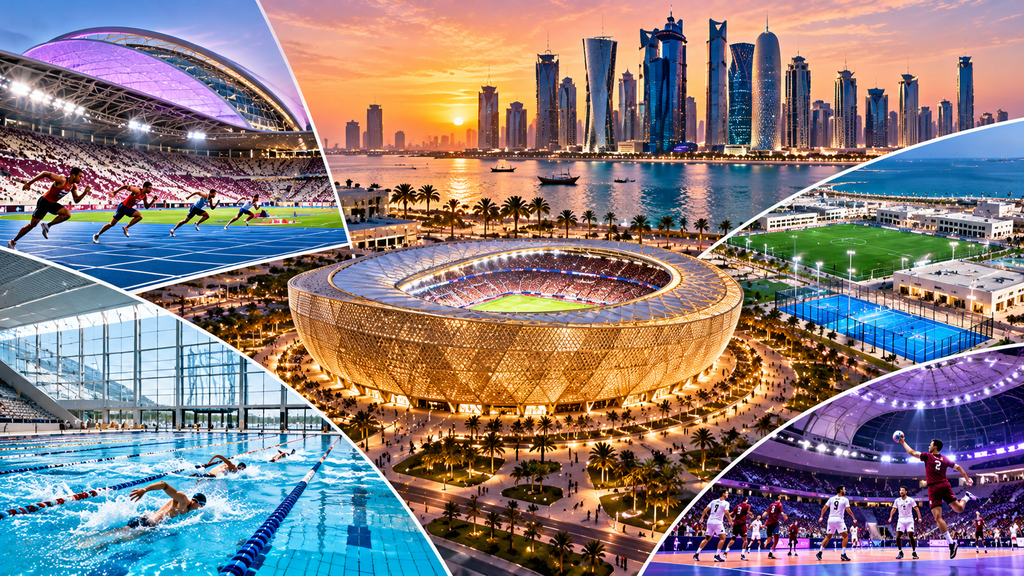
Training grounds and supporting facilities can provide opportunities for young athletes to develop technical and physical skills.
Coaching programmes may cover football and other sports, depending on available infrastructure.
Connecting facilities with schools and sports federations could increase participation while creating pathways for talented athletes.
3. University and Educational Activities
Venues located near educational institutions may support student competitions, coaching education and practical sports-management training.
Education City Stadium is particularly relevant to this approach because of its location within Qatar’s education ecosystem.
Universities could use suitable spaces for teaching, recreation and research, subject to agreements with facility operators.
4. Concerts, Exhibitions and Cultural Events
Some large sports venues may accommodate concerts, exhibitions or other entertainment activities.
Such events can create additional revenue through venue rental, hospitality and event services.
However, converting a stadium for concerts involves costs associated with staging, acoustics, security and protecting the playing surface.
5. Professional Athlete Training
Qatar’s training facilities could attract teams seeking preparation programmes, particularly when weather conditions and competition schedules are suitable.
Professional training camps can support accommodation, transportation and sports medicine services.
The success of this model depends on demand, quality and competitive pricing compared with other international destinations.
6. Sports Tourism and Visitor Experiences
Visitors may be interested in guided stadium tours, sports heritage exhibitions and experiences connected with major events.
These activities could complement Qatar’s existing tourism offerings.
However, revenue depends on sustained visitor interest rather than assuming World Cup memories alone will attract audiences indefinitely.
7. Business, Hospitality and Mixed-Use Development
Selected areas within sports precincts may accommodate conference facilities, retail, restaurants or other commercial services.
These developments can create recurring activity around venues.
Nevertheless, mixed-use investment should be guided by local demand and planning requirements rather than simply filling unused spaces with commercial tenants.
Seven Reuse Opportunities Compared
| Reuse Model | Potential Benefit | Main Consideration |
|---|---|---|
| Community Fitness | Regular local participation | Affordable access |
| Youth Academies | Athlete development | Qualified coaching |
| University Sport | Education and recreation | Institutional partnerships |
| Cultural Events | Additional venue revenue | Conversion costs |
| Training Camps | International business | Seasonal demand |
| Sports Tourism | Visitor spending | Sustained interest |
| Mixed-Use Development | Diversified income | Commercial feasibility |
The strongest opportunity may involve combining several compatible activities so facilities remain useful throughout the year.
Doha 2030 Asian Games and Future Tournaments: Reusing Existing Infrastructure
Although community programmes are important, major international tournaments remain part of Qatar’s sports strategy.
The challenge is ensuring that these events reinforce long-term infrastructure use rather than creating repeated pressure to build new facilities.
The 2030 Asian Games
Doha will host the Asian Games in 2030, bringing athletes from across the continent to compete in multiple sports.
In December 2025, Qatar announced the board overseeing preparations for the event.
The Government Communications Office emphasised the country’s existing infrastructure and stated that preparations could draw on established facilities without constructing entirely new venues.
This approach could reduce the need for additional permanent construction, although event-related spending and temporary modifications may still be necessary.
Annual FIFA Under-17 World Cups
FIFA awarded Qatar the men’s Under-17 World Cup for five consecutive editions from 2025 to 2029.
The expanded competition involves 48 teams and uses Qatar’s existing football infrastructure.
A recurring tournament can provide more predictable opportunities to use facilities, build operational expertise and develop relationships with international sports organisations.
However, even annual events occupy only part of a venue’s available calendar.
The Value of Experienced Event Professionals
Qatar’s sports investments have produced expertise in logistics, broadcasting, security, hospitality and stadium operations.
In November 2024, the Supreme Committee for Delivery & Legacy received an expanded mandate focused on long-term event hosting and the development of professional capabilities.
This matters because sporting infrastructure includes more than buildings.
People with event-management experience can support future competitions and businesses.
A More Balanced Events Strategy
| Event Category | Potential Infrastructure Use |
|---|---|
| International Championships | Large stadiums and major arenas |
| Youth Competitions | Football and training facilities |
| Domestic Leagues | Regular use of suitable stadiums |
| Community Events | Parks, public spaces and smaller venues |
| Corporate Sporting Events | Selected training and recreation spaces |
| Cultural Events | Adaptable stadium and event facilities |
A diversified calendar can help Qatar maximise existing assets, but scheduling must account for maintenance, playing-surface conditions and competition requirements.
How Community Sports Could Become Qatar’s Most Valuable Legacy
International tournaments attract attention, but regular participation in sport may provide a more lasting benefit for residents.
A venue that supports thousands of community sessions over several years can contribute to everyday physical activity, youth engagement and social interaction.
Qatar’s New Sports Policy
In January 2026, Qatar’s Ministry of Sports and Youth highlighted the country’s National Sports Policy.
The framework includes community sports participation, facility management, private-sector involvement and the development of sporting expertise.
It also connects sporting activity with wider quality-of-life objectives under Qatar National Vision 2030.
These priorities indicate that the government is considering sports infrastructure as a community resource, not exclusively as a tool for attracting international events.
Making Facilities Accessible
Community participation depends on practical factors such as location, opening hours, transport and cost.
A well-equipped stadium precinct may still be difficult to use if residents cannot access its recreation facilities or find affordable programmes.
Operators could consider designated community hours, school partnerships and suitable group activities.
Creating Opportunities for Different Residents
Sports programmes should accommodate different ages, abilities and interests.
Children may benefit from introductory activities, while adults may prefer recreational leagues, walking groups or fitness sessions.
Suitable programmes for women, people with disabilities and older residents can also help widen participation.
However, activities must be designed around appropriate facilities and qualified supervision.
The Role of Schools and Universities
Educational institutions can become important partners in maintaining consistent use of sports infrastructure.
School competitions, student training sessions and coaching development can make facilities part of the regular educational environment.
Such programmes require coordination and reliable access rather than depending entirely on occasional sporting campaigns.
Community Legacy Indicators
| Indicator | What It Measures |
|---|---|
| Annual Participants | Reach of sports activities |
| Repeat Attendance | Continued engagement |
| Youth Programmes | Development opportunities |
| Accessibility | Ability of different groups to participate |
| Community Partnerships | Connections with schools and organisations |
| Facility Utilisation | Frequency of use |
| Participant Feedback | Quality of the experience |
These indicators can help authorities evaluate whether the benefits of sports facilities are reaching residents beyond major tournament audiences.
The Business of Qatar Sports Facilities: Revenue, Costs and Investment
Reusing major sporting facilities can create business opportunities across tourism, hospitality, fitness, education and event management.
However, the financial sustainability of an existing venue depends on more than attracting occasional high-profile bookings.
Large stadiums can involve significant maintenance, utilities, staffing and security expenses even when no events are taking place.
Different Sources of Revenue
Venue operators may explore several income streams depending on their facilities and permissions.
| Business Activity | Potential Revenue Source |
|---|---|
| Domestic Sports Competitions | Venue rental and ticketing |
| International Tournaments | Hosting and service agreements |
| Concerts and Exhibitions | Event rental and commercial services |
| Stadium Tours | Visitor admission |
| Corporate Events | Meeting and hospitality packages |
| Sports Academies | Coaching and programme fees |
| Retail and Restaurants | Leasing and concessions |
| Community Activities | Memberships and selected programme fees |
Illustrative Stadium Operating Model
Consider a hypothetical medium-sized sports venue developing a broader annual programme.
| Annual Item | Illustrative Amount |
|---|---|
| Sports Events and Venue Rental | QAR 6 million |
| Concerts and Commercial Events | QAR 4 million |
| Hospitality and Corporate Activities | QAR 2 million |
| Tours and Other Services | QAR 1 million |
| Total Revenue | QAR 13 million |
| Maintenance and Utilities | QAR 4 million |
| Staffing and Security | QAR 3 million |
| Event Delivery Expenses | QAR 2 million |
| Marketing and Administration | QAR 1 million |
| Operating Surplus Before Other Costs | QAR 3 million |
These amounts are entirely hypothetical, not verified operating figures for any Qatar stadium. They exclude depreciation, financing, major capital repairs and other potential expenses.
An operating surplus also does not establish that a venue has recovered its original construction costs.
The Importance of Private-Sector Partnerships
Qatar’s sports policies recognise the role of private businesses in developing events and supporting sports services.
Partnerships with event organisers, coaching providers, hospitality businesses and commercial tenants could create opportunities for facility operators.
However, public-private agreements require clear responsibilities, transparent commercial terms and appropriate risk allocation.
Why Financial Returns Are Not the Only Measure
Public sports infrastructure can provide community benefits that do not appear directly in venue revenue.
Opportunities for exercise, youth participation and local events may justify some investment even when certain activities do not cover their full costs.
A credible evaluation should distinguish these public benefits from commercial profitability rather than describing every event as an economic success.
Sustainability, Maintenance and Challenges of Stadium Reuse
Reusing sports infrastructure may reduce the need for new construction, but it does not automatically make existing facilities environmentally or financially sustainable.
The full impact depends on how venues are maintained, renovated and operated.
The Environmental Value of Reusing Buildings
Construction requires materials, energy and transportation. Extending the useful life of an existing building can avoid some impacts associated with demolition and replacement.
However, maintaining a large venue also consumes resources.
An effective environmental assessment should consider energy use, water consumption, equipment replacement, transport emissions and the building’s remaining lifespan.
Cooling and Electricity Demand
Qatar’s climate creates important operating challenges, especially during hotter months.
Large indoor spaces and cooled sporting facilities can require substantial electricity.
Operators may improve performance through efficient building systems, appropriate scheduling and maintenance, but actual savings need to be measured.
The Risk of Underused Facilities
A stadium can become financially burdensome if it hosts too few events or if operating costs exceed realistic revenue opportunities.
This is sometimes described as the risk of creating a white elephant, a major investment whose ongoing costs are difficult to justify through its use.
A 2025 academic analysis of Qatar’s World Cup legacy argued that the country should balance elite sport, major events and grassroots participation to strengthen the sustainability of its sports ecosystem.
Accessibility and Transport
Sports venues need convenient connections to their surrounding communities.
Qatar’s transport infrastructure can support event attendance, but everyday use also depends on practical access, suitable schedules and affordability.
The needs of visitors attending a major tournament may differ from those of residents participating in weekly activities.
Challenges and Possible Responses
| Challenge | Potential Problem | Possible Response |
|---|---|---|
| Limited Event Demand | Low venue utilisation | Diversified programming |
| High Maintenance Costs | Financial pressure | Lifecycle planning |
| Cooling Requirements | Energy consumption | Efficient systems |
| Oversized Capacity | Unused spectator areas | Appropriate capacity adaptation |
| Limited Community Access | Weak local participation | Public-access programmes |
| Commercial Uncertainty | Unpredictable revenue | Feasibility assessments |
| Renovation Costs | Additional capital needs | Phased development |
The central challenge is selecting uses that fit the physical design and actual demand for each venue.
The Future of Qatar Sports Facilities and Frequently Asked Questions
Qatar’s sports infrastructure is entering a period in which long-term value will become increasingly important.
The country already has major stadiums, training facilities, transport connections and experienced event professionals. Its future strategy can build on these resources rather than measuring progress exclusively through new construction.
From Tournament Venues to Everyday Destinations
A major stadium could become part of a wider destination offering suitable recreational activities, professional training, visitor experiences and commercial services.
Different venues will require different approaches.
A facility near universities may benefit from educational programmes, while a stadium connected with professional sport may prioritise domestic competitions and specialist training.
Using Existing Infrastructure for Future Events
The Asian Games in 2030 and recurring youth football tournaments provide opportunities to use established infrastructure.
Future competitions can also help Qatar strengthen its organisational expertise.
However, major events should complement community-focused programmes rather than become the only reason facilities remain active.
The Importance of Measuring Real Outcomes
Venue operators and policymakers can monitor attendance, utilisation, maintenance costs, energy consumption and community participation.
Public reporting on these indicators would help distinguish planned legacy benefits from outcomes actually achieved.
It would also allow adjustments when particular activities attract insufficient demand.
Practical Stadium Legacy Checklist
- Confirm realistic demand for each proposed activity.
- Prioritise reuse before considering new construction.
- Assess long-term maintenance and operating costs.
- Develop programmes for residents and local organisations.
- Coordinate with schools, universities and sports federations.
- Explore suitable commercial partnerships.
- Improve accessibility and transport connections.
- Measure energy, water and maintenance performance.
- Maintain flexibility for international competitions.
- Publish meaningful indicators of long-term use.
Frequently Asked Questions
Why does Qatar need to reuse its World Cup stadiums?
Reusing existing infrastructure can help extend the value of previous investment, support sporting activities and reduce the need for unnecessary new construction.
Are Qatar’s World Cup stadiums still being used?
Several venues have continued to serve sporting purposes. Individual legacy plans have changed over time, and proposed conversions should not be assumed completed without updated confirmation.
Has Stadium 974 been completely dismantled?
Stadium 974 was designed for dismantling and reuse. Its original concept should not be confused with confirmed completion of that process.
How can Qatar’s stadiums support local communities?
Potential uses include recreational activities, youth academies, educational programmes, community events and suitable public spaces.
What is the role of the 2030 Asian Games?
The Games provide an opportunity to reuse established sports infrastructure and strengthen Qatar’s international event-hosting experience.
Can stadiums generate revenue without football matches?
Yes. Depending on their design, they may host concerts, conferences, corporate events, tours and other activities, although profitability is not guaranteed.
Is stadium reuse environmentally sustainable?
It can reduce the need for new construction, but actual sustainability depends on energy consumption, maintenance, renovations and the environmental impacts of continued operation.
Will Qatar build more major sports facilities?
Future investment decisions depend on sporting requirements, national plans and feasibility. Existing infrastructure is a significant part of the country’s strategy for upcoming events.
Final Thoughts on Qatar’s Sports Facilities
Qatar’s investment in world-class sports infrastructure created opportunities extending far beyond the tournaments for which many facilities were originally developed.
The next stage is about ensuring that those assets remain relevant to residents, athletes, businesses and visitors.
International competitions will continue to play a role, particularly with the FIFA Under-17 World Cups and the Asian Games in 2030. However, the wider legacy depends on more consistent forms of participation and use.
Community sport, youth development, education, tourism and commercial events can all contribute to keeping suitable facilities active.
For policymakers, the challenge is balancing public value with operational sustainability. For businesses, the opportunity involves developing services that respond to genuine demand rather than relying exclusively on major-event exposure.
For residents, the most meaningful legacy may be access to facilities and opportunities that encourage active lifestyles over many years.
Ultimately, Qatar Sports Facilities could have a valuable second life beyond major tournaments, not because every stadium becomes a major commercial attraction, but because existing infrastructure can serve multiple purposes.
The real measure of success will be whether Qatar’s sporting investments continue creating lasting value long after international spectators have returned home.
Do follow us on Instagram
Read More – The Future of Sustainable Desalination: Can Gulf Countries Make Drinking Water More Sustainable?