Real Estate Trends Changing the Way People Live in the GCC
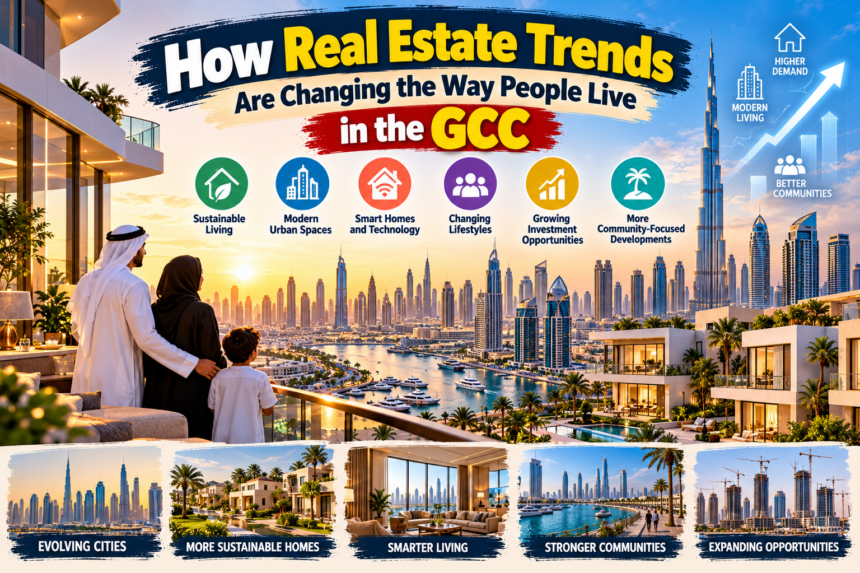
The Gulf Cooperation Council (GCC) has experienced remarkable changes in the way people live, work, and build their communities. Cities such as Dubai, Abu Dhabi, Riyadh, Doha, Kuwait City, Manama, and Muscat are developing new residential areas, modern apartments, shopping centres, business districts, and mixed-use communities. Along with these developments, real estate trends are changing people’s daily routines, housing choices, family life, and expectations about where they live.
- 1. More People Are Choosing Modern Apartment Living
- 2. Family-Friendly Communities Are Becoming More Important
- 3. Mixed-Use Developments Are Changing Urban Lifestyles
- 4. Affordability Is Influencing Where People Choose to Live
- 5. Renting and Homeownership Are Both Shaping Modern Living
- 6. Smart Homes and Digital Technology Are Changing Everyday Comfort
- 7. Sustainable Buildings Are Becoming Part of Modern Housing Choices
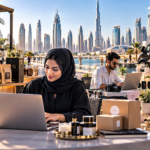
- 8. Work-from-Home and Flexible Working Are Influencing Home Design
- 9. Location and Transport Are Playing a Bigger Role in Housing Decisions
- 10. Luxury Living and Lifestyle-Focused Properties Are Expanding
- 11. Real Estate Trends Across the Six GCC Countries
- 12. Five Important Challenges Behind Changing Real Estate Trends
- 13. What the Future of Living in the GCC May Look Like
- Conclusion: Real Estate Is Changing More Than Buildings
- Frequently Asked Questions (FAQs)
In the past, many people selected a home mainly by considering its size, location, and monthly rent. Today, the decision can involve many more factors. Residents increasingly consider access to public transport, nearby schools, healthcare facilities, parks, shopping areas, fitness centres, security, technology, and energy efficiency. For some households, living close to work is a priority, while others prefer a quieter community with more space for children and family activities.
The property market is also changing. Apartment living, gated communities, affordable housing projects, luxury residences, serviced apartments, and environmentally friendly buildings are becoming important parts of the wider GCC real estate landscape. Digital platforms have also made it easier for people to search for properties, compare prices, arrange viewings, and manage rental agreements.
Recent market reports show that these changes are not happening at the same speed everywhere. Dubai’s residential market has entered a period of adjustment in 2026, while Saudi Arabia continues to expand housing supply and Qatar has experienced changing levels of residential activity. These differences reflect the size, economy, population, and development priorities of individual countries.
In this article, we explore 10 major ways real estate trends are changing the way people live in the GCC, including housing preferences, urban development, technology, sustainability, affordability, and the future of Gulf communities.
1. More People Are Choosing Modern Apartment Living
One of the most noticeable changes in GCC cities is the growing importance of apartment living. As cities expand and employment opportunities develop around business districts, many residents choose apartments that offer convenient access to workplaces, shopping areas, restaurants, and transport services.
Modern apartment buildings are also different from traditional residential buildings. Many new developments include facilities that make everyday life more comfortable.
These may include:
- Swimming pools and fitness centres.
- Children’s play areas.
- Indoor parking facilities.
- Security and reception services.
- Shared outdoor spaces.
- Shops and restaurants on the ground floor.
- Shared workspaces and meeting rooms.
For young professionals, couples, and small families, apartments can provide a practical option, particularly when they want to live near employment centres.
High-rise residential buildings are especially visible in cities such as Dubai, Doha, and Manama. They allow developers to accommodate more households within developed urban areas, although good planning is needed to manage traffic, parking, lifts, and shared facilities.
Apartment living can also change people’s daily routines. Residents may spend less time travelling to nearby shops or fitness facilities and more time using shared spaces within their communities.
However, not every household prefers apartment living. Families with children, people who work from home, and residents who need additional privacy may prefer villas, townhouses, or larger homes.
Emerging Micro-Trends in GCC Apartments
- Smart Home Ecosystems: Properties now come standard with automated climate control, keyless digital entry, and energy-management apps.
- Micro-Units and Studio Demand: A growing demographic of solo expats and digital nomads has created a booming market for well-designed, space-optimised studios and one-bedroom units.
- Sustainable Infrastructure: Newer developments increasingly incorporate solar-powered common areas, EV charging bays, and water-recycling systems to lower the footprint of high-density living.
The trend is therefore not simply about replacing houses with apartments. It is about providing different types of homes for different lifestyles.
2. Family-Friendly Communities Are Becoming More Important
Real estate developers increasingly need to think beyond individual buildings. Many residents want a neighbourhood where they can manage daily activities without travelling long distances.
This has increased interest in planned residential communities that combine housing with useful facilities.
A family-friendly community may include:
- Schools and nurseries.
- Parks and playgrounds.
- Walking and cycling paths.
- Grocery shops and supermarkets.
- Clinics and pharmacies.
- Sports and fitness facilities.
- Community centres.
- Places for social activities.
These facilities can make everyday life easier, especially for families with children and older adults.
For example, a family living in a community with a nearby school, supermarket, playground, and healthcare facility may spend less time travelling for basic needs. Children may have more opportunities to play outdoors, while parents can access essential services more conveniently.
Saudi Arabia is developing large residential communities as part of its wider housing and urban development plans. Its Vision 2030 Annual Report 2025 describes progress in expanding housing options, improving access to financing, and making the housing market more responsive to demand. It also reports that homeownership among Saudi families increased from 47% in 2016 to more than 60% in 2025.
The growing focus on community facilities shows that the value of a home is increasingly connected to the quality of the surrounding neighbourhood.
3. Mixed-Use Developments Are Changing Urban Lifestyles
Another important real estate trend in the GCC is the growth of mixed-use developments.
A mixed-use development combines different types of properties and facilities within one area. It may include residential apartments, offices, restaurants, shops, hotels, entertainment spaces, and public areas.
Instead of living in one part of the city, working in another, and travelling somewhere else for shopping or entertainment, residents may be able to access several daily services within the same neighbourhood.
Why are mixed-use communities becoming popular?
Modern residents often value convenience. Long commutes and heavy traffic can make everyday life tiring, especially in large cities.
Mixed-use developments aim to reduce some of these problems by bringing different activities closer together.
For example, a resident may live in an apartment above a shopping area, work in a nearby office, and use a local gym or restaurant without travelling across the city.
Examples of mixed-use and master-planned developments can be seen in:
- Downtown Dubai and Business Bay.
- Lusail in Qatar.
- King Abdullah Financial District and other major developments in Riyadh.
- Waterfront and integrated residential projects across the UAE and Saudi Arabia.
- Selected urban developments in Oman and Bahrain.
However, mixed-use projects do not automatically create walkable neighbourhoods. Good pedestrian access, public spaces, traffic management, and suitable public transport are also necessary.
When these elements are planned together, mixed-use developments can change how people use their time and interact with their neighbourhoods.
4. Affordability Is Influencing Where People Choose to Live
Housing affordability is one of the most important issues affecting residents across the GCC.
Property prices, monthly rents, utility bills, transport costs, and service charges all influence how much a household can spend on accommodation.
As cities grow, some popular neighbourhoods may become expensive. This encourages residents to compare different locations and consider homes outside central business districts.
For example, an employee working in central Dubai may compare an apartment near the workplace with a larger home in a developing area farther away. The decision may depend on rent, commuting time, transport availability, parking, and family requirements.
How affordability is changing housing choices
Some residents are responding to higher housing costs by:
- Choosing smaller apartments.
- Sharing accommodation where legally permitted.
- Moving to developing neighbourhoods.
- Selecting areas farther from major business districts.
- Comparing older and newer buildings.
- Choosing rentals instead of purchasing property.
- Looking for communities with lower service charges.
However, cheaper rent does not always mean lower overall living costs. A home located far from work may increase transport expenses and commuting time.
A useful housing decision should consider the complete monthly cost rather than rent or purchase price alone.
Recent market reports also demonstrate why housing affordability needs attention. In Saudi Arabia, Knight Frank reported that residential transaction volumes declined 12% year-on-year in Q2 2026, with affordability pressures among the factors affecting purchasing decisions.
For residents, the growing importance of affordability means that location, housing size, access to services, and household budgets are increasingly connected.
5. Renting and Homeownership Are Both Shaping Modern Living
People across the GCC have different reasons for renting or buying a home.
Some residents prefer renting because it offers flexibility. They may change jobs, move between cities, or return to their home country after a few years. Others want to purchase a property because they plan to live in the same country for a longer period.
There is no single housing choice that suits everyone.
Why some residents prefer renting
Renting can be useful for people who:
- Expect to move for work.
- Are new to a city and want to understand different neighbourhoods.
- Do not have enough savings for a property purchase.
- Prefer not to manage long-term property ownership.
- Want flexibility while making future plans.
Why other residents prefer buying
Buying may appeal to households that:
- Plan to remain in the same location for many years.
- Want a stable long-term home.
- Have suitable savings and financing.
- Prefer to build ownership over time.
- Want a property that meets their family’s future needs.
Saudi Arabia’s housing programmes have focused on expanding homeownership opportunities through housing support, financing, and new developments. According to the Ministry of Municipalities and Housing, the homeownership rate among Saudi families reached 65.4% by the end of 2024, exceeding the programme’s 2025 target of 65%.
In Dubai, renting remains a large part of the housing market. The Dubai Land Department reported that registered tenancy contracts increased by 6% in 2025 compared with 2024, reaching approximately 1.38 million contracts with a combined value of AED 126.4 billion.
These examples show that housing preferences are influenced by personal circumstances, government policies, financing options, and market conditions.
6. Smart Homes and Digital Technology Are Changing Everyday Comfort
Technology is becoming an important part of modern residential property across the GCC.
Smart homes use connected devices and digital systems to help residents manage different household functions. Depending on the property, these may include lighting, temperature, security, appliances, and energy use.
For example, residents may be able to:
- Control air conditioning through a mobile application.
- Switch lights on or off remotely.
- Monitor smart door locks.
- Receive security alerts.
- Operate selected household appliances.
- Monitor electricity or water consumption.
- Use video doorbells and connected cameras.
These features can improve convenience and help residents manage their homes more easily.
Why smart homes are useful in Gulf countries
The climate of the Gulf makes air conditioning an important part of daily life. Smart temperature controls and suitable building systems may help residents manage cooling more efficiently.
Smart water meters and leak detection systems can also help identify unusual consumption or possible plumbing problems.
However, smart technology is not automatically energy-efficient. Its benefits depend on the equipment, installation, user habits, and building design.
Security also matters. Connected devices should have suitable software updates, strong passwords, and appropriate privacy settings.
As digital services continue to develop, technology is likely to become a more visible part of residential buildings, from visitor management to maintenance requests and shared facility bookings.
7. Sustainable Buildings Are Becoming Part of Modern Housing Choices
Environmental awareness is influencing the way developers design and build properties in the GCC.
Hot weather, high cooling requirements, water consumption, and construction activity make sustainability important for the region.
A sustainable building aims to use resources more carefully while providing a comfortable indoor environment.
Some common features include:
- Energy-efficient lighting.
- Better insulation.
- High-performance windows.
- Efficient air-conditioning systems.
- Water-saving taps and showers.
- Solar panels where practical.
- Waste separation and recycling facilities.
- Green spaces suited to local water conditions.
In the Gulf, reducing unnecessary cooling costs can be especially important. Better insulation and suitable building materials may help reduce heat entering a property and limit the amount of energy needed for air conditioning.
Water conservation is another consideration. Buildings may use efficient plumbing fixtures, smart water meters, and treated wastewater for suitable landscaping purposes.
The UAE has introduced green building and sustainable development initiatives, including the Abu Dhabi Estidama Pearl Rating System and Dubai’s green building regulations. These frameworks encourage more resource-efficient building design.
Saudi Arabia’s wider development strategy also includes sustainability goals within major urban and infrastructure projects.
For residents, sustainable buildings may offer benefits such as improved indoor comfort, more efficient resource use, and potentially lower operating costs. Actual savings depend on the building, climate, maintenance, and residents’ usage.
8. Work-from-Home and Flexible Working Are Influencing Home Design
Changes in working habits have also influenced residential property preferences.
Some professionals work fully remotely, while others follow hybrid schedules that combine office attendance with working from home.
As a result, many residents now consider whether a property provides a comfortable space for work and study.
A suitable home working environment may include:
- A quiet room or dedicated desk.
- Reliable internet connectivity.
- Good lighting.
- Comfortable furniture.
- Suitable electrical connections.
- Space for video meetings.
- Separation between work and relaxation areas.
For people living in smaller apartments, creating a separate workspace can be difficult. Some residents use shared workspaces in residential communities or co-working offices near their homes.
Developers have also introduced shared lounges, meeting rooms, and flexible working areas in selected residential projects.
This trend is changing the way people evaluate properties. A home is no longer only a place to sleep and relax. For some households, it is also a place to study, attend meetings, run a small business, or complete professional tasks.
9. Location and Transport Are Playing a Bigger Role in Housing Decisions
Where people live affects how they travel, how much time they spend commuting, and how easily they can access daily services.
In large GCC cities, residents often consider the distance between their homes and workplaces, schools, shopping areas, airports, and healthcare facilities.
The growth of public transport systems, roads, metro services, and new urban developments is influencing housing decisions.
Examples of transport-related development
Dubai’s metro network has helped connect several residential and business areas. Riyadh has developed its public transport system, including the Riyadh Metro. Doha’s metro network has improved access between important locations in the capital.
Transport investment can make some neighbourhoods more attractive to residents who want to reduce their dependence on private vehicles.
When comparing properties, residents may consider:
- Distance to a metro or bus station.
- Access to major roads.
- Daily commuting time.
- Availability of parking.
- Nearby schools and medical services.
- Walking and cycling facilities.
- Traffic conditions during working hours.
A property may appear affordable, but if it requires a long daily commute, it could create additional costs and reduce personal time.
This is why transport connectivity is increasingly important when people choose where to live.
10. Luxury Living and Lifestyle-Focused Properties Are Expanding
The GCC property market is also known for luxury apartments, villas, waterfront homes, branded residences, and properties with premium services.
These developments attract different types of buyers and residents, including high-income households, international investors, and people looking for specific lifestyle facilities.
Luxury residential properties may offer:
- Private swimming pools.
- Fitness and wellness facilities.
- Concierge services.
- Sea or city views.
- Private gardens and terraces.
- High-end interior design.
- Access to restaurants and leisure facilities.
- Hotel-style maintenance and services.
Dubai has been a major centre for luxury residential development, while Saudi Arabia, Qatar, and other GCC countries are also developing premium residential and lifestyle destinations.
At the same time, luxury housing represents only one part of the property market. Many residents continue to prioritise affordability, suitable family homes, and practical access to everyday services.
The growing range of residential products shows how real estate developers are responding to different lifestyles and budgets rather than offering only one type of housing.
11. Real Estate Trends Across the Six GCC Countries
Although all six GCC countries are experiencing urban and property development, their real estate markets are different. Population patterns, economic conditions, tourism, employment, regulations, and housing needs influence local trends.
United Arab Emirates
The UAE has a diverse residential market that includes high-rise apartments, suburban communities, villas, waterfront developments, and serviced residences.
Dubai and Abu Dhabi attract residents and businesses from around the world. Demand is influenced by employment opportunities, international investment, population growth, and lifestyle preferences.
However, conditions can change. Cushman & Wakefield Core’s Q3 2026 Dubai residential report, published on 29 October 2026, reported year-on-year declines of 1% in sale prices and 7% in rents, alongside additional housing supply. This suggests a period of market adjustment rather than uninterrupted growth.
Saudi Arabia
Saudi Arabia is expanding residential development through housing programmes, infrastructure investment, and large-scale urban projects.
Riyadh, Jeddah, and the Dammam Metropolitan Area have different housing needs and market conditions. The focus on affordable and mid-market housing is important as cities grow and more households seek suitable homes.
Knight Frank’s Q2 2026 report shows that residential performance varied across these major cities, with affordability and location influencing purchasing decisions.
Qatar
Doha and Lusail include modern apartments, villas, waterfront communities, and mixed-use developments.
Qatar’s residential market has experienced changes in transaction activity and property values. ValuStrat’s Q2 2026 analysis reported a 23.6% quarterly increase in residential transaction volumes, while average apartment and villa capital values remained broadly stable.
Kuwait
Kuwait’s residential market includes traditional family homes, villas, apartment buildings, and investment properties. Housing availability, location, family preferences, and public planning remain important factors in residential choices.
Bahrain
Bahrain offers apartments, villas, waterfront properties, and residential communities in areas such as Manama, Seef, and Muharraq.
CBRE’s H1 2026 market snapshot reported relatively limited changes in asking rents, with average apartment rents declining 1.2% and villa rents declining 4.1%. This illustrates how market conditions can differ from those in larger GCC property markets.
Oman
Oman’s residential landscape includes urban apartments, family villas, coastal developments, and properties in expanding areas around Muscat and other cities.
Its geography and development priorities create different housing requirements from those in Dubai or Riyadh. Access to transport, local services, natural surroundings, and affordable housing can all influence residential choices.
Overall, the GCC is not one single housing market. Each country has its own development priorities, regulations, and lifestyle patterns.
12. Five Important Challenges Behind Changing Real Estate Trends
Real estate development can improve housing choices and create new communities, but it also brings challenges that affect residents.
1. Rising housing costs
When demand increases in popular locations, property prices and rents may become difficult for some households to afford. This can encourage people to move farther from central areas or choose smaller homes.
2. Traffic and commuting pressure
New residential areas may increase traffic if transport systems and roads do not develop at the same speed as housing.
3. Unequal access to facilities
Some communities have parks, schools, clinics, and shopping facilities nearby, while others may lack these services. Good urban planning needs to consider the needs of different income groups.
4. Construction and environmental pressure
Large developments require land, construction materials, energy, and water. Poorly managed development can increase waste, affect natural habitats, and place pressure on local infrastructure.
5. Market uncertainty
Property prices, rents, mortgage costs, and construction schedules can change. Buyers and renters need reliable information and should avoid making decisions based only on promises of future price increases.
These challenges show that successful real estate development is not measured only by the number of buildings constructed. It should also be measured by whether people can afford suitable homes and enjoy safe, accessible, and comfortable neighbourhoods.
13. What the Future of Living in the GCC May Look Like
The future of real estate in the GCC is likely to involve a wider mix of residential choices and more attention to everyday quality of life.
Several developments may shape the next stage of Gulf living:
More affordable housing options: Governments and developers may continue to explore housing models that offer suitable homes for different income groups.
Smarter residential buildings: Digital access systems, connected appliances, energy monitoring, and automated maintenance services may become more common.
More integrated communities: Residential areas may increasingly combine housing with shops, schools, parks, offices, and leisure facilities.
Greater focus on sustainability: Energy efficiency, water conservation, waste management, and climate-appropriate building design may become more important.
Improved public transport connections: Metro, bus, and other transport services can influence where residents choose to live.
Flexible housing arrangements: Serviced apartments, co-living, and furnished rentals may serve residents with changing work and travel requirements, where local regulations and market demand support them.
Stronger digital property services: Online transactions, property information platforms, digital ownership records, and electronic rental services may make property processes more convenient.
These developments will not happen at the same speed in every country. Their success will depend on affordability, infrastructure, government planning, developer performance, and the needs of local communities.
Conclusion: Real Estate Is Changing More Than Buildings
Real estate trends across the GCC are changing more than the appearance of cities. They are influencing how people choose homes, manage daily expenses, travel to work, raise families, use technology, and connect with their communities.
Modern apartments, family-friendly neighbourhoods, mixed-use developments, smart homes, sustainable buildings, and improved transport connections are creating more housing options for residents. At the same time, affordability, traffic, environmental pressure, and market uncertainty remain important challenges.
The latest market reports also demonstrate that each GCC country follows a different path. Dubai’s changing rental and sales conditions, Saudi Arabia’s housing expansion, Qatar’s residential market adjustments, and Bahrain’s rental trends show why local information matters when making housing decisions.
For residents, the most important property trend is not necessarily the newest building or the most expensive neighbourhood. It is finding a home that supports their everyday needs, fits their budget, and offers a comfortable living environment.
The future of real estate in the GCC will be shaped not only by how cities grow, but by how successfully they create places where people can live comfortably, work conveniently, and build a better quality of life.
Frequently Asked Questions (FAQs)
1. How are real estate trends changing the way people live in the GCC?
Real estate trends are changing housing choices, neighbourhood design, commuting habits, and access to everyday services. Residents are considering factors such as affordability, technology, green spaces, schools, transport, and community facilities when choosing homes.
2. What types of homes are popular in GCC cities?
Apartments, villas, townhouses, serviced residences, and master-planned community homes are all part of the GCC residential market. Preferences vary depending on budget, family size, location, and lifestyle.
3. Why are mixed-use developments becoming popular in the Gulf?
Mixed-use developments bring homes, offices, shops, restaurants, and leisure facilities closer together. They can make everyday activities more convenient and help residents spend less time travelling between different parts of a city.
4. How is technology changing real estate in the GCC?
Smart home systems, digital property platforms, online rental services, smart access systems, and energy monitoring tools are changing how people find, manage, and use properties.
5. Are people in the GCC choosing to rent or buy homes?
Both options remain important. Renting can offer flexibility to people who expect to move, while buying may suit households planning to stay in one location for a longer period. The right choice depends on finances, eligibility, local rules, and personal plans.
6. Why is affordable housing important in the GCC?
Affordable housing helps households manage living costs and choose homes that meet their needs. It is also important for growing cities that need to accommodate workers, families, and new residents.
7. How are sustainable buildings improving Gulf living?
Sustainable buildings can use energy-efficient lighting, insulation, better cooling systems, water-saving fixtures, and suitable renewable energy. These features may improve indoor comfort and help reduce resource use.
8. Which GCC countries are seeing major real estate development?
The UAE, Saudi Arabia, and Qatar have major urban and residential development programmes. Bahrain, Kuwait, and Oman also have active property markets, with developments shaped by their own local housing needs and economic priorities.
9. Will smart homes become more common in Gulf cities?
Smart home features may become more common as connected devices and digital services develop. Their adoption will depend on costs, building design, resident demand, and the quality of installation and maintenance.
10. What should people consider before choosing a home in the GCC?
People should compare rent or purchase costs, location, commuting time, building quality, service charges, available facilities, transport connections, maintenance, and local housing regulations before making a decision.
Do follow us on Instagram
Read More – How to Build a Lifelong Learning Habit While Working Full-Time