Why Recycling and Resource Recovery Matter for Gulf Businesses
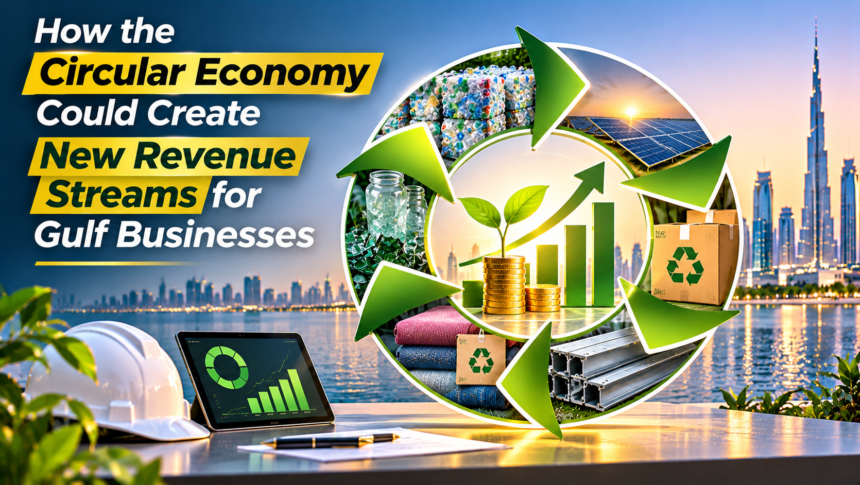
Across the Arabian Gulf, businesses are reconsidering how products are manufactured, consumed, repaired, and eventually discarded. For decades, conventional business models have largely followed a linear approach in which companies extract resources, manufacture goods, sell them, and manage the resulting waste. However, increasing interest in resource efficiency, environmental sustainability, and economic diversification is encouraging companies to explore a different model: the circular economy.
- 1. Why the Circular Economy Is Becoming Important for Gulf Business Growth
- 2. How Recycling and Waste-to-Value Businesses Can Generate Revenue
- 3. Why Repair, Refurbishment, and Resale Could Become Profitable Industries
- 4. How Product-as-a-Service and Reusable Packaging Create Recurring Income
- 5. How GCC Circular Economy Policies Are Opening Business Opportunities
- 6. Challenges Gulf Businesses Must Overcome to Build Profitable Circular Models
- 7. The Future of the Circular Economy in the Gulf: Revenue, Innovation, and Growth
The circular economy in the Gulf could create new revenue opportunities by helping companies recover value from products, materials, and resources that would otherwise be discarded. Instead of relying entirely on manufacturing and selling new goods, businesses can develop services involving repair, refurbishment, resale, equipment leasing, recycling, reusable packaging, and material recovery.
This approach is particularly relevant to the United Arab Emirates, Saudi Arabia, Qatar, Oman, Bahrain, and Kuwait, where construction, manufacturing, retail, hospitality, logistics, and industrial activities generate significant demand for materials and services. By extending product lifespans and introducing new methods of resource management, businesses may unlock additional commercial opportunities while reducing certain operating costs.
Government policies are also providing a supportive environment. The UAE Circular Economy Policy 2021–2031, Saudi Arabia’s recycling investments, and waste-management initiatives across other Gulf markets demonstrate a growing regional interest in developing more resource-efficient economies.
However, circular business models are not automatically profitable or environmentally beneficial. Their success depends on collection costs, customer demand, product quality, processing technology, regulations, and effective operational planning.
Understanding these factors reveals how Gulf businesses can move beyond conventional waste management and explore a commercial economy built around keeping materials, products, and resources in productive use.
1. Why the Circular Economy Is Becoming Important for Gulf Business Growth
The circular economy is an economic approach designed to reduce unnecessary waste, keep products and materials in use for longer, and support the regeneration of natural systems.
Unlike the traditional take-make-dispose model, circular systems attempt to preserve the value already embedded in products, equipment, packaging, and raw materials.
The Ellen MacArthur Foundation identifies three fundamental principles: eliminating waste and pollution, circulating products and materials, and regenerating nature.
For businesses, these principles can create opportunities to generate revenue from assets that might otherwise lose their commercial value.
Moving Beyond the Traditional Business Model
A conventional furniture manufacturer may sell a new office desk and earn revenue from that single transaction.
Under a circular model, the same company could offer repair services, refurbishment, furniture leasing, or resale of previously used products.
The desk might generate economic value across multiple stages of its useful life rather than through only its original sale.
However, the manufacturer would also need to account for collection, maintenance, refurbishment, and transportation expenses.
This demonstrates that circularity creates possible commercial opportunities rather than guaranteed financial returns.
Linear Economy Versus Circular Economy
| Business Activity | Linear Economy | Circular Economy |
|---|---|---|
| Product Design | Focus on manufacture and initial sale | Consider durability, repair and recovery |
| Revenue Model | Primarily one-time transactions | Sales plus repair, rental, resale and services |
| Material Use | Greater dependence on new materials | Reuse and recovery where practical |
| End-of-Life Management | Disposal or conventional waste treatment | Recovery, refurbishment or responsible recycling |
| Customer Relationship | Often ends after the sale | May continue throughout product use |
| Business Value | Primarily captured through initial sales | Potentially captured over multiple product lifecycles |
Why the GCC Presents Commercial Opportunities
Gulf economies have established industries that depend on materials, machinery, equipment, packaging, and international trade.
Construction companies use significant quantities of metals and building materials. Retailers manage returned merchandise, while hospitality businesses regularly replace furniture and equipment.
These activities can generate recoverable products and material streams.
The circular economy may create new opportunities for businesses capable of collecting, inspecting, processing, and redistributing those resources.
It can also support economic diversification by encouraging specialised service providers in technical maintenance, industrial recycling, product recovery, and digital asset management.
2. How Recycling and Waste-to-Value Businesses Can Generate Revenue
Recycling is one of the most familiar circular-economy activities, but its commercial possibilities extend beyond collecting discarded materials.
Businesses may recover metals, plastics, glass, paper, and other suitable materials for processing into industrial inputs.
Some companies can also develop products using manufacturing by-products that would otherwise require disposal.
Turning Industrial Waste Into Valuable Materials
Manufacturing processes can produce scrap materials, offcuts, and by-products.
When these materials are properly sorted and meet relevant technical requirements, they may be sold to other manufacturers or used again within the same production system.
For example, a metal fabrication business could recover suitable scrap for sale to an authorised processor.
A construction materials company might investigate whether appropriately processed demolition materials can be used in new applications.
However, recovered materials must satisfy applicable safety and quality standards.
Not all waste is suitable for reuse, and certain materials require specialised treatment.
The Opportunity in Construction and Demolition Waste
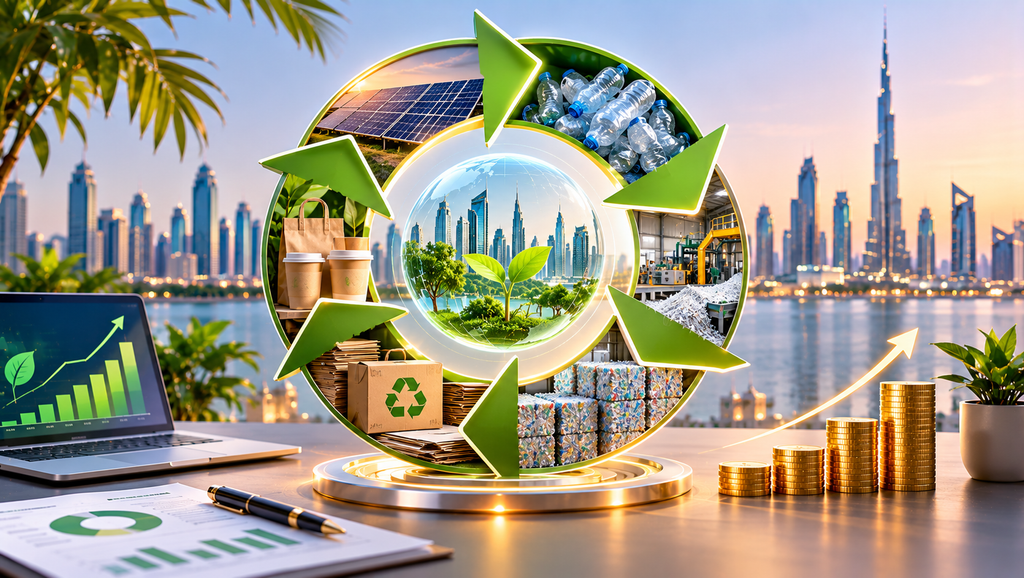
Construction is particularly relevant to the Gulf because of the region’s extensive infrastructure and real estate development activities.
Construction and demolition projects can generate concrete, metals, timber, glass, and other recoverable materials.
Specialised businesses may create revenue through collection, sorting, processing, or supplying recycled construction products.
Saudi Arabia’s Public Investment Fund-owned Saudi Investment Recycling Company (SIRC) has supported the development of recycling infrastructure, including facilities addressing construction and demolition waste.
These initiatives demonstrate the role of organised recovery systems in developing secondary-material markets.
Potential Waste-to-Value Business Models
| Waste Stream | Recovery Opportunity | Potential Revenue Source |
|---|---|---|
| Metal Scrap | Sorting and recycling | Sale of recovered metals |
| Construction Debris | Processing suitable concrete and aggregates | Recycled construction materials |
| Used Electronics | Refurbishment or authorised material recovery | Resale, service fees or recovered components |
| Organic Waste | Composting or other approved treatment | Compost, treatment services or energy products |
| Plastic Packaging | Sorting and processing | Recycled polymer materials |
| Industrial By-products | Recovery for suitable industrial applications | Sale of secondary production inputs |
Understanding the Economics of Recycling
Material recovery is commercially attractive only when the recovered value or service revenue is sufficient to support the operation.
Collection, transportation, sorting, energy, labour, and quality testing can all affect profitability.
A material may have a market value but still be uneconomical to recover from widely dispersed locations.
Businesses must therefore assess available volumes, contamination levels, processing costs, and demand for the finished material.
Reliable long-term supply and purchasing agreements can be important when establishing recycling operations.
3. Why Repair, Refurbishment, and Resale Could Become Profitable Industries
One of the most direct ways to extend product life is to repair or refurbish equipment that remains commercially useful.
Many products retain significant value after their first period of ownership.
Electronics, office furniture, industrial machinery, and selected consumer products may be suitable for repair, inspection, and resale.
Creating Value Through Product Refurbishment
A company selling electronic devices could introduce a trade-in programme that collects used products from customers.
After inspection, suitable devices could be repaired, tested, and resold with clear information about their condition.
Products that cannot be economically repaired may contain components suitable for authorised recovery.
This model creates a possible second revenue stream while supporting the management of returned inventory.
However, warranties, product safety, customer data removal, and quality assurance require careful attention.
The Commercial Potential of Second-Hand Markets
Resale platforms connect consumers and businesses interested in purchasing previously owned goods.
Products may include furniture, electronics, fashion, appliances, and selected professional equipment.
For consumers, resale can provide access to products at different price points.
For businesses, it offers opportunities to recover value from returned merchandise, older inventory, and trade-in programmes.
The commercial attractiveness of resale depends on product condition, customer demand, authenticity, and distribution costs.
Equipment Maintenance as a Recurring Service
Circular business models can also generate revenue from maintenance rather than product replacement.
Industrial equipment suppliers may offer ongoing inspection, repair, or performance-monitoring services.
These arrangements can create recurring income while helping customers extend the useful life of expensive machinery.
For example, a commercial refrigeration supplier could provide maintenance contracts to hospitality businesses.
The service may help reduce unexpected equipment failures, although performance depends on proper maintenance and equipment condition.
Commercial Opportunities Across Product Categories
| Product Category | Circular Business Opportunity |
|---|---|
| Smartphones | Trade-ins, repair and certified refurbishment |
| Furniture | Restoration, leasing and resale |
| Industrial Equipment | Maintenance, component replacement and remanufacturing |
| Fashion | Resale, rental, repair and alteration |
| Appliances | Spare parts, servicing and refurbishment |
| Commercial Electronics | Testing, reuse and approved recycling |
Why Quality and Consumer Trust Matter
Customers purchasing refurbished products need clear information about condition, functionality, warranties, and previous use.
Businesses should not represent refurbished products as new.
Product categories involving safety or regulated technical standards may require additional inspections or certifications.
Transparent descriptions and dependable after-sales service can help support customer confidence.
4. How Product-as-a-Service and Reusable Packaging Create Recurring Income
The circular economy can also change how companies charge customers.
Instead of transferring ownership through a one-time sale, businesses may retain ownership of certain assets and charge for their use.
This approach is often described as product-as-a-service.
From Product Sales to Service-Based Revenue
Under a conventional model, a company sells industrial equipment and receives payment for the transaction.
Under a service model, it might retain ownership and provide equipment access through rental, leasing, or usage-based arrangements.
The customer pays for access or performance rather than purchasing the asset outright.
Potential applications include commercial machinery, office furniture, selected transportation services, and specialised industrial equipment.
For businesses, the model may create ongoing revenue and opportunities for maintenance contracts.
However, ownership also introduces responsibilities for repairs, depreciation, insurance, financing, and asset recovery.
The Role of Reusable Packaging
Packaging represents another opportunity for circular business models.
Businesses in food distribution, logistics, manufacturing, and retail may use reusable crates, containers, pallets, or transport packaging.
A packaging service provider could supply these assets to commercial customers and charge for their use, collection, inspection, and redistribution.
This approach may reduce repeated purchases of disposable packaging where reuse systems operate efficiently.
However, cleaning, transport, loss, and replacement costs must be included in financial planning.
Circular Revenue Models Compared
| Business Model | How Revenue Is Generated | Important Cost |
|---|---|---|
| Equipment Leasing | Periodic rental charges | Financing, depreciation and maintenance |
| Repair Services | Maintenance and repair fees | Labour and spare parts |
| Product Resale | Sale of recovered products | Collection and refurbishment |
| Reusable Packaging | Usage or service charges | Cleaning, transport and replacement |
| Product Subscription | Recurring access payments | Asset management and customer support |
| Material Recovery | Sale of recovered materials or processing services | Sorting and treatment |
Why Recurring Revenue Is Not Guaranteed Profit
Recurring payments can make revenue more predictable, but the provider must maintain the assets needed to deliver the service.
A rental company may experience low equipment utilisation, damage, or unexpected maintenance expenses.
Similarly, reusable packaging becomes less attractive if containers are frequently lost or transported over long distances.
Successful models require accurate tracking, customer contracts, and realistic forecasts of asset use.
5. How GCC Circular Economy Policies Are Opening Business Opportunities
Government policies across the Gulf are creating frameworks that encourage more efficient resource use and support waste recovery.
However, each GCC country has its own regulations, industry priorities, and investment conditions.
Businesses should distinguish national policy objectives from financial incentives or commercial opportunities actually available to individual companies.
The UAE Circular Economy Policy 2021–2031
The UAE introduced its Circular Economy Policy in 2021.
The policy identifies four priority areas: sustainable infrastructure, transportation, manufacturing, and food production and consumption.
Its objectives include improving resource efficiency, encouraging cleaner production methods, supporting innovation, and reducing environmental pressures.
For businesses, these priorities provide a framework for considering resource recovery, sustainable manufacturing, and new service models.
However, the policy does not guarantee funding or profitability for individual circular-economy projects.
Saudi Arabia’s Recycling and Resource Recovery Development
Saudi Arabia has established institutional support for recycling and resource recovery through SIRC.
The company, owned by the Public Investment Fund, was established in 2017 to develop investment and operational opportunities across the waste-management value chain.
Its activities involve recycling infrastructure, partnerships, and the use of technology to improve material recovery.
These developments could create opportunities for private businesses providing equipment, collection services, specialised processing, and industrial solutions.
Qatar’s Circular Economy Priorities
Qatar’s environmental strategy identifies waste management and circular resource use as important components of sustainable development.
Its approach includes improving waste data, developing infrastructure, and encouraging productive uses for recovered materials.
For companies, potential opportunities may arise in construction-material recovery, industrial by-product utilisation, and waste-processing services.
Oman’s Resource Recovery Opportunities
Oman’s Vision 2040 includes objectives relating to economic diversification and environmental sustainability.
Invest Oman’s circular-economy investment guidance identifies waste recovery, recycling, and resource efficiency as areas of commercial interest.
Oman’s environmental services company be’ah also identifies material recovery, energy recovery, and commercial partnerships among its circular-economy activities.
Circular Economy Opportunities Across the GCC
| Country | Relevant Development | Potential Business Opportunity |
|---|---|---|
| UAE | Circular Economy Policy 2021–2031 | Resource-efficient production and circular services |
| Saudi Arabia | SIRC and recycling investment | Collection, processing and material recovery |
| Qatar | Waste management and circular-economy strategy | Industrial and construction-material recovery |
| Oman | Circular-economy investment priorities | Recycling, recovery technology and services |
| Bahrain | Environmental and waste-management initiatives | Reuse, recycling and technical service opportunities |
| Kuwait | Waste-management and resource-efficiency needs | Sorting, processing and recovery services |
These are potential commercial applications rather than confirmed revenue forecasts.
Before entering a market, businesses should examine applicable permits, investment conditions, waste classifications, and customer demand.
6. Challenges Gulf Businesses Must Overcome to Build Profitable Circular Models
Circular-economy businesses may face different financial and operational challenges from conventional manufacturers or retailers.
Collection networks, specialised equipment, product inspection, customer behaviour, and regulatory requirements all influence commercial feasibility.
High Initial Investment and Processing Costs
Some circular business models require specialised machinery, storage facilities, transport networks, and technical personnel.
An electronics refurbishment operation may need testing equipment and trained technicians.
A construction-waste processing facility may require heavy machinery, suitable land, environmental permits, and reliable material supply.
Investors should assess whether sufficient demand exists to justify these expenses.
Customer Acceptance and Market Demand
Recovered materials and refurbished products must meet customer expectations.
Businesses may face concerns about quality, reliability, product history, or safety.
Clear specifications, appropriate certification, and transparent warranties can help address these concerns.
However, customer willingness to purchase recycled or refurbished products varies by category and price.
Collection and Reverse Logistics
A circular business often depends on obtaining products after customers have finished using them.
This requires effective collection systems.
Companies may offer take-back programmes, deposit arrangements, authorised drop-off points, or commercial collection contracts.
Collection costs can become excessive when products are geographically dispersed or have limited residual value.
Challenges and Potential Solutions
| Challenge | Commercial Risk | Possible Response |
|---|---|---|
| High Start-up Costs | Slow investment recovery | Pilot projects and phased investment |
| Limited Collection Infrastructure | Inconsistent material supply | Partnerships and collection networks |
| Quality Concerns | Weak customer demand | Testing and transparent certification |
| Complex Regulations | Delays or compliance costs | Early regulatory assessment |
| Weak Product Traceability | Uncertainty about condition | Digital tracking and documentation |
| Low Recovery Value | Limited profit margins | Focus on commercially viable materials |
| High Transport Costs | Reduced economic benefit | Local processing and route optimisation |
Environmental Benefits Must Be Verified
Recycling or reusing a product does not automatically mean an activity has a lower environmental impact.
Long transport distances, energy-intensive processing, or excessive packaging can reduce the benefits of recovery.
Businesses should use appropriate environmental assessments to compare circular processes with conventional alternatives.
Circularity should also prioritise extending useful product life where practical rather than treating recycling as the only solution.
7. The Future of the Circular Economy in the Gulf: Revenue, Innovation, and Growth
The future of circular business models in the Gulf will depend on the ability of companies to turn resource efficiency into services and products that customers genuinely value.
As governments develop environmental strategies and companies seek ways to manage operating costs, opportunities may emerge across manufacturing, hospitality, construction, retail, and logistics.
However, successful businesses will need to demonstrate financial viability alongside environmental responsibility.
New Opportunities for Startups and Small Businesses
Circular-economy ventures do not always require large industrial facilities.
Small businesses may develop services involving electronics repair, furniture restoration, reusable packaging management, product resale, or digital marketplaces for recovered materials.
Technology companies could build systems for tracking reusable assets or connecting businesses with authorised recovery providers.
Such models may allow entrepreneurs to enter specialised markets without manufacturing entirely new products.
How Artificial Intelligence Could Support Circular Businesses
Artificial intelligence may help companies estimate product condition, forecast demand for refurbished goods, and analyse recovery costs.
Digital inventory systems can improve tracking, while connected sensors may support predictive maintenance.
However, automated systems depend on accurate information and should not replace appropriate product inspection or safety procedures.
A Practical Circular Business Implementation Checklist
- Identify products or materials with recoverable commercial value.
- Estimate collection, inspection, and processing costs.
- Research demand for refurbished products or recovered materials.
- Review relevant environmental and business regulations.
- Identify appropriate suppliers and technical partners.
- Develop reliable quality-control procedures.
- Compare circular and conventional operating costs.
- Evaluate environmental impacts using credible methods.
- Test the business model through a limited pilot.
- Expand only after assessing financial and operational results.
Measuring Financial Performance
Businesses should track both revenue and costs when evaluating circular operations.
Useful indicators include recovered material value, repair revenue, asset utilisation, product recovery rates, collection costs, and net operating margins.
For example, a business recovering products for resale should calculate the proceeds after deducting collection, inspection, repair, storage, and selling expenses.
A high recovery rate is not necessarily evidence of profitability if processing costs remain excessive.
Why Collaboration Matters
Circular business systems often require cooperation between manufacturers, retailers, logistics providers, recyclers, technology companies, and customers.
A manufacturer may need a collection partner to recover products and a specialised processor to manage unusable components.
Shared infrastructure and reliable commercial agreements can improve efficiency.
However, partnerships should define responsibilities for product ownership, quality, transportation, information sharing, and regulatory compliance.
Conclusion
The circular economy in the Gulf offers an important opportunity for businesses to explore new revenue streams while improving the way products and resources are managed.
Repair, refurbishment, resale, equipment leasing, reusable packaging, recycling, and material recovery demonstrate how value can be generated beyond the initial sale of a product.
The UAE’s Circular Economy Policy, Saudi Arabia’s recycling investments, and sustainability initiatives across other GCC markets provide relevant foundations for further development.
However, circular business models require careful financial and operational planning.
Commercial viability depends on customer demand, collection efficiency, quality control, regulatory compliance, and the market value of recovered materials.
Businesses that approach circularity as a genuine commercial strategy rather than a marketing claim may identify opportunities to reduce certain costs, develop new services, and improve resilience.
Ultimately, the circular economy could help Gulf businesses move beyond the assumption that economic growth must always depend on producing and consuming more new materials.
By retaining value within products and resources for longer, companies can explore a more diversified and potentially more sustainable approach to revenue generation.
Do follow us on Instagram
Read More – Why Supply Chain Transparency Is Becoming a Competitive Advantage for GCC Companies