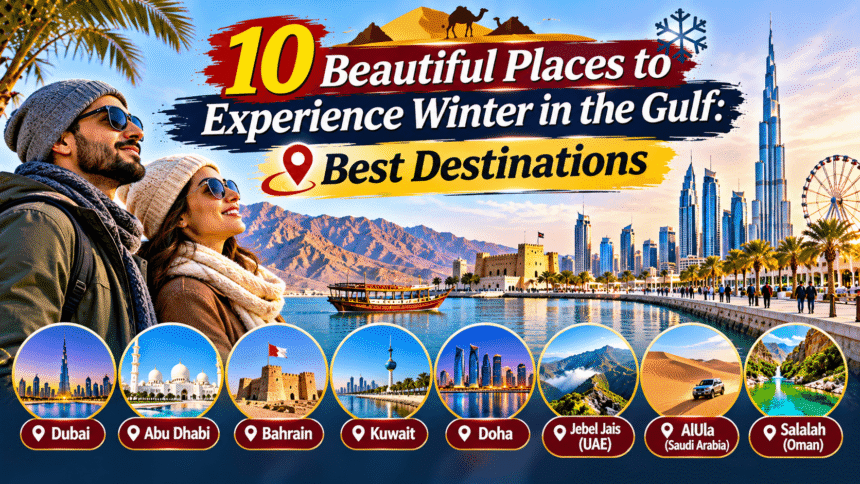
10 Beautiful Places to Experience Winter in the Gulf
Winter in the Gulf, from November to March, brings cooler weather, clear skies, and pleasant conditions for outdoor activities and sightseeing.
- 1. Hatta, United Arab Emirates – A Beautiful Mountain Escape
- 2. Jebel Jais, United Arab Emirates – Enjoy Winter Among the Mountains
- 3. Liwa Desert, United Arab Emirates – Experience the Beauty of Golden Sand Dunes
- 4. AlUla, Saudi Arabia – Discover Ancient History and Natural Beauty
- 5. Wadi Al Disah, Saudi Arabia – Explore a Stunning Natural Valley
- 6. Jebel Akhdar, Oman – Enjoy the Cool Beauty of the Green Mountains
- 7. Sharqiyah Sands, Oman – Experience Traditional Arabian Desert Camping
- 8. Khor Al Adaid, Qatar – Where the Desert Meets the Sea
- 9. Bahrain Fort, Bahrain – Explore History Beside the Sea
- 10. Kuwait’s Winter Desert Camps – Enjoy the Beauty of Traditional Desert Life
- Best Time to Explore Winter Destinations in the Gulf
- Tips for Planning a Winter Trip Across the Gulf
- Conclusion
- Frequently Asked Questions (FAQs)
Winter in the Gulf brings pleasant, sunny weather, with temperatures usually between 25°C and 30°C. It is a great time to enjoy beaches, desert trips, and outdoor activities without the intense summer heat.
1. Hatta, United Arab Emirates – A Beautiful Mountain Escape
Hatta is one of the most attractive winter destinations in the United Arab Emirates. Located in the Hajar Mountains, this destination is known for its rocky landscapes, mountain views, freshwater pools and peaceful surroundings.
During winter, the cooler weather makes Hatta a popular choice for outdoor activities. Visitors can enjoy the natural scenery, explore mountain trails and spend time around Hatta Dam, where turquoise water creates a beautiful contrast with the surrounding mountains.
One of the most popular experiences is kayaking at Hatta Dam. Visitors can enjoy the calm water while looking at the surrounding mountain scenery. The area also offers opportunities for hiking, cycling and exploring traditional villages.
Hatta Heritage Village is another interesting place to visit. It gives visitors a glimpse into traditional Emirati life through restored houses, watchtowers and historical buildings.
Things to enjoy in Hatta during winter:
- Kayaking and other water activities at Hatta Dam.
- Hiking through mountain trails.
- Mountain biking and outdoor adventures.
- Exploring Hatta Heritage Village.
- Photography around rocky landscapes and water viewpoints.
- Enjoying outdoor dining and peaceful mountain surroundings.
Hatta is a good choice for families, couples and adventure lovers who want to experience a different side of the UAE.
2. Jebel Jais, United Arab Emirates – Enjoy Winter Among the Mountains
Jebel Jais, located in Ras Al Khaimah, is one of the UAE’s most popular mountain destinations. It forms part of the Hajar Mountain range and is known for its dramatic peaks, winding roads and wide views across the surrounding landscape.
Jebel Jais, is the highest mountain in the UAE, standing 1,934 metres above sea level.
It is also one of the coldest places in the country. During winter, temperatures near the top usually range from 6°C to 11°C and sometimes drop close to freezing. It Located about two hours from Dubai, it is a great place to enjoy cool weather and beautiful mountain views.
Winter is an excellent season to visit because temperatures at higher elevations are generally cooler than in the lowlands. The mountain becomes a popular place for hiking, sightseeing and outdoor adventures.
One of the biggest attractions is Jais Flight, a famous mountain zipline experience. Visitors can also enjoy the Jais Sledder, scenic viewpoints and designated mountain trails.
The journey towards the mountain is an experience in itself. As the road climbs higher, visitors can see rocky slopes, deep valleys and changing mountain scenery.
Jebel Jais also offers camping and outdoor experiences for visitors who want to spend more time in the mountains.
Why visit Jebel Jais in winter?
- Enjoy cooler mountain temperatures.
- Explore scenic viewpoints and hiking routes.
- Experience mountain ziplining and adventure activities.
- Enjoy photography and sightseeing.
- Spend time at designated mountain camping locations.
Jebel Jais is a great place for travellers who love adventure and beautiful natural scenery, especially during the UAE’s winter season.
3. Liwa Desert, United Arab Emirates – Experience the Beauty of Golden Sand Dunes
The Liwa Desert, located in Abu Dhabi’s Al Dhafra region, is a wonderful destination for travellers who want to experience the traditional beauty of the Arabian Desert.
It lies along the northern edge of the Empty Quarter, also known as Rub’ al Khali, one of the largest continuous sand deserts in the world.
During winter, the cooler weather makes desert exploration more comfortable. Visitors can enjoy the enormous sand dunes, watch beautiful sunsets and experience traditional desert camping.
Moreeb Dune is one of the area’s most famous natural attractions. Its impressive height and steep sandy slopes make it a popular location for desert events and adventure activities.
Visit the base of one of the world’s tallest sand dunes, standing around 300 metres high with a steep slope.
A paved road takes you right to the dune, making it a great spot for sunset photos.
You can also explore the nearby sand dunes and off-road trails in a 4×4 vehicle.
Liwa is also known for its date palm farms and traditional settlements, which create a beautiful contrast with the surrounding sand dunes.
Popular winter experiences in Liwa include:
- Traditional desert camping.
- Watching sunrise and sunset over the dunes.
- Dune driving with experienced guides.
- Sandboarding and desert photography.
- Exploring Moreeb Dune.
- Learning about traditional desert life.
The peaceful atmosphere of Liwa makes it especially attractive to visitors looking for a break from busy city life.
4. AlUla, Saudi Arabia – Discover Ancient History and Natural Beauty
AlUla is one of Saudi Arabia’s most remarkable winter destinations. Located in the northwest of the country, it is famous for its ancient archaeological sites, sandstone mountains, desert landscapes and beautiful natural formations.
Winter is an especially comfortable time to explore AlUla because daytime temperatures are generally more suitable for sightseeing and outdoor activities.
One of its most important attractions is Hegra, Saudi Arabia’s first UNESCO World Heritage Site. It contains impressive Nabataean tombs carved into sandstone formations and provides an opportunity to learn about the region’s ancient history.
Another popular attraction is Elephant Rock, a natural sandstone formation shaped like an elephant. It is particularly beautiful during sunset when the changing light gives the surrounding rocks warm colours.
Visitors can also explore AlUla Old Town, enjoy desert experiences and discover the area’s cultural heritage.
Top winter activities in AlUla:
- Exploring the ancient tombs of Hegra.
- Visiting Elephant Rock.
- Walking through AlUla Old Town.
- Enjoying desert stargazing.
- Taking guided hikes through sandstone landscapes.
- Experiencing seasonal cultural and entertainment events.
The Royal Commission for AlUla identifies October to April as a particularly active period for visitors, thanks to comfortable weather and a wide calendar of festivals and activities.
AlUla is an excellent destination for history lovers, photographers and travellers looking for a combination of culture and nature.
5. Wadi Al Disah, Saudi Arabia – Explore a Stunning Natural Valley
Wadi Al Disah is one of the most beautiful natural landscapes in northwestern Saudi Arabia. Located in the Tabuk region, it is known for its tall sandstone cliffs, wide valleys, natural water sources and green vegetation.
The landscape looks very different from the open sandy deserts that many people associate with Saudi Arabia. Towering rock formations rise on both sides of the valley, creating a dramatic natural setting.
Winter is a suitable time to explore the area because the weather is generally more comfortable for outdoor activities. Visitors can enjoy guided nature trips, photography and scenic drives through the valley.
Depending on recent rainfall and local conditions, parts of the wadi may have flowing water and seasonal vegetation.
The valley also provides a habitat for different plants and wildlife that have adapted to the region’s dry climate.
Things to enjoy in Wadi Al Disah:
- Exploring the dramatic sandstone cliffs.
- Taking guided walks through the valley.
- Enjoying nature photography.
- Discovering seasonal vegetation and natural water sources.
- Experiencing peaceful outdoor surroundings.
- Learning about the region’s natural environment.
Wadi Al Disah is a wonderful choice for visitors who want to discover Saudi Arabia’s natural beauty beyond its major cities and famous desert destinations.
6. Jebel Akhdar, Oman – Enjoy the Cool Beauty of the Green Mountains
Jebel Akhdar, meaning Green Mountain, is one of Oman’s most beautiful mountain destinations. It is part of the Al Hajar mountain range and is known for its terraced farms, deep valleys, traditional villages and spectacular viewpoints.
The higher elevation gives the region a different climate from many lowland areas of Oman. During winter, temperatures can become quite cold, especially at night.
The mountain is particularly famous for its agricultural terraces, where local farmers grow pomegranates, roses, walnuts and other crops.
Visitors can explore traditional villages, walk along mountain paths and enjoy views of the surrounding valleys.
The region is also known for its rose gardens. During the spring season, local rose varieties are harvested and used to produce traditional Omani rosewater.
Winter experiences at Jebel Akhdar include:
- Exploring mountain villages and terraced farms.
- Enjoying scenic viewpoints.
- Walking along approved hiking routes.
- Visiting local farms and agricultural areas.
- Enjoying mountain resorts and outdoor dining.
- Photographing the rugged mountain landscape.
Jebel Akhdar is an ideal destination for travellers who enjoy nature, cooler weather and peaceful mountain surroundings.
7. Sharqiyah Sands, Oman – Experience Traditional Arabian Desert Camping
Sharqiyah Sands, also known as Wahiba Sands, is one of Oman’s most famous desert destinations. It is recognised for its rolling dunes, traditional Bedouin culture and beautiful desert scenery.
Winter is one of the most comfortable seasons to explore the area. Cooler daytime temperatures make it easier to enjoy desert activities, while clear evenings provide excellent opportunities for stargazing.
Visitors can stay in traditional desert camps or more comfortable luxury accommodation. These stays often combine modern facilities with elements of Omani hospitality.
Desert activities are a major attraction in the region. Visitors can enjoy guided dune drives, camel experiences, sandboarding and traditional meals.
The desert is also home to different wildlife species, including reptiles, insects and small mammals that have adapted to dry conditions.
Popular experiences at Sharqiyah Sands:
- Staying overnight in a desert camp.
- Watching the sunset over golden dunes.
- Enjoying traditional Omani food.
- Taking guided 4WD desert trips.
- Trying sandboarding and camel experiences.
- Stargazing away from city lights.
Sharqiyah Sands is perfect for visitors who want to experience the traditional desert environment and learn more about Oman’s cultural heritage.
8. Khor Al Adaid, Qatar – Where the Desert Meets the Sea
Khor Al Adaid, commonly known as the Inland Sea, is one of Qatar’s most unusual natural destinations. Located in the southeast of the country, it is famous for its impressive sand dunes that meet the waters of the Arabian Gulf.
The landscape creates a beautiful combination of golden desert sands, blue water and open coastal scenery.
Winter is a popular season for visiting Khor Al Adaid because the cooler weather makes desert activities more comfortable.
The area is a recognised nature reserve and supports different types of wildlife and vegetation. Its natural environment makes it especially attractive to photographers and nature lovers.
Visitors can enjoy guided 4WD desert trips, camping, fishing and scenic views. The journey through the dunes is also an important part of the experience.
Things to do at Khor Al Adaid:
- Enjoy guided dune driving.
- Watch the sunset where the dunes meet the sea.
- Experience authorised desert camping.
- Explore the natural landscape.
- Enjoy photography and peaceful coastal views.
- Observe local wildlife without disturbing it.
According to Visit Qatar, access to the Inland Sea requires a four-wheel-drive vehicle and a professional driver. Visitors should plan the trip with an experienced local operator.
Khor Al Adaid is a beautiful destination for anyone looking to experience the unusual combination of desert and sea.
9. Bahrain Fort, Bahrain – Explore History Beside the Sea
Bahrain Fort, also known as Qal’at al-Bahrain, is one of the country’s most important historical attractions. Located on the northern coast near Manama, it offers a beautiful combination of ancient architecture, greenery and coastal scenery.
Winter is a pleasant time to visit because the cooler weather makes walking around the archaeological site more comfortable.
The fort is connected with the ancient Dilmun civilisation, which played an important role in regional trade and maritime history.
The archaeological site contains remains from different periods of occupation, showing how people lived, traded and developed communities in the area over many centuries.
Visitors can explore the historic structures, walk along the surrounding paths and visit the nearby museum to learn more about Bahrain’s past.
The coastal location also provides beautiful views, particularly during sunset.
Why visit Bahrain Fort during winter?
- Explore an important UNESCO World Heritage Site.
- Learn about the ancient Dilmun civilisation.
- Enjoy peaceful walks around the archaeological area.
- Visit the museum and discover historical objects.
- Relax at the nearby café overlooking the sea.
- Capture beautiful photographs of the fort and coastline.
Bahrain Fort is an excellent destination for visitors who enjoy history, architecture and relaxing outdoor experiences.
10. Kuwait’s Winter Desert Camps – Enjoy the Beauty of Traditional Desert Life
Winter brings a special atmosphere to Kuwait. After the extremely hot summer months, cooler weather encourages families and friends to spend more time outdoors.
One of the most popular seasonal traditions is desert camping, locally known as Kashta.
During the winter season, designated camping areas across Kuwait become lively gathering places. Families and groups set up camps, prepare traditional food, enjoy conversations and spend evenings away from the busy city environment.
For many people, winter camping is more than a recreational activity. It is a way to enjoy traditional hospitality and maintain a connection with the country’s desert heritage.
Visitors can experience the beauty of open desert landscapes, enjoy peaceful evenings and look at the stars away from bright city lights.
Kuwait also offers urban green spaces such as Al Shaheed Park, where visitors can enjoy gardens, walking paths, museums, lakes and outdoor cafés.
Popular winter experiences in Kuwait include:
- Spending time at authorised desert camps.
- Enjoying traditional Kuwaiti food and hospitality.
- Watching beautiful desert sunsets.
- Stargazing during clear evenings.
- Visiting Al Shaheed Park.
- Exploring Kuwait’s cultural and historical attractions.
Kuwait Government Online describes the winter camping season as an important part of the country’s cultural identity and community life.
Visitors should always check current camping dates, approved locations and permit requirements before arranging an independent camping trip.
Best Time to Explore Winter Destinations in the Gulf
Winter in the Gulf generally runs from November to March, although the exact weather varies between countries and destinations.
Coastal cities usually enjoy mild daytime temperatures, while mountains and inland desert areas can become much colder at night.
Here is a general guide to planning your trip:
- November: A good time to begin exploring deserts, beaches and outdoor attractions.
- December: Suitable for camping, mountain visits and cultural sightseeing.
- January: A popular month for outdoor adventures and winter festivals.
- February: Pleasant conditions for desert exploration, hiking and coastal trips.
- March: A useful period for outdoor sightseeing before temperatures begin rising in many areas.
Travellers should check local weather forecasts before visiting mountain and desert regions, especially when planning overnight stays.
Tips for Planning a Winter Trip Across the Gulf
A little preparation can make your winter journey more enjoyable.
Here are some useful travel tips:
- Pack light clothing for daytime and warm jackets for cold evenings.
- Book popular hotels and desert camps in advance.
- Carry sufficient water during outdoor activities.
- Wear comfortable shoes for hiking and sightseeing.
- Check local driving and camping regulations.
- Use experienced guides for remote desert and mountain trips.
- Respect local customs and cultural traditions.
- Avoid littering and disturbing natural habitats.
Planning your route in advance is also helpful if you want to explore more than one Gulf country during the same holiday.
Conclusion
Winter is one of the best seasons to discover the natural beauty, cultural heritage and outdoor attractions of the Gulf region. From the mountains of Hatta and Jebel Akhdar to the golden dunes of Liwa and Sharqiyah Sands, every destination offers a different experience.
Travellers can explore ancient historical sites in AlUla and Bahrain, enjoy peaceful mountain landscapes in Oman, experience the unique desert and sea scenery of Qatar and take part in traditional winter camping in Kuwait.
The cooler weather makes these destinations more comfortable for hiking, sightseeing, photography, camping and outdoor dining.
What makes winter travel in the Gulf especially interesting is the variety of experiences available within a relatively connected region. Visitors can enjoy mountains, deserts, beaches, historic towns and cultural attractions during the same season.
Whether you are planning a family holiday, an adventure trip or a peaceful weekend escape, these 10 beautiful places offer plenty of reasons to explore the Gulf during winter.
Frequently Asked Questions (FAQs)
1. Which are the beautiful places to experience winter in the Gulf during winter?
Some popular destinations include Hatta, Jebel Jais, Liwa Desert, AlUla, Wadi Al Disah, Jebel Akhdar, Sharqiyah Sands, Khor Al Adaid, Bahrain Fort and Kuwait’s winter desert camps.
2. When does winter begin in the Gulf countries?
Winter generally begins in November and continues until March. However, temperatures and seasonal conditions differ between coastal, desert and mountain areas.
3. Which Gulf country is best for winter mountain trips?
Oman and the UAE are excellent choices for mountain trips. Jebel Akhdar, Jebel Shams, Hatta and Jebel Jais offer beautiful landscapes and outdoor activities.
4. Where can visitors enjoy desert camping in the Gulf?
Liwa in the UAE, Sharqiyah Sands in Oman, Khor Al Adaid in Qatar and designated winter camping areas in Kuwait are popular choices.
5. Is winter a good time to visit AlUla in Saudi Arabia?
Yes. Winter is an excellent time to visit AlUla because the weather is generally comfortable for exploring Hegra, Elephant Rock, AlUla Old Town and other outdoor attractions.
6. Which Gulf destination is best for families during winter?
Hatta, AlUla, Bahrain Fort and Kuwait’s Al Shaheed Park are good options for families because they offer a combination of outdoor activities, sightseeing and cultural experiences.
7. Can tourists enjoy beaches in the Gulf during winter?
Yes. Many Gulf beaches offer comfortable conditions for walking, sightseeing and outdoor relaxation during winter. Water temperatures and weather vary by location.
8. Is winter suitable for wildlife observation in the Gulf?
Yes. Winter provides opportunities to observe migratory birds, desert animals and other wildlife in protected natural areas. Visitors should follow local wildlife protection rules.
9. What should travellers pack for a Gulf winter holiday?
Travellers should carry comfortable daytime clothing, warm jackets for evenings, walking shoes, sunscreen and enough water for outdoor activities. Mountain and desert nights can be particularly cold.
10. Why is winter popular for tourism in the Gulf?
Winter brings more comfortable outdoor temperatures, making it easier to enjoy desert adventures, mountain hiking, beach visits, cultural festivals and outdoor dining.
Do follow us on Instagram
Read More – The Rise of Luxury Desert Camping in Saudi Arabia