


Jewellery Advisor | Art Curator | Creative Director
For more than a decade, Jewellery Masterpiece has offered its audience a rare window into the world of exceptional jewellery. From international fairs and high jewellery presentations to auction previews, private salons and encounters with some of the industry’s most respected masters, the platform built its reputation around access, taste and a sharp eye for beauty.
- Jewellery Masterpiece looks very different today. What changed?
- From the outside, your work looked successful. Was it?
- Is it that easy for you to walk away from something that works?
- Why?
- What did your life look like before that first war?
- What kind of business did you have?
- How did you end up in advertising?
- What had you studied?
- Your first job?
- And you did it?
- Were you terrified?
- What did that teach you?
- What do you remember about 2008?
- The war.
- Is that how Jewellery Masterpiece began?
- When did you realise it might become something?
- A stranger?
- What was Basel like?
- Did you immediately understand how exceptional it was?
- Did that make you harder to impress?
- Do you still think originality is that simple?
- Can anybody create something completely new?
- How do you determine whether something is collectible?
- You collect yourself?
- Let’s return to 2022. Why did you stay in Ukraine?
- What changed?
- Were you frightened?
- Beauty sounds almost like a necessity when you say it.
- Did London become that future?
- You tried to return to the jewellery business there?
- What did you say?
- Was that frightening or liberating?
- Have you answered it?
- So you tell people what is wrong with their jewellery?
- What are you particularly good at seeing?
- You are building several new projects now. Let’s start with Creating a Masterpiece.
- Another jewellery interview?
- Why now?
- Only jewellery?
- And A Living Digital Library?
- The title When Is It Fucking Enough? is difficult to ignore. What is behind it?
- And Jewellery Masterpiece Journeys?
- These projects sound very different from one another.
- And Jewellery Masterpiece Journeys?
- These projects sound very different from one another.
Today, Jewellery Masterpiece is evolving.
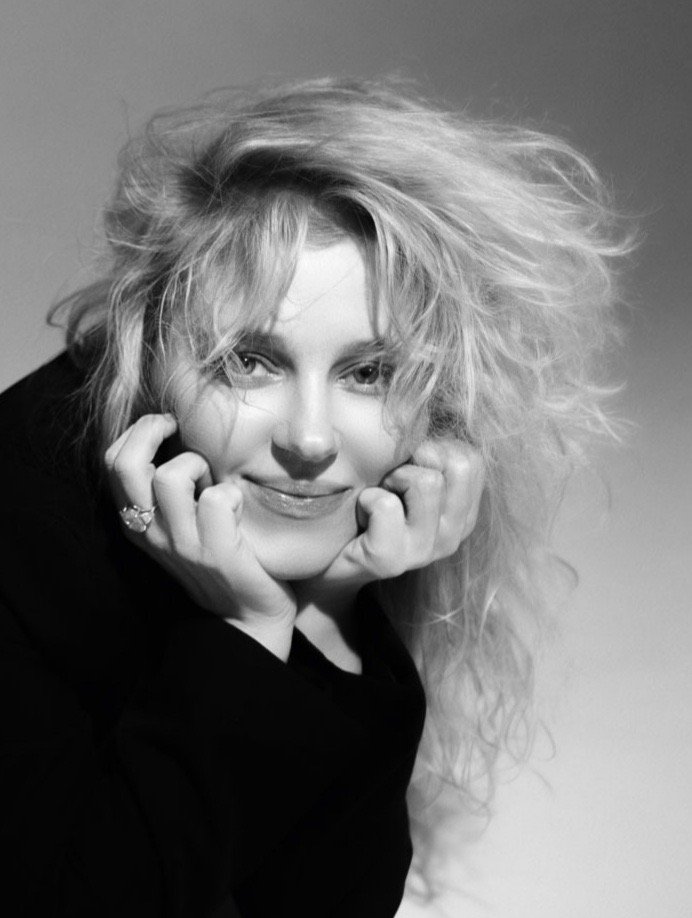
Jewellery remains at its heart, but the platform now reaches further into art, architecture, museums, cultural history and daily news. Behind this transformation is its founder, Tetiana Pfaifer, whose own life has been shaped by reinvention.
She studied international relations, worked with billion dollar figures at a major Ukrainian corporation, entered the advertising industry, survived the 2008 financial crisis and built a successful business. War forced her to leave Donetsk in 2014 and later changed her life again in Kyiv in 2022. Somewhere between those chapters, Jewellery Masterpiece emerged almost accidentally.
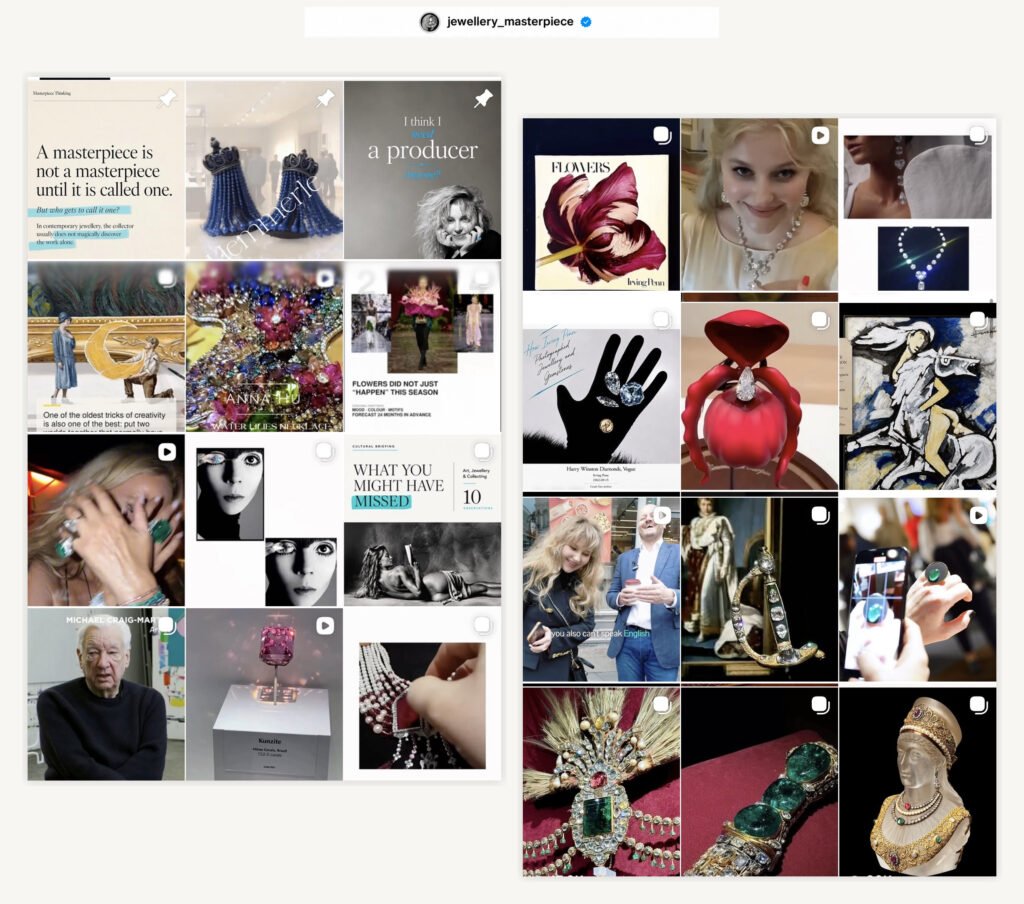
Today, the platform has grown to more than 600,000 followers.
But for Pfaifer, numbers are not the most interesting part of the story. Her curiosity, resilience and willingness to abandon what no longer feels meaningful have become central to the way she works.
In this conversation, Pfaifer discusses taste, originality, collectibility, beauty, survival and the importance of following your interest even when it leads somewhere unexpected.
Jewellery Masterpiece looks very different today. What changed?
Many things.
I want to keep Jewellery Masterpiece intellectually alive. I do not want it to become simply a large Instagram account repeating whatever has already worked or whatever happens to be going viral.
What fascinated me ten years ago does not excite me in exactly the same way today. In the beginning, travelling to exhibitions and discovering new jewellery gave me an almost crazy sense of excitement. I still love seeing beautiful jewellery, of course.
But I have a naturally analytical mind. I need to understand why something works.
Why do some artists become recognised while others struggle? Why do certain pieces immediately command attention and become collectible?
Living in different countries also broadened my interests. You discover local artists, antiques, architecture and forgotten histories.
Once you move outside one discipline, you begin seeing connections you could not see before. One interest naturally leads to another.
I have always known how to learn. I finished school with a gold medal, graduated from university with honours and my thesis placed third in Ukraine. I was then admitted to a fully funded PhD programme.
Perhaps that background explains why I am never satisfied with what I already know.
I am still learning.
From the outside, your work looked successful. Was it?
Yes. It was successful in the obvious sense. I had clients, access, travel and an audience.
But looking back, several things were pushing me towards change.
One was the business model around exhibitions. We were giving events significant international visibility, but often the expectation was that we would provide that visibility for free and then somehow earn separately from exhibitors or clients.
At some point, that stopped making sense to me.
My interests had also become much wider. I wanted people not simply to see a jewel, but to understand what they were looking at and why it mattered.
And if I am completely honest, I was tired of repeating a format simply because it worked. I knew there was more I wanted to do than simply try on jewellery for the camera.
I remember returning from an exhibition at the end of 2019 and thinking, “That’s it. I can’t do this anymore.”
Is it that easy for you to walk away from something that works?
God, no.
I had no proper plan for what would come next, and I certainly had not thought enough about the financial consequences.
Looking back, perhaps that was partly foolish.
A few months later, the pandemic happened. I remember feeling a strange sense of relief, not because of what was happening, obviously, but because suddenly I did not have to make an immediate decision. The whole world had been forced to pause.
Ironically, the pandemic also demonstrated the importance of online communication. Exhibitions and brands began taking digital platforms and content creators much more seriously.
It became an excellent time for many of my colleagues.
But I remained outside.
Why?
In February 2022, Russia attacked Ukraine.
For me, it was my second war.
The first was in 2014.
What did your life look like before that first war?
Very structured.
I ran my business, travelled, practised yoga and belly dancing, went swimming. My days were full, but life felt easy.
It has never felt that easy again.
What kind of business did you have?
Advertising.
How did you end up in advertising?
Not through any master plan.
After university, I had a very difficult time finding my place.
Until then, I had always been successful academically. I finished school with a gold medal and graduated from university with honours. Then suddenly I could not find a proper job.
At some interviews, I was told I was not qualified enough. At others, I was overqualified.
I remember being frustrated and even ashamed.
What had you studied?
International relations.
Eventually, a friend called me and said that a major industrial corporation was looking for secretaries.
She actually said, “I know you would never agree to be a secretary.”
But by then I was ready to consider almost anything.
During the interview, the man looked at my background and said, “Your thesis placed third in Ukraine. You shouldn’t be applying as a secretary.”
The funny thing is, I did not even know that my thesis had placed third.
He offered me a job in the finance and credit department instead.
Your first job?
Yes, and immediately with very large numbers.
We were arranging loans against corporate assets. Billions went through my hands, unfortunately only on paper.
Later, I realised that this had changed something in my head.
Large numbers became simply numbers.
Then my original manager left, and I did not work well with the person who replaced him. There was another period of trying to understand what I wanted to do.
After yet another unsuccessful interview, a man listened to me and finally said, “With your way of thinking and your approach, you should open your own business.”
I did not leave that interview with a business plan.
But his words stayed in my head.
Something shifted.
And you did it?
Eventually.
Neither of my parents had any experience in business, so there was nobody at home who could explain how to begin.
But I had inherited an apartment from my uncle.
When I was 26, I sold it and invested the money in a business.
My father was completely against it.
So I persuaded my mother. She helped me.
Were you terrified?
No. That is the funny thing.
At 26, I had no fear.
My first investment was actually a bad one. I bought advertising billboards in poor locations. The company operating them could not sell enough advertising, eventually stopped paying me rent and I had to sell the billboards.
Everyone told me they would be impossible to sell.
But somehow I knew I would sell them.
And I did.
What did that teach you?
People helped me. People deceived me. Problems appeared and I had to solve them.
But I was already inside the business world.
Then I found a patented advertising format inside public transport, opened an office and hired people.
Very quickly, the business became successful.
Within three months, I bought a car. Later I bought an apartment with a dollar denominated mortgage.
And then came 2008.
What do you remember about 2008?
I remember it as if it were yesterday. I was 28.
My monthly mortgage payment went from around 400 dollars to 800 dollars while the business collapsed.
I still had salaries to pay. Office rent. Everything.
There was probably a year of fighting for the business.
But we survived.
Then life smiled at me again.
Until 2014.
The war.
Yes.
I was 34 when I had to leave Donetsk and move to Kyiv.
My business was tied to the territory, so it did not continue after the move.
For the first time in my life, I felt real fear about my future.
I had no idea what to do.
I am not somebody who can create a new business every week. I need time to understand what genuinely interests me.
My entire life had disappeared.
I believe I became depressed, although we did not speak about depression as openly then.
Eventually, I trained as a psychotherapist.
And I remember one insight from a session that became very important to me:
“Always follow your interest.”
Is that how Jewellery Masterpiece began?
Almost accidentally.
When I was leaving Donetsk, a friend introduced me to Instagram.
After arriving in Kyiv, my days were empty because the life and business I had built no longer existed.
I began looking at images and posting things that interested me. Fashion, jewellery and objects I found beautiful.
People started responding, and slowly a community formed around the account.
When did you realise it might become something?
Basel, in 2016.
I wanted to visit the jewellery fair, but financially it was not an easy trip for me.
I wrote on Instagram that I wanted to go.
A woman contacted me and said she could not attend herself, but she would cover all my expenses if I went and then told her about everything I had seen.
A stranger?
Yes.
And I remain profoundly grateful to her.
I do not know how my life would have developed had she not appeared at exactly that moment.
What was Basel like?
Extraordinary.
People were kind, and some were already beginning to recognise me.
I remember Lala Busatti saying to me, “Take your time. You can film for as long as you need.”
She probably saw how nervous I was.
I also remember trying on a 15 carat heart shaped diamond ring and a heart shaped necklace from Dehres.
Suddenly, a door had opened into the highest level of the jewellery world.
And Basel was only the beginning.
Then came Paris Couture Week, high jewellery presentations, auctions and private salons.
By 2017, I had met Wallace Chan, Cindy Chao, Anna Hu, Hemmerle and Viren Bhagat.
I was encountering the work of great living masters.
Did you immediately understand how exceptional it was?
I was fortunate enough to see extraordinary work before I had enough knowledge to understand just how extraordinary it was.
At first, I operated largely on instinct.
I studied, filmed and wore jewellery that many people encounter only in museums, archives or auction catalogues.
Historic collections. Art Nouveau. JAR. Cartier. Van Cleef and Arpels. Contemporary masters including Fabio Salini, Edmond Chin and Glenn Spiro.
Only later did I realise that my eye had been learning long before I knew I was being taught.
If you spend years looking at exceptional composition, exceptional craftsmanship and exceptional stones, your internal standard changes.
Then I began deliberately studying jewellery history, stones, craftsmanship and the market.
Did that make you harder to impress?
Much harder.
For a period, perhaps too hard.
I became almost obsessed with originality.
I would look at a piece and immediately recognise one element from one designer, something else from another.
People would ask me, “Do you like it?”
And I would think, I know exactly where this came from.
At that point, I did not yet have the diplomatic language to answer elegantly.
Do you still think originality is that simple?
My understanding has become much more nuanced.
Creativity has always involved references, combinations and influences.
The interesting question is how those references have been transformed.
Can anybody create something completely new?
There are rare people who seem to create a language that feels entirely their own.
For me, Wallace Chan, Edmond Chin and Fabio Salini are among those people.
But I also came to understand that many great artists are not necessarily infinitely more creative than everybody else.
They often make better creative decisions.
They know what to remove.
What to keep.
What deserves months of work.
What can become a collection.
What has the potential to become collectible.
How do you determine whether something is collectible?
For me, collectibility is a combination of recognisable design language, rarity, execution, documentation and provenance.
Collectors are buying the complete case.
And being a collector means that very few things truly appeal to you.
If everything appealed to us equally, there would be no reason to collect anything.
A collector’s attention is selective.
You collect yourself?
Yes.
Contemporary art, antiques and unusual objects.
Moving between countries has made that interest much stronger.
Every country has its artists, decorative traditions, architecture, antiques and forgotten histories.
Once you actually live somewhere, these things begin finding you.
Let’s return to 2022. Why did you stay in Ukraine?
By then, the decision was no longer mine alone.
My sister was married, I had a family, and everyone was waiting to hear what I thought we should do.
I said, “We are not leaving.”
At that moment, staying together mattered more than returning to the industry.
What changed?
Time.
By 2024, two years had passed, and I understood that the war was not going to end quickly.
I could feel myself slowly dying inside.
Were you frightened?
I have to tell you something strange.
I was never afraid of being killed.
That was not my fear.
I was afraid, in a way, of not being able to live my life.
I could not do what I loved.
I could not be close to beauty.
And I need beauty in my life.
I really do.
Beauty sounds almost like a necessity when you say it.
For me, it is.
War puts everybody into survival mode. I function very badly in that state.
I remember saying to my sister, “Every day here has become a struggle, and I can no longer see the future I am building for myself.”
If I left, of course I would still have to fight.
But perhaps I would be fighting for something that might eventually become my future.
So I moved to London.
Did London become that future?
London was incredibly difficult.
Much harder than I expected.
The kind of difficult that makes you think that, if somebody had explained it properly beforehand, perhaps you would have thought twice.
You tried to return to the jewellery business there?
Yes.
I visited one of my former clients because I thought, if I am going to come back, I have to begin somewhere.
Almost immediately, he told me I had been out of the business for two years and needed to prove myself again.
He said:
“What do you think—that I am going to pay for your apartment in Knightsbridge? You have been out of the business for two years, and you expect me simply to begin working with you again? You have to prove that you are worthy again. Do a few posts for me for free first.”
I remember those words as clearly as if the conversation had happened today.
He also spoke dismissively about some of my colleagues.
What did you say?
Nothing.
I froze.
Completely.
I had not expected that aggression.
And I was raised to respect people older than me. He was considerably older, and I simply did not know how to respond in that moment.
I remember it was raining, and I could not find a taxi for a long time.
When one finally arrived, it was dirty and smelled terrible.
I sat inside and thought, this is all the ugliness I have just received in that conversation, and now I am physically sitting inside it.
And something shifted.
I realised I did not want my old professional life back.
Not in the form in which it had existed.
Was that frightening or liberating?
It is one thing to know what you do not want.
Then you still have to answer the more difficult question.
What do I want instead?
Have you answered it?
I am answering it.
Consulting is one part.
I now work with jewellery designers and brands on creative and artistic direction, design language, collections, hero pieces, collectibility and positioning.
So you tell people what is wrong with their jewellery?
Always (smiles).
But it is not only about jewellery.
My psychotherapy background influences the way I work.
Behind a creative problem there is always a person with doubts, habits, fear and ambition.
What are you particularly good at seeing?
What needs to be removed.
And occasionally what needs to be added.
(smiles)
You are building several new projects now. Let’s start with Creating a Masterpiece.
It is a filmed interview series.
I began with shorter conversations at PAD, with Hemmerle, Taffin and Glenn Spiro.
Now I want to make it much deeper and more intimate.
Another jewellery interview?
No.
And actually, you do not find that many serious jewellery interviews anyway.
But I do not want to put somebody against an anonymous wall and ask ten conventional questions.
I want to understand the person through their world.
Their home. Their studio. Their art. Their favourite places.
What do they notice?
What surrounds them?
Because all of that eventually finds its way into the work.
Why now?
I actually wanted to do it back in 2017.
I started.
But many of my heroes were not ready to be seen that openly.
These are people who have spent 40 or 50 years mastering what they do.
Perhaps now they are ready to share things they were not ready to talk about earlier.
Knowledge. Decisions. Maybe even certain secrets.
And if those conversations are not recorded, a tremendous amount of understanding can simply disappear.
Only jewellery?
No.
It begins with jewellery because that is my world.
But I am interested in mastery itself.
Painting. Architecture. Gastronomy.
I am interested in people who have learned to do something exceptionally well.
And A Living Digital Library?
It would be a growing educational collection of jewellery masterpieces.
I already have more than ten years of photographic and video material, so naturally that would be the starting point.
Technology now allows us to restore and improve material filmed many years ago, which means an archive can become a serious educational resource.
Each entry could include full page photography, close up details, an artist profile, provenance and history, design and technical insights and video.
But the purpose is not simply to preserve beautiful images.
I want experts to explain the techniques and creative decisions behind each piece.
What should a collector notice?
What can a designer learn from it?
The title When Is It Fucking Enough? is difficult to ignore. What is behind it?
It is a podcast about the exact moment when somebody understands:
I cannot continue living the life I have been living.
I am interested in decisions that divide a life into before and after.
And Jewellery Masterpiece Journeys?
That is another expression of the same interests.
Exceptional art, jewellery and gastronomy experiences with private access.
I want them built through all five senses.
Sight. Sound. Touch. Taste. Scent.
It might be a private visit to the Vatican Museums for a small group, an extraordinary chef creating dinner somewhere unexpected, or meeting an artist and seeing their work inside a historic residence.
For me, it is not about luxury for the sake of luxury.
It is an inspirational recharge.
These projects sound very different from one another.
No, to me they are not.
It has always been about the same thing.
Following my interest and sharing the inspiration I find along the way.
And Jewellery Masterpiece Journeys?
That is another expression of the same interests.
Exceptional art, jewellery and gastronomy experiences with private access.
I want them built through all five senses.
Sight. Sound. Touch. Taste. Scent.
It might be a private visit to the Vatican Museums for a small group, an extraordinary chef creating dinner somewhere unexpected, or meeting an artist and seeing their work inside a historic residence.
For me, it is not about luxury for the sake of luxury.
It is an inspirational recharge.
These projects sound very different from one another.
No, to me they are not.
It has always been about the same thing.
Following my interest and sharing the inspiration I find along the way.
Follow Tetiana Pfaifer on Instagram
Read More – What Are the 10 Best Areas for Expats in Dubai in 2026?