

How to Start a Business in Dubai 2026 Ultimate Step-by-Step Guide for Entrepreneurs and Investors
Dubai has earned a global reputation as one of the best places in the world to start and grow a business. With its strategic location, business-friendly regulations, world-class infrastructure, modern logistics network, and tax-efficient environment, the emirate attracts entrepreneurs, startups, multinational corporations, and investors from every continent.
- Why Start a Business in Dubai?
- Dubai’s Business Environment
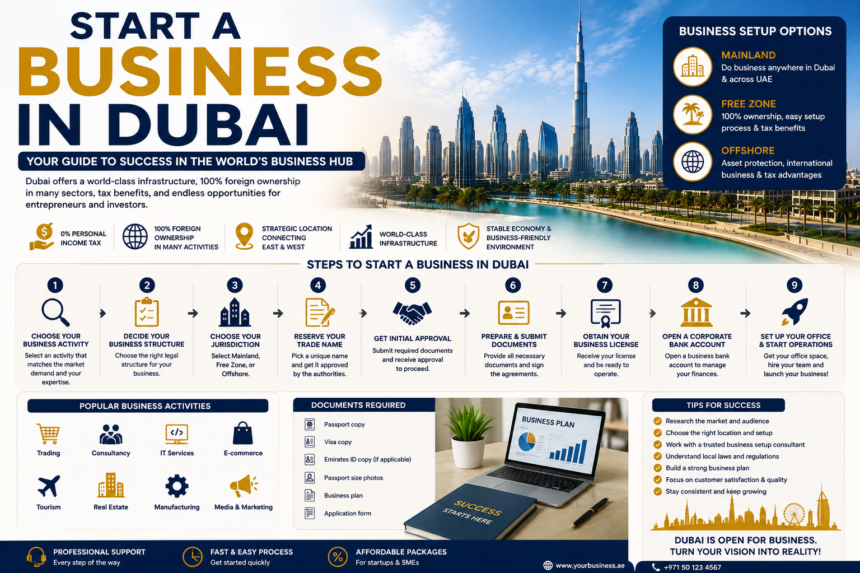
- Step 1: Choose Your Business Activity
- Step 2: Select the Right Business Structure
- Step 3: Choose the Right Jurisdiction
- Step 4: Choose a Company Name
- Step 5: Obtain Initial Approvals
- Step 6: Prepare Required Documents
- Step 7: Apply for a Business Licence
- Step 8: Secure Business Premises
- Step 9: Open a Corporate Bank Account
- Step 10: Hire Employees
- Estimated Startup Costs for Business in Dubai
- Business Banking
- Accounting and Record Keeping
- Marketing Your Business
- Best Business Ideas in Dubai
- Technology Opportunities
- Challenges to Consider
- Tips for Business Success
- Common Mistakes to Avoid for Business in Dubai
- Frequently Asked Questions
- Future of Business in Dubai
Whether you’re planning to launch a small startup, establish an e-commerce company, open a restaurant, create a consultancy, or expand an international business. The business in Dubai offers numerous opportunities across almost every industry.
The government’s continued focus on innovation, digital transformation, sustainability, tourism, finance, and entrepreneurship has made Dubai one of the Middle East’s leading business hubs. Through initiatives that simplify company formation and attract foreign investment, the city continues to strengthen its position as a preferred destination for businesses of all sizes.
This comprehensive guide explains how to start a business in Dubai, including choosing the right business activity, selecting the best jurisdiction, obtaining licences, understanding legal requirements, estimating startup costs, opening a corporate bank account, hiring employees, and building a successful company.
Why Start a Business in Dubai?
Business in Dubai offers numerous advantages for entrepreneurs.
Some of the biggest benefits for business in Dubai include:
- Strategic location connecting Europe, Asia, and Africa
- Modern infrastructure
- Business-friendly regulations
- International workforce
- Growing economy
- Advanced logistics network
- Strong digital ecosystem
- Access to global markets
- Excellent quality of life
- Diverse business opportunities
These advantages continue to attract businesses from around the world.
Dubai’s Business Environment
Dubai has developed a diversified economy supported by industries such as:
- Technology
- Tourism
- Healthcare
- Finance
- Logistics
- Real estate
- Construction
- Manufacturing
- Education
- Retail
- Professional services
- Renewable energy
Economic diversification continues to create opportunities across both traditional and emerging sectors.
Step 1: Choose Your Business Activity
The first step is deciding what your company will do.
Popular business activities include:
- Trading
- Consultancy
- E-commerce
- Information Technology
- Marketing
- Tourism
- Food and Beverage
- Healthcare
- Education
- Real Estate
- Manufacturing
- Logistics
Your chosen activity influences licensing and regulatory requirements.
Step 2: Select the Right Business Structure
Choosing an appropriate legal structure is essential.
Common business in Dubai structures include:
1. Sole Proprietorship: Suitable for certain individual-owned businesses, subject to applicable regulations.
2. Limited Liability Company (LLC): Often chosen by businesses seeking operational flexibility and limited liability protection.
3. Civil Company: Available for certain professional service activities.
4. Branch Office: Allows an existing foreign company to establish a presence in Dubai, subject to relevant regulations.
5. Representative Office: Generally used for marketing and liaison activities without conducting full commercial operations.
Each structure has different ownership, governance, and compliance requirements.
Step 3: Choose the Right Jurisdiction
Businesses in Dubai generally operate in one of three jurisdictions.
1. Mainland: Mainland companies can typically conduct business across the UAE, subject to licensing requirements.
Suitable for:
- Retail businesses
- Restaurants
- Professional services
- Construction companies
- Manufacturing
- Healthcare providers
2. Free Zones: Free zones are designed to support specific industries and international business activities.
Potential advantages may include:
- Streamlined business setup
- Industry-focused ecosystems
- Modern infrastructure
- Customs and logistics benefits depending on the zone
Each free zone has its own rules, permitted activities, and licensing framework.
3. Offshore: Offshore structures may be appropriate for certain international business and asset-holding purposes. They are generally not intended for conducting business within the UAE domestic market.
Professional legal and tax advice is recommended before choosing this structure.
Step 4: Choose a Company Name
Your trade name should:
- Be distinctive
- Reflect your business activity where appropriate
- Comply with applicable naming rules
- Avoid prohibited or misleading terms
- Be available for registration
Check the latest naming guidelines before submitting an application.
Step 5: Obtain Initial Approvals
Depending on your business activity, you may need approvals from the relevant authorities before proceeding with company registration.
Requirements vary by sector.
Step 6: Prepare Required Documents
Documentation commonly requested may include:
- Passport copies
- Visa or residency documents (where applicable)
- Emirates ID (if applicable)
- Business plan (for some activities)
- Application forms
- Trade name reservation documents
- Constitutional documents for the chosen business structure
Additional documents may be required based on the activity and jurisdiction.
Step 7: Apply for a Business Licence
Your licence authorises your company to carry out approved business activities.
Common licence categories include:
1. Commercial Licence: For trading and general commercial activities.
2. Professional Licence: For service-based businesses and professional consultancies.
3. Industrial Licence: For manufacturing and industrial operations.
4. Tourism Licence: For travel, hospitality, and tourism-related businesses.
Choose the licence that matches your intended activity.
Step 8: Secure Business Premises
Many businesses require a registered office or workspace.
Options include:
- Traditional office
- Co-working space
- Serviced office
- Retail shop
- Warehouse
- Industrial facility
Requirements depend on the jurisdiction and business activity.
Step 9: Open a Corporate Bank Account
A business bank account helps manage:
- Customer payments
- Supplier payments
- Payroll
- International transfers
- Tax and accounting records
- Operating expenses
Banks have different eligibility requirements and compliance procedures.
Step 10: Hire Employees
As your business grows, you may recruit:
- Managers
- Sales staff
- Customer service representatives
- Marketing professionals
- Accountants
- Engineers
- IT specialists
- Administrative staff
Ensure employment practices comply with applicable labour laws.
Estimated Startup Costs for Business in Dubai
Business in Dubai setup costs vary depending on factors such as:
- Jurisdiction
- Licence type
- Office requirements
- Number of employees
- Government fees
- Professional services
- Immigration-related costs (where applicable)
Prepare a detailed financial plan before launching your business.
Business Banking
When choosing a bank, consider:
- Digital banking
- International transfers
- Business financing
- Merchant services
- Customer support
- Fees
- Multi-currency services
Select products that align with your business operations.
Accounting and Record Keeping
Good financial management includes:
- Maintaining accurate records
- Tracking income and expenses
- Preparing financial statements
- Managing invoices
- Monitoring cash flow
Proper bookkeeping supports informed business decisions and regulatory compliance.
Marketing Your Business
A strong marketing strategy should include:
1. Search Engine Optimisation (SEO): Improve your website’s visibility in search results.
2. Social Media Marketing: Build relationships with your audience through relevant platforms.
3. Content Marketing: Publish valuable articles, guides, videos, and case studies.
4. Email Marketing: Stay connected with customers through newsletters and promotional campaigns.
5. Paid Advertising: Use targeted campaigns to reach potential customers.
Consistent branding helps establish credibility and recognition.
Best Business Ideas in Dubai
Popular opportunities for business in Dubai include:
- E-commerce store
- Digital marketing agency
- IT consultancy
- Artificial intelligence solutions
- Tourism services
- Restaurant or café
- Real estate consultancy
- Healthcare services
- Online education platform
- Logistics company
- Cleaning services
- Business consulting
Choose a business in Dubai that aligns with your skills, experience, and market demand.
Technology Opportunities
Business in Dubai continues investing in:
- Artificial Intelligence
- Smart cities
- Cloud computing
- Cybersecurity
- FinTech
- Robotics
- Blockchain applications
- Internet of Things (IoT)
Technology-driven businesses are well positioned for long-term growth.
Challenges to Consider
Entrepreneurs may encounter:
- Market competition
- Recruitment
- Cash flow management
- Regulatory compliance
- Customer acquisition
- Rapid technological change
Planning ahead and seeking professional advice can help reduce these risks.
Tips for Business Success
- Conduct thorough market research.
- Develop a clear business plan.
- Understand your target audience.
- Build a professional online presence.
- Focus on customer satisfaction.
- Monitor business performance regularly.
- Invest in employee development.
- Stay informed about industry trends.
- Build strong professional relationships.
- Adapt to changing market conditions.
Common Mistakes to Avoid for Business in Dubai
Avoid:
- Choosing the wrong business activity
- Inadequate market research
- Underestimating startup costs
- Poor financial management
- Ignoring legal requirements
- Weak marketing
- Expanding too quickly
- Neglecting customer feedback
Learning from these mistakes can improve long-term success.
Frequently Asked Questions
Q1. Can foreigners start a business in Dubai?
Ans: Yes. Dubai offers multiple business setup options for foreign investors. The most suitable structure depends on the business activity, jurisdiction, and applicable regulations.
Q2. How long does company formation take?
Ans: The timeframe varies depending on the business activity, approvals required, completeness of documentation, and chosen jurisdiction.
Q3. Do I need an office?
Ans: Office requirements depend on the business activity and licensing framework. Some jurisdictions offer flexible workspace solutions.
Q4. What industries offer strong opportunities?
Ans: Technology, tourism, healthcare, logistics, professional services, e-commerce, education, renewable energy, manufacturing, and financial services continue to attract investment.
Q5. Can I open a corporate bank account?
Ans: Yes. Once your business is established and the required documentation is available, you can apply for a corporate bank account with a participating financial institution, subject to the bank’s approval process.
Future of Business in Dubai
Several trends are expected to shape entrepreneurship in the coming years:
- Artificial Intelligence adoption
- Sustainable business practices
- Digital commerce
- Green technologies
- Smart city innovation
- Financial technology
- Automation
- International trade
- Healthcare innovation
- Knowledge-based industries
Businesses that embrace innovation and adapt to changing customer expectations are likely to remain competitive.
Conclusion
Dubai continues to stand out as one of the world’s most attractive destinations for entrepreneurs, startups, and established businesses. Its strategic location, diversified economy, modern infrastructure, supportive business environment, and commitment to innovation create opportunities across a broad range of industries.
Starting a business in Dubai requires thoughtful planning, from selecting the right business activity and legal structure to obtaining the necessary licences, arranging banking, and developing a sustainable growth strategy. Taking time to understand the regulatory landscape, prepare accurate documentation, and build a strong business plan can significantly improve your chances of long-term success.
Whether you’re launching your first venture, expanding internationally, or investing in one of the Middle East’s fastest-growing markets, Dubai offers an ecosystem where innovation, ambition, and global connectivity can help businesses thrive.
Do follow us on Instagram
Read More – Best Business Ideas in Dubai