


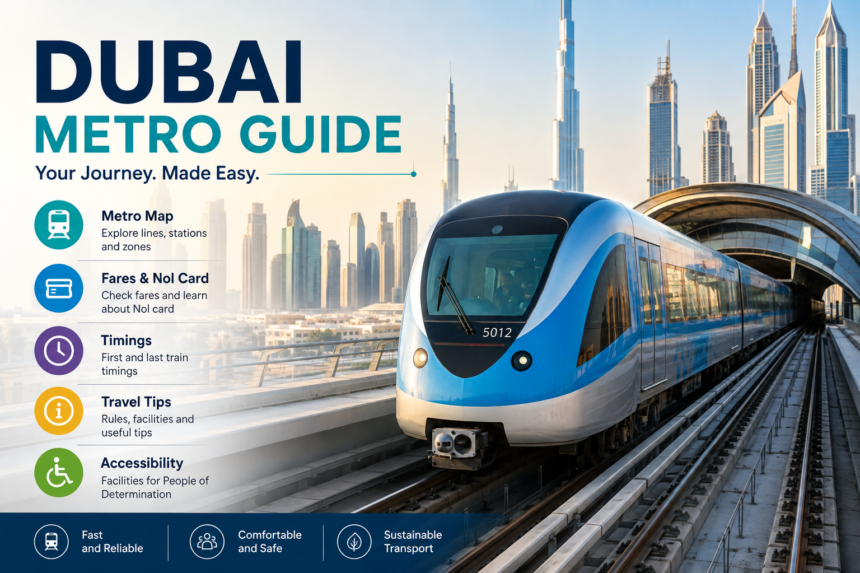
Dubai Metro Guide: Everything You Need to Know About Dubai’s Metro System
Dubai is famous for its futuristic skyline, luxury lifestyle, and world-class transportation network. Among all public transport options, the Dubai Metro stands out as one of the fastest, cleanest, and most efficient metro systems in the world. Whether you’re a tourist exploring iconic attractions or a resident commuting daily, the Dubai Metro offers an affordable and convenient way to travel across the city.
- What is the Dubai Metro?
- Why Use Dubai Metro?
- Dubai Metro Lines
- Red Line
- Green Line
- Major Dubai Metro Stations
- Union Station
- BurJuman Station
- Dubai Mall/Burj Khalifa Station
- Mall of the Emirates Station
- DMCC Station
- Dubai Metro Operating Hours
- Dubai Metro Fare Zones
- Understanding the Nol Card
- Silver Card
- Gold Card
- Blue Card
- Red Ticket
- Dubai Metro Fare Classes
- Standard Class
- Gold Class
- Women’s and Children’s Cabin
- Metro Rules and Etiquette
- Dubai Metro and Airport Connections
- Tourist Attractions Accessible by Dubai Metro
- Burj Khalifa
- Dubai Mall
- Dubai Marina
- Mall of the Emirates
- Dubai Frame
- Dubai Creek
- Gold Souk
- Metro Facilities
- Accessibility
- Park and Ride
- Safety Features
- Tips for Tourists
- Peak Hours
- Benefits for Residents
- Environmental Benefits
- Future Expansion
- Common Mistakes to Avoid
- Frequently Asked Questions
This comprehensive Dubai Metro Guide covers everything you need to know, including metro routes, stations, fares, operating hours, Nol Cards, airport connectivity, travel tips, and frequently asked questions.
What is the Dubai Metro?
The Dubai Metro is a fully automated, driverless rapid transit railway system operated by Dubai’s Roads and Transport Authority (RTA). Since its launch in 2009, it has become one of the city’s most reliable transportation options.
The metro connects major business districts, shopping malls, tourist attractions, residential communities, airports, and commercial centers.
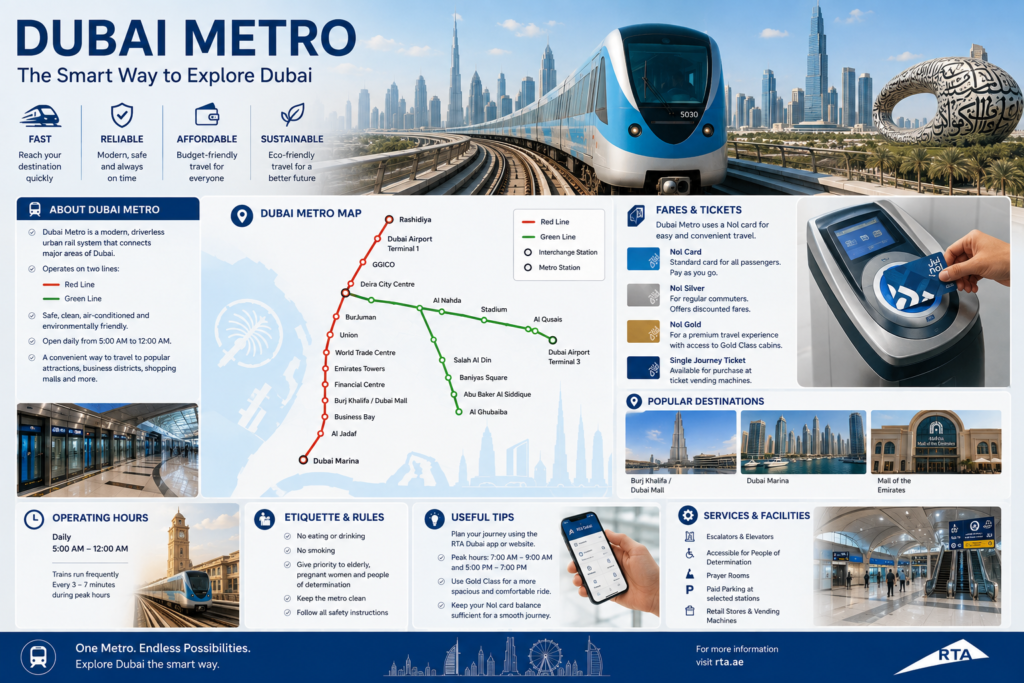
Today, millions of passengers use the Dubai Metro every month because it is:
- Fast
- Affordable
- Air-conditioned
- Environmentally friendly
- Easy to navigate
- Safe for families and solo travelers
Why Use Dubai Metro?
There are many reasons why people prefer the metro over taxis or private vehicles.
Save Time: Dubai roads can become busy during peak hours. The metro avoids traffic completely, making travel quicker.
Cost-Effective: Metro fares are much cheaper than taxis, especially for long-distance journeys.
Comfortable: Every station and train is fully air-conditioned, providing a comfortable travel experience even during Dubai’s hot summers.
Tourist Friendly: Most of Dubai’s famous attractions are easily accessible through metro stations.
Dubai Metro Lines
The Dubai Metro currently has two main operational lines.
Red Line
The Red Line is the busiest metro line in Dubai.
It connects:
- Centrepoint
- Dubai International Airport
- BurJuman
- Financial Centre
- Dubai Mall/Burj Khalifa
- Business Bay
- Mall of the Emirates
- Dubai Marina
- Jumeirah Lakes Towers
- Expo City Dubai
The Red Line serves many of Dubai’s major attractions and business hubs.
Green Line
The Green Line mainly serves older parts of Dubai.
Popular stations include:
- Etisalat
- Al Qusais
- Stadium
- Abu Hail
- Union
- Baniyas Square
- Al Fahidi
- Sharaf DG
- Creek
This route is ideal for visitors exploring traditional Dubai.
Major Dubai Metro Stations
Some stations are particularly important because they connect different parts of the city.
Union Station
One of the largest interchange stations connecting the Red and Green Lines.
Nearby attractions include:
- Deira
- Traditional markets
- Hotels
- Shopping centers
BurJuman Station
Another interchange station connecting both metro lines.
Nearby:
- BurJuman Mall
- Healthcare City
- Government offices
Dubai Mall/Burj Khalifa Station
Perfect for tourists visiting:
- Burj Khalifa
- Dubai Mall
- Dubai Fountain
- Dubai Opera
A covered air-conditioned walkway connects the station to Dubai Mall.
Mall of the Emirates Station
Ideal for visiting:
- Ski Dubai
- Mall of the Emirates
- Luxury shopping outlets
DMCC Station
Gateway to:
- Dubai Marina
- JBR Beach
- Bluewaters Island
Dubai Metro Operating Hours
Metro timings may vary slightly on weekends and public holidays.
Typical operating hours include:
Monday to Thursday
5:00 AM – Midnight
Friday
5:00 AM – 1:00 AM
Saturday
5:00 AM – Midnight
Sunday
8:00 AM – Midnight
Always check the latest schedule before traveling during holidays or special events.
Dubai Metro Fare Zones
Dubai is divided into several travel zones.
Your fare depends on:
- Number of zones crossed
- Type of Nol Card
- Travel class
The system automatically calculates your fare when you tap in and tap out.
Understanding the Nol Card
A Nol Card is required to use the Dubai Metro.
Instead of buying paper tickets each time, passengers simply tap their Nol Card when entering and exiting stations.
Popular Nol Card types include:
Silver Card
The most commonly used card for residents and tourists.
Ideal for regular metro users.
Gold Card
Allows access to Gold Class cabins with more spacious seating.
Perfect for business travelers.
Blue Card
Personalized card mainly for residents.
Offers balance protection if lost.
Red Ticket
Best for tourists making only a few trips.
Can be purchased at metro stations.
Dubai Metro Fare Classes
There are two travel classes.
Standard Class
Affordable and suitable for most passengers.
Gold Class
Offers:
- Premium seating
- Less crowded cabins
- Comfortable travel
Gold Class requires a Gold Nol Card.
Women’s and Children’s Cabin
Dubai Metro has dedicated coaches exclusively for:
- Women
- Children
These cabins provide a more comfortable travel environment.
Men should avoid entering these cabins unless accompanying children where permitted, as fines may apply.
Metro Rules and Etiquette
Passengers are expected to follow RTA regulations.
Important rules include:
- No eating or drinking.
- No chewing gum.
- No smoking.
- Keep stations clean.
- Give priority seats to elderly passengers.
- Respect designated cabins.
- Stand on the right side of escalators.
- Allow passengers to exit before boarding.
Failure to follow the rules may result in fines.
Dubai Metro and Airport Connections
Dubai Metro provides excellent connectivity to Dubai International Airport.
Terminal 1 and Terminal 3 both have metro stations on the Red Line.
This allows travelers to reach:
- Downtown Dubai
- Business Bay
- Dubai Marina
- Mall of the Emirates
- Expo City
Without needing a taxi.
Tourist Attractions Accessible by Dubai Metro
The metro connects many of Dubai’s most popular destinations.
Burj Khalifa
Take the Red Line to Dubai Mall/Burj Khalifa Station.
Dubai Mall
One of the world’s largest shopping malls.
Accessible directly from the metro walkway.
Dubai Marina
Travel to DMCC or Sobha Realty Station.
Enjoy waterfront dining and evening walks.
Mall of the Emirates
Home to Ski Dubai and hundreds of international brands.
Dubai Frame
Nearest station:
Max Station, followed by a short taxi ride or walk.
Dubai Creek
Take the Green Line to Creek Station.
Explore traditional Dubai and dhow cruises.
Gold Souk
Reach via Al Ras Station.
Perfect for shopping jewelry and souvenirs.
Metro Facilities
Dubai Metro stations offer excellent facilities.
Passengers can enjoy:
- Free Wi-Fi in many stations
- Elevators
- Escalators
- Prayer rooms
- Restrooms
- Retail shops
- ATMs
- Customer service desks
- Parking at selected stations
Accessibility
Dubai Metro is designed to accommodate passengers with disabilities.
Features include:
- Wheelchair access
- Tactile paving
- Elevators
- Audio announcements
- Priority seating
- Accessible ticket machines
Park and Ride
Several metro stations offer park-and-ride facilities.
This allows commuters to park their vehicles and continue their journey using the metro.
Popular stations include:
- Centrepoint
- Etisalat
- Jabal Ali
Safety Features
Dubai Metro is considered one of the safest public transport systems worldwide.
Safety features include:
- CCTV surveillance
- Security personnel
- Emergency communication systems
- Platform screen doors
- Fire safety systems
Tips for Tourists
If you’re visiting Dubai for the first time, these tips can make your metro journey smoother:
- Purchase a Silver Nol Card for multiple trips.
- Avoid rush hours if carrying luggage.
- Download the RTA Dubai app.
- Keep your Nol Card topped up.
- Wear comfortable shoes.
- Follow station signs in English and Arabic.
- Keep drinking water for after exiting stations, as food and beverages are not allowed inside paid areas.
Peak Hours
The metro becomes busiest during:
- 7:00 AM to 9:00 AM
- 5:00 PM to 7:00 PM
Tourists may prefer traveling outside these hours for a more comfortable experience.
Benefits for Residents
Residents use the metro because it:
- Reduces commuting costs
- Saves fuel expenses
- Avoids traffic congestion
- Offers predictable travel times
- Supports sustainable transportation
Environmental Benefits
Dubai Metro contributes significantly to reducing carbon emissions.
Benefits include:
- Less traffic congestion
- Lower fuel consumption
- Reduced pollution
- Sustainable urban mobility
The driverless electric trains make public transportation more environmentally friendly.
Future Expansion
Dubai continues expanding its public transport network to support population growth and tourism.
Future developments may include:
- Additional metro stations
- Improved connectivity
- New residential links
- Integration with smart mobility solutions
These projects aim to make commuting even easier for residents and visitors.
Common Mistakes to Avoid
Many first-time visitors make simple mistakes.
Avoid these by remembering:
- Always tap in and tap out with your Nol Card.
- Stay out of Gold Class unless you have the correct ticket.
- Do not enter the Women’s and Children’s cabin unless permitted.
- Keep enough balance on your Nol Card.
- Follow all station announcements and signage.
- Avoid blocking train doors during boarding.
Frequently Asked Questions
Q1. Is the Dubai Metro safe?
Ans: Yes. It is one of the safest metro systems in the world, with CCTV monitoring, security staff, and strict regulations.
Q2. Can tourists use the Dubai Metro?
Ans: Absolutely. Tourists can purchase a Red Ticket or Silver Nol Card and travel throughout the network with ease.
Q3. Does the Dubai Metro reach the airport?
Ans: Yes. The Red Line serves Dubai International Airport Terminals 1 and 3, making it convenient for travelers.
Q4. Can I carry luggage?
Ans: Yes. Reasonable-sized luggage is permitted, making the metro a popular option for airport transfers.
Q5. Is Wi-Fi available?
Ans: Many stations and transport services provide Wi-Fi access, helping passengers stay connected during their journey.
Q6. Are food and drinks allowed?
Ans: No. Eating and drinking inside trains and paid station areas is prohibited and may result in a fine.
Q7. Is the Dubai Metro air-conditioned?
Ans: Yes. All trains and stations are fully air-conditioned, ensuring a comfortable journey year-round.
Final Thoughts
The Dubai Metro is much more than a public transportation system—it’s one of the city’s greatest conveniences. Offering fast, affordable, clean, and reliable travel, it connects key business districts, world-famous attractions, shopping destinations, residential neighborhoods, and Dubai International Airport with ease.
Whether you’re a first-time visitor exploring landmarks like Burj Khalifa and Dubai Marina or a resident commuting daily, the metro provides an efficient alternative to driving and helps you avoid traffic congestion. By using a Nol Card, following station guidelines, and planning your journey in advance, you can enjoy a smooth and stress-free travel experience.
As Dubai continues to expand its world-class transport infrastructure, the metro remains a cornerstone of sustainable urban mobility and an essential part of experiencing everything the city has to offer. For anyone planning a trip to Dubai, understanding how the metro works will save both time and money while making it easier to explore this vibrant global destination.
Do follow us on Instagram
Read More – Dubai Metro Timings 2026: Complete Guide to Operating Hours