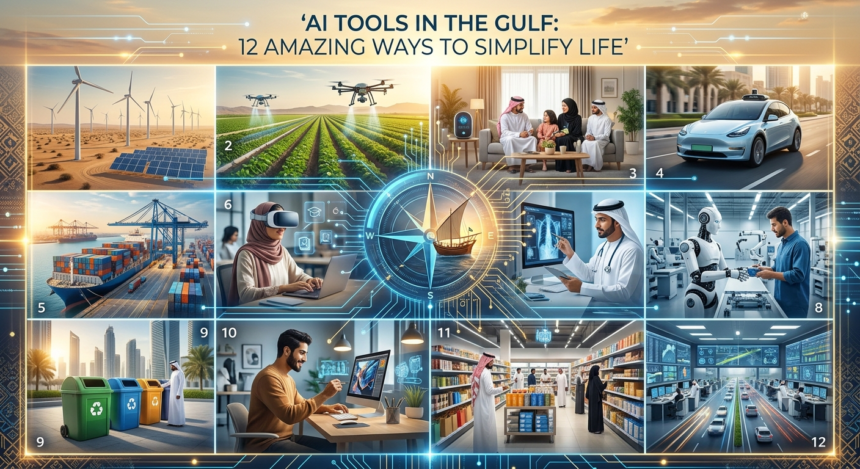
How AI Tools Can Make Everyday Life Easier in the Gulf: 12 Amazing Benefits
Introduction: How AI Is Making Everyday Life Easier in the Gulf
Artificial Intelligence (AI) is becoming an increasingly useful part of our lives. It simplifies people’s daily tasks, helps in managing time more effectively, and assists in making sound decisions. In the Gulf region—known for its modern cities, digital services, diverse communities, and fast-paced lifestyle—AI tools offer practical ways to streamline various aspects of life, including work, education, shopping, travel, and household management.
- Introduction: How AI Is Making Everyday Life Easier in the Gulf
- 1. AI Assistants Make Daily Planning Easier
- 2. AI Makes Travel and Commuting More Convenient
- 3. AI Translation Tools Help Gulf Residents Communicate
- 4. AI Helps Students Learn More Effectively
- 5. AI Improves Productivity at Work
- 6. AI Makes Shopping and Budget Planning Simpler
- 7. AI Helps Families Manage Household Responsibilities
- 8. AI Supports Health, Fitness, and Personal Well-Being
- 9. AI Helps Small Businesses Grow in the Gulf
- 10. AI Makes Digital Government and Customer Services Easier to Navigate
- 11. AI Helps People Explore Gulf Culture, Food, and Entertainment
- 12. AI Makes Learning New Skills and Building a Career Easier
- Best AI Tools for Everyday Life in the Gulf
- The Future of AI and Everyday Life in the Gulf
- Conclusion: Make Everyday Life Simpler with AI Tools in the Gulf
- Frequently Asked Questions (FAQs)
Whether you live in Dubai, Abu Dhabi, Riyadh, Doha, Kuwait City, Manama, or Muscat, you have likely encountered AI in navigation apps, online shopping recommendations, customer service chatbots, translation tools, and digital assistants. These technologies help residents—including expatriates, students, professionals, entrepreneurs, and families—manage their daily tasks with greater ease.
The increasing availability of AI-based applications does not mean that you need deep technical knowledge to use them. Many of these tools function through simple text prompts, voice commands, images, or uploaded documents. For example, an employee might use an AI assistant to draft an email, a student could ask for an explanation of a complex topic, and a family might create a weekly meal plan tailored to their budget.
However, AI is most beneficial when used thoughtfully. It can assist in human decision-making, reduce the burden of repetitive tasks, and improve access to information; yet, it cannot guarantee that every answer will be accurate or correct.
By using these tools responsibly, people in the Gulf region can better leverage the benefits of digital life.
In this guide, we explore 12 amazing ways AI tools in the Gulf can make everyday life easier, with practical examples, useful applications, and tips for getting started.
1. AI Assistants Make Daily Planning Easier
Managing work schedules, family responsibilities, appointments, shopping lists, and personal goals can become overwhelming, particularly for people balancing demanding jobs with busy city life. AI assistants can help organize these responsibilities into manageable plans.
Tools such as ChatGPT, Google Gemini, and Microsoft Copilot can generate schedules, summarize information, suggest priorities, and help users prepare for upcoming tasks. Instead of spending time deciding how to organize the day, users can describe their responsibilities and ask for a practical plan.
For example, a professional working in Dubai might ask an AI assistant to create a weekday routine that includes office hours, commuting, exercise, grocery shopping, and family time. A university student in Qatar could request a revision timetable that fits around classes and assignment deadlines.
AI can also help break large projects into smaller steps. If you need to prepare for an interview, organize a family event, or complete a work presentation, an AI assistant can suggest a checklist and a realistic timeline.
Everyday uses include:
- Creating daily and weekly schedules.
- Prioritizing urgent and important tasks.
- Preparing shopping and packing lists.
- Planning family activities and personal goals.
- Generating reminders and checklists.
- Summarizing long documents and messages.
AI-generated plans should be adjusted to suit your actual commitments. For reminders and appointments, use a calendar or task-management app to confirm that important dates are saved correctly.
2. AI Makes Travel and Commuting More Convenient
Travel is a major part of life in the Gulf. Residents commute to work, travel between emirates and cities, visit shopping centres, attend business meetings, and explore regional destinations. AI-powered navigation and travel-planning features can help make these journeys more convenient.
Navigation applications such as Google Maps and Waze use data-driven systems to estimate journey times, identify traffic patterns, and suggest alternative routes where available. These features can be especially useful during busy commuting periods, major events, roadworks, or holiday travel.
AI assistants can also help users prepare itineraries. Someone planning a weekend in Oman, a cultural visit in Qatar, or a family holiday in Saudi Arabia can request a suggested route, a list of attractions, a packing checklist, and a daily budget.
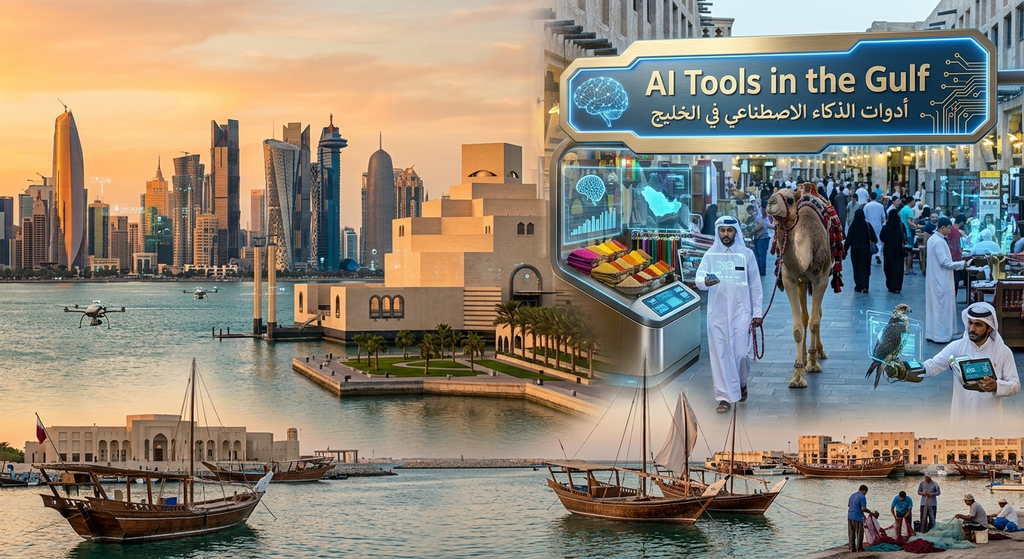
For example, a visitor to Doha could ask an AI assistant to arrange a day around Souq Waqif, the Museum of Islamic Art, and the Corniche, taking into account travel time, meal breaks, and personal interests. The suggested plan should then be checked against current opening hours, transport options, and entry requirements.
AI can also help travellers understand unfamiliar travel information by summarizing booking confirmations, explaining itinerary details, or translating useful phrases.
How AI improves travel planning:
- Suggests itineraries based on available time and interests.
- Helps compare destinations and activities.
- Organizes booking information and packing lists.
- Supports translation when communicating abroad.
- Helps users understand routes and travel instructions.
- Estimates expenses for accommodation, transport, and activities.
Always verify traffic conditions, visa rules, flight information, and transport schedules through reliable, current sources. AI suggestions are a starting point, not a substitute for official travel information.
3. AI Translation Tools Help Gulf Residents Communicate
The Gulf is home to people from many countries, creating multilingual workplaces, schools, neighbourhoods, and businesses. Arabic is widely used across the region, while English and numerous other languages are also common in everyday communication.
AI translation tools can help people understand messages, read unfamiliar information, and communicate more comfortably across language barriers. Applications such as Google Translate and Microsoft Translator offer translation features, while some AI assistants can explain the meaning and tone of a sentence or help rewrite it for a particular audience.
For an expatriate who is learning Arabic, AI can explain common expressions, provide pronunciation guidance where supported, and create short practice conversations. A worker can use translation assistance to understand a routine workplace message, while a small business owner can draft an initial version of a customer response in another language.
AI writing tools can also help users adjust communication styles. For example, you can ask an assistant to rewrite a message in polite professional English or simplify a complicated paragraph so it is easier to understand.
Useful applications include:
- Translating everyday phrases and messages.
- Practising Arabic or English vocabulary.
- Understanding general instructions and notices.
- Drafting multilingual customer-service replies.
- Improving grammar and professional writing.
- Preparing for conversations in unfamiliar situations.
Translation is not always reliable, particularly with regional dialects, legal documents, medical instructions, and culturally sensitive expressions. For important matters, use a qualified human translator or an authoritative source.
4. AI Helps Students Learn More Effectively
Education is another area where AI tools in the Gulf can provide practical benefits. Students in schools, colleges, universities, and professional training programmes can use AI to understand concepts, organize revision, practise skills, and prepare for assessments.
An AI assistant can explain a difficult mathematical concept step by step, create practice questions, summarize a chapter, or suggest a revision schedule. Students preparing for English-language examinations can practise conversations, improve vocabulary, and receive feedback on writing.
For example, a student in Kuwait preparing for a computer science examination could request beginner-friendly explanations of programming concepts, followed by practice questions and worked examples. A professional in Saudi Arabia could use AI to structure a learning plan for data analysis, project management, or digital marketing.
AI can also support parents who want to organize educational activities for children. It can suggest age-appropriate reading exercises, creative projects, or revision games, although adults should check that the content is suitable.
Ways students can use AI responsibly:
- Ask for explanations rather than only final answers.
- Generate quizzes and practice exercises.
- Create revision schedules.
- Improve grammar and writing clarity.
- Explore examples of programming and mathematics.
- Identify topics that require additional study.
Students should follow their institution’s rules on AI use. Submitting generated work as original work may violate academic policies. The most effective approach is to use AI as a tutor that encourages understanding, independent thinking, and practice.
5. AI Improves Productivity at Work
Professionals across the Gulf work in industries such as finance, healthcare, construction, hospitality, logistics, education, retail, and technology. Many of these roles involve repetitive writing, document preparation, data organization, communication, and reporting.
AI productivity tools can reduce the time spent on some of these activities. Microsoft Copilot, Google Workspace AI features, and ChatGPT can assist with drafting emails, summarizing documents, brainstorming ideas, preparing meeting agendas, and outlining presentations, depending on the product and subscription.
For instance, a sales executive can ask an AI assistant to structure a follow-up email after a meeting. A human resources professional can create a first draft of an onboarding checklist. A project coordinator can turn a list of tasks into a weekly status-report template.
AI can also help people prepare for interviews, improve CV wording, practise workplace conversations, and identify skills to develop. For job seekers in competitive employment markets, these features can be useful when preparing applications for roles in administration, customer service, engineering, hospitality, and IT.
Workplace tasks AI can support:
- Drafting and editing professional emails.
- Summarizing lengthy documents.
- Preparing meeting agendas and action lists.
- Creating presentation outlines.
- Organizing project tasks and timelines.
- Generating initial report structures.
- Brainstorming solutions and ideas.
Before uploading workplace documents, check your employer’s policies. Confidential contracts, employee records, financial information, customer data, and internal business plans should not be entered into unauthorized AI services. AI-generated facts and calculations also require human review.
6. AI Makes Shopping and Budget Planning Simpler
Managing everyday expenses is important for residents and expatriates living in Gulf cities, where spending may include rent, transport, groceries, education, utilities, and family commitments. AI can help people plan purchases, compare options, and create budgets.
A user can ask an AI assistant to build a monthly budget from income and expense categories they provide. It can suggest ways to organize spending, identify areas to review, and create a grocery list that fits a specified amount.
AI-powered shopping platforms may also recommend products based on browsing behaviour, previous purchases, and stated preferences. These recommendations can help people discover relevant items, but they may also encourage unnecessary purchases.
For example, a family in Bahrain could ask an AI assistant to develop a weekly grocery plan featuring affordable meals and ingredients that can be reused across several dishes. A resident in the UAE could compare the features of household appliances before checking current prices and warranties with retailers.
AI can help with:
- Building monthly and weekly budgets.
- Planning grocery shopping around a spending limit.
- Comparing product features.
- Creating meal plans from available ingredients.
- Organizing recurring household expenses.
- Identifying subscriptions or spending categories to review.
AI should not be treated as a financial adviser with access to your complete financial situation. Check prices, delivery charges, warranty terms, return policies, and product specifications before buying. Avoid sharing bank passwords, payment-card security codes, or other sensitive financial information with AI tools.
7. AI Helps Families Manage Household Responsibilities
Running a household involves more than cleaning and cooking. Families must coordinate grocery shopping, school schedules, appointments, meal preparation, maintenance, and monthly expenses. AI tools can help organize these responsibilities and reduce the mental effort required to manage everyday routines.
For example, a family living in Abu Dhabi could ask an AI assistant to prepare a seven-day meal plan, create a grocery checklist, and suggest quick dinner options for busy weekdays. Parents can use AI to develop activity ideas for children, plan birthday celebrations, or organize a holiday packing list.
AI can also suggest ways to make household routines more efficient. If you have a busy week ahead, you can list your commitments and ask for a realistic schedule that balances work, cooking, errands, exercise, and rest.
Practical household uses include:
- Creating weekly meal plans and grocery lists.
- Organizing family calendars and task assignments.
- Planning celebrations and weekend activities.
- Generating age-appropriate learning activities.
- Preparing household maintenance checklists.
- Finding ways to reduce food waste.
AI-generated meal plans should account for dietary requirements, allergies, and cultural preferences that you specify. Always verify ingredients and food safety information, especially when allergies or medical dietary restrictions are involved.
8. AI Supports Health, Fitness, and Personal Well-Being
Busy routines, long working hours, and the demands of city life can make it difficult to maintain healthy habits. AI-powered fitness applications and digital assistants can help users organize exercise, monitor progress, and build more consistent routines.
Depending on the application, AI features may suggest workouts, track activity patterns, create meal-planning ideas, or provide reminders to move throughout the day. People who prefer exercising at home can ask an AI assistant to outline a beginner-friendly routine using minimal equipment.
For example, a resident of Muscat could request a weekly walking and strength-training plan that fits around work commitments and outdoor temperatures. Someone working in Riyadh could ask for indoor exercise ideas during particularly hot weather.
AI can also help users prepare questions for a healthcare appointment or explain general medical terminology in simpler language. However, these tools cannot reliably diagnose every condition or replace professional medical advice.
Ways AI may support healthier routines:
- Organizing exercise schedules.
- Suggesting beginner-friendly fitness activities.
- Tracking habits through compatible applications.
- Preparing questions for medical appointments.
- Explaining general health information.
- Encouraging consistent sleep and activity routines.
Health-related recommendations should be checked against trustworthy medical guidance. Do not rely on an AI assistant for emergency decisions, medication changes, or diagnosis. Protect health information and review the privacy settings of any connected fitness or wellness application.
9. AI Helps Small Businesses Grow in the Gulf
Small businesses play an important role in the Gulf economy. Cafés, restaurants, online shops, tourism operators, salons, independent consultants, and home-based businesses often need to manage marketing, customer communication, administration, and sales with limited resources.
AI tools can help entrepreneurs complete some of these tasks more efficiently without requiring a large marketing or administrative team. They can generate initial drafts of social media captions, brainstorm promotional campaigns, suggest website content, and organize frequently asked customer questions.
For example, a café owner in Doha could use AI to develop a month’s worth of social media ideas, draft descriptions for menu items, and create a promotional calendar for weekends and public holidays. An online seller in Kuwait could ask for clearer product descriptions and customer-service message templates.
AI can also help business owners analyse customer feedback, categorize survey responses, or structure a basic business plan. However, the quality of the results depends on the information provided and the capabilities of the particular tool.
AI applications for small businesses include:
- Drafting social media posts and marketing emails.
- Creating first drafts of website content.
- Developing product descriptions.
- Preparing customer-service templates.
- Organizing frequently asked questions.
- Summarizing non-sensitive customer feedback.
- Brainstorming promotional ideas and campaigns.
Business owners should review all AI-generated content before publishing it. Check local advertising requirements, commercial licensing, intellectual property rights, and applicable privacy laws. AI should support genuine customer relationships rather than generate misleading claims or fake reviews.
10. AI Makes Digital Government and Customer Services Easier to Navigate
Across the Gulf, government entities and private organizations increasingly offer digital services, online portals, and automated customer support. AI-powered chatbots and virtual assistants can help users locate information, understand general procedures, and find relevant services when those capabilities are available.
For residents, everyday administrative tasks may involve renewing documents, understanding application requirements, checking service procedures, or contacting a utility provider. An AI assistant can help explain a set of instructions in plain language and prepare a checklist of documents to verify.
For example, an expatriate who needs to understand a residency-related procedure could ask AI to summarize the official guidance they provide. The assistant may help identify important terms or questions to ask, but the user should confirm the current rules directly with the relevant government authority.
Similarly, customer-service chatbots may help users find information about bills, appointments, deliveries, and account services. Their usefulness depends on the provider, the services supported, and whether the chatbot can access current information.
AI can assist with:
- Explaining general administrative procedures.
- Summarizing official instructions.
- Preparing checklists for applications.
- Finding relevant questions to ask a service provider.
- Navigating supported customer-service channels.
- Rewriting formal requests in clear language.
Always use official government websites and verified service channels for applications, payments, legal requirements, and personal records. Never assume that an AI-generated answer reflects the latest regulations or guarantees approval.
11. AI Helps People Explore Gulf Culture, Food, and Entertainment
The Gulf offers a rich combination of heritage, architecture, food, museums, traditional markets, coastal experiences, and contemporary entertainment. AI tools can help residents and visitors discover activities that match their interests, available time, and budget.
A traveller in Saudi Arabia might ask for a heritage-focused itinerary in AlUla. Someone visiting Qatar could request a cultural day featuring museums, traditional markets, and waterfront attractions. A family in Bahrain could ask for ideas for a weekend outing that combines outdoor activities with indoor entertainment.
AI can also help people explore regional cuisine. Users can request recipes for familiar dishes, ask about traditional ingredients, or create a shopping list for a home-cooked meal. Those interested in Gulf heritage can ask for introductory explanations of traditional crafts, architecture, music, and customs.
Ideas for using AI to explore the region include:
- Creating weekend itineraries.
- Discovering museums and cultural attractions.
- Planning family-friendly outings.
- Finding recipe ideas inspired by Gulf cuisine.
- Learning basic Arabic greetings and cultural expressions.
- Building a list of activities within a specific budget.
Use AI to generate ideas, then check opening hours, event dates, ticket availability, dress expectations, and transport details with official sources. Cultural information can vary by country and community, so approach recommendations with curiosity and respect.
12. AI Makes Learning New Skills and Building a Career Easier
The evolving business landscape in the Gulf region constantly creates new opportunities for individuals looking to enhance their professional skills, explore new career paths, or launch a business. AI can make the learning process more accessible; it assists users in identifying skill gaps, creating study plans, practicing for interviews, and grasping unfamiliar concepts. In short, AI can simplify your learning journey by helping you pinpoint skill gaps, develop study plans, prepare for interviews, and understand new or complex topics.
For example, a graduate in the UAE could ask an AI assistant to create a six-week learning plan for data analytics. A professional in Qatar might practise common interview questions for a customer-service position, while an aspiring entrepreneur in Oman could use AI to structure an initial business proposal.
AI can also help users improve their CVs, draft professional emails, prepare LinkedIn content, and practise workplace communication. These applications are especially helpful when users want to improve their writing or gain confidence before an interview.
Career-development uses include:
- Creating personalized learning plans.
- Practising job interviews.
- Improving CVs and cover letters.
- Learning introductory coding concepts.
- Developing presentation and communication skills.
- Brainstorming portfolio projects.
- Organizing professional development goals.
AI cannot guarantee employment, verify every job advertisement, or replace practical experience. Check job vacancies through trusted recruitment channels, tailor applications honestly, and make sure you can demonstrate any skill listed on your CV.
Best AI Tools for Everyday Life in the Gulf
Choosing an AI tool depends on the task you want to complete. Some applications focus on writing and reasoning, while others specialize in navigation, translation, organization, or workplace productivity.
| Tool | Everyday use | Example |
|---|---|---|
| ChatGPT | Writing, planning, explanations, brainstorming | Create a weekly routine |
| Google Gemini | Research assistance and everyday productivity | Organize travel ideas |
| Microsoft Copilot | Workplace writing and supported productivity tasks | Draft a meeting summary |
| Google Translate | Language translation | Understand common Arabic phrases |
| Google Maps | Navigation and route planning | Check a commute |
| Waze | Navigation and traffic information | Explore alternative routes |
| Notion AI | Notes and supported workspace tasks | Organize project notes |
| Canva AI features | Design and content creation | Prepare a social media graphic |
Features, availability, pricing, and language support can vary by country, subscription, device, and product version. Some tools also offer free and paid tiers, so check the current terms before subscribing.
The Future of AI and Everyday Life in the Gulf
AI is likely to become more closely integrated with digital services, workplaces, education, transport, retail, and household technology. As tools improve, people may find it easier to move between tasks such as planning a journey, translating information, preparing a document, and organizing a schedule.
For Gulf residents, the most meaningful developments may not always be dramatic technological breakthroughs. They may be small improvements that make routine tasks less time-consuming: clearer communication, more accessible learning, easier service navigation, and better organization.
The benefits will depend on the reliability of the tools, the quality of digital infrastructure, local language support, affordability, and the ability of users to evaluate AI-generated information. Digital literacy will remain important as AI becomes more common.
Rather than treating AI as a replacement for human skills, individuals and businesses can use it to strengthen their capabilities. People who learn to write clear prompts, verify results, protect data, and combine AI assistance with their own expertise will be better positioned to benefit from these developments.
Conclusion: Make Everyday Life Simpler with AI Tools in the Gulf
AI tools in the Gulf can help make everyday life more manageable by supporting travel planning, communication, education, workplace productivity, shopping, household organization, fitness, and career development. From a student preparing for examinations in Kuwait to an entrepreneur promoting a business in Qatar or a professional organizing a busy schedule in the UAE, practical AI applications can save time and make information easier to work with.
The best starting point is simple: choose one task that regularly takes too much time, test a suitable AI tool, and review the results carefully. As you become more familiar with the technology, you can explore additional applications that fit your needs.
AI is not a substitute for human judgment, local knowledge, or personal relationships. Used thoughtfully, however, it can become a valuable everyday assistant for people living, working, studying, and travelling across the Gulf.
Frequently Asked Questions (FAQs)
1. What are the best AI tools in the Gulf?
Useful options include ChatGPT, Google Gemini, Microsoft Copilot, Google Translate, Google Maps, Waze, Notion AI, and Canva’s AI features. The best choice depends on whether you need help with writing, translation, navigation, productivity, organization, or design.
2. Can I use AI tools for free in the UAE, Saudi Arabia, and Qatar?
Some AI applications offer free access or limited free features, while others require subscriptions for advanced capabilities. Availability and pricing can vary by country, account, and product version. Check the provider’s official website or app for current details.
3. How can AI help expatriates living in the Gulf?
AI can assist expatriates with language learning, translation, travel planning, budgeting, CV preparation, interview practice, and understanding general administrative instructions. Important immigration and residency requirements should always be verified through official government sources.
4. Can AI help me find a job in the Gulf?
AI can help improve your CV, draft cover letters, practise interviews, identify relevant skills, and prepare professional emails. It cannot guarantee a job, so verify vacancies, apply through trusted channels, and ensure your application accurately represents your experience.
5. Is it safe to use AI apps for personal tasks?
AI apps can be useful, but users should review privacy policies and settings before sharing information. Avoid entering passwords, payment security codes, identification details, confidential business records, or sensitive personal data unless the service is specifically authorized and appropriate for that information.
6. Can AI tools understand Arabic and Gulf dialects?
Many AI tools support Arabic, but their accuracy varies by application and dialect. They may handle Modern Standard Arabic more consistently than some regional expressions. Review translations carefully, particularly for formal, legal, or culturally sensitive communication.
7. How can small businesses in the Gulf benefit from AI?
Small businesses can use AI to draft marketing content, organize customer-service responses, prepare product descriptions, brainstorm promotions, and structure business plans. Human review remains important for accuracy, brand consistency, customer privacy, and compliance with local requirements.
8. Will AI replace jobs in the Gulf?
AI may automate some repetitive tasks and change how certain jobs are performed, but its overall impact will vary by industry and role. Learning digital skills, critical thinking, communication, and responsible AI use can help workers adapt to changing workplace needs.
9. Can AI help reduce daily expenses in the Gulf?
AI can help users build budgets, plan affordable meals, compare product features, and identify spending categories to review. Savings are not guaranteed, and users should verify actual prices, fees, and financial information before making decisions.
10. What is the easiest way to start using AI?
Choose a trusted application and use it for one simple task, such as drafting an email, creating a shopping list, explaining a study topic, or planning a weekend. Give clear instructions, check the result, and expand your use as you gain confidence.
Do follow us on Instagram
Read More – Doha Travel Guide: 12 Amazing Attractions & Unforgettable Experiences