


Turning 22 Years of Experience Into Culinary Leadership
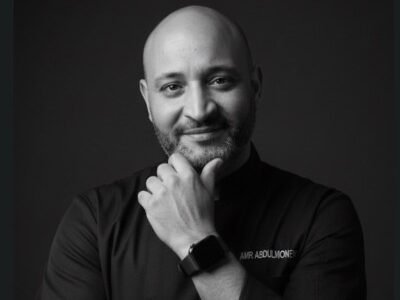
For Amr Abdulmonem, a successful kitchen is not simply a place where food is prepared. It is a space where discipline, creativity, teamwork and leadership must work together every day.
- More Than Two Decades Inside Professional Kitchens
- Amr Abdulmonem Sees Leadership Beyond the Chef’s Jacket
- Turning Kitchen Operations Into Structured Systems
- The Challenge of Opening Before Opening Day
- Menu Engineering Connects Creativity With Business
- Training the Next Generation of Culinary Professionals
- High Volume Service Tests Every Part of Leadership
- Creating Standards Guests May Never Notice
- Building Teams That Can Perform Under Pressure
- Revenue Matters Alongside Culinary Creativity
- Saudi Arabia Creates a New Stage for Hospitality Leaders
- The Human Side of Culinary Success
- Success Becomes Stronger When Knowledge Is Shared
- Amr Abdulmonem Continues Building Through People and Performance
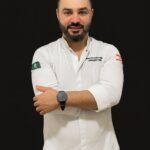
With more than 22 years of experience in the culinary and hospitality industry, Amr has built a career that goes far beyond cooking. His professional journey reflects the evolution of a chef who learned how to manage people, design kitchen operations, develop menus, train teams and deliver consistent experiences even in demanding, high-volume environments.
Today, he works as an Executive Chef and continues to build his reputation around culinary excellence, operational leadership and the development of people around him.
His story is particularly relevant in an industry where success is often seen only through the final plate. Behind every dining experience are hours of planning, preparation, coordination, training and decision-making. Amr’s career shows how much leadership happens before a guest ever sees the food.
More Than Two Decades Inside Professional Kitchens
Twenty-two years in hospitality means witnessing major changes in how kitchens operate.
Customer expectations have evolved. Technology has changed. Menus have become more diverse. Food safety requirements have become more detailed, and hospitality businesses are under constant pressure to deliver quality while controlling costs.
Amr’s professional experience has developed alongside those changes.
Over the years, he has gained experience not only in culinary production but also in the systems required to make a kitchen perform properly.
That includes commercial kitchen planning, equipment selection, operational preparation, menu development, team training and revenue-focused decision-making.
This broader understanding has helped shape him into more than an experienced chef. It has developed him into an operational leader capable of looking at the complete culinary business.
Amr Abdulmonem Sees Leadership Beyond the Chef’s Jacket
The title Executive Chef often creates an image of someone standing at the centre of a kitchen directing every detail.
In reality, the strongest executive chefs gradually learn that leadership is less about controlling every plate and more about creating a team capable of delivering quality consistently.
Amr’s professional approach reflects that idea.
Developing junior and senior employees has remained an important part of his work. Training is not limited to demonstrating a recipe. It includes practical skills, theoretical knowledge, standards, organisation and the confidence required to perform under pressure.
A kitchen can have strong equipment and an impressive menu, but without a capable team, consistency eventually suffers.
That is why developing people becomes one of the most important responsibilities of an experienced culinary leader.
Turning Kitchen Operations Into Structured Systems
Professional hospitality kitchens operate very differently from home kitchens.
A large restaurant, hotel or catering operation can involve hundreds or even thousands of meals, multiple departments, strict food safety requirements and tight service schedules.
Amr has developed experience in commercial kitchen layout design, fitting and equipment planning.
This requires understanding how a kitchen actually moves.
Ingredients need to arrive efficiently. Storage areas need to make sense. Preparation sections must support different culinary teams. Cooking equipment must be positioned logically. Hygiene standards must be protected throughout the process.
A poorly designed kitchen creates unnecessary movement, delays and operational pressure.
A thoughtfully planned kitchen can improve productivity before the first dish is ever prepared.
That technical understanding has become an important part of Amr’s wider culinary profile.
The Challenge of Opening Before Opening Day
Pre-opening experience is one of the most demanding areas in hospitality.
Long before guests arrive, a culinary team must create operating procedures, staffing structures, menus, equipment plans, training systems and quality standards.
Nothing can simply be left to chance.
Amr’s experience includes developing both operational and managerial plans for pre-opening environments.
This side of hospitality rarely receives the same attention as the opening celebration itself, but it often determines whether a new operation starts smoothly or spends months correcting avoidable problems.
Successful pre-opening leadership requires patience because many decisions must be made before real customer behaviour can be observed.
It also requires the ability to anticipate problems.
That skill usually comes from experience.
Menu Engineering Connects Creativity With Business
A good menu must excite the customer, but it must also work commercially.
This is where menu engineering becomes important.
Amr’s work includes menu development and engineering, an area that combines creativity with practical business thinking.
Every dish carries costs.
Ingredients must be sourced. Preparation requires labour. Storage creates operational requirements. Waste affects profitability. Pricing must make sense to customers while still supporting the business.
The best menu is therefore not automatically the one with the largest number of dishes.
It is the menu that creates a strong identity while allowing the kitchen to maintain quality, consistency and efficiency.
For an experienced Executive Chef, understanding this balance becomes essential.
Training the Next Generation of Culinary Professionals
One of the most meaningful parts of Amr’s professional journey has been his involvement in culinary education and training.
His public professional background includes experience connected with culinary academies and the development of facilities, standards and processes used for culinary training.
That responsibility places him in an interesting position between hospitality operations and education.
A chef working only for immediate service focuses on what needs to happen today.
A chef involved in training must think about what another professional needs to understand for the next ten years.
That changes the responsibility.
It requires knowledge to be explained clearly and skills to be demonstrated in ways that others can repeat.
Amr has also shared educational culinary material publicly, including explanations of different cooking methods and heat-transfer techniques.
It reflects an interest not only in practising the profession but also in communicating its foundations.
High Volume Service Tests Every Part of Leadership
Large hospitality events reveal the strength of a culinary operation very quickly.
There is little room for improvisation when hundreds of guests need to be served at the same time.
Recent professional activity shared by Amr highlighted an event connected with the Saudi National Fishing Tournament in 2025, where the culinary and food and beverage teams handled dinner service for approximately 1,300 guests.
The scale itself is significant.
But the more important story is what that number represents behind the scenes.
Producing food for a large event requires purchasing, preparation, staffing, timing, temperature control, service coordination and continuous communication between departments.
It becomes a test of systems rather than simply cooking ability.
Amr publicly credited his wider culinary and food and beverage teams for the professionalism and teamwork behind the event.
That acknowledgement reflects an important leadership principle.
Major hospitality achievements are rarely individual achievements.
Creating Standards Guests May Never Notice
Some of the most important work in hospitality is designed to remain invisible.
Guests usually notice food presentation, taste and service.
They do not necessarily see the systems protecting food safety behind the scenes.
Recent professional activity associated with Amr also highlighted the achievement of an Intertek Cristal HACCP regional certification involving the culinary operation.
Food safety certification requires disciplined processes and consistent implementation.
It affects storage, temperature management, hygiene, preparation, documentation and staff behaviour.
For a culinary leader, food safety is not separate from hospitality quality.
It is part of it.
The best guest experience depends on trust, and that trust starts with professional standards long before the food reaches the table.
Building Teams That Can Perform Under Pressure
Professional kitchens are demanding environments.
There are deadlines every day.
Orders can arrive at the same time. Events change. Suppliers face delays. Equipment can fail. Customer expectations remain high regardless of what is happening behind the kitchen doors.
Experienced chefs gradually understand that pressure spreads quickly through a team.
Leadership therefore becomes emotional as well as operational.
A strong leader has to create clarity.
People need to understand their responsibilities. They need standards they can follow and systems that reduce unnecessary confusion.
Amr’s emphasis on developing both junior and senior kitchen employees demonstrates the importance he places on creating stronger teams rather than relying only on individual talent.
Knowledge becomes more valuable when it is shared.
Revenue Matters Alongside Culinary Creativity
Modern Executive Chefs are also business leaders.
Food quality remains central, but an operation cannot succeed over the long term without financial discipline.
Amr’s experience includes revenue maximisation and pricing strategy.
That means looking beyond the emotional side of food and understanding the numbers behind it.
Menu pricing must account for ingredient costs, labour, operating expenses and customer expectations.
Poor pricing can damage even a popular restaurant.
Strong pricing strategy, on the other hand, allows the business to remain competitive while protecting quality.
This combination of culinary creativity and commercial understanding is becoming increasingly important across the hospitality sector.
Saudi Arabia Creates a New Stage for Hospitality Leaders
Amr’s professional journey is currently closely connected with Saudi Arabia.
The country’s hospitality and tourism sectors are developing rapidly, creating new opportunities for chefs, hotel professionals, trainers and operational specialists.
For experienced culinary professionals, this environment demands more than technical cooking ability.
New hotels, restaurants and tourism experiences require leaders capable of building systems, developing teams and maintaining international standards while responding to local culture and guest expectations.
Amr’s background in pre-opening planning, training, large-scale operations and menu engineering places him naturally within this changing hospitality environment.
It allows him to contribute not only as a chef but as someone who understands how culinary operations are built from the ground up.
The Human Side of Culinary Success
A career lasting more than two decades does not happen without difficult periods.
Hospitality involves long working hours, physical pressure and constant responsibility.
Weekend work and major celebrations can be among the busiest periods rather than time away from work.
A chef’s career is built through thousands of services that most people never see.
That reality gives Amr’s journey a human dimension.
Professional success is rarely created by one major moment.
It is created through repetition.
Showing up again.
Training another employee.
Improving another process.
Correcting another mistake.
Preparing for another event.
Learning another lesson.
Eventually, those small actions become experience.
Success Becomes Stronger When Knowledge Is Shared
Amr’s career also demonstrates that growth does not have to stop once someone reaches a leadership position.
For some professionals, seniority becomes a reason to protect knowledge.
For others, it becomes an opportunity to pass knowledge forward.
Amr’s work with training and culinary education points toward the second approach.
Junior chefs need more than instructions.
They need mentors who can explain why standards matter and how professional kitchens function.
When experienced chefs invest time in younger professionals, they help strengthen the industry itself.
The immediate result may be one better-trained employee.
The long-term result can be a generation of stronger hospitality professionals.
Amr Abdulmonem Continues Building Through People and Performance
The strongest part of Amr Abdulmonem’s journey may be the combination of creativity and structure.
Cooking remains the foundation.
But his career has expanded into menu strategy, commercial kitchen planning, pre-opening operations, training, food safety, pricing and large-scale hospitality execution.
These responsibilities show how the role of an Executive Chef changes over time.
At the beginning of a career, success may be measured by mastering techniques.
Later, success becomes the ability to build systems.
Eventually, leadership is measured by whether other people can perform successfully because of the environment you helped create.
For Amr, more than two decades in hospitality have created that evolution.
He continues to operate in an industry where trends constantly change, but the fundamentals remain remarkably consistent.
Quality matters.
Discipline matters.
Teamwork matters.
Learning matters.
And behind every memorable dining experience is a group of professionals working together to make it appear effortless.
Amr Abdulmonem’s journey is a reminder that a chef can create much more than meals.
A chef can create standards, develop careers, build teams and shape the culture of an entire kitchen.
That may ultimately be one of the most lasting forms of culinary success.
Connect Amr Abdulmonem on Linkedin
Read More – Best Living in Dubai Without a Car: Top Areas for Easy City Life