



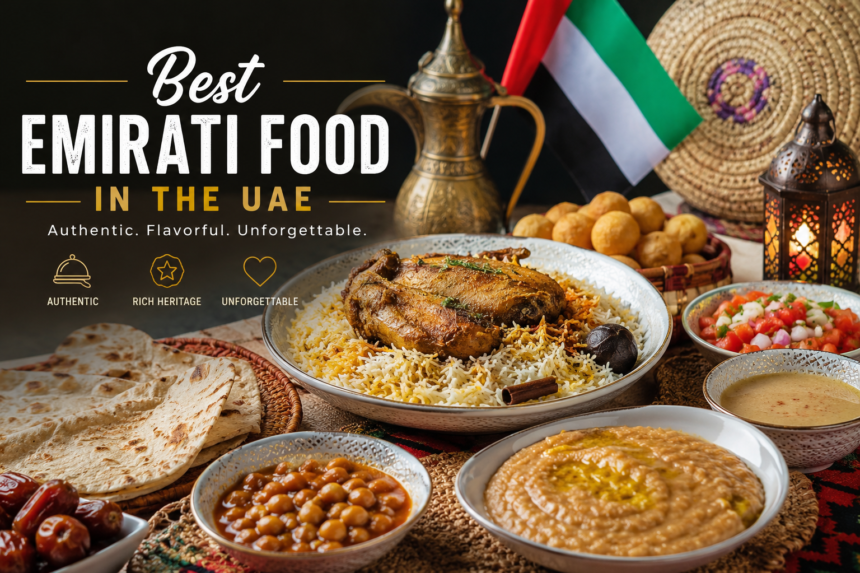
Traditional Dishes Best Emirati Food in the UAE You Must Try
The best Emirati food in the UAE offers a delicious journey through the country’s history, culture, hospitality, and traditional way of life. Emirati cuisine has developed over generations and reflects the UAE’s desert environment, coastal heritage, Bedouin traditions, and long-standing trade connections with neighbouring regions. Traditional Emirati dishes are generally rich in flavour while making thoughtful use of ingredients such as rice, meat, fish, dates, spices, wheat, legumes, and vegetables. From hearty rice dishes served at family gatherings to sweet treats enjoyed with Arabic coffee, Emirati food provides visitors and residents with an authentic taste of the UAE.
- What Is Emirati Food?
- Why You Should Try Traditional Best Emirati Food in the UAE
- 1. Machboos
- 2. Al Harees
- 3. Al Thareed
- 4. Balaleet
- 5. Luqaimat
- 6. Al Madrooba
- 7. Al Saloona
- 8. Chabab Bread
- 9. Regag Bread
- 10. Khameer Bread
- 11. Chebab
- 12. Emirati Seafood Dishes
- 13. Dates
- 14. Arabic Coffee
- Traditional Best Emirati Food in the UAE During Ramadan
- Best Emirati Food in the UAE for Breakfast
- Best Emirati Food in the UAE for Lunch and Dinner
- Best Places to Experience Emirati Food in the UAE
- Emirati Food and UAE Hospitality
- Popular Ingredients in Emirati Cuisine
- Emirati Desserts You Should Try
- Tips for Trying Authentic Best Emirati Food in the UAE
- Emirati Food vs. Other Middle Eastern Cuisines
- How Emirati Cuisine Is Changing
- Why Emirati Food Is Important to UAE Culture
Whether you are visiting Dubai, Abu Dhabi, Sharjah, Ajman, Ras Al Khaimah, Fujairah, or Umm Al Quwain, you can find opportunities to experience traditional UAE cuisine. Some dishes are especially popular during Ramadan, Eid, weddings, national celebrations, and family gatherings, while others are enjoyed throughout the year. If you want to explore the country beyond its famous international restaurants, trying authentic Emirati dishes should be an important part of your UAE experience.
What Is Emirati Food?
Emirati food refers to the traditional cuisine of the United Arab Emirates. Historically, the cuisine was shaped by the availability of local ingredients and the lifestyles of communities living in coastal areas, oases, and desert regions. Fishing communities relied heavily on seafood, while inland communities used dates, grains, meat, dairy products, and locally available plants.
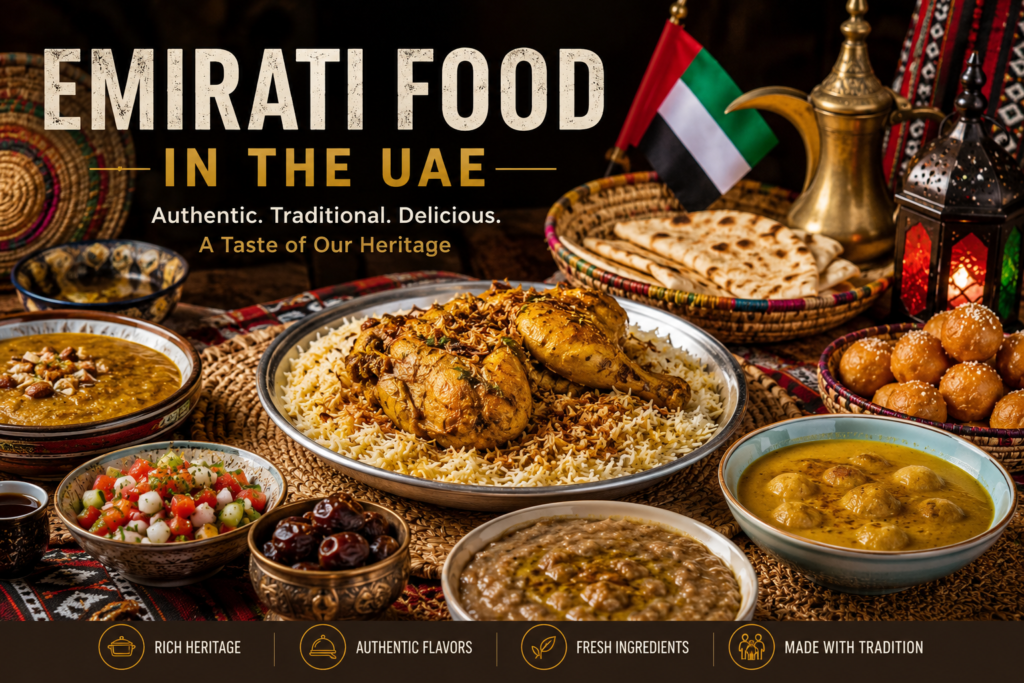
Spices also became an important part of Emirati cooking because the UAE was historically connected to regional and international trade routes. Ingredients such as cardamom, saffron, cinnamon, turmeric, cloves, dried limes, and black pepper are commonly associated with the flavors of traditional Gulf cuisine.
One of the defining characteristics of Emirati cuisine is its connection to hospitality. Food is often prepared in generous quantities and shared with family, friends, and guests. Large rice-and-meat dishes are particularly associated with celebrations and gatherings.
Why You Should Try Traditional Best Emirati Food in the UAE
Trying local food is one of the best ways to understand the culture of a destination. Emirati cuisine provides an opportunity to experience flavours and cooking traditions that have been passed down through generations.
Here are some reasons to explore traditional best Emirati food in the UAE:
- Experience UAE heritage: Traditional dishes provide insight into the country’s history and culture.
- Discover unique flavors: Emirati cuisine combines aromatic spices, herbs, meat, seafood, grains, and dates.
- Enjoy traditional hospitality: Many Emirati meals are designed to be shared.
- Try regional specialties: Different parts of the UAE offer their own culinary influences.
- Explore beyond international cuisine: The UAE is famous for global restaurants, but local cuisine offers a different experience.
- Enjoy traditional desserts: Emirati sweets are often served with Arabic coffee and dates.
1. Machboos
Machboos is one of the most famous traditional dishes associated with Emirati and Gulf cuisine. It is a flavorful rice dish prepared with meat, chicken, or fish and seasoned with aromatic spices.
The rice is generally cooked with ingredients such as onions, tomatoes, dried lime, cardamom, cinnamon, cloves, and other spices. The result is a fragrant dish with a combination of savory, spicy, and slightly tangy flavors.
Chicken Machboos is a popular option for people trying Emirati food for the first time. Seafood versions are also particularly appropriate in the UAE because of the country’s historic connection with fishing and the Arabian Gulf.
Machboos is often served at family gatherings, celebrations, and special occasions. If you want to start your Emirati food journey with one classic dish, Machboos is an excellent choice.
2. Al Harees
Al Harees is a traditional UAE dish made primarily from wheat and meat. The ingredients are cooked slowly until they develop a smooth, soft consistency.
The dish is particularly associated with Ramadan, weddings, Eid celebrations, and other important occasions. Its preparation can require several hours, making it a dish that represents patience and traditional cooking techniques.
Harees has a mild flavor compared with some heavily spiced dishes. Its creamy texture and simple ingredients make it a comforting meal.
For visitors who want to understand the traditional side of Emirati cuisine, Harees is one of the dishes worth seeking out.
3. Al Thareed
Thareed is another well-known traditional Emirati dish. It typically combines pieces of bread with a flavorful meat or vegetable stew.
The bread absorbs the broth, creating a soft and satisfying texture. Depending on the preparation, the stew may include meat, chicken, vegetables, potatoes, tomatoes, and spices.
Thareed is especially popular during Ramadan and is often associated with home-style Emirati cooking.
Its combination of bread, vegetables, and stew makes it a filling meal and a good example of how traditional cooking transformed simple ingredients into satisfying dishes.
4. Balaleet
For those with a sweet tooth, Balaleet is a traditional dish that deserves attention. It combines sweetened vermicelli with flavors such as cardamom, saffron, and rose water.
Balaleet is commonly served for breakfast and can also appear during celebrations and special occasions. A traditional serving may include an omelet or eggs alongside the sweet vermicelli.
The combination of sweet and savory flavors makes Balaleet particularly interesting for visitors who have never tried Gulf cuisine.
5. Luqaimat
Luqaimat is one of the most popular Emirati desserts. These small, golden dumplings are crispy on the outside and soft on the inside.
They are often served with date syrup or other sweet toppings and may be garnished with sesame seeds.
Luqaimat is particularly popular during Ramadan and festive occasions, but it can also be found at restaurants and cultural events throughout the UAE.
If you are searching for the best Emirati desserts in the UAE, Luqaimat should be near the top of your list.
6. Al Madrooba
Al Madrooba is a traditional dish prepared using salted fish along with ingredients such as rice, flour, spices, and onions. The ingredients are cooked together until the dish develops a thick consistency.
Because seafood played an important role in the traditional coastal communities of the UAE, dishes such as Madrooba demonstrate the influence of the Arabian Gulf on Emirati cuisine.
The dish has a distinctive flavor and is particularly interesting for travelers who want to explore authentic local seafood traditions.
7. Al Saloona
Al Saloona is a traditional stew that can be prepared with meat, chicken, or fish along with vegetables and spices.
It is a comforting home-style dish and can be served with rice or bread. The combination of broth, vegetables, protein, and spices makes Saloona a practical and flavorful everyday meal.
Recipes can vary between families, which is one of the interesting aspects of traditional Emirati cooking.
8. Chabab Bread
Chabab bread is a traditional Emirati pancake-like bread that is often enjoyed for breakfast. It is generally prepared with flour and flavored with ingredients such as cardamom and saffron.
The name is sometimes associated with the bread’s appearance and preparation style. Chabab can be served with honey, date syrup, cheese, or other accompaniments.
For visitors interested in traditional Emirati breakfasts, Chabab is an excellent dish to try.
9. Regag Bread
Regag bread is a very thin traditional UAE bread. It is often eaten alongside other dishes or used as an accompaniment to stews.
Its thin texture makes it different from many other types of flatbread found across the region. Regag can also be used as a base for various traditional preparations.
Simple breads like Regag demonstrate how grains and flour were incorporated into traditional Emirati meals.
10. Khameer Bread
Khameer is a traditional Emirati bread known for its soft texture and slightly sweet flavor. It is often prepared with ingredients such as flour, yeast, sugar, cardamom, and saffron.
Khameer can be eaten on its own or served with savory and sweet accompaniments. It is especially enjoyable alongside tea, coffee, honey, or dates.
For travelers exploring traditional Emirati food, trying several varieties of local bread is a simple way to discover the diversity of the cuisine.
11. Chebab
Chebab, sometimes described as an Emirati-style pancake, is another traditional breakfast favorite. Its distinctive flavor comes from ingredients such as saffron and cardamom.
It can be served warm with honey, date syrup, cheese, or other toppings. The fragrant combination of spices gives it a characteristic Emirati flavor.
Chebab is particularly appealing to visitors who prefer lighter breakfast dishes.
12. Emirati Seafood Dishes
The UAE’s long coastline has had a major influence on its food culture. Traditional Emirati cuisine includes various preparations involving fish and seafood.
Historically, fishing was an important part of life in coastal communities, and seafood became a valuable source of protein. Fish may be grilled, fried, dried, salted, or incorporated into rice dishes and stews.
Popular seafood preparations can vary by region and restaurant. When visiting coastal areas such as Fujairah or Ras Al Khaimah, exploring traditional seafood dishes can provide a different perspective on Emirati cuisine.
13. Dates
Dates are deeply connected with the culture and food traditions of the UAE. The country’s date palm has long been an important agricultural resource, particularly around oasis communities.
Dates can be eaten on their own, served with Arabic coffee, incorporated into desserts, or used as a natural sweetener.
When visiting an Emirati household or traditional restaurant, dates are often part of the hospitality experience.
Different varieties offer different textures and levels of sweetness, so trying locally grown dates is a simple but meaningful way to experience Emirati food culture.
14. Arabic Coffee
Although Arabic coffee, often known as gahwa, is a beverage rather than a dish, it is an essential part of the traditional Emirati dining experience.
It is commonly flavored with cardamom and served in small cups. Arabic coffee is traditionally offered to guests as a gesture of hospitality.
The experience of drinking coffee alongside dates is closely associated with Emirati culture and social traditions.
For visitors, enjoying traditional coffee in a heritage setting can be an excellent way to complement a meal.
Traditional Best Emirati Food in the UAE During Ramadan
Ramadan is an especially important time for experiencing traditional Emirati cuisine. Families often prepare generous meals for Iftar, the evening meal that breaks the daily fast.
Dishes such as Harees, Thareed, Luqaimat, dates, soups, rice dishes, and various breads may appear during Ramadan meals.
Ramadan also highlights the social importance of food in Emirati culture. Families and communities come together to share meals, while mosques and charitable organizations may provide food for people in need.
Visitors to the UAE during Ramadan can experience this atmosphere through restaurants, cultural events, and traditional food markets.
Best Emirati Food in the UAE for Breakfast
Traditional Emirati breakfast can be very different from a typical Western breakfast. Some popular choices include:
- Chabab bread
- Balaleet
- Khameer bread
- Eggs
- Dates
- Cheese
- Honey
- Arabic coffee
- Tea
A traditional breakfast is often a combination of sweet and savory flavors. Cardamom, saffron, dates, and honey contribute distinctive aromas and sweetness.
Best Emirati Food in the UAE for Lunch and Dinner
Lunch and dinner are often centered around rice, meat, chicken, or seafood. Large dishes may be placed in the center of the table for everyone to share.
Some traditional options include:
- Machboos
- Harees
- Thareed
- Saloona
- Madrooba
- Grilled fish
- Rice with chicken or meat
- Traditional breads
Sharing food is an important part of Emirati hospitality, and communal meals are especially common during family gatherings and celebrations.
Best Places to Experience Emirati Food in the UAE
The UAE has no shortage of international dining options, but travellers looking for authentic local cuisine should consider restaurants specializing in Emirati dishes and cultural dining experiences.
Dubai
Dubai offers perhaps the widest range of opportunities to experience traditional Emirati cuisine. Visitors can explore local restaurants, heritage neighborhoods, cultural centers, and traditional food markets.
Areas with historic architecture and cultural attractions can be particularly rewarding for people interested in combining food with UAE heritage.
Abu Dhabi
Abu Dhabi also offers numerous opportunities to try Emirati dishes. Visitors can find traditional food at local restaurants, cultural destinations, and selected hotels.
The capital is an excellent destination for travelers who want to experience Emirati hospitality alongside modern UAE culture.
Sharjah
Sharjah is particularly interesting for cultural tourism because of its museums, heritage areas, and traditional architecture. Local restaurants and cultural events can provide opportunities to sample authentic Emirati dishes.
Ras Al Khaimah
Ras Al Khaimah offers a combination of mountain, desert, coastal, and cultural experiences. Traditional food can be part of a broader exploration of northern UAE heritage.
Fujairah
Fujairah’s location on the UAE’s eastern coast makes seafood an especially interesting part of the local culinary experience. Visitors can explore both traditional dishes and fresh seafood preparations.
Emirati Food and UAE Hospitality
Food and hospitality are closely connected in Emirati culture. Welcoming guests with coffee, dates, sweets, and meals is an important social tradition.
A guest may be offered Arabic coffee several times, and refusing hospitality can sometimes be considered unusual depending on the social context. The traditional serving of coffee also follows established customs.
Large meals are often shared, emphasizing community rather than individual portions. This makes Emirati cuisine particularly enjoyable for families and groups.
Popular Ingredients in Emirati Cuisine
Traditional Emirati cooking uses a range of ingredients that contribute to its distinctive flavors.
Common ingredients include:
- Rice
- Wheat
- Dates
- Fish
- Chicken
- Lamb
- Beef
- Cardamom
- Saffron
- Cinnamon
- Turmeric
- Black pepper
- Dried lime
- Onions
- Tomatoes
- Potatoes
- Herbs
- Lentils
- Flour
The combination of spices and slow cooking techniques creates the rich aromas associated with traditional UAE dishes.
Emirati Desserts You Should Try
Emirati cuisine is not only about savory dishes. Traditional desserts are an important part of the food culture.
Some popular options include:
Luqaimat: Crispy, golden dumplings commonly served with date syrup.
Khabeesa: A traditional sweet preparation often made using flour, sugar, oil, and aromatic spices.
Khabees: Another traditional sweet dish made from roasted flour or similar ingredients and flavored with spices.
Dates with tahini or syrup: Dates are frequently transformed into simple but delicious sweet treats.
Pairing traditional desserts with Arabic coffee creates a classic UAE hospitality experience.
Tips for Trying Authentic Best Emirati Food in the UAE
If this is your first time exploring Emirati cuisine, a few simple tips can make the experience more enjoyable.
Start with Machboos: It is one of the best-known traditional rice dishes and provides a good introduction to Emirati flavors.
Try a traditional breakfast: Chabab, Balaleet, Khameer, dates, and Arabic coffee offer a different side of the cuisine.
Don’t skip desserts: Luqaimat is an excellent introduction to traditional Emirati sweets.
Explore local restaurants: Look beyond international chains and seek restaurants that specialize in UAE cuisine.
Try seafood: The UAE’s coastal history makes seafood an important part of its culinary heritage.
Share dishes: Many Emirati meals are designed for communal dining.
Ask about ingredients: Recipes can vary from restaurant to restaurant and family to family.
Emirati Food vs. Other Middle Eastern Cuisines
The UAE is home to people from around the world, so its food scene includes Lebanese, Syrian, Indian, Iranian, Turkish, Pakistani, and many other cuisines. However, traditional Emirati cuisine has its own identity.
Emirati food is strongly influenced by the Gulf environment, the desert lifestyle, fishing traditions, Bedouin heritage, dates, rice, seafood, and regional spices.
Some dishes may resemble foods found in neighboring Gulf countries because culinary traditions have historically crossed modern national borders. Nevertheless, Emirati cooking has developed its own regional interpretations and family recipes.
How Emirati Cuisine Is Changing
Modern Emirati restaurants are finding new ways to present traditional recipes. Chefs may preserve traditional flavors while experimenting with presentation, ingredients, and cooking techniques.
This evolution is helping introduce Emirati cuisine to younger generations and international visitors.
At the same time, traditional dishes remain important during family gatherings, cultural festivals, Ramadan, weddings, and national celebrations.
The combination of heritage and innovation means visitors can experience Emirati food in both traditional and contemporary settings.
Why Emirati Food Is Important to UAE Culture
Food is much more than nourishment in Emirati society. It represents family, generosity, history, identity, and hospitality.
Traditional recipes tell stories about how communities lived before the UAE became the modern, multicultural country it is today. Coastal dishes reflect the importance of fishing and maritime trade, while date-based foods and simple grain dishes connect with desert and oasis life.
Many traditional recipes are passed from parents and grandparents to younger generations, helping preserve cultural heritage.
Final Thoughts on the Best Emirati Food in the UAE
Exploring the best Emirati food in the UAE is an excellent way to experience the country’s culture beyond its skyscrapers, shopping malls, beaches, and luxury attractions. Traditional dishes such as Machboos, Harees, Thareed, Balaleet, Madrooba, Saloona, Chabab, Khameer, Luqaimat, and Regag bread offer a fascinating introduction to the flavors and traditions of the Emirates.
Whether you are enjoying a family-style meal, drinking Arabic coffee with dates, visiting a heritage restaurant, or discovering local food during Ramadan, Emirati cuisine provides a genuine connection to UAE culture.
For first-time visitors, start with Machboos, sample Harees or Thareed, enjoy traditional bread and breakfast dishes, and finish with Luqaimat and Arabic coffee. If you have more time, explore regional seafood dishes and traditional desserts as well.
The best Emirati food in the UAE is ultimately about more than individual dishes. It is about sharing food, welcoming guests, preserving traditions, and celebrating the rich heritage of the Emirates. For anyone interested in authentic UAE experiences, traditional Emirati cuisine should be an essential part of the journey.
Do follow us on Instagram
Read More – Best Delicious Dishes in Dubai Cuisine That You Will Relish