



How to Plan a Food-Focused Holiday Without Falling Into Tourist Traps
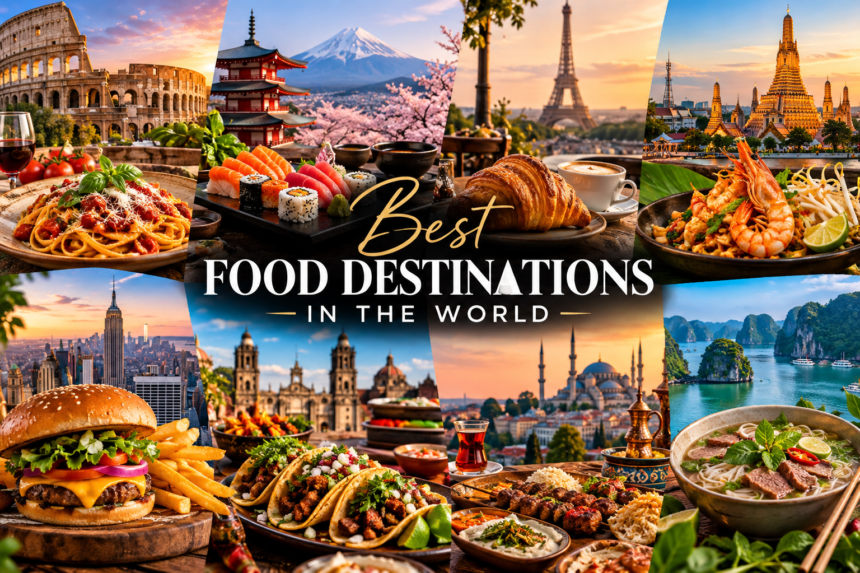
The best food destinations in the world offer much more than famous restaurants. They allow travellers to understand a place through its markets, family recipes, neighbourhood cafés, street-food stalls, regional ingredients and dining traditions.
- Best Food Destinations in the World at a Glance
- Italy, France and Spain: Europe’s Classic Food Destinations
- Japan, Thailand and Vietnam for Unforgettable Asian Food Experiences
- Mexico and Peru: Two of Latin America’s Most Exciting Food Destinations
- Türkiye, India and the Middle East for Rich Culinary Traditions
- Singapore and Dubai for Global Food Without Travelling Between Countries
- How to Plan a Food-Focused Holiday Without Falling Into Tourist Traps
- How to Choose the Best Food Destination for Your Travel Style
Food has become an increasingly important reason to travel. Some visitors plan entire holidays around pizza in Naples, sushi in Tokyo, tacos in Mexico City or street food in Bangkok. Others prefer discovering local markets, cooking classes or traditional restaurants that tell the story of a destination through food.
The MICHELIN Guide’s 2026 food-travel recommendations also show how culinary tourism is expanding beyond the world’s most obvious dining capitals. Its latest selection highlights established destinations such as Italy alongside emerging food regions including Cebu in the Philippines, Jiangsu in China, Cappadocia in Türkiye and destinations across Canada and Central Europe.
The best culinary destination also depends on what kind of food traveller you are.
Italy appeals to people who appreciate regional cooking and simple ingredients. Japan offers extraordinary precision and variety, from casual ramen counters to highly specialised restaurants. Thailand and Vietnam are particularly attractive for street-food culture, while Mexico combines ancient ingredients with an enormous range of regional traditions.
France remains important for classical cuisine and pastry, while Spain has developed a reputation that stretches from tapas bars to innovative restaurants. Türkiye connects Mediterranean, Middle Eastern and Central Asian influences, and Peru has become one of Latin America’s most exciting culinary destinations.
India is almost impossible to describe as one cuisine because every region brings different spices, cooking techniques and traditions.
Dubai deserves attention for a different reason. Rather than being defined by one historic cuisine alone, it brings together Emirati, Arab, South Asian, African and international food cultures in a single city.
This guide explores 12 destinations worth considering for a food-focused holiday, what to eat in each one, and how to plan a trip that goes beyond tourist restaurants.
Best Food Destinations in the World at a Glance
There is no single official ranking that can determine the world’s best food destination.
Food is personal, and different destinations are strong for different reasons.
A traveller interested in street food may prefer Bangkok or Mexico City, while someone planning a fine-dining holiday might prioritise Tokyo, Paris or Barcelona.
Here is a useful overview.
| Destination | Best For | Foods to Try |
|---|---|---|
| Italy | Regional cooking and pasta | Pasta, pizza, risotto, gelato |
| Japan | Precision and variety | Sushi, ramen, tempura, yakitori |
| Thailand | Street food | Pad Thai, som tam, curries |
| Mexico | Bold regional flavours | Tacos, mole, tamales |
| Spain | Tapas and modern dining | Jamón, paella, pintxos |
| France | Pastry and fine dining | Croissants, cheese, regional dishes |
| Türkiye | Markets and shared meals | Kebabs, meze, baklava |
| Peru | Contemporary Latin American cuisine | Ceviche, lomo saltado |
| Vietnam | Affordable street food | Pho, bánh mì, bún chả |
| India | Regional diversity | Biryani, dosas, curries, chaat |
| Singapore | Hawker culture | Laksa, chicken rice, satay |
| Dubai | International dining | Emirati, Arab and global cuisines |
A food destination becomes particularly memorable when travellers explore beyond famous dishes.
The difference between eating one pizza in a tourist district and understanding Italian food culture can involve visiting local markets, learning how regional ingredients differ and eating dishes associated specifically with one city.
That is why the best food trips are usually built around curiosity rather than checklists.
Italy, France and Spain: Europe’s Classic Food Destinations
Europe contains some of the world’s most influential culinary traditions.
Italy, France and Spain have each shaped international dining, but the best reason to visit is not simply because their food is famous.
It is because regional food still matters enormously.
Italy
Italy is one of the easiest destinations to recommend to travellers who build holidays around food.
However, talking about “Italian food” can be misleading because dishes vary dramatically across the country.
Rome is associated with classics such as:
- Carbonara
- Cacio e pepe
- Amatriciana
- Supplì
Naples is inseparable from pizza traditions.
Bologna and Emilia-Romagna are strongly associated with:
- Tortellini
- Tagliatelle
- Mortadella
- Parmigiano Reggiano
Sicily brings another completely different culinary identity with arancini, seafood, cannoli and strong Mediterranean influences.
Even markets can become major travel experiences.
The MICHELIN Guide’s 2026 coverage of Rome highlights places such as Mercato Centrale, Campo de’ Fiori, Nomentano and Testaccio, where visitors can experience traditional Roman foods in less formal settings.
What makes Italy special
Many classic Italian dishes use relatively few ingredients.
The quality of those ingredients therefore matters enormously.
A simple pasta dish may depend on:
- Good cheese
- Properly cooked pasta
- Olive oil
- Tomatoes
- Local cured meat
Food travellers should resist the temptation to spend the entire trip at famous restaurants.
Markets, bakeries, cafés and neighbourhood trattorias can be equally important.
France
France remains one of the world’s major culinary destinations.
Paris is famous for:
- Boulangeries
- Pâtisseries
- Bistros
- Cheese shops
- Fine dining
But France becomes more interesting when travellers look beyond Paris.
Different regions offer completely different food identities.
Provence is associated with Mediterranean ingredients.
Brittany is famous for crêpes and seafood.
Lyon has a strong traditional restaurant culture.
Burgundy is closely connected to wine and regional dishes.
French food travel can therefore work particularly well as a road trip or train journey rather than a single-city visit.
Spain
Spain offers another strong combination of everyday food culture and innovative dining.
Barcelona, Madrid, San Sebastián and Seville all provide different experiences.
Visitors can explore:
- Tapas
- Pintxos
- Jamón
- Seafood
- Paella
- Regional wines
San Sebastián has developed an especially strong international reputation for its food culture.
However, one of the best aspects of eating in Spain is the social nature of meals.
Travellers often move between different bars, sharing smaller dishes rather than sitting through one long formal dinner.
For people who enjoy casual eating, nightlife and variety, Spain can be one of the most enjoyable culinary destinations in Europe.
Japan, Thailand and Vietnam for Unforgettable Asian Food Experiences
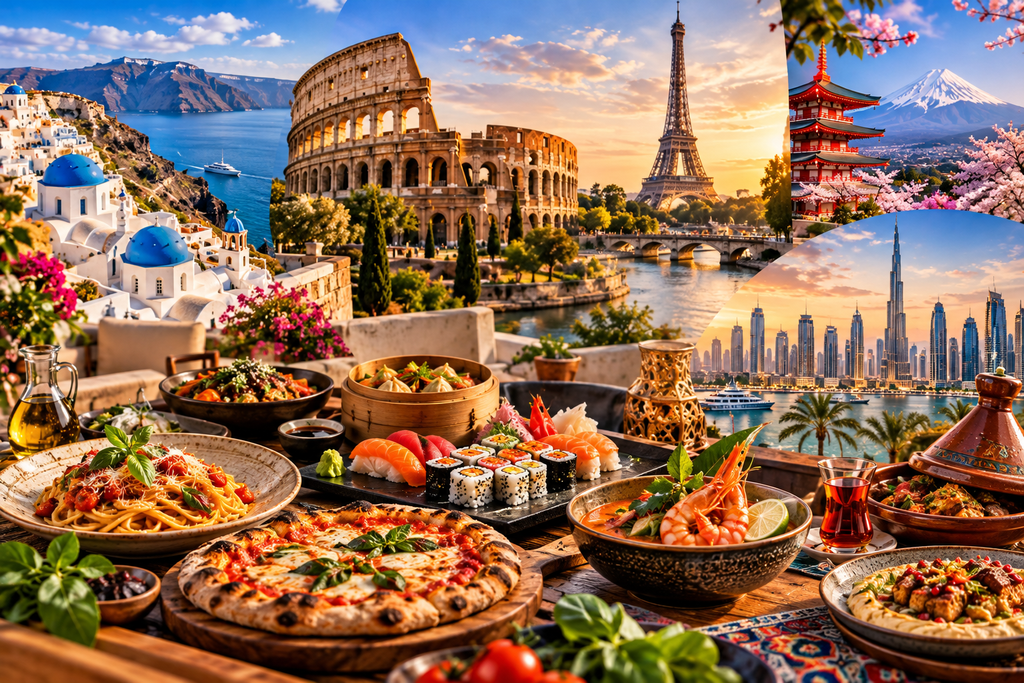
Asia offers some of the world’s most exciting food travel.
Japan, Thailand and Vietnam are particularly attractive because travellers can eat extremely well without depending entirely on expensive restaurants.
Japan
Japan rewards travellers who appreciate detail.
Tokyo alone contains an extraordinary variety of dining experiences, including:
- Sushi counters
- Ramen shops
- Yakitori restaurants
- Tempura specialists
- Soba shops
- Izakayas
The city’s reputation for fine dining is significant. MICHELIN noted in 2026 that Tokyo had more than 150 MICHELIN-Starred restaurants, making it one of the world’s strongest destinations for high-end dining.
But Tokyo’s food culture is much broader than starred restaurants.
Markets and neighbourhood establishments are equally important.
Travellers can begin in a food market, eat ramen for lunch and finish the evening in a small izakaya.
Kyoto provides a different experience, with stronger connections to traditional seasonal cuisine and tea culture.
Osaka is often associated with more casual foods such as:
- Takoyaki
- Okonomiyaki
- Kushikatsu
Food travellers may therefore want to include more than one Japanese city.
Thailand
Thailand is particularly strong for travellers who love street food.
Bangkok can provide an entire holiday based around eating.
Popular dishes include:
- Pad Thai
- Som tam
- Boat noodles
- Green curry
- Mango sticky rice
- Grilled meat skewers
Street stalls and small restaurants are part of everyday city life.
Chinatown is particularly popular for evening food exploration.
However, Thai cuisine also varies regionally.
Northern Thailand is known for dishes such as khao soi.
Southern cuisine can feature stronger spice levels and seafood.
Isaan cooking from northeastern Thailand brings its own distinctive flavours.
Food travellers should therefore avoid assuming everything in Thailand tastes like the Thai dishes they already know from restaurants abroad.
Vietnam
Vietnam offers exceptional value for food-focused travellers.
Street food and small local restaurants are central to the experience.
Popular dishes include:
- Pho
- Bánh mì
- Bún chả
- Fresh spring rolls
- Bánh xèo
Regional differences matter here as well.
Hanoi’s food traditions differ from those of Ho Chi Minh City.
Central Vietnam, including cities such as Hue and Hoi An, has its own culinary identity.
Vietnam is particularly good for travellers who enjoy eating several smaller meals throughout the day.
A food day might include:
Breakfast pho
→ Vietnamese coffee
→ Bánh mì
→ Street-food snack
→ Dinner at a local restaurant
That makes Vietnam one of the easiest places to build an entire itinerary around food.
Mexico and Peru: Two of Latin America’s Most Exciting Food Destinations
Latin America offers an enormous range of culinary traditions, and Mexico and Peru stand out for very different reasons.
Mexico
Mexican cuisine is far more diverse than the tacos and burritos often associated with it internationally.
Mexico City’s food scene alone includes:
- Street tacos
- Traditional markets
- Regional restaurants
- Contemporary Mexican dining
- Bakeries
- Fine dining
Popular foods include:
- Tacos al pastor
- Tamales
- Mole
- Pozole
- Chilaquiles
- Churros
But one of the most important lessons for food travellers is that Mexican food changes across the country.
Oaxaca is strongly associated with mole, chocolate and mezcal culture.
Yucatán has different flavours and cooking techniques.
Coastal areas offer seafood traditions.
Northern Mexico has a stronger relationship with grilled meats.
For serious food travellers, Mexico works better as a country to explore repeatedly rather than a destination that can be understood through one city.
Street food matters
Some of the most memorable meals can come from small stalls rather than formal restaurants.
The attraction is not just price.
Street food allows travellers to see:
- How dishes are prepared
- Which ingredients locals prefer
- When particular foods are eaten
That makes eating part of the cultural experience.
Peru
Peru has become increasingly influential in global food culture.
Lima is particularly well known internationally for its restaurant scene.
Peruvian cuisine combines Indigenous ingredients with influences from Spanish, African, Chinese and Japanese migration.
Popular foods include:
- Ceviche
- Lomo saltado
- Anticuchos
- Causa
- Ají-based dishes
One particularly interesting part of Peruvian food is the use of local ingredients.
The country’s geography includes coast, mountains and rainforest, giving chefs access to very different products.
Nikkei and Chifa cuisine
Peru also demonstrates how migration can reshape national food traditions.
Nikkei cuisine reflects Japanese-Peruvian influences.
Chifa reflects Chinese-Peruvian cooking.
These traditions show that food cultures can evolve while still becoming deeply connected to national identity.
For travellers interested in contemporary gastronomy as well as traditional food, Lima deserves serious consideration.
Türkiye, India and the Middle East for Rich Culinary Traditions
Some of the world’s most complex food cultures developed around historic trade routes, migration and regional exchange.
Türkiye and India are particularly good examples, while Middle Eastern destinations provide another layer of variety.
Türkiye
Turkish food extends far beyond kebabs.
Istanbul is one of the most enjoyable cities for food travellers because eating is woven into almost every part of daily life.
Visitors can try:
- Simit
- Meze
- Kebabs
- Pide
- Lahmacun
- Turkish breakfast
- Baklava
A traditional Turkish breakfast can itself become an important travel experience.
It may include:
- Cheese
- Olives
- Eggs
- Bread
- Tomatoes
- Cucumber
- Honey
- Tea
Food markets and neighbourhood bakeries can be just as interesting as restaurants.
Türkiye also varies dramatically by region.
Gaziantep is particularly famous for food and pistachio-based desserts.
Cappadocia is gaining increased culinary attention; the MICHELIN Guide’s 2026 travel recommendations noted the region’s growing dining scene and highlighted its newly recognised restaurant selection.
India
India is one of the most difficult countries to summarise through food because every region has its own cooking traditions.
Northern Indian food can include:
- Kebabs
- Rich curries
- Tandoori dishes
- Breads
Southern India offers:
- Dosas
- Idli
- Sambhar
- Coconut-based dishes
Western India brings completely different traditions, while eastern regions have their own sweets, fish dishes and rice-based cooking.
Major food cities worth exploring include:
- Delhi
- Mumbai
- Kolkata
- Hyderabad
- Chennai
- Lucknow
Delhi is particularly strong for street food and Mughlai traditions.
Mumbai offers everything from local snacks to coastal cuisine.
Hyderabad is famous for biryani.
Kolkata has a distinctive food culture shaped by Bengali traditions.
For travellers, India works best when they focus on regional food rather than asking for one national “Indian cuisine.”
Middle Eastern food travel
Cities across the Middle East also offer significant culinary experiences.
Food traditions across Lebanon, Jordan and the Gulf can include:
- Mezze
- Grilled meats
- Rice dishes
- Flatbreads
- Desserts
- Coffee traditions
The region’s food culture places particular emphasis on sharing.
Meals often become social events rather than simply opportunities to eat.
Singapore and Dubai for Global Food Without Travelling Between Countries
Some destinations become food capitals because many cultures come together in one place.
Singapore and Dubai are good examples.
Singapore
Singapore has developed an international reputation for hawker-centre dining.
Its food culture combines influences including:
- Chinese
- Malay
- Indian
- Peranakan
Popular dishes include:
- Hainanese chicken rice
- Laksa
- Satay
- Chilli crab
- Kaya toast
A traveller can move between several culinary traditions within one neighbourhood.
One major advantage is accessibility.
Food can range from inexpensive hawker meals to luxury restaurants.
This allows travellers with different budgets to experience the city’s culinary scene.
Hawker culture
Singapore’s hawker centres are especially important because they turn everyday food into part of the country’s cultural identity.
Instead of treating inexpensive food as a lower-level alternative to restaurants, visitors often consider hawker dining one of the main reasons to travel there.
Dubai
Dubai offers a completely different kind of international food destination.
Its strength lies in the diversity created by residents from across the world.
A visitor can experience:
- Emirati cuisine
- Lebanese food
- Indian food
- Pakistani food
- Iranian cuisine
- Filipino food
- African dishes
- European fine dining
all within one city.
That makes Dubai particularly interesting for travellers who enjoy exploring multiple cuisines during one trip.
Where to eat in Dubai
Different areas offer different experiences.
Old Dubai and Deira are especially useful for affordable regional and South Asian food.
Jumeirah and Downtown Dubai offer more international dining.
Dubai Marina and Palm Jumeirah provide a mix of restaurants with waterfront or skyline settings.
Luxury hotels bring internationally recognised chefs and restaurants to the city.
But some of Dubai’s most memorable food can also come from small neighbourhood restaurants.
Try Emirati food
Travellers should make an effort to experience local Emirati cuisine rather than spending the whole trip eating international food.
Dishes can include:
- Machboos
- Harees
- Luqaimat
- Grilled seafood
Food can help visitors understand local culture more deeply than simply visiting another attraction.
How to Plan a Food-Focused Holiday Without Falling Into Tourist Traps
Choosing the destination is only the beginning.
A successful food trip requires a different planning approach from a conventional sightseeing holiday.
Research neighbourhoods, not just restaurants
Instead of making a list of 20 famous restaurants, understand where local food culture is concentrated.
Good areas may include:
- Markets
- Traditional shopping streets
- Residential neighbourhoods
- Food halls
This provides more flexibility.
If one restaurant is full, you will still be surrounded by other options.
Mix formal and informal meals
Do not eat every meal at a premium restaurant.
A better food itinerary may include:
Breakfast at a bakery
→ Market lunch
→ Street-food snack
→ Restaurant dinner
This helps travellers understand how people actually eat in the destination.
Book only the meals that need reservations
Fine-dining restaurants may require reservations weeks or months ahead.
Book those early.
Leave some other meals flexible.
Food discoveries often happen unexpectedly.
Visit markets early
Many food markets are most active in the morning.
Arriving early may provide:
- Fresher produce
- More local shoppers
- Fewer crowds
- Better photography conditions
Rome’s Mercato Trionfale, for example, operates primarily during daytime hours and closes earlier on most days, illustrating why market schedules need to be checked before planning.
Take a food tour at the beginning of the trip
A well-run food tour can be useful on the first day.
It may help travellers understand:
- Local dishes
- Eating customs
- Neighbourhoods
- Ordering etiquette
That knowledge can improve the rest of the holiday.
Take a cooking class
Cooking classes can be especially valuable in destinations where techniques are important.
Examples include:
- Pasta making in Italy
- Thai curry classes
- Sushi workshops
- Mexican cooking
- Vietnamese cooking
It creates a more interactive experience than simply eating the finished dish.
Do not judge restaurants only by social media
Viral restaurants are often crowded because they photograph well.
That does not automatically mean they provide the best food.
Check:
- Recent reviews
- Local recommendations
- Menu focus
- Whether locals actually eat there
Be careful with food safety
Street food can be excellent, but basic precautions still matter.
Look for stalls with:
- High customer turnover
- Food cooked fresh
- Clean preparation areas
- Proper handling
Drink safe water and follow destination-specific health guidance.
Respect local dining customs
Food culture includes behaviour.
Examples may include:
- Meal times
- Tipping practices
- Dress expectations
- Shared dishes
- Religious dietary rules
Learning a few basic customs can make the experience more respectful and enjoyable.
How to Choose the Best Food Destination for Your Travel Style
The world’s best food destination depends on what you want to experience.
For street-food lovers
Consider:
- Bangkok
- Mexico City
- Ho Chi Minh City
- Delhi
- Singapore
These destinations allow travellers to build an entire day around small meals and food stalls.
For fine-dining travellers
Consider:
- Tokyo
- Paris
- Barcelona
- Lima
These cities combine major restaurants with broader food cultures.
For traditional regional cuisine
Consider:
- Italy
- Türkiye
- India
- Mexico
The biggest advantage is variety between regions.
You can return several times and experience something completely different.
For affordable food travel
Thailand, Vietnam, India and parts of Mexico can offer excellent value depending on exchange rates, neighbourhood and travel style.
However, costs can still rise significantly around famous tourist districts.
For luxury food holidays
France, Japan, Italy, Spain and Dubai can provide premium dining and luxury hospitality.
Travellers can combine:
- Fine dining
- Luxury hotels
- Private food tours
- Wine experiences
For food and beach holidays
Consider:
- Thailand
- Mexico
- Türkiye
- Dubai
These destinations make it easier to combine dining with leisure.
For food and culture
Italy, Japan, Mexico and India are especially strong because food traditions are closely connected with history, religion, family and regional identity.
Quick destination guide
| Travel Style | Destinations to Consider |
|---|---|
| Street food | Thailand, Vietnam, Mexico, Singapore |
| Fine dining | Japan, France, Spain, Peru |
| Regional traditions | Italy, India, Türkiye, Mexico |
| Budget food travel | Vietnam, Thailand, India |
| Luxury dining | France, Japan, Dubai |
| Food + beaches | Thailand, Türkiye, Mexico, Dubai |
| Market culture | Italy, Türkiye, Mexico, Japan |
The best food destinations in the world are not necessarily the places with the largest number of famous restaurants.
They are destinations where food becomes part of understanding the culture.
Italy offers extraordinary regional cooking built around strong ingredients and local traditions.
Japan provides precision, variety and everything from small ramen shops to some of the world’s most highly regarded restaurants.
Thailand and Vietnam demonstrate why street food can be as important as formal dining.
Mexico combines ancient food traditions with extraordinary regional diversity, while Peru shows how migration and local ingredients can create new culinary identities.
France and Spain remain essential destinations for travellers interested in European dining culture.
Türkiye, India and the Middle East provide deep culinary traditions shaped by history, geography and trade.
Singapore demonstrates the cultural importance of everyday hawker food.
Dubai shows how a modern international city can bring many cuisines together while maintaining its own Emirati culinary heritage.
The MICHELIN Guide’s 2026 travel recommendations also underline an important trend: culinary tourism is expanding beyond the traditional food capitals, with emerging destinations receiving greater international attention.
For travellers, this creates more possibilities than ever.
The best food holiday does not require eating at the world’s most expensive restaurant every evening.
It can begin with a market breakfast, continue with a street-food lunch and finish with a local dish you had never heard of before arriving.
That sense of discovery is ultimately what makes travelling for food memorable.
Do follow us on Instagram
Read More – How to Spend 24 Hours in Dubai: The Perfect One-Day Itinerary