


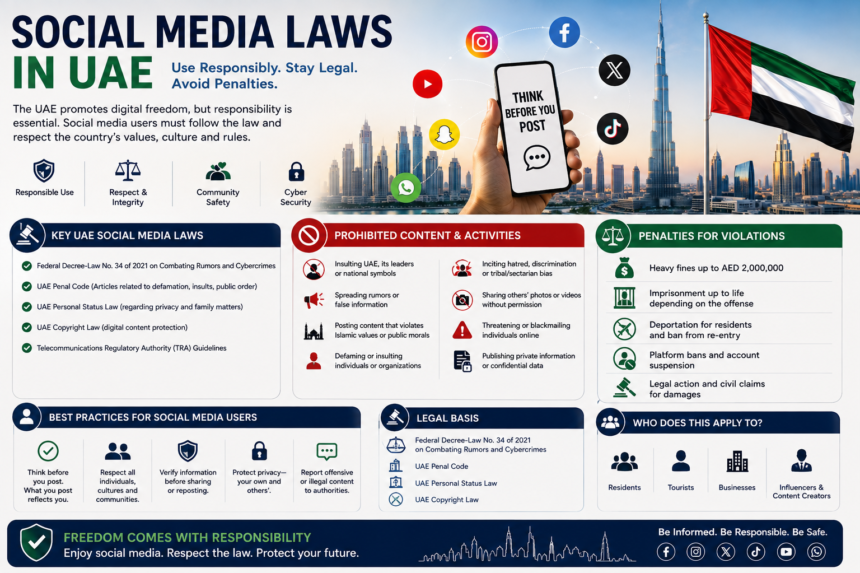
Social Media Laws in UAE: Rules, Penalties & Complete Guide for Safe Online Use
Social media has become an essential part of everyday life in the United Arab Emirates (UAE). Millions of residents, tourists, influencers, and businesses use platforms such as Instagram, Facebook, TikTok, X (formerly Twitter), LinkedIn, Snapchat, and YouTube to communicate, market products, share opinions, and stay connected.
- What Are Social Media Laws in UAE?
- Why Social Media Laws in UAE Are Important?
- Who Must Follow Social Media Laws in UAE?
- Key Principles of Responsible Social Media Laws in UAE
- Common Activities That May Lead to Legal Issues
- Unauthorized Use of Copyrighted Content
- Privacy Rules on Social Media
- Social Media and Businesses
- Influencers and Content Creators
- Social Media and Employees
- Safe Social Media Practices
- Social Media for Tourists
- Digital Security Tips
- Benefits of Following Social Media Laws in UAE
- Common Mistakes to Avoid
- Future of Social Media Regulation in the UAE
- Tips for Businesses Using Social Media
- Frequently Asked Questions (FAQs)
While the UAE supports innovation and digital transformation, it also maintains strict laws to protect individuals, businesses, national security, and public order. The country’s social media laws in UAE are designed to encourage responsible online behavior, safeguard privacy, prevent cybercrime, and maintain respect for the nation’s cultural values.
Understanding these regulations is essential for anyone living in or visiting the UAE. A single inappropriate post, offensive comment, or unauthorized sharing of private content can lead to legal consequences, including fines or criminal penalties, depending on the nature of the violation.
This guide explains the key social media laws in UAE, prohibited online activities, privacy rules, potential penalties, and practical tips for using social media responsibly.
What Are Social Media Laws in UAE?
Social media laws in UAE are a collection of legal provisions that regulate online activities conducted through social media platforms, websites, messaging applications, and other digital communication channels.
These social media laws in UAE are intended to:
- Protect privacy
- Prevent cybercrime
- Combat misinformation
- Safeguard public order
- Protect intellectual property
- Promote respectful online communication
- Enhance digital security
The rules apply to individuals, businesses, influencers, visitors, and organizations using digital platforms within the UAE.
Why Social Media Laws in UAE Are Important?
The rapid growth of digital communication has created opportunities but also introduced risks such as cyberbullying, identity theft, misinformation, fraud, and privacy violations.
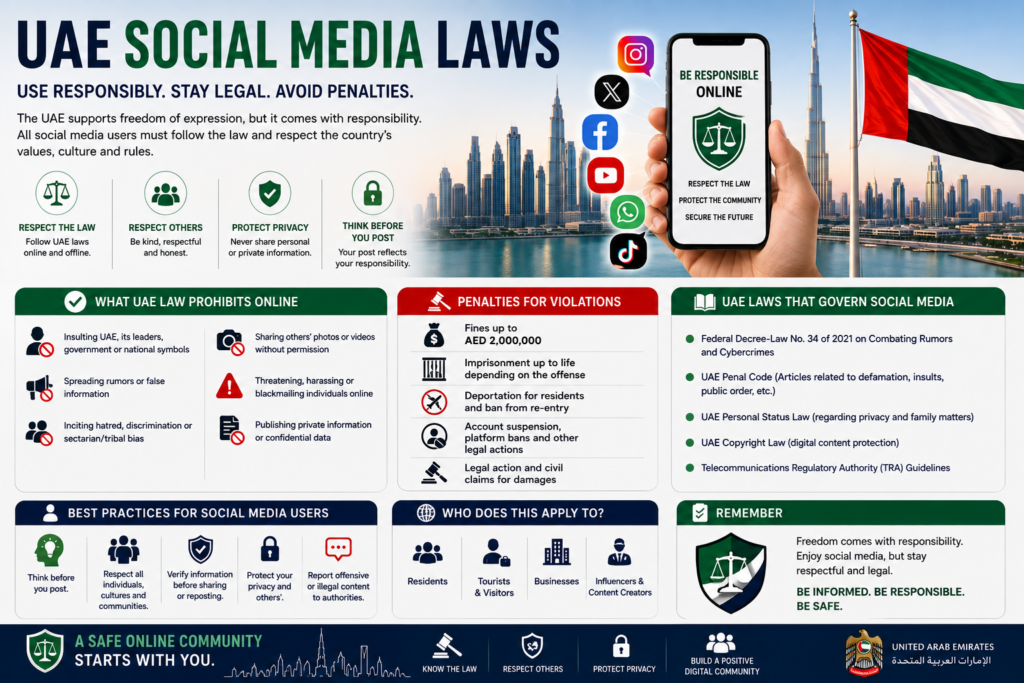
The UAE’s legal framework aims to:
- Protect personal rights
- Prevent online harassment
- Maintain national security
- Promote responsible digital behavior
- Encourage safe online communities
- Support trust in digital services
Following these laws helps users avoid legal issues while contributing to a safer online environment.
Who Must Follow Social Media Laws in UAE?
The regulations generally apply to:
- UAE citizens
- Residents
- Expats
- Tourists
- Businesses
- Influencers
- Content creators
- Online sellers
- Freelancers
- Employees using social media for work
Anyone using social media while in the UAE should understand and respect applicable laws.
Key Principles of Responsible Social Media Laws in UAE
Users should always:
- Respect others
- Verify information before sharing
- Protect personal and confidential information
- Obtain permission before posting someone else’s content when required
- Avoid defamatory or abusive language
- Follow platform policies in addition to local laws
Responsible online behavior helps reduce legal risks and protects the rights of others.
Common Activities That May Lead to Legal Issues
While each case depends on its facts and applicable law, users should avoid conduct such as:
Defamation and Insults: Posting false or damaging statements about an individual or business, making abusive comments, or publishing content that harms another person’s reputation may result in legal action.
Examples include:
- Personal attacks
- False accusations
- Offensive language
- Public humiliation
- Online harassment
Always communicate respectfully and resolve disputes through appropriate channels.
Sharing False Information: Spreading rumors or misinformation can have serious consequences.
Examples include:
- Fake news
- Unverified claims
- Misleading public information
- Edited content presented as genuine
Always verify information using reliable sources before reposting or forwarding it.
Privacy Violations: Privacy is strongly protected in the UAE.
Avoid:
- Sharing private conversations without consent
- Posting photos or videos of individuals without permission where privacy rights are affected
- Publishing confidential personal information
- Recording others in situations where doing so violates the law
Respecting privacy is one of the most important aspects of responsible social media use.
Cyberbullying and Harassment: Online abuse is not acceptable.
Examples include:
- Threats
- Intimidation
- Repeated harassment
- Hate speech
- Discriminatory comments
- Offensive messaging
Digital communication should remain respectful and professional.
Hate Speech and Discrimination
Users should avoid content that promotes:
- Religious intolerance
- Racial discrimination
- Ethnic hatred
- Violence
- Extremism
Respect for cultural diversity is an important principle in the UAE.
Unauthorized Use of Copyrighted Content
Creators’ rights should be respected.
Avoid:
- Uploading copyrighted videos without permission
- Copying articles
- Using protected music unlawfully
- Sharing commercial images without authorization
Use licensed or original content whenever possible.
Privacy Rules on Social Media
The UAE places significant emphasis on protecting personal privacy.
Good practices include:
- Ask permission before sharing someone’s identifiable image when appropriate.
- Do not publish private documents or personal data.
- Avoid revealing confidential workplace information.
- Protect customer information.
- Use strong passwords and account security features.
Businesses should also establish internal policies governing employee use of social media.
Social Media and Businesses
Companies increasingly rely on social media for marketing, customer engagement, and brand awareness.
Businesses should:
- Ensure advertising is truthful.
- Respect intellectual property rights.
- Protect customer data.
- Avoid misleading promotions.
- Respond professionally to customer feedback.
Organizations should also provide staff with social media guidelines and training.
Influencers and Content Creators
Influencers play an important role in the UAE’s digital economy.
Best practices include:
- Clearly disclose sponsored content where required.
- Avoid misleading endorsements.
- Respect advertising regulations.
- Use original or licensed content.
- Protect audience trust through transparency.
Depending on the nature of commercial activities, additional regulatory approvals or licenses may be required.
Social Media and Employees
Employees should remember that online behavior can affect both personal and professional reputations.
Recommendations include:
- Follow company social media policies.
- Avoid sharing confidential information.
- Separate personal opinions from official business communications.
- Maintain professionalism when discussing work-related matters.
Employers may also establish workplace rules governing online conduct.
Safe Social Media Practices
Follow these tips to stay safe online:
- Think before posting.
- Verify facts before sharing.
- Respect others’ opinions.
- Protect personal information.
- Enable two-factor authentication.
- Keep software updated.
- Use strong passwords.
- Report suspicious accounts.
- Review privacy settings regularly.
Practicing good digital hygiene helps reduce security risks.
Social Media for Tourists
Visitors to the UAE should also be mindful of local laws and customs when using social media.
Tourists should:
- Respect local traditions and cultural values.
- Avoid sharing content that infringes on others’ privacy.
- Follow the same legal standards that apply to residents.
- Be cautious when photographing or filming people in public.
Understanding local expectations helps ensure a smooth and enjoyable visit.
Digital Security Tips
Cybersecurity is closely linked to responsible social media use.
Protect yourself by:
- Using unique passwords for each account.
- Enabling multi-factor authentication.
- Avoiding suspicious links and phishing messages.
- Updating devices regularly.
- Backing up important data.
- Monitoring account activity.
These habits can help prevent unauthorized access and identity theft.
Benefits of Following Social Media Laws in UAE
Responsible social media laws in UAE use offers many advantages:
- Better personal reputation
- Stronger digital security
- Greater privacy protection
- Reduced legal risk
- Improved online relationships
- Increased trust for businesses and brands
- Safer digital communities
Compliance benefits both individuals and organizations.
Common Mistakes to Avoid
Many legal issues arise from avoidable mistakes, such as:
- Posting without verifying facts.
- Sharing private information.
- Using offensive language.
- Uploading copyrighted material without permission.
- Ignoring privacy settings.
- Responding emotionally during online disputes.
- Assuming deleted posts cannot be recovered.
Taking a moment to review content before publishing can prevent problems.
Future of Social Media Regulation in the UAE
As technology evolves, social media regulation is expected to continue adapting to new challenges.
Likely areas of focus include:
- Artificial Intelligence
- Deepfake content
- Digital identity protection
- Online fraud prevention
- Cybersecurity
- Data protection
- Responsible influencer marketing
Users and businesses should stay informed about legal developments and platform policies.
Tips for Businesses Using Social Media
Businesses can strengthen compliance by:
- Developing a clear social media policy.
- Training employees on appropriate online conduct.
- Monitoring official brand accounts.
- Respecting advertising standards.
- Protecting customer information.
- Responding professionally to public feedback.
- Keeping records of marketing campaigns when appropriate.
A proactive approach supports both legal compliance and brand reputation.
Frequently Asked Questions (FAQs)
Q1. What are UAE social media laws?
Ans: UAE social media laws regulate online behavior to protect privacy, public order, digital security, and the rights of individuals and organizations. They apply to social media platforms, messaging apps, websites, and other online services.
Q2. Do UAE social media laws apply to tourists?
Ans: Yes. Visitors should follow applicable UAE laws while using social media during their stay.
Q3. Can businesses advertise on social media?
Ans: Yes, businesses can market products and services online, provided they comply with advertising rules, intellectual property requirements, consumer protection laws, and any sector-specific regulations.
Q4. Is privacy important under UAE law?
Ans: Yes. Respecting the privacy of others is a key principle. Sharing private information, images, recordings, or confidential content without appropriate authorization may lead to legal consequences.
Q5. How can I stay compliant?
Ans: Use social media responsibly, verify information before sharing, respect others, protect privacy, avoid offensive or defamatory content, and keep up to date with applicable laws and platform policies.
Conclusion
The UAE social media laws are designed to promote a safe, respectful, and secure digital environment for everyone. Whether you are a resident, tourist, business owner, employee, or content creator, understanding these rules is essential for responsible online participation.
By respecting privacy, avoiding misinformation, communicating professionally, protecting intellectual property, and following applicable legal requirements, users can enjoy the benefits of social media while minimizing legal and reputational risks. Businesses and influencers also play a vital role by maintaining transparency, protecting customer information, and adhering to advertising and consumer protection standards.
As the UAE continues to lead in digital innovation and smart governance, responsible social media use remains an important part of everyday life. Staying informed about current regulations and adopting thoughtful online habits will help individuals and organizations build trust, protect their reputations, and contribute to a positive and secure digital community.
Do follow us on Instagram
Read More – UAE Social Media Laws Everyone Needs to Know