How Youth-Led Initiatives Are Strengthening Gulf Communities
Community volunteering in the Gulf is evolving into a more organised and accessible form of civic participation. Digital platforms connect individuals with opportunities, young professionals contribute specialised skills, and educational institutions encourage students to engage with community initiatives. Environmental protection, cultural preservation, healthcare awareness, and social inclusion are also becoming important areas for voluntary work.
- 1. How Traditional Volunteering Is Evolving Across Gulf Societies
- 2. The Growing Role of Digital Volunteering Platforms in the GCC
- 3. Why Young People Are Becoming Important to Community Volunteering
- 4. How Environmental and Skills-Based Volunteering Is Expanding
- 5. The Influence of Volunteering on Social Inclusion and Cultural Connections
- 6. Challenges Facing Modern Volunteering Across Gulf Communities
- 7. The Future of Community Volunteering in the Gulf: Building Lasting Social Impact
Across the United Arab Emirates, Saudi Arabia, Qatar, Oman, Bahrain, and Kuwait, volunteering initiatives reflect a growing interest in strengthening community participation. While each country has its own institutions and regulations, the broader transformation demonstrates how voluntary service can complement social development objectives and create meaningful connections between residents.
Understanding these changes reveals how established charitable traditions are adapting to modern social needs and why volunteering may play an increasingly important role in the future of Gulf communities.
1. How Traditional Volunteering Is Evolving Across Gulf Societies
Volunteering is not a new concept in the Gulf. For generations, communities have supported individuals and families through informal assistance, charitable contributions, and collective responsibilities.
Social values associated with generosity and hospitality have historically encouraged people to support neighbours, relatives, and those facing hardship. Religious and cultural practices have also influenced charitable giving and community service.
However, contemporary volunteering increasingly includes structured programmes, registered organisations, professional development opportunities, and coordinated public initiatives.
From Informal Assistance to Organised Participation
Traditional volunteering often developed through personal relationships and local community networks. Individuals might help organise religious gatherings, support families during emergencies, or contribute resources to charitable activities.
These forms of assistance remain important, but organised volunteering creates additional opportunities for participation.
Registered organisations can identify community needs, provide volunteer training, assign responsibilities, and coordinate projects involving larger groups.
For example, a neighbourhood clean-up initiative may require planning, equipment, safety instructions, and coordination with local authorities.
Similarly, a public awareness campaign may involve trained volunteers responsible for registration, information sharing, and assisting participants.
Changing Expectations of Volunteers
Modern volunteers may seek opportunities that match their interests, qualifications, and available time.
Some prefer short-term activities that can be completed during weekends, while others commit to ongoing programmes.
Professionals may contribute technical expertise, and students may participate to develop practical experience or explore potential careers.
This variety has encouraged organisations to develop more flexible models of volunteering.
Traditional and Contemporary Volunteering Compared
| Aspect | Traditional Community Volunteering | Emerging Volunteering Models |
|---|---|---|
| Organisation | Family and neighbourhood networks | Registered organisations and digital platforms |
| Participation | Informal assistance and community traditions | Structured programmes and flexible opportunities |
| Main Activities | Charity, neighbourhood support, social assistance | Education, environment, technology, healthcare, and social services |
| Recruitment | Personal relationships and community networks | Online registration and institutional partnerships |
| Skills Development | Informal learning through participation | Training, mentoring, and specialised experience |
| Impact Measurement | Community feedback and direct observation | Documented hours, outcomes, and programme evaluation |
These approaches do not necessarily compete with each other.
Informal neighbourly assistance remains valuable, while structured programmes can help coordinate volunteers across larger communities.
The future of volunteering may depend on bringing these approaches together.
2. The Growing Role of Digital Volunteering Platforms in the GCC
Digital technology is changing how volunteers discover opportunities and how organisations coordinate their activities.
Previously, individuals might have depended on personal recommendations, community announcements, or direct contact with charitable organisations.
Today, online volunteering platforms can centralise information about available projects, participation requirements, schedules, and registration procedures.
The UAE’s Digital Volunteering Ecosystem
The UAE’s national platform, Volunteers.ae, was established in 2017 to connect individuals with opportunities offered by participating organisations.
The platform supports multiple categories, including community assistance, education, specialised volunteering, and environmental activities.
It also allows eligible volunteers to establish records of their participation and identify opportunities suited to their interests.
These features demonstrate how digital systems can reduce some of the practical barriers between people who want to volunteer and organisations seeking assistance.
Saudi Arabia’s Expanding Volunteer Participation
Saudi Arabia has also developed a national volunteering infrastructure as part of its broader social development priorities.
The National Volunteer Portal helps connect individuals with approved opportunities and supports the documentation of participation.
Saudi Arabia’s Vision 2030 originally established a target of one million annual volunteers by 2030.
Official reporting indicates that the Kingdom exceeded this target in 2024, recording more than 1.2 million volunteers during that year.
This expansion illustrates the growing visibility of organised volunteering within the country’s development agenda.
Digital Coordination in Qatar, Oman, and Bahrain
Other GCC countries are also strengthening digital volunteering infrastructure.
In May 2026, Qatar launched its National Volunteer Platform to improve coordination between volunteers and organisations while supporting a more integrated approach to community participation.
Oman’s Ministry of Social Development launched the Ayadi volunteering platform in June 2025 to support volunteer coordination and the development of a centralised information system.
Bahrain’s National Volunteering Platform similarly provides information about opportunities and aims to strengthen community participation.
Kuwait also has established charitable and voluntary organisations, although its volunteering environment should not be assumed to operate through the same digital structures as neighbouring countries.
Examples of Digital Volunteering Infrastructure
| Country | Platform or Initiative | Primary Purpose |
|---|---|---|
| UAE | Volunteers.ae | Connecting volunteers with registered opportunities |
| Saudi Arabia | National Volunteer Portal | Coordinating opportunities and documenting contributions |
| Qatar | National Volunteer Platform | Bringing organisations and volunteers together |
| Oman | Ayadi | Supporting organised volunteering and information management |
| Bahrain | National Volunteering Platform | Promoting community participation and volunteer opportunities |
Digital platforms cannot guarantee meaningful social outcomes on their own.
Their effectiveness depends on accessibility, trustworthy organisations, appropriate volunteer training, and the quality of available opportunities.
Nevertheless, these systems provide infrastructure that can make organised volunteering easier to discover and manage.
3. Why Young People Are Becoming Important to Community Volunteering
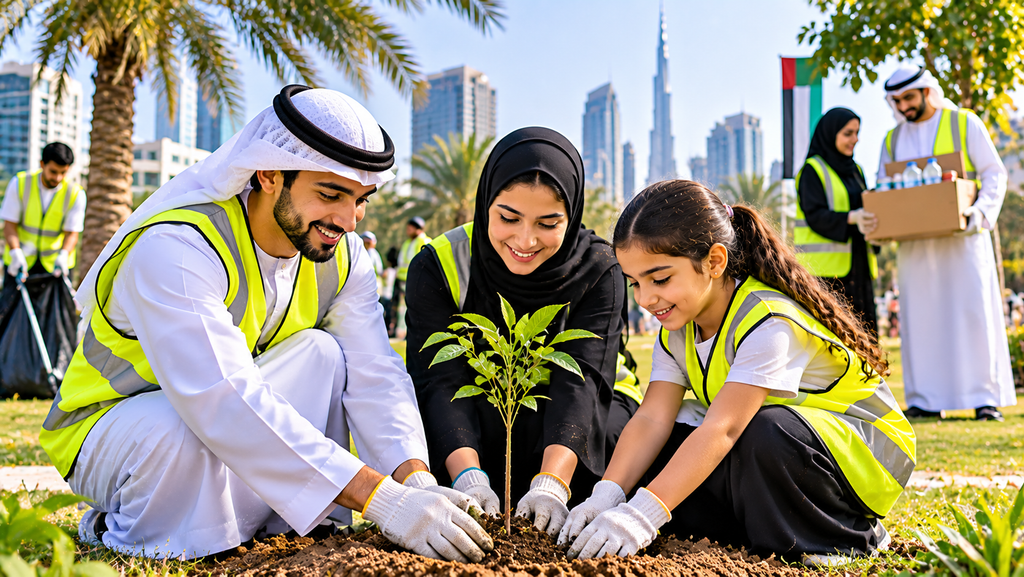
Young people represent an important part of the changing volunteering landscape across Gulf societies.
Schools, universities, youth organisations, and community programmes increasingly recognise volunteering as an opportunity to develop responsibility, leadership, and practical experience.
For younger participants, community service can also provide opportunities to interact with people outside their immediate social or educational environments.
Volunteering as an Educational Experience
Classroom education provides essential academic knowledge, but community volunteering introduces students to practical social challenges.
A student supporting an environmental campaign may learn about waste management and community behaviour.
Someone assisting at a cultural event may develop communication, coordination, and organisational skills.
These experiences can complement academic learning by demonstrating how knowledge applies to everyday situations.
Building Leadership and Communication Skills
Volunteering often involves collaboration between people with different backgrounds, responsibilities, and levels of experience.
Participants may need to manage schedules, communicate clearly, solve unexpected problems, or support team members.
Such responsibilities can help develop transferable skills.
Potential learning outcomes include:
- Communication and active listening.
- Teamwork and cooperation.
- Project planning and time management.
- Problem-solving and adaptability.
- Awareness of community needs.
- Respect for different cultural perspectives.
- Leadership and personal responsibility.
However, skills development is not automatic.
Volunteers benefit most when organisations provide clear responsibilities, guidance, supervision, and opportunities for reflection.
The Role of Universities and Educational Institutions
Educational institutions can encourage volunteering through community partnerships, student organisations, and service-learning activities.
Service learning differs from ordinary volunteering because it connects community participation with defined educational objectives.
For example, students studying environmental science might contribute to a supervised conservation project while examining its ecological implications.
Business students could assist eligible nonprofit organisations with basic administrative activities under appropriate supervision.
These programmes can help learners connect academic study with social responsibility.
Avoiding Superficial Participation
One challenge is ensuring that volunteering remains meaningful rather than becoming an activity completed solely to obtain certificates.
Participation records can be useful, particularly for students documenting their experiences.
However, the number of hours completed does not necessarily demonstrate the value of a contribution.
Educational institutions should also consider learning outcomes, community benefits, and ethical responsibilities.
Young volunteers should receive age-appropriate tasks and suitable supervision, with safeguarding procedures where necessary.
4. How Environmental and Skills-Based Volunteering Is Expanding
Community volunteering is increasingly associated with activities that address specific social, environmental, and professional needs.
While charitable donations and direct assistance remain important, volunteers may also contribute specialised knowledge to educational programmes, conservation projects, and nonprofit operations.
Environmental Volunteering and Sustainability
Environmental protection provides a visible opportunity for community participation.
Across the Gulf, residents can encounter volunteering activities connected to beach clean-ups, waste reduction, tree planting, and conservation awareness.
Environmental programmes can encourage people to understand the relationship between everyday behaviour and long-term ecological challenges.
For example, a coastal clean-up event may help participants observe the types of waste affecting local environments.
Educational activities can then explain why reducing pollution at its source is more important than relying exclusively on periodic clean-ups.
Examples of Environmental Volunteering
Potential activities include:
- Participating in authorised beach and neighbourhood clean-ups.
- Supporting recycling and waste-awareness campaigns.
- Assisting with approved native planting projects.
- Helping organise environmental education events.
- Supporting citizen-science activities under expert supervision.
- Contributing to community sustainability workshops.
Environmental volunteering must follow local rules and professional guidance.
Activities involving wildlife, protected habitats, or hazardous waste require appropriate permissions and expertise.
The Rise of Skills-Based Volunteering
Skills-based volunteering involves contributing professional abilities to organisations or community projects.
Instead of offering only general assistance, volunteers provide expertise relevant to a particular need.
For example, a graphic designer may help an eligible nonprofit create educational materials.
A technology professional might assist with a digital accessibility project, while an experienced educator could support an authorised mentoring programme.
Different Models of Community Volunteering
| Volunteering Type | Example Activities | Potential Community Value |
|---|---|---|
| Environmental | Clean-ups and conservation awareness | Supports environmental protection |
| Educational | Tutoring and mentoring | Expands learning support |
| Professional | Design, technology, administration | Strengthens organisational capabilities |
| Cultural | Heritage events and museum programmes | Supports cultural participation |
| Healthcare Support | Approved awareness events and non-clinical assistance | Improves community outreach |
| Social Assistance | Organised food distribution and community support | Helps address immediate needs |
Skills-based volunteering can offer valuable support to organisations that lack specialised resources.
However, professional volunteers must operate within their qualifications and legal permissions.
Medical, legal, financial, and other regulated services should not be provided without the appropriate authorisation.
5. The Influence of Volunteering on Social Inclusion and Cultural Connections
Gulf societies include communities with diverse national, linguistic, and cultural backgrounds.
This diversity creates opportunities for volunteering programmes to bring residents together through shared activities.
Community service can provide a setting where people interact beyond workplaces, educational institutions, and established social networks.
Building Relationships Across Communities
Volunteering projects often involve collective tasks that encourage cooperation.
A community clean-up, cultural festival, or educational workshop may bring together participants who would otherwise have limited interaction.
Working toward a common objective can encourage communication and greater awareness of different experiences.
These interactions may help build trust and a sense of shared responsibility.
However, social inclusion requires deliberate attention to accessibility and participation rather than assuming that diversity automatically produces meaningful relationships.
The Contribution of Expatriate Communities
Expatriate residents form an important part of the population in several GCC countries.
Their participation in eligible volunteering programmes can strengthen connections with local communities and provide opportunities to contribute beyond professional employment.
In the UAE, for example, Volunteers.ae permits registration by eligible citizens and residents of different nationalities, subject to its requirements.
Other GCC countries may have different rules relating to volunteer eligibility, organisational registration, and permitted activities.
Participants should therefore verify the relevant national and institutional requirements.
Supporting Vulnerable Groups Responsibly
Volunteering can also contribute to programmes assisting older adults, people with disabilities, low-income households, and individuals facing difficult circumstances.
Such activities require sensitivity, confidentiality, and respect for the dignity of beneficiaries.
Volunteers should avoid treating assistance as an opportunity for publicity without the informed consent of those involved.
Organisations should also provide guidance on safeguarding, privacy, and appropriate conduct.
The Importance of Inclusive Opportunities
Effective volunteering programmes should consider practical barriers to participation.
These may include language differences, transportation expenses, work schedules, disability access, and eligibility requirements.
Potential responses include:
- Providing clear information in relevant languages.
- Offering opportunities at different times.
- Designing accessible volunteering locations.
- Creating suitable roles for different levels of experience.
- Providing necessary training and safety information.
- Establishing transparent participation criteria.
Inclusive approaches can help organisations access a wider range of volunteers while improving the experience of participants and beneficiaries.
6. Challenges Facing Modern Volunteering Across Gulf Communities
Despite the expansion of volunteering programmes, several challenges can affect their effectiveness.
These include uneven participation, limited organisational resources, inadequate training, unclear responsibilities, and difficulties measuring genuine community impact.
Understanding these issues is essential for developing sustainable volunteering systems.
Balancing Volunteering With Work and Family Responsibilities
Many potential volunteers manage demanding professional and personal schedules.
This can make regular participation difficult, particularly when opportunities require fixed attendance or significant travel.
Organisations may improve accessibility through short-term projects, weekend activities, and clearly defined assignments.
However, flexibility should not compromise the consistency required for activities involving vulnerable beneficiaries or specialised responsibilities.
Training and Volunteer Safety
Certain volunteering activities involve physical, emotional, or professional risks.
Disaster response, healthcare support, and work involving children require particularly careful organisation.
Volunteers should receive information about their responsibilities, safety procedures, and the limits of their roles.
Activities requiring professional certification should be restricted to appropriately qualified individuals.
Measuring Meaningful Impact
Digital platforms can document volunteer registrations, completed hours, and participation numbers.
These indicators are useful for understanding the scale of activity, but they do not fully explain whether programmes improve community outcomes.
For example, a tutoring initiative should consider whether students receive meaningful educational support rather than focusing only on volunteer attendance.
Similarly, an environmental project should assess relevant ecological outcomes where practical.
Challenges and Potential Responses
| Challenge | Potential Impact | Possible Response |
|---|---|---|
| Limited Free Time | Lower volunteer participation | Flexible schedules and short-term opportunities |
| Inadequate Training | Safety risks and inconsistent service | Structured orientation and supervision |
| Unequal Access | Some communities remain underrepresented | Accessible and inclusive recruitment |
| Limited Resources | Difficulty maintaining programmes | Partnerships and sustainable planning |
| Volunteer Fatigue | Reduced long-term commitment | Reasonable workloads and recognition |
| Weak Impact Evaluation | Unclear community benefits | Outcome-based measurement |
| Unclear Regulations | Participation and compliance problems | Verified guidance from authorised organisations |
Avoiding Volunteer Burnout
Highly committed volunteers may take on responsibilities beyond their available time or experience.
Organisations should encourage manageable commitments and provide opportunities to discuss concerns.
Recognition can support motivation, but appreciation should not create pressure to participate continuously.
Sustainable volunteering depends on clear expectations and mutual respect between volunteers and organising institutions.
7. The Future of Community Volunteering in the Gulf: Building Lasting Social Impact
The future of volunteering across Gulf societies is likely to involve stronger coordination, specialised opportunities, digital services, and closer relationships between community organisations and institutions.
However, the effectiveness of these developments will depend on whether programmes respond to genuine needs and provide measurable benefits.
Moving From Participation Numbers to Social Outcomes
Volunteer numbers and participation hours demonstrate the scale of organised activities.
Future programmes may increasingly examine whether those activities produce lasting improvements.
For example, an educational initiative might evaluate learner progress, while a community accessibility project could assess whether residents experience fewer practical barriers.
This approach encourages organisations to define clear objectives before recruiting volunteers.
Corporate and Institutional Volunteering
Businesses and educational institutions can contribute through structured community partnerships.
Corporate volunteering may involve employees assisting eligible organisations with professional expertise, environmental projects, or community programmes.
However, these activities should be developed in consultation with participating organisations rather than being driven exclusively by corporate publicity goals.
Meaningful partnerships require continuity, appropriate resources, and respect for the communities involved.
The Potential of Remote Volunteering
Digital communication may expand opportunities for certain types of remote volunteering.
Suitable activities could include approved translation projects, educational content development, administrative support, digital accessibility reviews, and online mentoring.
Remote participation may help individuals contribute when transportation or scheduling makes in-person activities difficult.
Nevertheless, virtual projects require safeguards related to privacy, data protection, supervision, and the verification of volunteer qualifications.
How Individuals Can Start Volunteering
People interested in contributing to their communities can follow a practical process.
- Identify a social, environmental, educational, or cultural cause that matters to them.
- Research authorised organisations and recognised volunteering opportunities.
- Review eligibility requirements, including age and residency conditions.
- Consider whether the activity matches their available time and abilities.
- Complete required registration or training.
- Understand safety, confidentiality, and conduct expectations.
- Participate responsibly and communicate any difficulties.
- Reflect on the experience and evaluate opportunities for continued involvement.
Volunteers should use official channels and avoid paying unofficial intermediaries for access to opportunities.
Checklist for Organisations Developing Volunteer Programmes
- Identify a clearly defined community need.
- Establish measurable programme objectives.
- Recruit through appropriate and authorised channels.
- Match volunteer responsibilities with relevant abilities.
- Provide safety guidance and necessary training.
- Make reasonable efforts to support inclusive participation.
- Respect beneficiary privacy and dignity.
- Monitor volunteer wellbeing and workloads.
- Measure community outcomes alongside participation hours.
- Use feedback to improve future activities.
The Role of Volunteering in Stronger Communities
Community volunteering cannot replace essential public services or the responsibilities of professional organisations.
However, it can complement institutional support by mobilising additional knowledge, time, and community participation.
Its wider importance lies in creating opportunities for people to contribute to shared social objectives.
As Gulf societies continue to evolve, volunteering can help residents build relationships, respond to local challenges, and participate in activities that strengthen community life.
Conclusion
Community volunteering in the Gulf is developing from a tradition of informal assistance and charitable giving into a broader ecosystem of organised participation.
Digital platforms, youth engagement, professional volunteering, environmental initiatives, and community partnerships are expanding the ways individuals can contribute.
Across the GCC, national programmes demonstrate growing institutional recognition of volunteering as part of social development.
Yet increased participation alone does not guarantee meaningful outcomes. Sustainable volunteering requires appropriate training, accessible opportunities, responsible organisations, and clear measures of community benefit.
Traditional values of generosity and mutual assistance remain important foundations for these newer approaches.
The challenge for Gulf societies is to preserve those values while creating effective structures that respond to contemporary needs.
As volunteering becomes more accessible and specialised, its long-term contribution will be measured not only by how many people participate, but also by the quality of relationships, services, and opportunities that their efforts help create.
In this sense, the future of volunteering across the Gulf is closely connected to the development of stronger, more inclusive, and more resilient communities.
Do follow us on Instagram
Read More – Why Financial Literacy Should Become Part of School Education in the Middle East