



UAE Customers Expect Speed, Convenience and Digital Experiences
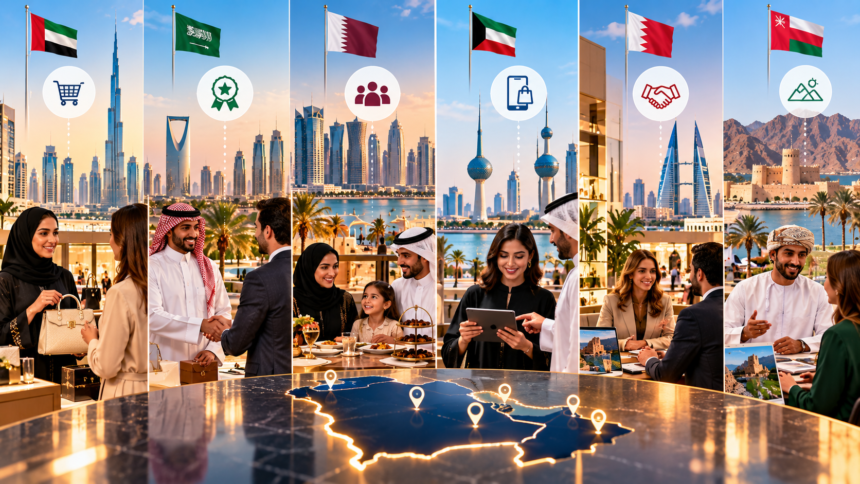
The Gulf Cooperation Council may be discussed as one regional market, but customers across the UAE, Saudi Arabia, Qatar, Kuwait, Bahrain and Oman do not always behave in exactly the same way. Differences in population size, demographics, digital adoption, retail development, local culture and purchasing habits can influence what people expect from brands. Understanding how customer expectations differ across GCC markets is therefore important for companies planning to expand across the region rather than treating all six countries as one identical customer base.
- How Customer Expectations Differ Across GCC Markets
- UAE Customers Expect Speed, Convenience and Digital Experiences
- Saudi Customers Combine Digital Expectations With Value and Service
- Qatar Customers Often Expect Quality, Trust and Technology
- Kuwait Customers Value Convenience, Service and Strong Brand Relationships
- Bahrain Customers Can Reward Responsive and Personal Service
- Oman Customers May Prioritise Trust, Practical Value and Ease
- How Businesses Can Adapt Their GCC Customer Strategy
There are also important similarities. Customers throughout the GCC increasingly expect reliable digital services, secure payments, responsive customer support and convenient shopping experiences. PwC’s 2025 GCC Banking Sentiment Index, based on around 2.8 million public digital conversations across the six GCC markets, found service quality, digital reliability, fraud concerns and responsiveness among the strongest themes affecting customer sentiment.
At the same time, regional trends should not replace country-level understanding. A mobile-first strategy that performs well in Dubai may need adaptation for customers in Oman. A premium positioning approach designed for Qatar may require different pricing or communication in Saudi Arabia. Even within individual GCC countries, expectations can differ by age, nationality, income and location.
The most effective strategy is therefore to combine regional consistency with local adaptation. Businesses can maintain the same overall brand while adjusting payment options, communication, pricing, customer service and marketing according to the expectations of each market.
How Customer Expectations Differ Across GCC Markets
Customer expectations across the GCC are influenced by several overlapping factors rather than nationality alone.
These include:
- Digital adoption
- Population demographics
- Disposable income
- Cost sensitivity
- Local competition
- Tourism
- Expatriate populations
- Cultural expectations
- Delivery infrastructure
- Payment habits
- Brand familiarity
- Government digitalisation
The GCC has also become an increasingly digital consumer environment. Visa’s latest regional research found continued movement away from cash toward cards and mobile payments across all six GCC countries. Its 2026 regional findings reported that 67% of surveyed Saudi consumers and 64% of Omani consumers were largely non-cash users, while only 16% of surveyed UAE consumers still used cash for everyday purchases.
However, this does not mean every consumer expects exactly the same purchasing journey.
A business operating in several GCC markets may need to change aspects such as:
| Customer Experience Area | What May Need Localisation |
|---|---|
| Pricing | Promotions, bundles and premium positioning |
| Payments | Cards, wallets, cash and local payment options |
| Customer service | Language, channels and response expectations |
| Delivery | Speed, coverage and flexibility |
| Marketing | Cultural references and campaign timing |
| Loyalty | Rewards, discounts and exclusive experiences |
| Digital experience | Mobile design and checkout options |
| Product mix | Local preferences and demand |
The mistake is assuming that localisation simply means translating advertising into Arabic.
True localisation involves understanding how customers research, buy, pay, receive products and communicate with companies.
Regional consistency still matters
Customers travelling between Dubai, Riyadh, Doha, Kuwait City, Manama and Muscat may encounter the same international brands.
They may therefore expect a reasonably consistent level of quality.
A company’s core identity, product standards and customer-service principles can remain regional while individual market execution changes.
UAE Customers Expect Speed, Convenience and Digital Experiences
The UAE is one of the GCC’s most internationally diverse consumer markets. Its combination of residents from many nationalities, strong tourism, sophisticated malls and extensive digital infrastructure has created high expectations around convenience.
Mobile shopping is particularly important.
Visa’s 2025 Global Digital Shopping Index found that 67% of surveyed UAE consumers used a smartphone during their latest retail purchase. Thirty-seven percent completed online shopping through mobile devices, the highest percentage among the markets covered by that study.
For businesses, this means a website that technically works on a phone is no longer enough.
Customers may expect:
- Fast-loading mobile pages
- Easy product search
- Simple checkout
- Multiple payment choices
- Saved payment details
- Quick delivery information
- Order tracking
- Responsive customer support
Checkout friction matters
Visa research published in 2025, based on 2,016 GCC online shoppers including UAE respondents, found continuing opportunities to improve checkout experiences, particularly around manual card entry and payment security.
UAE retailers should therefore treat checkout design as part of customer service.
If shoppers need to repeatedly enter information, cannot find their preferred payment option or feel uncertain about security, they may abandon the purchase.
Customers embrace technology but still value humans
The UAE is also seeing rapid consumer adoption of AI-assisted shopping.
Visa reported in June 2026 that 85% of surveyed UAE consumers had used AI to assist with shopping. Yet only 32% trusted AI agents to complete checkout, demonstrating that enthusiasm for technology does not automatically mean consumers are willing to surrender control over important transactions.
Similarly, Visa’s late-2025 research found that 69% of UAE respondents preferred speaking to a human customer-service representative rather than AI.
This suggests that the strongest UAE customer experience may combine automation with easy human escalation.
Trust and security are essential
Consumers may be comfortable with advanced digital tools but remain highly concerned about fraud.
Security, payment transparency and visible customer support can therefore become important trust signals.
For UAE businesses, digital convenience should not come at the expense of reassurance.
Saudi Customers Combine Digital Expectations With Value and Service
Saudi Arabia is the GCC’s largest consumer market by population and offers substantial opportunities across retail, entertainment, technology, hospitality and services.
The market has undergone rapid digital and economic transformation, and customer expectations have risen accordingly.
Digital payments are increasingly normal. Visa’s regional research published in 2026 found that 67% of surveyed Saudi consumers were largely non-cash users.
This creates strong expectations for smooth digital purchasing journeys.
However, companies should not assume that digital capability alone creates loyalty.
Response speed matters
PwC’s GCC Banking Sentiment Index found that customer-service delays were a major source of negative sentiment in Saudi Arabia. Within digital banking discussions, speed, login processes and alerts were prominent areas of dissatisfaction.
Although these findings relate specifically to banking, they illustrate a broader lesson for service businesses: digital customers notice delays quickly.
Customers who can place an order instantly may expect companies to respond with similar speed when something goes wrong.
Businesses should consider:
- Fast WhatsApp responses
- Clear call-centre processes
- Arabic-language support
- Simple returns
- Accurate delivery updates
- Effective complaint escalation
Value remains important
Premium consumption is visible in Saudi Arabia, particularly in major cities and sectors such as hospitality, entertainment and luxury retail.
However, premium demand does not eliminate value awareness.
PwC’s Middle East consumer research found cost of living remained a major concern, while price, taste and brand trust all influenced purchasing decisions across surveyed regional consumers.
Companies should therefore avoid equating a wealthy regional market with unlimited willingness to pay.
Customers still ask:
“What am I getting for this price?”
Local relevance matters
Saudi customers may also respond strongly to locally relevant campaigns, Arabic communication and products designed around local lifestyles.
Brands entering the market should consider local events, seasonal patterns and cultural expectations rather than simply importing campaigns created for another country.
Qatar Customers Often Expect Quality, Trust and Technology
Qatar is a smaller market than Saudi Arabia or the UAE, but it has sophisticated infrastructure and a customer base with strong exposure to international brands.
PwC’s Qatar-focused Voice of the Consumer research described surveyed customers as increasingly tech-savvy, empowered and environmentally conscious, with digital innovation, trust and sustainability among important themes.
This creates opportunities for companies that combine convenience with credibility.
Quality can matter as much as price
In markets with significant premium retail, hospitality and international-brand presence, competing only on low prices may not always be the strongest strategy.
Customers may evaluate:
- Product quality
- Service consistency
- Brand reputation
- Convenience
- After-sales support
- Trust
- Experience
This is particularly important in categories such as luxury retail, automotive, hospitality, financial services and premium food.
Digital experiences need to work reliably
Like customers elsewhere in the GCC, Qatar consumers increasingly rely on digital channels.
However, simply launching an app does not create a good digital experience.
PwC’s banking sentiment research found system performance and responsiveness among important areas of negative digital sentiment in Qatar.
For businesses, the broader takeaway is simple:
Digital services must be reliable.
A beautifully designed platform that fails during checkout or customer support can damage confidence more than a simpler system that works consistently.
Sustainability can influence perception
Sustainability is also becoming part of how some Qatar consumers evaluate companies.
That does not mean every customer will choose the environmentally friendly product regardless of price.
Instead, businesses should provide credible information about areas such as:
- Packaging
- Waste reduction
- Local sourcing
- Energy efficiency
- Responsible production
Claims should be specific and verifiable rather than vague marketing language.
Kuwait Customers Value Convenience, Service and Strong Brand Relationships

Kuwait has a well-established consumer culture, particularly in retail, food, fashion and hospitality.
Customers are familiar with international brands but also support strong local businesses and regional concepts.
For companies entering Kuwait, brand reputation can matter significantly.
Consumers often have many choices, particularly in sectors such as:
- Restaurants
- Coffee
- Fashion
- Beauty
- Electronics
- Financial services
- Online retail
This means getting attention is only the first challenge. Maintaining service consistency is equally important.
Digital convenience should be reliable
PwC’s banking sentiment research found that speed, platform responsiveness, login problems and alerts were among the digital issues generating negative conversations in Kuwait.
While banking experiences should not automatically be used to describe all industries, the findings reinforce a regional expectation that digital services should be dependable.
Customers increasingly expect businesses to remember information, process orders efficiently and resolve problems without requiring repeated explanations.
Promotions can attract attention, but experience keeps customers
Discounts can encourage trial, but repeated discounting can also make customers wait for the next promotion.
A stronger strategy may combine promotions with:
- Loyalty programmes
- Personalised offers
- Member benefits
- Excellent service
- Exclusive launches
- Reliable after-sales support
Businesses should understand whether customers are returning because they value the brand or simply because another discount appeared.
Social influence matters
Restaurants, fashion brands and consumer businesses can gain substantial visibility through social platforms and recommendations.
However, social visibility increases expectations.
When a product is promoted as premium online, customers expect the actual experience to match the imagery, packaging and service shown in marketing.
Bahrain Customers Can Reward Responsive and Personal Service
Bahrain is geographically smaller than most other GCC markets, which can create a more connected commercial environment in certain sectors.
Customers may encounter brands through communities, recommendations and repeated personal interactions.
This can make relationship quality particularly valuable.
PwC’s GCC Banking Sentiment Index noted that responsive service helped customer sentiment trend positively in Bahrain, although its detailed digital comparison excluded Bahrain because of a smaller sample size.
Businesses should therefore avoid drawing overly precise conclusions from one dataset, but responsiveness remains a useful general customer-experience principle.
Personalisation can feel more visible
Customers often appreciate being recognised as individuals rather than ticket numbers.
Small businesses can use this advantage through:
- Remembering repeat customers
- Quick WhatsApp communication
- Personal recommendations
- Flexible problem resolution
- Strong loyalty programmes
Larger brands can create similar experiences through effective CRM systems.
Trust travels quickly
In closely connected markets, positive and negative experiences can spread through word of mouth.
This makes consistency important.
A good marketing campaign may bring customers in once, but repeated service problems can weaken reputation.
Price still matters
Bahrain should not automatically be positioned as either a discount or premium-only market.
Different consumer groups have different spending power.
Brands need clear segmentation rather than attempting to use one price point and message for everyone.
Oman Customers May Prioritise Trust, Practical Value and Ease
Oman’s consumer market combines major urban centres with a more geographically distributed population than some smaller GCC countries.
Businesses considering Oman should therefore think carefully about availability, delivery coverage and practical convenience.
Digital adoption is continuing to rise. Visa’s 2026 regional findings reported that 64% of surveyed Omani consumers were largely non-cash users.
However, digital adoption does not eliminate the importance of reliable personal service.
Practical value can be powerful
Brands should clearly communicate why their offer is worth the price.
That may involve:
- Product durability
- Reliable warranties
- Good customer support
- Transparent pricing
- Convenient delivery
- Easy returns
- Useful loyalty rewards
Discounting is not the only way to communicate value.
A product that lasts longer or comes with dependable service can justify a higher price.
Digital systems still need improvement
PwC’s banking analysis found platform speed, customer digital security and alert reliability among major areas of negative sentiment in Oman.
Again, these findings relate to financial services, but they highlight the importance of making digital systems reliable rather than simply adding more features.
Location can change expectations
Businesses should also avoid assuming Muscat represents every customer in Oman.
Delivery times, store accessibility and service expectations may differ outside major urban areas.
An e-commerce company, for example, should explain delivery coverage and timings clearly rather than promising the same service everywhere if its logistics cannot support it.
How Businesses Can Adapt Their GCC Customer Strategy
The biggest mistake companies can make is copying one successful GCC strategy into all five other markets without testing it.
A regional approach should have a common foundation but enough flexibility for local customer behaviour.
A useful framework is:
| Market | Customer Experience Areas to Watch |
|---|---|
| UAE | Mobile convenience, speed, choice, security |
| Saudi Arabia | Service responsiveness, localisation, digital ease, value |
| Qatar | Quality, trust, digital reliability, premium experience |
| Kuwait | Convenience, reputation, loyalty, service |
| Bahrain | Responsiveness, relationships, personalisation |
| Oman | Practical value, trust, accessibility, digital reliability |
This table is a strategic starting point rather than a description of every customer. Each market contains diverse consumer groups, and businesses should validate assumptions through their own customer data.
Localise customer research
Before entering a new GCC country, run:
- Customer interviews
- Competitor analysis
- Pricing tests
- Product trials
- Digital advertising tests
- Website analytics
- Customer surveys
Do not rely entirely on regional reports.
Offer language choice
Arabic is central across the GCC, while English is also widely used in many commercial settings.
Businesses serving diverse populations may benefit from supporting both.
Translation quality matters.
Poorly translated product descriptions or automated support can reduce trust.
Make digital journeys simple
Regional evidence consistently shows that consumers value convenience but become frustrated when platforms are slow or unreliable. PwC found that digital-experience complaints across GCC banking were heavily driven by speed and responsiveness problems.
Businesses should regularly test:
- Page speed
- Mobile navigation
- Login
- Checkout
- Payment
- Order tracking
- Customer-support access
Do not ignore physical experiences
Digital growth does not mean physical retail is disappearing.
Many GCC markets have highly developed malls, restaurants, entertainment venues and hospitality sectors.
Customers may research online and purchase offline, or discover a product in-store and reorder digitally later.
The strongest businesses therefore connect both experiences.
Use customer data carefully
Personalisation can improve relevance, but customers also care about privacy and security.
Only collect information that has a clear purpose and ensure customers understand how it is being used.
Build trust before pushing loyalty
Loyalty programmes work best after a company consistently delivers what it promised.
Customers are unlikely to care about points or rewards if:
- Deliveries are repeatedly late.
- Customer service does not respond.
- Refunds are difficult.
- Apps fail.
- Prices are unclear.
Basic reliability comes first.
Quick GCC customer-experience checklist
Before entering another GCC market, check:
- Who is the primary customer?
- What languages should be supported?
- What payment methods are expected?
- What delivery speed can realistically be provided?
- How price-sensitive is the target segment?
- Which customer-service channels are preferred?
- What local competitors set the service standard?
- Does marketing reflect local culture?
- Is the mobile experience easy to use?
- Are returns and refunds clearly explained?
- Is customer data handled securely?
- Have assumptions been tested locally?
Understanding how customer expectations differ across GCC markets helps businesses move beyond the idea that the Gulf is one uniform consumer environment. The UAE, Saudi Arabia, Qatar, Kuwait, Bahrain and Oman share many characteristics, including fast digital adoption and strong demand for convenient, trustworthy services. Yet the importance placed on speed, price, premium experiences, relationships and localisation can vary by market and customer segment.
Current evidence also points to several expectations that increasingly cross borders. Customers want digital services that work reliably, payments that feel secure, faster problem resolution and brands they can trust. Regional consumers are simultaneously becoming more digitally sophisticated and more conscious of value.
Companies expanding across the GCC should therefore avoid choosing between complete standardisation and complete localisation. A better approach is to keep the brand’s core promise consistent while adapting the customer journey where local behaviour requires it.
Research customers before entering each market, listen to feedback after launch and continue adjusting the experience as expectations evolve. Businesses that understand these differences are better positioned to build trust, repeat purchases and long-term customer relationships across the GCC.
Do follow us on Instagram
Read More – World’s Most Famous Dishes: Iconic Foods Everyone Should Try