



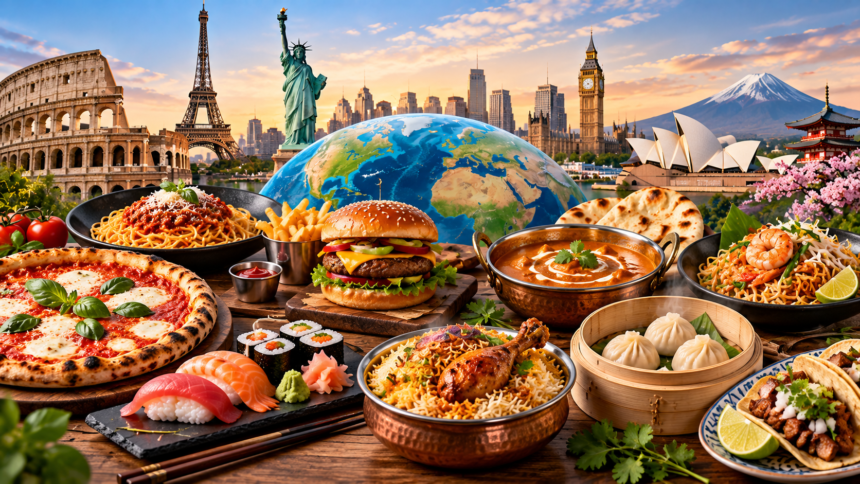
World’s Most Famous Dishes and Why They Became Global Icons
Food is one of the easiest ways to understand a place, its people and its history. Every country has dishes that reflect local ingredients, family traditions, migration and centuries of cultural exchange. Some recipes remain closely connected to their place of origin, while others become so popular that they are recognised and enjoyed around the world. From Italian pizza and Japanese sushi to Indian biryani and Mexican tacos, the world’s most famous dishes have become part of global food culture.
- World’s Most Famous Dishes and Why They Became Global Icons
- Pizza: Italy’s Most Recognised Contribution to Global Food
- Sushi: Japan’s Famous Combination of Simplicity and Precision
- Biryani: One of South Asia’s Most Loved Rice Dishes
- Tacos and Mexican Food Around the World
- Famous European Dishes Beyond Pizza
- Asian Dishes That Became International Favourites
- Middle Eastern and Mediterranean Dishes Known Worldwide
- How to Explore Famous Foods Like a Traveller
What makes a dish famous is not always complexity or expensive ingredients. Many iconic foods started as simple everyday meals made from ingredients that were easy to find locally. Over time, restaurants, tourism and international communities introduced these dishes to new audiences. Some were adapted to local tastes, while others stayed close to their traditional form.
Trying famous dishes is also a way to experience different cooking methods. Some cuisines rely heavily on grilling, others on slow cooking, fermentation, baking, spices or fresh ingredients. Understanding these differences can make food more interesting and help travellers appreciate why certain dishes became so important in their home countries.
This guide explores some of the most recognised dishes from different parts of the world, what makes them special and why they continue to attract food lovers across cultures.
World’s Most Famous Dishes and Why They Became Global Icons
Some dishes become internationally famous because they are simple, adaptable and easy to enjoy. Others gain recognition because they are deeply connected to a country’s identity.
Several factors can help a dish become internationally popular:
- Strong cultural identity
- Distinctive flavours
- Easy availability of ingredients
- International tourism
- Migration and global communities
- Restaurant culture
- Social media and food television
- Ability to adapt to different tastes
Pizza is a good example. It began as an affordable food associated with Naples but spread internationally through migration and restaurant culture. Today, almost every major city has its own interpretation of pizza.
Sushi followed a different path. Its careful presentation, fresh ingredients and connection to Japanese culinary traditions helped it develop an international reputation as both everyday food and fine dining.
The table below highlights several dishes that are widely recognised around the world.
| Dish | Country/Region | Main Characteristics |
|---|---|---|
| Pizza | Italy | Baked dough, tomato, cheese and toppings |
| Sushi | Japan | Vinegared rice with seafood or vegetables |
| Biryani | South Asia | Aromatic rice, spices, meat or vegetables |
| Tacos | Mexico | Tortillas filled with meat, vegetables and sauces |
| Paella | Spain | Rice cooked with seafood, meat or vegetables |
| Croissant | France | Flaky, buttery pastry |
| Pad Thai | Thailand | Stir-fried noodles with sweet, sour and savoury flavours |
| Peking Duck | China | Roasted duck with crisp skin |
| Shawarma | Middle East | Seasoned meat cooked on a vertical spit |
| Fish and Chips | United Kingdom | Fried fish with thick-cut potatoes |
Fame does not necessarily mean that every version found abroad is traditional. International versions often change according to local ingredients and customer preferences.
Pizza: Italy’s Most Recognised Contribution to Global Food
Few foods are as internationally recognisable as pizza.
Modern pizza is strongly associated with Naples, Italy, where flatbread topped with simple ingredients became popular among working communities. The classic Neapolitan style typically uses a thin base, tomato, mozzarella, olive oil and a small number of carefully selected toppings.
Margherita pizza
One of the most famous versions is Pizza Margherita, traditionally made with:
- Tomato
- Mozzarella
- Fresh basil
- Olive oil
Its combination of red, white and green ingredients is often associated with the colours of the Italian flag.
The simplicity of the dish is part of its appeal. Rather than covering the base with many ingredients, traditional versions focus on high-quality dough, tomatoes and cheese.
How pizza changed around the world
As Italian communities moved abroad, pizza travelled with them.
Different regions developed their own styles, including:
- New York-style pizza
- Chicago deep-dish pizza
- Roman-style pizza
- Detroit-style pizza
- Thin-crust restaurant pizzas
- Local versions topped with regional ingredients
Pizza has become successful partly because it is extremely adaptable. A restaurant can create vegetarian, meat-based, seafood or even dessert versions without changing the basic idea of the dish.
Why pizza remains so popular
Pizza works well for almost every type of dining occasion.
It can be:
- Affordable street food
- Family dinner
- Restaurant meal
- Gourmet cuisine
- Quick takeaway
Few dishes move between casual and premium dining as easily.
Sushi: Japan’s Famous Combination of Simplicity and Precision
Sushi is one of Japan’s most internationally recognised foods.
Many people assume that sushi simply means raw fish, but the defining element is actually seasoned rice prepared with vinegar. The rice can then be combined with seafood, vegetables or other ingredients in several different forms.
Common types of sushi
| Type | Description |
|---|---|
| Nigiri | Rice topped with fish or another ingredient |
| Maki | Rice and fillings rolled in seaweed |
| Sashimi | Sliced raw seafood, usually served without rice |
| Temaki | Hand-rolled cone-shaped sushi |
| Uramaki | Roll with rice on the outside |
Technically, sashimi is separate from sushi because it does not contain sushi rice, although the two are frequently served together.
Why sushi became internationally popular
Sushi has a combination of qualities that appeal to global diners.
It is visually attractive, usually served in small portions and can range from simple to highly sophisticated.
The dish also became closely associated with Japanese attention to presentation, freshness and technique.
Outside Japan, chefs created variations designed for local customers. Rolls containing avocado, cream cheese, spicy sauces and cooked seafood became particularly common.
These adaptations helped introduce sushi to people who were initially uncomfortable with raw fish.
Traditional versus international sushi
International sushi should not automatically be treated as representative of traditional Japanese sushi.
Both can be enjoyable, but they reflect different culinary environments.
Understanding this difference can make the experience more interesting when visiting Japan or eating at a traditional Japanese restaurant.
Biryani: One of South Asia’s Most Loved Rice Dishes
Biryani is among the most celebrated dishes across India, Pakistan and other parts of South Asia.
It combines fragrant rice with spices, meat, seafood or vegetables. Different regions have developed distinctive biryani traditions, creating one of the most varied dishes in Asian cuisine.
What makes biryani special
Biryani often includes aromatic ingredients such as:
- Basmati rice
- Saffron
- Cardamom
- Cinnamon
- Cloves
- Onions
- Fresh herbs
- Meat or vegetables
Cooking methods vary greatly.
Some styles layer partially cooked rice with marinated meat before finishing both together. Others cook ingredients differently according to local traditions.
Popular biryani styles
Hyderabadi biryani is known for bold spices and layered cooking.
Lucknowi or Awadhi biryani generally uses a more delicate approach and balanced aromas.
Kolkata biryani is distinctive for ingredients such as potatoes and a lighter flavour profile.
Sindhi biryani is commonly associated with stronger spice and tangy flavours.
Malabar biryani from southern India often uses a different variety of rice and reflects the culinary traditions of Kerala.
This variety means that saying “biryani” does not describe one single recipe.
Why biryani became internationally famous
South Asian migration helped take biryani around the world.
Today, it is commonly available in cities across the UAE, UK, United States, Canada, Singapore and many other countries.
Its popularity comes from the combination of rice, spices and rich flavours that can easily be adapted to different dietary preferences.
Vegetarian versions are also widely prepared.
Tacos and Mexican Food Around the World
Tacos are one of Mexico’s most famous culinary exports.
At their simplest, tacos consist of a tortilla filled with meat, seafood, vegetables or other ingredients.
The dish offers enormous variety because both the tortilla and filling can change depending on region and tradition.
Traditional taco components
Common ingredients may include:
- Corn or flour tortillas
- Beef
- Pork
- Chicken
- Seafood
- Onion
- Coriander
- Salsa
- Lime
Regional variations can be dramatically different.
Tacos al pastor, for example, use seasoned meat cooked on a vertical spit and are influenced by cooking traditions brought to Mexico by Lebanese immigrants.
This shows how famous national dishes often develop through cultural exchange.
Street food culture
Tacos are closely associated with Mexican street-food culture.
Small stalls and taquerias can specialise in just one or two types of taco, perfecting the preparation over many years.
This simplicity is one reason tacos are so popular.
Customers can eat a quick inexpensive meal while still experiencing complex flavours.
International adaptations
Outside Mexico, tacos may include:
- Hard shells
- Lettuce
- Cheese
- Sour cream
- Different sauces
- Fusion fillings
These versions are popular internationally but can be quite different from traditional Mexican street tacos.
Famous European Dishes Beyond Pizza
Europe has contributed many globally recognised dishes, ranging from pastries and pasta to seafood and slow-cooked meals.
Different climates, farming traditions and historical trade routes helped create enormous culinary diversity across the continent.
Paella from Spain
Paella originated in the Valencia region of Spain.
Traditional Valencian paella is different from the seafood versions many tourists associate with the dish.
The original style can include ingredients such as rabbit, chicken and local beans, while coastal versions commonly use seafood.
Rice is the foundation of the dish, and one of the most valued features is often the caramelised layer that forms at the bottom of the pan.
Croissant from France
The croissant has become closely associated with French breakfast culture.
Its defining feature is laminated dough, created by folding butter between layers of dough before baking.
The result is a light pastry with numerous flaky layers.
Although its historical development includes influences from Central European pastries, the modern croissant became deeply established in French baking culture.
Pasta from Italy
Italy’s contribution to world cuisine goes far beyond pizza.
Pasta is consumed internationally in countless forms, including:
- Spaghetti
- Penne
- Tagliatelle
- Lasagne
- Ravioli
- Linguine
One of the most important aspects of Italian pasta culture is that particular sauces traditionally pair with particular pasta shapes.
For example, heavier sauces may work well with shapes designed to hold more sauce, while delicate preparations may use thinner pasta.
Fish and chips from Britain
Fish and chips became a major part of British working-class food culture during the nineteenth and twentieth centuries.
The dish typically consists of battered fried fish served with thick-cut fried potatoes.
Traditional accompaniments may include:
- Mushy peas
- Malt vinegar
- Tartar sauce
Although simple, fish and chips remains strongly associated with British food identity.
Asian Dishes That Became International Favourites
Asia is home to some of the world’s most diverse food cultures.
Different regions use rice, noodles, seafood, fermented foods, spices and fresh herbs in distinctive ways.
Several Asian dishes have become internationally famous.
Pad Thai from Thailand
Pad Thai is one of Thailand’s most internationally recognised dishes.
It typically combines stir-fried rice noodles with ingredients such as:
- Egg
- Tofu
- Prawns or meat
- Bean sprouts
- Peanuts
- Tamarind
- Fish sauce
- Lime
The dish balances sweet, sour, salty and savoury flavours.
This combination makes it approachable while still offering the complexity associated with Thai cuisine.
Peking Duck from China
Peking duck is one of China’s best-known dishes.
It is famous for its crisp skin and carefully controlled roasting process.
It is commonly served with thin pancakes, spring onions, cucumber and sauce.
The preparation can require considerable skill and time, which has helped the dish develop a reputation as a special-occasion meal.
Pho from Vietnam
Pho is a Vietnamese noodle soup usually prepared with aromatic broth, rice noodles, herbs and beef or chicken.
Fresh herbs, lime and chilli often allow diners to customise the final flavour.
The dish became internationally popular because it combines comforting broth with fresh ingredients and strong aromas.
Korean barbecue
Korean barbecue has grown rapidly in popularity in many international cities.
Meat is often grilled directly at the table and served with side dishes known as banchan.
The social nature of the meal is part of its appeal.
Diners cook, share and assemble their own combinations, making the meal interactive.
Middle Eastern and Mediterranean Dishes Known Worldwide
Middle Eastern cuisine has influenced food culture across Europe, Asia, Africa and the Americas.
Ingredients such as chickpeas, tahini, olive oil, grilled meat, yoghurt, herbs and flatbread appear across many regional cuisines.
Shawarma
Shawarma is one of the most internationally recognised Middle Eastern street foods.
Seasoned meat is stacked on a vertical spit and slowly roasted as it rotates.
Thin slices are cut from the outer surface and usually served in bread with sauces, vegetables and pickles.
Common meat options include:
- Chicken
- Beef
- Lamb
Shawarma’s convenience and strong flavour have helped it spread internationally.
Hummus
Hummus is made primarily from chickpeas and tahini, usually with lemon and garlic.
It can be served as a dip, side dish or part of a larger meal.
Its popularity has expanded significantly outside the Middle East because it works well with vegetarian diets and is easy to serve in many settings.
Falafel
Falafel consists of fried balls or patties traditionally made from chickpeas, fava beans or a combination depending on regional tradition.
It is commonly eaten with bread, vegetables, pickles and tahini-based sauces.
The dish has become popular globally as an inexpensive and filling vegetarian option.
Kebab
The term kebab covers many different grilled or roasted meat dishes across the Middle East, Turkey, Central Asia and surrounding regions.
Examples range from minced meat cooked on skewers to sliced grilled meat.
Because there are so many regional traditions, treating “kebab” as one single dish can oversimplify its culinary history.
How to Explore Famous Foods Like a Traveller
Trying internationally famous dishes can be more meaningful when you understand how they are traditionally eaten.
A dish served at an international chain may taste very different from the version found in its country of origin.
Look beyond tourist areas
Tourist districts often adapt food for international tastes.
For a more local experience, consider:
- Neighbourhood restaurants
- Traditional markets
- Family-run businesses
- Street-food stalls
- Local bakeries
- Regional food festivals
Reviews can be useful, but the longest queue of local customers can sometimes be a better sign.
Try regional variations
Do not assume one version represents an entire country’s cuisine.
Italy alone has enormous regional differences.
Indian food changes dramatically between north, south, east and west.
Chinese cuisine includes numerous regional culinary traditions with very different ingredients and techniques.
Exploring these differences can make travel much more interesting.
Respect local eating traditions
Some dishes have particular ways of being served or eaten.
You do not need to follow every tradition perfectly, but understanding local customs can improve the experience.
For example, shared dishes may play an important social role in some cultures, while others place greater emphasis on individual presentation.
Be open to unfamiliar ingredients
Famous international dishes may contain flavours or textures that are unfamiliar at first.
Instead of judging them against foods you already know, try understanding what the dish is intended to taste like.
This approach often makes new food experiences more enjoyable.
A quick world-food checklist
If you enjoy exploring global cuisine, try building your own list:
- Authentic Neapolitan pizza
- Japanese sushi
- Regional biryani
- Mexican street tacos
- Spanish paella
- Thai Pad Thai
- Vietnamese pho
- Middle Eastern shawarma
- French croissant
- Chinese Peking duck
- British fish and chips
- Korean barbecue
The world’s most famous dishes are more than popular meals. They represent geography, history, migration and generations of cooking traditions. Pizza tells part of Italy’s story, sushi reflects Japanese technique, biryani shows the rich culinary diversity of South Asia and tacos demonstrate how Mexican cuisine developed through both local traditions and cultural exchange.
International popularity has changed many of these foods. Restaurants around the world adapt recipes according to local tastes, available ingredients and dietary preferences. These adaptations can create interesting new dishes, but they are not always identical to the traditional versions served in their places of origin.
For food lovers, the best approach is to enjoy both. International interpretations can be creative and accessible, while traditional preparations offer a deeper understanding of the culture behind the dish.
Whether you are travelling abroad or exploring restaurants in your own city, famous dishes provide an easy starting point for discovering new cuisines. Try different regional versions, learn about their ingredients and understand how local people eat them. A simple meal can often reveal much more about a culture than expected.
Do follow us on Instagram
Read More – Common Mistakes First-Time Entrepreneurs Make in Dubai