




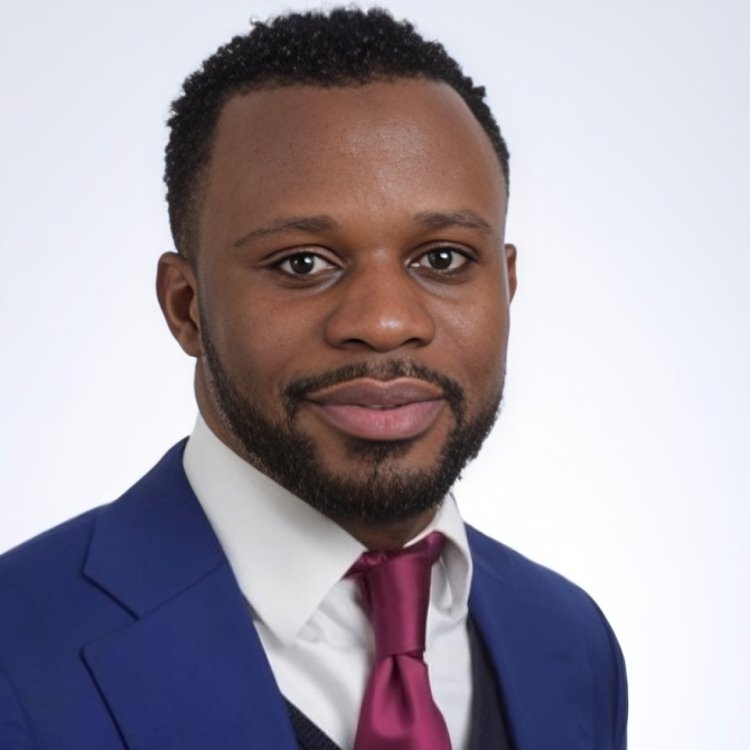
Strategic Leadership | AI Driven Professional Innovation | Sustainability Focused
Dr Matthew O E Shotsha represents a professional journey shaped by education, leadership, sustainability, entrepreneurship and a continuing interest in the forces transforming modern society. Based in the London Area of the United Kingdom, his experience brings together executive leadership training, operations management, strategic leadership, project management, mentoring, consultancy and higher education.
What makes his journey particularly distinctive, however, is the thinking behind these professional areas. His interests extend beyond how organisations operate to deeper questions about how leaders define progress, how institutions make decisions and what economic and technological development should ultimately achieve.
His work and ideas increasingly explore the relationship between artificial intelligence, leadership, sustainability and ethical philosophy. At the heart of this thinking is a simple but important proposition: technology itself is not necessarily the problem. The more fundamental question is how people choose to use technology and the values that guide those choices.
Building a Career Through Continuous Learning
For Dr Matthew O E Shotsha, education has been more than a collection of academic qualifications. It has been a continuing process of understanding people, organisations and the changing world around them.
His academic background includes a Master of Science in Sustainability Studies from the University of Sunderland in London. His professional experience in higher education has also included lecturing, research, teaching, management, customer service and communication.
These experiences have given him an opportunity to look at professional development from different perspectives. Teaching, for example, is not simply about transferring information. It requires understanding people, communicating complex ideas and helping others turn knowledge into practical understanding.
That experience has contributed to his broader approach to leadership and mentoring. Rather than seeing professional development as a fixed process, he views learning as something that should continue throughout a person’s career.
AI Is a Tool, Not the Ultimate Problem
Artificial intelligence has become one of the defining subjects of modern business and society. Yet Dr Matthew O E Shotsha believes that discussions about AI should go deeper than the technology itself.
His argument is that AI should not automatically be treated as the fundamental problem facing humanity. Technology is a tool, and its consequences depend significantly on the objectives, values and governance systems surrounding its development and use.
AI can improve productivity, healthcare, education, energy management and environmental sustainability. At the same time, poorly governed applications can contribute to challenges involving inequality, surveillance, misinformation and environmental costs.
The difference is therefore not necessarily the existence of the technology. It is the philosophy and decision-making framework behind its use.
This perspective places responsibility on leaders, institutions and organisations to ask more meaningful questions about technological progress.
The question is not simply what AI can do.
It is also what AI should be used for, who benefits from it and what consequences its adoption may create.
Rethinking What Leadership Means
Dr Matthew O E Shotsha’s thinking also challenges the idea that the world simply needs more leaders.
His view is that modern organisations need leaders who are willing to reconsider how success itself is defined.
For many years, business and economic development have often been measured through indicators such as profitability, productivity and economic output. These measurements remain important, but they do not necessarily describe the full impact of an organisation or economy.
Human wellbeing, social cohesion, environmental health and the interests of future generations also form part of the wider picture.
This creates an opportunity for leadership to evolve.
A leader’s responsibility can extend beyond generating financial results to include developing people, creating responsible systems, supporting communities and considering long-term consequences.
For Dr Matthew O E Shotsha, this broader understanding of leadership connects directly with sustainability.
Sustainable development cannot depend only on individual good intentions. Ethical leadership needs to work alongside effective institutions, responsible corporate governance, appropriate regulation and incentive structures that encourage long-term value creation.
Sustainability Beyond Environmental Responsibility
Sustainability is often discussed primarily in environmental terms, but Dr Matthew O E Shotsha sees it as a much broader organisational and economic issue.
His academic background in sustainability and professional interests in renewable energy, oil and gas and emerging technologies have given him an opportunity to consider how traditional systems and new approaches can coexist during a period of major transformation.
The transition toward a more sustainable future requires businesses to think beyond immediate returns. It also requires them to understand how environmental decisions connect with investment, employment, technology, operations and communities.
This does not necessarily mean rejecting economic growth or capitalism.
Instead, it means questioning models of development that focus too heavily on short-term value extraction while overlooking long-term social and environmental consequences.
Markets and businesses can also become part of the solution when their structures and incentives encourage innovation, responsible investment and sustainable behaviour.
The Philosophy of Ubuntu
One of the most important ideas in Dr Matthew O E Shotsha’s thinking is Ubuntu, a philosophy associated with interconnectedness, human dignity, community and mutual responsibility.
Often expressed through the principle “I am because we are,” Ubuntu offers a different way of thinking about relationships between individuals, organisations and society.
Applied thoughtfully to leadership, the philosophy encourages leaders to look beyond individual or organisational gain and consider the wider consequences of their decisions.
Instead of asking only, “How much value can we create?” leaders can also ask:
“For whom are we creating value?”
“What impact are we having on society?”
“What responsibilities come with the decisions we make?”
“And what world are we leaving for future generations?”
For Dr Matthew O E Shotsha, Ubuntu does not have to remain an abstract philosophical concept. Its principles can potentially inform corporate governance, stakeholder relationships, employment practices, ESG strategies, sustainable investment and organisational culture.
The challenge is translating philosophy into measurable policies and everyday practices.
From Knowledge to Action
His professional experience across higher education, leadership, operations, project management, entrepreneurship and mentoring provides a practical foundation for these ideas.
A strategy has little value without execution. Technology has limited value without responsible application. Education becomes more meaningful when knowledge leads to action.
This connection between knowledge and implementation is central to Dr Matthew O E Shotsha’s professional outlook.
His work as an educator and mentor reflects an interest in helping people develop not only technical knowledge but also the ability to think critically about the environment in which they operate.
In a rapidly changing business world, professionals increasingly need to understand several disciplines at once. A business leader may need to understand AI. A technology professional may need to understand ethics. A marketer may need to understand sustainability. An entrepreneur may need to understand social impact.
The boundaries between these areas are becoming increasingly connected.
A Different Question for the Future
The future of leadership may therefore require a shift in the questions organisations ask.
Rather than focusing only on how to compete, grow or maximise returns, leaders may increasingly need to consider how prosperity can be created without compromising people, society and the planet.
This is where Dr Matthew O E Shotsha’s thinking around AI, leadership and Ubuntu comes together.
AI will continue to evolve. Markets will continue to change. Organisations will continue to compete. Sustainability pressures will continue to influence business decisions.
But technology and economic systems do not operate independently of human choices.
The philosophy behind those choices matters.
For Dr Matthew O E Shotsha, the challenge facing modern leadership is therefore not simply to become more technologically advanced. It is to become more thoughtful about the purpose behind advancement.
The world may need smarter technology, but it also needs wiser decisions about what technology, business and economic development are ultimately for.
His professional journey continues to develop around this intersection of knowledge, leadership, sustainability and human responsibility, offering a perspective that places the future of organisations within a much larger question: how can progress create lasting value for both people and the planet?
Connect Omba Matthew Ehomba on LinkedIn
Read More – Best Gulf Countries for Entrepreneurs: 6 Powerful Choices in 2026