

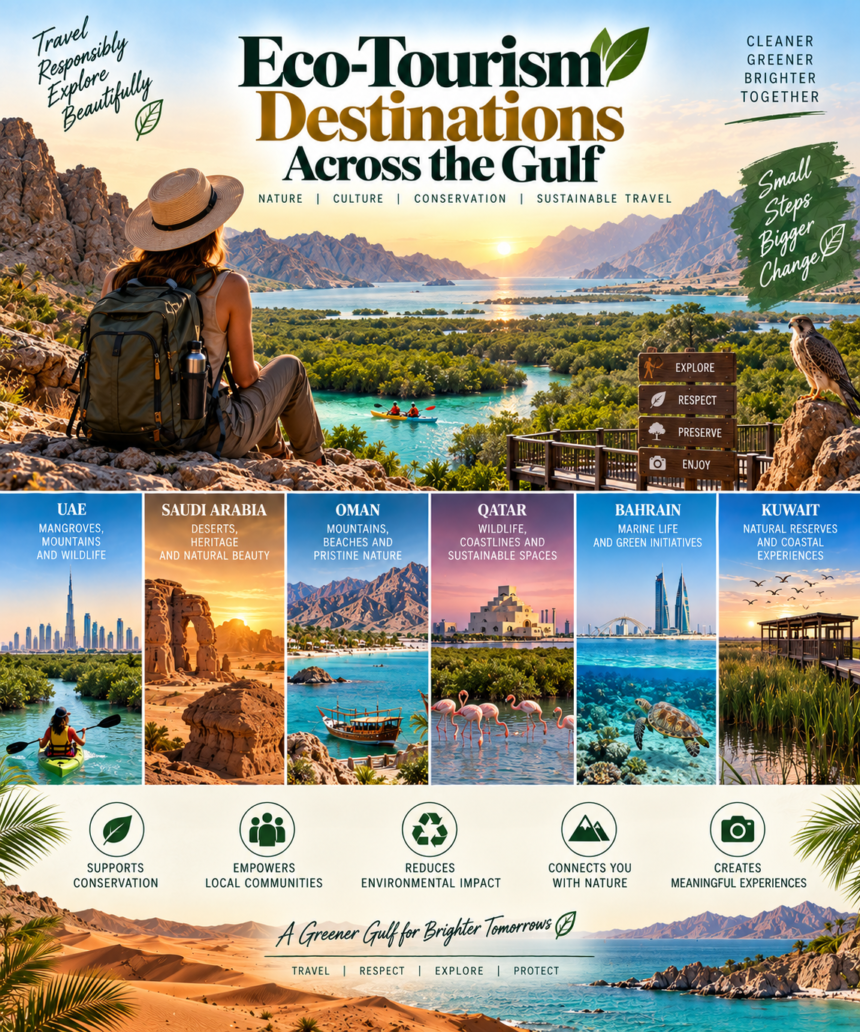
Eco-Tourism Destinations Across the Gulf at a Glance
Skyscrapers, luxury resorts and enormous shopping centres may dominate international images of the Gulf, but the region also contains mangrove forests, coral reefs, turtle nesting beaches, protected islands, wetlands, mountains and large desert conservation areas.
- What Makes a Gulf Destination Truly Eco-Friendly?
- Eco-Tourism Destinations Across the Gulf at a Glance
- Jubail Mangrove Park and Abu Dhabi’s Mangroves
- Sir Bani Yas Island, UAE
- Farasan Islands, Saudi Arabia
- Saudi Arabia’s Red Sea
- Al Thakhira Mangroves, Qatar
- Khor Al Adaid, Qatar
- Hawar Islands, Bahrain
- Mohammed bin Zayed Natural Reserve, Bahrain
- Daymaniyat Islands Nature Reserve, Oman
- Ras Al Jinz and Masirah Island, Oman
- Jahra Nature Reserve and Kuwait’s Protected Landscapes
- Best Eco-Tourism Activities Across the GCC
- How to Choose a Responsible Nature Tour
- Wildlife Watching Without Disturbing Animals
- How to Reduce Your Impact While Travelling
- Best Time for Eco-Tourism Across the Gulf
- Eco-Tourism Checklist for Gulf Travellers
- Final Thoughts on Eco-Tourism Destinations Across the Gulf
The best Eco-Tourism Destinations Across the Gulf allow travellers to discover these environments without treating nature simply as a backdrop for entertainment. Responsible kayaking through mangroves, guided wildlife watching, conservation-focused island stays, hiking, birdwatching and low-impact marine experiences can help visitors understand why these ecosystems matter.
Across the UAE, Saudi Arabia, Qatar, Bahrain, Oman and Kuwait, protected areas are also becoming more visible to visitors. Qatar says protected areas account for more than 23 percent of its land area, while Abu Dhabi has opened selected marine protected areas to tourism alongside its established mangrove and wildlife destinations. Saudi Arabia’s Farasan Islands are recognised as the country’s first UNESCO biosphere reserve, and Oman’s Daymaniyat Islands protect rich coral and marine ecosystems.
Eco-tourism, however, should not mean simply driving into a desert or visiting an undeveloped beach. The strongest experiences minimise disturbance, respect wildlife, follow protected-area rules and ideally contribute to conservation or local communities.
What Makes a Gulf Destination Truly Eco-Friendly?
A natural attraction is not automatically an eco-tourism destination. A dune covered with off-road vehicles, litter or uncontrolled camps may be beautiful, but heavy visitor pressure can damage the ecosystem rather than support it.
Real eco-tourism should balance visitor access with protection. Activities such as marked hiking trails, controlled wildlife observation, guided kayaking, conservation education and regulated reserve access usually fit this idea better than unrestricted access to sensitive habitats.
The distinction is particularly important in the Gulf because many ecosystems are more fragile than they first appear. Mangroves protect coastlines and support fish and bird life, coral reefs can be damaged by careless anchoring or contact, and desert vegetation may take years to recover after being driven over.
Some destinations have already connected tourism directly with education. At Abu Dhabi’s Jubail Mangrove Park, kayaking and boardwalk experiences introduce visitors to mangrove biodiversity, while Saudi Red Sea mangrove excursions use conservation guides to explain the role these ecosystems play in coastal protection and marine life.
Eco-Tourism Destinations Across the Gulf at a Glance
| Destination | Country | Main Ecosystem | Best Eco Experience |
|---|---|---|---|
| Jubail Mangrove Park | UAE | Mangroves | Kayaking and boardwalks |
| Sir Bani Yas Island | UAE | Island wildlife | Guided nature safari |
| Farasan Islands | Saudi Arabia | Coral, mangroves and islands | Diving and birdwatching |
| Saudi Red Sea | Saudi Arabia | Coral reefs and islands | Conservation-led marine activities |
| Al Thakhira | Qatar | Mangrove wetlands | Kayaking and birdwatching |
| Khor Al Adaid | Qatar | Desert and coastal lagoon | Guided nature exploration |
| Hawar Islands | Bahrain | Island wildlife | Eco-focused island stay |
| Mohammed bin Zayed Natural Reserve | Bahrain | Desert wildlife | Conservation education |
| Daymaniyat Islands | Oman | Coral reef ecosystem | Snorkelling and diving |
| Ras Al Jinz | Oman | Turtle nesting coast | Guided turtle observation |
| Masirah Island | Oman | Marine and island habitat | Turtles and migratory birds |
| Jahra Nature Reserve | Kuwait | Wetlands | Permitted birdwatching |
Jubail Mangrove Park and Abu Dhabi’s Mangroves
One of the easiest introductions to Gulf eco-tourism can be found minutes from central Abu Dhabi.
Jubail Mangrove Park protects an environment of tidal waterways, shallow lagoons and mangrove forests between Yas Island and Saadiyat Island. Visitors can explore from raised walkways or join kayaking experiences that move quietly through the channels.
Abu Dhabi Tourism specifically includes the park among its leading eco-tourism experiences and describes kayaking through the mangroves as a way to explore marine and bird life while supporting awareness of conservation.
The wider emirate provides even more options. Mangrove National Park is a protected ecological area containing salt marshes, waterways and extensive mangrove habitat. The tourism authority states that it represents almost 75 percent of the UAE’s mangrove forest area.
Abu Dhabi has also started opening selected marine protected areas to tourism. These include ecosystems containing coral reefs, seagrass beds, wetlands and mangroves. Marawah Marine Biosphere Reserve alone covers more than 4,000 square kilometres and contains significant dugong, bird and fish populations.
Best for: Kayaking, families, photographers, birdwatching and first-time eco-travellers.
Sir Bani Yas Island, UAE
For wildlife experiences, Sir Bani Yas Island offers a very different side of the UAE.
The island is promoted by Abu Dhabi Tourism as the UAE’s largest nature reserve and is home to more than 17,000 free-roaming animals across varied habitats. Visitors can participate in guided wildlife safaris, nature walks and kayaking rather than simply viewing wildlife inside a conventional urban attraction.
Its appeal comes from combining conservation with tourism. Animals can be seen across large landscapes, while visitors learn about the environment through guided experiences.
A longer Abu Dhabi eco-tourism itinerary could therefore combine coastal ecosystems at Jubail or Mangrove National Park with a wildlife-focused stay on Sir Bani Yas.
That contrast also challenges the idea that UAE nature tourism begins and ends with desert safaris.
Best for: Wildlife, families, conservation-focused luxury travel and photographers.
Farasan Islands, Saudi Arabia
Saudi Arabia’s Farasan Islands are among the strongest conservation destinations in the GCC.
Located off the Jazan coast, the archipelago contains more than 200 islands surrounded by coral reefs, mangroves and clear marine environments. Visit Saudi identifies Farasan as Saudi Arabia’s first UNESCO biosphere reserve and highlights wildlife ranging from dolphins and sea turtles to migratory birds and the distinctive Farasan gazelle.
The islands have been protected for decades. Visit Saudi notes that the area was designated a protected area in 1996 and is known for coral reefs, fish diversity and important bird species.
For visitors, the strongest experiences are naturally connected to the sea. Diving, snorkelling, birdwatching and exploring the islands with knowledgeable local guides can reveal ecosystems that are dramatically different from Saudi Arabia’s better-known desert landscapes.
This is also the type of destination where restraint matters. Coral reefs should never be touched or stood on, wildlife should be observed from a distance and boat operators should avoid practices that damage shallow marine habitats.
Best for: Divers, birdwatchers, marine-life enthusiasts and travellers seeking less urban Saudi experiences.
Saudi Arabia’s Red Sea
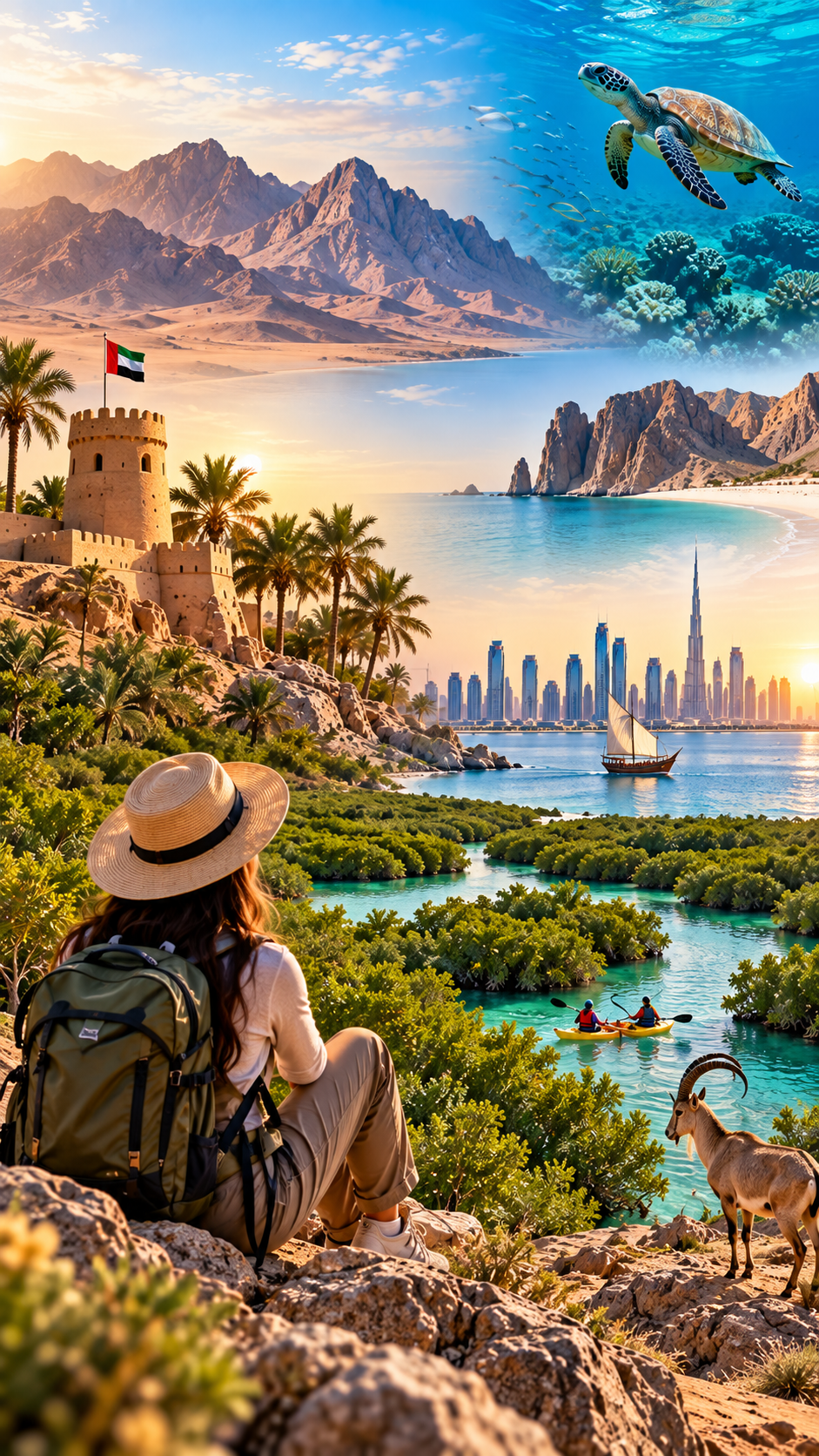
The Saudi Red Sea represents a newer and more ambitious approach to nature-based tourism.
Visit Saudi describes the destination as a regenerative tourism project built around islands, coral reefs, mangroves and desert landscapes. The area now includes multiple high-end resorts while continuing to position marine conservation as a central part of the visitor experience.
Marine activities include kayaking through mangroves with conservation guides, snorkelling, diving and guided exploration of desert landscapes. Official tourism information describes a rich reef system containing hundreds of coral species and marine animals.
Sustainability is also being integrated into resort infrastructure. Visit Saudi states that Shura Island operates entirely on renewable energy, while Desert Rock Resort uses renewable power and water-conservation systems.
That does not remove the environmental footprint of developing remote islands, and travellers should still look critically at sustainability claims. However, the Red Sea demonstrates how conservation is increasingly being incorporated into the design and marketing of new Gulf tourism destinations.
Best for: Marine eco-tourism, sustainable luxury, diving, snorkelling and couples.
Al Thakhira Mangroves, Qatar
Green mangrove forests may not be the landscape most visitors imagine when thinking about Qatar, but Al Thakhira shows a completely different side of the country.
The reserve was designated in 2006 because of its marine biodiversity. Visitors can kayak or paddleboard through mangrove waterways and look for fish, crabs and bird species including herons and flamingos.
Mangroves perform several ecological roles at once. They provide breeding areas for marine species, protect coastlines and absorb carbon dioxide, making them especially important in vulnerable coastal environments. Visit Qatar actively uses guided kayaking as an opportunity to educate visitors about these benefits.
The wider Al Thakhira area also works well for birdwatching and quiet coastal exploration.
Travellers should avoid leaving rubbish, disturbing nesting birds or pushing kayaks directly through dense vegetation simply to get a better photograph.
Best for: Kayaking, birdwatching, beginners and short nature trips from Doha.
Khor Al Adaid, Qatar
Where Al Thakhira represents Qatar’s green coastal ecosystems, Khor Al Adaid represents its dramatic desert environment.
Known as the Inland Sea, the nature reserve sits in southeast Qatar where enormous dunes meet a tidal lagoon. The area became a protected reserve in 2007 and is included on UNESCO’s World Heritage Tentative List.
The ecosystem supports desert and marine wildlife, including turtles, flamingos, gazelles and other species. Visit Qatar recommends activities ranging from birdwatching and guided nature walks to swimming and camping.
Access requires a 4×4 and an experienced off-road driver because there is no conventional paved road into the reserve.
This is also where responsible tourism becomes particularly important. Repeated uncontrolled driving over fragile areas, littering and excessive noise can undermine the reason travellers came to experience the landscape in the first place.
Choose operators that follow established access routes, remove all waste and avoid disturbing wildlife.
Best for: Desert landscapes, nature photography, camping and guided ecological tours.
Hawar Islands, Bahrain
Bahrain’s Hawar Islands combine wildlife, open water and remote island landscapes.
Hawar Resort by Mantis describes its location as an eco-conscious retreat surrounded by a wildlife sanctuary approximately 20 kilometres from the mainland. The resort’s tourism offering is built around lower-impact island experiences alongside sustainably designed accommodation.
For travellers interested in eco-luxury, this creates a different alternative to conventional urban resort stays.
Instead of viewing the island simply as a private beach destination, visitors can focus on its natural environment and wildlife, keep water-based activities low-impact and learn more about the island ecosystem.
Bahrain Tourism also promotes nature experiences closer to Manama, including guided kayaking through the mangroves of Tubli Bay.
Best for: Island escapes, couples, wildlife and travellers combining nature with comfortable accommodation.
Mohammed bin Zayed Natural Reserve, Bahrain
Bahrain also provides a more educational conservation experience at the Mohammed bin Zayed Natural Reserve in Zallaq.
The protected area is dedicated to biodiversity conservation and the protection and breeding of threatened wildlife, including Arabian oryx and Bahraini reem. Part of the reserve remains restricted to researchers and specialists, while another section is open to visitors.
This controlled-access model is worth highlighting because good eco-tourism does not mean opening every part of a reserve to the public.
Some habitats need to remain protected from tourism entirely.
Visitors can explore the public section and learn about regional plants, birds, mammals and reptiles without requiring unrestricted access to sensitive conservation zones.
Best for: Families, wildlife education and conservation awareness.
Daymaniyat Islands Nature Reserve, Oman
Oman’s Daymaniyat Islands are among the Gulf’s strongest marine nature destinations.
The reserve is known for clear water, coral reefs and varied fish and marine species. Experience Oman promotes diving, snorkelling and kayaking as key ways to explore the islands.
For travellers based in Muscat, the islands offer a relatively easy way to replace an ordinary sightseeing day with an experience focused on marine ecosystems.
The environmental responsibility of the operator matters enormously here. Boats should respect reserve regulations, avoid anchoring on coral and prevent visitors from touching or removing marine life.
Snorkellers should also control buoyancy and avoid standing on reefs, even in shallow water.
The goal should be to leave the underwater environment exactly as it was found.
Best for: Snorkelling, diving, marine photography and nature-focused day trips.
Ras Al Jinz and Masirah Island, Oman
Oman’s eastern coastline is one of the region’s most important areas for travellers interested in sea turtles.
Ras Al Jinz Turtle Reserve combines natural conservation with archaeological heritage. Experience Oman identifies it as part of the wider turtle reserve landscape along the South Al Sharqiyah coast.
Further south, Masirah Island supports an especially rich mix of marine and bird life. Oman’s tourism authority says its beaches provide opportunities to see loggerhead, green, hawksbill and olive ridley turtles, as well as migratory birds including pelicans and flamingos.
Wildlife encounters of this kind require much more care than ordinary sightseeing.
Artificial light, touching animals, approaching nesting females too closely or crowding hatchlings can disturb natural behaviour. Visitors should follow reserve staff and licensed guides rather than trying to locate nests independently.
Oman’s strength is that these wildlife destinations can also be combined with wadis, mountains and traditional villages, producing a nature-focused itinerary rather than a single attraction.
Best for: Turtle conservation, birdwatching, road trips and wildlife photography.
Jahra Nature Reserve and Kuwait’s Protected Landscapes
Kuwait is less commonly associated with eco-tourism, but it contains important wetland and desert conservation areas.
The Jahra Nature Reserve is particularly significant for birds and wetlands. Kuwait’s Environment Public Authority operates a permit system for visitors and amateur photographers, with strict rules designed to reduce disturbance. Visitors are prohibited from hunting, leaving marked vehicle tracks, camping, lighting fires or disturbing wildlife.
This is arguably a good example of what responsible reserve tourism should look like. Access is possible, but visitors do not receive unlimited freedom simply because they have entered the protected area.
Kuwait’s larger Sabah Al-Ahmad Natural Reserve protects hundreds of square kilometres of desert, coastal mudflats, salt marshes and other habitats. The Environment Public Authority records more than 150 bird species in the reserve alongside reptiles, mammals and significant native vegetation.
Sabah Al-Ahmad should not be treated as a casual tourist attraction without checking current access arrangements. Its value lies primarily in conservation.
Best for: Birdwatchers, conservation enthusiasts and travellers prepared to follow permit requirements.
Best Eco-Tourism Activities Across the GCC
The best activity depends on the ecosystem rather than the country.
| Eco Activity | Strong Destinations |
|---|---|
| Mangrove kayaking | Abu Dhabi, Al Thakhira, Saudi Red Sea, Bahrain |
| Birdwatching | Qatar, Bahrain, Kuwait, Oman |
| Turtle observation | Oman, Qatar, Saudi Red Sea |
| Coral reef snorkelling | Oman and Saudi Arabia |
| Responsible diving | Farasan Islands, Daymaniyat Islands, Red Sea |
| Wildlife safaris | Sir Bani Yas Island |
| Desert nature walks | Qatar and Saudi Arabia |
| Conservation education | Bahrain and UAE |
| Eco-luxury stays | Saudi Red Sea and Hawar Islands |
| Nature photography | Oman, Kuwait, Qatar and Saudi Arabia |
An eco-tourism itinerary does not need to include high-energy adventure every day. Quiet observation, guided walks and educational experiences can often create a deeper connection with the environment.
How to Choose a Responsible Nature Tour
A company using words such as “eco”, “green” or “sustainable” is not automatically operating responsibly.
Before booking, look at what the operator actually does.
Ask whether groups are kept small, whether guides explain environmental rules and whether boats or vehicles follow established routes. Find out how waste is handled and whether wildlife is fed, handled or chased for photographs.
For marine activities, ask whether the operator uses responsible anchoring practices and whether guides prevent guests from touching coral.
For desert trips, choose companies that stay on recognised routes where required and remove all waste.
For wildlife watching, avoid companies promising guaranteed close encounters. Wild animals should determine how close they come to people, not the tour operator.
Responsible tourism sometimes means seeing less rather than getting closer.
Wildlife Watching Without Disturbing Animals
Seeing turtles, flamingos, oryx or dolphins in the wild can become the highlight of a Gulf trip, but photographs should never take priority over the animals.
Use zoom lenses rather than approaching wildlife. Keep voices low around nesting or resting areas and never attempt to feed animals simply to bring them closer.
On beaches used by nesting turtles, avoid bright flash photography and follow the instructions of conservation staff.
Birdwatchers should be especially careful during breeding and migration periods. Kuwait’s Jahra reserve explicitly restricts behaviour that could interfere with nests or wildlife and requires visitors to remain on designated routes.
The basic rule is simple: if an animal changes its behaviour because you approached it, you are probably too close.
How to Reduce Your Impact While Travelling
Eco-tourism also depends on everyday travel decisions.
Bring a reusable water bottle where refill facilities are available rather than repeatedly buying small plastic bottles. Avoid leaving food packaging, cigarette ends or tissues in deserts and beaches, even when a location appears empty.
Do not collect shells, coral, plants, rocks or wildlife souvenirs from protected areas.
Choose established walking routes rather than creating shortcuts across vegetation. In mangroves, stay within recognised waterways and do not pull branches aside for photographs.
Support local guides, locally owned businesses and traditional producers when possible. Eco-tourism works best when communities see meaningful benefits from protecting landscapes rather than replacing them with more intensive development.
Travellers should also resist the temptation to geotag sensitive wildlife nesting locations publicly if doing so could encourage uncontrolled visitation.
Best Time for Eco-Tourism Across the Gulf
For most land-based eco-tourism, November through March provides the easiest conditions.
Cooler temperatures make mangrove paddling, desert walks, birdwatching and reserve visits significantly more comfortable. Qatar Tourism identifies the cooler winter months as ideal for exploring its reserves, while spring and autumn are especially interesting for migratory birdwatching.
Saudi Arabia’s Al Urmah eco-tourism season also runs through the cooler period from October to April, with activities based around deserts, valleys, cycling and traditional camel journeys.
Marine tourism can follow different seasonal patterns. Saudi Red Sea tourism operates year-round, although official guidance identifies October to April as the peak period for comfortable outdoor conditions.
Wildlife seasons matter more than ordinary weather when visiting turtle or bird habitats. Always confirm current viewing seasons and conservation restrictions before travelling.
Eco-Tourism Checklist for Gulf Travellers
Before visiting a Gulf nature destination, check these essentials:
- Confirm whether the area requires a permit or licensed guide.
- Choose operators that follow reserve and wildlife rules.
- Check seasonal closures before travelling.
- Carry sufficient water without leaving disposable waste behind.
- Use reef-safe behaviour when snorkelling or diving.
- Never feed, chase or touch wildlife.
- Remain on marked paths, roads and boardwalks.
- Keep noise low around birds and nesting areas.
- Avoid collecting shells, coral, plants or other natural materials.
- Carry all rubbish out of remote areas.
- Use reusable items where practical.
- Support local guides and community businesses.
- Ask how an eco-lodge actually reduces its environmental footprint.
- Avoid off-road driving through untouched vegetation.
- Respect restricted areas even when they would produce a better photograph.
These habits may appear small individually, but eco-tourism depends on thousands of visitors making choices that keep sensitive environments intact.
Final Thoughts on Eco-Tourism Destinations Across the Gulf
The best Eco-Tourism Destinations Across the Gulf reveal a region far more environmentally diverse than its international image sometimes suggests.
In the UAE, Jubail Mangrove Park, Mangrove National Park and Sir Bani Yas Island allow visitors to experience coastal ecosystems and wildlife conservation close to major cities. Abu Dhabi’s expanding network of visitor-accessible protected marine areas adds another dimension to nature tourism.
Saudi Arabia offers two particularly significant options. The Farasan Islands protect coral, mangroves, birds and rare wildlife within the country’s first UNESCO biosphere reserve, while The Red Sea is attempting to connect new luxury tourism development with renewable energy, conservation and regenerative tourism principles.
Qatar’s Al Thakhira Mangroves and Khor Al Adaid show the contrast between coastal wetlands and desert ecosystems, while Bahrain combines island nature at Hawar with conservation education at the Mohammed bin Zayed Natural Reserve.
Oman remains one of the Gulf’s strongest destinations for nature-focused travel, especially around the Daymaniyat Islands, Ras Al Jinz and Masirah Island, where coral ecosystems, turtles and migratory birds create opportunities for responsible wildlife experiences. Kuwait adds another important dimension through the controlled wetland access of Jahra Nature Reserve and the large protected landscape of Sabah Al-Ahmad Natural Reserve.
The purpose of eco-tourism should not be to turn every untouched landscape into another attraction. Its real value comes from making travel compatible with conservation.
The Gulf’s mangroves, deserts, reefs, islands and wetlands are most valuable when visitors can experience them today without reducing what remains for the people and wildlife that come next.
Do follow us on Instagram
Read More – Accessible Tourism in GCC Countries: 15 Essential Travel Tips