The Evolution of Entrepreneurship Across GCC: From Traditional Trading to Modern Startups
Introduction
Entrepreneurship has played an important role in shaping the economies and communities of the Gulf Cooperation Council (GCC). The GCC includes six countries: Saudi Arabia, the United Arab Emirates (UAE), Qatar, Kuwait, Bahrain, and Oman. Across these countries, business has evolved from traditional trading, fishing, pearl diving, and family-run shops into a modern environment that includes technology startups, digital services, international trade, tourism, and innovative industries.
- Introduction
- 1. The Early History of Entrepreneurship in the GCC
- 2. How Oil Changed the Business Environment
- 3. The Rise of Small and Medium-Sized Enterprises
- 4. Digital Transformation and the New Generation of Entrepreneurs
- 5. Saudi Arabia: Entrepreneurship Under Vision 2030
- 6. The UAE: A Global Destination for Business
- 7. Qatar: Supporting Innovation and New Businesses
- 8. Bahrain: A Long History of Commerce and Financial Services
- 9. Kuwait: Traditional Business Culture Meets New Ideas
- 10. Oman: Entrepreneurship Beyond Traditional Industries
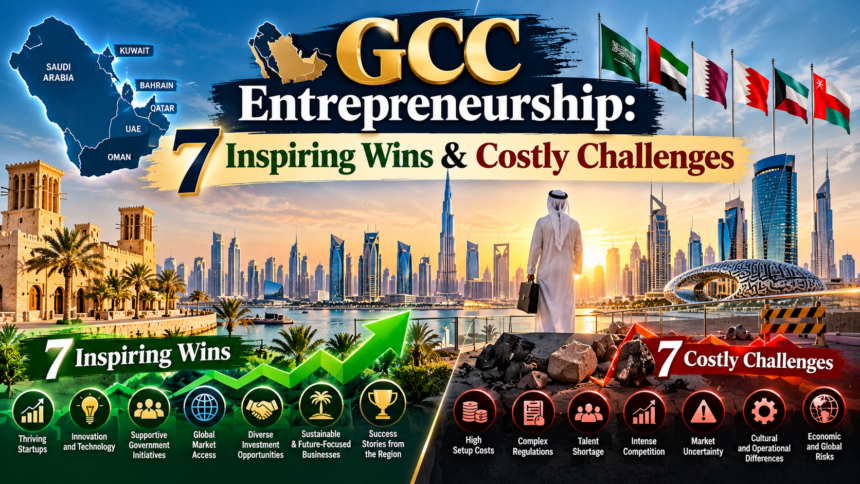
- 11. Positive Trends: Why Entrepreneurship Is Growing Across the GCC
- 12. Negative Side: The Main Challenges Facing GCC Entrepreneurs
- 13. Future Opportunities for Entrepreneurship in the GCC
- 14. How Entrepreneurs Can Build a Successful Business in the GCC
- Conclusion
- Frequently Asked Questions (FAQs)
For many years, oil and natural gas supported economic growth across the Gulf. Governments used energy revenues to build roads, ports, airports, schools, hospitals, and other infrastructure. These developments created opportunities for local business owners, contractors, suppliers, and traders. As cities expanded, new businesses emerged to meet the needs of growing populations.
Today, entrepreneurship has become an important part of economic diversification. Governments are encouraging small and medium-sized enterprises (SMEs), supporting innovative ideas, and attracting investors. Entrepreneurs are entering sectors such as e-commerce, financial technology, artificial intelligence, healthcare, education, logistics, food services, and renewable energy.
However, this journey has not been without difficulties. Access to funding, competition, rising operating costs, business regulations, and attracting skilled employees remain challenges for many entrepreneurs.
Understanding the evolution of entrepreneurship across the GCC helps explain how the region has changed and where its business opportunities may lead in the coming years.
1. The Early History of Entrepreneurship in the GCC
Before the discovery and expansion of the oil industry, entrepreneurship in the Gulf was closely connected to traditional livelihoods. People earned money through fishing, pearl diving, boatbuilding, farming, handicrafts, and local and international trade.
Coastal settlements were important centres of commercial activity. Traders connected the Arabian Peninsula with India, East Africa, Persia, and other parts of Asia. They exchanged goods such as dates, textiles, spices, pearls, and other valuable products.
Small businesses often started within families. A shop might be managed by several family members, while another family operated boats, supplied goods, or traded in local markets. Trust, personal relationships, and reputation were important in attracting customers.
Traditional markets, known as souks, were central to this business culture. They provided places where traders could sell goods, build relationships, negotiate prices, and exchange information.
Some common forms of early entrepreneurship included:
- Trading food, textiles, spices, and household products.
- Fishing, pearl diving, and selling marine products.
- Building, repairing, and operating traditional boats.
- Operating small shops and family businesses.
- Producing handmade goods and traditional crafts.
- Providing transport and services to merchants.
These activities helped create the foundations of the Gulf’s commercial culture. Although modern entrepreneurship looks very different today, many familiar principles remain important: understanding customer needs, building trust, managing money, and maintaining long-term relationships.
2. How Oil Changed the Business Environment
The discovery and development of oil changed the economic direction of the Gulf during the 20th century. Growing oil revenues helped governments invest in infrastructure and public services, while demand for goods, construction, transport, and professional services increased.
This created opportunities for entrepreneurs who could supply materials, build facilities, transport goods, operate shops, and provide services to expanding cities.
Construction companies, transport businesses, trading firms, retailers, and service providers benefited from urban growth. Family-owned businesses also expanded, with some moving from small shops into larger commercial groups.
However, early private-sector growth was closely linked to government spending and the oil industry. Many businesses supplied products or services to governments, large companies, or industries connected to energy production.
This created economic opportunities but also made some businesses vulnerable to changes in oil prices and government budgets.
Over time, Gulf countries began to recognise the importance of building a more diverse business environment. They increasingly focused on private-sector growth, foreign investment, industrial development, tourism, and other sources of income.
The shift from a mainly oil-supported economy towards a broader range of industries helped create the conditions for modern entrepreneurship.
Important key points:
- Rentier State Wealth: Hydrocarbon revenues fund the vast majority of state budgets, historically shielding businesses from heavy domestic taxation.
- State-Driven Infrastructure: Governments used oil windfalls to build world-class logistics hubs, ports, and smart cities that attract global enterprises.
- Expatriate Labor Reliance: Massive oil wealth created a dual labor market, heavily relying on foreign workers for private-sector operations
- Workforce Nationalization: Recent policy shifts (like Saudization) mandate that private firms hire and train local citizens rather than expatriates.
- U.S. Dollar Currency Pegs: Standardized pegs to the U.S. dollar remove exchange-rate risks, providing long-term financial stability for trade.
- Sovereign Wealth Funds: Mega-funds (like Saudi Arabia’s PIF and UAE’s ADIA) inject massive capital back into domestic tech, tourism, and real estate sectors.
- Aggressive Diversification: Volatile oil markets have forced a massive shift toward non-oil sectors, offering lucrative incentives in green energy, digital tech, and tourism.
- Regulatory Modernization: To ease the post-oil transition, states have liberalized foreign direct investment (FDI) laws, allowing 100% foreign business ownership.
3. The Rise of Small and Medium-Sized Enterprises
Small and medium-sized enterprises, commonly called SMEs, have become an important part of the GCC economy. They include small shops, restaurants, service providers, technology businesses, manufacturing firms, and companies that supply products to larger organisations.
SMEs create employment, provide specialised services, support local communities, and help economies become less dependent on a limited number of major industries.
In Saudi Arabia, the national entrepreneurship strategy aims to strengthen businesses and increase the contribution of SMEs to the economy. The country’s Vision 2030 framework has set a target of raising SME contribution to GDP to 35% by 2030.
Across the GCC, small businesses are active in areas such as:
- Retail and online shopping.
- Restaurants, cafés, and catering.
- Construction and property services.
- Digital marketing and creative services.
- Logistics and delivery.
- Healthcare and education.
- Software development and IT support.
- Manufacturing and specialised industrial services.
Many entrepreneurs begin with a small operation and gradually expand after developing a reliable customer base. Others create new products or services to meet needs that larger businesses have overlooked.
SMEs also help larger companies work more efficiently by supplying specialist products, maintenance, software, professional services, and other business support.
4. Digital Transformation and the New Generation of Entrepreneurs
One of the biggest changes in GCC entrepreneurship has been the growth of digital technology.
In the past, starting a business often required a physical shop, a large inventory, printed advertising, and direct contact with customers. Today, entrepreneurs can use websites, social media, online payment systems, and mobile applications to reach customers and manage daily operations.
A small business can promote its products through Instagram, accept online orders, and provide customer support through messaging platforms. Software companies can serve customers in different countries without opening an office in every location.
E-commerce has created opportunities for independent retailers, fashion brands, home businesses, speciality food companies, and direct-to-customer brands. Digital marketing has also created new jobs for content creators, designers, advertising specialists, and social media managers.
Technology startups are developing solutions in areas such as:
- Financial technology: Digital payments, financial services, and business tools.
- Artificial intelligence: Automation, data analysis, and customer service.
- Education technology: Online learning and digital training.
- Health technology: Digital health services and appointment systems.
- Logistics technology: Delivery tracking, inventory systems, and supply-chain management.
- E-commerce: Online marketplaces and digital retail services.
- Business software: Tools that help companies manage sales, accounting, and customers.
The digital economy has reduced some traditional barriers to starting a business. Nevertheless, entrepreneurs still need a clear business model, suitable licences, reliable technology, customer trust, and enough money to operate sustainably.
5. Saudi Arabia: Entrepreneurship Under Vision 2030
Saudi Arabia has become a major example of the GCC’s push towards entrepreneurship and economic diversification.
Vision 2030 seeks to expand private-sector activity and encourage businesses in industries beyond traditional oil production. Areas receiving attention include tourism, entertainment, logistics, technology, healthcare, manufacturing, financial services, and renewable energy.
The country has also developed programmes and institutions to support SMEs, improve access to finance, and connect entrepreneurs with business opportunities.
According to Saudi Arabia’s 2025 Vision 2030 Annual Report, the number of SMEs exceeded 1.7 million, their contribution to GDP reached 22.9%, and they employed around 8.8 million people.
These figures reflect a growing role for entrepreneurs and investors in the Saudi economy.
Opportunities in Saudi Arabia
Entrepreneurs can explore opportunities in tourism, hospitality, events, digital services, construction supply chains, entertainment, and business technology.
Large development projects may create demand for smaller suppliers, specialist contractors, design companies, software providers, and local service businesses.
However, large opportunities do not guarantee success. Business owners must understand licensing requirements, customer expectations, competition, cash-flow needs, and the practical demands of working with larger clients.
6. The UAE: A Global Destination for Business
The United Arab Emirates has developed a strong reputation as a destination for entrepreneurs, investors, and international businesses.
Dubai and Abu Dhabi are particularly important business centres. Their international airports, ports, logistics networks, financial services, and connections with global markets support companies working across several countries.
The UAE has also developed free zones, digital business services, and programmes designed to attract new businesses. Government initiatives focus on areas such as reducing business costs, improving financing options, supporting innovation, and helping SMEs participate in government procurement. Details are available through the UAE Ministry of Economy and Tourism’s entrepreneurship and SME programmes.
Entrepreneurs in the UAE work across many industries, including:
- E-commerce and online retail.
- Tourism and hospitality.
- Digital marketing and creative services.
- Logistics and international trading.
- Financial technology.
- Business consulting and professional services.
- Food businesses and speciality products.
- Software and technology development.
The UAE’s international population also creates demand for products and services aimed at different communities.
However, entrepreneurs must consider licence costs, office or workspace expenses, competition, visa requirements, and the rules that apply to their chosen business activity. The right business structure depends on the activity, location, ownership arrangements, and target market.
7. Qatar: Supporting Innovation and New Businesses
Qatar has been working to develop entrepreneurship as part of its broader economic diversification goals.
The country has opportunities in business services, tourism, sports, logistics, education, healthcare, technology, and specialised services linked to major industries.
Qatar’s Ministry of Commerce and Industry has outlined a 2024–2030 strategy focused on improving the business environment, supporting entrepreneurship, attracting investment, and developing national industries. These priorities are described in its official strategy.
Technology and digital services provide opportunities for startups that can solve practical problems for businesses and consumers. Companies may develop software, improve payment systems, offer online learning, support tourism operations, or provide specialised services to larger organisations.
However, the opportunity to start a business does not always translate into a successful or sustainable company. Qatar’s national entrepreneurship research, published through Qatar Development Bank and the Global Entrepreneurship Monitor, has identified concerns around the difficulty of starting businesses and reliance on personal savings.
Qatar’s innovation ecosystem prioritizes high-growth digital and deep-tech areas, including:
- Artificial Intelligence (AI) and Sovereign AI infrastructure (backed by multi-billion dollar national initiatives)
- FinTech (supported via the Qatar FinTech Hub)
- Cybersecurity, HealthTech, ClimateTech, Robotics, SaaS, and Supply Chain Technology
8. Bahrain: A Long History of Commerce and Financial Services
Bahrain has a long commercial history shaped by maritime trade, pearl diving, and its location within the Gulf.
Over time, the country developed a broader economic base that includes financial services, manufacturing, logistics, tourism, and professional services. Its efforts to diversify began relatively early compared with some neighbours, partly because its oil resources were more limited.
For entrepreneurs, Bahrain offers potential opportunities in financial technology, professional services, online businesses, tourism, retail, and business support.
Smaller markets can create advantages for businesses that value close customer relationships and want to test a product or service before expanding to other countries.
However, a small domestic market can also limit growth. Entrepreneurs may need to build relationships across the GCC to reach a larger customer base. This requires an understanding of different regulations, sales channels, customer preferences, and operating costs.
Bahrain’s experience illustrates how a country can build entrepreneurial activity by using its existing strengths while exploring new industries.
9. Kuwait: Traditional Business Culture Meets New Ideas
Kuwait has a long history of trading, family businesses, retail, and maritime commerce. Its oil wealth helped finance modern infrastructure and a large domestic market, creating opportunities for businesses supplying goods and services.
Today, entrepreneurs in Kuwait work in restaurants, online retail, professional services, digital marketing, technology, logistics, and consumer-focused industries.
Social media and e-commerce have created new ways for small businesses to reach customers. Home-based businesses and specialised online brands can test products without immediately investing in a large retail space, although all applicable legal requirements still need to be checked.
Kuwait’s challenge is to encourage sustainable private-sector growth and create more opportunities for innovative businesses. Entrepreneurs may need to deal with competition from established firms, financing constraints, and market limitations.
Businesses that understand local customer needs and provide reliable service can build strong customer relationships. To grow further, they may also need to offer distinctive products, improve efficiency, and explore regional markets.
10. Oman: Entrepreneurship Beyond Traditional Industries
Oman has a long history of maritime trade linking the Arabian Peninsula with East Africa, India, and other parts of Asia. This history helped build a culture of commerce and connections across the Indian Ocean.
Today, Oman is working to strengthen entrepreneurship in sectors that can contribute to economic diversification and create employment.
Potential areas for entrepreneurs include tourism, logistics, food processing, fisheries, agriculture, manufacturing, renewable energy, and digital services.
Oman’s natural landscapes, historic forts, coastal communities, and cultural heritage can support tourism businesses. Local entrepreneurs can develop accommodation, guided experiences, transport services, traditional products, and food businesses.
The country’s ports and transport connections may also create opportunities for companies supporting shipping, warehousing, supply chains, and industrial activity.
Nevertheless, entrepreneurs need to assess demand carefully. Businesses should consider seasonal income, transport costs, access to skilled employees, financing, and the size of their target market.
Oman’s experience highlights the importance of developing businesses that build on local strengths while serving wider regional and international customers.
11. Positive Trends: Why Entrepreneurship Is Growing Across the GCC
Entrepreneurship across the GCC has several encouraging trends.
More business support
Governments have introduced strategies, funding programmes, business centres, startup initiatives, and digital services to help entrepreneurs establish and grow companies. The details vary by country, but the wider goal is to make private businesses stronger contributors to national economies.
Growing access to technology
Digital tools allow entrepreneurs to advertise, manage stock, accept payments, and communicate with customers more efficiently. This can lower some entry costs and help small firms compete in selected markets.
New customer markets
International populations, tourism, regional trade, and growing demand for specialised services provide opportunities for companies with clear products and strong customer service.
Greater focus on innovation
Startups are increasingly exploring AI, software, fintech, health technology, education, sustainability, and logistics. These businesses can help solve practical problems and support other industries.
More opportunities for women and young people
Digital business models, training programmes, and entrepreneurship initiatives can give women and young people new routes into business ownership. Their success still depends on access to finance, networks, skills, and suitable markets.
Economic diversification
As governments seek to expand industries outside oil and gas, new opportunities may appear for SMEs that supply products, services, and specialist skills.
Together, these changes are helping broaden the role of entrepreneurship across the GCC.
12. Negative Side: The Main Challenges Facing GCC Entrepreneurs
Despite this progress, starting and growing a business is not always easy.
Difficulty accessing finance
Some entrepreneurs struggle to obtain loans or investment, especially when their businesses are new and have little financial history. The International Monetary Fund has highlighted the scope to increase lending to SMEs across the GCC. Its 2025 analysis reported that SME lending represented around 4% of total commercial bank loans across the region, compared with 33.5% in emerging-market economies.
High operating costs
Rent, staff, marketing, technology, equipment, and licence fees can put pressure on small businesses. Costs vary widely across countries and cities, so entrepreneurs need to prepare realistic budgets.
Strong competition
Popular sectors such as restaurants, retail, e-commerce, and digital marketing can become crowded. A business may struggle if its products are similar to those of many existing competitors.
Complex rules and procedures
Business registration, licensing, tax obligations, employment rules, ownership requirements, and other regulations may differ by country and business activity. Entrepreneurs should verify requirements before investing.
Limited market size in some countries
Some businesses may reach a ceiling if they rely only on a small local customer base. Expansion into other GCC markets can help, but it requires careful planning.
Difficulty finding and keeping skilled employees
Growing companies need workers with the right technical, sales, management, and customer-service skills. Competition for experienced employees can raise costs.
Fear of failure and uncertain demand
A promising idea is not always a profitable business. Entrepreneurs need to test customer demand, manage cash carefully, and learn from early feedback rather than investing too much before understanding the market.
These challenges do not mean entrepreneurship is a poor choice. They show why planning, financial discipline, customer research, and access to reliable support are essential.
13. Future Opportunities for Entrepreneurship in the GCC
The GCC’s future business environment is likely to be shaped by technology, diversification, sustainability, and changing consumer needs.
Entrepreneurs should look for problems that people and businesses are willing to pay to solve, rather than following every popular trend.
Potential opportunities include:
- Artificial intelligence services: Helping companies automate routine work and improve customer support.
- Digital business tools: Developing software for sales, accounting, inventory, and customer relationships.
- Tourism and cultural experiences: Providing local tours, accommodation, food experiences, and heritage activities.
- Logistics and delivery: Improving storage, transport, fulfilment, and supply-chain operations.
- Education and professional training: Offering practical courses that meet changing workforce needs.
- Sustainable products and services: Supporting energy efficiency, reuse, waste reduction, and resource management.
- Healthcare services: Providing suitable health-related technology and support services within the relevant regulatory framework.
- Specialist manufacturing: Producing products or components for local industries and regional customers.
Before entering any sector, business owners should research local demand, competition, regulations, setup costs, and the time required to reach profitability. A small test project can be a safer starting point than a large investment.
14. How Entrepreneurs Can Build a Successful Business in the GCC
A successful business does not depend only on having a good idea. It also requires consistent execution.
1. Understand the market. Identify who your customers are, what they need, and what they currently use. Speak directly with potential customers before committing major funds.
2. Choose the right business model. Decide how the business will earn money, what it will cost to operate, and how customers will receive the product or service.
3. Check legal requirements. Research licensing, ownership, taxation, employment, and other rules in the chosen GCC country. Use official government sources or qualified professional advice where necessary.
4. Prepare a realistic budget. Include setup costs, regular expenses, marketing, staff, technology, and a reserve for unexpected problems.
5. Use digital tools wisely. Websites, online payments, accounting software, and digital marketing can improve efficiency, but they should support a clear business strategy.
6. Build strong relationships. Reliable suppliers, satisfied customers, skilled employees, and professional networks can help a company grow.
7. Measure performance. Track revenue, expenses, customer retention, profit margins, and cash flow. Sales alone do not prove that a business is financially healthy.
8. Plan for long-term growth. Once a business has proven demand, consider new products, business partnerships, or expansion to other GCC markets.
Entrepreneurs who balance ambition with careful planning are better prepared to manage risk and build a sustainable business.
Conclusion
The evolution of entrepreneurship across the GCC reflects the wider transformation of the Gulf region. Traditional traders, fishermen, pearl divers, craftspeople, and family businesses laid the foundations of commercial life. Oil-driven development then created new markets and infrastructure, while economic diversification and digital technology opened additional opportunities.
Today, Saudi Arabia, the UAE, Qatar, Bahrain, Kuwait, and Oman are developing entrepreneurship in different ways. Their business environments are influenced by local markets, national strategies, available resources, and international connections.
There are positive signs, including expanding digital services, growing startup activity, new funding initiatives, and opportunities in technology and non-oil industries. At the same time, funding gaps, operating costs, competition, and market limitations remain important challenges.
The future of GCC entrepreneurship will depend not only on new startups or major investment projects but also on the ability of small and medium-sized businesses to innovate, employ people, serve customers, and grow steadily.
For entrepreneurs, the region offers possibilities—but success comes from understanding the market, solving real problems, following local regulations, and managing finances carefully. With these foundations, businesses can contribute to more diverse and resilient GCC economies.
Frequently Asked Questions (FAQs)
1. What is the evolution of entrepreneurship across GCC?
Entrepreneurship has evolved from traditional trading, fishing, pearl diving, and family businesses into a wider business environment that includes SMEs, technology startups, digital services, tourism, logistics, and innovative industries.
2. Which GCC countries support entrepreneurship?
All six GCC countries—Saudi Arabia, the UAE, Qatar, Bahrain, Kuwait, and Oman—have initiatives aimed at supporting business development and economic diversification. The programmes, eligibility requirements, and opportunities differ between countries.
3. What are the main industries for entrepreneurs in the GCC?
Common opportunities include e-commerce, tourism, logistics, food services, financial technology, software development, healthcare, education, manufacturing, and sustainability-related services. The best sector depends on customer demand and local market conditions.
4. What challenges do entrepreneurs face in the GCC?
Challenges can include limited access to funding, high operating costs, competition, regulatory requirements, difficulty finding skilled workers, and restricted market size. Entrepreneurs should research these issues before launching a business.
5. Why are SMEs important to GCC economies?
SMEs support employment, provide specialised services, encourage innovation, create local business opportunities, and help diversify economic activity beyond oil and gas.
6. How is technology changing entrepreneurship in the GCC?
Digital platforms allow companies to market products, receive payments, communicate with customers, and manage operations online. AI, fintech, e-commerce, and business software are also creating new products and services.
7. What is the future of entrepreneurship across the GCC?
Future growth may come from technology, tourism, logistics, education, specialised manufacturing, sustainability, and other non-oil industries. Businesses that solve real customer problems and operate efficiently may be better positioned to grow.
8. How can a beginner start a business in a GCC country?
Start by researching customer demand, choosing a suitable business model, preparing a budget, and checking official licensing and ownership requirements. Begin at a manageable scale, test demand, and expand when the business shows sustainable results.
Do follow us on Instagram
Read More – The History Behind the Oldest Neighbourhoods in Gulf Cities