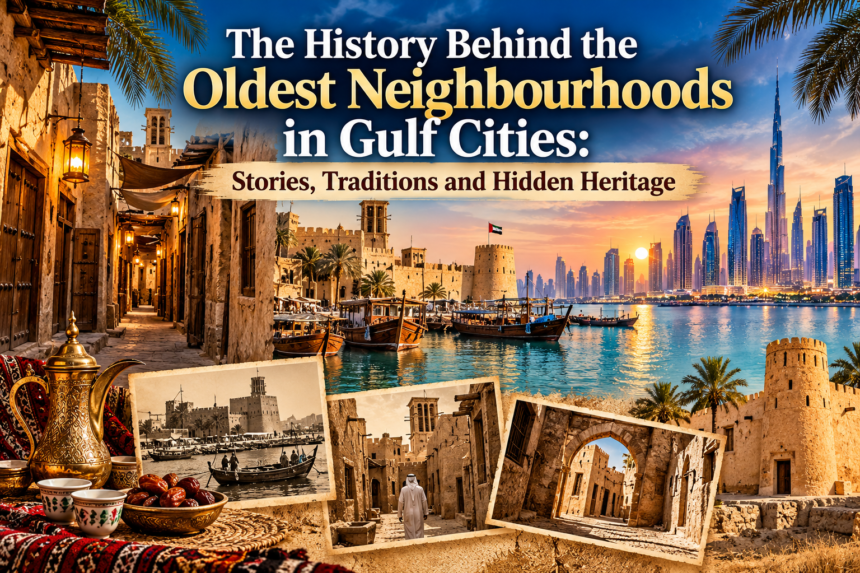
The History Behind the Oldest Neighbourhoods in Gulf Cities
Introduction : History Behind the Oldest neighbourhoods Gulf Cities
The Gulf region is famous for its modern skylines, luxury hotels, shopping malls, and impressive buildings. Cities such as Dubai, Doha, Abu Dhabi, Riyadh, Kuwait City, and Manama have changed rapidly over the past few decades. However, behind their modern appearance are old neighbourhoods that tell the story of how people lived, worked, traded, and built communities long before the rise of modern cities.
- Introduction : History Behind the Oldest neighbourhoods Gulf Cities
- 1. Why Old Neighbourhoods Matter in Gulf History
- 2. Al Fahidi Historical Neighbourhood, Dubai, UAE
- 3. Al Shindagha, Dubai: Where the Creek Tells Its Story
- 4. Deira, Dubai: A Neighbourhood Built Around Trade
- 5. Historic Jeddah, Saudi Arabia: The Gateway to Makkah
- 6. Muharraq, Bahrain: The Home of the Pearl-Diving Community
- 7. Muttrah, Oman: An Old Neighbourhood Shaped by the Sea
- 8. Kuwait City’s Old Neighbourhoods: Life Before Modern Development
- 9. Riyadh’s Historic Al-Diriyah: The Roots of a Modern Capital
- 10. What Traditional Gulf Neighbourhoods Have in Common
- 11. How Old Neighbourhoods Are Being Preserved Today
- 12. Why These Neighbourhoods Matter to Future Generations
- Conclusion
- Frequently Asked Questions (FAQs)
These historic neighbourhoods are more than collections of old houses and narrow streets. They reflect the history of fishing, pearl diving, international trade, religious traditions, family life, and local craftsmanship. Many developed near the sea, traditional markets, mosques, or important trade routes. Their locations helped residents earn a living and stay connected with other communities.
The oldest neighbourhoods in Gulf cities also reveal how people adapted to a hot climate, limited resources, and changing economic conditions. Traditional homes were built using locally available materials, while narrow lanes and shaded spaces helped people move around in the heat. Markets and courtyards created places for business, family gatherings, and social activities.
Today, many of these historic areas are being restored and protected. They attract visitors interested in local history, traditional architecture, and authentic cultural experiences. At the same time, they remain important reminders of the people and traditions that shaped the Gulf region.
In this article, we explore the history behind some of the oldest neighbourhoods in Gulf cities, their cultural importance, their traditional architecture, and why preserving them matters for future generations.
1. Why Old Neighbourhoods Matter in Gulf History
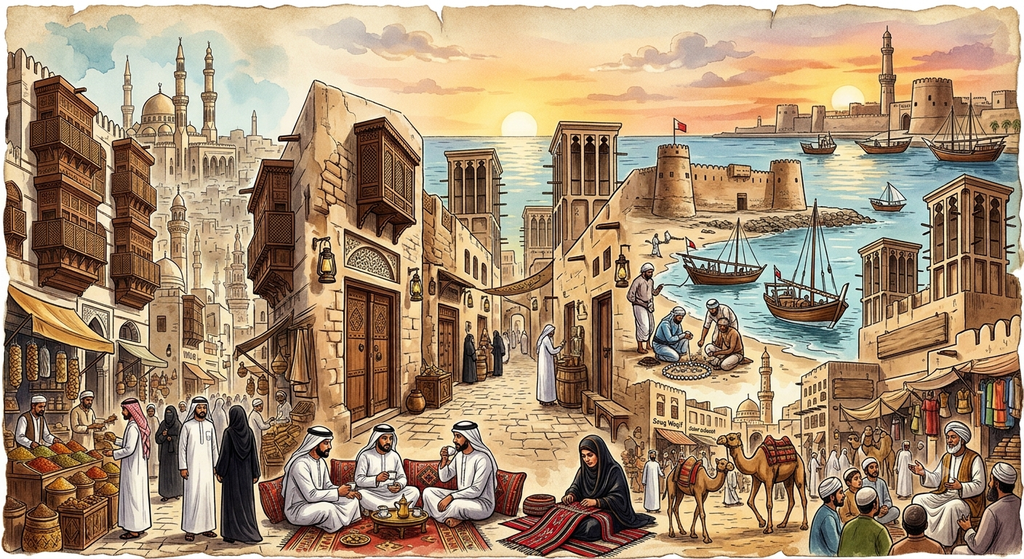
Before modern roads, airports, and skyscrapers transformed the Gulf, many communities developed around natural harbours, fishing areas, wells, mosques, and local markets.
Life was closely connected to the surrounding environment. Coastal communities depended on fishing, pearl diving, boatbuilding, and maritime trade. Inland settlements relied more heavily on farming, livestock, crafts, and regional exchange.
Neighbourhoods developed naturally around these activities. Families often lived close to relatives, neighbours, and local businesses. A mosque could serve as an important community centre, while a nearby market supplied food, clothing, tools, and household goods.
These older areas help us understand several important parts of Gulf history:
- Trade and business: Coastal settlements connected merchants from Arabia, India, East Africa, Persia, and other regions.
- Family and community life: Neighbours supported one another during celebrations, difficult times, and seasonal work.
- Traditional architecture: Buildings were designed to provide shade, privacy, and comfort in a hot climate.
- Local craftsmanship: Woodworkers, builders, boatmakers, traders, and other skilled workers helped communities grow.
- Cultural identity: Traditional homes, markets, mosques, and public spaces reflect local customs and values.
Climate and Vernacular Architecture:
- Natural Cooling: Traditional areas like Al Fahidi Historical Neighbourhood in Dubai or old quarters in Qatar and Saudi Arabia show how people adapted to extreme heat without electricity.
- Design Features: Buildings used coral stone, gypsum, mud, and palm fronds (barasti), paired with narrow winding alleys (sikkas) that channeled sea breezes and iconic wind towers (barjeels) that sucked cool air into private courtyards.
Understanding these neighbourhoods helps explain how Gulf cities developed before modern urban planning transformed their streets and skylines.
2. Al Fahidi Historical Neighbourhood, Dubai, UAE
Dubai is now an international centre for tourism, finance, trade, and technology. However, its history is closely connected to Dubai Creek, which helped establish the city as an important centre of maritime commerce.
One of the best-known places to explore this earlier period is Al Fahidi Historical Neighbourhood, also known as Al Bastakiya. The district preserves much of the traditional character associated with Dubai from the mid-19th century through the early decades of the city’s modern development.
Located near Dubai Creek, Al Fahidi developed when maritime trade, merchants, and local businesses played important roles in the city’s economy. Its buildings reflect a time when life moved at a different pace and communities depended heavily on trade and personal relationships.
The traditional wind towers – constructed from sandstone, teak, gypsum, palm wood and sandalwood – represent only a small part of Al Fahidi’s history. Each alley, twisting pathway and breezy tower tells a story of a life before the seven emirates united.
Traditional architecture of Al Fahidi
The neighbourhood is known for its narrow lanes, traditional courtyards, and wind towers called barajeel. These towers were designed to catch breezes and help circulate air through buildings before modern air conditioning became widely available.
Traditional construction used materials such as coral stone, gypsum, teak, sandalwood, and palm wood. These materials reflected the resources available through local building practices and regional trade.
The neighbourhood’s design also helped provide shade. Narrow pathways and closely arranged buildings reduced direct exposure to the sun in some areas.
Today, Al Fahidi contains cultural spaces, museums, galleries, cafés, and heritage buildings. Visitors can walk through its streets and learn about a period when Dubai was a much smaller trading settlement.
Why Al Fahidi matters: It connects modern Dubai with its earlier maritime history and demonstrates how traditional architecture responded to the local climate.
3. Al Shindagha, Dubai: Where the Creek Tells Its Story
Another historic area of Dubai is Al Shindagha, located near the entrance to Dubai Creek. Its position made it important to the development of the city and its connection with maritime trade.
For generations, Dubai Creek served as a working waterway. Boats carried merchants, goods, fishermen, and other travellers between the two sides of the city and across the wider Gulf trading network.
Al Shindagha was also associated with important political and family histories. Traditional houses in the area provide insight into the lives of influential residents and the development of the early city.
The neighbourhood’s history is closely linked to the relationship between the people of Dubai and the sea. Fishing, pearl diving, boatbuilding, and trade supported livelihoods, while the Creek connected the city with regional and international markets.
Today, heritage attractions and restored buildings help visitors understand these connections. Museums and cultural displays explain how people lived, worked, and adapted to the changing economy.
Al Shindagha is especially valuable because it tells a story that modern skyscrapers cannot show on their own: the story of a city built around a waterway and the people who depended on it.
Origins and History:
- Establishment: Settled and established in the 1830s to 1860s (with notable expansion around 1862 by members of the Bani Yas tribe and the Maktoum family).
- Royal Residence: It was the residential headquarters of Dubai’s rulers, most notably Sheikh Saeed bin Maktoum Al Maktoum, who lived here from 1912 to 1958.
- Trading & Fishing Hub: Because of its strategic location at the mouth of Dubai Creek, Al Shindagha acted as a vital port for pearling fleets, fishing boats, and regional maritime trade.
Architecture and Design
- Traditional Materials: Built using coral stone, limestone, gypsum, sandalwood, teak, and palm fronds.
- Wind Towers (Barajeel): Features classic Gulf architecture with wind towers designed to naturally cool homes before the advent of electricity.
- Courtyards & Alleys: Low-rise family compounds connected by narrow, winding sikkas (alleys) designed to capture sea breezes.
4. Deira, Dubai: A Neighbourhood Built Around Trade
Deira is one of Dubai’s historic commercial districts. Situated on the other side of Dubai Creek from Bur Dubai, it developed as an important place for merchants, traders, and shoppers.
Traditional markets helped make Deira a busy centre of everyday commerce. Traders sold spices, textiles, jewellery, perfumes, and many other goods. The area became known for markets that connected local customers with products from different parts of the world.
The Gold Souk and Spice Souk remain among the best-known examples of Dubai’s traditional market culture. Although shops and commercial activities have changed over time, the area’s trading identity continues.
How Deira shaped Dubai’s economy
Deira’s development shows the importance of small businesses and international connections in the history of Gulf cities. Merchants relied on relationships with suppliers, customers, transport workers, and trading partners.
Traditional boats, including wooden dhows, helped carry goods across the Creek and connect Dubai with regional markets. These activities supported employment and encouraged the growth of surrounding neighbourhoods.
Today, Deira combines older commercial streets with modern buildings, hotels, and transport connections.
Its continued activity shows that heritage does not always need to be separated from everyday life. A historic neighbourhood can remain a working business district while preserving important elements of its past.
5. Historic Jeddah, Saudi Arabia: The Gateway to Makkah
Historic Jeddah, also known as Al-Balad, is one of the most significant heritage districts in Saudi Arabia. Located on the Red Sea coast, it developed as an important port and a gateway for Muslim pilgrims travelling to Makkah.
UNESCO records Jeddah’s role in Indian Ocean trade routes from the 7th century AD. Its position helped connect Arabia with merchants and travellers from Africa, Asia, and other parts of the Middle East.
The arrival of pilgrims and traders helped create a diverse urban community. Merchants, craftspeople, religious visitors, and residents contributed to the growth of the neighbourhood.
The famous houses of Al-Balad
Historic Jeddah is particularly known for its traditional tower houses, many of which were built by wealthy merchants during the 19th century. These buildings often featured decorative wooden window screens called rawashin, which helped provide shade, airflow, and privacy.
Coral stone was another important building material. Builders used materials gathered from the coastal environment and combined them with regional techniques and craftsmanship.
The historic district also includes mosques, traditional markets, public squares, and residential buildings. Its streets reflect the way trade, religion, and family life came together in the old city.
The opening of the Suez Canal in 1869 and changes in international shipping strengthened the wider Red Sea trading network during the late 19th century. Jeddah benefited from these connections, and some merchant families built impressive houses that reflected their commercial success.
Why Historic Jeddah is important
Al-Balad is not simply an old commercial district. It is a record of cultural exchange between the Arabian Peninsula, Africa, and Asia.
Its buildings and streets demonstrate how communities adapted architecture to the coastal climate while creating homes, businesses, and public spaces.
Preserving Historic Jeddah helps protect an important part of Saudi Arabia’s urban history and the wider story of Red Sea trade.
6. Muharraq, Bahrain: The Home of the Pearl-Diving Community
Muharraq holds a special place in Bahrain’s history. For centuries, the city was closely associated with the Gulf’s pearl-diving economy and served as Bahrain’s capital from 1810 to 1923.
Before oil became the foundation of Bahrain’s modern economy, pearl diving supported a large network of people. Divers, boat captains, merchants, sailors, boatbuilders, and suppliers all contributed to the industry.
Muharraq grew around this economic activity. Its traditional neighbourhoods, known locally as firjan, were often organised around family connections, mosques, and community gathering places.
How pearl diving shaped neighbourhood life
Pearl diving was seasonal and demanding. Many men spent long periods at sea, while families remained on land and managed their homes and daily responsibilities.
Local markets, houses, and gathering places formed part of a community system that helped people support one another. Neighbourhood connections were particularly important during the pearling season.
Traditional houses in Muharraq often used coral stone and included carefully designed windows, wooden features, and spaces that protected household privacy.
The city’s architecture also reflects international influences. Trade connected Bahrain with India, Persia, East Africa, and other regions, bringing new materials, decorative styles, and building techniques.
The Pearling Path
Today, Muharraq’s Pearling Path helps visitors understand the history of this industry. Recognised as a UNESCO World Heritage Site in 2012, the property includes historic buildings, oyster beds, part of the seashore, and Qal’at Bu Mahir, a fortress associated with boats departing for pearl-diving grounds.
The historic route highlights the relationship between the sea, commerce, architecture, and community life.
Muharraq’s neighbourhoods are an important reminder that the Gulf’s economic history was not built on oil alone. Before the modern energy industry, pearl diving helped shape the lives and identities of many coastal communities.
7. Muttrah, Oman: An Old Neighbourhood Shaped by the Sea
Muttrah, also written as Matrah, is one of Oman’s historic coastal areas. Located within the Muscat region, it has long been associated with maritime activity and traditional commerce.
Its coastal position made it useful for trade and transport. The surrounding harbour connected local merchants with wider maritime networks, while the nearby mountains helped shape the area’s physical layout.
Muttrah Souq remains one of its most recognisable landmarks. Traditional markets like this have historically brought together merchants, residents, craftspeople, and travellers.
Visitors can find shops selling textiles, perfumes, traditional products, jewellery, and souvenirs. The market’s atmosphere offers a glimpse of how commerce operated before modern shopping centres became common.
Architecture and everyday life in Muttrah
Older parts of Muttrah reflect the relationship between buildings, streets, the harbour, and the surrounding landscape. Homes and commercial buildings developed in response to the available space and the needs of people living and working in a busy coastal district.
The neighbourhood’s character is different from the modern business districts found in many Gulf cities. Its narrow streets and traditional market environment provide a strong sense of place.
Muttrah is also connected to Oman’s wider maritime history. Omani sailors and merchants played important roles in trade across the Indian Ocean, linking the Arabian Peninsula with East Africa, India, and other coastal regions.
Today, Muttrah continues to combine local commerce, tourism, and cultural heritage. Its historic market and waterfront help preserve the connection between modern Muscat and Oman’s long relationship with the sea.
8. Kuwait City’s Old Neighbourhoods: Life Before Modern Development
Kuwait City’s history is closely connected to the sea, trade, boatbuilding, and pearl diving. Before the modern oil economy transformed the country, the settlement developed around its harbour and the commercial activities that supported local families.
Older residential areas were built around family relationships, mosques, markets, and traditional homes. Many houses were designed with courtyards and internal spaces that helped protect privacy and provide shade.
Kuwait’s maritime economy supported merchants, sailors, fishermen, pearl divers, and craftspeople. Wooden dhows were important for transport and trade, connecting Kuwait with other ports in the Gulf and beyond.
Traditional markets played a major role in everyday life. Residents visited them to purchase food, textiles, household goods, and other necessities. These markets were also places to meet neighbours, exchange information, and maintain business relationships.
How the old city changed
The discovery and production of oil brought major changes to Kuwait during the 20th century. Modern roads, government buildings, schools, hospitals, and residential districts expanded as the country developed.
Many older buildings were lost during rapid redevelopment, but historic sites and cultural institutions continue to preserve aspects of Kuwait’s past.
The country’s maritime heritage is also reflected in its museums and traditional architecture. Restored buildings, historic photographs, and cultural displays help explain how families lived before modern urban development.
Kuwait City’s older neighbourhoods remind residents that the country’s history includes centuries of trade, craftsmanship, and community life as well as its more recent oil wealth.
9. Riyadh’s Historic Al-Diriyah: The Roots of a Modern Capital
Riyadh has grown into a major metropolitan centre, but the wider history of the Saudi capital is closely connected to historic settlements in the surrounding region.
One of the most important is Diriyah, located northwest of central Riyadh. Its historic At-Turaif district is associated with the early history of the Saudi state and the First Saudi State, established in 1727.
Built largely using traditional Najdi architectural methods, the historic district features mud-brick structures adapted to the local environment. Thick walls, compact building forms, and courtyards helped residents respond to the region’s hot climate.
Diriyah’s importance was not only architectural. It was also a centre of political, social, and religious activity during a significant period in the history of the Arabian Peninsula.
Today, restoration and heritage development have made Diriyah an important place for understanding Saudi history and traditional Najdi culture.
What makes Diriyah different?
Unlike coastal neighbourhoods shaped mainly by pearl diving and maritime trade, Diriyah reflects the history of an inland settlement connected to regional leadership, agriculture, and desert life.
Its architecture and layout demonstrate how communities developed using local materials and responded to the environment.
Diriyah also shows that the history of Gulf cities is not limited to the coast. Inland settlements played important roles in shaping political authority, culture, and connections between communities.
Key Highlights & Attractions
- At-Turaif World Heritage Site: Inscribed as a UNESCO World Heritage Site in 2010, this restored 18th-century mud-brick city is the original seat of power for the Al Saud dynasty. It features traditional Najdi architecture, defensive towers, courtyards, and the massive Salwa Palace.
- Bujairi Terrace: A premier pedestrian and fine-dining district linked to At-Turaif by a bridge, offering upscale restaurants and cafes overlooking the illuminated historic ruins.
- JAX District: A creative, industrial-style hub for local artists, galleries, and design studios.
10. What Traditional Gulf Neighbourhoods Have in Common
Although old neighbourhoods across the Gulf differ in their history, they share several features.
Many grew around economic activities such as trade, fishing, pearl diving, farming, or regional transport. Their streets and buildings developed in response to local climates, family needs, and the resources available to residents.
Common features include:
- Narrow streets and shaded pathways: These helped reduce direct exposure to sunlight and supported movement between homes and markets.
- Courtyard houses: Internal courtyards provided private outdoor space and supported family activities.
- Mosques and gathering spaces: These served religious and social needs.
- Traditional markets: Souks supported commerce and provided places for daily shopping.
- Locally available materials: Coral stone, mud brick, gypsum, palm wood, and timber were used in different places depending on local conditions and trade.
- Privacy-focused design: Many traditional homes used inward-facing layouts and screened windows.
- Strong community connections: Families and neighbours often depended on one another for support and work.
These features show that older neighbourhoods were carefully shaped by practical needs as well as cultural values.
11. How Old Neighbourhoods Are Being Preserved Today
Modern development can place pressure on historic areas. New roads, commercial buildings, changing property values, and the demand for modern housing may lead to the loss of older structures.
Preserving historic neighbourhoods helps protect architectural heritage, traditional craftsmanship, and the stories of earlier generations.
Across the Gulf, restoration projects, museums, heritage routes, and cultural festivals are helping bring renewed attention to historic districts.
Examples include the restoration and cultural activities in Al Fahidi, heritage conservation in Historic Jeddah, Bahrain’s Pearling Path, and the redevelopment of Diriyah’s historic areas.
Preservation efforts can offer several benefits:
- Protecting historic buildings and traditional architecture.
- Supporting local craftspeople and heritage skills.
- Helping younger generations learn about local history.
- Creating opportunities for cultural tourism.
- Supporting traditional markets and small businesses.
- Giving residents a stronger connection to their city’s identity.
However, successful preservation requires more than repairing old buildings. Historic neighbourhoods should also remain meaningful places for communities. Residents need access to services, and restoration should respect local history rather than turning every district into a tourist attraction.
A balanced approach can help these places remain active, welcoming, and culturally important.
12. Why These Neighbourhoods Matter to Future Generations
As Gulf cities continue to grow, historic neighbourhoods provide a valuable link between the past and the future.
Modern buildings demonstrate technological progress, but older districts explain how communities first developed. They show how people traded, built homes, shared public spaces, and adapted to difficult environmental conditions.
These neighbourhoods can also offer lessons for modern urban planning. Traditional designs often made thoughtful use of shade, natural airflow, compact streets, and local materials. Although these methods cannot solve every modern urban challenge, they can inspire climate-sensitive design.
For younger generations, historic districts provide opportunities to learn about family histories, traditional occupations, and the cultural influences that shaped their cities.
For visitors, they offer a more detailed understanding of Gulf life beyond skyscrapers and luxury attractions.
For local businesses, heritage areas can support cafés, craft shops, museums, guided walks, and cultural events when development is managed responsibly.
Most importantly, old neighbourhoods remind people that a city is more than its buildings. It is shaped by the memories, skills, relationships, and traditions of the people who live there.
Conclusion
The history behind the oldest neighbourhoods in Gulf cities is a story of trade, family life, craftsmanship, faith, and adaptation. From Al Fahidi and Deira in Dubai to Historic Jeddah, Muharraq, Muttrah, Kuwait City’s older districts, and Diriyah, each place reflects a different part of the region’s history.
Some grew around pearl diving and fishing, while others developed through international trade, religious travel, or regional leadership. Their architecture reveals how people responded to the local climate, used available materials, and created neighbourhoods that supported daily life.
Today, many Gulf cities are known for rapid modernization, but their historic districts remain essential to understanding their identity. Restoration projects and cultural initiatives help protect these places, while also creating opportunities for education, tourism, and local businesses.
Preserving old neighbourhoods is not about stopping progress. It is about ensuring that progress does not erase the stories that made each city unique.
As Gulf cities continue to develop, their oldest neighbourhoods will remain valuable reminders of where their communities came from, how they lived, and what they can teach future generations.
Frequently Asked Questions (FAQs)
1. What are the Amazing History Behind the Oldest Neighbourhoods in Gulf cities?
Important historic districts include Al Fahidi and Al Shindagha in Dubai, Deira in Dubai, Historic Jeddah in Saudi Arabia, Muharraq in Bahrain, Muttrah in Oman, older districts of Kuwait City, and historic Diriyah near Riyadh. Each reflects different aspects of the Gulf’s history.
2. Why were traditional Gulf neighbourhoods built near the sea?
The sea supported fishing, pearl diving, transport, and international trade. Coastal locations allowed merchants and sailors to connect with other ports and helped communities build livelihoods around maritime activities.
3. What materials were used to build old Gulf houses?
Materials varied by location. Builders used coral stone, gypsum, mud brick, palm wood, palm fronds, and imported timber. The choice depended on local resources, the climate, construction traditions, and trade connections.
4. What is special about Al Fahidi Historical Neighbourhood?
Al Fahidi preserves traditional architecture associated with old Dubai, including narrow lanes, courtyard houses, and wind towers. Its location near Dubai Creek also reflects the city’s history as a maritime trading centre.
5. Why is Historic Jeddah important?
Historic Jeddah developed as a major Red Sea port and a gateway for Muslim pilgrims travelling to Makkah. Its traditional houses, wooden window screens, markets, and mosques reflect centuries of trade and cultural exchange.
6. What is the connection between Muharraq and pearl diving?
Muharraq was a major centre of the Gulf pearling economy and served as Bahrain’s capital from 1810 to 1923. Its historic homes, neighbourhoods, and Pearling Path preserve evidence of the industry and the communities it supported.
7. How are old Gulf neighbourhoods being protected?
Governments and heritage organisations use restoration projects, historic-site protection, museums, cultural programmes, and heritage routes to preserve traditional buildings and share their history with residents and visitors.
8. Why should we preserve historic neighbourhoods?
They protect cultural identity, traditional architecture, craftsmanship, and community memories. They also support education and responsible cultural tourism while helping future generations understand how Gulf cities developed.
Do follow us on Instagram
Read More – How Gulf Cities Changed Over the Past 50 Years: From Small Settlements to Modern Global Cities