


Redefining Dubai’s Hospitality Future
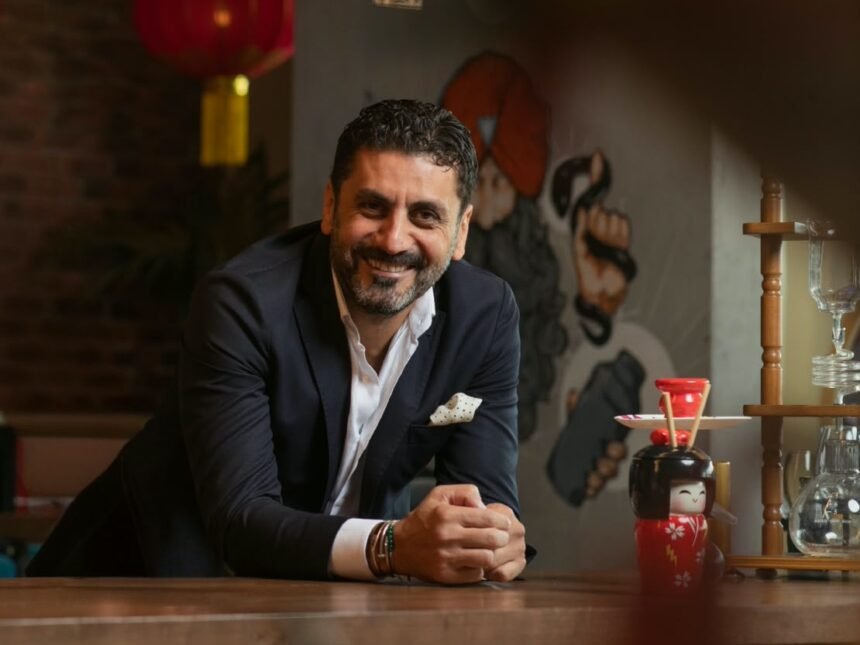
For Farah George Farah, hospitality has never really been about restaurants, bars or hotels. After more than 25 years in the industry, he still sees it as something much simpler: people looking after people.
It is a perspective shaped by a career spent learning the business from the inside, through operations, brand management, guest experience and, eventually, entrepreneurship.
Today, Farah is the founder of Elements Hospitality in Dubai, with a portfolio that includes Salmon Guru, Amici Miei and BurgerFuel UAE. But he is quick to point out that building businesses came much later. First came the years of learning how hospitality actually works.
Learning from the Floor Up
Like many people who stay in hospitality for a long time, Farah learned that there is a big difference between understanding the business on paper and understanding what happens on the floor.
Guests rarely see the systems, meetings, budgets and decisions happening behind the scenes. They simply know how a place makes them feel.
That lesson has stayed with him throughout his career.
“You can spend a lot of money creating a beautiful restaurant or a great brand, but ultimately the guest doesn’t care about your investment. They care about the experience they have when they walk through the door.”
That experience comes down to hundreds of small details: how someone is welcomed, the energy of the room, the quality of the product, the music, the service and, perhaps most importantly, whether all of those things feel natural together.
Becoming an Entrepreneur
Moving from managing hospitality businesses to owning and developing them changed Farah’s perspective.
The responsibility becomes different when the decisions, and the consequences of those decisions, are yours.
There have been successful concepts and difficult periods along the way. Farah doesn’t separate the two. Both have shaped the way he approaches the business today.
“Hospitality teaches you humility very quickly. You can believe strongly in an idea and still get things wrong. The important thing is being able to recognise it, adjust and keep moving.”
That experience has also changed his view of expansion.
Growth for the sake of growth no longer interests him. A new location needs to make sense commercially, but it also needs the right people, the right market and a clear reason to exist.
“Opening is actually the easy part. Building something that people still want to visit years later is much harder.”
Protecting What Makes a Brand Special
Salmon Guru offers a good example of that philosophy.
The original Madrid bar had already built an international reputation before the concept came to Dubai. The challenge was not to recreate it exactly, nor to turn it into something completely different for the local market.
It was to understand its DNA.
“When you bring a successful international concept into another country, there is always a temptation to change too much. But first you have to understand why people fell in love with it in the first place.”
At the same time, Dubai is not Madrid. Different customers, cultures and expectations mean that successful international brands need to understand their new environment without losing their identity.
Finding that balance has become increasingly relevant as Dubai develops into one of the world’s most competitive hospitality markets.
The People Behind the Business
Ask Farah what has become more important to him with experience and he returns quickly to people.
Hospitality businesses can have strong concepts, talented designers and sophisticated systems, but ultimately they depend on the people delivering the experience every day.
And managing those people is not always straightforward.
“You learn that you cannot expect everyone to think like you. Good people have different personalities and different strengths. Leadership is about bringing those strengths together.”
His own leadership style has evolved accordingly.
Earlier in a career, it can be tempting to control every detail. As businesses become larger, that becomes impossible, and often counterproductive. The role of a leader gradually shifts from having all the answers to putting the right people in the right positions and giving them enough responsibility to succeed.
“You have to let people become better than you at what they do. Otherwise you don’t really have a team.”
A Changing Dubai
Farah has also watched Dubai’s hospitality industry change dramatically.
The city has become more sophisticated, and so have its customers.
There was a period when an international name, an impressive location and significant investment could create considerable attention. Today, those things may help with an opening, but they don’t guarantee longevity.
Dubai’s guests have travelled. They know restaurants and bars around the world. They have more choice than ever before, and expectations have risen accordingly.
At the same time, home-grown concepts from Dubai and the wider region are increasingly confident enough to compete internationally.
Farah sees that as a healthy evolution.
“The customer is much more knowledgeable today. That’s good for the industry because it forces everyone to become better.”
It also means operators need to understand both sides of hospitality: creativity and commercial reality.
A restaurant can be exciting and still be a poor business. Equally, a financially efficient operation without personality rarely creates the emotional connection that makes hospitality memorable.
The best concepts find a way to do both.
Still Learning
Perhaps the biggest change after more than two decades in hospitality is that Farah is less interested in pretending there is a formula for success.
Markets change. Customers change. Teams change. What worked five years ago may not work today.
Experience helps, but curiosity remains just as important.
“I don’t think you ever finish learning this business. The moment you think you understand everything is probably the moment you start falling behind.”
His focus now is on developing Elements Hospitality carefully, working with concepts that have genuine character and building the structure and teams needed to support them.
Awards and industry recognition are appreciated, but Farah has become more interested in something less visible: longevity.
After years of openings, difficult decisions, successes, mistakes and constant change, his definition of a good hospitality business has become increasingly simple.
It should have a reason to exist. It should treat its people well. It should make commercial sense. And, above all, people should genuinely want to come back.
Everything else comes after that.
Follow Farah George Farah on Instagram
Read More –8 Best Fine Dining Experiences in Riyadh You Must Try