




Redefining Visual Storytelling Across the GCC
In a world where people process information faster than ever, Joe Obeid has built his career around a powerful idea: design should do more than look attractive. It should help people understand, feel and remember.
- From Beirut to a Regional Creative Career
- Joe Obeid Building a New Chapter in the UAE
- Where Strategy Meets Creativity
- Designing Across Languages and Cultures
- Recognition Beyond the Region
- Exploring Why People Choose What They See
- Technology Is Changing Creativity
- Success Built Through Continuous Learning
- Creating Work That Communicates
Based in Abu Dhabi and originally from Lebanon, Joe has spent more than 13 years developing his position across creative direction, art direction, branding and visual communication. His journey has moved through agencies, government projects, cultural initiatives and regional collaborations, gradually transforming him from a hands-on designer into a creative professional who approaches communication from a strategic perspective.
Today, his work reflects something larger than aesthetics. It explores how thoughtful visual communication can simplify complexity, influence perception and create meaningful connections between organizations and their audiences.
From Beirut to a Regional Creative Career
Joe’s relationship with creativity began long before major projects and international recognition entered the picture.
Growing up in Lebanon, he developed an interest in visual expression and technology. His academic background in Computer Art, Graphic Design and Web Design gave him a technical foundation, but entering the professional world taught him lessons that could not come from a classroom alone.
His early agency experience exposed him to different industries and expectations. Every assignment required a different way of thinking. Retail demanded one language, healthcare another, while institutional and government communications introduced entirely different levels of responsibility and precision.
Rather than limiting himself to a single visual style, Joe learned to adapt.
That ability would eventually become one of the strongest elements of his career.
Joe Obeid Building a New Chapter in the UAE
Moving from Lebanon into the UAE’s highly competitive creative environment represented an important stage in Joe’s professional growth.
Abu Dhabi became more than his place of work. It became an environment where he could apply creativity across government, culture, tourism, healthcare, events and corporate communication.
His portfolio has grown to include work connected with prominent organizations and initiatives across the UAE and wider region. His experience includes the Abu Dhabi Judicial Department and the Department of Culture and Tourism Abu Dhabi, alongside work associated with organizations and brands across government, healthcare, media, finance, hospitality and consumer sectors.
Working across such different environments has required Joe to understand that creative direction cannot begin with decoration.
It begins with understanding the problem.
Where Strategy Meets Creativity
Joe describes his creative approach as research driven and intentional.
Before deciding how something should look, he focuses on understanding what it needs to communicate, who needs to understand it and what action or feeling should follow.
That process becomes especially valuable when dealing with complicated operational, technical, financial or cultural information.
Executive presentations, reports, dashboards, identity systems and bilingual communications may appear very different on the surface, but they share one challenge: information must become clear without losing meaning.
For Joe, this is where design becomes strategic.
His work often combines structured thinking with clean visual storytelling, allowing information to become easier to navigate while maintaining a strong identity.
A principle that captures this philosophy is:
“Powerful design does not simply attract attention. It gives meaning to information and helps people see what matters.”
Designing Across Languages and Cultures
Working in the GCC has also strengthened Joe’s understanding of cultural communication.
Arabic and English do not simply represent two versions of the same visual system. Typography, hierarchy, reading patterns and cultural context can change how audiences experience information.
Joe’s experience with bilingual communication has therefore required more than translation. It requires sensitivity.
His work seeks to create visual systems where both languages feel intentional rather than allowing one to become an afterthought.
That approach is particularly important across government and cultural projects, where communication must often reach audiences from different backgrounds while preserving a clear institutional voice.
Recognition Beyond the Region
Years of experimentation and consistency have also brought Joe international recognition.
His professional profile includes multiple international design awards and recognition connected with the World Brand Design Society and Online Design Awards. His portfolio has also received visibility through international creative platforms.
Yet awards tell only part of the story.
A significant recent development was his selection among a small international cohort of creative directors for the Gritnova Creative Director Lab, an experience connected with global mentorship and an immersive graduation journey in Tokyo.
For someone whose career began with visual design and gradually expanded into strategy and creative leadership, the selection represents another step toward a more international creative perspective.
It also reflects an important quality within Joe’s journey: he continues to approach his profession as something that can still teach him.
Exploring Why People Choose What They See
Joe’s curiosity about design has increasingly moved beyond how visuals are created toward understanding why visuals influence people.
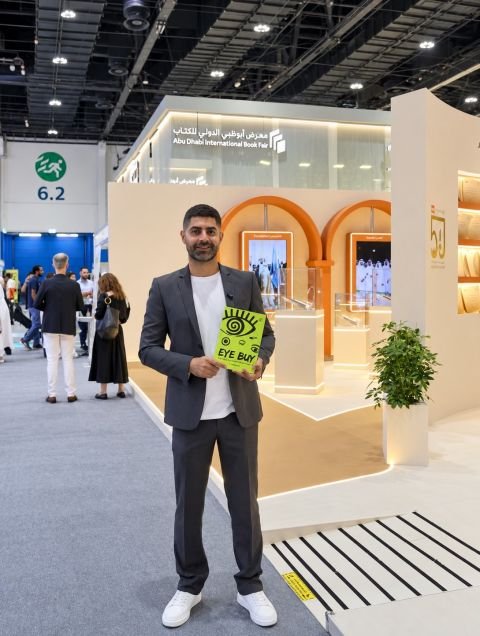
That interest is reflected in his book EYE BUY, which explores the relationship between visual design, psychology and consumer choice.
The subject naturally extends his professional journey.
After years of building identities, campaigns and communication systems, Joe has become increasingly interested in the psychology behind attention and desire. Why does one image stop someone while another disappears into the background? Why do particular visual decisions create trust? How can design influence the way people perceive value?
These questions move creativity beyond software and technique.
They position design as part of human behavior.
His recent book activity also marks an evolution from practicing design to contributing ideas about the discipline itself.
Technology Is Changing Creativity
Joe’s career is also developing during one of the biggest transformations the creative industry has experienced.
Artificial intelligence and new digital tools are changing how quickly designers can generate concepts, produce variations and explore visual possibilities.
Joe sees technology as something creative professionals must understand rather than ignore.
But faster production does not eliminate the need for human judgment.
If anything, the growing accessibility of creative tools makes strategy, taste, cultural awareness and critical thinking increasingly important.
Technology can help produce possibilities. Creative leadership still determines which possibility deserves to exist.
That distinction is likely to become even more important as artificial intelligence becomes integrated into branding, content and communication.
Success Built Through Continuous Learning
Joe’s journey is not simply a story about reaching a senior creative position.
It is a story about continuing to evolve after reaching one.
From his beginnings in Lebanon to building a multidisciplinary career in the UAE, international recognition, creative leadership, authorship and global learning opportunities, every stage has expanded the way he understands design.
The UAE Golden Visa granted under creative talent recognition represents another milestone in that journey and reflects the professional foundation he has built within the country.
Still, Joe appears focused less on treating recognition as a finish line and more on using it as motivation for the next stage.
Creating Work That Communicates
Perhaps the most relevant lesson from Joe’s journey is that creative careers are rarely built through talent alone.
They require curiosity, adaptation, patience and the willingness to keep learning while industries change around you.
Joe started with a passion for visual storytelling. Over time, that passion expanded into branding, art direction, executive communication, cultural storytelling and design psychology.
The tools became broader, but the central purpose remained remarkably consistent: making ideas easier to understand and harder to forget.
As brands, governments and organizations face increasingly crowded communication environments, professionals who can combine creativity with clarity will continue to carry significant value.
For Joe Obeid, the next chapter appears to be about pushing that combination further, connecting regional experience with global creative thinking while exploring how design can influence not only what people see, but what they understand, remember and ultimately choose.
Connect Joe Obeid on LinkedIn
Read More – UAE Employees Labour Law Ultimate Guide to Know About It