


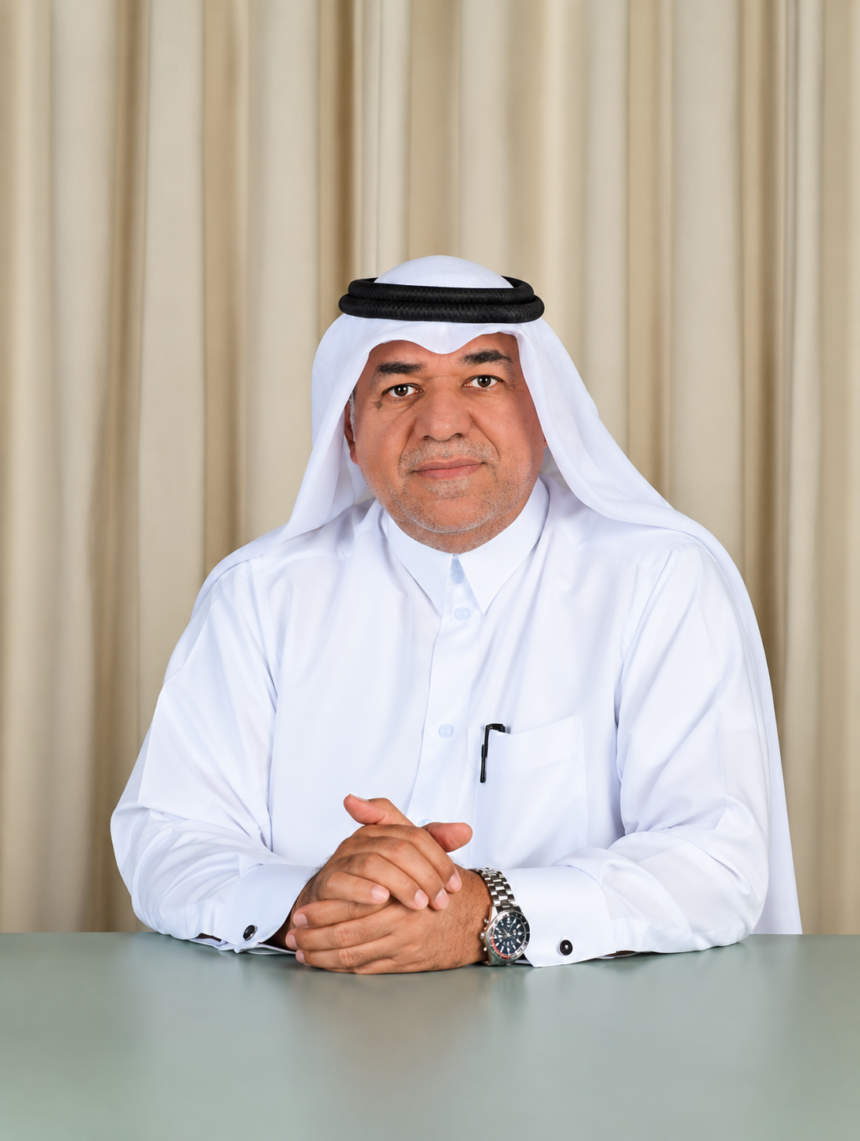
How Khalifa Al Obaidly Helped Shape Qatar Photography
For Khalifa Al Obaidly, photography has never been only about creating a beautiful image. It has become a way of remembering places, protecting stories and helping future generations understand where they came from.
- A Camera From His Father Started Everything
- Science Led Him Underwater With a Camera
- Qatari Heritage Became a Central Subject
- Moving From Photographer to Cultural Leader
- Building Opportunities for Emerging Artists
- Tasweer Created a Bigger Photography Platform
- His Current Work Keeps Looking Forward
- Photography Is Also About Memory
- The Next Chapter for Khalifa Al Obaidly
The Qatari photographer and art lover has spent decades moving between science, museums, heritage, contemporary art and photography. His journey began long before smartphones made taking pictures effortless. As a child, he received a camera from his father and started photographing family members and the neighbourhood around him.
That simple gift eventually became the beginning of a lifelong relationship with images.
Today, Khalifa is not only known for his own photography. He has also become an important figure in Qatar’s cultural landscape, supporting artists and photographers through major institutions, exhibitions and the Tasweer Photography Festival.
A Camera From His Father Started Everything
Khalifa’s interest in photography began when he was still in school.
His father gave him his first camera, and the young Khalifa began photographing ordinary life around him. At the time, there was no carefully planned artistic career behind those pictures.
He was simply curious.
Family members, streets and neighbourhood scenes became his first subjects. Looking through the camera encouraged him to notice details that might otherwise have disappeared into everyday life.
That early habit of observation stayed with him.
Years later, the same curiosity would become central to the way he documented Qatar, its people, its sea and the traditions connected to the country’s identity.
Science Led Him Underwater With a Camera
Khalifa’s professional education initially moved in a very different direction.
He studied marine science at Qatar University and became deeply interested in the natural world. During his university years, photography and science began coming together.
He learned darkroom techniques and film development while continuing to develop his photographic skills. By the 1990s, underwater photography had become one of the most important early stages of his creative journey.
The sea was not simply a subject.
For Qatar, it carries deep cultural meaning through fishing, pearl diving, wooden dhows and generations of families whose lives were connected to the water.
Khalifa’s scientific background helped him observe this environment carefully, while photography allowed him to communicate what he saw emotionally.
Qatari Heritage Became a Central Subject
From the early 2000s, Khalifa increasingly focused his photographic work on Qatari culture and heritage.
Two themes became particularly important to him.
The desert and the sea.
These landscapes helped shape Qatar long before the country’s modern skyline appeared. Through his images, Khalifa explored traditional boats, pearl diving heritage and the relationship between people and the environments that supported earlier generations.
For him, a dhow is more than a wooden vessel.
It carries memories of travel, work, survival and community.
This approach turned photography into a form of cultural documentation. The camera became a way to hold onto stories while Qatar itself was changing rapidly.
Moving From Photographer to Cultural Leader
Khalifa’s journey gradually expanded beyond creating his own photographs.
He became involved with museums, cultural programmes and major arts initiatives in Qatar. His professional experience included museum projects, heritage work and leadership roles designed to support other artists.
One of the most important chapters was his involvement with the Fire Station in Doha.
The former fire station building was transformed into an important contemporary art space and artist residency programme. Khalifa played a major leadership role in developing programmes that gave local and regional artists access to studios, mentorship, exhibitions and international opportunities.
This changed his relationship with art.
He was no longer thinking only about his own creative work. He was helping create an environment where other people could develop theirs.
Building Opportunities for Emerging Artists
Supporting younger artists became an important part of Khalifa Al Obaidly’s wider contribution.
Creative talent does not always grow simply because someone has good ideas. Artists also need space, guidance, professional networks and opportunities for their work to be seen.
Khalifa understood this challenge from experience.
Through residency programmes and cultural initiatives, he helped connect artists in Qatar with wider international art communities.
That work also reflected a larger transformation taking place in Doha. Qatar was investing heavily in museums, exhibitions, public art and cultural institutions, creating opportunities for artists to work within an increasingly ambitious creative environment.
Khalifa became part of that development from inside the community.
Tasweer Created a Bigger Photography Platform
Photography eventually became the centre of another major chapter in Khalifa’s career through Tasweer Photography Festival Qatar.
As Director of Tasweer, he has worked to strengthen opportunities for photographers in Qatar and across the wider region.
The festival is not only about showing finished photographs.
It supports learning, discussion, exhibitions, mentorship and the development of emerging voices.
For Khalifa, this matters because photographers need more than technical knowledge. They need confidence in their own perspective.
A camera can be taught.
A personal visual language takes much longer to develop.
Tasweer creates an environment where photographers can explore identity, memory, society and contemporary life through their own experiences.
His Current Work Keeps Looking Forward
Khalifa remains actively involved in developing photography in Qatar.
In September 2026, Tasweer opened the second edition of its Frame and Focus exhibition, presenting projects by twelve photographers who completed an advanced fourteen week photography programme.
The works explored identity, memory, heritage, community and contemporary life.
For Khalifa, programmes like this represent a larger ambition.
He wants photographers to have the guidance and visibility required to take their work further and reach wider audiences.
That idea shows how his career has evolved.
The child who once learned photography by observing his neighbourhood is now helping another generation find its own subjects and stories.
Photography Is Also About Memory
One theme continues appearing throughout Khalifa’s work.
Memory.
Cities change. Buildings disappear. Traditions evolve and people move forward. Photography has the ability to hold a small part of that moment before it disappears completely.
Khalifa’s interest in Qatari heritage reflects this responsibility.
His work does not suggest that culture must remain frozen in the past. Instead, photography becomes a bridge between what existed before and what comes next.
This is particularly meaningful in Qatar, where extraordinary development has transformed the physical and cultural landscape within a relatively short period.
Photographers become witnesses to that change.
The Next Chapter for Khalifa Al Obaidly
Khalifa Al Obaidly’s journey has moved through childhood photography, marine science, underwater images, heritage documentation, museums, artist residencies and photography festivals.
Each chapter appears different, but they are connected by one idea.
Observation.
He learned to observe the sea as a student. He observed Qatar’s traditions as a photographer. Later, he began observing what younger artists needed in order to grow.
Today, his legacy is developing in two directions at once.
There are the photographs he has created himself, preserving parts of Qatar’s visual memory.
Then there are the photographers he continues helping to develop through programmes such as Tasweer and Frame and Focus.
For Khalifa, photography has become much more than pressing a shutter.
It is a way to protect history, encourage creativity and give people the confidence to show the world through their own eyes.
The camera his father gave him many years ago started a personal passion.
That passion has now become part of Qatar’s wider photography story.
Do follow Khalifa Al Obaidly on Instagram
Read More – How Artificial Intelligence Is Reshaping Gulf Career Opportunities