




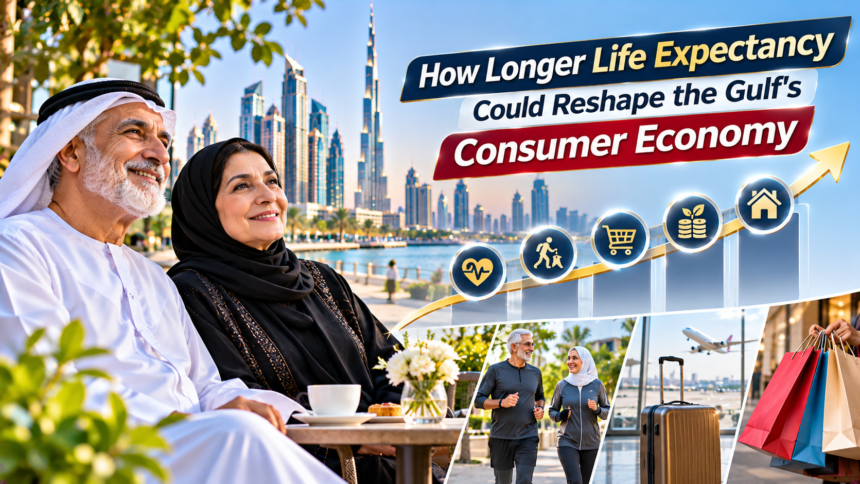
The Future of Healthcare, Housing and Spending in Ageing Gulf Societies
Across the Arabian Gulf, rising life expectancy and advances in healthcare are creating new questions about the future of economic growth, consumer behaviour, and everyday living. For decades, many businesses have focused heavily on younger professionals, growing families, international workers, and affluent consumers. However, as people live longer and demographic structures gradually change, companies may need to reconsider who their customers are and how their needs evolve over time.
- 1. Why Longer Life Expectancy Could Transform Consumer Spending in the Gulf
- 2. How Healthcare and Wellness Businesses Could Benefit From Longer Lives
- 3. Why Housing, Urban Planning, and Senior Living Services May Change
- 4. How Retirement Planning and Financial Services Could Evolve
- 5. Why Travel, Leisure, Retail, and Education Could Serve Older Consumers Differently
- 6. The Challenges of Serving an Ageing Consumer Economy in the GCC
- 7. The Future of the Gulf’s Silver Economy: Business Opportunities and Consumer Change
Longer life expectancy in the Gulf could influence spending across healthcare, housing, travel, financial services, technology, insurance, retail, and personal wellbeing. People who live longer may require products and services that support financial security, independence, mobility, social participation, and comfortable living at different stages of adulthood.
The concept of the silver economy, which includes economic activities serving older populations and supporting their participation in society, is becoming increasingly relevant to regional development discussions. It extends beyond medical care to include leisure, education, employment, digital services, and accessible consumer products.
Saudi Arabia offers an important example of changing health outcomes. The country’s Ministry of Health reported that average life expectancy reached 78.8 years in 2024, compared with 74 years in 2016. The United Arab Emirates has also developed policies supporting the independence, wellbeing, and participation of senior citizens.
However, population ageing does not happen at the same pace throughout the GCC. The UAE, Saudi Arabia, Qatar, Bahrain, Kuwait, and Oman have different population structures, migration patterns, and social arrangements.
Businesses must therefore distinguish demographic opportunities from assumptions about every older consumer.
Understanding these changes reveals how longer lives could reshape the Gulf’s consumer economy while creating new responsibilities involving affordability, accessibility, and financial wellbeing.
1. Why Longer Life Expectancy Could Transform Consumer Spending in the Gulf
Life expectancy refers to the average number of years a person is expected to live under a particular set of mortality conditions.
Improvements in healthcare, disease prevention, nutrition, sanitation, and living conditions can contribute to longer lives.
However, longer life expectancy does not automatically mean every individual experiences better health or greater spending power.
Understanding the Gulf’s Demographic Transition
The Gulf region has relatively young populations in several markets, particularly when measured against countries already experiencing advanced population ageing.
Nevertheless, demographic structures can change over time as life expectancy increases and fertility patterns evolve.
The United Nations’ World Population Prospects 2024 examines these changes internationally, including the relationship between longer lives, smaller families, and population age structures.
For businesses, the important question is not simply how many people live beyond a particular age.
It is also how many remain economically active, what financial resources they possess, and which goods and services they need.
Saudi Arabia’s Changing Age Profile
Saudi Arabia’s General Authority for Statistics reported that approximately 1.7 million people aged 60 and older lived in the Kingdom in 2025.
They represented 4.8% of the total population.
This shows that older adults remain a relatively small share of Saudi Arabia’s population, although they already represent a substantial group of potential consumers.
The same report indicated that older Saudi citizens continued participating in social activities and community life.
These findings challenge the assumption that later adulthood is necessarily characterised by inactivity.
What Is the Silver Economy?
The silver economy includes products, services, employment, and business activities connected to older adults.
It can involve medical care and assistive technology, but it also extends to tourism, retail, housing, financial services, and education.
In October 2026, the United Nations Economic and Social Commission for Western Asia highlighted the silver economy as an opportunity for Arab economies to respond to ageing through inclusive business development.
Consumer Needs Across Different Life Stages
| Consumer Stage | Potential Spending Priorities |
|---|---|
| Early Career | Education, transport, technology and housing |
| Mid-Career | Family spending, property and financial planning |
| Pre-Retirement | Savings, insurance and lifestyle adjustments |
| Active Retirement | Travel, leisure, learning and wellbeing |
| Later Life | Accessible housing, support services and healthcare |
These categories are illustrative rather than fixed descriptions of how people behave.
Age alone does not determine income, health, preferences, or consumption.
2. How Healthcare and Wellness Businesses Could Benefit From Longer Lives
Healthcare is one of the most direct sectors affected by changing longevity.
As people live longer, healthcare systems must address the needs of individuals across more years of life.
However, the goal should not simply be to expand treatment services.
Preventive care, early diagnosis, rehabilitation, and healthier living can help people maintain independence and wellbeing.
The Growing Importance of Preventive Healthcare
Preventive healthcare focuses on reducing health risks and identifying conditions before they become more difficult to manage.
Services may include appropriate screening, vaccination, nutrition guidance, physical activity programmes, and regular medical assessments.
For healthcare providers, longer lifespans could increase demand for ongoing relationships with patients rather than isolated medical appointments.
However, the effectiveness of individual preventive services depends on clinical evidence and personal health circumstances.
Chronic Disease Management
Some people experience chronic conditions requiring ongoing monitoring and treatment.
Healthcare businesses may develop integrated services involving medical consultations, medication management, rehabilitation, and remote follow-up.
Digital health tools can support certain activities, although they must be used with appropriate safeguards.
Patients should not rely solely on consumer devices or automated applications for diagnosis or treatment decisions.
Wellness and Healthy Ageing
Longer lives may also encourage interest in maintaining physical function, mobility, and independence.
Businesses could develop age-inclusive fitness programmes, nutritional services, physiotherapy, and evidence-based wellness offerings.
However, marketing should avoid implying that ageing itself is a disease or that a product can guarantee longevity.
Healthcare Opportunities
| Service Area | Potential Consumer Need |
|---|---|
| Preventive Medicine | Health screening and risk management |
| Rehabilitation | Recovery and functional mobility |
| Physiotherapy | Support for movement and physical ability |
| Digital Health | Convenient monitoring and consultations |
| Home Healthcare | Selected care services at home |
| Medical Devices | Accessible and appropriate assistive equipment |
| Wellness Services | Physical activity and healthy living support |
Why Healthy Life Expectancy Matters
The World Health Organization distinguishes life expectancy from healthy life expectancy.
Healthy life expectancy estimates the years people can expect to live in full health, accounting for periods affected by illness or injury.
This distinction matters economically.
Longer lives accompanied by good health may support continued employment, travel, leisure, and independent consumption.
Longer lives with extensive care needs may instead increase household and healthcare expenditure pressures.
The goal should therefore be better health throughout life rather than simply more years lived.
3. Why Housing, Urban Planning, and Senior Living Services May Change
Housing needs can evolve as people grow older, although changes differ between individuals.
Some older adults remain in large family homes, while others prefer smaller residences requiring less maintenance.
Accessibility, location, safety, and proximity to everyday services may become increasingly important.
The Opportunity in Age-Friendly Housing

Age-friendly housing is designed to support people with different levels of mobility and physical ability.
Features may include step-free entrances, suitable bathrooms, accessible lifts, clear lighting, and convenient building layouts.
These elements can benefit residents of different ages.
A parent using a stroller, a person recovering from surgery, and an older adult may all benefit from accessible design.
Independent Living and Home Support
Some residents may prefer to continue living independently while obtaining occasional assistance.
This can create opportunities for maintenance services, household support, accessible transportation, and professionally managed residential communities.
However, such services require transparent pricing, trained employees, and appropriate safeguarding.
The UAE’s Senior Emiratis Policy
The UAE’s National Policy for Senior Emiratis includes healthcare, infrastructure and transportation, financial stability, safety, and quality of life among its main priorities.
The policy aims to support active participation and access to services.
These priorities illustrate how public policy can influence the development of age-friendly products and environments.
However, the rights and services available under specific programmes depend on eligibility and applicable law.
Potential Housing Models
| Housing Model | Potential Advantage | Important Consideration |
|---|---|---|
| Adapted Family Home | Familiar surroundings | Modification and maintenance costs |
| Accessible Apartment | Easier everyday movement | Location and affordability |
| Independent Senior Living | Supportive services and privacy | Service quality and fees |
| Multigenerational Housing | Family proximity | Privacy and suitable layouts |
| Assisted Living | Greater support for eligible residents | Care standards and licensing |
| Home-Based Support | Assistance without relocation | Availability of qualified providers |
How Urban Planning Could Respond
Cities may benefit from accessible pedestrian routes, reliable transport, shaded public spaces, and proximity to healthcare facilities.
These considerations are especially relevant in Gulf climates where high temperatures can make outdoor movement difficult.
The World Health Organization’s age-friendly cities framework encourages communities to consider accessibility, participation, transport, and essential services.
Good planning should support older adults without separating them unnecessarily from wider society.
4. How Retirement Planning and Financial Services Could Evolve
Financial planning becomes increasingly important when people expect to live for more years.
Individuals need to consider how long savings may need to support their lifestyle, how healthcare expenses might change, and what financial responsibilities may continue later in life.
These questions create opportunities for financial institutions, insurers, employers, and professional advisers.
The Challenge of Longer Retirement Periods
A person who retires relatively early but lives substantially longer may need retirement savings to last for several decades.
This can create pressure when spending is higher than expected or investment returns differ from assumptions.
However, not everyone retires at the same age, and some people continue working by choice or necessity.
Retirement planning must account for individual circumstances.
Savings, Insurance, and Investment Services
Financial institutions may develop services helping customers understand retirement income, insurance coverage, and long-term financial risks.
Potential offerings include retirement planning consultations, appropriate savings products, and digital financial education.
However, longer lives do not justify encouraging consumers to purchase unsuitable or excessively complex financial products.
Clear disclosure and appropriate suitability assessments remain essential.
The Role of Financial Literacy
Consumers need to understand the effect of inflation, longevity, and unexpected expenses on financial security.
For example, a retirement plan based on a fixed monthly budget may become inadequate if living costs increase over time.
Education can help individuals assess different scenarios.
However, financial information should be presented clearly without promising guaranteed investment returns.
Financial Priorities Over a Longer Lifetime
| Financial Concern | Planning Consideration |
|---|---|
| Longer Retirement | Adequacy and sustainability of savings |
| Inflation | Future purchasing power |
| Healthcare Expenses | Appropriate financial protection |
| Family Responsibilities | Dependants and wealth transfer |
| Continued Employment | Flexible earnings and retirement transitions |
| Fraud Protection | Secure financial services |
| Estate Planning | Applicable legal arrangements |
The Regional Economic Challenge
The World Bank’s 2025 research on demographic change in the Middle East and North Africa highlights the potential impact of ageing on pensions, healthcare, and employment.
It reported that the regional ratio of people aged 65 and older to the working-age population could rise substantially over the coming decades.
These findings concern the wider MENA region rather than the GCC alone.
For Gulf businesses and governments, the implication is the importance of planning before demographic pressures become more significant.
5. Why Travel, Leisure, Retail, and Education Could Serve Older Consumers Differently
The silver economy is not limited to medical services and retirement planning.
Older adults also participate in tourism, cultural activities, retail, entertainment, learning, and community life.
Businesses may discover new opportunities by designing experiences that recognise diverse interests and abilities.
Travel and Hospitality
Some older consumers may value flexible itineraries, comfortable accommodation, accessible transportation, and reliable customer support.
Travel providers could offer services suited to varying mobility requirements without assuming that all older travellers have physical limitations.
For example, a cultural tour might include optional transport assistance or alternative walking routes.
Such features can improve accessibility for many customers.
Retail Experience and Product Design
Retailers may need to consider product packaging, store layouts, information readability, and convenient customer service.
Clear price labels, accessible fitting rooms, and helpful employees can improve shopping for people across age groups.
Similarly, e-commerce platforms can benefit from readable interfaces and straightforward purchasing processes.
Lifelong Learning
Longer lives can create opportunities for continued education.
Some people may pursue professional development, digital skills, language learning, or creative interests later in life.
Universities, training providers, and community organisations could develop programmes supporting lifelong learning.
However, demand depends on affordability, accessibility, educational goals, and local cultural circumstances.
Consumer Opportunities Beyond Healthcare
| Sector | Potential Service Opportunity |
|---|---|
| Tourism | Accessible and flexible travel |
| Hospitality | Convenient accommodation and personalised assistance |
| Retail | Inclusive store design and practical products |
| Education | Lifelong learning and digital skills |
| Recreation | Accessible cultural and leisure activities |
| Technology | Clear interfaces and suitable assistance |
| Transportation | Convenient and accessible mobility |
Avoiding Age-Based Stereotypes
Businesses should not assume that older consumers are automatically less interested in technology, fashion, or travel.
Some may be highly digitally confident, professionally active, and financially independent.
Others may require additional assistance.
Consumer research should reflect these differences rather than treat age as a complete description of purchasing behaviour.
6. The Challenges of Serving an Ageing Consumer Economy in the GCC
Although longer life expectancy creates possible market opportunities, it also introduces economic and operational challenges.
Businesses must consider affordability, service accessibility, workforce availability, regulatory requirements, and differences between national populations.
Unequal Financial Resources
Not every older person has significant savings or retirement income.
Some may depend on pensions, employment, family support, or other arrangements.
Developing only premium products could leave important needs unmet.
Businesses should examine different income groups before designing age-focused services.
The Demand for Skilled Care Workers
Healthcare and long-term support services require appropriately trained professionals.
As demand changes, providers may face challenges involving recruitment, training, service quality, and regulatory compliance.
Technology can support some activities but cannot replace every aspect of personal care.
Digital Exclusion
Digital platforms may create barriers for consumers who find certain interfaces difficult to use.
However, these barriers are not unique to older people.
Accessible design, straightforward instructions, and alternative service channels can help.
Businesses should avoid eliminating in-person or telephone assistance without considering customer needs.
Regional Population Differences
The GCC includes countries with distinctive demographic structures.
Large expatriate populations can influence the age distribution of residents, particularly where migration is concentrated among working-age adults.
As a result, national population statistics may not accurately describe the age profile of citizens or long-term residents.
Businesses should distinguish between citizens, expatriates, households, and relevant customer groups when conducting market research.
Challenges and Potential Responses
| Challenge | Possible Impact | Practical Response |
|---|---|---|
| Unequal Income | Limited affordability | Different pricing and service options |
| Workforce Shortages | Reduced service availability | Training and professional development |
| Digital Barriers | Difficult customer access | Inclusive design and alternative channels |
| Age Stereotypes | Poor product fit | Research-based segmentation |
| Regulatory Differences | Compliance problems | Country-specific legal assessment |
| Data Privacy | Exposure of sensitive information | Responsible information management |
| Uncertain Demand | Weak commercial returns | Pilot programmes and market testing |
Protecting Consumer Independence
Businesses serving older adults must respect privacy, choice, and independence.
Services involving healthcare, financial products, or personal monitoring require particular care.
Marketing should not exploit fears about ageing or suggest that all older individuals need constant supervision.
The objective should be to support customers in making informed decisions.
7. The Future of the Gulf’s Silver Economy: Business Opportunities and Consumer Change
The future of the Gulf’s consumer economy will depend partly on how businesses respond to longer lives and changing demographic patterns.
Opportunities may emerge in healthcare, housing, technology, financial services, hospitality, and education.
However, the most successful approaches will likely combine commercial innovation with accessibility and responsible service design.
Building Age-Inclusive Businesses
Instead of developing every product exclusively for older consumers, companies can incorporate accessible features into mainstream services.
For example, an e-commerce application with clear navigation may benefit customers of all ages.
Similarly, accessible transport and well-designed public spaces support a broad range of residents.
Using Technology Responsibly
Technology could support independent living through appropriate communication tools, digital health services, and accessible online platforms.
However, products should be evaluated for usability, reliability, cybersecurity, and privacy.
Artificial intelligence may help businesses understand customer needs, but automated systems should not make unsupported assumptions based solely on age.
A Practical Silver Economy Business Checklist
- Review relevant demographic trends using official statistics.
- Distinguish the age structure of citizens and expatriate residents.
- Research income, interests, health needs, and consumer preferences.
- Avoid treating older customers as one uniform group.
- Evaluate accessibility in physical and digital services.
- Provide transparent prices and contractual terms.
- Include appropriate customer support options.
- Consider data protection and consumer safeguards.
- Test products with intended users.
- Measure satisfaction, affordability, and commercial results.
How Businesses Should Measure Success
Commercial performance should be evaluated alongside customer experience.
Relevant measures may include repeat purchasing, service accessibility, satisfaction, customer complaints, and overall profitability.
Healthcare and support services may also require quality and safety indicators.
However, strong revenue growth is not evidence by itself that a business is meeting older customers’ needs responsibly.
Opportunities for Startups and Entrepreneurs
Startups may identify opportunities in accessible consumer technology, home modification services, mobility solutions, financial education, and practical lifestyle products.
Small businesses may develop specialised services without requiring large industrial facilities.
However, entrepreneurs should validate actual demand before investing.
A product marketed toward older adults may fail if customers find it unnecessary, intrusive, or difficult to use.
The Importance of Long-Term Planning
Demographic changes unfold over many years.
Governments and businesses should therefore consider both current consumer demand and longer-term population developments.
The UAE’s senior citizen policies and Saudi Arabia’s healthcare transformation illustrate how public planning can address aspects of longer life expectancy.
However, private-sector opportunities depend on the interaction between policy, household finances, consumer preferences, and service availability.
Conclusion
Longer life expectancy could reshape the Gulf’s consumer economy by changing how people spend, save, travel, live, work, and access essential services.
As people live longer, businesses may encounter growing demand for preventive healthcare, accessible housing, retirement planning, suitable technology, leisure activities, and lifelong learning.
Saudi Arabia’s improving life expectancy and the UAE’s focus on senior wellbeing demonstrate the growing regional importance of preparing for longer lives.
However, demographic change differs across GCC countries, and older consumers cannot be treated as one homogeneous market.
Income, health, personal interests, employment, family circumstances, and digital confidence all influence consumption.
For businesses, the silver economy represents an opportunity to develop products and services that respond to changing needs while respecting individual independence.
Successful strategies will require reliable research, inclusive design, transparent pricing, and appropriate consumer protection.
Ultimately, the future of the Gulf’s consumer economy will not be shaped simply by the number of additional years people live.
It will depend on how those years are experienced and whether businesses and public institutions create the conditions for people to remain active, financially secure, connected, and able to participate in economic life throughout adulthood.
Do follow us on Instagram
Read More – The Changing Relationship Between Young Gulf Consumers and Traditional Retail Brands