The Future of Mangrove Conservation Across Gulf Countries
The Arabian Gulf is known for its modern waterfront cities, busy ports, luxury coastal developments and expanding infrastructure. From Abu Dhabi and Dubai to Doha, Bahrain and Saudi Arabia’s Eastern Province, coastal areas play an important role in the region’s economy and everyday life.
- 1. What Are Mangrove Forests and Why Do They Grow Along the Arabian Gulf?
- 2. How Mangrove Roots Reduce Coastal Erosion and Wave Damage
- 3. Why Mangrove Forests Matter for Marine Life and Fisheries
- 4. How Mangroves Store Blue Carbon and Support Climate Resilience
- 5. Where Are the Arabian Gulf’s Important Mangrove Forests?
- 6. What Threats Are Putting Gulf Mangrove Ecosystems at Risk?
- 7. Why Mangrove Restoration Requires More Than Planting Trees
- 8. The Future of Mangrove Conservation and Coastal Protection in the Gulf
- Conclusion: Mangrove Forests Are Natural Assets for the Arabian Gulf
However, beyond the buildings and artificial waterfronts, the Gulf is also home to natural ecosystems that help protect its coastline. Among the most valuable are mangrove forests, remarkable coastal habitats that survive in salty water, muddy shorelines and some of the harshest environmental conditions in the world.
These forests may appear small compared with tropical mangrove systems in other parts of the world, but their environmental importance is considerable.
Mangrove forests in the Arabian Gulf help reduce wave energy, stabilise coastal sediments, provide habitats for marine life and store carbon in vegetation and coastal soils.
Their root systems slow water movement and help hold sediments in place, while their branches and leaves provide shelter for birds and other wildlife. Mangrove habitats also contribute to the health of surrounding marine ecosystems, including seagrass beds and coastal fish nurseries.
A systematic review published in Frontiers in Marine Science identified coastal protection, carbon storage, biodiversity support and water-quality regulation among the important ecosystem services provided by mangroves across GCC countries. Frontiers
These benefits are particularly relevant as Gulf coastlines face pressures from land reclamation, industrial activity, pollution and climate change.
Governments across the region are responding through mangrove conservation and restoration initiatives. The UAE has developed guidance for protecting existing mangroves and restoring suitable coastal habitats, while Saudi Arabia has launched large-scale planting programmes. Qatar is also protecting important natural mangrove environments, including the Al Thakhira Reserve.
Yet planting trees alone is not enough to guarantee coastal protection. Mangrove forests require suitable tidal conditions, healthy water circulation and long-term ecological management.
Understanding how these ecosystems work can help coastal planners, environmental authorities, businesses and local communities make better decisions about protecting the Arabian Gulf’s shoreline.
1. What Are Mangrove Forests and Why Do They Grow Along the Arabian Gulf?
Mangroves are trees and shrubs adapted to coastal environments where seawater and freshwater influences may overlap. They commonly grow in intertidal zones, the areas of shoreline that are periodically covered and exposed by changing tides.
Unlike most trees, mangroves possess adaptations that allow them to survive in saline environments.
These adaptations differ between species and may include salt exclusion at the roots, salt secretion through specialised structures and the ability to tolerate waterlogged soils.
The Arabian Gulf’s dominant mangrove species
The most familiar mangrove species in many Gulf coastal environments is the grey mangrove, Avicennia marina.
It is found in locations such as Abu Dhabi, Qatar and Saudi Arabia’s Gulf coast.
This species can tolerate demanding environmental conditions, including high salinity and considerable temperature variation.
Its root system includes specialised structures known as pneumatophores, which project above muddy soil and help the plant obtain oxygen.
The Environment Agency – Abu Dhabi’s mangrove restoration guidance describes the adaptations that allow grey mangroves to survive in the UAE’s highly saline intertidal environment. ead.gov.ae
Why Gulf mangroves are unusual
Many mangrove ecosystems around the world develop in tropical coastal environments with substantial rainfall.
The Arabian Gulf presents a different setting.
Its coastlines experience limited rainfall, high evaporation and, in many places, unusually saline water.
Despite these conditions, mangroves survive in sheltered bays, lagoons and tidal inlets where local conditions support their growth.
An ecosystem connected to the tides
Mangroves depend on appropriate tidal exchange.
Tides carry water, sediments and nutrients through coastal habitats.
Healthy water movement also affects soil conditions and the distribution of salt.
If a coastal development blocks natural tidal channels, mangroves may experience waterlogging, excessive salinity or changes in sediment supply.
This is why maintaining appropriate hydrology is often as important as protecting the trees themselves.
Key features of Arabian Gulf mangroves
| Feature | Ecological importance |
|---|---|
| Salt-tolerant vegetation | Allows survival in saline coastal conditions |
| Specialised roots | Supports oxygen exchange and sediment interaction |
| Intertidal location | Connects terrestrial and marine ecosystems |
| Dense vegetation | Can reduce local water movement and wave energy |
| Coastal sediments | Support nutrient cycling and carbon storage |
| Sheltered habitat | Provides refuge for fish, birds and invertebrates |
Mangrove forests are not simply groups of coastal trees. They are functioning ecosystems connected to water movement, sediments, wildlife and the surrounding marine environment.
2. How Mangrove Roots Reduce Coastal Erosion and Wave Damage
One of the most important functions of mangrove forests is their ability to influence coastal water movement.
When waves travel toward a shoreline, they carry energy that can disturb sediments, erode exposed land and damage vulnerable coastal areas.
Mangrove vegetation can reduce some of this energy before waves reach the land behind the forest.
Slowing the movement of waves
Mangrove trunks, roots and branches create physical resistance as water moves through them.
This resistance can reduce wave height and energy.
The extent of protection depends on factors such as forest width, vegetation density, water depth, wave conditions and the shape of the coastline.
Scientific guidance compiled by The Nature Conservancy explains that mangrove vegetation can dissipate wind-generated and swell-wave energy, although the effectiveness varies with local conditions. Conservation Gateway
Helping stabilise sediments
Mangrove roots interact with soft coastal sediments.
By reducing the speed of moving water, vegetation may encourage suspended particles to settle.
Root networks can also help stabilise sediment already present.
Together, these processes can influence shoreline development and reduce erosion in suitable environments.
However, mangroves do not always cause sediment accumulation, and their effectiveness depends on local currents and sediment availability.
Reducing damage to coastal infrastructure
Where healthy mangrove belts lie between the sea and developed land, they may contribute to coastal protection.
This can be relevant to roads, residential areas, recreational spaces and other infrastructure near the shoreline.
Nevertheless, mangroves should not be presented as complete substitutes for engineered flood protection.
Extreme storms, unusual water levels and severe wave conditions can overwhelm or damage natural vegetation.
Mangroves and engineered coastal protection
| Coastal protection feature | Main function | Important limitation |
|---|---|---|
| Mangrove forest | Reduces wave energy and supports sediment stability | Effectiveness depends on ecosystem condition and location |
| Seawall | Provides a physical barrier against water and waves | May increase erosion in adjacent areas |
| Rock revetment | Protects exposed shoreline surfaces | Requires design and maintenance |
| Beach nourishment | Replaces or supplements beach sediments | May require repeated replenishment |
| Integrated coastal protection | Combines natural and engineered measures | Requires coordinated site-specific planning |
For the Arabian Gulf, combining ecological protection with appropriate engineering may provide a more resilient approach than relying on one method alone.
3. Why Mangrove Forests Matter for Marine Life and Fisheries
Mangrove ecosystems contribute to coastal biodiversity by creating habitats where marine and terrestrial species interact.
Their roots, shallow channels and sheltered waters provide spaces used by fish, crabs, molluscs and other organisms.
Birds also use mangrove environments for feeding, resting and nesting, depending on the location and species.
Natural nursery habitats
Some juvenile fish and invertebrates use mangrove environments as feeding and shelter areas.
The complex root systems may offer protection from predators while supporting food availability.
As these animals grow, some move into neighbouring marine habitats.
This connection can make mangrove areas important components of wider coastal ecosystems.
However, the degree to which mangroves support fisheries differs among species and locations.
Connections with seagrass beds
Seagrass meadows are another important marine ecosystem found in parts of the Gulf.
They provide food and habitat for marine organisms and can help stabilise seabed sediments.
Mangrove forests, seagrass beds and tidal flats can function as connected habitats.
Protecting only one part of this network may be insufficient if surrounding ecosystems are damaged.
Qatar’s Ministry of Environment and Climate Change identifies both mangrove swamps and seagrass beds among the important habitats protected within Al Thakhira Bay. MECC
Supporting coastal birds
Mangrove forests and nearby tidal areas provide feeding opportunities for resident and migratory birds.
The availability of sheltered habitat and food can make these locations valuable parts of regional bird migration networks.
Disturbance from uncontrolled tourism, construction or pollution may affect these functions.
Why biodiversity matters for coastal health
A healthy coastal ecosystem contains interacting organisms that contribute to nutrient cycling, food webs and habitat structure.
Mangrove conservation can therefore support broader ecological stability rather than benefiting only the trees themselves.
Mangrove ecosystem beneficiaries
| Wildlife group | Relationship with mangrove habitats |
|---|---|
| Juvenile fish | Shelter and feeding opportunities |
| Crabs and other crustaceans | Habitat within sediments and roots |
| Molluscs | Feeding and settlement environments |
| Shorebirds | Access to coastal feeding areas |
| Migratory birds | Resting and foraging habitat |
| Microorganisms | Nutrient cycling and organic matter breakdown |
Protecting mangrove forests can help maintain the ecological relationships that support coastal biodiversity and, in suitable locations, local fisheries.
4. How Mangroves Store Blue Carbon and Support Climate Resilience
Mangrove forests provide environmental benefits beyond coastal erosion protection.
They also capture carbon dioxide through photosynthesis and store carbon in their vegetation and surrounding soils.
Carbon held within coastal and marine ecosystems is commonly described as blue carbon.
Understanding blue carbon
As mangroves grow, they absorb carbon dioxide and incorporate carbon into roots, trunks, branches and leaves.
Some organic material also becomes incorporated into coastal sediments.
In suitable conditions, carbon can remain stored in waterlogged soils for extended periods.
However, carbon storage rates vary depending on environmental conditions, forest age, soil composition and other factors.
It would therefore be misleading to assume that every newly planted mangrove stores the same amount of carbon.
Why coastal sediments matter
A substantial part of a mangrove ecosystem’s carbon may be stored below ground.
Disturbing or excavating these sediments can affect existing carbon stocks.
This means protecting established mangrove habitats may deliver benefits that cannot be immediately recreated by planting young trees elsewhere.
The UAE Blue Carbon Demonstration Project has examined the role of mangroves and other coastal habitats in carbon storage and climate-related environmental planning. bluecarbon.unep-wcmc.org
Climate adaptation and mitigation
Mangrove conservation contributes to two related environmental objectives.
Climate mitigation involves reducing greenhouse gas emissions or protecting carbon storage.
Climate adaptation involves preparing ecosystems and communities for changing environmental conditions.
Mangroves can contribute to mitigation through carbon storage and to adaptation through their potential coastal protection functions.
However, they are themselves vulnerable to climate change.
Rising sea levels, extreme heat, changing sediment conditions and coastal development can threaten their survival.
The limits of natural adaptation
Some mangrove ecosystems can respond to gradual sea-level changes through sediment accumulation and changes in their distribution.
However, this ability depends on sediment supply, local elevation and the space available for mangroves to migrate inland.
Roads, seawalls and buildings may prevent natural landward expansion.
Research on coastal ecosystems of the Arabian Peninsula has examined how sediment accumulation contributes to maintaining elevation relative to sea level. agupubs.onlinelibrary.wiley.com
Protecting mangroves therefore requires attention to both current habitat conditions and future coastal changes.
5. Where Are the Arabian Gulf’s Important Mangrove Forests?
Mangrove habitats occur at several locations around the Arabian Gulf, although their size, condition and ecological characteristics vary.
Some form extensive natural forests, while others include restored or planted areas.
Jubail Mangrove Park | Nature Experiences
Jubail Mangrove Park
Abu Dhabi’s coastal mangroves are among the region’s notable examples. They support biodiversity, environmental education and coastal conservation. The Environment Agency – Abu Dhabi has developed guidance to protect and restore suitable mangrove habitats.
Al Thakhira Mangrove Reserve
Qatar’s Al Thakhira region contains important mangrove forests alongside tidal flats and seagrass ecosystems. In July 2026, Qatar’s Ministry of Environment and Climate Change reported approximately 14 square kilometres of mangrove cover nationwide, more than half of it in the Al Thakhira Reserve. qna.org.qa
Saudi Arabia’s Eastern Province
Mangrove habitats occur along parts of Saudi Arabia’s Gulf coastline. In April 2025, the country’s National Center for Vegetation Cover Development and Combating Desertification announced a partnership to develop a mangrove park along the Saihat and Dammam waterfronts. ncvc.gov.sa
Other Gulf countries, including Bahrain and Kuwait, have coastal habitats where conservation and habitat restoration may be relevant. However, local conditions determine where mangroves can survive successfully.
Arabian Gulf mangrove conservation overview
| Location | Environmental importance |
|---|---|
| Abu Dhabi, UAE | Coastal protection, blue carbon and biodiversity |
| Al Thakhira, Qatar | Mangrove habitat connected to seagrass and tidal ecosystems |
| Eastern Province, Saudi Arabia | Coastal vegetation and restoration opportunities |
| Bahrain | Selected intertidal habitats and coastal conservation |
| Kuwait | Opportunities requiring careful ecological suitability assessment |
Importantly, Saudi Arabia also has major mangrove restoration initiatives along the Red Sea. Those projects are relevant to the Kingdom’s national environmental efforts but should not be confused with restoration specifically located along the Arabian Gulf.
6. What Threats Are Putting Gulf Mangrove Ecosystems at Risk?
Despite their ability to tolerate challenging natural conditions, mangrove forests are vulnerable to human disturbance and environmental change.
Some pressures affect individual trees, while others disrupt the coastal processes supporting entire ecosystems.
Coastal construction and land reclamation
Waterfront development can involve filling coastal areas, changing shorelines and creating artificial structures.
These activities may remove mangrove habitat directly or interfere with tidal exchange.
Mangroves that remain standing may still experience declining health if their water circulation changes.
Marine pollution
Industrial discharges, oil contamination, plastics and other pollutants can affect mangrove environments.
The impact depends on the substance, concentration, duration of exposure and local ecosystem conditions.
Pollution may damage vegetation or affect the animals living in the habitat.
Changes in water circulation
Mangroves depend on suitable tidal movement.
Road construction, poorly designed drainage or other structures can restrict water exchange.
This may create conditions unsuitable for healthy mangrove growth.
Extreme environmental conditions
The Arabian Gulf already experiences high temperatures and salinity.
Additional warming, marine heatwaves and changing sea levels could increase stress on vulnerable habitats.
A 2025 scientific review of Middle Eastern mangroves identified climate extremes, pollution and coastal development among the major threats to these ecosystems. a comprehensive review
Unmanaged recreational activities
Mangrove areas can attract visitors interested in kayaking, birdwatching and nature tourism.
These activities may support environmental awareness, but uncontrolled access can also disturb wildlife or damage sensitive vegetation.
Responsible tourism requires designated access routes and suitable habitat protection.
Major threats and management responses
| Threat | Possible impact | Conservation response |
|---|---|---|
| Land reclamation | Habitat loss | Avoid development in sensitive areas |
| Restricted tidal flow | Water and soil stress | Maintain natural water circulation |
| Marine pollution | Damage to vegetation and wildlife | Pollution prevention and monitoring |
| Climate change | Heat and sea-level pressures | Long-term adaptation planning |
| Uncontrolled tourism | Habitat disturbance | Designated visitor access |
| Poor restoration practices | Low seedling survival | Evidence-based site selection |
Preventing damage to healthy mangrove habitats is often more effective than trying to recreate the entire ecosystem after it has been destroyed.
7. Why Mangrove Restoration Requires More Than Planting Trees
Mangrove restoration is becoming an important environmental activity across the Gulf.
Governments, businesses and community organisations are supporting initiatives intended to restore degraded coastal habitats and strengthen biodiversity.
However, restoring mangroves successfully requires scientific planning.
Choosing suitable restoration locations
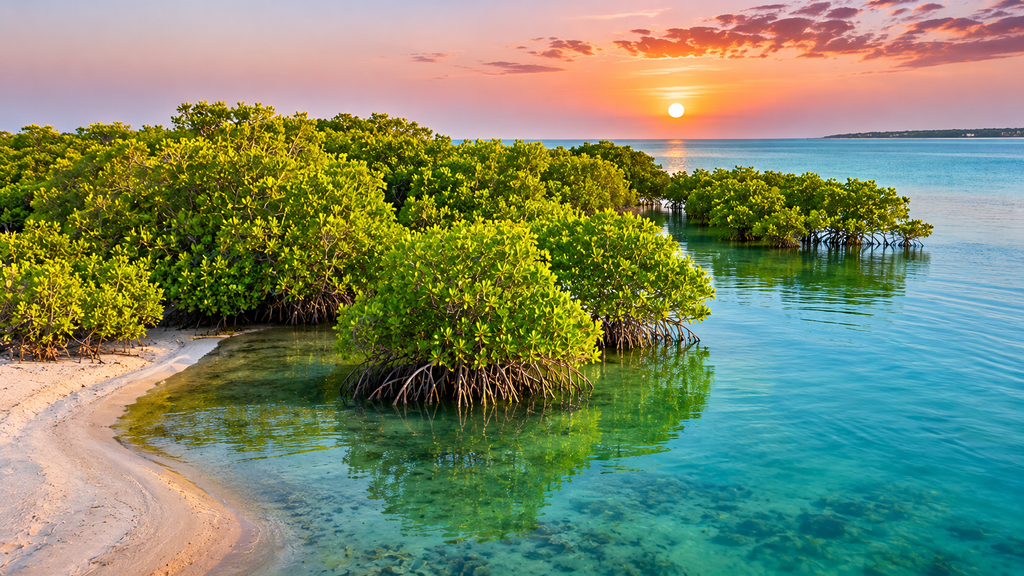
Not every stretch of coastline is appropriate for mangrove planting.
Mangroves require suitable tidal conditions, sediment characteristics, water movement and environmental conditions.
Planting seedlings in unsuitable locations may result in poor survival.
It can also disturb other valuable ecosystems, including natural tidal flats.
For this reason, restoration should begin with ecological assessment rather than predetermined tree-planting targets.
Protecting existing forests
Mature mangrove ecosystems provide established root networks, habitat complexity and existing carbon stocks.
These characteristics take time to develop.
Protecting healthy forests may therefore provide more immediate ecological benefits than planting seedlings in new locations.
Saudi Arabia’s restoration initiatives
In July 2025, Saudi Arabia’s National Center for Vegetation Cover Development and Combating Desertification announced that 52 million mangrove trees had been planted along the Kingdom’s coastlines through national efforts and partnerships.
The initiative supports a target of planting 100 million mangrove seedlings by 2030. Saudi Press Agency
These are nationwide coastal figures, including the Red Sea, rather than planting totals for the Arabian Gulf alone.
Planting numbers also should not be interpreted as the number of surviving mature trees.
The UAE’s evidence-based restoration approach
Guidelines developed through collaboration involving the Environment Agency – Abu Dhabi, the UAE Ministry of Climate Change and Environment, and Emirates Nature–WWF emphasise protecting existing ecosystems, evaluating suitable restoration conditions and monitoring results. ead.gov.ae
This approach recognises that long-term ecosystem recovery is more important than the number of seedlings planted during a single campaign.
Restoration success indicators
| Indicator | Why it matters |
|---|---|
| Seedling survival | Evaluates early establishment |
| Natural regeneration | Shows whether the forest can reproduce |
| Tidal connectivity | Assesses suitable water movement |
| Vegetation health | Identifies environmental stress |
| Sediment stability | Helps evaluate coastal functions |
| Wildlife presence | Indicates habitat development |
| Long-term monitoring | Determines whether restoration benefits persist |
Effective restoration programmes should evaluate ecological outcomes over several years, not simply count planting events.
8. The Future of Mangrove Conservation and Coastal Protection in the Gulf
As Gulf cities continue developing their coastlines, mangrove conservation could become increasingly important to regional sustainability planning.
The challenge is to balance infrastructure requirements, environmental protection and long-term coastal resilience.
Integrating mangroves into coastal planning
Urban planners can consider existing mangrove habitats before approving waterfront developments.
Early environmental assessments can help identify sensitive areas and avoid unnecessary habitat destruction.
Where appropriate, mangroves may form part of broader nature-based coastal protection strategies.
However, their effectiveness must be evaluated using local environmental information.
Combining natural and engineered protection
Mangrove forests can complement engineered infrastructure, but they do not provide complete protection against every flood or storm.
Integrated coastal strategies may combine natural habitats, suitable drainage systems, shoreline engineering and development controls.
This approach recognises that different coastal hazards require different responses.
Using technology for monitoring
Satellite imagery, drones and geographic information systems can help environmental authorities monitor changes in mangrove cover.
These tools may identify habitat loss, vegetation stress or changes in coastal conditions.
However, remote sensing should be supported by field observations when detailed ecological assessment is required.
Encouraging responsible community participation
Schools, universities, environmental organisations and local communities can contribute through awareness programmes, research and supervised conservation activities.
Public participation should focus on protecting existing habitats and following scientifically appropriate restoration guidance.
Uncoordinated planting or recreational activity can unintentionally damage sensitive ecosystems.
A practical conservation roadmap
- Map existing mangrove habitats: Identify their location, extent and ecological condition.
- Protect healthy forests: Prioritise avoiding unnecessary habitat destruction.
- Assess coastal development impacts: Examine tidal movement, pollution and sediment changes.
- Identify suitable restoration areas: Use scientific site assessments.
- Maintain water circulation: Protect the tidal processes supporting mangrove health.
- Monitor environmental performance: Track vegetation, sediments and biodiversity.
- Encourage responsible public access: Combine environmental education with habitat protection.
- Review long-term outcomes: Adapt management using monitoring and scientific evidence.
Conclusion: Mangrove Forests Are Natural Assets for the Arabian Gulf
Mangrove forests play an important role in protecting the Arabian Gulf’s coastline and supporting its marine environment.
Their root systems can reduce water movement, stabilise sediments and help lessen some forms of coastal erosion. At the same time, mangrove ecosystems provide habitats for marine life, support biodiversity and contribute to blue carbon storage.
These benefits are especially valuable in a region where coastal development, industrial activity and changing environmental conditions create increasing pressure on natural habitats.
The UAE’s conservation programmes, Qatar’s protected mangrove environments and Saudi Arabia’s restoration initiatives demonstrate the growing regional recognition of these ecosystems.
However, mangrove protection should not be measured simply by how many trees are planted.
Healthy tidal circulation, suitable coastal conditions, biodiversity and long-term ecosystem survival are equally important.
For governments, developers and communities, preserving established mangrove forests and restoring damaged habitats responsibly could strengthen coastal resilience.
Ultimately, mangrove forests in the Arabian Gulf are more than natural coastal vegetation. They are living ecosystems that help protect shorelines, sustain marine biodiversity and support a more resilient environmental future for the region.
Do follow us on Instagram
Read More – Why Postgraduate Research Mentorship Could Strengthen Scientific Innovation in Gulf Universities