
How Postgraduate Mentors Help Develop the Next Generation of GCC Researchers
Universities across the Gulf Cooperation Council (GCC) are becoming increasingly important centres for scientific research, technological development and academic collaboration. Countries such as Saudi Arabia, the United Arab Emirates, Qatar, Oman, Kuwait and Bahrain are investing in postgraduate education, specialised laboratories and research institutions to strengthen their knowledge-based economies.
- 1. What Is Postgraduate Research Mentorship and Why Does It Matter?
- 2. How Mentorship Could Improve Research Quality and Scientific Productivity
- 3. How Gulf Universities Are Developing Research Mentorship and Supervision
- 4. Why Research Mentorship Matters for Innovation in Gulf Priority Sectors
- 5. How Mentorship Could Strengthen Collaboration Between Universities and Industry
- 6. What Challenges Can Limit Effective Postgraduate Research Mentorship?
- 7. How Universities Can Build More Effective Research Mentorship Programmes
- 8. The Future of Postgraduate Research Mentorship in Gulf Universities
- Conclusion: Mentorship Can Help Turn Research Investment Into Scientific Progress
These investments are creating opportunities for students to contribute to scientific discoveries in areas such as artificial intelligence, renewable energy, biotechnology, healthcare, environmental sustainability and advanced engineering.
However, modern research facilities and generous funding cannot guarantee meaningful scientific progress on their own. Young researchers also need guidance, practical experience, constructive feedback and opportunities to develop independent thinking.
This is why postgraduate research mentorship in Gulf universities deserves greater attention.
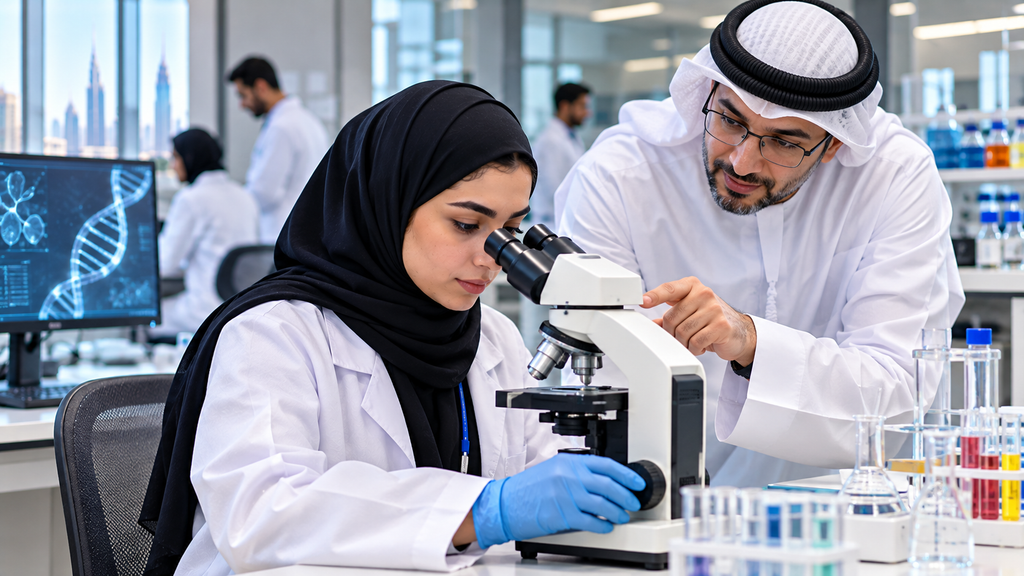
Research mentorship involves experienced academics and researchers supporting postgraduate students as they develop scientific knowledge, research skills and professional judgement. A mentor may help a student refine a research question, select suitable methods, overcome technical challenges and understand how to communicate findings effectively.
Mentorship is closely connected to academic supervision, but the two are not necessarily identical. Formal supervisors are responsible for overseeing specific academic requirements, while mentors may also provide broader guidance on career development, collaboration and professional growth.
The National Academies of Sciences, Engineering, and Medicine identifies effective mentorship as an important contributor to the development, confidence and persistence of students in science, technology, engineering, mathematics and medicine. NCBI
Across the Gulf, universities are already developing systems that support research training and supervision.
Khalifa University in Abu Dhabi uses research supervisory committees to guide and evaluate postgraduate research progress. In Saudi Arabia, King Saud University has introduced the Ufoq mentorship programme for young academics and early-career scientists. Qatar’s Hamad Bin Khalifa University also provides research mentoring through specialised scientific institutes. ku-ae.smartcatalogiq.com+2
These initiatives illustrate different approaches to developing research talent.
As Gulf universities seek to contribute more actively to international science and technological innovation, structured postgraduate mentorship could help turn educational investment into stronger research capabilities.
1. What Is Postgraduate Research Mentorship and Why Does It Matter?
Postgraduate research mentorship is a professional relationship in which an experienced researcher provides guidance to a master’s student, doctoral candidate or other emerging researcher.
The purpose is to help the student develop the skills and judgement required to conduct independent, ethical and scientifically reliable research.
A strong mentoring relationship involves more than answering occasional questions.
It usually includes constructive discussion, clear expectations, academic encouragement and ongoing feedback.
Understanding research supervision and mentorship
Formal academic supervision focuses on fulfilling postgraduate degree requirements.
Supervisors guide research projects, review academic progress and ensure that students meet institutional standards.
Mentorship may extend beyond those responsibilities.
A mentor might provide career guidance, introduce the student to research networks or offer advice on presenting findings at international conferences.
In many postgraduate programmes, one faculty member performs both roles.
However, students may also benefit from additional mentors with different expertise.
Developing research independence
Postgraduate students often begin their programmes with limited experience designing original research.
They may understand established scientific concepts but still need to learn how to develop research questions and evaluate competing explanations.
A mentor can help students move from following instructions toward making informed scientific decisions.
For example, a doctoral student investigating water treatment technology may initially require guidance on experimental design.
As the project progresses, the mentor can gradually encourage the student to analyse results, identify limitations and propose further investigations independently.
Supporting scientific confidence
Research involves uncertainty.
Experiments sometimes fail, datasets may be incomplete and initial hypotheses may not be supported by the evidence.
Experienced mentors can help students understand that unexpected results are part of scientific investigation.
This support may encourage persistence without minimising the need for rigorous evaluation.
Key functions of research mentorship
| Mentorship activity | Main purpose | Potential benefit |
|---|---|---|
| Research planning | Refine questions and objectives | Clearer project direction |
| Methodological guidance | Select appropriate research methods | More reliable investigations |
| Technical development | Build laboratory and analytical skills | Greater practical competence |
| Critical feedback | Evaluate assumptions and findings | Stronger scientific reasoning |
| Research ethics | Support responsible research conduct | Improved integrity |
| Academic writing | Develop publication and presentation skills | Clearer communication |
| Career guidance | Explore professional opportunities | More informed career decisions |
| Research networking | Connect students with relevant experts | Greater collaboration potential |
Effective mentorship should support students in becoming capable independent researchers rather than making them permanently dependent on supervisors.
2. How Mentorship Could Improve Research Quality and Scientific Productivity
Scientific innovation depends on the quality of research processes as well as the originality of ideas.
A promising research question may produce limited results if the methods are unsuitable, the data are unreliable or the findings are poorly interpreted.
Mentorship can help students develop the habits needed to conduct rigorous research.
Improving research methodology
Postgraduate students must understand how to choose appropriate research methods.
These may include laboratory experiments, computational modelling, surveys, clinical studies or qualitative investigations.
A mentor can help students evaluate which approach is suitable for their research question.
For example, a student studying urban heat in Gulf cities may need guidance on climate data, sampling methods and statistical analysis.
A well-designed project should address potential sources of error before data collection begins.
Strengthening critical thinking
Scientific research requires the ability to question assumptions and examine alternative explanations.
Mentors can encourage students to explain why they selected a particular method and how they interpret their results.
Constructive questioning helps students recognise weaknesses in their arguments and improve the quality of their conclusions.
Improving research documentation
Reliable research depends on accurate records.
Laboratory notebooks, datasets, analysis scripts and research protocols should be maintained according to appropriate institutional standards.
Mentors can help students understand data management, reproducibility and the importance of documenting methods clearly.
Supporting responsible publication
Publishing research is an important part of academic development, but the number of publications should not be the only measure of success.
Mentors can teach students how to select appropriate journals, respond to peer-review comments and communicate limitations transparently.
They should also explain authorship responsibilities, research integrity and the risks associated with misleading or predatory publishing practices.
Research quality indicators
| Research area | Mentorship contribution |
|---|---|
| Project design | More focused research questions |
| Method selection | Better alignment between methods and objectives |
| Data analysis | Appropriate interpretation of results |
| Research integrity | Stronger documentation and ethical practices |
| Scientific writing | Clearer reporting of findings |
| Peer review | Constructive responses to scientific criticism |
| Research continuity | Better planning across project stages |
A 2024 scoping review of postgraduate STEM and medical mentorship interventions found considerable interest in mentoring, but also noted that many studies lacked sufficiently strong designs to establish effectiveness conclusively. PubMed Central (PMC)
This distinction matters. Mentorship can plausibly improve research quality, but universities should evaluate their own programmes instead of assuming every intervention will produce measurable gains.
3. How Gulf Universities Are Developing Research Mentorship and Supervision
Several Gulf universities have formal systems for supervising postgraduate research, supporting early-career scientists and creating opportunities for research collaboration.
These initiatives differ in their objectives and target groups.
Some focus on postgraduate supervision, while others provide broader professional mentorship.
Saudi Arabia: KAUST and research career development
King Abdullah University of Science and Technology (KAUST) provides advanced postgraduate research opportunities in science and engineering.
Its Office of Postdoctoral and Research Affairs operates a mentoring programme for postdoctoral researchers.
The programme connects participants with faculty members or other professionals who can provide career guidance alongside their existing research supervision. OPRA
Postdoctoral researchers have generally completed their doctorates, so this programme should not be presented as a dedicated master’s or PhD mentoring scheme.
Nevertheless, it demonstrates how formal mentorship can complement research supervision throughout scientific career development.
King Saud University’s Ufoq mentorship initiative
King Saud University’s Central Research Laboratory operates the Ufoq mentorship programme.
The initiative aims to support young academics and early-career scientists through individual guidance, professional development and research networking.
It also seeks to strengthen connections between researchers from different disciplines. Central Research Laboratory
Such programmes may help emerging scientists understand career opportunities and develop research relationships beyond their immediate departments.
Taibah University’s graduate research support
Taibah University offers an Emerging Researchers Program that gives eligible participants opportunities to contribute to research projects under faculty supervision.
The programme includes postgraduate students among its potential participants. Taibah University
The university also maintains an initiative supporting graduate research projects aligned with institutional research priorities. Taibah University
These opportunities demonstrate how supervised participation and research support can complement formal postgraduate education.
UAE: Khalifa University and structured supervision
Khalifa University’s postgraduate framework includes research advisors and supervisory committees.
Its 2026–2027 graduate catalogue describes a Research Supervisory Committee responsible for monitoring research progress, providing feedback and evaluating students’ academic development. ku-ae.smartcatalogiq.com
The university also requires relevant advisor arrangements for doctoral research.
This provides an example of institutional structures that support oversight rather than relying entirely on informal discussions between individual students and supervisors.
United Arab Emirates University research assistantships
United Arab Emirates University offers graduate research assistantships for eligible master’s and doctoral students.
Students work on research projects under faculty supervision, allowing them to gain practical experience in a research environment. United Arab Emirates University (UAEU)
Such arrangements can help postgraduate students develop technical skills and become more familiar with collaborative research.
Qatar: Hamad Bin Khalifa University and research mentoring
Hamad Bin Khalifa University’s Qatar Biomedical Research Institute provides mentoring, scientific training and career guidance to developing researchers.
Its researchers contribute to master’s and doctoral programmes through teaching and supervision. Hamad Bin Khalifa University
Qatar University also maintains formal graduate faculty and thesis supervision arrangements. qu.edu.qa
Regional overview
| University or institution | Documented approach | Relevance to research development |
|---|---|---|
| KAUST, Saudi Arabia | Postdoctoral mentoring | Early-career research development |
| King Saud University | Ufoq mentorship programme | Research networking and career guidance |
| Taibah University | Supervised research participation | Practical research experience |
| Khalifa University, UAE | Graduate supervisory committees | Structured research oversight |
| United Arab Emirates University | Graduate research assistantships | Faculty-supervised research training |
| Hamad Bin Khalifa University, Qatar | Research institute mentoring | Scientific and postgraduate development |
| Qatar University | Graduate supervision arrangements | Academic guidance and progress oversight |
These examples show that the foundations for stronger mentorship already exist, although programme structure and accessibility differ between institutions.
4. Why Research Mentorship Matters for Innovation in Gulf Priority Sectors
Scientific innovation becomes particularly valuable when research addresses important environmental, economic and social challenges.
Gulf countries face several research questions involving energy, water, healthcare, industrial development and digital technology.
Postgraduate researchers can contribute to these areas by investigating problems, testing new methods and generating evidence that supports future innovation.
Renewable energy and environmental sustainability
The Gulf’s climate creates opportunities and challenges for renewable energy development.
Researchers may investigate solar panel performance under high temperatures, energy storage technologies or methods of improving electricity efficiency.
A postgraduate mentor with relevant engineering experience can help students design experiments and evaluate findings under local conditions.
Research guidance may also help students distinguish between technologies that work successfully in laboratories and those suitable for commercial deployment.
Water scarcity and desalination
Water security remains a major regional concern.
Universities can contribute through research into desalination efficiency, wastewater treatment, groundwater management and water conservation.
A student investigating new filtration membranes, for example, may need guidance in materials science, chemistry and environmental engineering.
Access to mentors from different disciplines could improve the study’s technical quality.
Healthcare and biotechnology
Biomedical research increasingly involves genetics, diagnostics, artificial intelligence and advanced treatment methods.
Postgraduate mentorship can help researchers understand laboratory procedures, ethical approvals, patient data protection and scientific reporting.
Research involving human participants also requires specialised oversight and regulatory compliance.
Artificial intelligence and digital technologies
AI research involves rapidly developing methods and changing technical requirements.
Students may benefit from mentoring in algorithm development, model validation, data quality and responsible technology use.
Experienced researchers can help students recognise limitations rather than treating every promising technical result as a commercially viable innovation.
Scientific priorities and mentorship opportunities
| Research field | Potential postgraduate project | Valuable mentoring expertise |
|---|---|---|
| Renewable energy | Solar performance and energy storage | Electrical engineering and energy systems |
| Water sustainability | Desalination or wastewater treatment | Environmental engineering and chemistry |
| Biotechnology | Molecular diagnostics or biological analysis | Biomedical science and research ethics |
| Artificial intelligence | Machine learning for regional applications | Computing, statistics and responsible AI |
| Advanced materials | Durable or low-carbon construction materials | Materials science and industrial engineering |
| Climate resilience | Urban heat and flood assessment | Climate science and modelling |
| Agricultural innovation | Water-efficient cultivation | Agricultural science and resource management |
Effective mentorship can help students connect research ideas with relevant scientific challenges.
However, a university should not restrict every postgraduate project to immediate commercial or national priorities. Fundamental research can also generate discoveries whose applications are not yet known.
5. How Mentorship Could Strengthen Collaboration Between Universities and Industry
Scientific discoveries often require cooperation between academic researchers, businesses, hospitals and public institutions.
Universities can generate new knowledge, while external partners may provide practical problems, specialist equipment or opportunities to test research findings.
Postgraduate mentorship can help students participate in these collaborations responsibly.
Connecting research with practical challenges
Industry partners may identify problems that require scientific investigation.
For example, an industrial manufacturer might want to evaluate materials that use less energy during production.
A university research team could investigate the problem, with postgraduate students contributing experiments and analysis.
Mentors can help students define research questions that are scientifically meaningful while remaining relevant to the collaboration.
Developing professional networks
Experienced academics often maintain relationships with researchers at other institutions.
They may help postgraduate students identify suitable collaborators, conferences or specialist research facilities.
These connections can expose students to different methods and perspectives.
However, access to opportunities should be transparent and not depend entirely on personal relationships.
Supporting interdisciplinary research
Many important scientific problems cross traditional academic boundaries.
For example, a project involving medical artificial intelligence may require expertise in medicine, computer science, statistics and ethics.
A single supervisor may not possess all the necessary knowledge.
Co-mentoring arrangements can bring together specialists from multiple fields.
Turning research into practical applications
Some research findings may lead to prototypes, patents, software or other innovations.
Mentors can help students understand the early stages of technology transfer and identify when specialist advice is required.
However, decisions about intellectual property should follow university policies, funding agreements and applicable law.
Students must receive appropriate recognition for their contributions.
An example from Qatar
Hamad Bin Khalifa University’s Knowledge Transfer Partnership framework connects academic institutions and businesses to address practical challenges.
The model includes graduate associates who contribute to projects while receiving mentoring and specialist knowledge transfer. Expertise Catalog
This illustrates how university-industry cooperation can support research training alongside organisational innovation.
Collaboration models
| Model | Main activity | Potential benefit |
|---|---|---|
| University-industry research | Investigating practical problems | Applied scientific knowledge |
| Joint academic supervision | Guidance from multiple researchers | Broader technical expertise |
| Research internships | Participation in external research environments | Professional experience |
| International laboratory partnerships | Sharing expertise and facilities | Access to specialised methods |
| Graduate innovation projects | Developing research-based solutions | Commercialisation experience |
| Interdisciplinary research groups | Combining expertise across fields | More comprehensive investigation |
Mentorship can help students navigate these opportunities while protecting research independence and academic integrity.
6. What Challenges Can Limit Effective Postgraduate Research Mentorship?
Although mentorship offers important opportunities, poor supervision can also create difficulties for postgraduate students.
Research institutions should therefore focus on mentoring quality rather than assuming that every relationship is beneficial.
High academic workloads
Faculty members may balance teaching, administration, grant applications and research responsibilities.
When mentors have limited availability, postgraduate students may experience delayed feedback or uncertainty about project expectations.
Universities should consider mentoring workloads when allocating students to supervisors.
Unclear responsibilities
Students and mentors may have different expectations about meeting frequency, research independence, publication or project deadlines.
Without early discussion, these differences can lead to frustration.
Written supervision agreements or mentoring plans can help establish shared expectations.
Unequal access to opportunities
Some students may benefit from well-connected supervisors and well-funded laboratories, while others have fewer opportunities.
Universities should develop fair procedures for accessing mentoring, research training and professional networks.
Research integrity and authorship
Postgraduate research can involve questions about data ownership, publication rights and authorship credit.
Clear policies can help prevent disagreements.
Mentors should model responsible research behaviour, including transparent data management and appropriate acknowledgment of contributions.
The imbalance of power
Supervisors may influence academic progress, funding recommendations and future career opportunities.
This creates a power imbalance that universities must manage carefully.
Students should have access to confidential support and a fair process for raising concerns without inappropriate retaliation.
Challenges and possible responses
| Challenge | Possible institutional response |
|---|---|
| Limited mentor availability | Realistic supervision workloads |
| Unclear expectations | Written mentoring agreements |
| Delayed feedback | Scheduled progress reviews |
| Skills gaps | Training for mentors and mentees |
| Research disputes | Clear integrity and authorship policies |
| Power imbalances | Independent support and reporting channels |
| Unequal access | Transparent mentoring opportunities |
| Poor interdisciplinary coordination | Defined roles for co-supervisors |
The National Academies recommends institutional leadership, evidence-based mentor training and assessment of mentoring relationships to improve research environments. National Academies
These principles are especially relevant as Gulf universities expand postgraduate research programmes.
7. How Universities Can Build More Effective Research Mentorship Programmes
Successful mentorship programmes require deliberate planning.
Universities should establish clear objectives, provide suitable resources and monitor whether mentoring relationships support meaningful student development.
Introduce formal mentoring plans
At the beginning of a postgraduate project, students and supervisors can agree on research objectives, responsibilities and expected communication.
Plans may address project milestones, training needs and review schedules.
These arrangements should remain flexible as research findings develop.
Provide mentor training
Experienced researchers may possess excellent scientific knowledge without having received formal education in mentorship.
Training can help faculty members improve communication, provide constructive feedback and recognise challenges faced by developing researchers.
It can also address ethical responsibilities, inclusive supervision and conflict management.
Encourage multiple sources of guidance
Postgraduate students may benefit from a primary supervisor, co-supervisor and additional career mentor.
This arrangement can provide access to different perspectives.
However, responsibilities should be clear to avoid conflicting instructions.
Include student feedback
Universities should create safe opportunities for students to evaluate the quality of mentorship.
Feedback can help identify issues involving communication, availability and professional conduct.
Individual responses should be handled confidentially.
Recognise mentorship in academic evaluation
Research institutions often assess faculty performance through publications, grants and teaching.
High-quality mentorship also requires time and professional effort.
Universities could consider appropriately documented mentoring contributions within professional evaluation and recognition systems.
A practical mentorship development roadmap
- Assess postgraduate needs: Identify common research, supervision and professional development challenges.
- Establish clear responsibilities: Define the roles of supervisors, co-mentors and students.
- Provide mentor preparation: Train faculty in communication, research integrity and inclusive guidance.
- Create mentoring agreements: Record expectations and review arrangements.
- Support research skill development: Offer workshops in methods, data analysis and academic writing.
- Encourage collaboration: Connect students with relevant departments and research partners.
- Provide independent support: Establish fair procedures for resolving mentoring difficulties.
- Evaluate outcomes: Review student experience, research progress and longer-term development.
The National Academies’ online mentorship guide includes practical tools such as mentoring agreements, development plans and mentoring networks. nap.nationalacademies.org
These tools could be adapted to fit the academic structures and research priorities of Gulf universities.
8. The Future of Postgraduate Research Mentorship in Gulf Universities
As Gulf universities develop their scientific capabilities, mentorship could become a more visible part of research strategy.
The objective should not simply be to increase postgraduate enrolment.
Institutions also need to ensure that students receive the support required to undertake responsible and meaningful research.
Developing future research leaders
Effective mentorship can help students gain confidence in designing investigations, managing projects and communicating scientific results.
Over time, these skills may support careers in universities, research institutes, technology companies and public organisations.
Some graduates may become mentors themselves, contributing to the next generation of researchers.
Expanding international research connections
Gulf universities may benefit from partnerships with international institutions.
Joint supervision arrangements can expose students to different research methods and specialist expertise.
However, international collaboration should strengthen local research capabilities rather than create permanent dependence on external institutions.
Supporting women and diverse researchers
Inclusive mentorship can help universities recognise barriers that affect different groups of students.
These may include unequal access to networks, limited professional guidance or difficulties balancing research responsibilities with personal circumstances.
Support should be based on actual student needs and institutional evidence.
Using digital mentorship carefully
Video meetings, shared research platforms and collaborative software can support mentoring across different locations.
These tools may be valuable when students and supervisors work at separate research facilities.
However, digital communication should not replace laboratory training, appropriate supervision or meaningful professional interaction.
Measuring long-term success
Mentorship programmes should not be evaluated solely by publication counts.
Useful indicators include student research progress, degree completion, research integrity, student satisfaction and the development of independent scientific skills.
Career outcomes and the quality of research collaboration may also provide useful information.
A framework for evaluating mentorship
| Performance area | Suggested indicator |
|---|---|
| Research progress | Completion of agreed academic milestones |
| Student development | Demonstrated methodological and analytical skills |
| Mentoring quality | Confidential student feedback |
| Research integrity | Compliance with approved research standards |
| Scientific contribution | Quality and relevance of research outputs |
| Collaboration | Meaningful interdisciplinary participation |
| Career development | Access to training and professional opportunities |
| Institutional improvement | Actions taken in response to feedback |
These indicators should be considered together.
For example, rapid degree completion should not be encouraged at the expense of scientific quality, and publication targets should not create pressure to publish unreliable findings.
Conclusion: Mentorship Can Help Turn Research Investment Into Scientific Progress
Postgraduate research mentorship could become an important contributor to scientific innovation in Gulf universities.
As countries invest in advanced research facilities, specialised postgraduate programmes and international partnerships, universities also need to strengthen the human relationships that support scientific development.
Experienced mentors can help students design reliable research, develop critical thinking, understand ethical responsibilities and build the confidence required for independent investigation.
Examples from Saudi Arabia, the UAE and Qatar show that Gulf institutions already employ a range of research supervision, training and mentoring approaches.
However, effective mentorship requires clear expectations, appropriate workloads, professional development and fair institutional support.
The strongest programmes will encourage students to question assumptions, explore original ideas and develop expertise rather than simply follow instructions.
For Gulf universities, the opportunity extends beyond helping individual students graduate.
By supporting the next generation of researchers, institutions can strengthen scientific collaboration, develop specialised talent and contribute to innovation in fields important to regional development.
Ultimately, postgraduate research mentorship in Gulf universities could help transform academic investment into stronger scientific knowledge, more capable researchers and long-term innovation across the region.
Do follow us on Instagram
Read More – The Role of Patient Navigation Services in Making Healthcare Easier to Access