How Multigenerational Living Is Redefining Family Spaces
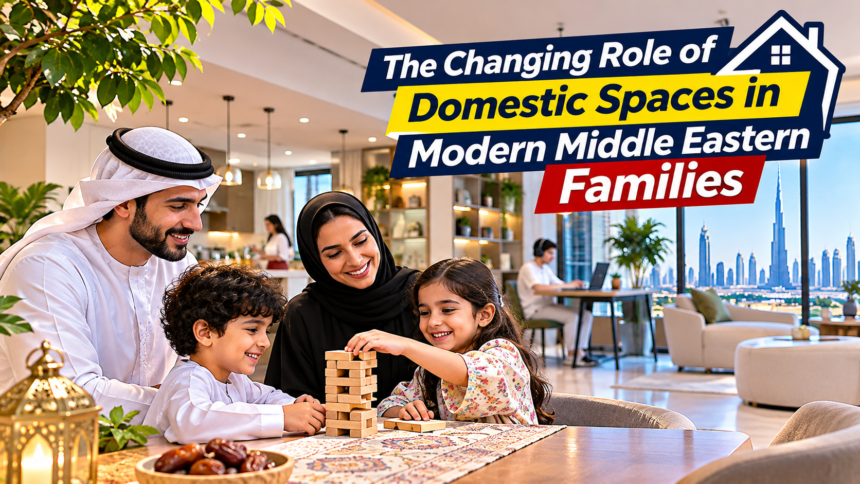
A living room that once served mainly as a place to welcome guests is becoming a flexible space for remote work, children’s activities and everyday family gatherings. A bedroom may double as a study, while a traditional courtyard is being reimagined as a private outdoor retreat. Across the Middle East, the purpose of domestic spaces is evolving as households adapt to changing lifestyles, technology and family responsibilities.
- Why Middle Eastern Family Homes Are Changing
- 7 Powerful Changes Transforming Modern Domestic Spaces
- How Multigenerational Living Is Redefining Family Spaces
- Privacy, Hospitality and the Evolution of Traditional Rooms
- Remote Work, Education and Technology Inside the Home
- The Economics of Flexible Family Homes
- Challenges of Designing Homes for Changing Family Needs
- The Future of Middle Eastern Family Homes and FAQs
Middle Eastern Family Homes are increasingly being designed and adapted to accommodate multiple activities, different generations and new expectations about privacy, comfort and independence.
For many families, the home has always been more than a place to sleep. It is a setting for hospitality, family relationships, cultural traditions and daily responsibilities.
However, urban development, changing household structures and rising housing expenses are influencing how those functions are organised.
In cities such as Dubai, Abu Dhabi, Riyadh and Doha, contemporary homes may need to support professional work, digital learning, leisure and family gatherings within the same property.
Some households are introducing dedicated workspaces, while others are exploring separate living areas for adult children or older relatives.
Recent housing policies provide examples of this changing approach.
In March 2025, Dubai Municipality launched the Home First initiative, introducing additional residential planning flexibility for eligible Emirati families. The measures include provisions for family annexes, separate accommodation within existing properties and selected villa extensions.
Meanwhile, research published in 2025 examines how Gulf housing must respond to demographic change, privacy expectations, climatic conditions and evolving family needs.
Saudi Arabia’s expanding housing programmes also demonstrate the importance of providing different residential options for households at various stages of life.
Yet the transformation is not uniform.
A large family villa in the UAE has different design possibilities from a compact apartment in Beirut, Cairo or central Riyadh. Income, property ownership, local regulations and cultural preferences all shape what families can change.
The broader development is therefore not the disappearance of traditional domestic life. Instead, modern homes are increasingly combining established family practices with new uses and more adaptable designs.
Why Middle Eastern Family Homes Are Changing
Domestic spaces reflect the people who occupy them, the resources available to them and the wider environment in which they live.
As family routines evolve, homes need to accommodate activities that may not have been considered when the property was originally designed.
Changing Household Requirements
Families may require different spaces as children grow, older relatives need additional support or adult family members move between households.
A room used as a nursery today might become a teenager’s study area several years later.
Similarly, a household that previously needed only a shared living room may later require separate spaces for work and recreation.
Adaptability can help families respond to these changes without immediately relocating.
Urbanisation and Housing Choices
Middle Eastern cities contain diverse residential formats, including apartments, townhouses, villas and family compounds.
The type of property influences how residents organise domestic activities.
A compact apartment may require multifunctional furniture, while a detached villa can potentially accommodate separate entrances or additional rooms.
However, larger homes also involve higher purchase, maintenance and energy costs.
Culture and Contemporary Lifestyles
Hospitality and family interaction remain important considerations in many Middle Eastern households.
Traditional design elements such as reception rooms, courtyards and privacy-conscious entrances continue to influence contemporary architecture.
Yet preferences vary between countries, generations and individual families.
Modern domestic design therefore involves balancing established practices with the specific needs of present-day residents.
Traditional and Contemporary Domestic Functions
| Domestic Space | Established Function | Additional Modern Uses |
|---|---|---|
| Living Room | Family Gatherings | Work, Study and Entertainment |
| Majlis | Hospitality | Community and Social Events |
| Bedroom | Rest and Privacy | Personal Workspace |
| Kitchen | Food Preparation | Family Interaction and Learning |
| Courtyard | Outdoor Gathering | Recreation and Climate Comfort |
| Guest Room | Visitor Accommodation | Flexible Family Use |
| Balcony | Outdoor Relaxation | Gardening and Quiet Activities |
The important change is that many rooms are being asked to serve more than one purpose.
7 Powerful Changes Transforming Modern Domestic Spaces
The evolving role of the home can be understood through seven interconnected developments.
These changes do not affect every household equally, but they illustrate how domestic expectations are broadening.
1. Homes Are Becoming Flexible Workspaces
Remote and hybrid working arrangements have increased the relevance of suitable home offices.
Some professionals require dedicated rooms for video meetings, while others use a desk within an existing living area.
Reliable connectivity, appropriate lighting and reduced noise are important considerations.
However, not every occupation allows employees to work from home.
2. Multigenerational Living Is Influencing Layouts
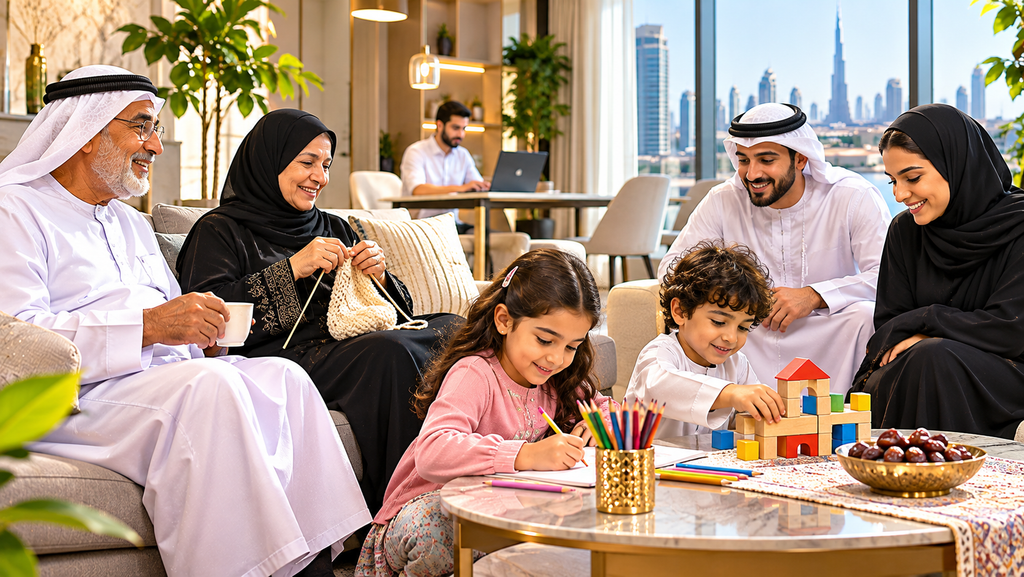
Some families want older relatives and adult children to remain nearby while maintaining personal independence.
Separate living areas, ground-floor bedrooms and additional entrances may help support these arrangements.
The suitability of such designs depends on property size, household preferences and planning regulations.
3. Privacy Is Being Reconsidered
Privacy has long been important in many regional housing traditions.
Modern homes may use internal zoning, acoustic separation and thoughtful entrance design to manage interactions between household members and visitors.
These features can accommodate different daily routines without requiring family members to live entirely separately.
4. Kitchens Are Becoming More Social
In some households, kitchens now function as shared spaces for cooking, conversation and family activities.
Open-plan designs may encourage interaction, while other families prefer enclosed kitchens for privacy, ventilation or practical reasons.
Neither layout is universally preferable.
5. Technology Is Changing Household Management
Smart thermostats, connected lighting, security systems and digital appliances offer new ways to manage homes.
These systems may improve convenience and help monitor energy consumption.
However, they also introduce financial, cybersecurity and privacy considerations.
6. Indoor and Outdoor Spaces Are Becoming More Connected
Shaded courtyards, terraces and gardens can provide additional places for family activities.
Such spaces may be especially valuable when designed for regional climatic conditions.
However, extreme heat and maintenance requirements affect how frequently outdoor areas can be used.
7. Homes Are Supporting More Personal Activities
Family members increasingly use domestic spaces for fitness, creative hobbies, entertainment and independent study.
A spare room may become an exercise area, art corner or music practice space.
Flexible layouts allow these activities to change over time.
Seven Changes Compared
| Change | Main Requirement | Potential Advantage |
|---|---|---|
| Home Working | Quiet Workspace | Greater Flexibility |
| Multigenerational Living | Separate Living Areas | Family Proximity |
| Privacy | Thoughtful Room Layouts | Personal Comfort |
| Social Kitchens | Functional Shared Space | Family Interaction |
| Smart Technology | Connected Systems | Convenience |
| Outdoor Integration | Climate-Responsive Design | Additional Recreation |
| Personal Activities | Adaptable Rooms | Wider Household Use |
A successful home does not necessarily include every feature. It responds to the needs and resources of its occupants.
How Multigenerational Living Is Redefining Family Spaces
Multigenerational living remains an established arrangement in parts of the Middle East.
However, contemporary families may want greater independence within shared or closely connected residences.
This creates opportunities for housing designs that combine proximity with personal boundaries.
Separate Spaces Within One Property
A family villa may include a private ground-floor suite for older relatives or independent accommodation for adult children.
Separate bathrooms, small living areas and suitable entrances can allow different generations to maintain individual routines.
However, such modifications require sufficient space and appropriate approvals.
Dubai’s Home First Initiative
Dubai Municipality’s Home First initiative, introduced on March 17, 2025, offers a concrete example of residential policy responding to family needs.
The initiative allows eligible Emirati homeowners to build certain family annexes and, subject to applicable requirements, construct a separate villa for a son within an existing family property.
It also introduces greater flexibility concerning extensions and building setbacks.
These measures are intended to support family stability and efficient use of residential land.
However, the provisions do not establish unrestricted construction rights for every Dubai homeowner.
Saudi Arabia’s Housing Expansion
Saudi Arabia has been expanding access to housing through programmes including Sakani.
In September 2026, the Ministry of Municipalities and Housing reported that 63,076 Saudi families had moved into their first homes during the first half of the year.
This demonstrates continued activity in housing access, but it does not establish how many of those households are multigenerational.
Research on Gulf housing also highlights the need for flexible arrangements that can respond to changing household composition.
Accessibility for Older Residents
Homes intended to accommodate older family members may benefit from ground-floor bedrooms, accessible bathrooms and reduced reliance on stairs.
Good lighting, safe flooring and convenient access to shared areas can also contribute to everyday comfort.
However, accessibility requirements vary, and adaptations should reflect residents’ actual needs.
Housing Models Compared
| Model | Main Feature | Important Consideration |
|---|---|---|
| Shared Villa | Common Household Facilities | Personal Boundaries |
| Villa With Annex | Partly Independent Accommodation | Legal Approval |
| Family Compound | Separate Residential Units | Ownership and Maintenance |
| Adjacent Apartments | Independent Homes Nearby | Availability and Cost |
| Adaptable Townhouse | Flexible Internal Layout | Structural Limitations |
The objective is not necessarily to keep every generation under one roof, but to create practical arrangements that support family relationships and independence.
Privacy, Hospitality and the Evolution of Traditional Rooms
Domestic architecture across the Middle East has historically responded to social customs, climate and expectations concerning public and private life.
However, these traditions have taken different forms across countries and communities.
Contemporary housing design often draws on selected elements rather than recreating traditional layouts exactly.
The Changing Role of the Majlis
The majlis is an important social space in many Gulf homes, traditionally associated with receiving visitors and holding conversations.
In contemporary properties, a majlis may remain separate from everyday family rooms.
Other households may use a more flexible reception area for both guests and family gatherings.
The choice depends on household preferences, available space and frequency of visitors.
Privacy Through Spatial Design
An entrance opening directly into a family living room can create different privacy considerations from one leading into a reception area.
Designers may use hallways, partitions or separate access points to manage visibility.
A 2026 architectural study examining traditional Middle Eastern domestic spaces describes the role of transitional areas, courtyards and entrances in connecting social functions with environmental comfort.
These elements can also inspire contemporary design.
Courtyards and Transitional Spaces
Traditional courtyards can help create sheltered outdoor areas while allowing family activities to occur away from public view.
Their environmental performance depends on orientation, shading, materials and airflow.
A courtyard should not automatically be described as energy-efficient without assessing its actual climatic performance.
Privacy in Smart Homes
Connected cameras, voice assistants and other digital devices create additional privacy questions.
Research presented at the 2025 Symposium on Usable Privacy and Security examined privacy expectations in Saudi smart homes.
The study found that privacy can be negotiated within households according to family roles, relationships and cultural expectations.
This illustrates how digital privacy is not solely a question of whether outsiders can access information. Family members may also have different expectations about recording, monitoring and access.
Traditional Features and Modern Adaptations
| Design Feature | Traditional Role | Contemporary Application |
|---|---|---|
| Majlis | Receiving Guests | Flexible Reception Space |
| Courtyard | Private Outdoor Gathering | Family Recreation |
| Entrance Corridor | Managing Visibility | Privacy and Circulation |
| Internal Partition | Separating Activities | Work and Personal Zones |
| Shaded Terrace | Outdoor Comfort | Informal Family Space |
| Enclosed Kitchen | Food Preparation | Cooking and Service Separation |
Good design allows households to retain the traditions they value while adapting rooms to their present-day requirements.
Remote Work, Education and Technology Inside the Home
The growth of digital services has expanded the activities that can take place within residential spaces.
For some households, the home now functions as a workplace, classroom, entertainment venue and administrative centre.
However, these functions can compete for limited space.
The Home Office
A dedicated office can provide a quieter environment for professional tasks.
In smaller apartments, a compact desk or adaptable furniture may be more practical.
The most important considerations include reliable connectivity, suitable lighting, seating and the ability to participate in calls without excessive interruption.
Not every home requires a separate office.
Study Spaces for Children
Children may need areas for homework, reading and creative projects.
A study space does not necessarily require an entire room.
A suitable table, storage area and reliable lighting may be sufficient for many activities.
Parents should consider the child’s age, educational needs and available supervision.
Digital Entertainment
Streaming services, video games and connected televisions have become common forms of household recreation.
However, different family members may want quiet study, entertainment and conversation at the same time.
Acoustic separation and agreed household routines can help manage competing activities.
The Smart Home Opportunity
Connected devices can automate lighting, cooling and other household functions.
Some systems allow residents to monitor energy use and manage equipment remotely.
However, potential savings depend on the specific technology, building characteristics and user behaviour.
Upfront costs and ongoing subscriptions should also be considered.
Data Privacy and Security
Smart home devices may process information about daily routines, conversations or household activity.
Residents should examine privacy settings, account permissions and security updates.
Devices should not be installed in ways that undermine other household members’ reasonable privacy expectations.
Modern Household Technology
| Technology | Possible Use | Important Consideration |
|---|---|---|
| Video Conferencing | Remote Work | Privacy and Connectivity |
| Digital Learning Tools | Education | Age-Appropriate Use |
| Smart Thermostats | Cooling Management | Actual Energy Performance |
| Connected Cameras | Security Monitoring | Household Privacy |
| Smart Lighting | Convenience | Installation Costs |
| Home Networks | Multiple Connected Devices | Cybersecurity |
Digital convenience is valuable when technology serves the household rather than introducing unnecessary complexity.
The Economics of Flexible Family Homes
A home designed for several purposes may offer long-term advantages, but flexibility is not always inexpensive.
Additional rooms, improved insulation, home offices and smart systems can increase construction or renovation costs.
Households should therefore evaluate whether proposed changes will provide enough practical value.
Renovating Instead of Moving
A family may consider converting an unused room into an office rather than renting a larger property.
This can be economical when the existing home has sufficient space.
However, major structural changes may require professional design, approvals and additional investment.
The Cost of Additional Space
Larger properties usually involve more than a higher purchase price.
Households may also face increased maintenance, insurance, furnishing and cooling expenses.
This is especially relevant in the Gulf, where air-conditioning can be a major operational requirement.
Hypothetical Renovation Budget
Consider a fictional family adapting an existing home to support remote work, study and older relatives.
| Renovation Item | Illustrative Cost |
|---|---|
| Home Office Setup | AED 8,000 |
| Adaptable Furniture and Storage | AED 6,000 |
| Improved Lighting | AED 3,000 |
| Acoustic Improvements | AED 7,000 |
| Accessibility Modifications | AED 15,000 |
| Total Illustrative Investment | AED 39,000 |
These figures are hypothetical and do not represent actual contractor quotations or average market costs.
They also exclude major structural work, design fees and permit expenses.
Why Flexibility Can Have Financial Value
Adaptable rooms may reduce the need for repeated furniture purchases or disruptive renovations as household requirements change.
For example, a room designed with sufficient storage and connectivity could function as a study, guest room or office at different times.
However, flexible design does not guarantee higher resale value.
Property values depend on location, market conditions, layout quality and buyer preferences.
Ownership and Shared Expenses
Families living together should establish clear arrangements concerning maintenance and renovation costs.
If several generations occupy one property, financial responsibilities should not be left entirely to informal assumptions.
Formal ownership questions may require professional legal advice.
Financial Planning Checklist
- Identify which spaces are genuinely needed.
- Compare renovation costs with relocation costs.
- Check whether proposed changes need permits.
- Include cooling and maintenance expenses.
- Consider future accessibility requirements.
- Select durable and adaptable furniture.
- Evaluate the usefulness of smart home systems.
- Discuss shared household costs.
- Maintain a contingency budget.
- Avoid assuming every renovation increases property value.
The most economical design is often the one that supports daily life without adding unnecessary space or complexity.
Challenges of Designing Homes for Changing Family Needs
The transformation of domestic spaces creates opportunities, but it can also introduce competing demands.
Families may want larger gathering areas, greater privacy, dedicated workspaces and lower housing expenses at the same time.
These objectives are not always easy to reconcile.
Limited Space in Urban Apartments
Residents of compact apartments may struggle to separate professional, educational and recreational activities.
Multifunctional furniture can help, but a room cannot always accommodate several activities simultaneously.
Households may need to prioritise the uses that matter most.
Balancing Privacy and Togetherness
Open-plan layouts can encourage interaction, yet they may also reduce opportunities for quiet time.
Similarly, large shared family homes can bring relatives closer while creating disagreements about visitors, noise and household routines.
A successful arrangement requires both appropriate design and clear communication.
Climate and Energy Use
Homes in hot Middle Eastern climates require effective cooling and protection from solar heat.
Large glazed areas or poorly shaded outdoor spaces may increase energy consumption or reduce comfort.
Design decisions should consider orientation, insulation and ventilation alongside appearance.
Accessibility and Family Changes
A home suitable for young adults may become less convenient for older residents.
Narrow bathrooms, steep staircases and inaccessible entrances can create practical difficulties.
Planning for adaptable spaces may reduce some future renovation needs.
Building Regulations
Residential alterations must comply with local laws and planning requirements.
Adding an annex, modifying a structure or creating a separate residential unit may require approvals.
Dubai’s Home First initiative illustrates how planning flexibility can be expanded for eligible households, but its provisions are not universal.
Challenges and Practical Responses
| Challenge | Possible Consequence | Practical Response |
|---|---|---|
| Limited Floor Space | Competing Room Uses | Prioritise Essential Activities |
| Privacy Conflicts | Household Tension | Separate Functional Zones |
| Cooling Costs | Higher Utility Expenses | Climate-Responsive Design |
| Accessibility Needs | Reduced Convenience | Adaptable Layouts |
| Renovation Costs | Financial Pressure | Phased Improvements |
| Planning Restrictions | Delayed Modifications | Verify Requirements |
| Smart Technology Risks | Data Exposure | Secure Device Management |
The most effective domestic spaces combine practical design with realistic expectations about household needs.
The Future of Middle Eastern Family Homes and FAQs
The future of domestic spaces across the Middle East will be shaped by changing household composition, affordability, technology and local residential policies.
Rather than moving towards one universal housing model, families are likely to continue using different property types and layouts.
The central design challenge is creating homes that remain suitable as their occupants’ needs evolve.
More Adaptable Residential Design
Architectural research increasingly examines flexible layouts and housing that can change over time.
A 2025 study published in Frontiers in Built Environment argues for approaches that combine flexibility, adaptability, environmental performance and the ability of residents to modify homes appropriately.
These ideas may influence how new housing is planned, although commercial adoption will vary.
A Renewed Interest in Traditional Design Principles
Courtyards, shaded transitional areas and privacy-conscious layouts remain relevant to contemporary architecture.
Their value lies in responding to family interaction and climate rather than reproducing historical appearances without consideration of modern needs.
Smarter but More Human-Centred Homes
Connected systems may become more common, but technology should not dictate the entire residential experience.
Homes still need comfortable gathering spaces, private rooms, accessible facilities and layouts that support everyday routines.
Frequently Asked Questions
Why are domestic spaces changing in Middle Eastern families?
Homes are adapting to changing family structures, work routines, technology, housing expenses and expectations about privacy and independence.
What are the most important changes in modern family homes?
Important developments include flexible workspaces, multigenerational accommodation, privacy-conscious design, smart technology and adaptable rooms.
Is the traditional majlis disappearing?
No. It remains relevant in many Gulf homes, although contemporary designs may adapt its location, size or use.
Why are flexible layouts becoming important?
They allow rooms to accommodate different activities and changing household requirements without necessarily requiring major renovations.
Are multigenerational homes becoming more common?
There is documented interest in adaptable family accommodation, but comprehensive comparable statistics establishing a uniform Middle East-wide increase are limited.
What is Dubai’s Home First initiative?
It is a Dubai Municipality programme introduced in March 2025 to provide eligible Emirati families with greater residential planning flexibility.
How does remote work affect home design?
It can increase demand for quiet workspaces, reliable internet access, suitable lighting and acoustic separation.
Are smart homes always more efficient?
No. Their performance depends on building conditions, equipment, installation and household behaviour.
What makes a home suitable for older family members?
Potential features include accessible bathrooms, suitable lighting, fewer unnecessary steps and convenient ground-floor accommodation.
Can families modify their homes without permission?
Not necessarily. Structural changes and additional residential units may require approval from the relevant authority.
Will traditional home designs disappear?
There is no basis to assume they will. Contemporary architecture frequently adapts traditional principles to suit modern household requirements.
Final Thoughts
The changing role of domestic spaces reflects broader developments in family life across the Middle East.
Homes increasingly support activities that extend beyond conventional living, sleeping and hospitality.
Remote work, digital learning, multigenerational arrangements and personal recreation are influencing how residents organise their spaces.
At the same time, established cultural considerations such as hospitality, privacy and family interaction remain relevant.
Recent housing initiatives in Dubai and Saudi Arabia, alongside architectural research on adaptable residential design, illustrate the growing importance of matching homes to changing household needs.
However, there is no single design that suits every family.
The most effective homes balance shared activities with independence, technology with privacy, and modern convenience with affordability.
Ultimately, Middle Eastern Family Homes are evolving into more adaptable environments that reflect both continuity and change.
Their future will depend on how successfully architects, developers and residents create spaces that support family relationships, everyday comfort and changing lifestyles over time.
Do follow us on Instagram
Read More – Urban Noise in Gulf Cities: 7 Hidden Impacts on Everyday Life